
Written for people travelling alone: short walks to the station, places where eating solo is normal and honest notes on each area. Updated 2026.

Where to Stay in Kyoto as a Solo Traveller

Where to stay in Kyoto on your own — four bases with easy trains, counter seats and walks you can do at your own pace.

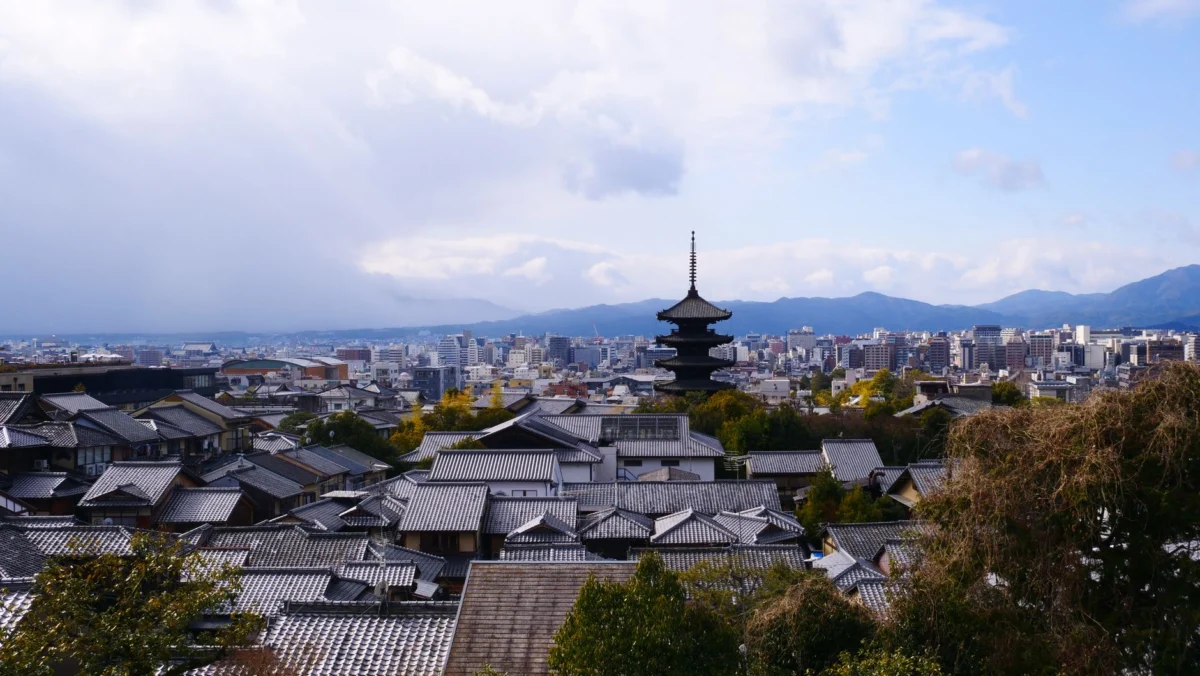
Panoramic view of Kyoto skyline with iconic landmarks
At a Glance
Country Japan
City Kyoto
Day / Night 17° / 7°
Local Time 7:33
November — Now Peak season
Best Months Dec · Nov

Kyoto is one of the easiest cities in the world to explore alone — if you sleep in the right place. This guide covers four very different bases: the transport hub around Kyoto Station, the lantern-lit alleys of Pontocho, the museum quarter of Okazaki and the student side of northern Sakyo. Each comes with a walk, a counter meal for one, an evening plan and a straight answer on what kind of room to look for.

Our favourite Kyoto stays for solo travellers

Best overall
⭐ 9.0
Via Inn Prime Kyotoeki Hachijoguchi

Via Inn Prime Kyotoeki Hachijoguchi

A station hotel on the south (Hachijō) side of Kyoto Station, a couple of minutes from the JR and Kintetsu gates and the Haruka airport train. It is the simplest possible base on your own: drop your bag, walk to the platform and be in Nara, Osaka or Fushimi without a taxi.

Solo friendly
⭐ 8.3
Hotel Japanesque Kyoto Station ZEQUU

Hotel Japanesque Kyoto Station ZEQUU

A Japanese-style hotel on Kawaramachi-dōri, around ten minutes on foot south-east of Kyoto Station. It is quieter than the streets on the north side, and the subway, JR and the airport train are all within an easy walk.

Top pick
⭐ 9.0
Hotel Espasion Pontocho

Hotel Espasion Pontocho

A small hotel in the Pontocho and Kiyamachi area, between the Kamo River and the Kawaramachi shopping streets. You can walk to Nishiki Market, the counter bars of Pontocho and three train lines, and walk home after dinner without needing a taxi.

Which Kyoto suits you travelling alone?

Pick what matters most on your own — trains, nightlife, museums or a quieter local side — and we will show you the neighbourhood.

Best choice: Kyoto Station (Kyoto Eki)

Best for: Day trips and easy trains

Best choice: Pontocho (Pontochō)

Best for: Evenings out and food

Best choice: Okazaki

Best for: Museums and calm nights

Best choice: Sakyo

Best for: Student life and calm walks

Best places to stay in Kyoto for solo travellers

Rooms a short walk from a train or subway station, in areas where you can eat alone and get home easily at night.

Hotel Japanesque Kyoto Station ZEQUU
Solo friendly
⭐ 8.3 Very Good
1585 reviews

Hotel Japanesque Kyoto Station ZEQUU

Kyoto Station • Japanese-style hotel • South-east of the station

A Japanese-style hotel on Kawaramachi-dōri, around ten minutes on foot south-east of Kyoto Station. It is quieter than the streets on the north side, and the subway, JR and the airport train are all within an easy walk.

  • About 10 minutes to Kyoto Station
  • Quieter side of the station
  • Japanese-style design
Hotel Espasion Pontocho
Top pick
⭐ 9.0 Excellent
244 reviews

Hotel Espasion Pontocho

Pontocho • Small hotel • Near the Kamo River

A small hotel in the Pontocho and Kiyamachi area, between the Kamo River and the Kawaramachi shopping streets. You can walk to Nishiki Market, the counter bars of Pontocho and three train lines, and walk home after dinner without needing a taxi.

  • Walk to Pontocho and Kiyamachi
  • Nishiki Market nearby
  • Keihan and Hankyu stations close
ShikiShiki Ponto 四季々々ぽんと先斗町の京町家
Smart choice
⭐ 8.6 Excellent
63 reviews

ShikiShiki Ponto 四季々々ぽんと先斗町の京町家

Pontocho • Machiya townhouse • Self-catering

A traditional wooden townhouse (machiya) in Pontocho, rented as a whole. It is more space than one person needs and priced accordingly, so it suits a longer stay, a splurge or a solo trip where friends join you for a few nights.

  • Traditional machiya
  • Whole house to yourself
  • In the middle of Pontocho
Hotel Okura Kyoto Okazaki Bettei
Luxury stay
⭐ 9.3 Outstanding
442 reviews

Hotel Okura Kyoto Okazaki Bettei

Okazaki • Upscale hotel • By Heian Shrine

An upscale hotel in Okazaki, a short walk from Heian Shrine, the art museums and the canal. It is a splurge rather than a social base, but if you want a calm, comfortable room after long days of walking, the location in the museum quarter is excellent.

  • Walk to Heian Shrine
  • Museum quarter on the doorstep
  • Quiet streets at night
"NAGOMI"Kyoto Okazaki
Editor’s choice
⭐ 8.8 Excellent
168 reviews

"NAGOMI"Kyoto Okazaki

Okazaki • Small stay • Museum quarter

A small stay in the Okazaki area, within walking distance of Heian Shrine, the museums and Nanzen-ji. Higashiyama subway station links you to the centre in a few minutes. Check the room type and check-in arrangements before you book, as small stays in Kyoto often have no staffed front desk.

  • Walk to the museums
  • Near Higashiyama subway
  • Quiet residential streets
Rinn Niomon
Walkable area
⭐ 9.1 Outstanding
294 reviews

Rinn Niomon

Okazaki • Small hotel • Niōmon-dōri

A small hotel on Niōmon-dōri, on the western edge of Okazaki, between the museum quarter and the Kamo River. You can walk to Heian Shrine in about ten minutes and to the bars of Sanjō and Pontocho in about fifteen, which makes it a good middle ground for one person.

  • On Niōmon-dōri
  • Walk to Heian Shrine
  • About 15 minutes to Sanjō
Ryokan KANADE
Smart choice
⭐ 9.0 Superb
1163 reviews

Ryokan KANADE

Sakyo (Okazaki) • 4-star ryokan • Hoshojicho

A 4-star ryokan in Okazaki Hoshojicho, in the south of Sakyo, about six minutes on foot from Heian Shrine and Okazaki Park and 13 from Nanzen-ji. Rooms have a terrace, a bath and yukata robes, there is a Japanese garden and a private open-air bath on the roof, and the breakfast is highly rated. Keage subway station is a ten-minute walk, and over 1,100 reviews at 9.0 make it an easy first ryokan for one.

  • Private rooftop open-air bath
  • 6 min walk to Heian Shrine
  • Japanese garden

How we choose

For solo travellers we look at the walk to the nearest station first, then at how easy it is to eat and spend an evening alone nearby, and only then at guest ratings.

The best areas to stay in Kyoto as a solo traveller

Four bases, each with a walk, a meal at the counter and an easy ride back.

Kyoto Station (Kyoto Eki)

Kyoto Station is where most solo trips to Kyoto start and end, and staying next to it makes everything simpler. The JR lines, the Karasuma subway, Kintetsu and the main bus terminal all meet under one roof, so Nara, Osaka, Fushimi Inari and Arashiyama are easy day trips with no planning beyond checking the platform.

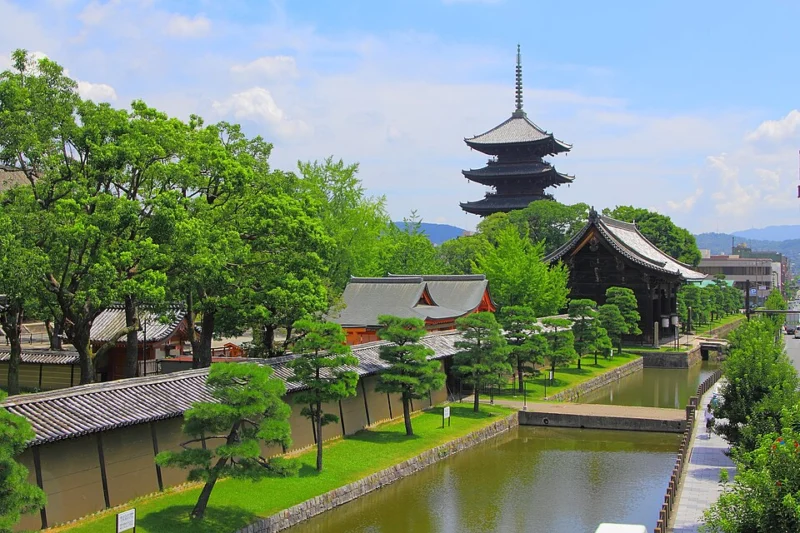
The area around it is a mix of business hotels, hostels and office blocks rather than old Kyoto, but the sights nearby are big ones. Mornings start at Tō-ji, whose five-storey pagoda is the tallest wooden tower in Japan; evenings end with ramen at a counter inside the station and the night view from Kyoto Tower. Eating alone here is completely normal.

The honest downside: the streets right around the station feel functional rather than charming, and they are busy with commuters. You will take the subway or a train to the old quarters every day.

Local picks

For Solo
  • 1
    MorningTō-jiStart at Tō-ji, founded in 796, two years after Kyoto became the capital. Walk the grounds around the five-storey pagoda before the tour groups arrive. On the 21st of the month, come for the Kōbō-san flea market instead.
  • 2
    FreeKyoto Station BuildingWalk back and explore the station itself — a 1997 building of glass and steel that is one of the largest in Japan. Climb the Grand Staircase on the west side for a free view over the concourse. The rooftop garden has been closed at times, so check the notices.
  • 3
    Lunch for oneKyoto Ramen KojiOn the 10th floor of the station building, a row of ramen shops from around Japan. You buy a ticket from the machine, hand it over and sit at the counter — the easiest solo meal in Kyoto. It gets busy at noon, so come a little early or late.
  • 4
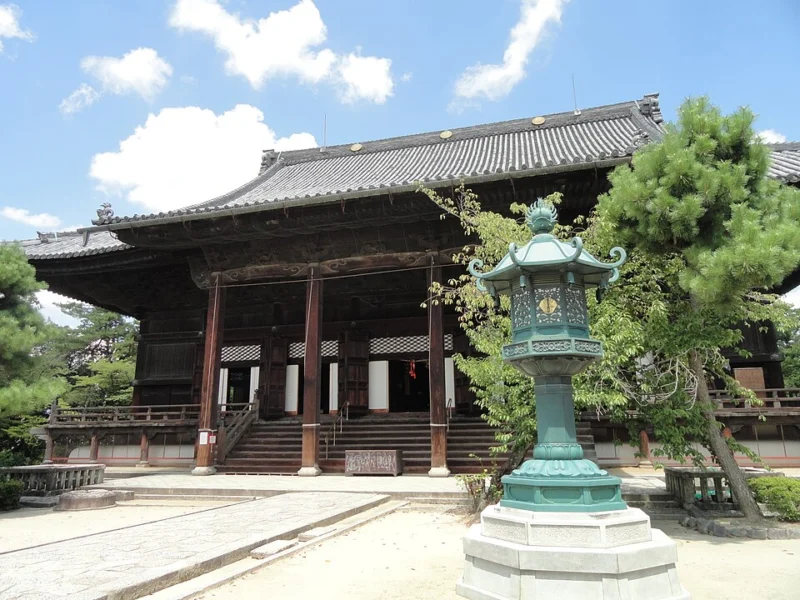
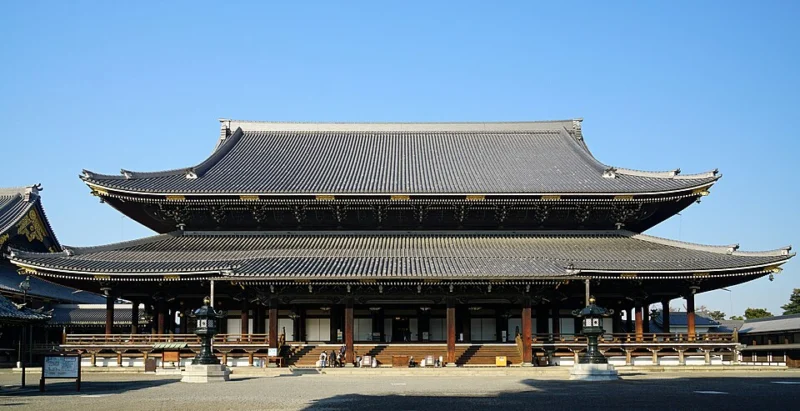
    AfternoonHigashi HonganjiFive minutes north of the station, a vast temple founded in 1602. Its Founder’s Hall is one of the largest wooden buildings in the world, and you can walk in and sit on the tatami. Entry is free.
  • 5
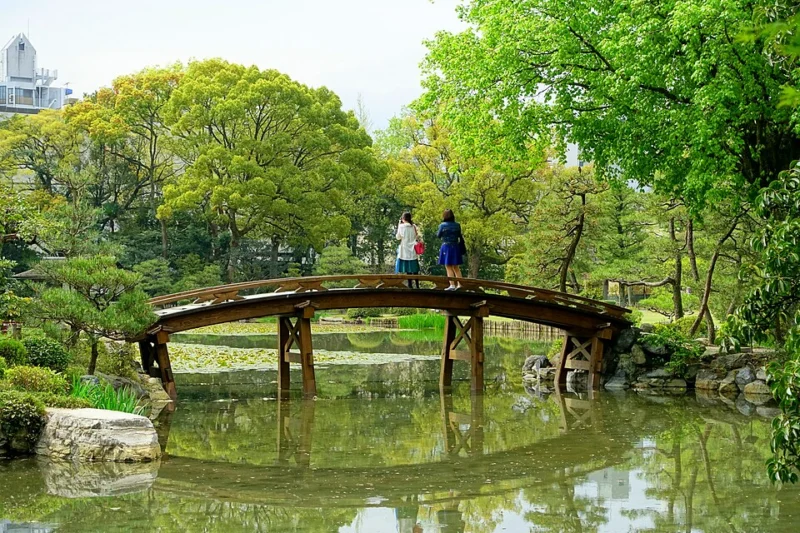
    Quiet hourShōsei-en GardenA walled garden belonging to Higashi Honganji, a short walk east of the temple. It has a pond, small bridges and tea houses, and it is rarely crowded. It closes at 5 pm.
  • 6
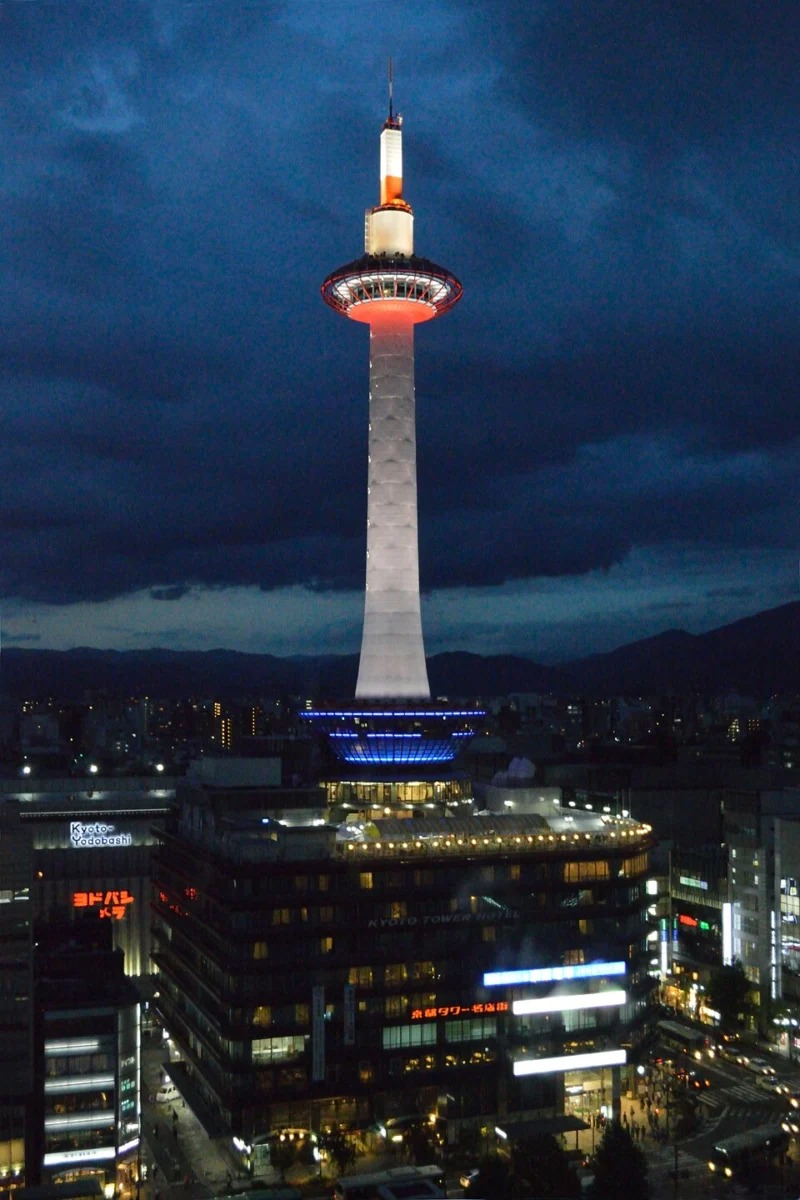
    EveningNidec Kyoto TowerGo up the 131-metre tower opposite the station for the city lights and the mountains around Kyoto. Then head to the Kyoto Tower Sando food hall in the basement, where you can eat at a counter and sit next to other travellers.
  • Getting aroundKyoto Station · JR, Karasuma subway, Kintetsu, busesEverything leaves from here: JR to Nara, Osaka and Fushimi Inari, the subway north to the centre and the Haruka train to Kansai Airport. City buses also start here but are often packed, so take the subway to Shijō or Karasuma Oike when you can.
  • Where to stayAround the station you will find business hotels with compact single rooms, plus hostels and guesthouses south of the tracks and towards Shichijō. Look for the Hachijō (south) or Karasuma (north) side within five minutes of the gates, and check if the room has a window — some cheaper station hotels do not.

Did you know?

A station for the 1,200th anniversary The current station building, designed by Hiroshi Hara, opened in 1997 to mark Kyoto’s 1,200th anniversary as a city.
Japan’s tallest wooden tower Tō-ji’s five-storey pagoda, a short walk from the station, is 54.8 metres high — the tallest wooden tower in Japan.
The 21st of every month On the 21st of each month Tō-ji hosts the Kōbō-san flea market, with antiques, second-hand clothes and food stalls.
Kyoto Station (Kyoto Eki)

Pontocho (Pontochō)

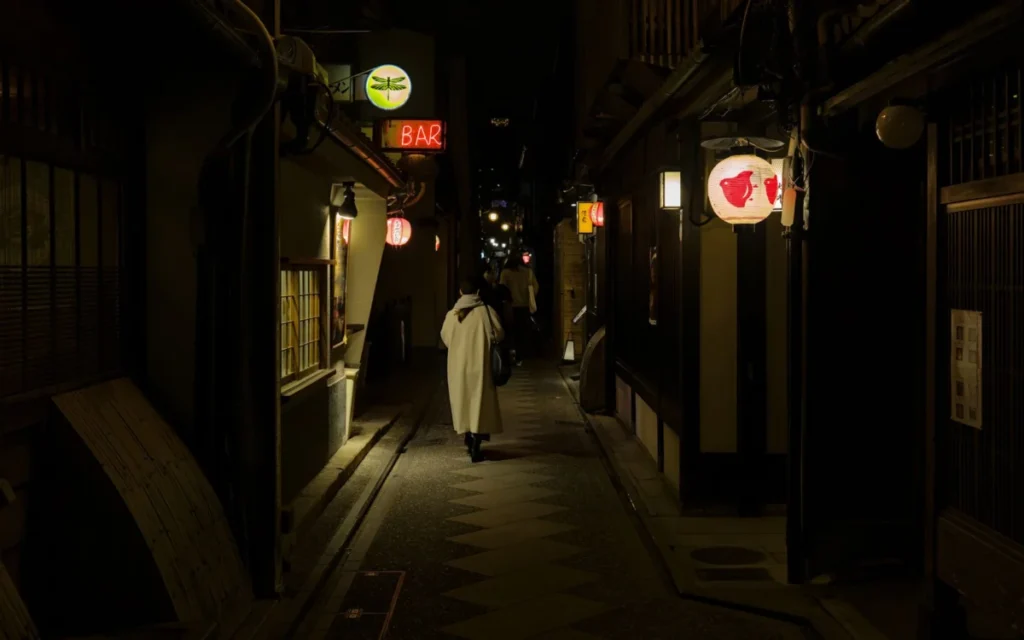
Pontocho is a single lantern-lit alley between Shijō and Sanjō, one block west of the Kamo River, and the streets around it — Kiyamachi, Kawaramachi and the covered shopping arcades — are the busiest part of central Kyoto after dark. Office workers, students and travellers fill the counters until late, which makes it the easiest place in the city to spend an evening alone.

Days start with snacks in Nishiki Market, then lunch at conveyor-belt sushi and an hour on the riverbank by Sanjō bridge, where locals sit on the steps at sunset. Evenings are for the alley itself and the tiny bars of Kiyamachi, many of them with only a few seats at the counter. Keihan, Hankyu and the subway are all a few minutes away.

The honest downside: rooms cost more than near the station, Pontocho is crowded at dinner time, and some of the restaurants with river terraces are expensive. Check the menu prices outside before you sit down.

Local picks

For Solo
  • 1
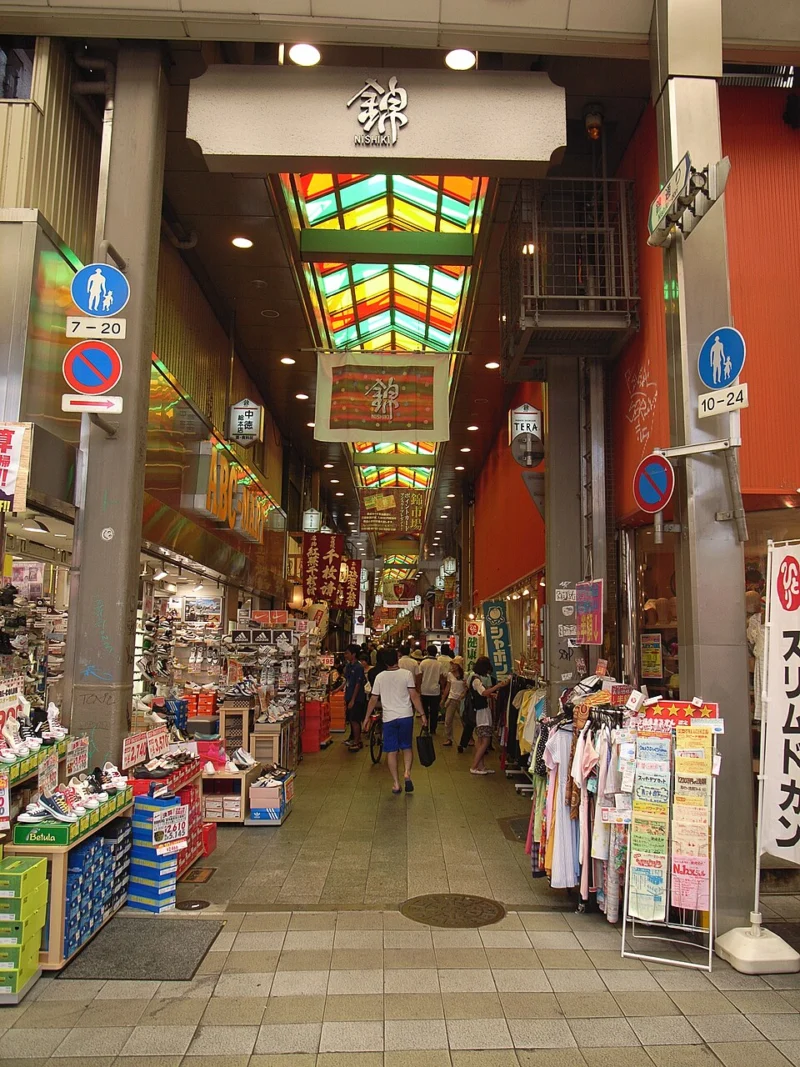
    MorningNishiki MarketGraze your way along Kyoto’s covered food street, buying one skewer, one pickle and one sweet at a time — perfect when you are on your own. Come before 11 am, before it gets crowded. Most stalls ask you to eat at the stall, not while walking.
  • 2
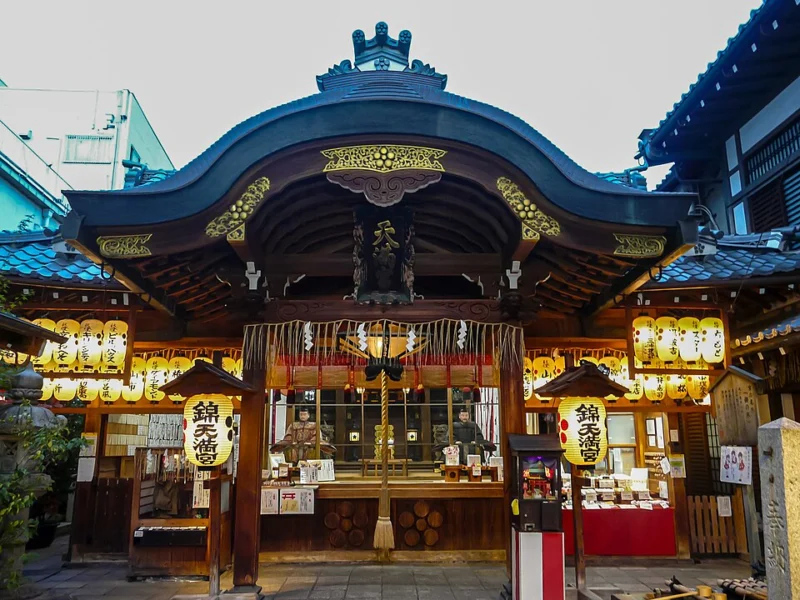
    FreeNishiki TenmangūA small shrine at the eastern end of Nishiki Market, squeezed between the shopping arcades. It takes five minutes, costs nothing and is a calm spot in the middle of the busiest streets.
  • 3
    Lunch for oneMusashi SushiOne of Kyoto’s oldest conveyor-belt sushi shops, at the Sanjō end of the arcades. Everyone sits at the counter, so nobody notices you are alone. Plates are colour-coded by price.
  • 4
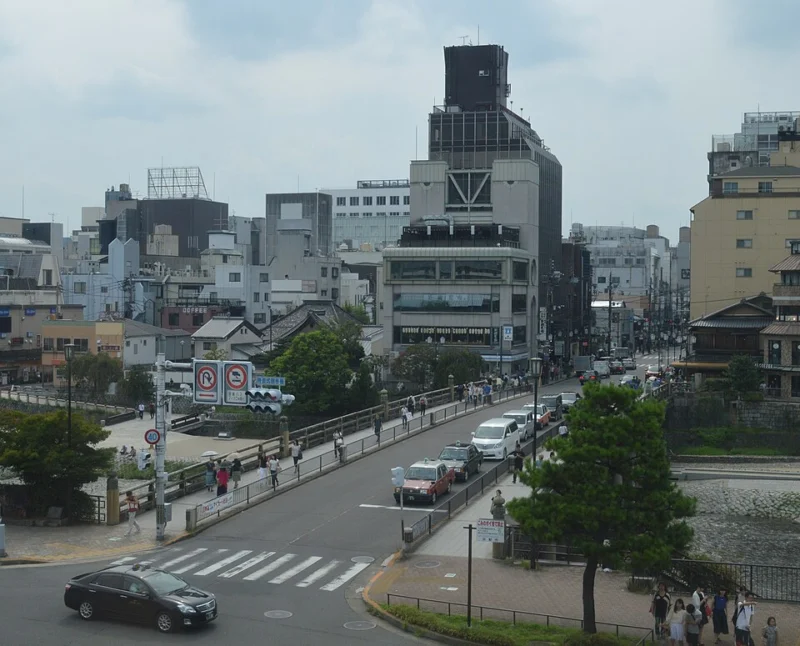
    AfternoonSanjō ŌhashiWalk out onto the old Sanjō bridge and down to the riverbank. Locals sit on the banks of the Kamo River to read, eat and watch the light change, and it is easy to join them with a drink from a convenience store.
  • 5
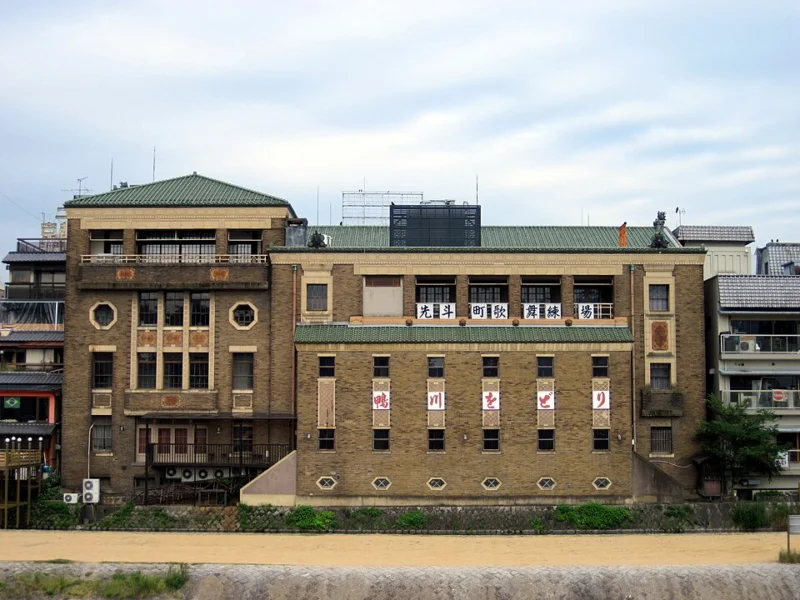
    Before darkPontochō Kaburenjō TheatreAt the Sanjō end of the alley, the theatre where Pontocho’s geiko have performed the Kamogawa Odori since the 1870s. Check the dates if you are in Kyoto in spring; other times, just admire the building as you enter the alley.
  • 6
    DinnerPontocho AlleyWalk the whole alley once before you choose — it is only about 500 metres. Look for places with counter seats and prices posted outside, and skip the river terraces if you are on a budget.
  • 7
    Alternative dinnerNijiyaA tiny vegan izakaya with just seven counter seats, a short walk from Pontocho. It opens in the early evening and fills fast, so arrive at opening time and expect a queue.
  • 8
    LateRocking Bar ingA long-running rock bar near Kiyamachi that stays open late. It is the kind of place where you sit at the bar alone and leave having talked to half the room. Last trains leave around midnight, so check yours.
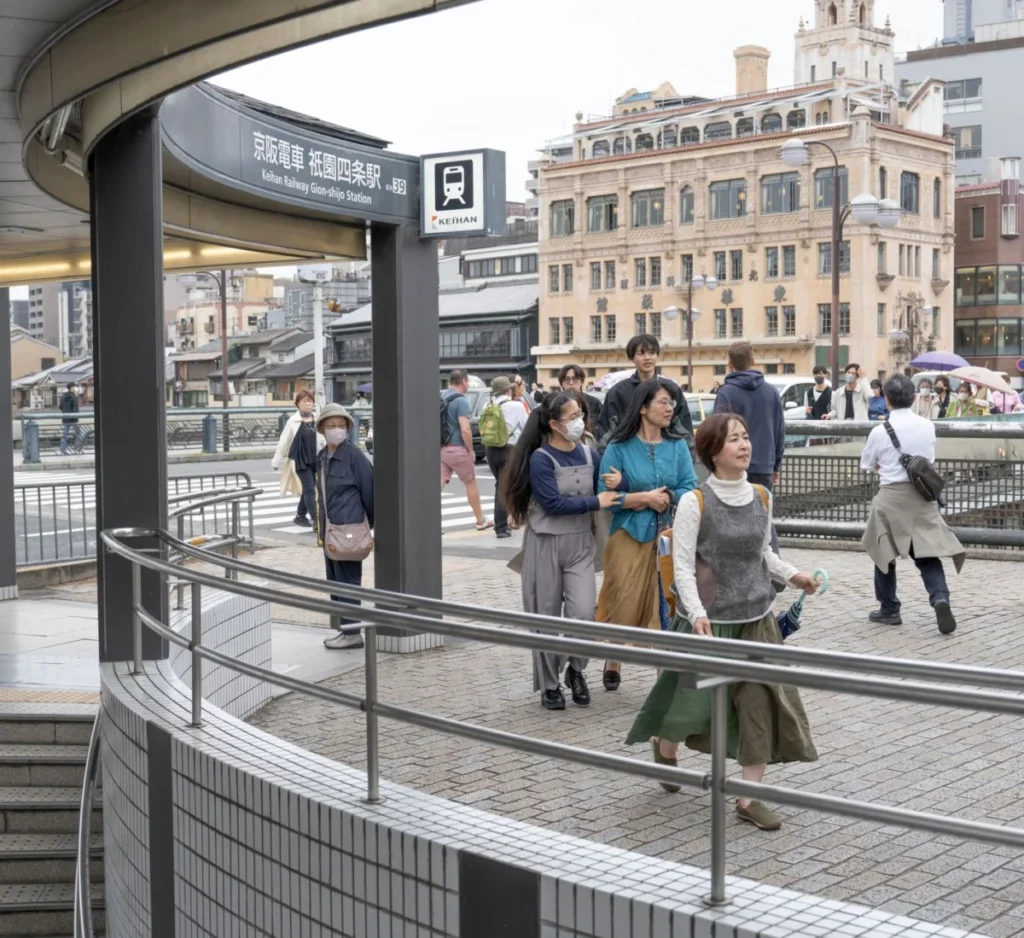
  • Getting aroundGion-Shijō · Sanjō · Kyoto-Kawaramachi · Kyoto Shiyakusho-maeKeihan trains stop at Gion-Shijō and Sanjō, Hankyu ends at Kyoto-Kawaramachi, and the Tōzai subway stops at Kyoto Shiyakusho-mae. You can walk to all of them in under ten minutes.
  • Where to stayPontocho itself has mostly small hotels and machiya rentals; the hostels and business hotels are a few streets away along Kawaramachi, Kiyamachi and Sanjō. Ask for a room away from Kiyamachi if you sleep lightly, as the bar streets are noisy until late.

Did you know?

A name from Portuguese The name “Ponto” is believed to come from the Portuguese word “ponte”, meaning bridge.
Where kabuki began The riverbank here is the traditional birthplace of kabuki, and a statue of its founder, Izumo no Okuni, stands across the river.
A dance every spring The Pontochō Kaburenjō Theatre at the Sanjō end of the alley has staged the Kamogawa Odori geiko dances since the 1870s.
Pontocho (Pontochō)

Okazaki

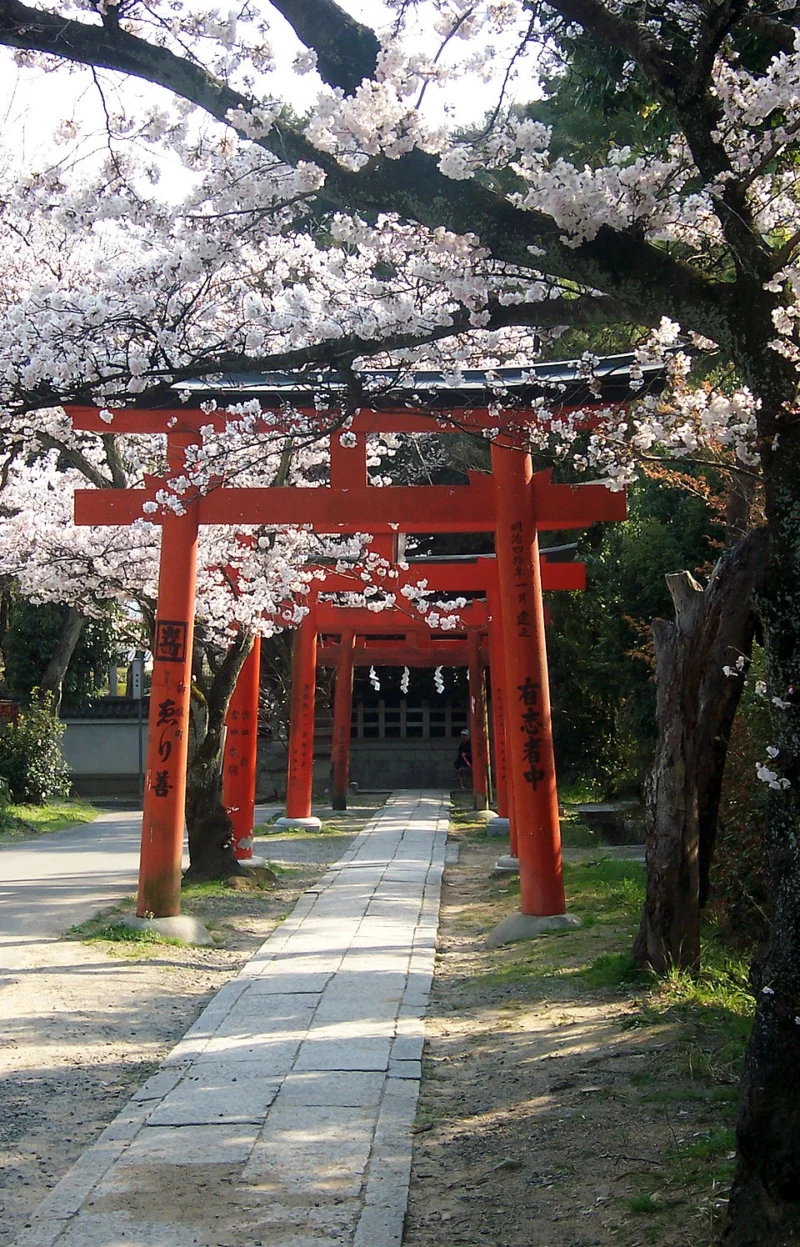
Okazaki is Kyoto’s museum quarter: a grid of wide, quiet streets east of the Kamo River, laid out around Heian Shrine and its giant red torii. The city’s two big art museums, a theatre and a library sit around one park, and the Lake Biwa Canal runs past them under cherry trees.

For a solo traveller, Okazaki is about long, easy days on foot. Start early at Nanzen-ji and its brick aqueduct before the crowds, spend the middle of the day in the museums, and finish at Heian Shrine as the light drops. Higashiyama subway station takes you to the bars of Sanjō in a few minutes when you want company.

The honest downside: Okazaki is quiet in the evening, with few bars or late restaurants, and there are not many hostels. It suits travellers who want calm nights more than a social scene.

Local picks

For Solo
  • 1
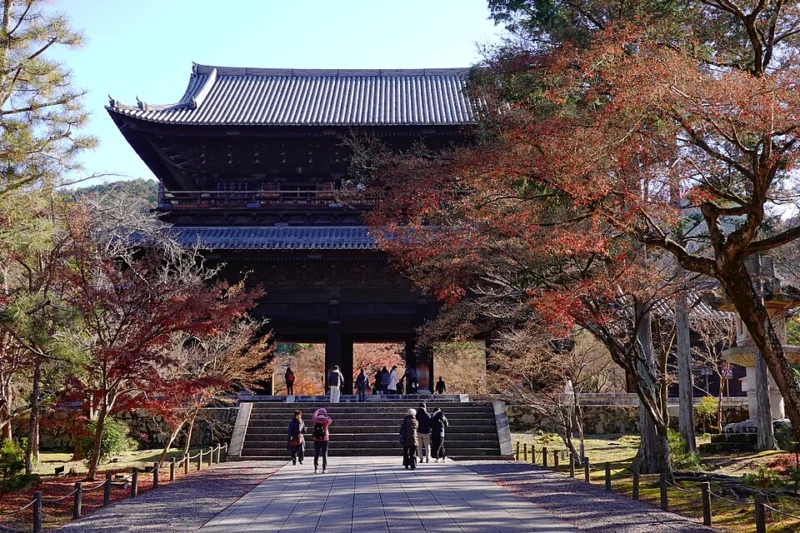
    MorningNanzen-jiArrive early, when the huge Sanmon gate and the grounds are almost empty. Find the red-brick aqueduct behind the main hall, built in 1890 to carry canal water. Entry to the grounds is free; some halls and gardens charge.
  • 2
    Mid-morningLake Biwa Canal MuseumA small museum about how the canal was built to bring water and power to Kyoto in the Meiji era. It is a good half-hour on your own and explains much of what you see in Okazaki.
  • 3
    WalkOkazaki Sakura CorridorFollow the canal west under the cherry trees towards the museums. In spring it is one of Kyoto’s best blossom walks; the rest of the year it is a quiet path by the water.
  • 4
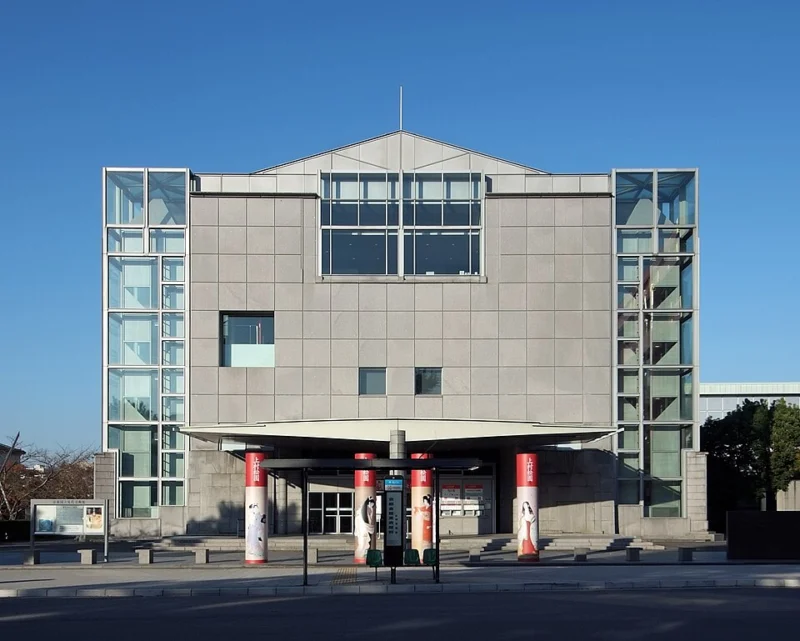
    AfternoonNational Museum of Modern Art, KyotoChanging exhibitions of modern Japanese art, crafts and design. Check what is on before you go. It is closed on Mondays.
  • 5
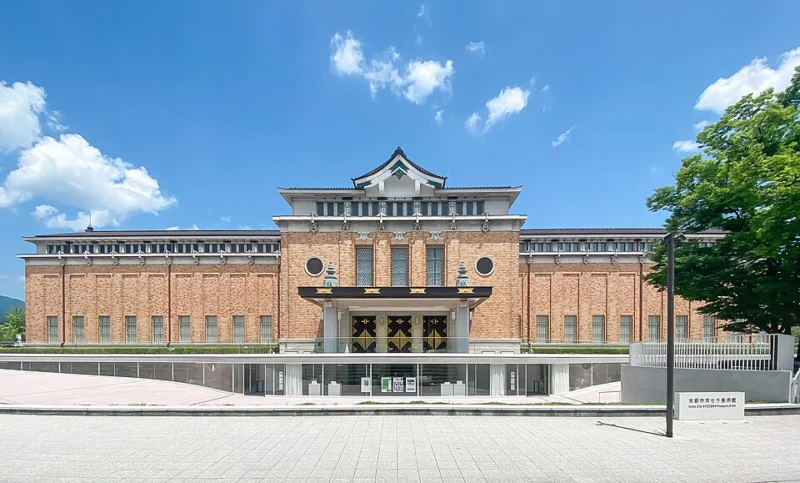
    AfternoonKyoto City KYOCERA Museum of ArtAcross the road, the city art museum, which first opened in 1933 and reopened after a big renovation. The building itself is worth a look. It is also closed on Mondays.
  • 6
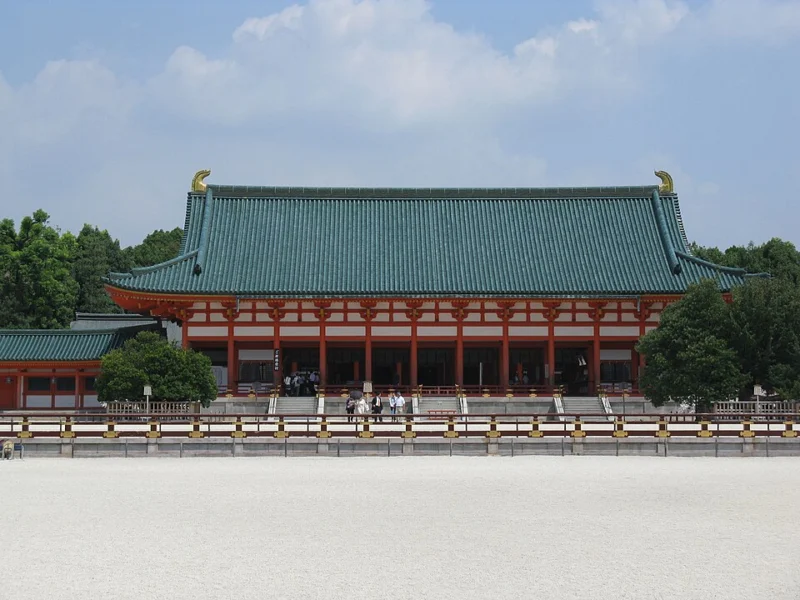
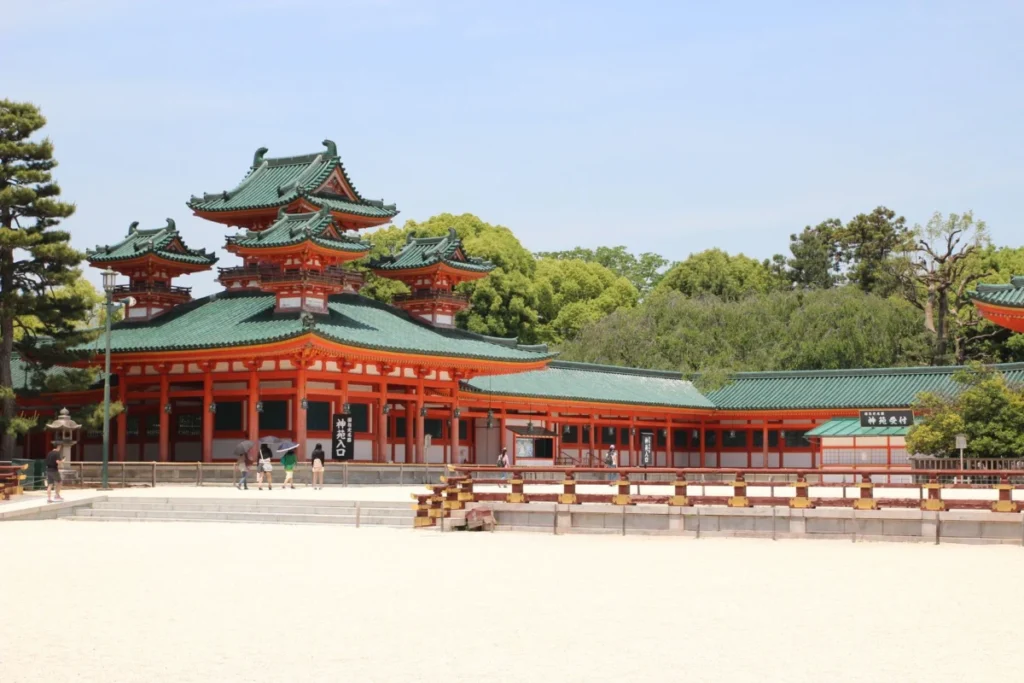
    Late afternoonHeian ShrineWalk through the vast gravel courtyard of Heian Shrine as the crowds leave. The main courtyard is free; the garden behind it charges and closes earlier, so go there first if you want to see it.
  • 7
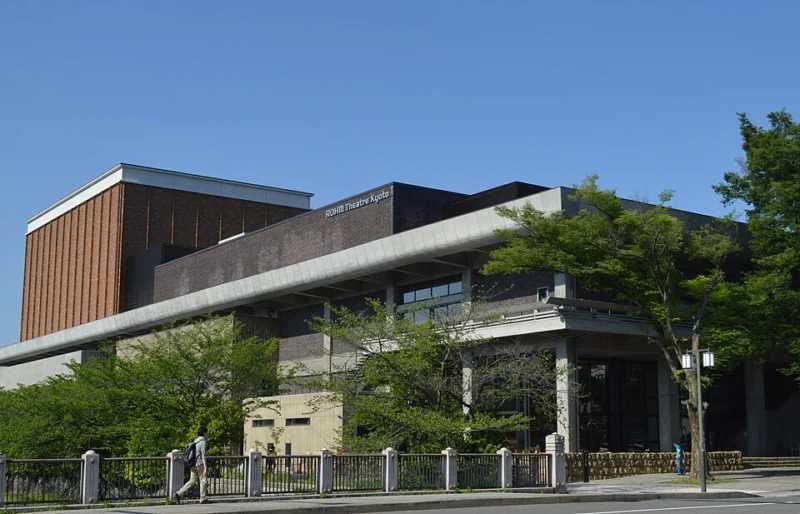
    EveningROHM Theatre KyotoOkazaki’s theatre hosts concerts, dance and plays, and a single ticket is often easy to find. Check the programme online, and if nothing appeals, take the subway one stop to Sanjō for dinner.
  • Getting aroundHigashiyama station · Tōzai subwayHigashiyama station on the Tōzai line is about ten minutes’ walk from Heian Shrine, and Keage station is next to Nanzen-ji. The same line takes you to Sanjō and Kyoto Shiyakusho-mae in a few minutes.
  • Where to stayOkazaki has a few upscale hotels, small machiya-style hotels and short-stay rentals, but few hostels. Stay on the western edge near Niōmon-dōri or Higashiyama station to keep the walk to the subway short, and check if there is a staffed front desk if you arrive late.

Did you know?

A palace at five-eighths scale Heian Shrine was built in 1895 for the 1,100th anniversary of Kyoto as a reduced copy of the old imperial palace hall.
A canal from a student thesis The Lake Biwa Canal was built under chief engineer Tanabe Sakurō, who had planned it in his university graduation thesis.
Japan’s first hydroelectric plant From 1895, water from the canal powered Japan’s first hydroelectric power plant, which ran Kyoto’s first trams.
Okazaki

Sakyo

Sakyo is the big ward east of the Kamo River, and its heart for a solo traveller is the student quarter around Kyoto University. Cheap cafés, second-hand bookshops, noodle counters and bike racks fill the streets around the Hyakumanben crossing, and half the people you pass are students or researchers on their own too.

Mornings start on campus and at the temples of Hyakumanben and Yoshida Shrine on its wooded hill. In the afternoon you walk east to Ginkaku-ji and down the Philosopher’s Path along the canal, which is far calmer early or late in the day. Evenings are low-key: a bowl of noodles at a counter on Imadegawa-dōri, or the Keihan train from Demachiyanagi to the bars of Sanjō.

The honest downside: there are few hotels and hostels here, the subway does not reach the area, and buses along Imadegawa get crowded. A bike makes Sakyo much easier.

Local picks

For Solo
  • 1
    MorningKyoto UniversityWalk onto the main Yoshida campus and look at the clock tower, the symbol of the university. The campus is open to walk through, and on a weekday you will see what student Kyoto looks like.
  • 2
    FreeHyakumanben Chion-jiA large Pure Land temple right at the Hyakumanben crossing, north of the campus. The grounds are free and quiet on most days. Have a look at the noticeboards for markets and events held here.
  • 3
    Late morningYoshida ShrineClimb the wooded Yoshida hill behind the university to this old shrine. The paths through the trees are almost empty on weekdays. It is best known for its big Setsubun festival in early February.
  • 4
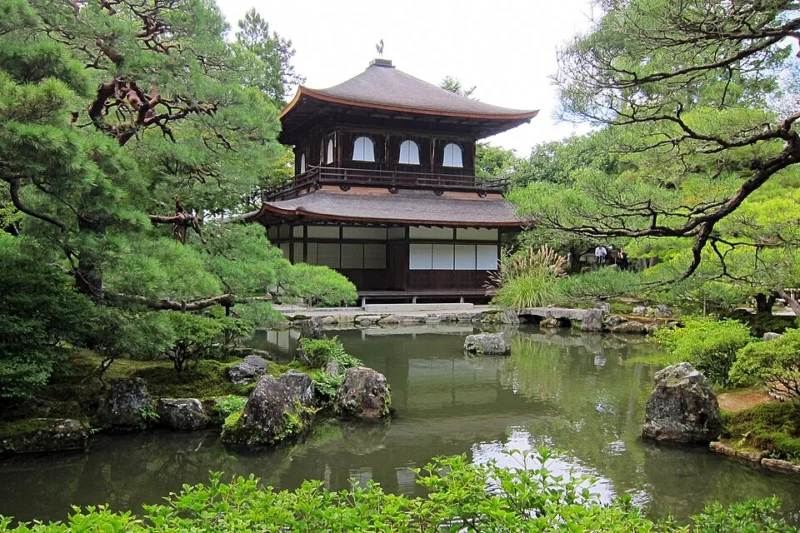
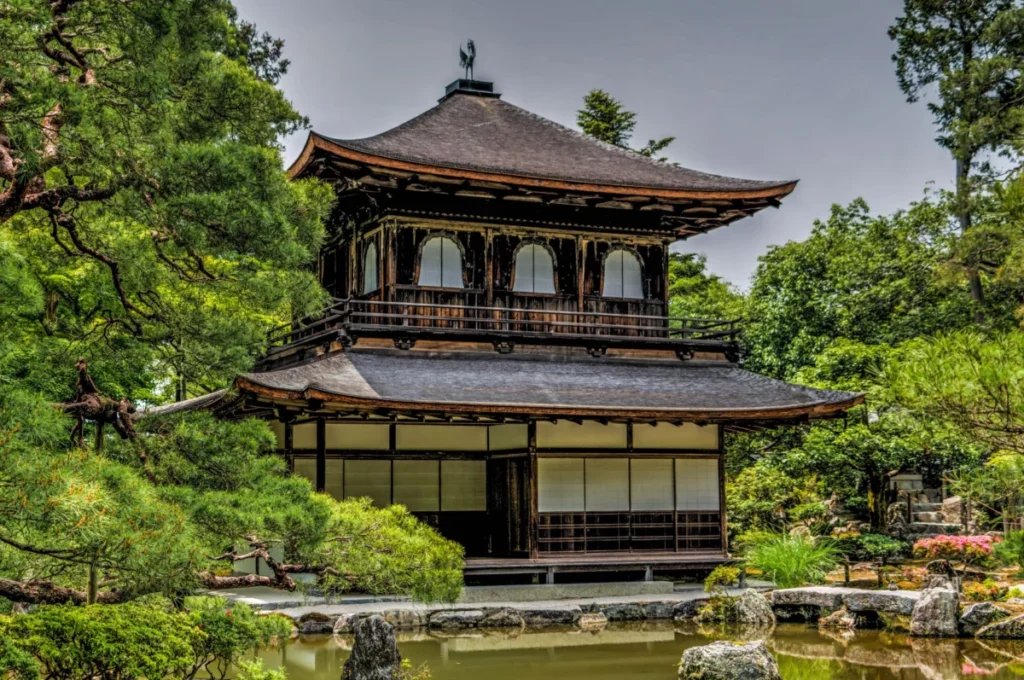
    AfternoonGinkaku-jiWalk east across Shirakawa-dōri to the Silver Pavilion and its raked sand garden. Go in the late afternoon, when most groups have left. There is a small entry fee.
  • 5
    SunsetPhilosopher’s PathFrom Ginkaku-ji, follow the canal path south under the cherry trees. It is about 2 km long, so walk as far as you like and turn back. Small cafés line parts of it.
  • Dinner for oneImadegawa-dōri noodle countersHead back towards Hyakumanben, where Imadegawa-dōri and the side streets are full of cheap ramen and noodle shops for students. Pick one with a queue, buy your ticket from the machine and sit at the counter.
  • Getting aroundDemachiyanagi · Keihan and Eizan Railway · city busesDemachiyanagi station, about 15 minutes’ walk from the campus, has Keihan trains to Sanjō and Gion-Shijō and the Eizan Railway north to Kurama. Buses run along Imadegawa-dōri and Higashiōji-dōri, and many students simply cycle.
  • Where to staySakyo has few hotels; most are small guesthouses and short-stay rentals near Demachiyanagi and Kyoto University, plus retreat hotels far to the north in Yase. Stay within a few minutes of Demachiyanagi or a main bus road, or the walks home at night will wear you down.

Did you know?

A university since 1897 Kyoto Imperial University, today Kyoto University, was founded here in 1897 as Japan’s second imperial university.
Japan’s first Nobel laureate Physicist Hideki Yukawa studied and taught at Kyoto Imperial University here before winning the Nobel Prize in 1949.
A professor’s daily walk The Philosopher’s Path is named after Kitarō Nishida, a Kyoto University philosophy professor who walked it regularly.
Sakyo

Planning your stay in Kyoto

For Solo
  • Getting around aloneGet an ICOCA card on day one — it works on the subway, JR, Keihan, Hankyu and city buses. The subway and trains are faster than the crowded buses for most trips.
  • From the airportThe Haruka limited express runs from Kansai Airport straight to Kyoto Station. From there, the subway reaches the centre in a few minutes.
  • Eating on your ownRamen shops, conveyor-belt sushi, food halls and izakaya counters all have single seats, and many use ticket machines. Nobody expects you to order for two.
  • Late nightsLast trains leave around midnight. Central Kyoto is busy until late, but in Okazaki and Sakyo the streets empty early, so plan your ride home.
Self-guided walking tours Solo (Kyoto, Japan)
Routes 4
Pick a route

Best time to visit Kyoto (Japan)

Now (November) avg high: 17°C, mostly dry, full season — expect crowds. Best months to walk: Dec & Nov.

Live Temp …
~Day / Night Temp 17°C / 7°C
Sunrise / Sunset 6:23 / 16:59
Local time 7:33
Best Months Dec & Nov
J Jan F Feb M Mar A Apr M May J Jun J Jul A Aug S Sep O Oct N Nov best month this month D Dec best month
Check Kyoto hotels
Temperature Average daytime high, month by month. Zero line marks freezing point.
Crowds How busy it gets — traveller interest by month.
Rainfall Rainy days to expect each month.
Sunshine Hours of sun per day, by month.
Kyoto guides →

Best places to stay in Kyoto for solo travellers

Rooms a short walk from a train or subway station, in areas where you can eat alone and get home easily at night.
Via Inn Prime Kyotoeki Hachijoguchi
Best overall
9.0 Excellent
5316 reviews

Via Inn Prime Kyotoeki Hachijoguchi

A station hotel on the south (Hachijō) side of Kyoto Station, a couple of minutes from the JR and Kintetsu gates and the Haruka airport train. It is the simplest possible base on your own: drop your bag, walk to the platform and be in Nara, Osaka or Fushimi without a taxi.

Ideal for: Solo travellers who want the shortest walk to the trains
Hotel Japanesque Kyoto Station ZEQUU
Solo friendly
8.3 Very Good
1585 reviews

Hotel Japanesque Kyoto Station ZEQUU

A Japanese-style hotel on Kawaramachi-dōri, around ten minutes on foot south-east of Kyoto Station. It is quieter than the streets on the north side, and the subway, JR and the airport train are all within an easy walk.

Ideal for: Solo travellers who want a calmer street near the station
Hotel Espasion Pontocho
Top pick
9.0 Excellent
244 reviews

Hotel Espasion Pontocho

A small hotel in the Pontocho and Kiyamachi area, between the Kamo River and the Kawaramachi shopping streets. You can walk to Nishiki Market, the counter bars of Pontocho and three train lines, and walk home after dinner without needing a taxi.

Ideal for: Solo travellers who want restaurants and bars on the doorstep
ShikiShiki Ponto 四季々々ぽんと先斗町の京町家
Smart choice
8.6 Excellent
63 reviews

ShikiShiki Ponto 四季々々ぽんと先斗町の京町家

A traditional wooden townhouse (machiya) in Pontocho, rented as a whole. It is more space than one person needs and priced accordingly, so it suits a longer stay, a splurge or a solo trip where friends join you for a few nights.

Ideal for: Solo travellers on a longer stay or meeting friends in Kyoto
Hotel Okura Kyoto Okazaki Bettei
Luxury stay
9.3 Outstanding
442 reviews

Hotel Okura Kyoto Okazaki Bettei

An upscale hotel in Okazaki, a short walk from Heian Shrine, the art museums and the canal. It is a splurge rather than a social base, but if you want a calm, comfortable room after long days of walking, the location in the museum quarter is excellent.

Ideal for: Solo travellers who want a quiet, comfortable splurge
"NAGOMI"Kyoto Okazaki
Editor’s choice
8.8 Excellent
168 reviews

"NAGOMI"Kyoto Okazaki

A small stay in the Okazaki area, within walking distance of Heian Shrine, the museums and Nanzen-ji. Higashiyama subway station links you to the centre in a few minutes. Check the room type and check-in arrangements before you book, as small stays in Kyoto often have no staffed front desk.

Ideal for: Solo travellers who like quiet evenings near the museums
Rinn Niomon
Walkable area
9.1 Outstanding
294 reviews

Rinn Niomon

A small hotel on Niōmon-dōri, on the western edge of Okazaki, between the museum quarter and the Kamo River. You can walk to Heian Shrine in about ten minutes and to the bars of Sanjō and Pontocho in about fifteen, which makes it a good middle ground for one person.

Ideal for: Solo travellers who want calm nights but a walk into the centre
Ryokan KANADE
Smart choice
9.0 Superb
1163 reviews

Ryokan KANADE

A 4-star ryokan in Okazaki Hoshojicho, in the south of Sakyo, about six minutes on foot from Heian Shrine and Okazaki Park and 13 from Nanzen-ji. Rooms have a terrace, a bath and yukata robes, there is a Japanese garden and a private open-air bath on the roof, and the breakfast is highly rated. Keage subway station is a ten-minute walk, and over 1,100 reviews at 9.0 make it an easy first ryokan for one.

Ideal for: Solo travellers who want a ryokan near the temples

Travelling in cherry blossom or autumn leaf season?

Single rooms and good hostel beds near the stations go first in late March to early April and in November — book early if your dates are fixed.

Compare Kyoto stays for solo travellers

Location, nearest station and what makes each one work for one person — side by side.
Hotel Japanesque Kyoto Station ZEQUU
Solo friendly
8.3 Very Good
1585 reviews

Hotel Japanesque Kyoto Station ZEQUU

Kyoto Station • Japanese-style hotel • South-east of the station
A quieter station base
Location
Walkable to Kyoto Station
Hotel Espasion Pontocho
Top pick
9.0 Excellent
244 reviews

Hotel Espasion Pontocho

Pontocho • Small hotel • Near the Kamo River
The central base for evenings out
Restaurants Nearby
Bars and restaurants on foot

Traditional Local Food Kyoto (Japan)

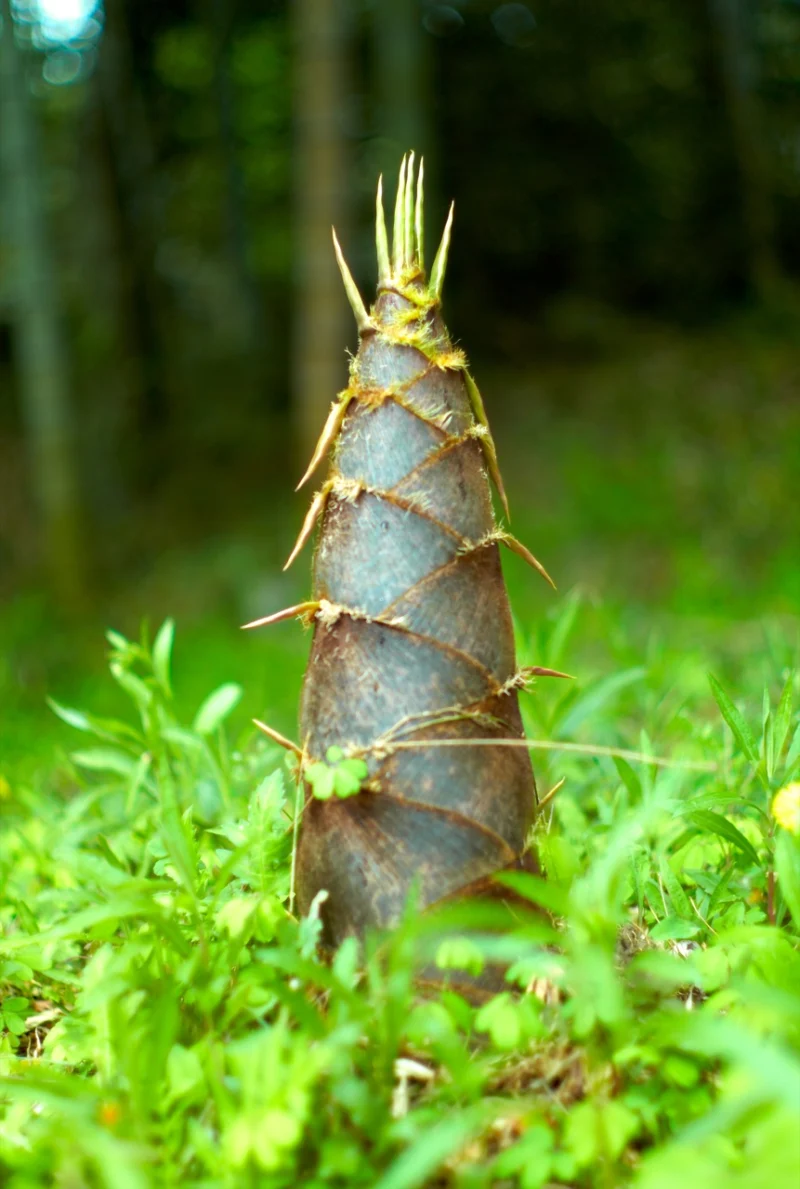
Grilled Bamboo Shoots
Snack Vegan

Grilled Bamboo Shoots

筍
TAH-kay-no-ko

Tender bamboo shoots, typically grilled and seasoned simply, representing spring.

Open Grilled Bamboo Shoots recipe
Main course Fish & Seafood

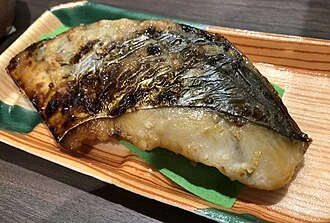
Grilled White Miso Marinated Fish

西京焼き
sai-kyo yah-kee

White miso marinated fish, grilled to achieve a savory sweetness.

Open Grilled White Miso Marinated Fish recipe
🐟
Main course Fish & Seafood

Hamo no Kiriotoshi

鱧の切り落とし
ha-mo no kee-ri-oh-toh-shee

Thinly sliced pike conger served in summer.

Open Hamo no Kiriotoshi recipe
🐟
Main course Fish & Seafood

Hamo no Yubiki

鱧の湯引き
Hah-moh noh Yoo-bee-kee

Lightly poached pike conger eel served with plum sauce.

Open Hamo no Yubiki recipe
Kuzu Manju
Dessert Vegan

Kuzu Manju

葛饅頭
koo-zoo mahn-joo

A summer dessert featuring cool, translucent jelly with sweet fillings.

Open Kuzu Manju recipe
Dessert Vegan

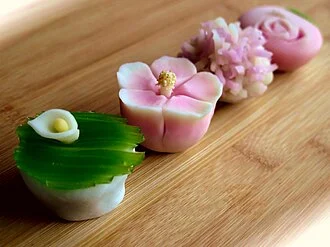
Kyo-Wagashi

京和菓子
kee-yoh wah-gah-shee

Traditional Kyoto sweets usually served with tea.

Open Kyo-Wagashi recipe
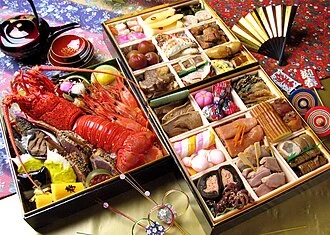
Main course Vegetarian

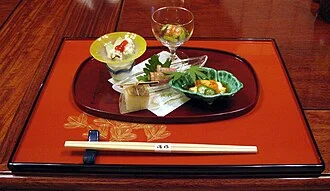
Kyo-kaiseki

京懐石
Kyo-kai-seh-key

A traditional multi-course Japanese dinner featuring seasonal ingredients.

Open Kyo-kaiseki recipe
Snack Vegan

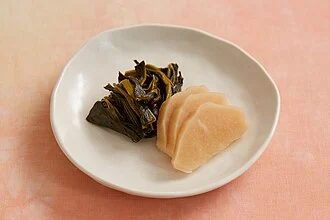
Kyo-tsukemono

京漬物
kyo-tsu-keh-mo-no

Traditional Kyoto pickled vegetables.

Open Kyo-tsukemono recipe
Main course Vegan

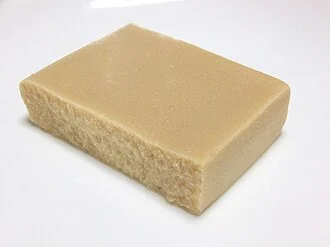
Kyoto Style Koyadofu

高野豆腐
koh-yah doh-foo

Freeze-dried tofu simmered in dashi broth.

Open Kyoto Style Koyadofu recipe
Soup Vegetarian

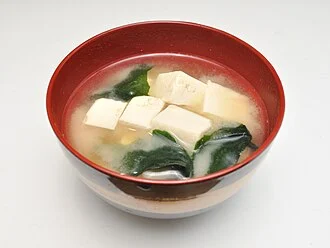
Kyoto Style Misoshiru

白味噌汁
mee-soh shee-roo

Traditional white miso soup with seasonal vegetables.

Open Kyoto Style Misoshiru recipe
Drink Vegan

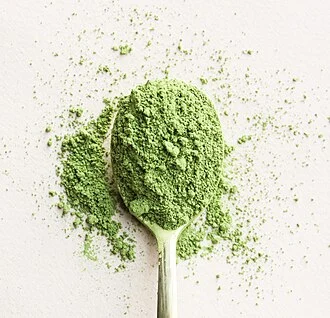
Matcha

抹茶
Maat-chah

Finely ground powder of specially grown and processed green tea leaves

Open Matcha recipe
Dessert Vegetarian

Matcha Green Tea Sweets

抹茶和菓子
mah-chah wah-gah-shee

Traditional sweets made with matcha, typically served with tea.

Open Matcha Green Tea Sweets recipe
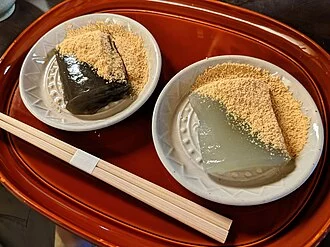
Dessert Vegan

Matcha Warabimochi

抹茶わらび餅
Maht-cha Wah-rah-bee-moh-chee

A jelly-like confection made from bracken starch and matcha served with kinako.

Open Matcha Warabimochi recipe
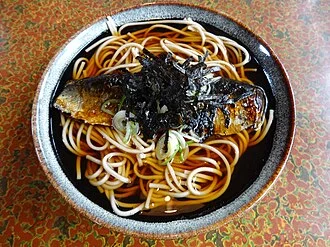
Main course Fish & Seafood

Nishin Soba

にしんそば
Nee-shin Soh-bah

Buckwheat noodles served in dashi broth topped with sweetened herring.

Open Nishin Soba recipe
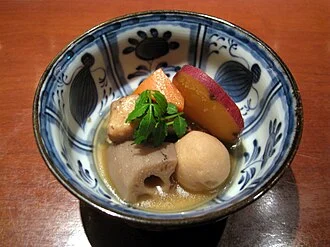
Main course Vegetarian

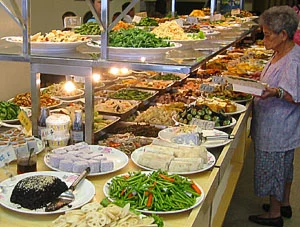
Obanzai

おばんざい
oh-ban-zai

A variety of traditional Kyoto home-cooked dishes.

Open Obanzai recipe
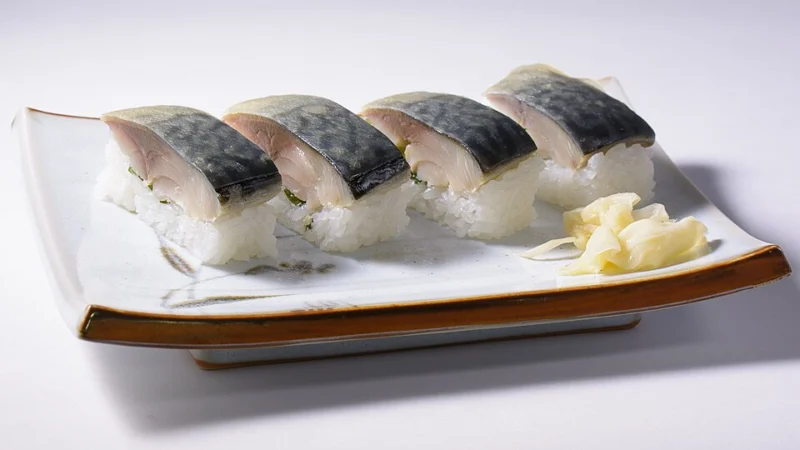
Saba Sushi
Main course Fish & Seafood

Saba Sushi

鯖寿司
sah-bah sue-shee

Pressed sushi made with mackerel and vinegared rice, a specialty of Kyoto.

Open Saba Sushi recipe
Main course Vegan

Shojin Ryori

精進料理
shoh-jeen ryo-ri

Traditional Zen Buddhist vegan cuisine.

Open Shojin Ryori recipe
Dessert Vegan

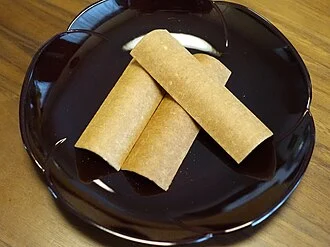
Yatsuhashi

八ツ橋
yaht-soo-hah-shee

Kyoto's iconic sweet made from glutinous rice flour, sugar, and cinnamon.

Open Yatsuhashi recipe
Main course Vegetarian

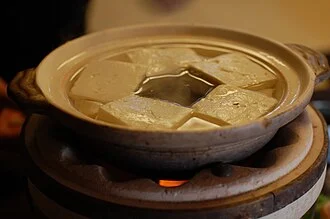
Yudofu

湯豆腐
Yoo-doh-foo

Tofu simmered in a light broth and served with dipping sauces.

Open Yudofu recipe

Activities & Experiences

Things to Do in Kyoto

Top-rated tours, day trips and local experiences — book in advance to secure your spot.

City & Country Data Kyoto (Japan)

Key travel data for Kyoto — local prices, safety, healthcare, local currency and essentials, curated by Triplandio.

Safety 🔒 89
Health 🏥 100
Lifestyle ⭐ 48
Infra 🏗️ 100
Rank 🎯 #5
Score 📊 70
Tourists ✈️ 4.1M/y
GDP/cap 💵 $36.0k
Life Exp ❤️ 84.0 yrs
Population 👥 123.4M
Currency 💱 JPY ¥
Language 🗣️ Japanese
Payments 💳 Mixed
Emergency 🆘 110
Coffee ☕ $3.50
Beer 🍺 $3.50
Lunch 🍽️ $10.00
Groceries 🛒 $50.00/w
Taxi/km 🚕 $1.50
Transit 🚇 $2.00
Fuel ⛽ $1.20/l
Internet 📡 $40.00/m
Salary 💵 $2,500/m

Travel tipsKyoto (Japan)

Quick tips

  1. Some cold and allergy medicines are banned — Critical

    Japan's strict stimulant-drug law covers Vicks inhalers, cold and flu tablets containing pseudoephedrine, some allergy and sinus remedies and some codeine painkillers. Visitors have been detained and deported, so check your medicines with the Japanese embassy before you fly.

  2. Don't follow street touts into bars — Critical

    In nightlife districts such as Kabukicho, Roppongi, Shibuya and Ikebukuro in Tokyo, touts lure visitors into bars where drinks are spiked and huge sums are charged to their cards. Ignore touts and check prices before you order.

  3. Don't chase geiko in Gion — Caution

    Geiko and trainee maiko in Kyoto's Gion district are working women, not attractions. Don't block their way, touch them or photograph them without permission, and keep out of the private lanes marked by signs.

  4. Always carry your passport — Caution

    Tourists in Japan must carry their passport at all times, not a photocopy. Police can arrest you if you cannot show proof of your permission to stay.

  5. Smoking on the street is often banned — Caution

    Smoking while walking on the streets of Tokyo and many other Japanese cities is illegal. Look for the designated smoking areas, usually near stations, and smoke only there.

  6. Carry cash as well as cards — Local tip

    Many small restaurants, shrines, temples and rural shops in Japan still take cash only. ATMs at 7-Eleven stores and post offices are the most reliable for foreign cards.

  • Do
  • Carry your passport at all times
  • Take shoes off where slippers wait
  • Wash before getting into an onsen
  • Carry cash for small places
  • Take your rubbish with you
  • Don’t
  • Bring pseudoephedrine medicine
  • Follow touts into bars
  • Tip in restaurants
  • Smoke while walking
  • Take phone calls on trains

Kyoto tips for solo travellers

Use counter seats

Ramen shops, conveyor-belt sushi, standing bars and izakaya counters are made for one person. In Kyoto Station, Kawaramachi and around Kyoto University you can eat every meal at a counter without anyone expecting you to order for two.

Tip: Eat at the counter, not at a table

Start early, finish central

The big temples are calmest right after opening. Do your sightseeing in the morning, then spend the evening around Pontocho and Kiyamachi, where there are people about until late and plenty of trains and taxis home.

Tip: Temples early, centre at night

Get an IC card on day one

An ICOCA card (or another Japanese IC card) works on Kyoto subways, JR, private railways and city buses. Tapping in saves you working out fares in Japanese at every ticket machine.

Tip: One card for every train

Want company? Choose a hostel with a lounge

Kyoto has plenty of hostels and guesthouses with shared lounges, especially around Kyoto Station and Kawaramachi. If meeting people matters, read reviews for the common room and the staff, not only the beds.

Tip: Read reviews for the common room

Kyoto for solo travellers: FAQ

When is the best time to visit Kyoto?

The best time to visit Kyoto is December and November — fewer crowds, comfortable temperatures, less rain and more sunshine. Compare every month in the seasonal chart above.

Where should I stay in Kyoto if I am travelling alone?

For a first solo trip, stay near Kyoto Station for day trips or around Pontocho and Kawaramachi for food and evenings out. Okazaki suits a quieter, museum-focused stay, and northern Sakyo suits travellers who want a local, student side of the city.

Which area is best for meeting other travellers?

Kawaramachi, Pontocho and the streets around Kyoto Station have the most hostels with shared lounges and the most bars where people sit alone at the counter. Okazaki and northern Sakyo are much quieter in the evening.

Is Kyoto safe for solo travellers?

Kyoto has low crime, and the central streets stay busy into the evening. Use normal care with your bag in crowded buses and at big sights, and check the time of the last train if you go out late.

Is it normal to eat alone in Kyoto?

Yes. Ramen shops, conveyor-belt sushi, food halls and izakaya counters all have single seats. Kyoto Ramen Koji in the station and the noodle counters around Kyoto University are good places to start.

How do I get from Kansai Airport to Kyoto alone?

The Haruka limited express runs from Kansai Airport to Kyoto Station, so a room near the station saves you a long walk with your luggage. From Osaka Itami Airport, airport buses run to Kyoto Station.

Kyoto on your own, the easy way

★ For solo travellers
Kyoto is one of the easiest cities in the world to explore alone — if you sleep in the right place. This guide covers four very different bases: the transport hub around Kyoto Station, the lantern-lit alleys of Pontocho, the museum quarter of Okazaki and the student side of northern Sakyo. Each comes with a walk, a counter meal for one, an evening plan and a straight answer on what kind of room to look for.
  • Handpicked hostels
  • Social atmospheres
  • Central locations
  • Updated 2026
Asia — Japan — Kyoto — Where to Stay in Kyoto as a Solo Traveller
keyboard_arrow_up