Explore Guides
EUROPE
Portugal
Triplandio Portugal guide covers 60 travel guides with 8 cities across 160 areas, complete with hotel picks. Explore 222 self-guided walking tours in Portugal with 425 POI, spanning 637.2 km in total. Get inspired by 69 local dishes, complete with recipes and our unique Food Flavour DNA graph.
Country Data Portugal

Key travel data for Portugal — safety, healthcare, local currency and essentials, curated by Triplandio.
🌍 Portugal
Safety
95
Health
83
Lifestyle
82
Infra
74
Rank
#19
Score
65
Tourists
4.2M/y
GDP/cap
$32.1k
Life Exp
82.4 yrs
Population
10.8M
Currency
EUR €
Language
Portuguese
Payments
Cards OK
Emergency
112
Travel tipsPortugal

Quick tips
- Drug use is not legal in Portugal — Critical
Portugal treats possession of small amounts as an administrative offence rather than a crime, but drugs, including cannabis, are still illegal. Smuggling or dealing brings long prison sentences and heavy fines.
- Wildfires are a real risk April–October — Critical
Wildfires can start anywhere in Portugal in the hot, dry months and spread fast. Starting a fire, even by accident, is illegal and can mean a fine or prison, so never light fires or barbecues near woodland, and call 112 if you see one.
- Red flag means stay out of the sea — Critical
People drown on Portuguese beaches every year. On lifeguarded beaches a red flag means you must not enter the water and a yellow flag means paddling only at the water's edge. Always follow lifeguard instructions.
- Albufeira fines bad behaviour on the spot — Caution
The Algarve resort of Albufeira has a public Code of Conduct banning inappropriate behaviour in public places, such as walking around town in just swimwear. On-the-spot fines run from 150 to 1,800 euros.
- Carry photo ID at all times — Good to know
Police in Portugal can ask for photo ID and may hold you at a police station until they confirm who you are. Carry your passport or national ID card, and always when driving.
- Split the trip by coast and region — Good to know
Portugal is small: Lisbon to Porto takes about 3 hours by train, and Lisbon to the Algarve about the same. Madeira and the Azores are separate island groups that need a flight.
- Do
- Say “obrigado” or “obrigada”
- Carry your passport or ID card
- Swim at lifeguarded beaches
- Pay in euros, not your currency
- Book June festival rooms early
- Don’t
- Buy drugs from street sellers
- Sit under crumbling cliffs
- Light fires in the countryside
- Assume people speak Spanish
- Wander Albufeira in swimwear
Critical
Prison or heavy penalty possible
Laws & fines
- Drink-driving limit is low — Critical
The legal blood-alcohol limit for drivers in Portugal is 0.5 g per litre, and lower for newly qualified drivers. Police run roadside checks, and penalties include heavy fines and losing your licence.
Health
- Watch your drinks in bars — Critical
Drink spiking, including with the sedative drug GHB (gamma-hydroxybutyrate), happens in nightlife areas. Buy your own drinks and keep them in sight; measures poured in Portuguese bars are often larger than you are used to.
Beaches & adventure
- Rip currents on Atlantic beaches — Critical
Portugal's Atlantic beaches have strong undertow. If a rip current pulls you out, swim parallel to the shore until you are free, then head back. Avoid swimming where a river meets the sea.
- Don't dive into unknown water — Critical
Hidden rocks and sudden shallows off Portuguese beaches and cliffs cause serious injuries every year. Check the depth before you jump, and never dive off rocks you don't know.
- Keep children within reach in pools — Critical
Children drown in hotel and villa pools in Portugal every year. Keep young children within arm's reach in and around the water, even when there is a lifeguard.
Caution
Fines, losses or injury possible
Laws & fines
- Fake drugs sold on the street — Caution
Men offering hashish or cocaine in central Lisbon and Porto usually sell crushed bay leaves or flour. Buying is still an offence, and arguing over a fake deal can turn nasty — just walk on.
- Gamble only in licensed casinos — Caution
Gambling in Portugal is legal only in government-licensed venues such as official casinos. Games of chance, even bingo, in unlicensed premises can lead to arrest, a fine or prison.
- Pay motorway tolls electronically — Caution
Several Portuguese motorways have electronic-only tolls with no booths. Rent a car with a toll transponder (Via Verde), or check the official toll payment portal afterwards so unpaid fees don't turn into fines.
- Obey cliff warning signs — Caution
Rock falls from eroding cliffs are a real hazard, especially on Algarve beaches. Don't sit or sunbathe under cliffs or cross fenced areas — the authorities can fine people who ignore warning signs.
Tipping & money
- Always pay in euros — Caution
When a card machine or ATM offers to charge you in your home currency, choose euros instead. The conversion offered on the spot (dynamic currency conversion) usually uses a poor rate.
Entry & visa
- No meat or dairy from outside the EU — Caution
You cannot bring meat, milk or products containing them into Portugal from outside the EU. Baby milk and special medical foods are exempt.
Beaches & adventure
- Hike Madeira and the Azores carefully — Caution
Trails on Madeira and the Azores are narrow, steep and slippery after rain. Pick routes that match your fitness, wear boots, check the official trail closure pages and tell your hotel where you're going.
- Nazaré waves are for watching — Caution
In winter, the Atlantic swell at Nazaré produces some of the biggest waves on Earth. Watch from the lighthouse, but keep back from the water's edge and the cliff edge.
Good to know
Rules and useful facts
Getting between cities
- Fly to Madeira and the Azores — Good to know
There is no passenger ferry from mainland Portugal to Madeira or the Azores. Fly from Lisbon or Porto; flights between the islands also link the Azores.
- Driving: right side, IDP sometimes — Good to know
Traffic drives on the right. Most photocard licences from the UK and EU are accepted; some other licences need an International Driving Permit, so check before you rent a car.
- Train strikes can cancel services — Good to know
Rail, metro and airport strikes happen in Portugal and can be announced at short notice. Check local news and your operator the day before you travel.
Regions & seasons
- Inland heat in summer — Good to know
The Alentejo and the Douro valley are very hot in July and August. Time wine tours and walks for the morning or evening.
Entry & visa
- Travel advisory: Level 1 of 4 — Good to know
Exercise Normal Precautions — the U.S. State Department's rating for Portugal.
- Check your passport dates — Good to know
For Portugal and the Schengen area, your passport must have been issued less than 10 years before you arrive and be valid for at least 3 months after the day you plan to leave.
- 90 days in any 180-day period — Good to know
Many visitors, including UK and US citizens, can stay in the Schengen area without a visa for up to 90 days in any 180 days. Time in other Schengen countries counts, and overstaying can bring an entry ban.
- Biometric checks at the border — Good to know
The EU's Entry/Exit System (EES) records your fingerprints and photo when you enter and leave the Schengen area. It is free but can make queues longer, so allow extra time at the airport.
- Children need a travel letter — Good to know
Children aged 17 or under travelling to Portugal alone or with an adult who isn't their parent need a notarised letter of authorisation from a parent. Without it, entry can be refused.
Health
- Tap water is safe to drink — Good to know
Tap water across mainland Portugal, Madeira and the Azores is safe to drink. Refill a bottle instead of buying plastic ones.
- Call 112 in an emergency — Good to know
Dial 112 for an ambulance, police or fire service anywhere in Portugal. For non-urgent advice on the mainland, the national health service (SNS) helpline is +351 808 24 24 24; press 9 for English.
- Bring enough of your medicine — Good to know
Foreign prescriptions are not recognised in Portugal, and antibiotics are sold only with a local prescription. Keep medicine in its original labelled box, with a few days' supply in hand luggage.
- Get travel insurance, not just a card — Good to know
The UK Global Health Insurance Card (GHIC) and the European Health Insurance Card (EHIC) cover necessary state treatment only, not private clinics or flights home. Travel insurance fills the gaps.
- Summer heat can be extreme — Good to know
Inland Portugal, especially the Alentejo and the Douro valley, can pass 40°C in July and August. Drink plenty of water, avoid the midday sun and check heat warnings.
Local tips
Local know-how
Getting between cities
- Fast trains between Lisbon and Porto — Local tip
The Alfa Pendular and Intercidades trains of CP, the national railway, link Lisbon, Coimbra, Aveiro and Porto. Seats are reserved, so book ahead on the CP website or app in summer.
- Long-distance buses are cheap — Local tip
Rede Expressos and FlixBus connect most Portuguese towns, including places trains don't reach. Buy tickets online, especially for Friday and Sunday travel.
Regions & seasons
- The Algarve: sun from spring to autumn — Local tip
The Algarve on the south coast is warm and dry from May to October. Visit in May, June or September to avoid the August crowds.
- Lisbon and Porto in spring or autumn — Local tip
Lisbon and Porto are most pleasant from April to June and September to October. Porto and the north get much more rain than the south in winter.
- Madeira is mild all year — Local tip
Madeira stays warm all year, making it a winter escape, but mountain trails can be cold, wet and cloudy even when Funchal is sunny.
Customs
- Don't assume people speak Spanish — Local tip
Portuguese is a separate language, and opening in Spanish can come across as careless. A simple “olá” and “obrigado” in Portuguese, or English, gets a warmer welcome.
- Meals are eaten later — Local tip
Lunch in Portugal usually runs from about 12:30 to 15:00 and dinner from around 19:30. Many traditional restaurants close their kitchens between the two.
- Cover up in churches — Local tip
Portugal's churches are active places of worship. Cover your shoulders, avoid beachwear, keep your voice down and don't walk around during a service.
- Starters on the table cost extra — Local tip
Bread, olives, butter and cheese placed on your table when you sit down (the couvert) are not free. If you don't want them, say so or hand them back and they won't be charged.
Tipping & money
- Tipping in Portugal is modest — Local tip
Service is rarely added to bills in Portugal. Rounding up or leaving 5–10% for good table service is appreciated, and rounding up a taxi fare is normal, but nobody expects a big tip.
- Choose bank ATMs marked Multibanco — Local tip
Portuguese bank cash machines carry the Multibanco logo. Standalone machines from private operators in tourist areas often add high fees and push expensive currency conversion.
- Prices are fixed in shops — Local tip
Bargaining is not usual in Portuguese shops or restaurants. At flea markets, such as Lisbon's Feira da Ladra, a polite offer on second-hand goods is fine.
Our Portugal city guides
Guard your bag on tram 28 and on Baixa streets — pickpockets work the crowds.
Take the metro from the airport; the Ribeira riverside is steep, so wear good shoes.
Main airport for the Algarve; the city centre is a short bus or taxi ride away.
Take the train from Lisbon and book palace tickets with a time slot online.
Agree the price before tasting exotic fruit at the Mercado dos Lavradores.
Flights can divert in strong winds — keep a spare day before connections home.
An easy train day trip from Porto; Holy Week is the city's biggest event.
Close to Porto by train; swim only on lifeguarded stretches at Costa Nova.
Say it locally
Men say “obrigado” and women say “obrigada” for thank you.
Through the year
Festival or season Public holiday (exact date)
- All Saints' Day
Mon 1 Nov 2027 · Public holiday
- Restoration of Independence
Tue 1 Dec 2026 · Public holiday
- Feast of the Immaculate Conception
Tue 8 Dec 2026 · Public holiday
- Christmas Day
Fri 25 Dec 2026 · Public holiday
- New Year's Day
Fri 1 Jan 2027 · Public holiday
- Carnival
Feb–Mar 2027 · Parades and parties across Portugal in the days before Lent; dates move each year.
- Carnival / Shrove Tuesday / Pancake Day
Tue 9 Feb 2027 · Public holiday
- Holy Week
Mar–Apr 2027 · Easter processions, biggest in Braga; some museums and shops close on Good Friday.
- Good Friday
Fri 26 Mar 2027 · Public holiday
- Easter Sunday
Sun 28 Mar 2027 · Public holiday
- Wildfire season
Apr–Oct 2027 · Higher wildfire risk from April to October, worst in hot, dry spells; roads and trails can close at short notice.
- Liberty Day
Sun 25 Apr 2027 · Public holiday
- Fátima pilgrimages
May 2027, Oct 2027 · Huge crowds gather at the Fátima sanctuary on 12–13 May and 12–13 October; accommodation fills up.
- Labor Day
Sat 1 May 2027 · Public holiday
- Corpus Christi
Thu 27 May 2027 · Public holiday
- Popular saints' festivals
Jun 2027 · Street parties with grilled sardines: Santo António in Lisbon (12–13 June) and São João in Porto (23–24 June). Book rooms early.
- Portugal Day
Thu 10 Jun 2027 · Public holiday
- Peak summer
Jul–Aug 2027 · Hot and crowded, especially on the Algarve; prices peak and inland heat can be extreme.
- Assumption of Mary
Sun 15 Aug 2027 · Public holiday
- Republic Day
Tue 5 Oct 2027 · Public holiday
Sources: GOV.UK travel advice · U.S. State Dept · Google public holidays
Traditional Local Food Portugal
🌿
Snack
Vegetarian
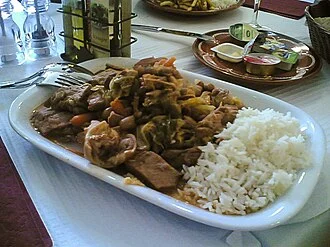
Sweet Toasts of Madeira
Torradas de Madeira
toh-RAH-dahs deh mah-DAY-rah
Toasted sweet bread, often flavored with cinnamon and sugar.
Open Sweet Toasts of Madeira recipe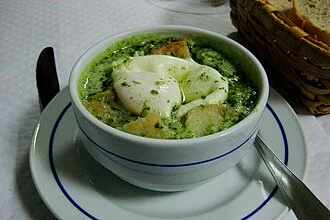
Soup
Vegetarian
Açorda à Alentejana
ah-SHOR-dah ah al-en-TEH-zha-na
A traditional bread soup with garlic, coriander, poached eggs, and olive oil.
Open Açorda à Alentejana recipe🥩
Snack
Meat
Beef Steak Sandwich
Prego no Pão
PRAY-goh noh POW(un)
A juicy beef sandwich served in a crusty roll.
Open Beef Steak Sandwich recipe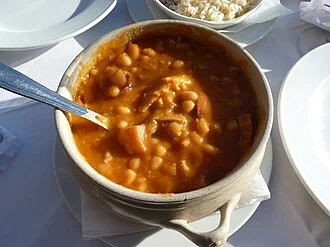
Main course
Meat
Tripas à Moda do Porto
TREE-pahs ah MAW-duh doo POR-too
A traditional tripe stew with beans and various kinds of meats.
Open Tripas à Moda do Porto recipe🌿
Dessert
Vegetarian
Cloisters' Almond Pie
Tarte de Amêndoa dos Claustros
TART-ee duh ah-MEN-dwat doosh KLOW-stroosh
Rich almond pie linked to Sintra's monastic history.
Open Cloisters' Almond Pie recipe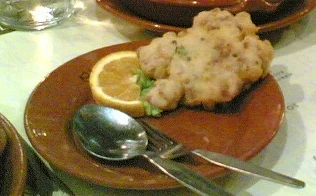
Snack
Fish & Seafood
Pataniscas de Bacalhau
Pah-tah-nees-kahs de Bah-kah-louw
· Codfish Fritters
Golden, crispy fritters made with cod.
Open Pataniscas de Bacalhau recipe🌿
Dessert
Vegetarian
Tíbia de Braga
Tee-bee-ah deh Brah-ghah
· Cream horn pastry
A delectable pastry filled with custard cream, rolled into a horn shape.
Open Tíbia de Braga recipe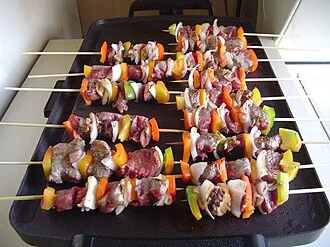
Main course
Meat
Espetada
eh-speh-TAH-dah
· Beef skewers with garlic
Grilled beef skewers seasoned with garlic and salt.
Open Espetada recipe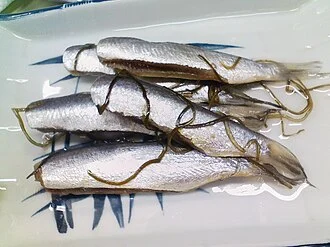
Main course
Fish & Seafood
Grilled Sardines
Sardinhas Assadas
sar-DEEN-yas ah-SAH-das
Fresh sardines grilled to perfection, often served with a sprinkle of sea salt.
Open Grilled Sardines recipe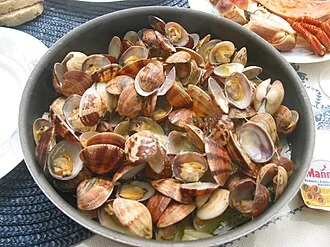
Starter
Fish & Seafood
Amêijoas à Bulhão Pato
Bulhão Pato Clams
ah-MAY-joosh ah bool-YOWN PAH-to
Clams cooked with garlic, white wine, and cilantro.
Open Amêijoas à Bulhão Pato recipe🌿
Dessert
Vegetarian
Donkey Thyme Cake
Bolo de Portalegre
BOH-loh deh por-ta-LAY-greh
A moist cake infused with the unique aroma of donkey thyme, native to the Algarve region.
Open Donkey Thyme Cake recipe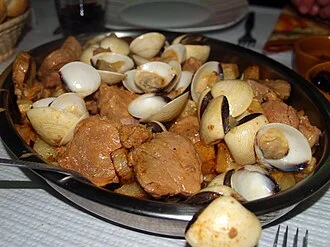
Main course
Meat
Portuguese Pork and Clams
Carne de Porco à Alentejana
KAHR-nuh deh PORH-koo ah ah-LEHN-cheh-JAH-nuh
A unique dish combining marinated pork and clams.
Open Portuguese Pork and Clams recipe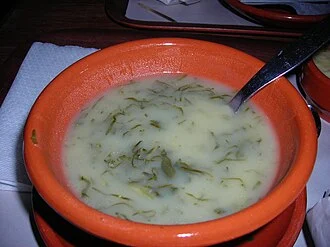
Soup
Meat
Caldo Verde
KAL-doh VEHR-day
A traditional green soup made with kale, potatoes, and chouriço.
Open Caldo Verde recipe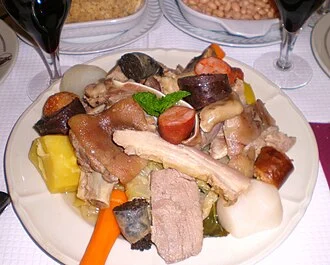
Main course
Meat
Beef Stew
Cozido à Portuguesa
Co-ZEE-doo ah Poor-too-GEH-za
A hearty stew with beef, pork, sausages, and vegetables simmered slowly.
Open Beef Stew recipe