Explore Guides
EUROPE / PORTUGAL
Triplandio Braga guide covers 3 travel guides across 12 areas, complete with hotel picks. Explore 11 self-guided walking tours in Braga with 20 POI, spanning 23.2 km in total. Get inspired by 5 local dishes, complete with recipes and our unique Food Flavour DNA graph.
Braga
City & Country Data Braga (Portugal)

Key travel data for Braga — local prices, safety, healthcare, local currency and essentials, curated by Triplandio.
🌍 Portugal
Safety
95
Health
83
Lifestyle
82
Infra
74
Rank
#19
Score
65
Tourists
4.2M/y
GDP/cap
$32.1k
Life Exp
82.4 yrs
Population
10.8M
Currency
EUR €
Language
Portuguese
Payments
Cards OK
Emergency
112
💰 Prices in Braga
Coffee
$1.69
Beer
$3.00
Lunch
$10.00
Groceries
$272.00/w
Taxi/km
$1.00
Transit
$1.55
Fuel
$1.55/l
Internet
$30.00/m
Salary
$1,532/m
Travel tipsBraga (Portugal)

Quick tips
- Drug use is not legal in Portugal — Critical
Portugal treats possession of small amounts as an administrative offence rather than a crime, but drugs, including cannabis, are still illegal. Smuggling or dealing brings long prison sentences and heavy fines.
- Wildfires are a real risk April–October — Critical
Wildfires can start anywhere in Portugal in the hot, dry months and spread fast. Starting a fire, even by accident, is illegal and can mean a fine or prison, so never light fires or barbecues near woodland, and call 112 if you see one.
- Red flag means stay out of the sea — Critical
People drown on Portuguese beaches every year. On lifeguarded beaches a red flag means you must not enter the water and a yellow flag means paddling only at the water's edge. Always follow lifeguard instructions.
- Albufeira fines bad behaviour on the spot — Caution
The Algarve resort of Albufeira has a public Code of Conduct banning inappropriate behaviour in public places, such as walking around town in just swimwear. On-the-spot fines run from 150 to 1,800 euros.
- Carry photo ID at all times — Good to know
Police in Portugal can ask for photo ID and may hold you at a police station until they confirm who you are. Carry your passport or national ID card, and always when driving.
- Do
- Say “obrigado” or “obrigada”
- Carry your passport or ID card
- Swim at lifeguarded beaches
- Pay in euros, not your currency
- Book June festival rooms early
- Don’t
- Buy drugs from street sellers
- Sit under crumbling cliffs
- Light fires in the countryside
- Assume people speak Spanish
- Wander Albufeira in swimwear
Critical
Prison or heavy penalty possible
Laws & fines
- Drink-driving limit is low — Critical
The legal blood-alcohol limit for drivers in Portugal is 0.5 g per litre, and lower for newly qualified drivers. Police run roadside checks, and penalties include heavy fines and losing your licence.
Health
- Watch your drinks in bars — Critical
Drink spiking, including with the sedative drug GHB (gamma-hydroxybutyrate), happens in nightlife areas. Buy your own drinks and keep them in sight; measures poured in Portuguese bars are often larger than you are used to.
Beaches & adventure
- Rip currents on Atlantic beaches — Critical
Portugal's Atlantic beaches have strong undertow. If a rip current pulls you out, swim parallel to the shore until you are free, then head back. Avoid swimming where a river meets the sea.
- Don't dive into unknown water — Critical
Hidden rocks and sudden shallows off Portuguese beaches and cliffs cause serious injuries every year. Check the depth before you jump, and never dive off rocks you don't know.
- Keep children within reach in pools — Critical
Children drown in hotel and villa pools in Portugal every year. Keep young children within arm's reach in and around the water, even when there is a lifeguard.
Caution
Fines, losses or injury possible
Laws & fines
- Fake drugs sold on the street — Caution
Men offering hashish or cocaine in central Lisbon and Porto usually sell crushed bay leaves or flour. Buying is still an offence, and arguing over a fake deal can turn nasty — just walk on.
- Gamble only in licensed casinos — Caution
Gambling in Portugal is legal only in government-licensed venues such as official casinos. Games of chance, even bingo, in unlicensed premises can lead to arrest, a fine or prison.
- Pay motorway tolls electronically — Caution
Several Portuguese motorways have electronic-only tolls with no booths. Rent a car with a toll transponder (Via Verde), or check the official toll payment portal afterwards so unpaid fees don't turn into fines.
- Obey cliff warning signs — Caution
Rock falls from eroding cliffs are a real hazard, especially on Algarve beaches. Don't sit or sunbathe under cliffs or cross fenced areas — the authorities can fine people who ignore warning signs.
Tipping & money
- Always pay in euros — Caution
When a card machine or ATM offers to charge you in your home currency, choose euros instead. The conversion offered on the spot (dynamic currency conversion) usually uses a poor rate.
Entry & visa
- No meat or dairy from outside the EU — Caution
You cannot bring meat, milk or products containing them into Portugal from outside the EU. Baby milk and special medical foods are exempt.
Beaches & adventure
- Hike Madeira and the Azores carefully — Caution
Trails on Madeira and the Azores are narrow, steep and slippery after rain. Pick routes that match your fitness, wear boots, check the official trail closure pages and tell your hotel where you're going.
- Nazaré waves are for watching — Caution
In winter, the Atlantic swell at Nazaré produces some of the biggest waves on Earth. Watch from the lighthouse, but keep back from the water's edge and the cliff edge.
Good to know
Rules and useful facts
Scams & safety
- Travel advisory: Level 1 of 4 — Good to know
Exercise Normal Precautions — the U.S. State Department's rating for Portugal.
- Crowds at Holy Week processions — Good to know
Braga's Holy Week (Semana Santa) processions draw very large crowds at night. Keep bags closed, agree a meeting point and watch children closely.
- Braga is a low-crime city — Good to know
Serious crime against visitors in Braga is rare. Take normal care with bags in busy cafés and on the main shopping streets.
Entry & visa
- Check your passport dates — Good to know
For Portugal and the Schengen area, your passport must have been issued less than 10 years before you arrive and be valid for at least 3 months after the day you plan to leave.
- 90 days in any 180-day period — Good to know
Many visitors, including UK and US citizens, can stay in the Schengen area without a visa for up to 90 days in any 180 days. Time in other Schengen countries counts, and overstaying can bring an entry ban.
- Biometric checks at the border — Good to know
The EU's Entry/Exit System (EES) records your fingerprints and photo when you enter and leave the Schengen area. It is free but can make queues longer, so allow extra time at the airport.
- Children need a travel letter — Good to know
Children aged 17 or under travelling to Portugal alone or with an adult who isn't their parent need a notarised letter of authorisation from a parent. Without it, entry can be refused.
Health
- Tap water is safe to drink — Good to know
Tap water across mainland Portugal, Madeira and the Azores is safe to drink. Refill a bottle instead of buying plastic ones.
- Call 112 in an emergency — Good to know
Dial 112 for an ambulance, police or fire service anywhere in Portugal. For non-urgent advice on the mainland, the national health service (SNS) helpline is +351 808 24 24 24; press 9 for English.
- Bring enough of your medicine — Good to know
Foreign prescriptions are not recognised in Portugal, and antibiotics are sold only with a local prescription. Keep medicine in its original labelled box, with a few days' supply in hand luggage.
- Get travel insurance, not just a card — Good to know
The UK Global Health Insurance Card (GHIC) and the European Health Insurance Card (EHIC) cover necessary state treatment only, not private clinics or flights home. Travel insurance fills the gaps.
- Summer heat can be extreme — Good to know
Inland Portugal, especially the Alentejo and the Douro valley, can pass 40°C in July and August. Drink plenty of water, avoid the midday sun and check heat warnings.
Local tips
Local know-how
Scams & safety
- Bom Jesus stairway is steep — Local tip
The baroque stairway at Bom Jesus do Monte has hundreds of steps. Take the funicular up if the climb is too much, and walk down with care when the stone is wet.
Getting around
- From Porto Airport (OPO) — Local tip
Braga has no airport. Direct shuttle buses run from Porto Airport to Braga in about 50 minutes, or take the metro into Porto and then a train.
- Train from Porto — Local tip
Trains from Porto's São Bento and Campanhã stations reach Braga in about an hour, and some fast trains from Lisbon also run to Braga.
- City buses to Bom Jesus — Local tip
Braga's city buses run from the centre to Bom Jesus do Monte, on the hillside east of the city. A taxi or ride-hailing app also works.
- Walk the historic centre — Local tip
Braga's old centre, cathedral and gardens are all close together and mostly pedestrianised, so you won't need transport once you arrive.
Customs
- Don't assume people speak Spanish — Local tip
Portuguese is a separate language, and opening in Spanish can come across as careless. A simple “olá” and “obrigado” in Portuguese, or English, gets a warmer welcome.
- Meals are eaten later — Local tip
Lunch in Portugal usually runs from about 12:30 to 15:00 and dinner from around 19:30. Many traditional restaurants close their kitchens between the two.
- Cover up in churches — Local tip
Portugal's churches are active places of worship. Cover your shoulders, avoid beachwear, keep your voice down and don't walk around during a service.
- Starters on the table cost extra — Local tip
Bread, olives, butter and cheese placed on your table when you sit down (the couvert) are not free. If you don't want them, say so or hand them back and they won't be charged.
Tipping & money
- Tipping in Portugal is modest — Local tip
Service is rarely added to bills in Portugal. Rounding up or leaving 5–10% for good table service is appreciated, and rounding up a taxi fare is normal, but nobody expects a big tip.
- Choose bank ATMs marked Multibanco — Local tip
Portuguese bank cash machines carry the Multibanco logo. Standalone machines from private operators in tourist areas often add high fees and push expensive currency conversion.
- Prices are fixed in shops — Local tip
Bargaining is not usual in Portuguese shops or restaurants. At flea markets, such as Lisbon's Feira da Ladra, a polite offer on second-hand goods is fine.
Say it locally
Men say “obrigado” and women say “obrigada” for thank you.
Through the year
Festival or season Public holiday (exact date)
- All Saints' Day
Mon 1 Nov 2027 · Public holiday
- Restoration of Independence
Tue 1 Dec 2026 · Public holiday
- Feast of the Immaculate Conception
Tue 8 Dec 2026 · Public holiday
- Christmas Day
Fri 25 Dec 2026 · Public holiday
- New Year's Day
Fri 1 Jan 2027 · Public holiday
- Carnival
Feb–Mar 2027 · Parades and parties across Portugal in the days before Lent; dates move each year.
- Carnival / Shrove Tuesday / Pancake Day
Tue 9 Feb 2027 · Public holiday
- Holy Week
Mar–Apr 2027 · Easter processions, biggest in Braga; some museums and shops close on Good Friday.
- Holy Week
Mar–Apr 2027 · Portugal's most famous Easter processions fill Braga's streets at night.
- Good Friday
Fri 26 Mar 2027 · Public holiday
- Easter Sunday
Sun 28 Mar 2027 · Public holiday
- Wildfire season
Apr–Oct 2027 · Higher wildfire risk from April to October, worst in hot, dry spells; roads and trails can close at short notice.
- Liberty Day
Sun 25 Apr 2027 · Public holiday
- Fátima pilgrimages
May 2027, Oct 2027 · Huge crowds gather at the Fátima sanctuary on 12–13 May and 12–13 October; accommodation fills up.
- Labor Day
Sat 1 May 2027 · Public holiday
- Corpus Christi
Thu 27 May 2027 · Public holiday
- Popular saints' festivals
Jun 2027 · Street parties with grilled sardines: Santo António in Lisbon (12–13 June) and São João in Porto (23–24 June). Book rooms early.
- São João festival
Jun 2027 · Braga celebrates St John on 23–24 June with street parties, music and fireworks.
- Portugal Day
Thu 10 Jun 2027 · Public holiday
- Peak summer
Jul–Aug 2027 · Hot and crowded, especially on the Algarve; prices peak and inland heat can be extreme.
- Assumption of Mary
Sun 15 Aug 2027 · Public holiday
- Republic Day
Tue 5 Oct 2027 · Public holiday
Sources: GOV.UK travel advice · U.S. State Dept · Google public holidays
Best time to visit Braga (Portugal)
Now (November) avg high: 17°C, wetter month, full season — expect crowds. Best months to walk: Jul & Jun.
Live Temp
…
~Day / Night Temp
17°C / 10°C
Sunrise / Sunset
8:14 / 18:21
Local time
22:51
Best Months  Jul & Jun
J
Jan
F
Feb
M
Mar
A
Apr
M
May
J
Jun
J
Jul
A
Aug
S
Sep
O
Oct
N
Nov
 D
Dec
J
Jul
A
Aug
S
Sep
O
Oct
N
Nov
D
Dec
Check Braga hotels
Temperature
Average daytime high, month by month. Zero line marks freezing point.
Crowds
How busy it gets — traveller interest by month.
Rainfall
Rainy days to expect each month.
Sunshine
Hours of sun per day, by month.
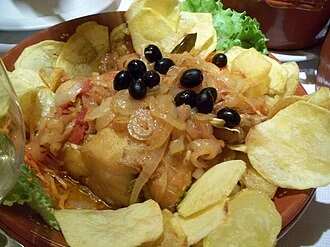
A traditional codfish dish prepared with sautéed onions and peppers. Small pastries filled with seasoned beef and pork mix, baked to perfection. A rustic porridge cooked with meats, blood, and spices, typically served in the Minho region. A hearty pork stew incorporating local spices served with potatoes and chestnuts. A delectable pastry filled with custard cream, rolled into a horn shape.
Traditional Local Food
Braga (Portugal)
Main course
Fish & Seafood
Bacalhau à Braga
Bah-kah-lau ah Brah-gah
· Braga-style codfish
🥩
Snack
Meat
Frigideiras de Braga
Free-zhee-deh-rahs deh Brah-gah
· Meat pies in pastry
Main course
Meat
Papas de Sarrabulho
Pah-pahs deh Sah-rah-bohl-yoo
· Pork and blood porridge
🥩
Main course
Meat
Rojões à Moda de Braga
Roh-zhones ah Moh-dah deh Brah-gah
· Pork stew with potatoes
🌿
Dessert
Vegetarian
Tíbia de Braga
Tee-bee-ah deh Brah-ghah
· Cream horn pastry