

Explore Guides
SOUTH AMERICA
Brazil
Triplandio Brazil guide covers 16 travel guides with 3 cities across 40 areas, complete with hotel picks. Explore 62 self-guided walking tours in Brazil with 172 POI, spanning 217.8 km in total. Get inspired by 30 local dishes, complete with recipes and our unique Food Flavour DNA graph.
Country Data Brazil

Key travel data for Brazil — safety, healthcare, local currency and essentials, curated by Triplandio.
🌍 Brazil
Safety
16
Health
49
Lifestyle
56
Infra
44
Rank
#70
Score
35
Tourists
6.4M/y
GDP/cap
$10.7k
Life Exp
76.0 yrs
Population
212.8M
Currency
BRL R$
Language
Portuguese
Payments
Cards OK
Emergency
190
Travel tipsBrazil

Quick tips
- Never enter a favela, even on a tour — Critical
Several governments, including the UK, advise avoiding all favelas (informal hillside neighbourhoods), including tours, hostels and bars inside them. Tourists have been shot after entering one by mistake, often by following GPS directions.
- Hand over valuables if robbed — Critical
Armed robberies are common in Brazilian cities, and attackers may be on drugs. If threatened, hand over your phone and money without resisting.
- Spirits can contain deadly methanol — Critical
People in Brazil have died after drinking spirits contaminated with methanol, which can't be detected by taste or smell. Take care with gin, vodka and whisky, and get urgent help if you feel ill after drinking.
- Vapes are illegal in Brazil — Caution
All e-cigarettes and vaping devices are banned in Brazil, including refills, parts and accessories. Customs officers can confiscate them from your hand luggage or checked bags.
- Make sure your passport is stamped — Good to know
Check that the border officer stamps your passport when you arrive in Brazil. Without a stamp you may be fined when you leave.
- Fly between regions in Brazil — Local tip
Brazil is larger than the contiguous United States and has almost no long-distance passenger trains. Plan to fly between regions, such as Rio to the Amazon or the north-east.
- Do
- Carry a copy of your passport
- Keep your phone out of sight
- Check the card machine amount
- Swim where lifeguards are on duty
- Get your passport stamped
- Don’t
- Bring a vape
- Enter a favela or follow GPS into one
- Resist a robber
- Take valuables to the beach
- Make the “OK” hand sign
Critical
Prison or heavy penalty possible
Getting between cities
- Book taxis and Uber only through apps — Critical
Robberies and express kidnappings (short abductions to empty your bank account) have happened in unlicensed taxis and fake app cars in Brazil. Don't hail cabs in the street; use airport taxi booths or the official app and check the plate.
Laws & fines
- Drug penalties are severe — Critical
Bringing any quantity of drugs into or out of Brazil is illegal and means long prison sentences. Airport scanners in Brazil detect drugs, including cannabis, in transit passengers' bags too.
- Never carry a package for someone — Critical
Fraudsters offer money to travel to Brazil and carry items home; these usually contain drugs. Anyone caught is detained for drug trafficking, whatever their story.
- Drink-driving can mean prison — Critical
Brazil's “Lei Seca” (dry law) allows effectively no alcohol for drivers, and police set up frequent checkpoints. Penalties range from fines and a 12-month driving ban to up to 3 years in prison.
- Sex with anyone under 18 is a crime — Critical
All sexual activity with people under 18 is illegal for foreigners in Brazil, whatever the local age of consent. Your home country may also prosecute you.
Beaches & adventure
- Respect shark warning signs in Recife — Critical
Shark attacks have killed swimmers on beaches around Recife in north-east Brazil, sometimes in only waist-deep water. Stay out where warning signs are posted and ask lifeguards if unsure.
- Avoid remote western Amazon rivers — Critical
Several governments, including the UK, advise against all but essential travel on several rivers in western Amazonas state, including the Japurá, the Itaquaí and the Rio Negro north or west of Barcelos. Amazon lodge trips near Manaus are not affected.
- Driving: lock doors, avoid night stops — Critical
Carjackings happen in Brazil at traffic lights, in tunnels and on major roads. Keep doors locked and windows closed, and don't stop at the roadside outside cities at night.
- Flash floods and landslides after heavy rain — Critical
Heavy rain in Brazil causes flash floods and deadly landslides, especially where mountains meet the coast, as around Rio. Follow official alerts, avoid road travel in heavy rain and never cross fast-flowing water.
Caution
Fines, losses or injury possible
Getting between cities
- Road crashes are common — Caution
Brazil has a high road accident rate, poor driving standards and frequent bus and coach crashes. Rural roads off the main highways are often in bad condition. Drive in daylight and avoid cycling on roads.
Tipping & money
- Check the card machine before you pay — Caution
Card cloning and payment-machine scams are common in Brazil, especially at beach kiosks and busy tourist spots. Keep your card in sight and check the amount on screen before you pay.
- Use cash machines inside banks — Caution
Cash machines in Brazil can be fitted with card-cloning devices. Use machines inside banks or shopping centres in daylight, and avoid any that look tampered with.
- Agree prices with beach vendors — Caution
Beach vendors in Brazil have overcharged tourists. Ask the price of drinks, chairs and umbrellas before you order, and check the total before paying.
Entry & visa
- Overstaying means a daily fine — Caution
If you stay in Brazil beyond your permitted time, you are fined for every extra day. To extend a tourist stay, contact the Federal Police before it runs out.
- Declare cash of US$10,000 or more — Caution
If you bring cash or travellers' cheques worth 10,000 US dollars or more into Brazil, you must declare it online.
Beaches & adventure
- Leave valuables away from the beach — Caution
Thefts are common on Brazilian city beaches, including mass robberies (arrastões) where groups run through grabbing belongings. Take only what you need, and don't go on city beaches after dark.
- Strong currents at many beaches — Caution
Many Brazilian ocean beaches have powerful waves and rip currents. Swim where lifeguards are on duty and follow their flags and whistles.
- Forest fire season, May to September — Caution
Forest fires are common in Brazil in the dry season, especially in July and August, and spread unpredictably. Check local alerts before travelling to rural or forest areas and follow official advice.
Good to know
Rules and useful facts
Getting between cities
- Driving rules and permits — Good to know
Traffic in Brazil drives on the right. UK photocard licences are accepted, while UK paper licences need the 1968 International Driving Permit (IDP), bought before travel; others should check their rules. Keep doors locked against carjacking.
Regions & seasons
- Rio and the south-east — Good to know
Rio de Janeiro and São Paulo are hot and humid from December to March with afternoon storms. April to October is cooler and drier, good for sightseeing.
- North-east beaches most of the year — Good to know
Salvador, Recife and the beaches of the north-east are warm all year, but their main rains fall from about April to July.
Laws & fines
- Carry a copy of your passport — Good to know
Always carry a copy of your passport and another photo ID if you have one in Brazil. Leave the original passport in your hotel safe.
- Stay away from protests — Good to know
Protests and strikes are regular in Brazilian cities, and police use rubber bullets and tear gas. Leave the area if a demonstration starts.
- Same-sex couples have equal rights — Good to know
Same-sex relationships and marriage are legal in Brazil, and São Paulo and Rio hold huge, peaceful Pride events. Attitudes are more conservative outside big cities, and harassment and violence are reported.
Tipping & money
- Pink-stained notes may be fake — Good to know
If a Brazilian cash machine gives you notes with pink marks, go to the bank or police at once to swap them; they may be marked as damaged or counterfeit.
Entry & visa
- Passport valid for 6 months — Good to know
Your passport must be valid for at least 6 months after the date you arrive in Brazil.
- Visa rules depend on your passport — Good to know
British and many other European visitors can stay in Brazil for up to 90 days without a visa. US, Canadian and Australian citizens need an e-visa (applied for online) — check your own nationality before booking.
- Children travelling without both parents — Good to know
Under-18s travelling in Brazil without one or both parents should carry parental authorisation and the original or notarised copy of their birth certificate.
Health
- Call 192 for an ambulance — Good to know
Dial 192 in Brazil for an ambulance and 190 for the police. Contact your insurer quickly if you are taken to hospital.
- Yellow fever vaccination — Good to know
Yellow fever is a risk in many parts of Brazil. Check vaccine advice at least 8 weeks before your trip — most visitors to rural and forest areas are advised to have the jab.
- Mosquito-borne diseases — Good to know
Dengue, chikungunya and Oropouche fever are spread by insects in Brazil. Use repellent day and night, cover up and choose rooms with screens or air conditioning.
- Strong sun all year — Good to know
UV levels in Brazil are high even on cloudy days. Use high-factor sunscreen, a hat and shade in the middle of the day, and drink plenty of water.
- Private hospitals need proof of payment — Good to know
Public hospitals in Brazil treat foreign visitors in emergencies but are often overcrowded. Private hospitals won't admit you without proof of insurance or funds, so travel insurance is essential.
- Bring your own medicines — Good to know
Some medicines are hard to find in Brazil and counterfeit drugs circulate. Bring enough for your whole trip, with a prescription or doctor's letter.
Local tips
Local know-how
Getting between cities
- Domestic flights connect everything — Local tip
Airlines such as LATAM (South America’s biggest airline group), Gol and Azul fly between Brazil's cities. São Paulo and Brasília are the main hubs, so many routes connect there.
- Long-distance buses are comfortable — Local tip
Buses from each city's main bus station (rodoviária) reach almost everywhere in Brazil, with reclining seats on overnight routes. Keep valuables on you, not in the hold.
Regions & seasons
- The Amazon: high or low water — Local tip
Around Manaus, rivers are highest around May–June, when boats reach flooded forest, and lowest around October–November, when trails and beaches appear.
- The south gets cold in winter — Local tip
Southern Brazil, including Curitiba and Porto Alegre, can be chilly from June to August. Pack layers if you travel south in winter.
Customs
- Brazilians speak Portuguese, not Spanish — Local tip
Portuguese is Brazil's language. A few words of Portuguese are warmly received; opening in Spanish can feel like you've mixed up countries.
- Avoid the “OK” hand sign — Local tip
The thumb-and-finger circle meaning “OK” is an obscene gesture in Brazil. Use a thumbs-up instead, which Brazilians use all the time.
- Greetings are warm — Local tip
Brazilians greet friends with a hug or kisses on the cheek — one in some cities, two in others. A handshake is fine when meeting someone formally.
- Time is relaxed socially — Local tip
Arriving 30 minutes late to a party in Brazil is normal. For tours, flights and business meetings, be on time.
Tipping & money
- 10% service is usually on the bill — Local tip
Most Brazilian restaurants add a 10% service charge (serviço) to the bill. It's optional, and you don't need to tip on top unless service was exceptional.
Our Brazil city guides
Take only what you need to the beach and keep your phone away on the street.
A city built for cars — use Uber or 99 between the spread-out sights.
Confins airport is about 40 km out; allow an hour to reach the city.
Say it locally
Brazilians are informal and warm: a smile and “tudo bem?” (all good?) go a long way.
Through the year
Festival or season Public holiday (exact date)
- All Souls' Day
Tue 2 Nov 2027 · Public holiday
- Republic Proclamation Day
Sun 15 Nov 2026 · Public holiday
- Black Awareness Day
Fri 20 Nov 2026 · Public holiday
- Summer high season
Dec 2026–Feb 2027 · Brazilian school holidays and summer heat fill beaches and push up prices, with afternoon storms in Rio and São Paulo.
- Christmas Eve (from 2pm)
Thu 24 Dec 2026 · Public holiday
- Christmas Day
Fri 25 Dec 2026 · Public holiday
- New Year's Eve (from 2pm)
Thu 31 Dec 2026 · Public holiday
- Amazon rainy season
Jan–May 2027 · Heavy rain and high rivers around Manaus; forest trails flood but boat access improves.
- New Year's Day
Fri 1 Jan 2027 · Public holiday
- Carnival
Feb–Mar 2027 · The biggest party of the year, with parades in Rio, Salvador, Recife and Olinda; prices soar, many businesses close and pickpockets target crowds. Dates move with Easter.
- Carnival Monday
Mon 8 Feb 2027 · Public holiday
- Carnival Tuesday
Tue 9 Feb 2027 · Public holiday
- Carnival end (until 2pm)
Wed 10 Feb 2027 · Public holiday
- Good Friday
Fri 26 Mar 2027 · Public holiday
- North-east coast rains
Apr–Jul 2027 · Salvador, Recife and Fortaleza get most of their rain in these months; the rest of the year is drier.
- Tiradentes Day
Wed 21 Apr 2027 · Public holiday
- Labor Day
Sat 1 May 2027 · Public holiday
- Corpus Christi
Thu 27 May 2027 · Public holiday
- Festas Juninas
Jun 2027 · June festivals with bonfires, dancing and food, biggest in the north-east around Campina Grande and Caruaru.
- Pantanal dry season
Jul–Oct 2027 · Best months for wildlife viewing in the Pantanal wetlands, as animals gather at the remaining water.
- Independence Day
Tue 7 Sep 2027 · Public holiday
- Our Lady of Aparecida / Children's Day
Tue 12 Oct 2027 · Public holiday
- Public Service
Thu 28 Oct 2027 · Public holiday
Sources: GOV.UK travel advice · Google public holidays
Traditional Local Food Brazil
Main course
Vegetarian
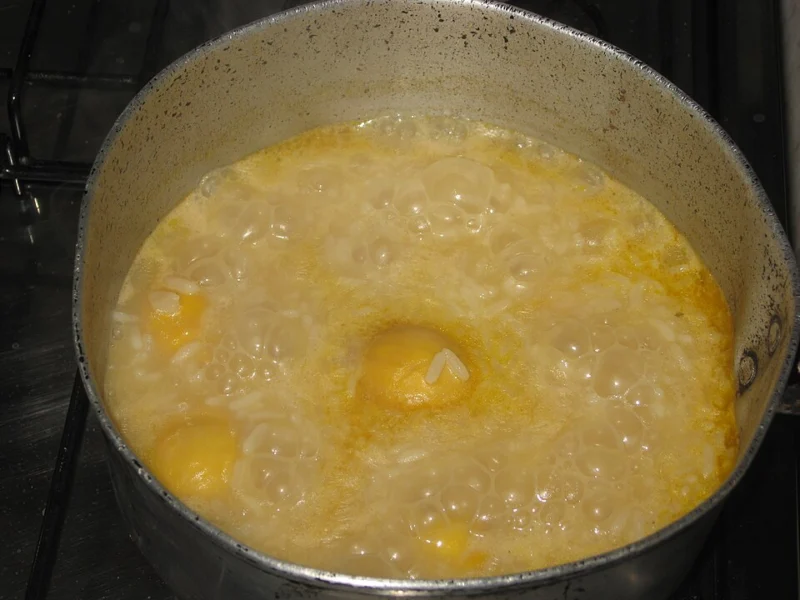
Arroz de Pequi
Arroz com Pequi
ah-roz deh peh-kee
· Rice with Pequi Fruit
A fragrant rice dish featuring the unique pequi fruit.
Open Arroz de Pequi recipe
Snack
Vegetarian
Açai Bowl
Açaí na Tigela
ah-sah-EE nah tee-GEH-lah
Frozen açaí pulp blended with fruits and topped with granola.
Open Açai Bowl recipe
Snack
Vegetarian
Pão de Queijo
Pown-deh-KAY-zhoo
· Cheese Bread
Cheese-filled dough balls made from cassava flour.
Open Pão de Queijo recipe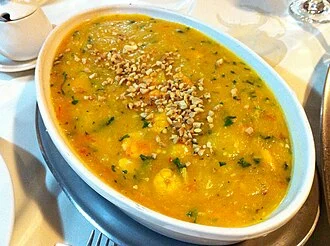
Main course
Fish & Seafood
Brazilian Shrimp Stew
Bobó de Camarão
boh-BOH deh kah-mah-ROWN
A creamy shrimp stew made with cassava, coconut milk, and dendê oil.
Open Brazilian Shrimp Stew recipe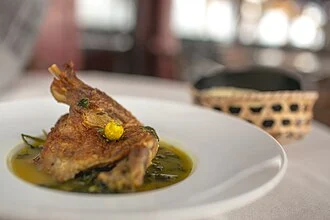
Main course
Meat
Duck with Tucupi
Pato no Tucupi
PAH-too noo too-KOO-pee
Duck cooked with tucupi sauce and jambú.
Open Duck with Tucupi recipe🥩
Soup
Meat
Black Bean Soup
Caldinho de Feijão
keow-DJEE-no deh fay-ZHAO
A comforting and nutritious black bean soup.
Open Black Bean Soup recipe
Drink
Vegan
Caipirinha
kai-pee-REE-nya
Classic Brazilian cocktail with cachaça, lime, and sugar.
Open Caipirinha recipe
Main course
Fish & Seafood
Bacalhau à Brás
bah-kal-YOW ah Brahs
A flavorful salt cod dish with onions, eggs, and potatoes.
Open Bacalhau à Brás recipe🥩
Side dish
Meat
Farofa de Carnes
fah-roh-fah deh car-ness
· Toasted Manioc Flour with Meat
A savory side dish of toasted manioc flour mixed with meat.
Open Farofa de Carnes recipe

Snack
Meat
Pastel
pahs-TELL
Crispy deep-fried turnover filled with savory ingredients.
Open Pastel recipe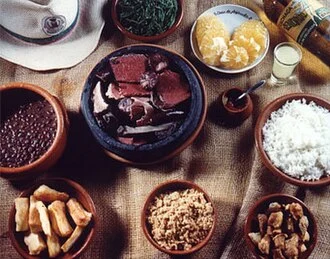
Street food
Fish & Seafood
Acarajé
ah-kah-rah-ZHEH
Deep-fried bean fritters filled with vatapá and shrimp.
Open Acarajé recipe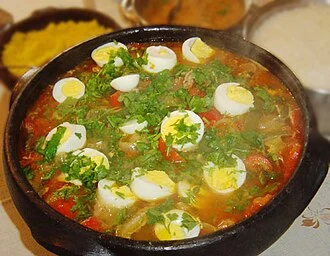
Main course
Fish & Seafood
Moqueca
moh-KEH-kah
A Brazilian seafood stew with fish, coconut milk, and palm oil.
Open Moqueca recipe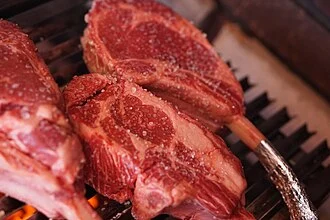
Main course
Meat
Grilled Steak with Chimichurri
Carne de Churrasco
KAHR-neh deh shoo-RAH-skoo
Grilled steak with a flavorful chimichurri sauce.
Open Grilled Steak with Chimichurri recipe
Main course
Meat
Feijão Tropeiro
Fay-ZHAW Troh-PAY-roh
· Bean and Sausage Stir
A hearty blend of beans, sausage, and greens, often served as a main course.
Open Feijão Tropeiro recipe