

Explore Guides
OCEANIA
Solomon Islands
Triplandio Solomon Islands guide covers 10 travel guides with 3 cities across 40 areas, complete with hotel picks. Explore 25 self-guided walking tours in Solomon Islands with 33 POI, spanning 81.1 km in total. Get inspired by 16 local dishes, complete with recipes and our unique Food Flavour DNA graph.
Country Data Solomon Islands

Key travel data for Solomon Islands — safety, healthcare, local currency and essentials, curated by Triplandio.
🌍 Solomon Islands
Tourists
4.4K/y
GDP/cap
$2.1k
Life Exp
70.7 yrs
Population
838.6K
Payments
Mixed
Emergency
112
Travel tipsSolomon Islands

Quick tips
- Swearing is a criminal offence — Critical
Swearing at someone is illegal in the Solomon Islands. It can lead to a large compensation claim from the person or their family, or even a prison sentence, so keep your temper in check.
- Crocodiles and sharks in coastal waters — Critical
Saltwater crocodiles have been seen off beaches near Honiara, and bull, tiger and hammerhead sharks live in coastal waters. Ask locals before swimming anywhere unfamiliar, including rivers and lakes.
- Unexploded WWII bombs remain — Critical
Unexploded weapons from the Second World War lie around Hell's Point near Honiara, the New Georgia islands, Tulagi and the Russell Islands. Never touch old munitions and take local advice before exploring.
- Many beaches and trails charge a kastom fee — Good to know
Almost all land in the Solomon Islands belongs to local clans. On many beaches around Honiara and on hiking trails you pay a small fee (kastom) to the landowner — ask locally first and pay it.
- ATMs only in four towns — Good to know
Cash machines exist only in Honiara, Gizo, Munda and Auki, and only major hotels and restaurants in Honiara take international cards. Carry enough Solomon Islands dollars for rural trips.
- Plan island hops around flights and boats — Good to know
Most visitors fly into Honiara on Guadalcanal, then continue by domestic flight or boat to Western Province or Malaita. Schedules are infrequent and change at short notice, so leave spare days.
- Do
- Ask before crossing village land
- Pay kastom fees when asked
- Carry cash outside Honiara
- Take malaria precautions
- Bring a lifejacket for boat trips
- Don’t
- Swear at anyone
- Swim where locals say crocodiles live
- Touch old WWII munitions
- Wear swimwear away from the beach
- Walk around Honiara alone at night
Critical
Prison or heavy penalty possible
Laws & fines
- Drug laws mean prison — Critical
Possessing, selling or using any illegal drug in the Solomon Islands can lead to a prison sentence.
- Same-sex relations are illegal — Critical
Same-sex sexual activity is illegal in the Solomon Islands and can mean prison. Public displays of affection by any couple are likely to cause offence.
Health
- Malaria is a real risk — Critical
Malaria, dengue and Zika are all present in the Solomon Islands. Ask a travel clinic about antimalarial tablets at least 8 weeks before you go, and use repellent day and night.
- Hospitals are very basic — Critical
The National Referral Hospital in Honiara often runs out of blood, painkillers and basic antibiotics. Bring a medical kit and insurance that covers evacuation.
- No working decompression chamber — Critical
The only hyperbaric (decompression) chamber in the Solomon Islands, in Honiara, is out of service after earthquake damage. Dive conservatively and ask your dive centre about evacuation plans.
Beaches & adventure
- Choose a licensed dive operator — Critical
Divers have died in the Solomon Islands where basic safety measures were missing. Use a reputable, fully licensed company with well-kept equipment.
- Earthquakes and tsunamis — Critical
The Solomon Islands lie on the Pacific Ring of Fire. After strong shaking near the coast, move to high ground; tsunami warnings are issued by radio.
Caution
Fines, losses or injury possible
Getting between cities
- Ferries and motor canoes — Caution
Passenger ferries link Honiara with Malaita and Western Province; remote islands are reached by small motorised canoes. Check the boat isn't overloaded and has safety equipment.
- Few roads, poor conditions — Caution
Roads exist mainly on Guadalcanal and Malaita and are potholed and unlit, with people and animals on them. Avoid driving at night.
Laws & fines
- Stay at the scene of a road accident — Caution
If you are in a road accident you must stay at the scene until police arrive. If it isn't safe to wait, drive to the nearest police station.
- Avoid political protests — Caution
Demonstrations in Honiara during Parliament sittings and elections can turn violent quickly, and security lockdowns are announced at short notice. Stay away and follow local media.
- Declare restricted goods — Caution
Solomon Islands customs rules are strict. Declare any food, plant or animal products and anything else that may be restricted or dutiable when you arrive.
Beaches & adventure
- Rip currents on reefs and estuaries — Caution
Dangerous rip currents run along reefs and river mouths. Follow warning signs and red flags; where there are none, ask local people before swimming.
- Bring your own lifejacket — Caution
Ferries and the small motorised canoes used between islands often lack safety gear. Bring a lifejacket and don't board an overloaded boat.
Good to know
Rules and useful facts
Getting between cities
- Driving yourself — Good to know
Traffic drives on the left. Visitors from the UK can drive on their licence for up to 4 months; other nationalities should check whether they need an International Driving Permit (IDP). Watch for doors opening as passengers spit betel nut.
Regions & seasons
- Malaita: village life — Good to know
Malaita, reached from Honiara via Auki, is known for traditional villages and customs. Check local advice before travelling and always ask before entering land.
Laws & fines
- Respect tabu sites — Good to know
Some places in the Solomon Islands are tabu (sacred or restricted), for example open only to men. Ask your guide or hotel before entering shrines, caves or burial sites.
Tipping & money
- Cash for everything outside Honiara — Good to know
Outside the few big hotels in Honiara, pay in Solomon Islands dollars (SBD) cash. Have more than one way to get money, as ATMs can run out or fail.
Entry & visa
- Travel advisory: Level 2 of 4 — Good to know
Exercise Increased Caution — the U.S. State Department's rating for Solomon Islands.
- Passport: 6 months, 2 blank pages — Good to know
Your passport must be valid for at least 6 months after you arrive in the Solomon Islands and have at least 2 blank pages for stamps.
- Visitor visa on arrival — Good to know
Many visitors, including British citizens, get a visitor visa on arrival for up to 30 days. Rules depend on your passport, so check with Solomon Islands Immigration first.
- Yellow fever certificate — Good to know
You need a yellow fever vaccination certificate if you arrive from a country with a risk of yellow fever transmission.
Health
- Drink bottled water — Good to know
Drink bottled water and wash your hands often; viral stomach infections are common in the Solomon Islands.
- Treatment in Australia needs a visa — Good to know
Serious cases are often flown to Australia, which requires a medical visa. Make sure your insurance covers medical evacuation and repatriation.
- Emergency number — Good to know
In the Solomon Islands call 111 for an ambulance. Police response can be slow, so tell your hotel too.
Beaches & adventure
- Coral cuts get infected — Good to know
Coral cuts and scrapes easily become infected in the tropics. Wear reef shoes and clean any cut straight away.
- Wary of village dogs — Good to know
Local dogs can be aggressive. Keep your distance, especially when walking or running alone.
Local tips
Local know-how
Getting between cities
- Domestic flights to the provinces — Local tip
Solomon Airlines flies small planes from Honiara to Munda, Gizo, Auki and other islands. Flights are infrequent and luggage limits are low, so book early and confirm the day before.
Regions & seasons
- Guadalcanal: history and the capital — Local tip
Guadalcanal is home to Honiara and many Second World War battle sites. Check local advice before visiting rural areas of the island.
- Western Province: diving — Local tip
Munda, Gizo and the Marovo Lagoon are the main areas for diving, wrecks and island lodges.
Customs
- Cover shoulders and knees — Local tip
Dress conservatively in the Solomon Islands, especially as a woman: cover shoulders and knees in towns and villages. Swimwear is for the beach only.
- Sunday is for church — Local tip
Most Solomon Islanders are Christian and Sunday is a day of worship and rest. Expect closed shops, and keep noise and beachwear low-key near villages.
- Ask before photographing people — Local tip
Ask before photographing people, villages or ceremonies, and before entering village land. Some communities expect a small fee.
- Betel nut is everywhere — Local tip
Chewing betel nut is part of daily life in the Solomon Islands, and the red spit marks you see are from it. Accept or decline an offer politely.
Tipping & money
- No tipping culture — Local tip
Tipping isn't part of Solomon Islands custom and is never expected. A thank-you or a small gift to a village guide is appreciated.
- Market prices are fixed — Local tip
Haggling isn't customary at Honiara Central Market or village stalls; the price you're told is the price. Bring small notes.
Our Solomon Islands city guides
Use taxis at night and take care around the central market and the airport road.
A base for wreck diving — but dive carefully, as there is no working decompression chamber.
The gateway to Malaita; bring cash, as Auki's ATM is the only one on the island.
Say it locally
English is the official language and is used in hotels, but a few words of Pijin, the everyday language, are warmly received.
Through the year
Festival or season Public holiday (exact date)
- Cyclone season
Nov 2026–May 2027 · Tropical cyclones are possible from November to May, bringing floods that wash away bridges and cancel boats.
- Christmas travel
Dec 2026 · Many Solomon Islanders go home to their islands for Christmas; book domestic flights and ferries early.
- Christmas Day
Fri 25 Dec 2026 · Public holiday
- National Day of Thanksgiving
Sat 26 Dec 2026 · Public holiday
- Wettest months
Jan–Mar 2027 · The heaviest rain usually falls in the first months of the year; roads on Guadalcanal and Malaita can become impassable.
- New Year's Day
Fri 1 Jan 2027 · Public holiday
- Good Friday
Fri 26 Mar 2027 · Public holiday
- Holy Saturday
Sat 27 Mar 2027 · Public holiday
- Easter Monday
Mon 29 Mar 2027 · Public holiday
- Whit Monday
Mon 17 May 2027 · Public holiday
- Drier season
Jun–Oct 2027 · Cooler, drier weather with generally calmer seas — the most popular time for diving and island hopping.
- Independence Day
Wed 7 Jul 2027 · Public holiday
Sources: GOV.UK travel advice · U.S. State Dept · Google public holidays
Traditional Local Food Solomon Islands
🌱
Starter
Vegan
Kakala Salad
Kah-kah-lah Sah-lahd
· Banana blossom salad
Fresh banana blossom salad mixed with local greens and a tangy dressing.
Open Kakala Salad recipe🌿
Starter
Vegetarian
Kukum Herb Salad
Salata Kukum
Sa-la-ta Ku-kum
A fresh salad with herbs and local vegetables.
Open Kukum Herb Salad recipe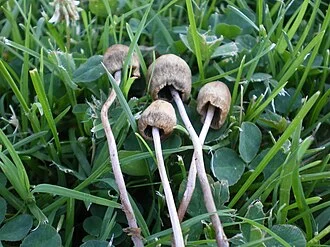
Soup
Vegan
Pana Lolo
pa-na lo-lo
· Yam and coconut soup
A creamy soup made from yams and coconut.
Open Pana Lolo recipe🥩
Main course
Meat
Mud Crab Curry
Kokoko Goa
koh-KOH-koh GOH-ah
· Spicy mud crab in coconut
A rich coconut curry featuring local mud crabs spiced with native peppers.
Open Mud Crab Curry recipe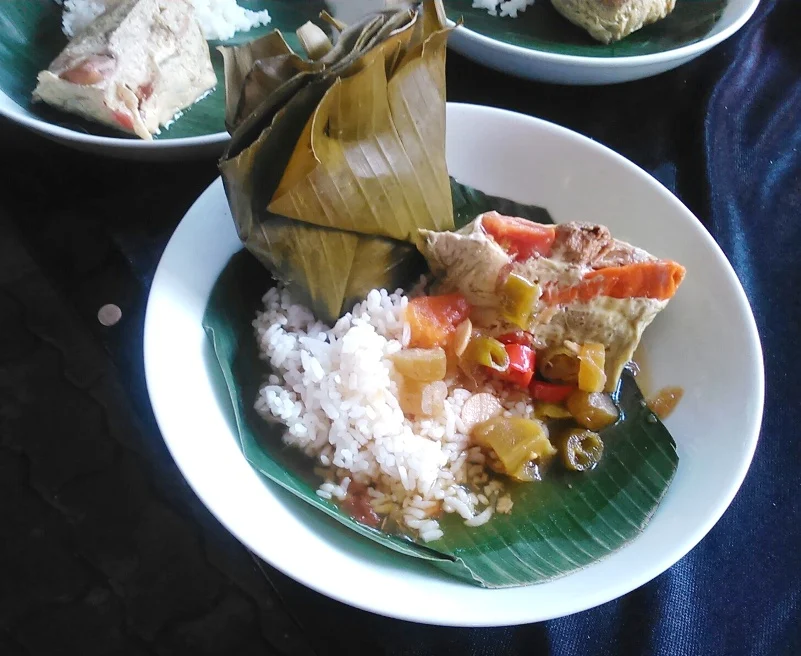
Main course
Meat
Banana Leaf-Wrapped Chicken
Nabuleka moa
Na-bu-le-ka mo-a
Chicken wrapped and cooked in banana leaves.
Open Banana Leaf-Wrapped Chicken recipe🐟
Main course
Fish & Seafood
Bona Kato
Boh-nuh Kah-toh
· Leaf-wrapped fish dish
Traditional dish of fish wrapped in banana leaves and cooked in coconut milk.
Open Bona Kato recipe🌿
Dessert
Vegetarian
Rukut Banana
Roo-koot Bah-nah-nah
· Baked banana in coconut
Whole bananas baked in a coconut and honey glaze, served warm.
Open Rukut Banana recipe🌿
Snack
Vegetarian
Panikeke Laplap
Pah-nee-keh-keh Lah-plahp
· Fried taro cakes
Crispy fried taro and sweet potato cakes, a local street snack.
Open Panikeke Laplap recipe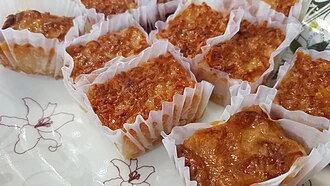
Dessert
Vegetarian
Cassava Pudding
Voo-rah-veh-nee Rone
· Steamed cassava and coconut cake
A dense pudding made with cassava and coconut milk.
Open Cassava Pudding recipe🌱
Starter
Vegan
Moliwa Salad
mo-li-wa sa-lad
A vibrant salad with local greens and root vegetables.
Open Moliwa Salad recipe🌿
Dessert
Vegetarian
Ulu Masi
Oo-loo Mah-see
· Taro and coconut pudding
A sweet pudding made from taro, wrapped and steamed in coconut leaves.
Open Ulu Masi recipe🌱
Snack
Vegan
Laula Fried Bananas
lou-la fried ba-na-nas
· Fried Banana Snack
Golden fried bananas served as a sweet snack.
Open Laula Fried Bananas recipe🥩
Snack
Meat
Smoked Beetle Larvae
Kabari raetem
Ka-ba-ri ra-e-tem
Grilled beetle larvae with a smoky flavor.
Open Smoked Beetle Larvae recipe🐟
Main course
Fish & Seafood
Kuma Tuna
koo-ma too-na
· Tuna cooked in coconut
Fresh tuna gently cooked with coconut cream.
Open Kuma Tuna recipe🌱
Side dish
Vegan
Coconut-Spiced Yam Mash
Tarito Yakara
Ta-ri-to Ya-ka-ra
Mashed yam flavored with coconut and spices.
Open Coconut-Spiced Yam Mash recipe