

Explore Guides
EUROPE
Serbia
Triplandio Serbia guide covers 7 travel guides with 2 cities across 28 areas, complete with hotel picks. Explore 26 self-guided walking tours in Serbia with 46 POI, spanning 86.9 km in total. Get inspired by 9 local dishes, complete with recipes and our unique Food Flavour DNA graph.
Country Data Serbia

Key travel data for Serbia — safety, healthcare, local currency and essentials, curated by Triplandio.
🌍 Serbia
Safety
55
Health
51
Lifestyle
63
Infra
48
Rank
#54
Score
45
GDP/cap
$15.3k
Life Exp
76.0 yrs
Population
6.5M
Payments
Cards OK
Emergency
112
Travel tipsSerbia

Quick tips
- Make sure your passport is stamped — Critical
Check that the border guard stamps your passport when you enter Serbia. Trying to leave without an entry stamp can lead to charges of illegal immigration, a heavy fine and even prison.
- Register with the police within 24 hours — Caution
Every visitor must be registered with the local police within 24 hours of arriving in Serbia. Hotels do it automatically; in a private flat, check your host does it, or you risk a fine and a court appearance.
- No photos of police or military — Caution
Photographing military or police buildings, staff or vehicles anywhere in Serbia can lead to arrest. Put the camera away near barracks, checkpoints and police stations.
- Kosovo is not an entry point to Serbia — Good to know
Serbia doesn't treat its crossings with Kosovo as international borders. To travel from Kosovo into Serbia you need a Serbian entry stamp from an airport or another land border, or you'll likely be turned back.
- Always carry your passport — Good to know
Serbian law requires visitors to carry their passport at all times for identification. Keep a copy separately in case it is lost or stolen.
- Cities in the north, mountains in the south — Local tip
Northern Serbia (Vojvodina) around Novi Sad is flat farmland along the Danube, while the south and west rise into mountains such as Zlatibor, Tara and Kopaonik — cooler in summer and snowy in winter.
- Do
- Check your passport entry stamp
- Confirm your police registration
- Carry your passport at all times
- Change money at a menjačnica
- Look people in the eye for “Živeli”
- Don’t
- Enter Serbia from Kosovo
- Photograph police or soldiers
- Use street money changers
- Join protests or derby crowds
- Leave marked paths near Kosovo
Critical
Prison or heavy penalty possible
Laws & fines
- Drug laws are strict — Critical
Possessing or trafficking drugs in Serbia, including cannabis, carries strict penalties. Airport scanners check the bags of transit passengers too.
- Very low drink-driving limit — Critical
Serbia's drink-driving limit is very low, and zero for new and professional drivers. Even one drink can put you over, so don't drink at all if you're driving.
Outdoors & adventure
- Landmines near the Kosovo boundary — Critical
Unexploded landmines and bombs from the 1999 Kosovo conflict remain in some mountains north and east of Kosovo, often hidden by thick vegetation. Stay on marked roads and paths and report anything suspicious to police.
Caution
Fines, losses or injury possible
Getting between cities
- Use registered taxis only — Caution
Serbian taxis should show a municipal registration number next to the cab number. Phone a radio taxi company, whose operators usually speak English, rather than hailing one.
Laws & fines
- Stay away from demonstrations — Caution
Mass protests take place in Belgrade and other Serbian cities, often at short notice. Most are peaceful but some have turned violent and they disrupt transport and mobile networks.
- Football derbies can turn violent — Caution
Matches between Red Star and Partizan, Belgrade's two big clubs, regularly see violence and petty crime. Take extra care around stadiums and expect long delays leaving the ground.
- Use headlights in daytime — Caution
In Serbia, dipped headlights must be on whenever you drive, day and night, all year round. Police stop drivers who forget.
Tipping & money
- Change money only at official offices — Caution
Use banks or licensed exchange offices (menjačnica, marked with a sign) to change money in Serbia. Street money changers are illegal and often pass fake notes or short-change you.
Entry & visa
- Declare cash over 10,000 euros — Caution
If you carry more than 10,000 euros in cash or travellers' cheques into Serbia, declare it at customs, keep the stamped form and show it when you leave, or the money may be seized.
Outdoors & adventure
- Wildfire risk April to October — Caution
Hot, dry weather brings wildfires to Serbia from April to October. Put out cigarettes properly, only light barbecues in marked areas and call 112 if you see a fire.
- Rural roads can be poor — Caution
Serbian road quality varies widely and is worst in rural areas after bad weather. The Ibarska Magistrala, the road from Belgrade via Čačak and Užice towards Montenegro, is notoriously dangerous.
Good to know
Rules and useful facts
Getting between cities
- Other trains are slow — Good to know
Away from the fast line, Serbian trains are slow and often badly delayed in winter. Watch your valuables, as thieves work on trains, and lock your berth on overnight services.
Regions & seasons
- Belgrade and Novi Sad: spring and autumn — Good to know
Both cities are best from April to June and September to October. July and August are hot, and winter is grey and often smoggy.
Laws & fines
- Public affection between same-sex couples — Good to know
Same-sex relations are legal in Serbia and discrimination is banned, but prejudice is still common. Showing affection in public can draw hostile attention; Belgrade has LGBT-friendly venues.
Tipping & money
- Scottish and Northern Irish notes won't work — Good to know
Serbian banks and exchange offices won't change Scottish or Northern Irish banknotes. Bring Bank of England notes or euros, or use a card.
Entry & visa
- Travel advisory: Level 2 of 4 — Good to know
Exercise increased caution — the U.S. State Department's rating for Serbia.
- Passport valid 90 days after leaving — Good to know
Your passport must be valid for at least 90 days after the date you plan to leave Serbia.
- Visa-free for 90 days in 6 months — Good to know
UK and many other passport holders can stay in Serbia without a visa for up to 90 days in any 6-month period. Check the rules for your passport with a Serbian embassy.
- Declare valuable items — Good to know
Declare valuable personal items such as jewellery, cameras and laptops at Serbian customs when you arrive. They are duty-free, but declaring them avoids problems when you leave.
- Longer waits at EU borders — Good to know
The EU's Entry/Exit System (EES), which registers fingerprints and photos of non-EU travellers, can slow crossings between Serbia and Schengen countries such as Hungary and Croatia. Allow extra time.
Health
- Call 194 for an ambulance — Good to know
In Serbia, dial 194 for an ambulance, or the general emergency number 112. Contact your insurer quickly if you're admitted to hospital.
- Pay cash for non-emergency care — Good to know
Non-emergency treatment in Serbia often has to be paid in cash on the spot. Get travel insurance and make sure you can access money for medical bills.
- Check for ticks after walks — Good to know
Ticks live in Serbian forests and long grass. Use repellent, wear long trousers when hiking and check your skin afterwards; remove any tick promptly.
- Winter air pollution — Good to know
Belgrade and other Serbian cities often have heavy smog in winter from heating and traffic. Check an air-quality (AQI) app if you have asthma or heart problems.
- Check your medicines are legal — Good to know
Some medicines prescribed at home are regulated differently in Serbia. Carry them in their original packaging with a copy of your prescription.
Outdoors & adventure
- Driving with a foreign licence — Good to know
Visitors from the UK can drive on their licence for up to 6 months; other nationalities should check whether they need an International Driving Permit (IDP). The 1968 IDP also helps with police checks. Traffic drives on the right. Call 1987 for roadside assistance.
- Hire cars and Kosovo — Good to know
Many Serbian car hire firms don't allow their cars into Kosovo, Albania or Bulgaria. Serbian-registered cars have been vandalised in isolated parts of Kosovo, so check your contract.
- Earthquakes and floods — Good to know
Earth tremors are common in Serbia and parts of the country flood after heavy rain. Follow instructions from the local authorities if either happens.
Local tips
Local know-how
Getting between cities
- Fast trains Belgrade–Novi Sad — Local tip
A modern high-speed line links Belgrade and Novi Sad in well under an hour. Check timetables with Srbija Voz, the national passenger rail operator, as services change.
- Buses go almost everywhere — Local tip
Intercity buses are the main way to reach towns such as Zlatibor. Carry cash in dinars: stations charge a small platform fee and drivers often charge extra for bags in the hold.
Regions & seasons
- Western mountains: year-round — Local tip
Zlatibor and Tara National Park offer hiking and cool air in summer and skiing and snow in winter, a few hours by bus from Belgrade.
- Kopaonik for skiing — Local tip
Kopaonik is Serbia's main ski resort, with the season running roughly December to March. Book early for New Year and Orthodox Christmas.
- The Danube gorge in the east — Local tip
In eastern Serbia the Danube cuts through the Iron Gates in Đerdap National Park. Boat trips and cycling routes run mainly from spring to autumn.
Customs
- Look people in the eye when toasting — Local tip
When Serbians raise a glass they say “Živeli” (cheers) and look each person in the eye as glasses touch. Looking away is considered impolite.
- Cover up in Orthodox churches — Local tip
In Serbian Orthodox churches and monasteries, cover your shoulders and knees and speak quietly. Women may be asked to wear a skirt or headscarf at some monasteries; wraps are often provided.
- Tread carefully with politics — Local tip
Kosovo, the 1990s wars and the 1999 bombing by NATO (the Western military alliance) are sensitive topics for many Serbians. Listen rather than argue if they come up.
- Expect hospitality and cigarette smoke — Local tip
Hosts in Serbia will offer food, coffee and rakija (fruit brandy) and may insist on second helpings. Smoking in cafés and bars is still more common than in Western Europe.
Tipping & money
- Tip around 10% in restaurants — Local tip
Service is rarely added to bills in Serbia. Leave about 10% in restaurants, and round up the fare for taxi drivers.
- Cards in cities, cash in the country — Local tip
Cards are widely accepted in Belgrade and Novi Sad, but bakeries, markets, village restaurants and bus stations often want cash in dinars (RSD).
- Spend your dinars before leaving — Local tip
Banks abroad, including in the UK, don't normally exchange Serbian dinars. Change spare notes back at an official exchange office before you leave Serbia.
Our Serbia city guides
No airport: fly into Belgrade and take the fast train north.
Reached by bus from Belgrade; in winter drive only with winter tyres and chains.
Say it locally
Serbian is written in both Cyrillic and Latin letters; add “molim” (please) to requests.
Through the year
Festival or season Public holiday (exact date)
- Winter smog
Nov 2026–Feb 2027 · Heating smoke often pushes air pollution in Belgrade and other cities to unhealthy levels.
- Armistice Day
Wed 11 Nov 2026 · Public holiday
- Ski season
Dec 2026–Mar 2027 · Kopaonik and Zlatibor are busiest around New Year and Orthodox Christmas on 7 January.
- Western New Year's Day
Fri 1 Jan 2027 · Public holiday
- Second Day of Western New Year's Day
Sat 2 Jan 2027 · Public holiday
- Christmas Day
Thu 7 Jan 2027 · Public holiday
- Statehood Day of the Republic of Serbia
Mon 15 Feb 2027 · Public holiday
- Statehood Day of the Republic of Serbia (Day 2)
Tue 16 Feb 2027 · Public holiday
- Wildfire season
Apr–Oct 2027 · Dry weather raises the fire risk in forests and fields; obey any bans on barbecues.
- Good Friday
Fri 30 Apr 2027 · Public holiday
- Best travel weather
May–Jun 2027, Sep–Oct 2027 · Late spring and early autumn are warm but not hot — ideal for Belgrade, Novi Sad and hiking in the mountains.
- Holy Saturday
Sat 1 May 2027 · Public holiday
- Labor
Sat 1 May 2027 · Public holiday
- Easter Day
Sun 2 May 2027 · Public holiday
- Labor Day
Mon 3 May 2027 · Public holiday
- Easter Monday
Mon 3 May 2027 · Public holiday
- Labor Day
Tue 4 May 2027 · Public holiday
- Summer heat
Jul–Aug 2027 · Cities often pass 35°C; locals head to river beaches such as Belgrade's Ada Ciganlija lake.
- Guča Trumpet Festival
Aug 2027 · Serbia's famous brass-band festival fills the small town of Guča in August; rooms sell out months ahead.
Sources: GOV.UK travel advice · U.S. State Dept · Google public holidays
Traditional Local Food Serbia
🥩
Snack
Meat
Zlatiborski Potkovica
Златиборски потковица
zla-tee-bor-skee pot-ko-vee-tsa
· Zlatibor-style smoked sausage
A traditional smoked sausage shaped like a horseshoe.
Open Zlatiborski Potkovica recipe🥩
Breakfast
Meat
Banatski doručak
Банатски доручак
Ba-naht-skee doh-roo-cha-k
· Banat-style breakfast
Hearty Serbian breakfast from Banat region.
Open Banatski doručak recipe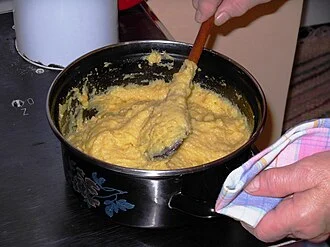
Main course
Vegetarian
Cicvara
Цицвара
tsits-va-ra
· Cornmeal and cheese porridge
A creamy porridge made from cornmeal, kajmak, and cheese.
Open Cicvara recipe🥩
Main course
Meat
Novosadski paprikaš
Новосадски паприкаш
No-vo-sahd-ski pah-pree-kahsh
· Novi Sad stew
Stew with paprika, potatoes, and meat.
Open Novosadski paprikaš recipe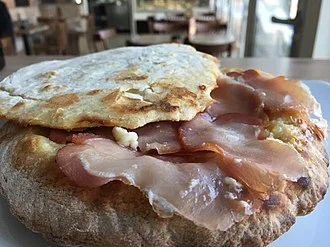
Main course
Meat
Komplet Lepinja
Комплет лепиња
kom-plet le-pi-nya
· Complete flatbread with cream
A traditional flatbread stuffed with egg, cream, and roasted meat drippings.
Open Komplet Lepinja recipe🥩
Main course
Meat
Somborska mućkalica
Сомборска мучкалица
Somborska mooch-kah-li-tsa
· Stewed meat and vegetables
A rich stew of mixed meats and vegetables.
Open Somborska mućkalica recipe🐟
Main course
Fish & Seafood
Karlovački fiš
Карловачки фиш
Karlovach-kee feesh
· Spicy fish stew
A spicy and flavorful fish stew.
Open Karlovački fiš recipe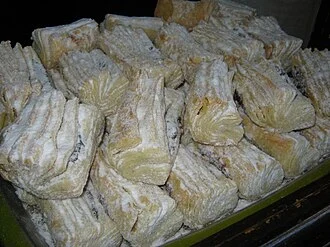
Dessert
Meat
Salčići
Салчићи
Sal-chee-tsi
· Pork leaf lard pastries
Sweet pastries made with pork leaf lard.
Open Salčići recipe🌿
Bread
Vegetarian
Gibanica Zlatiborski Stil
Гибаница златиборски стил
gee-ban-i-tsa zla-tee-bor-skee steel
· Zlatibor-style cheese pie
A layered pastry with cheese and eggs, baked to golden perfection.
Open Gibanica Zlatiborski Stil recipe