

Explore Guides
EUROPE
France
Triplandio France guide covers 70 travel guides with 6 cities across 167 areas, complete with hotel picks. Explore 273 self-guided walking tours in France with 588 POI, spanning 904.5 km in total. Get inspired by 68 local dishes, complete with recipes and our unique Food Flavour DNA graph.
Country Data France

Key travel data for France — safety, healthcare, local currency and essentials, curated by Triplandio.
🌍 France
Safety
52
Health
96
Lifestyle
64
Infra
91
Rank
#29
Score
61
Tourists
117.1M/y
GDP/cap
$49.0k
Life Exp
83.0 yrs
Population
68.7M
Currency
EUR €
Language
French
Payments
Cards OK
Emergency
112
Travel tipsFrance

Quick tips
- Cannabis is illegal in France — Critical
Possessing, using or smuggling any illegal drug, including cannabis, can mean prison and heavy fines. French airports, ports and Eurostar stations scan luggage closely, even for passengers in transit.
- Covering your face in public is illegal — Caution
France bans hiding your face in public places — balaclavas, full-face veils or masks worn to conceal your identity. The law applies to tourists too, and the fine is up to 150 euros.
- Pickpockets work in teams — Caution
In Paris and other big cities, one thief distracts you while another opens your bag. Carry your bag across your body, zipped, and keep phones off café tables.
- Carry your passport or photo ID — Good to know
Police in France can ask you to prove who you are at any time. Show a passport or photocard driving licence on the spot, or at a police station within 4 hours.
- Strikes can cancel trains and flights — Good to know
Industrial action (grèves) is frequent in France and can stop trains, flights and city transport at short notice. Check your operator's website or app the day before you travel.
- Link cities by high-speed train — Local tip
France's high-speed trains (TGV) connect Paris with Lyon in about 2 hours, Bordeaux in about 2 hours and Marseille in about 3 hours. Book early on the app of the national railway (SNCF), SNCF Connect, for the lowest fares.
- Do
- Say “bonjour” when you enter a shop
- Carry your passport or photo ID
- Keep your bag zipped and in front
- Ask for a free carafe of tap water
- Check for strikes before travel days
- Don’t
- Cover your face in public
- Buy counterfeit designer goods
- Smoke on beaches or in parks
- Swim when the red flag is up
- Drink and drive
Critical
Prison or heavy penalty possible
Laws & fines
- Drink-driving limit is low — Critical
The drink-drive limit in France is low, so even one drink can put you over. Police run regular roadside alcohol and drug checks; penalties include fines, losing your licence and prison.
Health
- Watch your drink in bars — Critical
Date-rape drugs are sometimes slipped into drinks in French nightlife areas. Buy your own drinks and keep them in sight — and remember measures in France are often stronger than you may be used to.
Caution
Fines, losses or injury possible
Getting between cities
- Keep doors locked near Calais — Caution
People seeking to reach the UK illegally sometimes try to climb into vehicles, especially camper vans, in slow traffic on roads to Calais and other Channel ports. Keep doors locked, keep moving where safe, and call 112 if threatened.
Laws & fines
- Don't buy counterfeit designer goods — Caution
Buying fake designer bags, watches or clothes is illegal in France for the buyer as well as the seller. Customs can seize fakes and fine you, including when you leave the country.
- No smoking on beaches or in parks — Caution
Since July 2025 smoking has been banned on French beaches, in public parks and gardens, at bus shelters and near schools, on top of the ban in enclosed public places. The fine is 135 euros.
- Driving fines are paid on the spot — Caution
French police give on-the-spot fines for speeding and other driving offences, and speed cameras are common on motorways and main roads. Rental companies pass camera fines on to you later.
- Clean-air sticker for city driving — Caution
Cars driven in central Paris, Lyon and Grenoble must show an air-pollution sticker (Crit'Air) from 8am to 8pm on weekdays. Order it only from the official French government website, well before your trip.
- Winter tyres in the mountains — Caution
From 1 November to 31 March, cars in many mountain areas of France must have winter tyres or carry snow chains. You can be fined without them — ask your rental company to include them.
Entry & visa
- No meat or dairy into the EU — Caution
You can't bring meat, milk or products containing them into France from outside the EU — sandwiches and cheese included. Customs will confiscate them and can fine you.
- Declare 10,000 euros or more in cash — Caution
Cash worth 10,000 euros or more must be declared when you enter or leave France. Undeclared money can be seized.
Beaches & adventure
- Beware of Atlantic rip currents — Caution
Strong rip currents (baïnes) on the Atlantic coast, especially in Gironde and Landes, drown swimmers every summer. Swim only between the lifeguard flags and never when the red flag is up.
- Wildfire risk April to October — Caution
Southern France, Corsica and the south-west have a high wildfire risk in hot, dry months. Causing a fire, even by accident, can mean a fine or prison. Obey forest closures and call 18 or 112 if you see a fire.
- Check avalanche risk off-piste — Caution
Before skiing off-piste in France, check the avalanche bulletin from the national weather service (Météo-France), never go alone, and carry avalanche search equipment.
- Camper vans attract thieves — Caution
Thieves in France break into caravans and camper vans, sometimes while the owners are asleep inside. Avoid parking overnight in isolated or dark car parks and consider fitting an alarm.
Good to know
Rules and useful facts
Getting between cities
- Check which Paris station you need — Good to know
Paris has several main-line stations: Gare de Lyon for Lyon, Marseille and Nice, Montparnasse for Bordeaux and Gare du Nord for Eurostar. Allow 30–45 minutes to cross between them by Métro.
- Short domestic flights are limited — Good to know
Since 2023 France has banned some short domestic flights, such as Paris Orly to Bordeaux, Lyon and Nantes, where a train takes under 2.5 hours. Take the high-speed train instead.
- Driving: right side and tolls — Good to know
Traffic in France drives on the right, and visitors from the UK can drive on their photocard licence. Most motorways (autoroutes) charge tolls payable by card. Hire firms may want an International Driving Permit (IDP) and a higher minimum age.
Regions & seasons
- Mediterranean south: spring and autumn — Good to know
Provence and the Côte d'Azur (Nice, Cannes, Marseille) have hot, dry summers and mild winters. May–June and September are warm but far less crowded than August.
- Atlantic coast: rain any time — Good to know
Bordeaux, Brittany and the Atlantic beaches are milder and wetter than the south. July and August are the reliable beach months; the sea stays cool.
- Alps and Pyrenees: two seasons — Good to know
The French mountains have ski season from December to April and hiking season from about late June to September. Many resorts close in between.
Customs
- Stay alert in crowded places — Good to know
The terrorism threat in France is high, and past attacks have targeted crowds, transport hubs, events and places of worship. Stay aware of your surroundings and follow police instructions.
Tipping & money
- Stay alert at cash machines — Good to know
Thieves in French cities watch people at street ATMs and at tourist sights. Use machines inside banks where possible, shield the keypad with your hand and ignore anyone who offers help.
Entry & visa
- Travel advisory: Level 2 of 4 — Good to know
Exercise Increased Caution — the U.S. State Department's rating for France.
- 90 days in any 180 — Good to know
Many visitors, including UK and US citizens, can stay in France and the rest of the Schengen area (29 European countries without internal border checks) for up to 90 days in any 180 days without a visa.
- Check your passport's issue date — Good to know
For France and the Schengen area, a non-EU passport must have been issued less than 10 years before you arrive and be valid for at least 3 months after you leave.
- Fingerprints at the border — Good to know
The EU's new Entry/Exit System (EES) records non-EU visitors' fingerprints and photo instead of stamping passports. It's free, but queues are longer, so allow extra time at airports and at Eurostar.
- Be ready to show your plans — Good to know
French border officers may ask for proof of travel insurance, accommodation, enough money for your stay and a return or onward ticket. Keep them on your phone.
Health
- Emergency number is 112 — Good to know
Call 112 in France for an ambulance, police or fire service; operators can answer in English. Contact your insurer quickly if you are admitted to hospital.
- Mosquitoes and ticks in summer — Good to know
Tiger mosquitoes in southern France can spread dengue and chikungunya, and ticks live in forests and long grass. Use repellent and check your skin after walks.
- Health cards don't replace insurance — Good to know
UK and EU visitors can use a Global Health Insurance Card (GHIC) or European Health Insurance Card (EHIC) for necessary state treatment, but it isn't free and doesn't cover private clinics, mountain rescue or flights home. Get travel insurance.
Beaches & adventure
- Mountain rescue costs money — Good to know
In the Alps and Pyrenees, check that your insurance covers mountain rescue and helicopter evacuation. Injured skiers in Savoie and Haute-Savoie are sometimes flown to Switzerland for treatment.
Local tips
Local know-how
Getting between cities
- Low-cost trains and coaches — Local tip
Ouigo, the budget arm of the national railway (SNCF), runs cheaper high-speed trains, and FlixBus and BlaBlaCar Bus coaches link most French cities for less — but journeys by coach take much longer.
- Plan long drives with breaks — Local tip
Summer Saturdays in July and August bring huge jams on routes south. Check the Bison Futé traffic forecast, set off early and stop every two hours.
Regions & seasons
- Paris and the north: grey winters — Local tip
Paris, Normandy and northern France are cool and often grey from November to March. April–June and September–October are the most pleasant months for city breaks.
Customs
- Always start with “bonjour” — Local tip
In France you greet staff before anything else: say “Bonjour, madame” or “Bonjour, monsieur” when you enter a shop, café or bakery. Launching straight into a question comes across as rude.
- Restaurants keep set meal times — Local tip
Outside big-city tourist areas, French restaurants usually serve lunch from about 12:00 to 14:00 and dinner from about 19:30. In between, the kitchen is often closed, so plan meals around it.
- Many shops close on Sundays — Local tip
Outside Paris and tourist zones, most shops in France close on Sunday and some on Monday too. Bakeries and food markets usually open on Sunday morning, so shop for picnics on Saturday.
- Be quiet and covered in churches — Local tip
French churches and cathedrals are places of worship first. Speak quietly, cover your shoulders, remove hats and don't walk around during a service.
Tipping & money
- Service is already in the price — Local tip
Restaurant prices in France include service (service compris). Tipping isn't expected, but leaving a few euros or rounding up for good service is appreciated.
- Cards work almost everywhere — Local tip
Contactless cards and phone payments are accepted in most French shops, cafés and on transport. Carry a little cash for markets, small bakeries and rural cafés, which may have a minimum card amount.
- Choose to pay in euros — Local tip
When a card machine or ATM offers to charge you in your home currency (dynamic currency conversion), choose euros instead. The machine's own exchange rate is almost always worse.
- Bargain only at flea markets — Local tip
Prices in French shops and food markets are fixed. Polite haggling is normal only at flea markets and antique fairs (marchés aux puces and brocantes).
Health
- Tap water is safe to drink — Local tip
Tap water across France is safe to drink. In restaurants, ask for “une carafe d'eau” and you'll get a free jug of tap water instead of paying for bottled.
- Pharmacies are the first stop — Local tip
Look for the green cross. French pharmacists can advise on minor illnesses, and a duty pharmacy (pharmacie de garde) is open at night and on Sundays in every area.
Beaches & adventure
- Use motorway emergency phones — Local tip
If you break down or see an accident on a French motorway, use the orange emergency phones along the hard shoulder — they connect straight to help and show your exact position.
Our France city guides
Pickpockets work Métro line 1 and RER B — keep your bag zipped and in front of you.
Tram line 2 runs from the airport to the centre; the beaches are pebbly, so bring water shoes.
Book a table at a bouchon, Lyon's traditional bistro, ahead for dinner — they are small and fill fast.
Keep your phone out of sight around Saint-Charles station and book summer access to the Calanques.
The tram runs from the airport to the centre; wine towns like Saint-Émilion are a short train ride away.
Hotel prices soar during the May film festival and big trade fairs — book early or stay in Nice.
Say it locally
Add “s'il vous plaît” (please) to every request and “madame” or “monsieur” to greetings.
Through the year
Festival or season Public holiday (exact date)
- All Saints' Day
Mon 1 Nov 2027 · Public holiday
- Armistice Day
Wed 11 Nov 2026 · Public holiday
- Ski season
Dec 2026–Apr 2027 · Alpine and Pyrenean resorts are busiest over Christmas and the February school holidays; mountain roads need winter tyres or chains.
- Christmas markets
Dec 2026 · Christmas markets open from late November, biggest in Strasbourg and Alsace; hotels there book up early.
- Christmas Day
Fri 25 Dec 2026 · Public holiday
- New Year's Day
Fri 1 Jan 2027 · Public holiday
- Easter Monday
Mon 29 Mar 2027 · Public holiday
- Labor Day
Sat 1 May 2027 · Public holiday
- Ascension Day
Thu 6 May 2027 · Public holiday
- WWII Victory Day
Sat 8 May 2027 · Public holiday
- Whit Monday
Mon 17 May 2027 · Public holiday
- Fête de la Musique
Jun 2027 · On 21 June free concerts fill streets and squares in every French town until late at night.
- Heatwaves and wildfires
Jun–Sep 2027 · Summer heatwaves (canicules) bring temperatures near 40°C, and fire risk is high in the south; some forests close on the worst days.
- Tour de France
Jul 2027 · The cycling race crosses France for three weeks in July; roads on the day's route close for hours.
- Summer holidays
Jul–Aug 2027 · The French take their holidays in July and August: beaches and motorways are packed, and some small Paris shops and restaurants close in August.
- Bastille Day
Wed 14 Jul 2027 · Public holiday
- Assumption of Mary
Sun 15 Aug 2027 · Public holiday
- Grape harvest
Sep–Oct 2027 · The wine harvest (vendanges) runs in Bordeaux, Burgundy and Champagne; some wineries pause tastings, others hold harvest festivals.
Sources: GOV.UK travel advice · U.S. State Dept · Google public holidays
Traditional Local Food France
Starter
Meat
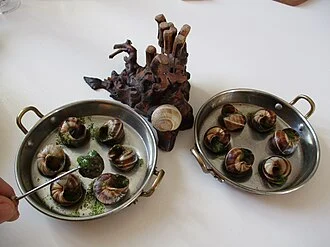
Escargots de Bourgogne
es-kar-go duh boor-gawn
Snails served in garlic-herb butter and baked in their shells.
Open Escargots de Bourgogne recipe🥩
Main course
Meat
Lyonnaise Stew
Pots de Lyon
Pot loh-nyoh
A hearty stew with beef, vegetables, and red wine.
Open Lyonnaise Stew recipe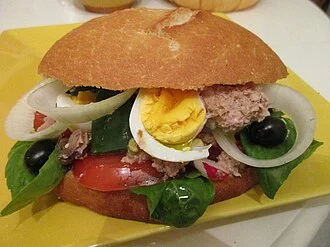
Main course
Fish & Seafood
Pan Bagnat
pahn bahn-YAH
A traditional sandwich from Nice, filled with tuna, hard-boiled eggs, and vegetables.
Open Pan Bagnat recipe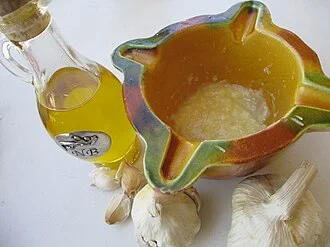
Main course
Fish & Seafood
Aioli Platter
Le Grand Aioli
luh grawn eye-YOLE
A Provençal platter of boiled vegetables, fish, and garlic mayonnaise.
Open Aioli Platter recipe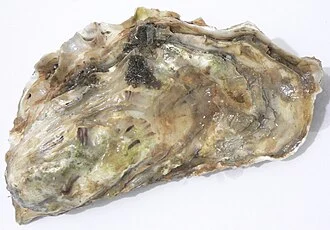
Starter
Fish & Seafood
Arcachon oysters
Huîtres d'Arcachon
WEE-truhz dar-kah-SHON
Fresh, briny oysters from the Arcachon Bay.
Open Arcachon oysters recipe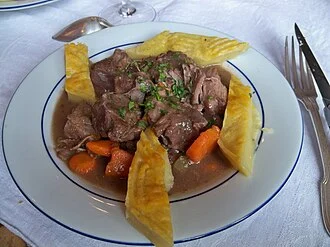
Main course
Meat
Daube
Dawb
A traditional beef stew slow-cooked with wine, vegetables, and herbs.
Open Daube recipe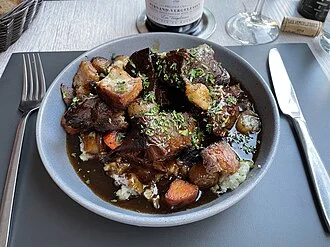
Main course
Meat
Boeuf Bourguignon
boh-EUF boor-ghee-NYON
A rich beef stew braised in red wine, flavored with herbs and mushrooms.
Open Boeuf Bourguignon recipe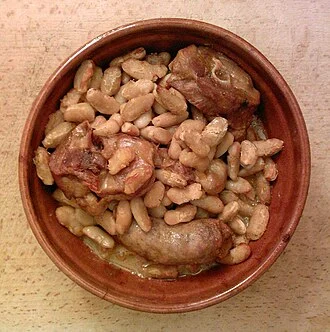
Main course
Meat
Cassoulet
ka-SOO-lay
A hearty bean stew with pork, sausages, and duck confit.
Open Cassoulet recipe
Main course
Meat
Pieds Paquets
Pyay pah-kay
Lamb's foot and tripe stew from Marseille.
Open Pieds Paquets recipe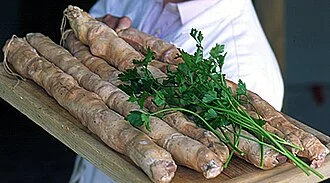
Main course
Meat
Andouille Sausage
Andouillette
ahn-DOO-yet
A coarsely chopped offal sausage, a rustic specialty.
Open Andouille Sausage recipe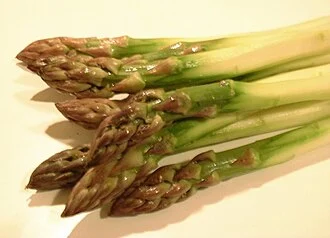
Starter
Vegetarian
White Asparagus with Hollandaise
Asperges Blanches avec Sauce Hollandaise
As-pairj blawn-sh avek sos o-lan-dez
Tender white asparagus served with a rich hollandaise sauce.
Open White Asparagus with Hollandaise recipe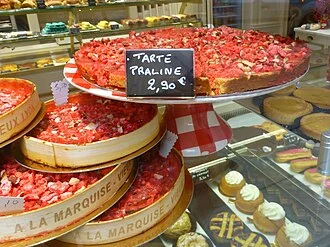
Dessert
Vegetarian
Praline Tart
Tarte aux Pralines
tahrt oh prah-LEEN
A sweet tart filled with vibrant pink praline made from almonds and sugar.
Open Praline Tart recipe🥩
Main course
Meat
Bordeaux-Style Squab
Pigeon à la Bordelaise
Pee-zhohn ah lah Bor-de-lays
Roasted squab served with a rich red wine and shallot sauce.
Open Bordeaux-Style Squab recipe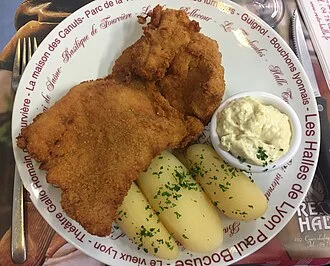
Main course
Meat
Lyon’s Marrow Bone Stew
Tablier de sapeur
ta-blee-AYr de sah-PEUR
A traditional tripe dish breaded and fried to golden.
Open Lyon’s Marrow Bone Stew recipe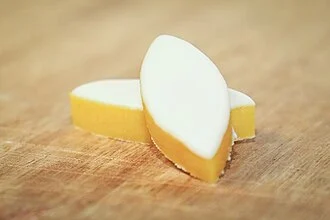
Dessert
Vegetarian
Calissons
Kah-lee-sawn
A traditional confection made from a paste of candied fruit and almonds.
Open Calissons recipe