Explore Guides
EUROPE / FRANCE
Triplandio Lyon guide covers 9 travel guides across 26 areas, complete with hotel picks. Explore 35 self-guided walking tours in Lyon with 41 POI, spanning 157.8 km in total. Get inspired by 32 local dishes, complete with recipes and our unique Food Flavour DNA graph.
Lyon
City & Country Data Lyon (France)

Key travel data for Lyon — local prices, safety, healthcare, local currency and essentials, curated by Triplandio.
🌍 France
Safety
52
Health
96
Lifestyle
64
Infra
91
Rank
#29
Score
61
Tourists
117.1M/y
GDP/cap
$49.0k
Life Exp
83.0 yrs
Population
68.7M
Currency
EUR €
Language
French
Payments
Cards OK
Emergency
112
💰 Prices in Lyon
Coffee
$3.54
Beer
$6.00
Lunch
$15.00
Groceries
$35.00/w
Taxi/km
$1.96
Transit
$2.10
Fuel
$1.80/l
Internet
$28.66/m
Salary
$2,000/m
Travel tipsLyon (France)

Quick tips
- Cannabis is illegal in France — Critical
Possessing, using or smuggling any illegal drug, including cannabis, can mean prison and heavy fines. French airports, ports and Eurostar stations scan luggage closely, even for passengers in transit.
- Covering your face in public is illegal — Caution
France bans hiding your face in public places — balaclavas, full-face veils or masks worn to conceal your identity. The law applies to tourists too, and the fine is up to 150 euros.
- Pickpockets work in teams — Caution
In Paris and other big cities, one thief distracts you while another opens your bag. Carry your bag across your body, zipped, and keep phones off café tables.
- Carry your passport or photo ID — Good to know
Police in France can ask you to prove who you are at any time. Show a passport or photocard driving licence on the spot, or at a police station within 4 hours.
- Strikes can cancel trains and flights — Good to know
Industrial action (grèves) is frequent in France and can stop trains, flights and city transport at short notice. Check your operator's website or app the day before you travel.
- Do
- Say “bonjour” when you enter a shop
- Carry your passport or photo ID
- Keep your bag zipped and in front
- Ask for a free carafe of tap water
- Check for strikes before travel days
- Don’t
- Cover your face in public
- Buy counterfeit designer goods
- Smoke on beaches or in parks
- Swim when the red flag is up
- Drink and drive
Critical
Prison or heavy penalty possible
Laws & fines
- Drink-driving limit is low — Critical
The drink-drive limit in France is low, so even one drink can put you over. Police run regular roadside alcohol and drug checks; penalties include fines, losing your licence and prison.
Health
- Watch your drink in bars — Critical
Date-rape drugs are sometimes slipped into drinks in French nightlife areas. Buy your own drinks and keep them in sight — and remember measures in France are often stronger than you may be used to.
Caution
Fines, losses or injury possible
Scams & safety
- Pickpockets at Part-Dieu — Caution
Part-Dieu, Lyon's main railway station and shopping centre, is the city's hotspot for bag and phone theft. Keep luggage in sight while you check timetables.
- Phones snatched from café tables — Caution
Thieves in Lyon grab phones left on terrace tables on the Presqu'île and in Vieux Lyon. Keep yours in a pocket or bag while you eat.
Laws & fines
- Don't buy counterfeit designer goods — Caution
Buying fake designer bags, watches or clothes is illegal in France for the buyer as well as the seller. Customs can seize fakes and fine you, including when you leave the country.
- No smoking on beaches or in parks — Caution
Since July 2025 smoking has been banned on French beaches, in public parks and gardens, at bus shelters and near schools, on top of the ban in enclosed public places. The fine is 135 euros.
- Driving fines are paid on the spot — Caution
French police give on-the-spot fines for speeding and other driving offences, and speed cameras are common on motorways and main roads. Rental companies pass camera fines on to you later.
- Clean-air sticker for city driving — Caution
Cars driven in central Paris, Lyon and Grenoble must show an air-pollution sticker (Crit'Air) from 8am to 8pm on weekdays. Order it only from the official French government website, well before your trip.
- Winter tyres in the mountains — Caution
From 1 November to 31 March, cars in many mountain areas of France must have winter tyres or carry snow chains. You can be fined without them — ask your rental company to include them.
Entry & visa
- No meat or dairy into the EU — Caution
You can't bring meat, milk or products containing them into France from outside the EU — sandwiches and cheese included. Customs will confiscate them and can fine you.
- Declare 10,000 euros or more in cash — Caution
Cash worth 10,000 euros or more must be declared when you enter or leave France. Undeclared money can be seized.
Beaches & adventure
- Beware of Atlantic rip currents — Caution
Strong rip currents (baïnes) on the Atlantic coast, especially in Gironde and Landes, drown swimmers every summer. Swim only between the lifeguard flags and never when the red flag is up.
- Wildfire risk April to October — Caution
Southern France, Corsica and the south-west have a high wildfire risk in hot, dry months. Causing a fire, even by accident, can mean a fine or prison. Obey forest closures and call 18 or 112 if you see a fire.
- Check avalanche risk off-piste — Caution
Before skiing off-piste in France, check the avalanche bulletin from the national weather service (Météo-France), never go alone, and carry avalanche search equipment.
- Camper vans attract thieves — Caution
Thieves in France break into caravans and camper vans, sometimes while the owners are asleep inside. Avoid parking overnight in isolated or dark car parks and consider fitting an alarm.
Good to know
Rules and useful facts
Scams & safety
- Travel advisory: Level 2 of 4 — Good to know
Exercise Increased Caution — the U.S. State Department's rating for France.
- Take care at Guillotière at night — Good to know
The Place Gabriel-Péri area of Guillotière has street drug dealing and thefts late at night. It's fine by day; after dark, walk along busier streets or take the Métro.
Getting around
- Check which station you need — Good to know
Lyon has two main railway stations: Part-Dieu for most high-speed trains and Perrache for many regional ones. Some high-speed trains also stop at the airport's own station.
Customs
- Stay alert in crowded places — Good to know
The terrorism threat in France is high, and past attacks have targeted crowds, transport hubs, events and places of worship. Stay aware of your surroundings and follow police instructions.
Tipping & money
- Stay alert at cash machines — Good to know
Thieves in French cities watch people at street ATMs and at tourist sights. Use machines inside banks where possible, shield the keypad with your hand and ignore anyone who offers help.
Entry & visa
- 90 days in any 180 — Good to know
Many visitors, including UK and US citizens, can stay in France and the rest of the Schengen area (29 European countries without internal border checks) for up to 90 days in any 180 days without a visa.
- Check your passport's issue date — Good to know
For France and the Schengen area, a non-EU passport must have been issued less than 10 years before you arrive and be valid for at least 3 months after you leave.
- Fingerprints at the border — Good to know
The EU's new Entry/Exit System (EES) records non-EU visitors' fingerprints and photo instead of stamping passports. It's free, but queues are longer, so allow extra time at airports and at Eurostar.
- Be ready to show your plans — Good to know
French border officers may ask for proof of travel insurance, accommodation, enough money for your stay and a return or onward ticket. Keep them on your phone.
Health
- Emergency number is 112 — Good to know
Call 112 in France for an ambulance, police or fire service; operators can answer in English. Contact your insurer quickly if you are admitted to hospital.
- Mosquitoes and ticks in summer — Good to know
Tiger mosquitoes in southern France can spread dengue and chikungunya, and ticks live in forests and long grass. Use repellent and check your skin after walks.
- Health cards don't replace insurance — Good to know
UK and EU visitors can use a Global Health Insurance Card (GHIC) or European Health Insurance Card (EHIC) for necessary state treatment, but it isn't free and doesn't cover private clinics, mountain rescue or flights home. Get travel insurance.
Beaches & adventure
- Mountain rescue costs money — Good to know
In the Alps and Pyrenees, check that your insurance covers mountain rescue and helicopter evacuation. Injured skiers in Savoie and Haute-Savoie are sometimes flown to Switzerland for treatment.
Local tips
Local know-how
Getting around
- Airport (LYS) → centre by Rhônexpress — Local tip
The Rhônexpress tram-train links Lyon–Saint-Exupéry airport with Part-Dieu station in about 30 minutes. It costs much more than a city ticket, so buy a return if you need one.
- Métro, trams and funiculars — Local tip
Lyon's public transport network (TCL) runs four Métro lines, trams and buses, plus two funiculars up Fourvière hill from Vieux Lyon. One ticket covers them all within its time limit.
- Bikes and ride-hailing — Local tip
Vélo'v shared bikes have stations across Lyon, and the riverside paths along the Rhône and Saône are flat and car-free. Uber and local taxis work in the city.
Customs
- Always start with “bonjour” — Local tip
In France you greet staff before anything else: say “Bonjour, madame” or “Bonjour, monsieur” when you enter a shop, café or bakery. Launching straight into a question comes across as rude.
- Restaurants keep set meal times — Local tip
Outside big-city tourist areas, French restaurants usually serve lunch from about 12:00 to 14:00 and dinner from about 19:30. In between, the kitchen is often closed, so plan meals around it.
- Many shops close on Sundays — Local tip
Outside Paris and tourist zones, most shops in France close on Sunday and some on Monday too. Bakeries and food markets usually open on Sunday morning, so shop for picnics on Saturday.
- Be quiet and covered in churches — Local tip
French churches and cathedrals are places of worship first. Speak quietly, cover your shoulders, remove hats and don't walk around during a service.
Tipping & money
- Service is already in the price — Local tip
Restaurant prices in France include service (service compris). Tipping isn't expected, but leaving a few euros or rounding up for good service is appreciated.
- Cards work almost everywhere — Local tip
Contactless cards and phone payments are accepted in most French shops, cafés and on transport. Carry a little cash for markets, small bakeries and rural cafés, which may have a minimum card amount.
- Choose to pay in euros — Local tip
When a card machine or ATM offers to charge you in your home currency (dynamic currency conversion), choose euros instead. The machine's own exchange rate is almost always worse.
- Bargain only at flea markets — Local tip
Prices in French shops and food markets are fixed. Polite haggling is normal only at flea markets and antique fairs (marchés aux puces and brocantes).
Health
- Tap water is safe to drink — Local tip
Tap water across France is safe to drink. In restaurants, ask for “une carafe d'eau” and you'll get a free jug of tap water instead of paying for bottled.
- Pharmacies are the first stop — Local tip
Look for the green cross. French pharmacists can advise on minor illnesses, and a duty pharmacy (pharmacie de garde) is open at night and on Sundays in every area.
Beaches & adventure
- Use motorway emergency phones — Local tip
If you break down or see an accident on a French motorway, use the orange emergency phones along the hard shoulder — they connect straight to help and show your exact position.
Say it locally
Add “s'il vous plaît” (please) to every request and “madame” or “monsieur” to greetings.
Through the year
Festival or season Public holiday (exact date)
- All Saints' Day
Mon 1 Nov 2027 · Public holiday
- Armistice Day
Wed 11 Nov 2026 · Public holiday
- Ski season
Dec 2026–Apr 2027 · Alpine and Pyrenean resorts are busiest over Christmas and the February school holidays; mountain roads need winter tyres or chains.
- Christmas markets
Dec 2026 · Christmas markets open from late November, biggest in Strasbourg and Alsace; hotels there book up early.
- Fête des Lumières
Dec 2026 · For four nights around 8 December, light shows fill Lyon's streets. Crowds are huge, pickpockets are busy and hotels book out months ahead.
- Christmas Day
Fri 25 Dec 2026 · Public holiday
- New Year's Day
Fri 1 Jan 2027 · Public holiday
- Easter Monday
Mon 29 Mar 2027 · Public holiday
- Labor Day
Sat 1 May 2027 · Public holiday
- Ascension Day
Thu 6 May 2027 · Public holiday
- WWII Victory Day
Sat 8 May 2027 · Public holiday
- Whit Monday
Mon 17 May 2027 · Public holiday
- Fête de la Musique
Jun 2027 · On 21 June free concerts fill streets and squares in every French town until late at night.
- Heatwaves and wildfires
Jun–Sep 2027 · Summer heatwaves (canicules) bring temperatures near 40°C, and fire risk is high in the south; some forests close on the worst days.
- Tour de France
Jul 2027 · The cycling race crosses France for three weeks in July; roads on the day's route close for hours.
- Summer holidays
Jul–Aug 2027 · The French take their holidays in July and August: beaches and motorways are packed, and some small Paris shops and restaurants close in August.
- Bastille Day
Wed 14 Jul 2027 · Public holiday
- Assumption of Mary
Sun 15 Aug 2027 · Public holiday
- Grape harvest
Sep–Oct 2027 · The wine harvest (vendanges) runs in Bordeaux, Burgundy and Champagne; some wineries pause tastings, others hold harvest festivals.
Sources: GOV.UK travel advice · U.S. State Dept · Google public holidays
Best time to visit Lyon (France)
Now (November) avg high: 11°C, mostly dry, full season — expect crowds. Best months to walk: Aug & Feb.
Live Temp
…
~Day / Night Temp
11°C / 5°C
Sunrise / Sunset
8:30 / 18:20
Local time
14:18
Best Months  Aug & Feb
J
Jan
F
Feb
M
Mar
A
Apr
M
May
J
Jun
J
Jul
A
Aug
S
Sep
O
Oct
N
Nov
 D
Dec
M
Mar
A
Apr
M
May
J
Jun
J
Jul
A
Aug
S
Sep
O
Oct
N
Nov
D
Dec
Check Lyon hotels
Temperature
Average daytime high, month by month. Zero line marks freezing point.
Crowds
How busy it gets — traveller interest by month.
Rainfall
Rainy days to expect each month.
Sunshine
Hours of sun per day, by month.
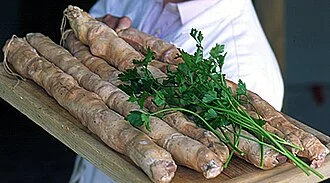
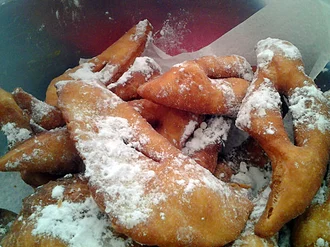
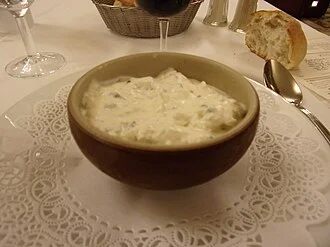
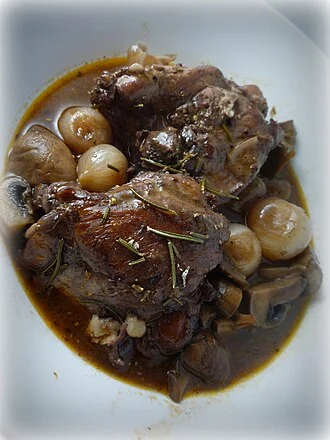
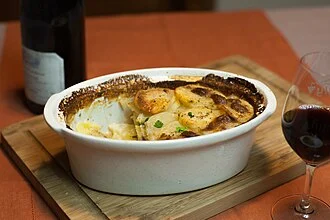
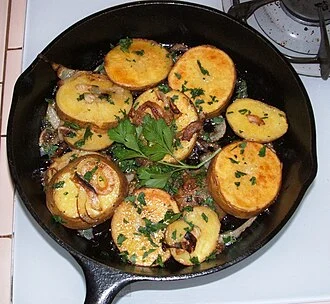
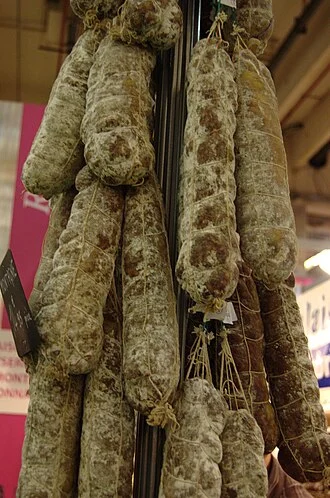
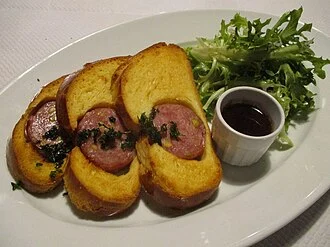
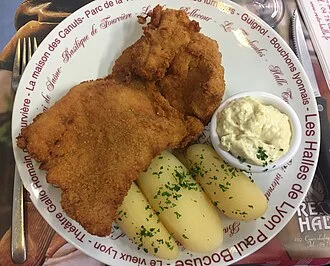
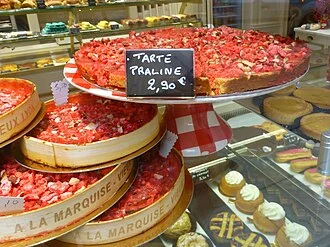
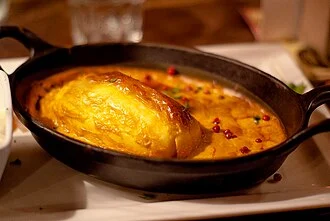
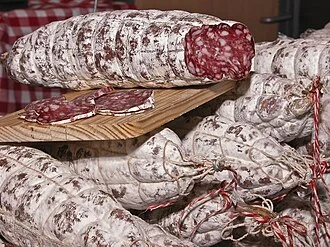
A coarsely chopped offal sausage, a rustic specialty. Sweet fried pastries similar to donuts dusted with icing sugar. A fresh and creamy cheese spread with herbs. A smooth, rich liver mousse served as a spread or appetizer. A traditional French chicken stew braised with red wine. Slow-cooked pork shoulder flavored with mustard and herbs. A traditional apple tart with a hint of cinnamon. A creamy baked potato dish with cheese and garlic. Crispy pan-fried potatoes with onions and parsley. Sausage paired with hearty green lentils in a savory sauce. A sausage embedded in brioche bread, typically studded with pistachios. A hearty stew with beef, vegetables, and red wine. A traditional tripe dish breaded and fried to golden. A sweet tart filled with vibrant pink praline made from almonds and sugar. Pike fish dumplings served with a rich sauce. A dry-cured pork sausage seasoned with garlic and pepper.
Traditional Local Food
Lyon (France)
Main course
Meat
Andouille Sausage
Andouillette
ahn-DOO-yet
Dessert
Vegetarian
Bugnes
Boon-yeuh
Snack
Vegetarian
Cervelle de Canut
ser-vell duh kah-NOO
🥩
Starter
Meat
Chicken Liver Mousse
Mousseline de Foies de Volailles
moos-uh-LEEN duh fwa de vol-ai
Main course
Meat
Coq au Vin
kohk oh VAHN
🥩
Main course
Meat
Lyon-style Pulled Pork
Porc Effiloché à la Lyonnaise
Pawrk Eh-fee-lo-shay ah la Lee-oh-nez
🌿
Dessert
Vegetarian
Lyonnaise Cake
Tarte à la Lyonnaise
tahrt ah lah lee-yoh-nehz
Side dish
Vegetarian
Lyonnaise Potato Sauce Dish
Gratin Dauphinois
Gra-tah doh-fee-NWAH
Side dish
Vegetarian
Lyonnaise Potatoes
Pommes Lyonnaise
pohm lee-yo-NEHZ
Main course
Meat
Lyonnaise Sausage and Lentils
Saucisson Lyonnais et Lentilles
So-si-soh lee-oh-neh eh lon-teel
Main course
Meat
Lyonnaise Sausage and Pistachio Pastry
Saucisson brioché
So-see-sohn bree-oh-SHAY
🥩
Main course
Meat
Lyonnaise Stew
Pots de Lyon
Pot loh-nyoh
Main course
Meat
Lyon’s Marrow Bone Stew
Tablier de sapeur
ta-blee-AYr de sah-PEUR
Dessert
Vegetarian
Praline Tart
Tarte aux Pralines
tahrt oh prah-LEEN
Main course
Fish & Seafood
Quenelles de Brochet
keh-NELL deh broh-SHAY
Snack
Meat
Rosette Sausage
Rosette de Lyon
Roh-zet duh lee-oh