
Written for travellers who come for history: palaces, shrines, old markets and museums, with honest notes on each area. Updated 2026.

Where to Stay in Seoul for Culture Exploration

Where to stay in Seoul for history and culture — palace quarters, Joseon streets and the places their stories happened.

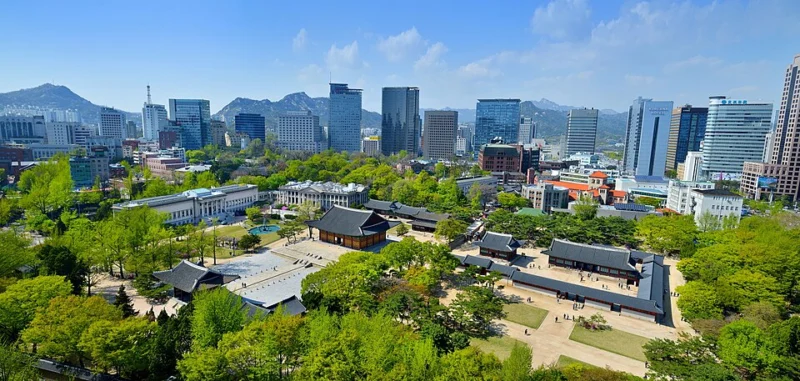
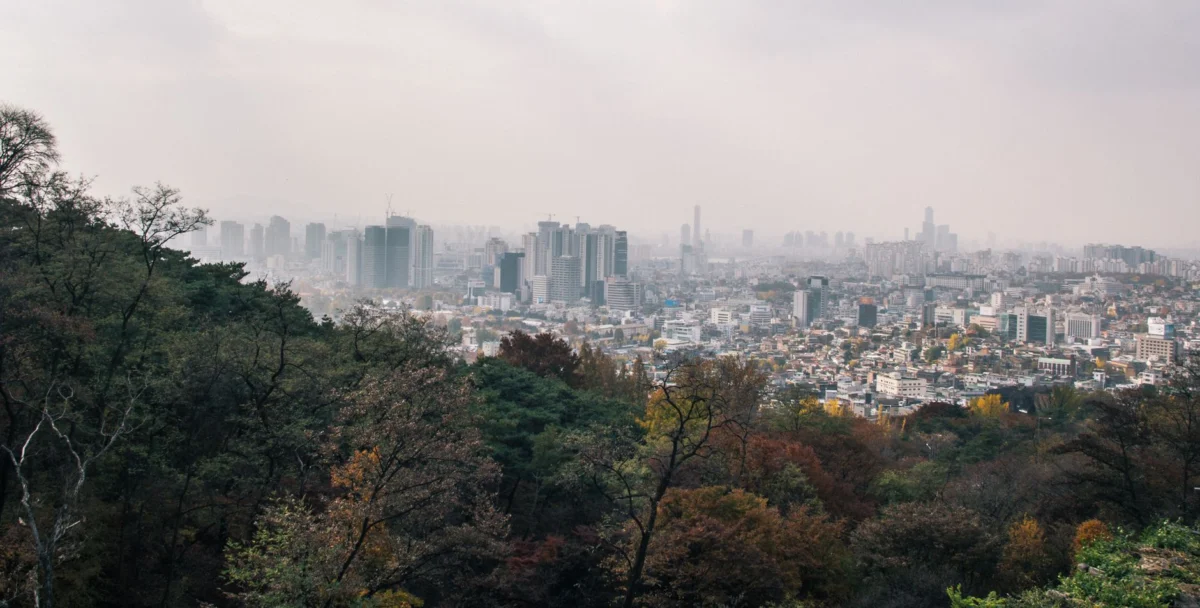
Panoramic view of Seoul's iconic skyline at sunset
At a Glance
Country South Korea
City Seoul
Day / Night 11° / 2°
Local Time 6:04
November — Now Peak season
Best Months Nov · Apr

Seoul was the capital of the Joseon kingdom for five centuries, and most of what survives is packed into a few square kilometres north of the Cheonggyecheon stream. This guide covers four bases — hanok Bukchon between the palaces, Seochon beside Gyeongbokgung, the old commercial heart along the Cheonggyecheon and Jeong-dong behind Deoksugung, the quarter of the Korean Empire — with a history route, a traditional meal and the kind of stay to look for in each.

Our favourite Seoul stays for culture and history

Smart choice
⭐ 9.2
Bukchon Binkwan by Rakkojae

Bukchon Binkwan by Rakkojae

A small hotel on Bukchon-ro 11ga-gil, in the hanok lanes between Changdeokgung and Gyeongbokgung, with a garden, a lounge and a coffee shop. Staying here puts you inside the village when day visitors are kept out, so you can walk the alleys before 10am and after 5pm. Only 63 reviews so far, but they are strong, and Anguk station is a 10-minute walk downhill.

Best overall
⭐ 9.7
Seochon Guesthouse

Seochon Guesthouse

A guesthouse in Seochon, the old neighbourhood west of Gyeongbokgung, and the best-rated stay in this guide. From here you can walk to the palace gates, Tongin Market and the small museums of Seochon. Check the room photos — guesthouses in old Seochon houses are often compact.

Top pick
⭐ 8.9
Sam House 2 Seochon

Sam House 2 Seochon

A small guesthouse in Seochon, among the cafés and old houses west of Gyeongbokgung. A good-value way to stay in the palace quarter; check the address and room type before you book.

Which Seoul suits your history trip?

Pick what matters most — palaces on foot, old Seoul streets, modern Seoul with fast trains or a quieter local base — and we will show you the area.

Best choice: Bukchon (북촌)

Best for: Hanok stays, palaces

Best choice: Seochon (서촌)

Best for: Palaces on foot

Best choice: Cheonggyecheon (청계천)

Best for: Old Seoul and markets

Best choice: Jeong-dong (정동)

Best for: Korean Empire history

Best places to stay in Seoul for culture lovers

Guesthouses and small hotels close to the palaces, the old streets or a direct metro line to them.

Seochon Guesthouse
Best overall
⭐ 9.7 Exceptional
289 reviews

Seochon Guesthouse

Seochon • Guesthouse • Next to Gyeongbokgung

A guesthouse in Seochon, the old neighbourhood west of Gyeongbokgung, and the best-rated stay in this guide. From here you can walk to the palace gates, Tongin Market and the small museums of Seochon. Check the room photos — guesthouses in old Seochon houses are often compact.

  • Walk to Gyeongbokgung
  • Best-rated stay in this guide
  • Tongin Market nearby
Sam House 2 Seochon
Top pick
⭐ 8.9 Very Good
35 reviews

Sam House 2 Seochon

Seochon • Guesthouse • Local lanes

A small guesthouse in Seochon, among the cafés and old houses west of Gyeongbokgung. A good-value way to stay in the palace quarter; check the address and room type before you book.

  • Seochon location
  • Cafés nearby
  • Walk to the palace
Hotel Lemong
Central location
⭐ 8.8 Fabulous
5408 reviews

Hotel Lemong

Cheonggyecheon • 3-star hotel • Jong-ro 16-gil, Jongno

A 3-star hotel on Jong-ro 16-gil, a few minutes from Tapgol Park and the Cheonggyecheon, with more than 5,000 reviews behind its 8.8 score. Insadong, Jongmyo Shrine and Gwangjang Market are all walkable, and there is a garden and a lounge for planning the next day. Rooms are soundproofed, which helps on this busy stretch of Jongno.

  • Steps from old Jongno
  • Soundproofed rooms
  • Breakfast available
Amare Hotel Jongno
Walkable area
⭐ 8.8 Fabulous
2381 reviews

Amare Hotel Jongno

Cheonggyecheon • 3-star hotel • Near Jongno 3-ga station

A 3-star hotel on Supyo-ro 22-gil, about 350 metres from Jongno 3-ga station, with a 24-hour front desk and luggage storage. Insadong is around 500 metres away, Jongmyo Shrine and the Cheonggyecheon are a short walk, and plenty of places to eat are within 10 minutes. It is a practical, central base rather than a characterful one.

  • Near Jongno 3-ga station
  • Insadong about 500 m
  • 24-hour front desk
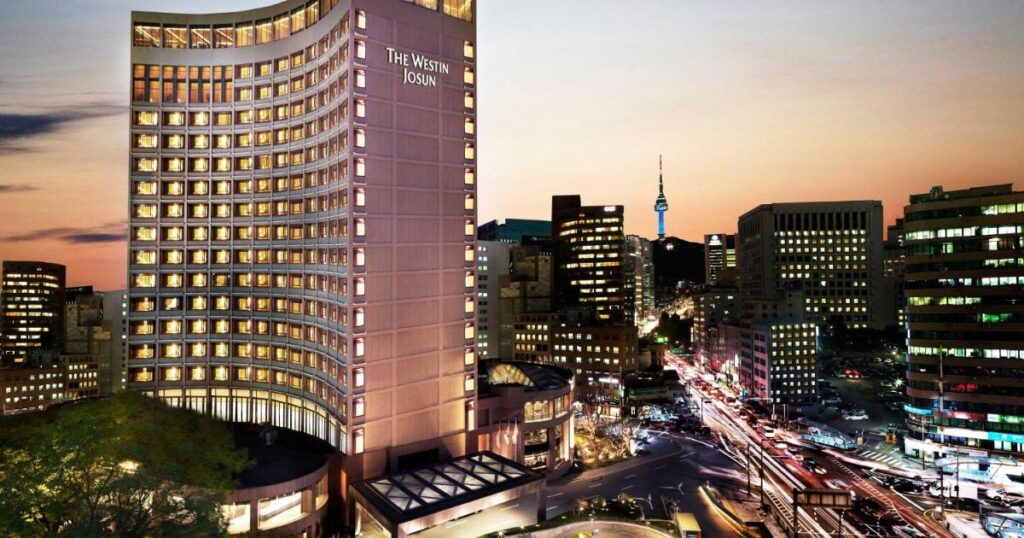
Westin Josun Seoul Hotel
Editor’s choice
⭐ 9.3 Superb
1445 reviews

Westin Josun Seoul Hotel

Jeong-dong • 5-star hotel • Near City Hall station

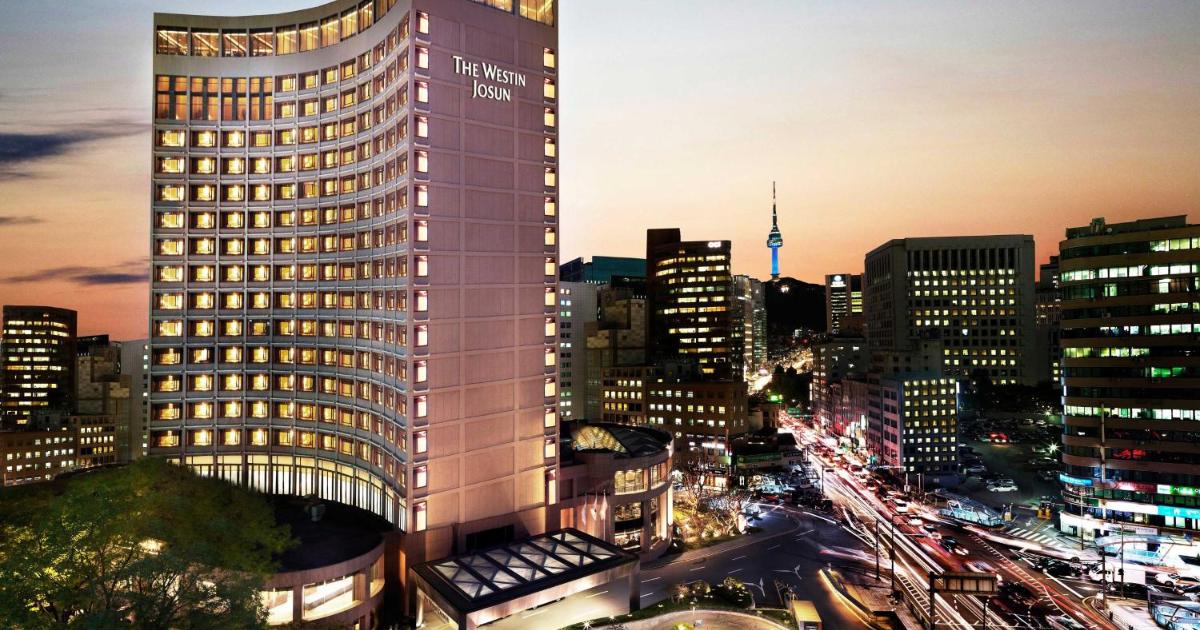
A 5-star hotel on Sogong-ro, about 350 metres from City Hall station, so Deoksugung and the Jeong-dong lanes are a few minutes away on foot. It has an indoor pool, a spa and several restaurants, and Namdaemun Market is a 7-minute walk. Expect business travellers and a busy shopping district right outside.

  • 350 m from City Hall station
  • Indoor pool and spa
  • Namdaemun Market 7 min
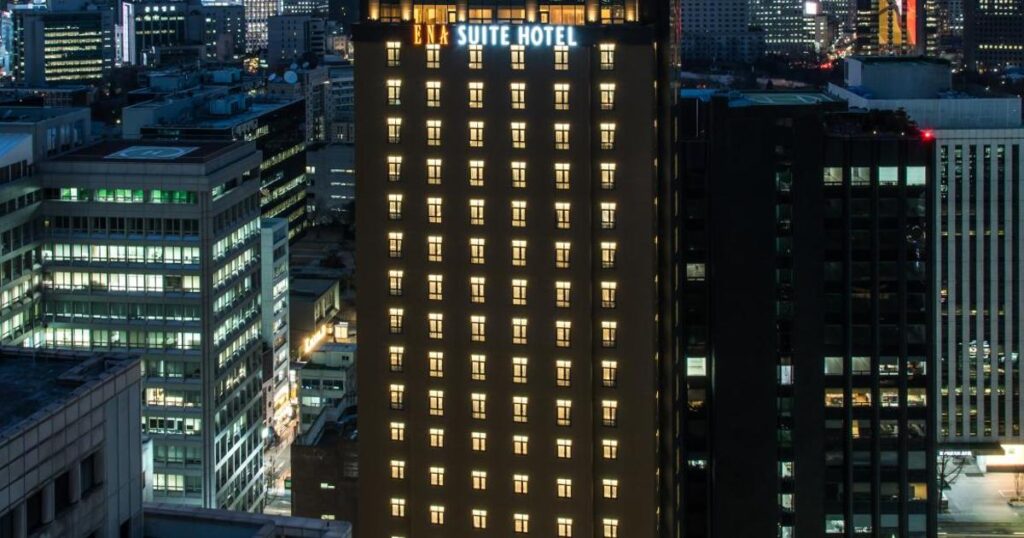
ENA Suite Hotel Namdaemun
Premium stay
⭐ 9.0 Superb
2880 reviews

ENA Suite Hotel Namdaemun

Jeong-dong • 4-star hotel • Sejong-daero 11-gil

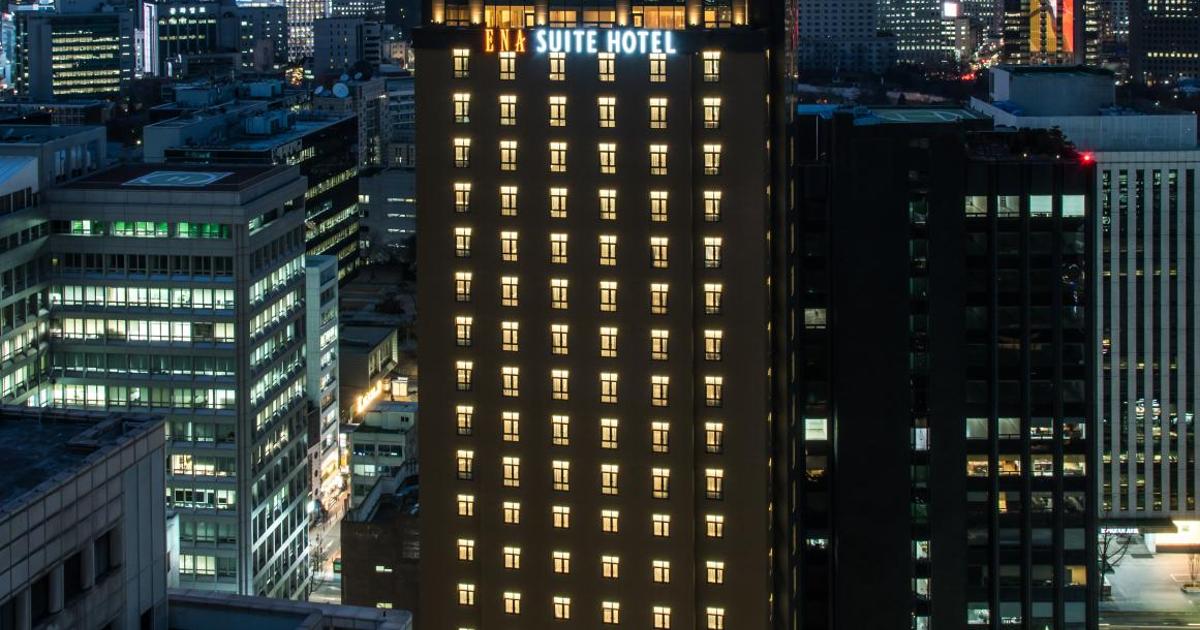
A 4-star hotel on Sejong-daero 11-gil, on the south side of Deoksugung between City Hall and Namdaemun gate. Rooms are large, with work desks and city views, and there is an indoor pool and a gym. The Seoul Museum of Art and Jeongdong-gil are about 10 minutes' walk away.

  • Spacious rooms with desks
  • Indoor pool and gym
  • Walk to Deoksugung

How we choose

For culture and history we look first at the walk to the palaces and old streets, then at traditional stays such as hanok guesthouses, and only then at guest ratings.

The best areas to stay in Seoul for culture and history

Four bases, each with a history route, a traditional place to eat and an honest note on what to expect.

Bukchon (북촌)

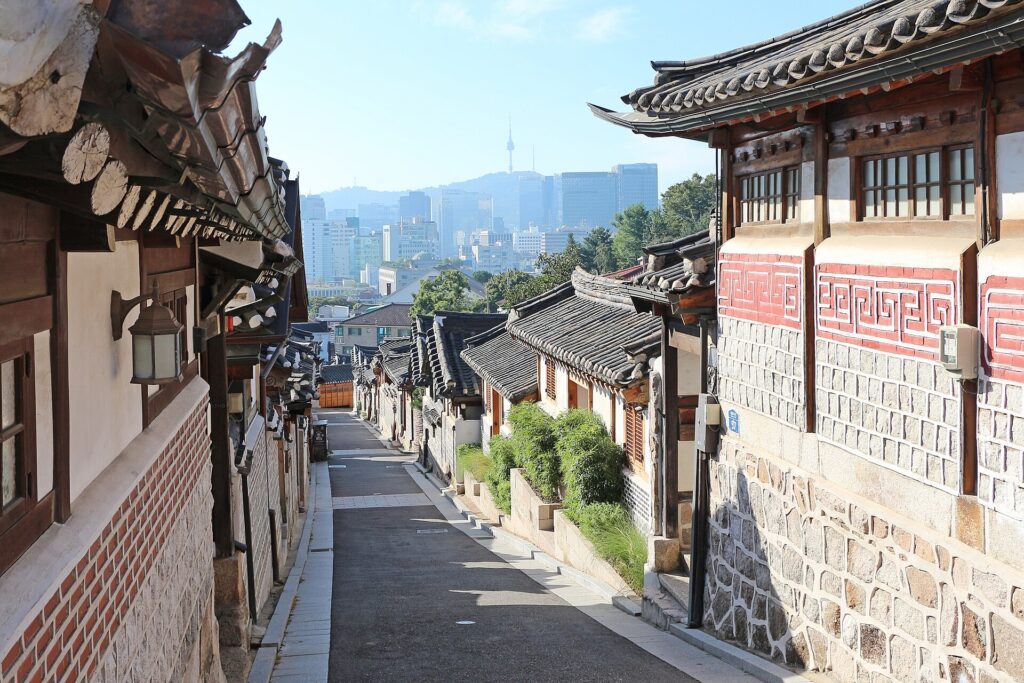
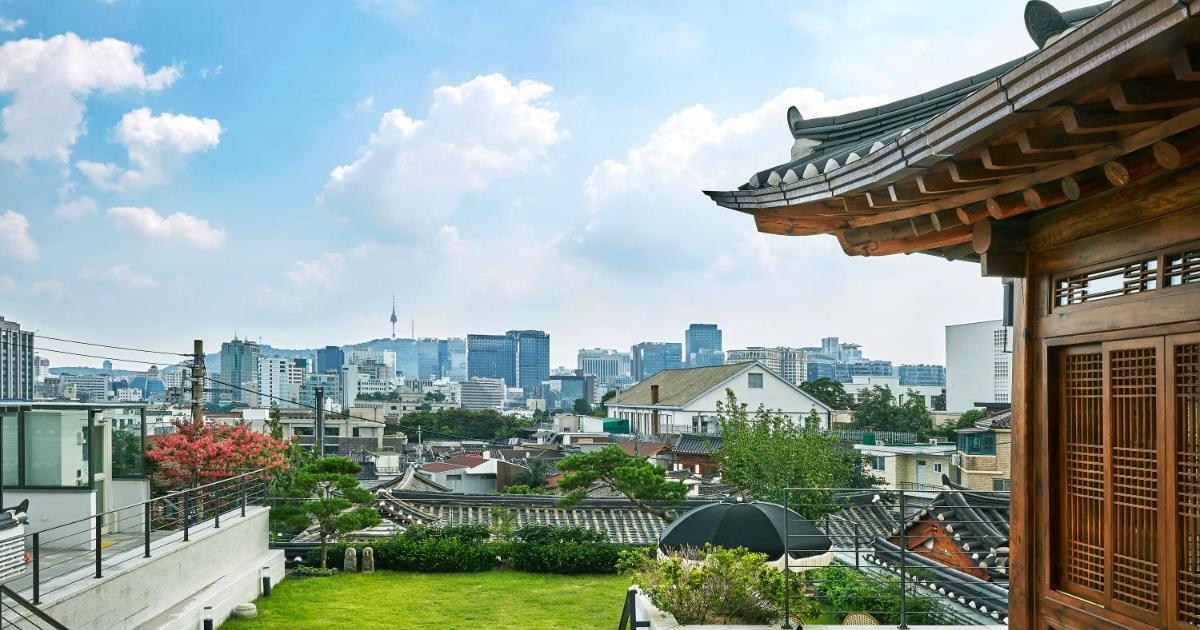
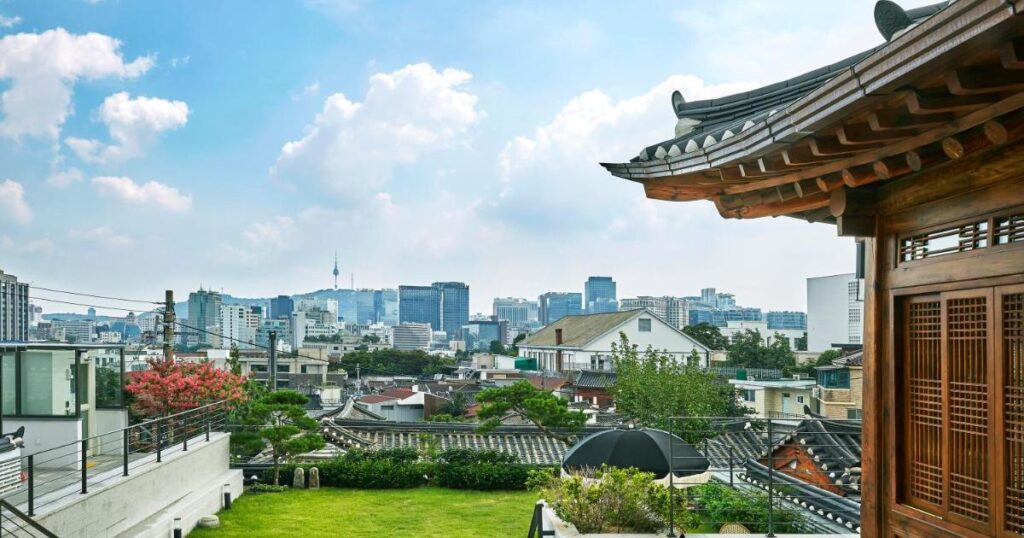
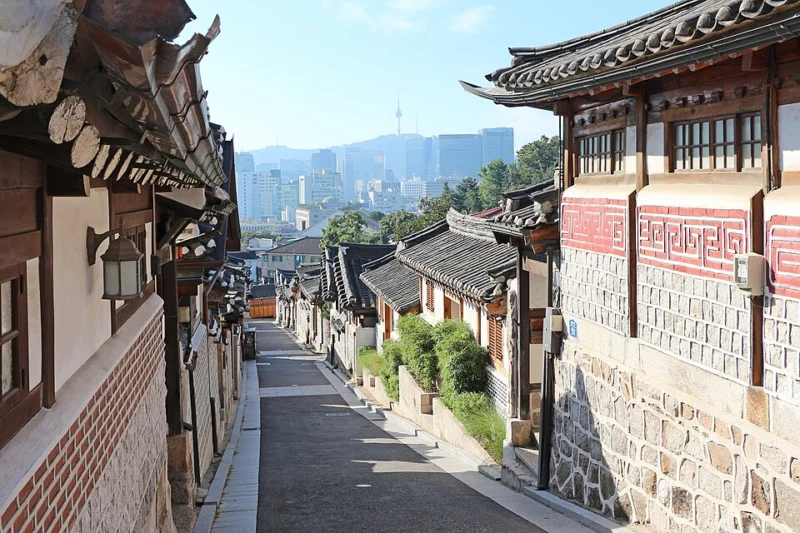
Bukchon, the “north village”, is the hill of tiled-roof hanok between Changdeokgung and Gyeongbokgung where Joseon officials and nobles once lived. Many of its houses now take guests, and that is the real reason to stay: since November 2024, visitors who are not staying in the village may enter the busiest lanes only between 10am and 5pm, so a hanok guesthouse gives you the alleys at dawn and after dark.

Start at Changdeokgung when it opens and book the Secret Garden tour, then climb into Gahoe-dong for the folk paintings of the Gahoe Museum and the rooftop views along Bukchon-ro 11-gil. Lunch is a bowl of sujebi in Samcheong-dong, and the afternoon fits MMCA Seoul, the national modern-art museum, which stays open until 9pm on Wednesdays and Saturdays.

The honest downside: it is a lived-in neighbourhood with steep lanes, thin hanok walls and few late-night places, and residents expect you to keep your voice down.

Local picks

For Culture & History
  • 1
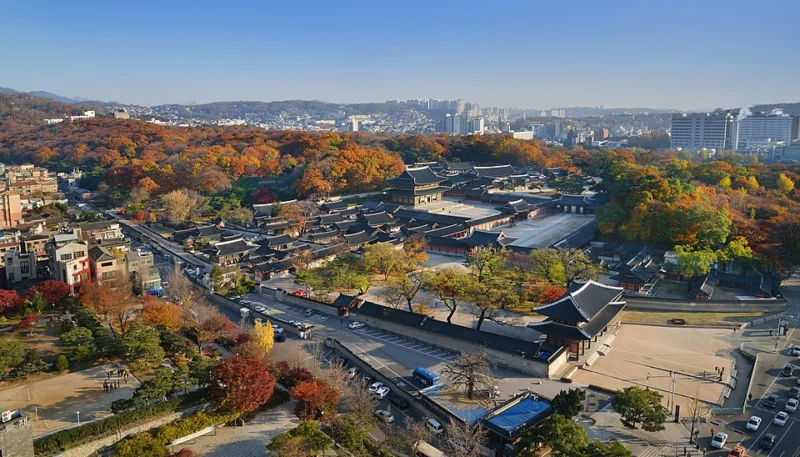
    MorningChangdeokgungFounded in 1405 and preferred by most Joseon kings to Gyeongbokgung. Arrive at opening time and book the Secret Garden tour ahead; the palace is closed on Mondays.
  • 2
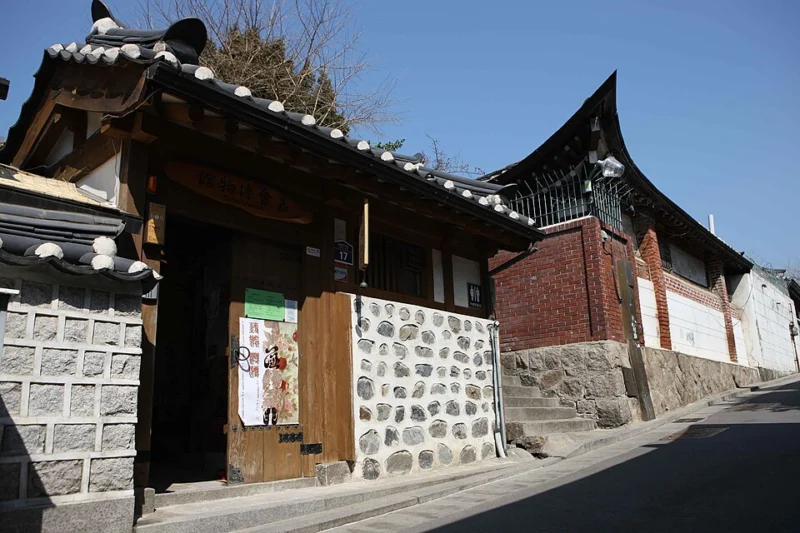
    Folk artGahoe MuseumA private museum in a hanok on Bukchon-ro with folk paintings, amulets and old books. It also runs folk-painting workshops if you want to try the brushwork yourself.
  • 3
    Hanok lanesBukchon Hanok VillageThe tiled roofs of Bukchon-ro 11-gil and the lanes of Gahoe-dong are the classic view of old Seoul. Walk them early if you are staying here, keep quiet and respect the homes, because people live behind every gate.
  • 4
    LunchSamcheongdong SujebiA canteen in Samcheong-dong known for sujebi, hand-torn dough in a mild broth. It opens at 11am and there is usually a queue at lunchtime.
  • 5
    AfternoonMMCA SeoulThe national museum of modern and contemporary art opened here in 2013 on the site of the former Defense Security Command, beside Gyeongbokgung. It stays open until 9pm on Wednesdays and Saturdays.
  • Getting aroundAnguk stationAnguk on Line 3 sits at the foot of Bukchon, one stop from Gyeongbokgung station and a short walk from Insadong. From the upper lanes it is 10–15 minutes downhill.
  • Where to stayBukchon is the place for a hanok guesthouse: rooms off a courtyard, floor bedding in some and shared bathrooms in the cheaper ones. Check the stairs and the walk up from Anguk before you book, and remember that guests are the only visitors allowed in the busiest lanes outside 10am–5pm.

Did you know?

North village Bukchon means “north village”: it lies north of the Cheonggyecheon stream and Jongno.
Home of the officials A family register from 1906 recorded that 43.6% of Bukchon’s residents were high-ranking officials and nobility.
A UNESCO palace Changdeokgung, founded in 1405, has been a UNESCO World Heritage Site since 1997.
Visiting hours Since November 2024 day visitors may enter the busiest lanes only from 10am to 5pm; guesthouse guests are exempt.
Bukchon (북촌)

Seochon (서촌)

Seochon, the “western village”, is the old neighbourhood on the west side of Gyeongbokgung. Its lanes of hanok and 1930s houses climb towards Inwangsan, and they are full of small museums, old shops and quiet guesthouses. For a history trip it is the best base in Seoul: you can be at the palace gate when it opens and back in your room at lunchtime.

Start at the Joseon altar of Sajikdan, see the royal collections at the National Palace Museum, then cross into the lanes for lunch at Tongin Market. Afternoons are for the former home of the painter Park No-soo, the valley that Jeong Seon painted and the museum of the poet Yun Dong-ju, who lived here as a student.

The honest downside: rooms are small and few, the lanes are hilly, and Seochon is quiet at night — great for sleep, less so if you want bars.

Local picks

For Culture & History
  • 1
    MorningSajikdan AltarThe altar where Joseon kings made offerings to the gods of the earth and grain, set up when Seoul became the capital. A quiet, open site to start the day before the palaces get busy.
  • 2
    Royal collectionsNational Palace Museum of KoreaRoyal seals, robes, carriages and court objects of the Joseon dynasty, right beside Gyeongbokgung. Go before or after the palace — it explains what you are looking at there.
  • 3
    Old innBoan YeogwanA 1930s inn opposite the palace walls, now an art space. Poets such as Seo Jeong-ju once stayed here; drop in to see what is on.
  • 4
    LunchTongin MarketA small covered market with a lunchbox café: you buy old-style brass coins and use them to fill your tray at the stalls. Simple, cheap and very Seochon.
  • 5
    Painter’s housePark No-soo Art MuseumThe former home of the painter Park No-soo, a 1930s house now run as a small museum. Opening hours are limited — check before you go.
  • 6
    Joseon landscapeSuseong-dong ValleyA rocky valley at the top of Seochon, painted by Jeong Seon in the 18th century. A small stone bridge still crosses the stream where his painting shows it.
  • 7
    AfternoonYun Dong-ju Literature MuseumA small museum to the poet Yun Dong-ju, built inside old water-supply buildings on the hill above Seochon. About 15 minutes uphill from the valley; closed on Mondays.
  • Getting aroundGyeongbokgung stationLine 3 at Gyeongbokgung station is at the south end of Seochon; it runs to Anguk for Bukchon and Insadong, and south to Sinsa in Gangnam. Gwanghwamun (Line 5) is a 10-minute walk.
  • Where to staySeochon has small guesthouses and a few hanok stays, but no big hotels. Book early, check whether the room has a proper bed or a mattress on the floor and whether the bathroom is shared, and look at how far up the hill it is from Gyeongbokgung station.

Did you know?

Home of the middle class In the Joseon era Seochon was home to many jungin — court interpreters, doctors and other technical officials.
The western village Seochon means “western village”, from its place west of Gyeongbokgung.
A poet’s student days The poet Yun Dong-ju boarded in Seochon in 1941 while studying in Seoul.
Seochon (서촌)

Cheonggyecheon (청계천)

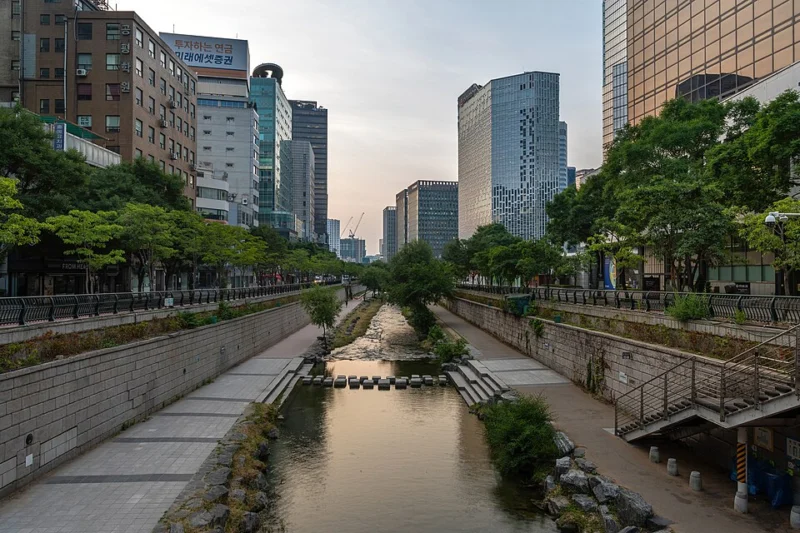
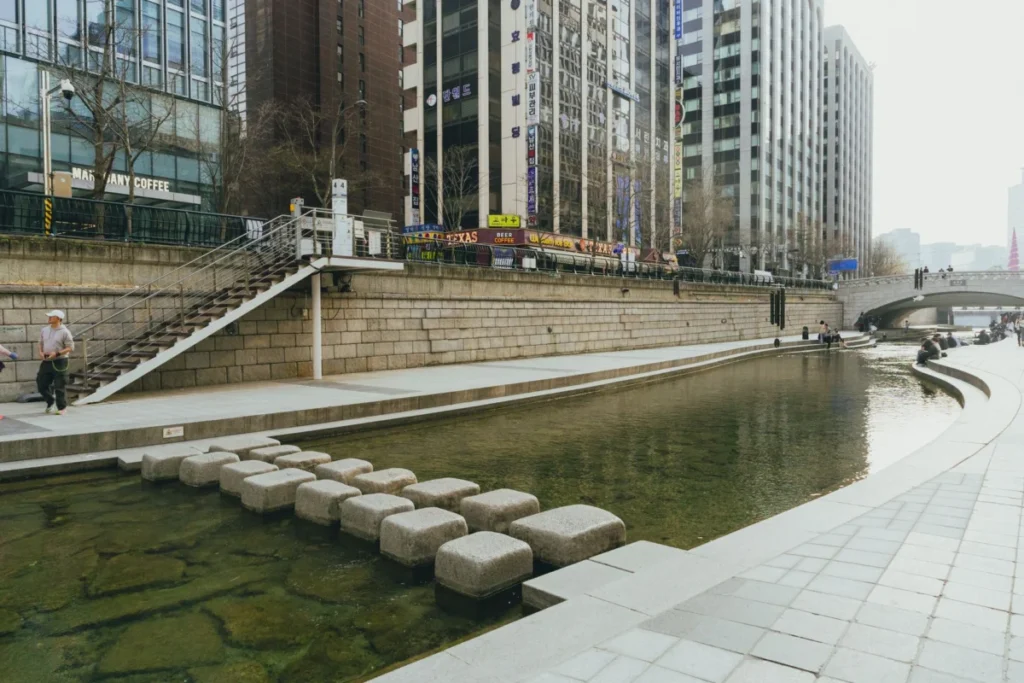
The Cheonggyecheon stream runs through the old commercial heart of Seoul, between the palace quarter to the north and the business district to the south. Staying on its Jongno side puts you among the oldest streets of the city: the Joseon bell pavilion, the park where the 1919 independence movement began, and the royal shrine of Jongmyo.

Walk the stream in the morning from Cheonggye Plaza, past the stone bridge of Gwangtonggyo, then turn north into Jongno for Bosingak and Tapgol Park. Spend the afternoon at Jongmyo and end the day at Gwangjang Market, one of the oldest markets in Korea, with mung-bean pancakes at a stall counter.

The honest downside: this is a busy, central business area — traffic on Jongno, office crowds at lunch, and not much charm in the side streets after dark.

Local picks

For Culture & History
  • 1
    Morning walkCheonggyecheonStart at Cheonggye Plaza, where the stream begins, and walk down the steps to the water. In the morning the path is quiet and shady.
  • 2
    Joseon bridgeGwangtonggyo BridgeThe largest stone bridge of Joseon Seoul, rebuilt on the stream during its restoration. Look at the carved stones in its base — they were taken from the tomb of a Joseon queen in the early 1400s.
  • 3
    Bell pavilionBosingak Bell PavilionThe pavilion on Jongno whose bell once marked the opening and closing of the city gates. Today it is rung at midnight on New Year’s Eve.
  • 4
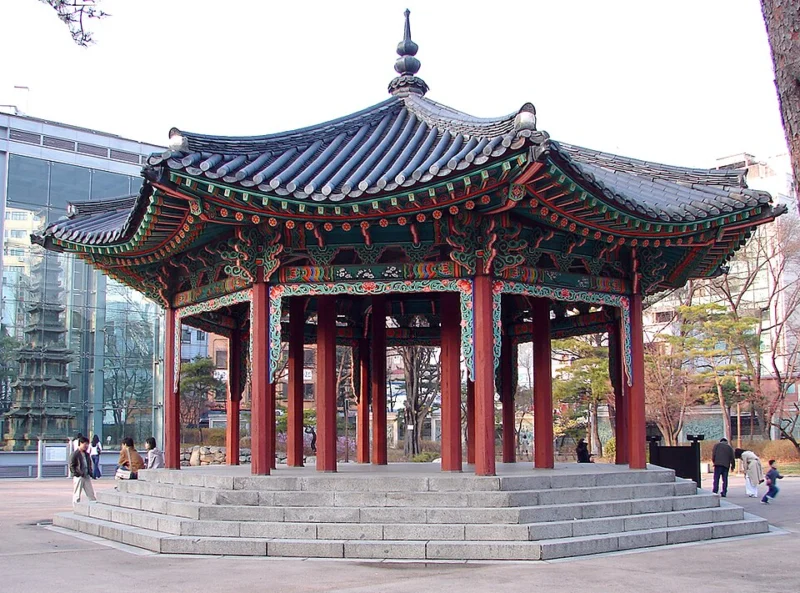
    Free historyTapgol ParkThe small park where the Declaration of Independence was read on 1 March 1919, with reliefs of the independence movement. The ten-storey Wongaksa pagoda stands in a glass case in the middle.
  • 5
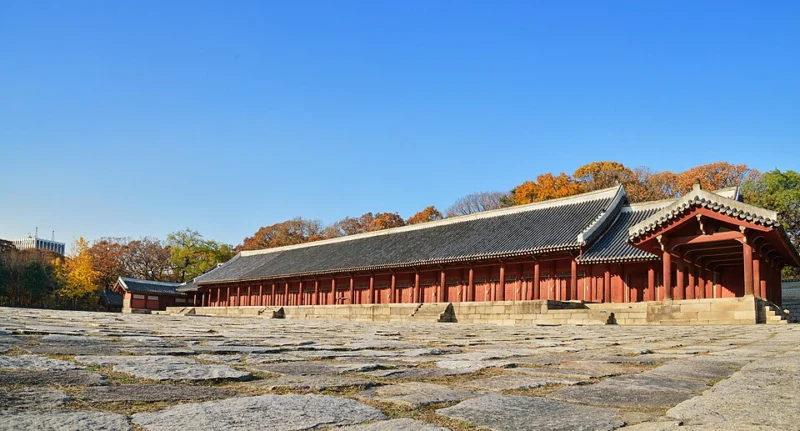
    AfternoonJongmyo ShrineThe royal ancestral shrine of the Joseon dynasty and a UNESCO World Heritage site — a long, low hall of spirit tablets that is one of the most impressive buildings in Seoul. Most days you visit on a guided tour; closed on Tuesdays.
  • 6
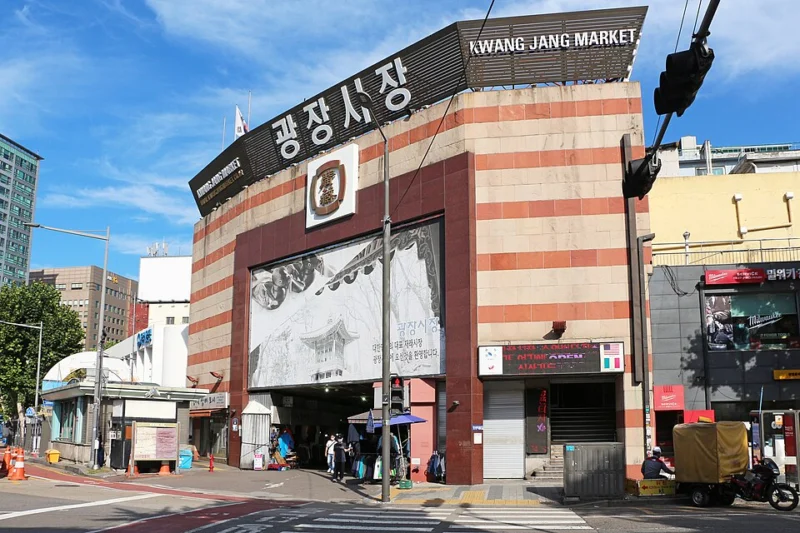
    Market dinnerGwangjang MarketOne of the oldest and largest traditional markets in Korea. Sit at a stall counter for bindaetteok, the mung-bean pancakes it is famous for, and mayak gimbap.
  • Getting aroundJonggak and Jongno 3-ga stationsLine 1 stops at Jonggak and Jongno 3-ga, where Lines 3 and 5 also meet. Gyeongbokgung, Insadong and Myeongdong are all a 10–20 minute walk.
  • Where to stayAlong the Jongno side of the stream you will find small hotels, serviced stays and business hotels rather than hanok. Choose something within a few minutes of Jonggak or Jongno 3-ga station, and ask for a room away from Jongno itself, which is busy with traffic.

Did you know?

A stream reborn in 2005 The stream was covered by a road and an elevated highway until a restoration finished in 2005.
Lanterns on the water Every November the Seoul Lantern Festival fills the stream with lit-up lanterns.
A 5.8 km walk The restored part of the stream runs about 5.8 km through central Seoul.
A royal clean-up King Yeongjo had the stream dredged in 1760 to stop it flooding the city.
Cheonggyecheon (청계천)

Jeong-dong (정동)

Jeong-dong is the quiet quarter behind Deoksugung, where Korea tried to become a modern empire. In 1896, after Queen Min’s murder, King Gojong took refuge in the Russian legation here, then made Deoksugung his palace and proclaimed the Korean Empire in 1897. Legations, churches and schools followed, and the stone and brick buildings along Jeongdong-gil still tell that story.

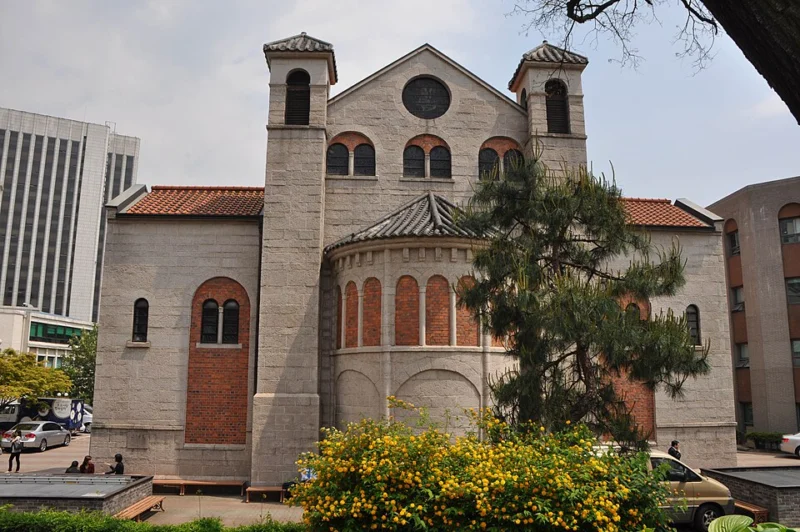
Walk the palace in the morning, then the Romanesque Seoul Anglican Cathedral and the old Supreme Court facade that now fronts the Seoul Museum of Art. Jungmyeongjeon, where the 1905 treaty that made Korea a Japanese protectorate was signed, is up the lane, and the Seoul Museum of History is ten minutes north. Evenings can end with a performance at Jeongdong Theater.

The honest downside: it is an office and embassy district, lovely by day and quiet at night, with only a handful of places to eat on the lanes themselves.

Local picks

For Culture & History
  • 1
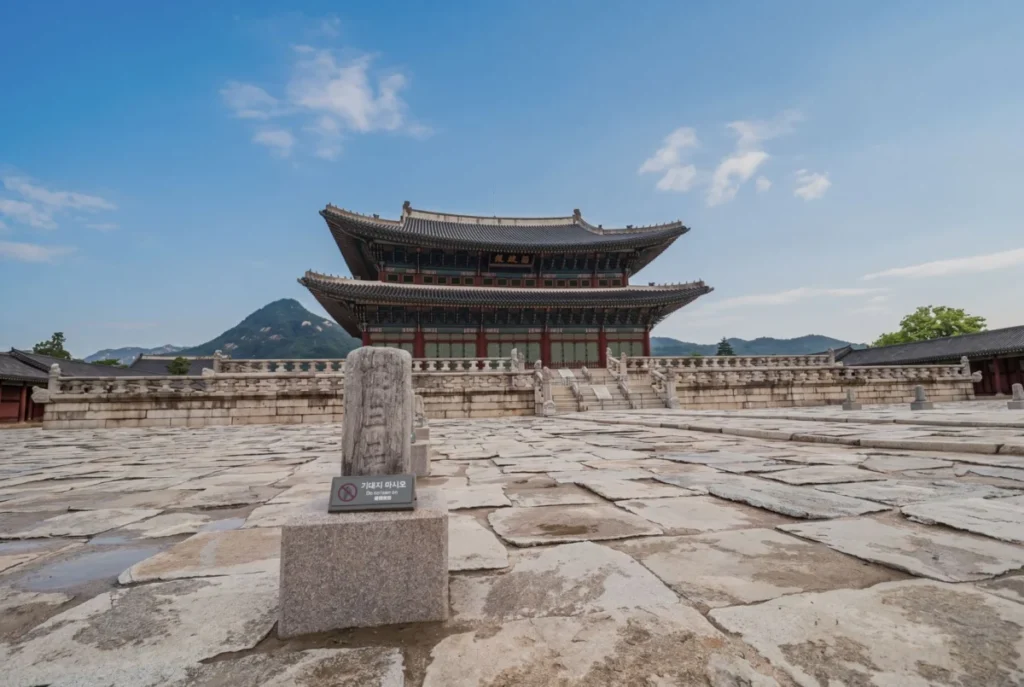
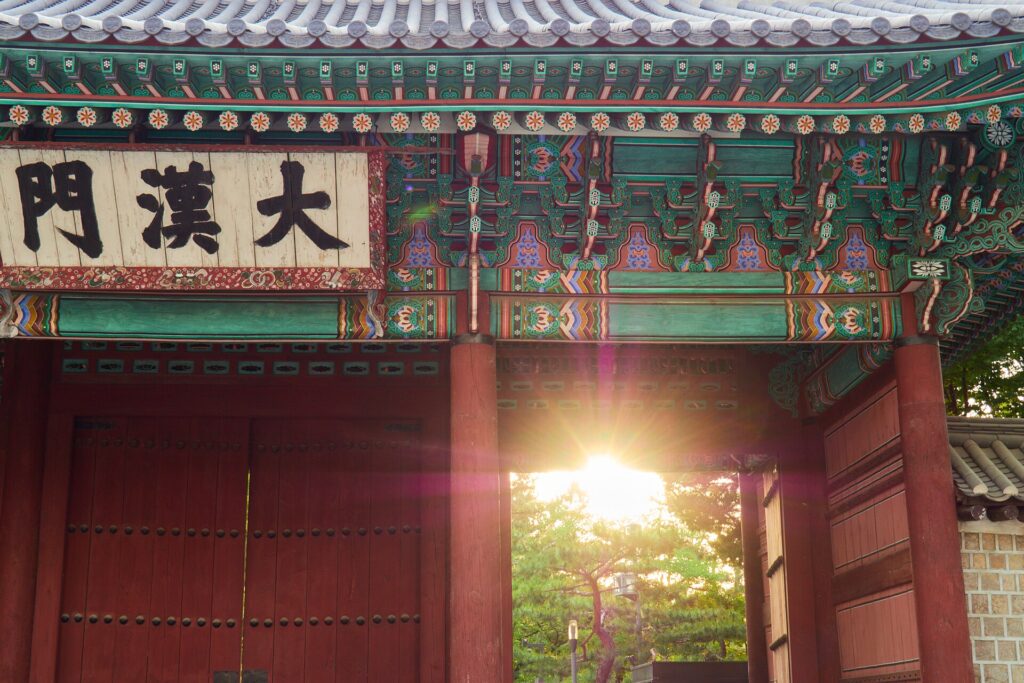
    MorningDeoksugung PalaceThe Korean Empire’s palace mixes wooden halls with the stone Seokjojeon. Check the times of the royal guard ceremony at Daehanmun gate; the palace is closed on Mondays.
  • 2
    Hidden historySeoul Anglican CathedralA Romanesque church by the English architect Arthur Dixon, begun in 1922 and finished to his plans only in 1996. Step inside for the mosaics, and remember it is a working church.
  • 3
    MuseumSeoul Museum of ArtKorean art from the 1940s to today behind the facade of the old Supreme Court building. The collection includes a large group of 1980s minjung works.
  • 4
    1905JungmyeongjeonThe two-storey hall where the Eulsa Treaty was signed in 1905, taking away Korea’s diplomatic sovereignty. It was restored in 2009 and stands just behind Jeongdong Theater.
  • 5
    AfternoonSeoul Museum of HistoryThe city’s own museum, telling the story of Seoul from the Joseon capital to today. It is ten minutes’ walk north along Saemunan-ro.
  • 6
    EveningJeongdong TheaterA theatre on Jeongdong-gil known for Korean traditional performance. Book a seat ahead and walk back along the palace wall afterwards.
  • Getting aroundCity Hall stationLines 1 and 2 stop at City Hall, right by Daehanmun gate. Gyeongbokgung, Insadong and the start of the Cheonggyecheon are 15–20 minutes on foot.
  • Where to stayJeong-dong and the streets around City Hall and Gwanghwamun have full-service hotels rather than guesthouses. Pick one within a few minutes of City Hall station and you can walk to Deoksugung, Gyeongbokgung and the Cheonggyecheon.

Did you know?

An empire’s palace Deoksugung was the main palace of the Korean Empire from 1897 to 1910; Gojong lived there until his death in 1919.
First Western building Jungmyeongjeon, once the imperial library, was the first Western-style building in the palace.
Arthur Dixon The English architect Arthur Dixon designed the Anglican cathedral; work began in 1922 and was completed only in 1996.
From court to gallery The Seoul Museum of Art’s main branch has occupied the old Supreme Court building since 2002.
Jeong-dong (정동)

Planning your stay in Seoul

For Culture & History
  • Three days of historyDay 1: Gyeongbokgung at opening time, the National Palace Museum and Seochon. Day 2: Changdeokgung and its Secret Garden tour, Bukchon and Insadong. Day 3: Jongmyo Shrine, Tapgol Park, the Cheonggyecheon and dinner at Gwangjang Market.
  • Tickets and timingGyeongbokgung and Jongmyo close on Tuesdays, Changdeokgung and Deoksugung on Mondays. Wearing hanbok gets you into the palaces for free. The Secret Garden and most Jongmyo visits are by guided tour — book ahead.
  • Beat the crowdsBe at Gyeongbokgung when it opens and walk straight to the back halls. Save museums for the middle of the day, and visit Bukchon’s lanes early — they are residential, with visiting hours in the busiest parts.
  • Beyond the top tenThe Sajikdan altar and the Yun Dong-ju Literature Museum in Seochon, Gwangtonggyo bridge on the Cheonggyecheon, the Gahoe Museum in Bukchon and Jungmyeongjeon behind Deoksugung.
Self-guided walking tours Culture & History (Seoul, South Korea)
Routes 4
Pick a route

Best time to visit Seoul (South Korea)

Now (November) avg high: 11°C, mostly dry, full season — expect crowds. Best months to walk: Nov & Apr.

Live Temp …
~Day / Night Temp 11°C / 2°C
Sunrise / Sunset 7:05 / 17:27
Local time 6:04
Sea Temp 16°C
Best Months Nov & Apr
J Jan F Feb M Mar A Apr best month M May J Jun J Jul A Aug S Sep O Oct N Nov best month this month D Dec
Check Seoul hotels
Temperature Average daytime high, month by month. Zero line marks freezing point.
Crowds How busy it gets — traveller interest by month.
Sea temperature Sea warmth for swimming, by month.
Rainfall Rainy days to expect each month.
Sunshine Hours of sun per day, by month.
Seoul guides →

Best places to stay in Seoul for culture lovers

Guesthouses and small hotels close to the palaces, the old streets or a direct metro line to them.
Bukchon Binkwan by Rakkojae
Smart choice
9.2 Superb
63 reviews

Bukchon Binkwan by Rakkojae

A small hotel on Bukchon-ro 11ga-gil, in the hanok lanes between Changdeokgung and Gyeongbokgung, with a garden, a lounge and a coffee shop. Staying here puts you inside the village when day visitors are kept out, so you can walk the alleys before 10am and after 5pm. Only 63 reviews so far, but they are strong, and Anguk station is a 10-minute walk downhill.

Ideal for: History lovers who want the hanok lanes at dawn and after the day crowds leave
Seochon Guesthouse
Best overall
9.7 Exceptional
289 reviews

Seochon Guesthouse

A guesthouse in Seochon, the old neighbourhood west of Gyeongbokgung, and the best-rated stay in this guide. From here you can walk to the palace gates, Tongin Market and the small museums of Seochon. Check the room photos — guesthouses in old Seochon houses are often compact.

Ideal for: Travellers who want to wake up next to the palace
Sam House 2 Seochon
Top pick
8.9 Very Good
35 reviews

Sam House 2 Seochon

A small guesthouse in Seochon, among the cafés and old houses west of Gyeongbokgung. A good-value way to stay in the palace quarter; check the address and room type before you book.

Ideal for: Travellers who want Seochon at a lower price
Hotel Lemong
Central location
8.8 Fabulous
5408 reviews

Hotel Lemong

A 3-star hotel on Jong-ro 16-gil, a few minutes from Tapgol Park and the Cheonggyecheon, with more than 5,000 reviews behind its 8.8 score. Insadong, Jongmyo Shrine and Gwangjang Market are all walkable, and there is a garden and a lounge for planning the next day. Rooms are soundproofed, which helps on this busy stretch of Jongno.

Ideal for: Culture travellers who want Jongmyo, Insadong and the old markets on foot
Amare Hotel Jongno
Walkable area
8.8 Fabulous
2381 reviews

Amare Hotel Jongno

A 3-star hotel on Supyo-ro 22-gil, about 350 metres from Jongno 3-ga station, with a 24-hour front desk and luggage storage. Insadong is around 500 metres away, Jongmyo Shrine and the Cheonggyecheon are a short walk, and plenty of places to eat are within 10 minutes. It is a practical, central base rather than a characterful one.

Ideal for: Travellers who want a central, practical base for Jongmyo and Insadong
Westin Josun Seoul Hotel
Editor’s choice
9.3 Superb
1445 reviews

Westin Josun Seoul Hotel

A 5-star hotel on Sogong-ro, about 350 metres from City Hall station, so Deoksugung and the Jeong-dong lanes are a few minutes away on foot. It has an indoor pool, a spa and several restaurants, and Namdaemun Market is a 7-minute walk. Expect business travellers and a busy shopping district right outside.

Ideal for: Culture travellers who want a full-service hotel within walking distance of Deoksugung
ENA Suite Hotel Namdaemun
Premium stay
9.0 Superb
2880 reviews

ENA Suite Hotel Namdaemun

A 4-star hotel on Sejong-daero 11-gil, on the south side of Deoksugung between City Hall and Namdaemun gate. Rooms are large, with work desks and city views, and there is an indoor pool and a gym. The Seoul Museum of Art and Jeongdong-gil are about 10 minutes' walk away.

Ideal for: History travellers who want space and a walk to Deoksugung and Namdaemun

Visiting in spring or autumn?

The palaces are at their best in April and October–November, and so are the crowds — hanok guesthouses near Gyeongbokgung have few rooms and fill first.

Compare Seoul stays for culture lovers

Location, style and the walk to the sights — side by side.
Seochon Guesthouse
Best overall
9.7 Exceptional
289 reviews

Seochon Guesthouse

Seochon • Guesthouse • Next to Gyeongbokgung
Best base for the palaces
Location
28-3 Jahamun-ro 7-gil, Jongno-gu
Historic Building
Old Seochon streets
Quiet Area
Quiet lanes at night
Sam House 2 Seochon
Top pick
8.9 Very Good
35 reviews

Sam House 2 Seochon

Seochon • Guesthouse • Local lanes
Good value in the palace quarter
Cafes
Cafés nearby
Budget Friendly
Good value
Location
13-2 Pirundae-ro 5-gil, Jongno-gu

Traditional Local Food Seoul (South Korea)

Main course Meat

Bibimbap

비빔밥
bee-bim-bahp

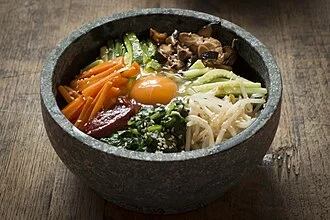
A mixed rice dish with assorted vegetables and beef, often topped with a fried egg.

Open Bibimbap recipe
Main course Meat

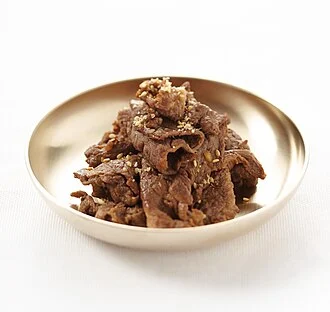
Bulgogi

불고기
bool-goh-gee

Thinly sliced marinated beef barbecued or grilled over an open flame.

Open Bulgogi recipe
Main course Vegetarian

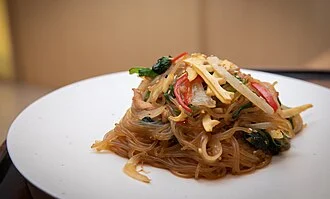
Japchae

잡채
jahp-cheh

Savory and slightly sweet stir-fried glass noodles with vegetables.

Open Japchae recipe
Soup Fish & Seafood

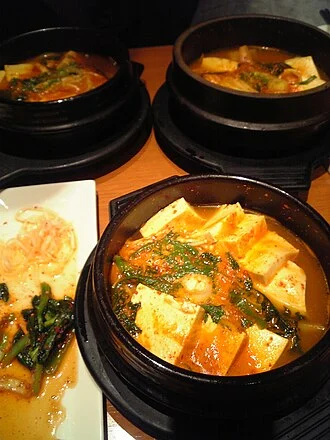
Jjigae

찌개
jee-gae

Korean stew often made with meat, seafood, or vegetables.

Open Jjigae recipe
Kimchi
Side dish Fish & Seafood

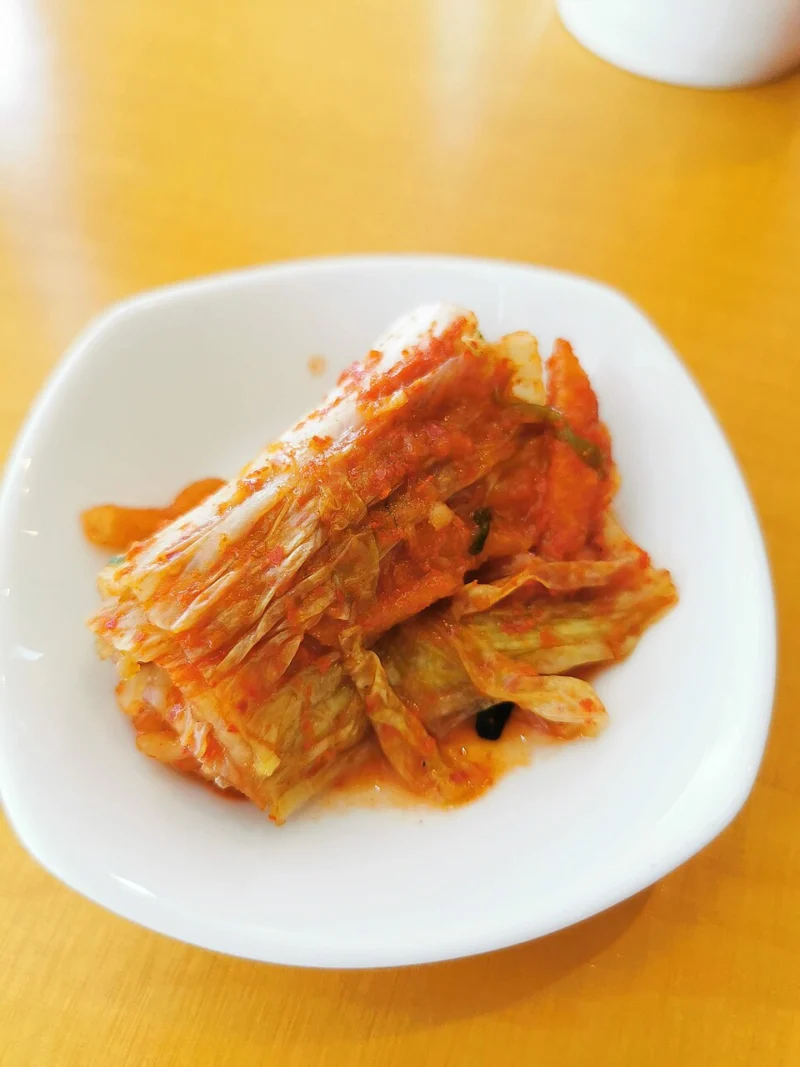
Kimchi

김치
kim-chee

A fermented vegetable dish, primarily made of napa cabbage and Korean radishes.

Open Kimchi recipe
Soup Meat

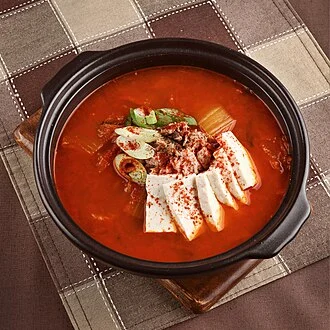
Kimchi Jjigae

김치찌개
kim-chee jee-geh

A hearty Korean stew made with kimchi, tofu, and pork.

Open Kimchi Jjigae recipe
Main course Meat

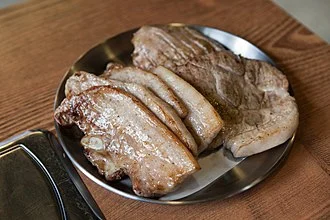
Samgyeopsal

삼겹살
sahm-gyup-sahl

Grilled pork belly pieces served with various side dishes.

Open Samgyeopsal recipe
Soup Meat

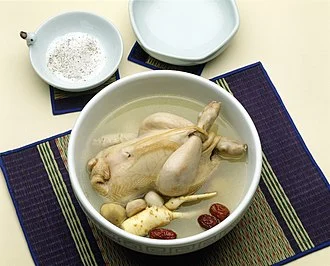
Samgyetang

삼계탕
sam-gyay-tang

Ginseng chicken soup with a whole young chicken stuffed with rice and herbs.

Open Samgyetang recipe
Main course Meat

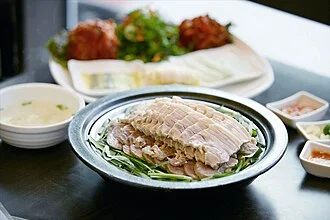
Su Yuk

수육
soo-yook

Boiled pork slices served with napa cabbage and spicy condiments.

Open Su Yuk recipe
Street food Vegan

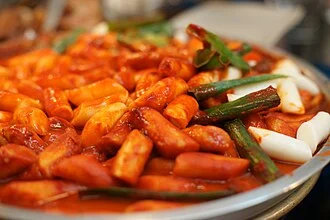
Tteokbokki

떡볶이
tuhk-bohk-kee

Spicy and sweet rice cakes cooked in a chili-based sauce.

Open Tteokbokki recipe

Activities & Experiences

Things to Do in Seoul

Top-rated tours, day trips and local experiences — book in advance to secure your spot.

City & Country Data Seoul (South Korea)

Key travel data for Seoul — local prices, safety, healthcare, local currency and essentials, curated by Triplandio.

Safety 🔒 70
Health 🏥 94
Lifestyle ⭐ 62
Infra 🏗️ 100
Rank 🎯 #10
Score 📊 68
Tourists ✈️ 2.5M/y
GDP/cap 💵 $36.2k
Life Exp ❤️ 83.6 yrs
Population 👥 51.7M
Currency 💱 KRW ₩
Language 🗣️ Korean
Payments 💳 Cards OK
Emergency 🆘 112
Coffee ☕ $3.85
Beer 🍺 $3.85
Lunch 🍽️ $9.63
Groceries 🛒 $35.00/w
Taxi/km 🚕 $1.85
Transit 🚇 $1.15
Fuel ⛽ $1.25/l
Internet 📡 $30.00/m
Salary 💵 $2,000/m

Travel tipsSeoul (South Korea)

Quick tips

  1. Even a little cannabis means prison — Critical

    South Korea punishes possessing or using any illegal drug, including small amounts of cannabis, with long prison terms and heavy fines. Foreigners have been detained on the basis of a positive drug test alone.

  2. Foreigners can't join political protests — Critical

    Under Korean law it is illegal for foreign visitors to take part in political activities, including demonstrations. Stay away from rallies, however peaceful they look.

  3. Drivers are blamed for pedestrian accidents — Critical

    Korean police treat drivers as at fault in accidents with pedestrians or cyclists. If you injure someone while driving, expect criminal charges and heavy penalties, even if guilt isn't proved.

  4. Some ADHD medicines are banned — Critical

    Amphetamine-based medicines such as Adderall are illegal in South Korea, even with a prescription. Check your medicines with the Ministry of Food and Drug Safety before you travel.

  5. Check whether you need a K-ETA — Good to know

    South Korea's online Korea Electronic Travel Authorization (K-ETA) is normally needed before a visa-free trip, but many nationalities, including UK and US citizens, are exempt until 31 December 2026. Apply only on the official government website.

  • Do
  • Give and receive with both hands
  • Take shoes off where others do
  • Leave priority seats free
  • Use Naver Map or KakaoMap
  • Carry your passport
  • Don’t
  • Touch cannabis in any form
  • Join political protests
  • Stick chopsticks upright in rice
  • Pack amphetamine-based ADHD medicine
  • Pour your own drink at a group meal

Seoul tips for culture lovers

Plan around closing days

Gyeongbokgung and Jongmyo close on Tuesdays, Changdeokgung and Deoksugung on Mondays. Wearing hanbok gets you into the palaces for free, and the Secret Garden at Changdeokgung can only be seen on a guided tour.

Tip: Check the closing days

Book the guided tours

Jongmyo Shrine is mostly visited on guided tours, except on Saturdays, and the Changdeokgung Secret Garden only on a tour with its own ticket. Book them for your first days, then fit everything else around them.

Tip: Tours first, then the rest

Eat in the old markets

Tongin Market in Seochon runs a lunchbox café where you pay with old-style brass coins, and Gwangjang Market, one of the oldest markets in Korea, is known for mung-bean pancakes. Both are a taste of everyday Seoul history.

Tip: History you can eat

Seoul for culture and history: FAQ

When is the best time to visit Seoul?

The best time to visit Seoul is November and April — fewer crowds, comfortable temperatures, less rain and more sunshine. Compare every month in the seasonal chart above.

Where should I stay in Seoul for culture and history?

Bukchon and Seochon, on either side of Gyeongbokgung, and the Jongno side of the Cheonggyecheon are the best bases: the palaces, Jongmyo Shrine, Insadong and the old markets are all walkable. Jeong-dong suits travellers who want the Korean Empire story and a full-service hotel by City Hall.

Is it worth staying in a hanok?

For a history trip, yes — at least for a night or two. Expect small rooms, heated floors and often a mattress on the floor; if you need a bed and a private bathroom, check the listing carefully. Seochon and Bukchon have the most hanok stays.

Which palaces should I see, and in what order?

Start with Gyeongbokgung, the main palace, early in the morning. Then Changdeokgung, a UNESCO World Heritage site, with its Secret Garden tour, and finish at Jongmyo Shrine, where the Joseon kings were honoured. Deoksugung is best in the evening.

What can I see for free?

The changing of the guard at Gwanghwamun, Tapgol Park and the Bosingak bell pavilion, the Cheonggyecheon walk and the permanent galleries of the National Museum of Korea are all free. Palaces are free if you wear hanbok.

Where can I eat traditional Korean food?

Try samgyetang at Tosokchon in Seochon, the coin lunchbox at Tongin Market, sujebi in Samcheong-dong above Bukchon and mung-bean pancakes at Gwangjang Market.

How do I get around Seoul’s historic sights?

On foot within old Seoul, and by metro between areas with a T-money card. Anguk on Line 3 serves Bukchon, City Hall on Lines 1 and 2 serves Jeong-dong, and Gyeongbokgung station on Line 3 is the stop for Seochon.

Seoul’s history, on foot

★ For culture lovers
Seoul was the capital of the Joseon kingdom for five centuries, and most of what survives is packed into a few square kilometres north of the Cheonggyecheon stream. This guide covers four bases — hanok Bukchon between the palaces, Seochon beside Gyeongbokgung, the old commercial heart along the Cheonggyecheon and Jeong-dong behind Deoksugung, the quarter of the Korean Empire — with a history route, a traditional meal and the kind of stay to look for in each.
  • Handpicked hotels
  • Best Seoul areas
  • All budgets covered
  • Updated 2026
Asia — South Korea — Seoul — Where to Stay in Seoul for Culture Exploration
keyboard_arrow_up