

Explore Guides
AFRICA
The Gambia
Triplandio The Gambia guide covers 5 travel guides with 1 city across 20 areas, complete with hotel picks. Explore 9 self-guided walking tours in The Gambia with 14 POI, spanning 46.7 km in total. Get inspired by 5 local dishes, complete with recipes and our unique Food Flavour DNA graph.
Travel tipsThe Gambia

Quick tips
- Codeine and diazepam are banned — Critical
Some common prescription and over-the-counter medicines, including those containing codeine or diazepam, are illegal in The Gambia. Check your medicines with the Gambian High Commission before you travel.
- Unofficial trips into Senegal — Critical
Bumsters may offer tours into Senegal without proper immigration formalities, which can get you detained. Cross borders only with a licensed operator and your passport.
- Zero tolerance for drugs — Critical
Importing, exporting or possessing any drug in The Gambia can bring heavy fines or prison, and entrapment by the authorities has happened. Never carry a package for anyone.
- Say no firmly to bumsters — Caution
Young men known as bumsters approach tourists on Gambian beaches offering help, tours or friendship, then ask for money. Be polite but firm, and book guides through your hotel.
- Pay the airport security fee — Good to know
Visitors pay a 20 US dollar Airport Security Fee on arrival in The Gambia and again when leaving, at marked kiosks at Banjul airport. Carry cash, as card machines often don't work.
- Base yourself on the coast — Local tip
Almost all hotels are on the short Atlantic coast around Kololi, Kotu and Bakau. Trips upriver to Janjanbureh or the wildlife reserves take long days on rough roads, best in the dry season.
- Do
- Say no politely but firmly
- Carry cash in dalasi
- Carry a printed passport copy
- Use your right hand to eat and pay
- Check your medicines are legal
- Don’t
- Bring codeine without checking
- Take tours into Senegal from touts
- Leave valuables on the beach
- Swim in rivers or creeks
- Carry packages for anyone
Critical
Prison or heavy penalty possible
Laws & fines
- Same-sex relationships are illegal — Critical
The Gambia has zero tolerance towards LGBT+ people, and same-sex relationships can lead to long prison sentences. Men dressing as women can be jailed for 5 years.
- Child sex offences are severely punished — Critical
The Gambia has severe penalties for any sexual offence against a child, and child sex tourism is actively targeted. Report concerns to the police.
Caution
Fines, losses or injury possible
Getting between cities
- Bush taxis and minibuses — Caution
Shared minibuses and bush taxis connect Gambian towns cheaply, but they are crowded and badly maintained. Avoid travelling on them at night.
Laws & fines
- Requests for bribes — Caution
Corruption is present at all levels in The Gambia and you may be asked for a bribe. Stay calm and polite, and ask for an official receipt for any fine.
Health
- Malaria is present all year — Caution
Malaria is a risk throughout The Gambia, highest in the rainy season. Take antimalarials if advised by a travel clinic and use repellent after dark.
- Avoid freshwater swimming — Caution
Rivers and creeks in The Gambia, including the River Gambia, can carry schistosomiasis (bilharzia), a parasitic infection. Swim in the sea or in pools.
Beaches & adventure
- Don't take valuables to the beach — Caution
Thefts happen on Gambian beaches, especially isolated ones and at night. Leave passports, cash and jewellery in the hotel safe.
- Atlantic currents are strong — Caution
Waves and currents on The Gambia's Atlantic coast can be powerful and few beaches have lifeguards. Swim near your hotel and stay in your depth.
- The Banjul–Barra ferry is unsafe — Caution
The ferry across the river mouth between Banjul and Barra is often overloaded and lacks life-saving equipment. Use the Senegambia Bridge near Farafenni if you can.
- Pirogues need life jackets — Caution
Wooden pirogues (dug-out canoes) used for river and creek trips are often overloaded. Use them only for short trips and check there are life jackets.
- Driving conditions are poor — Caution
Traffic drives on the right. Roads are potholed, lighting is poor after dark and some taxis are not roadworthy, so avoid driving at night.
Good to know
Rules and useful facts
Getting between cities
- Cross the river by bridge — Good to know
To reach the north bank or Senegal, the Senegambia Bridge near Farafenni is safer than the overloaded Banjul–Barra ferry, where boats have become stranded on sandbanks.
Regions & seasons
- Quieter south coast — Good to know
Beaches south of the resorts, towards Sanyang and Kartong, are quieter and good for birding, but have fewer services and more isolated beaches, so don't go alone at night.
- Upriver: hot and remote — Good to know
Janjanbureh and the eastern river region are much hotter than the coast, especially March–May, with basic facilities and few ATMs.
Laws & fines
- Carry ID at all times — Good to know
Foreigners in The Gambia must carry ID. Police usually accept a printed copy of your passport photo page and entry stamp, so keep the original in your hotel safe.
- Expect checkpoints and searches — Good to know
Security checkpoints operate around Banjul and on all main roads in The Gambia and are not always well signposted. Slow down and expect your vehicle to be searched.
Customs
- Respect Ramadan — Good to know
During Ramadan, be considerate towards people who are fasting, check opening hours, and drive carefully around dusk when people rush home to break the fast.
Tipping & money
- The Gambia runs on cash — Good to know
The Gambia is mainly cash-based, using the dalasi (GMD). Some hotels and restaurants take Visa cards, few take other cards, and ATMs outside the Senegambia area are scarce and unreliable.
Entry & visa
- Travel advisory: Level 2 of 4 — Good to know
Exercise Increased Caution — the U.S. State Department's rating for The Gambia.
- 28-day entry stamp — Good to know
British and many other visitors need no visa for The Gambia and get a 28-day stamp on arrival. You can extend twice by 28 days at the Immigration Office in Banjul or tourist police stations.
- Passport validity — Good to know
Your passport must be valid for the whole of your stay in The Gambia; airlines may ask for more, so 6 months is safest.
- Vehicle fee at land borders — Good to know
If you drive into The Gambia in a private vehicle, you may be asked to pay a vehicle registration fee at the border.
Health
- Yellow fever certificate — Good to know
You need a yellow fever certificate to enter The Gambia if arriving from a risk country, and some countries will ask for one after you've visited The Gambia.
- No national emergency number — Good to know
The Gambia has no single emergency number like 911 or 112. Save your hotel's, the nearest police station's and your insurer's numbers when you arrive.
- Medical care is very limited — Good to know
Hospitals in The Gambia are basic, private clinics treat only paying patients, and evacuation is expensive. Bring your own medicines and full insurance.
- Drink bottled water — Good to know
Drink bottled or treated water in The Gambia and avoid ice outside good hotels. Power cuts can also disrupt the water supply.
Local tips
Local know-how
Getting between cities
- Tourist taxis versus local taxis — Local tip
Green tourist taxis wait at hotels and charge fixed, higher fares. Yellow local taxis are cheaper but often in poor condition; agree the fare before you get in.
- Hire a driver for upriver trips — Local tip
Roads upcountry are potholed and flood in the rainy season. For trips to Janjanbureh or the River Gambia National Park, hire a driver or guide through a reputable operator.
Regions & seasons
- The coastal resort strip — Local tip
The Tourism Development Area around Kololi, Kotu, Bakau and Cape Point has most hotels, restaurants and ATMs, and is busiest November–May.
Customs
- A Muslim country: dress modestly — Local tip
Most Gambians are Muslim. Swimwear is fine on the beach and at hotel pools, but cover shoulders and knees in towns, markets and villages.
- Greetings take time — Local tip
Gambians exchange long greetings, asking after your health and family, before getting to business. Take part patiently; rushing is seen as rude.
- Use your right hand — Local tip
The left hand is considered unclean. Eat, shake hands and pass money or food with your right hand.
Tipping & money
- Tipping is appreciated — Local tip
Wages are low in The Gambia, and a tip of around 10% in restaurants and a small tip for guides and drivers is welcome, though never compulsory.
- Bargain at craft markets — Local tip
Prices at craft markets and for beach sellers start high. Haggle with a smile and walk away if the price stays too high.
- Bring clean foreign notes — Local tip
Euros, pounds and US dollars can be exchanged at banks and bureaux in the tourist area. Clean, undamaged notes get better rates.
Our The Gambia city guides
Book guides and trips through your hotel and ignore beach bumsters offering tours.
Say it locally
English is the official language, but Wolof and Mandinka are spoken every day; starting with “Salaam aleekum” is always polite.
Through the year
Festival or season Public holiday (exact date)
- Dry tourist season
Nov 2026–May 2027 · Sunny, dry weather and the main holiday season; hotels near Senegambia are busiest around Christmas and in February.
- Birdwatching season
Nov 2026–Mar 2027 · Migrant birds from Europe join hundreds of resident species; the best months for birding trips along the coast and river.
- Harmattan dust
Dec 2026–Feb 2027 · A dry, dusty wind from the Sahara can bring haze and cooler mornings; bring eye drops if you wear contact lenses.
- Christmas Day
Fri 25 Dec 2026 · Public holiday
- New Year
Fri 1 Jan 2027 · Public holiday
- Ramadan
Feb–Mar 2027 · The Muslim holy month falls in February–March in 2026 and 2027 and moves about 11 days earlier each year; shops and restaurants may change hours.
- Independence Day
Thu 18 Feb 2027 · Public holiday
- Lailat al-Qadr
Sat 6 Mar 2027 · Public holiday
- Eid al-Fitr (tentative)
Wed 10 Mar 2027 · Public holiday
- Good Friday
Fri 26 Mar 2027 · Public holiday
- Easter Monday
Mon 29 Mar 2027 · Public holiday
- Labour Day
Sat 1 May 2027 · Public holiday
- Eid al-Adha (tentative)
Mon 17 May 2027 · Public holiday
- Africa Day
Tue 25 May 2027 · Public holiday
- Rainy season
Jun–Oct 2027 · Heavy storms cause local flooding and make rural roads hard to pass; malaria risk is highest and some hotels close.
- Ashura (tentative)
Tue 15 Jun 2027 · Public holiday
- Assumption of Mary
Sun 15 Aug 2027 · Public holiday
- The Prophet's Birthday (tentative)
Sun 15 Aug 2027 · Public holiday
Sources: GOV.UK travel advice · U.S. State Dept · Google public holidays
Traditional Local Food The Gambia
🌿
Breakfast
Vegetarian
Chura Gerte
Chura Gerté
Chu-rah Ger-teh
· Peanut butter porridge
A creamy breakfast porridge made with rice and peanut butter.
Open Chura Gerte recipe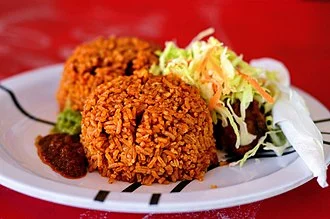
Main course
Fish & Seafood
Benachin
Beh-nah-chin
· One-pot rice and fish
A savory and spicy one-pot rice and fish dish.
Open Benachin recipe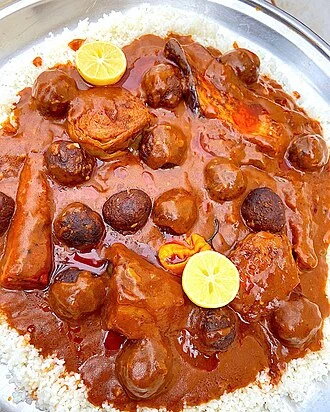
Main course
Meat
Domoda
Doh-moh-dah
· Peanut stew with rice
A rich and creamy peanut stew with meat, served with rice.
Open Domoda recipe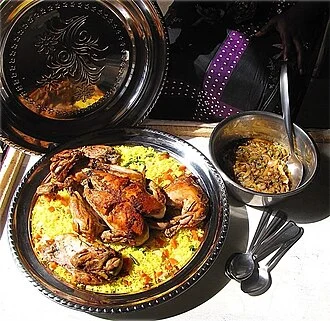
Main course
Meat
Yassa
Yah-sah
· Tangy grilled chicken
Marinated grilled chicken in a lemon-onion sauce.
Open Yassa recipe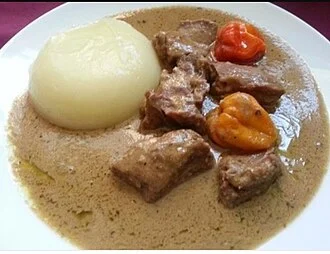
Soup
Meat
Maafe
Mah-feh
· Peanut butter soup
A hearty soup with peanut butter, vegetables, and meat.
Open Maafe recipe