Explore Guides
AFRICA / THE GAMBIA
Triplandio Senegambia guide covers 5 travel guides across 20 areas, complete with hotel picks. Explore 9 self-guided walking tours in Senegambia with 14 POI, spanning 46.7 km in total. Get inspired by 5 local dishes, complete with recipes and our unique Food Flavour DNA graph.
Senegambia
City & Country Data Senegambia (The Gambia)

Key travel data for Senegambia — local prices, safety, healthcare, local currency and essentials, curated by Triplandio.
💰 Prices in Senegambia
Coffee
$2.50
Beer
$2.50
Lunch
$5.00
Groceries
$20.00/w
Taxi/km
$1.00
Transit
$0.50
Fuel
$1.50/l
Internet
$50.00/m
Salary
$1,000/m
Travel tipsSenegambia (The Gambia)

Quick tips
- Codeine and diazepam are banned — Critical
Some common prescription and over-the-counter medicines, including those containing codeine or diazepam, are illegal in The Gambia. Check your medicines with the Gambian High Commission before you travel.
- Unofficial trips into Senegal — Critical
Bumsters may offer tours into Senegal without proper immigration formalities, which can get you detained. Cross borders only with a licensed operator and your passport.
- Zero tolerance for drugs — Critical
Importing, exporting or possessing any drug in The Gambia can bring heavy fines or prison, and entrapment by the authorities has happened. Never carry a package for anyone.
- Say no firmly to bumsters — Caution
Young men known as bumsters approach tourists on Gambian beaches offering help, tours or friendship, then ask for money. Be polite but firm, and book guides through your hotel.
- Pay the airport security fee — Good to know
Visitors pay a 20 US dollar Airport Security Fee on arrival in The Gambia and again when leaving, at marked kiosks at Banjul airport. Carry cash, as card machines often don't work.
- Do
- Say no politely but firmly
- Carry cash in dalasi
- Carry a printed passport copy
- Use your right hand to eat and pay
- Check your medicines are legal
- Don’t
- Bring codeine without checking
- Take tours into Senegal from touts
- Leave valuables on the beach
- Swim in rivers or creeks
- Carry packages for anyone
Critical
Prison or heavy penalty possible
Laws & fines
- Same-sex relationships are illegal — Critical
The Gambia has zero tolerance towards LGBT+ people, and same-sex relationships can lead to long prison sentences. Men dressing as women can be jailed for 5 years.
- Child sex offences are severely punished — Critical
The Gambia has severe penalties for any sexual offence against a child, and child sex tourism is actively targeted. Report concerns to the police.
Caution
Fines, losses or injury possible
Scams & safety
- Friendly strangers who “know you” — Caution
In Senegambia, someone may say they work at your hotel or met you yesterday, then offer a tour or ask for money for a naming ceremony or school fees. Politely say no.
- Thefts from hotel rooms — Caution
Passports and valuables have been stolen from hotel rooms in The Gambia's resort area. Use the room safe and keep a copy of your passport separately.
Laws & fines
- Requests for bribes — Caution
Corruption is present at all levels in The Gambia and you may be asked for a bribe. Stay calm and polite, and ask for an official receipt for any fine.
Health
- Malaria is present all year — Caution
Malaria is a risk throughout The Gambia, highest in the rainy season. Take antimalarials if advised by a travel clinic and use repellent after dark.
- Avoid freshwater swimming — Caution
Rivers and creeks in The Gambia, including the River Gambia, can carry schistosomiasis (bilharzia), a parasitic infection. Swim in the sea or in pools.
Beaches & adventure
- Don't take valuables to the beach — Caution
Thefts happen on Gambian beaches, especially isolated ones and at night. Leave passports, cash and jewellery in the hotel safe.
- Atlantic currents are strong — Caution
Waves and currents on The Gambia's Atlantic coast can be powerful and few beaches have lifeguards. Swim near your hotel and stay in your depth.
- The Banjul–Barra ferry is unsafe — Caution
The ferry across the river mouth between Banjul and Barra is often overloaded and lacks life-saving equipment. Use the Senegambia Bridge near Farafenni if you can.
- Pirogues need life jackets — Caution
Wooden pirogues (dug-out canoes) used for river and creek trips are often overloaded. Use them only for short trips and check there are life jackets.
- Driving conditions are poor — Caution
Traffic drives on the right. Roads are potholed, lighting is poor after dark and some taxis are not roadworthy, so avoid driving at night.
Good to know
Rules and useful facts
Scams & safety
- Travel advisory: Level 2 of 4 — Good to know
Exercise Increased Caution — the U.S. State Department's rating for The Gambia.
- Holiday romance scams — Good to know
Some relationships that start on Senegambia's beaches are aimed at getting money, gifts or a visa. Be cautious about sending money after you go home.
- Walk in groups at night — Good to know
The Senegambia strip is lively and generally safe, but beaches and side roads are dark at night. Take a taxi back to your hotel rather than walking alone.
Laws & fines
- Carry ID at all times — Good to know
Foreigners in The Gambia must carry ID. Police usually accept a printed copy of your passport photo page and entry stamp, so keep the original in your hotel safe.
- Expect checkpoints and searches — Good to know
Security checkpoints operate around Banjul and on all main roads in The Gambia and are not always well signposted. Slow down and expect your vehicle to be searched.
Customs
- Respect Ramadan — Good to know
During Ramadan, be considerate towards people who are fasting, check opening hours, and drive carefully around dusk when people rush home to break the fast.
Tipping & money
- The Gambia runs on cash — Good to know
The Gambia is mainly cash-based, using the dalasi (GMD). Some hotels and restaurants take Visa cards, few take other cards, and ATMs outside the Senegambia area are scarce and unreliable.
Entry & visa
- 28-day entry stamp — Good to know
British and many other visitors need no visa for The Gambia and get a 28-day stamp on arrival. You can extend twice by 28 days at the Immigration Office in Banjul or tourist police stations.
- Passport validity — Good to know
Your passport must be valid for the whole of your stay in The Gambia; airlines may ask for more, so 6 months is safest.
- Vehicle fee at land borders — Good to know
If you drive into The Gambia in a private vehicle, you may be asked to pay a vehicle registration fee at the border.
Health
- Yellow fever certificate — Good to know
You need a yellow fever certificate to enter The Gambia if arriving from a risk country, and some countries will ask for one after you've visited The Gambia.
- No national emergency number — Good to know
The Gambia has no single emergency number like 911 or 112. Save your hotel's, the nearest police station's and your insurer's numbers when you arrive.
- Medical care is very limited — Good to know
Hospitals in The Gambia are basic, private clinics treat only paying patients, and evacuation is expensive. Bring your own medicines and full insurance.
- Drink bottled water — Good to know
Drink bottled or treated water in The Gambia and avoid ice outside good hotels. Power cuts can also disrupt the water supply.
Local tips
Local know-how
Getting around
- Banjul International Airport (BJL) to Kololi — Local tip
Banjul International Airport (BJL) at Yundum is about 30 minutes by road from the Senegambia strip. Most package holidays include a transfer; otherwise take a tourist taxi.
- Tourist taxis at the hotels — Local tip
Green tourist taxis parked at Senegambia hotels charge fixed fares that are higher than local taxis but are licensed. Confirm the price before you set off.
- Walk the strip by day — Local tip
The Senegambia strip, the beach, Kololi market and Bijilo Forest Park monkey reserve are within walking distance of each other in the daytime.
Customs
- A Muslim country: dress modestly — Local tip
Most Gambians are Muslim. Swimwear is fine on the beach and at hotel pools, but cover shoulders and knees in towns, markets and villages.
- Greetings take time — Local tip
Gambians exchange long greetings, asking after your health and family, before getting to business. Take part patiently; rushing is seen as rude.
- Use your right hand — Local tip
The left hand is considered unclean. Eat, shake hands and pass money or food with your right hand.
Tipping & money
- Tipping is appreciated — Local tip
Wages are low in The Gambia, and a tip of around 10% in restaurants and a small tip for guides and drivers is welcome, though never compulsory.
- Bargain at craft markets — Local tip
Prices at craft markets and for beach sellers start high. Haggle with a smile and walk away if the price stays too high.
- Bring clean foreign notes — Local tip
Euros, pounds and US dollars can be exchanged at banks and bureaux in the tourist area. Clean, undamaged notes get better rates.
Say it locally
English is the official language, but Wolof and Mandinka are spoken every day; starting with “Salaam aleekum” is always polite.
Through the year
Festival or season Public holiday (exact date)
- Dry tourist season
Nov 2026–May 2027 · Sunny, dry weather and the main holiday season; hotels near Senegambia are busiest around Christmas and in February.
- Birdwatching season
Nov 2026–Mar 2027 · Migrant birds from Europe join hundreds of resident species; the best months for birding trips along the coast and river.
- Harmattan dust
Dec 2026–Feb 2027 · A dry, dusty wind from the Sahara can bring haze and cooler mornings; bring eye drops if you wear contact lenses.
- Christmas Day
Fri 25 Dec 2026 · Public holiday
- New Year
Fri 1 Jan 2027 · Public holiday
- Ramadan
Feb–Mar 2027 · The Muslim holy month falls in February–March in 2026 and 2027 and moves about 11 days earlier each year; shops and restaurants may change hours.
- Independence Day
Thu 18 Feb 2027 · Public holiday
- Lailat al-Qadr
Sat 6 Mar 2027 · Public holiday
- Eid al-Fitr (tentative)
Wed 10 Mar 2027 · Public holiday
- Good Friday
Fri 26 Mar 2027 · Public holiday
- Easter Monday
Mon 29 Mar 2027 · Public holiday
- Labour Day
Sat 1 May 2027 · Public holiday
- Eid al-Adha (tentative)
Mon 17 May 2027 · Public holiday
- Africa Day
Tue 25 May 2027 · Public holiday
- Rainy season
Jun–Oct 2027 · Heavy storms cause local flooding and make rural roads hard to pass; malaria risk is highest and some hotels close.
- Ashura (tentative)
Tue 15 Jun 2027 · Public holiday
- Assumption of Mary
Sun 15 Aug 2027 · Public holiday
- The Prophet's Birthday (tentative)
Sun 15 Aug 2027 · Public holiday
Sources: GOV.UK travel advice · U.S. State Dept · Google public holidays
Best time to visit Senegambia (The Gambia)
Now (November) avg high: 32°C, mostly dry, full season — expect crowds. Best months to walk: Apr & May.
Live Temp
…
~Day / Night Temp
32°C / 24°C
Sunrise / Sunset
7:05 / 18:37
Local time
0:48
Sea Temp
29°C
Best Months  Apr & May
J
Jan
F
Feb
M
Mar
A
Apr
M
May
J
Jun
J
Jul
A
Aug
S
Sep
O
Oct
N
Nov
 D
Dec
M
May
J
Jun
J
Jul
A
Aug
S
Sep
O
Oct
N
Nov
D
Dec
Check Senegambia hotels
Temperature
Average daytime high, month by month. Zero line marks freezing point.
Crowds
How busy it gets — traveller interest by month.
Sea temperature
Sea warmth for swimming, by month.
Rainfall
Rainy days to expect each month.
Sunshine
Hours of sun per day, by month.
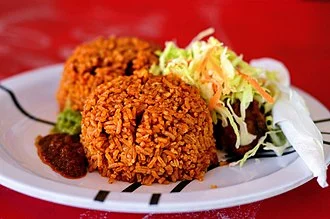
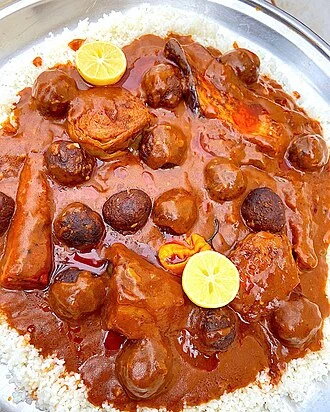
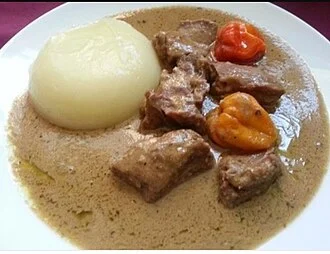
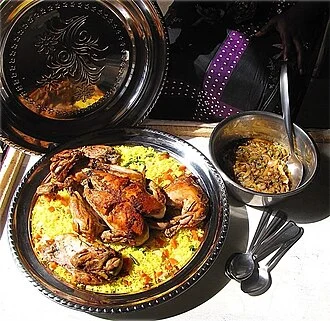
A savory and spicy one-pot rice and fish dish. A creamy breakfast porridge made with rice and peanut butter. A rich and creamy peanut stew with meat, served with rice. A hearty soup with peanut butter, vegetables, and meat. Marinated grilled chicken in a lemon-onion sauce.
Traditional Local Food
Senegambia (The Gambia)
Main course
Fish & Seafood
Benachin
Beh-nah-chin
· One-pot rice and fish
🌿
Breakfast
Vegetarian
Chura Gerte
Chura Gerté
Chu-rah Ger-teh
· Peanut butter porridge
Main course
Meat
Domoda
Doh-moh-dah
· Peanut stew with rice
Soup
Meat
Maafe
Mah-feh
· Peanut butter soup
Main course
Meat
Yassa
Yah-sah
· Tangy grilled chicken