Explore Guides
SOUTH AMERICA / CHILE
Triplandio Santiago guide covers 10 travel guides across 17 areas, complete with hotel picks. Explore 39 self-guided walking tours in Santiago with 90 POI, spanning 97 km in total. Get inspired by 31 local dishes, complete with recipes and our unique Food Flavour DNA graph.
Santiago
City & Country Data Santiago (Chile)

Key travel data for Santiago — local prices, safety, healthcare, local currency and essentials, curated by Triplandio.
🌍 Chile
Safety
57
Health
68
Lifestyle
71
Infra
61
Rank
#43
Score
51
Tourists
5.4M/y
GDP/cap
$18.0k
Life Exp
81.4 yrs
Population
19.9M
Currency
CLP $
Language
Spanish
Payments
Cards OK
Emergency
131
💰 Prices in Santiago
Coffee
$3.20
Beer
$4.00
Lunch
$10.00
Groceries
$35.00/w
Taxi/km
$1.50
Transit
$1.20
Fuel
$1.20/l
Internet
$40.00/m
Salary
$800/m
Travel tipsSantiago (Chile)

Quick tips
- Pay for airport taxis inside the terminal — Critical
Fake drivers with official-looking lanyards at Santiago airport charge huge sums, sometimes adding zeros on card machines. Book and pay only at the official booths inside arrivals.
- Stay away from protests — Critical
Protests in Chilean cities, especially central Santiago on Friday evenings, can turn violent, and police use tear gas and water cannon. Foreigners involved in violence can be deported.
- Fires in national parks are illegal — Critical
Lighting a fire outside permitted camping areas in Chile's national parks is illegal. Tourists caught can lose their tourist permit and be told to leave within 72 hours or be deported, and face criminal charges if a wildfire spreads.
- Declare all food at the border — Caution
Chile's agriculture service (SAG) strictly checks bags for fruit, meat, cheese, honey, seeds and plants. Declare all food on the form or bin it before customs; undeclared items bring heavy fines.
- Drinking in public is illegal — Caution
In Chile it's illegal to drink alcohol in streets, roads, squares and on promenades. Keep drinks to bars, restaurants and private places.
- Distraction thieves work in pairs — Caution
In Chile one person spills something on you or asks for help while a partner takes your bag or phone. Keep bags on your lap, not on chair backs or under the table.
- Do
- Declare all food at customs
- Keep bags on your lap in cafés
- Carry a copy of your passport
- Check the zeros on card machines
- Learn tsunami routes on the coast
- Don’t
- Drink alcohol in the street
- Join or watch protests
- Light fires in national parks
- Leave anything visible in a car
- Resist a mugger
Critical
Prison or heavy penalty possible
Scams & safety
- Drink spiking in Bellavista and Suecia — Critical
Drinks have been spiked in bars and clubs in Santiago's Bellavista and Suecia nightlife areas. Watch your drink and refuse drinks from strangers.
Laws & fines
- Drugs can mean prison — Critical
Using or possessing illegal drugs in Chile, including cannabis in public, can lead to arrest and prison.
- Never resist a mugging — Critical
Muggings in Santiago and Valparaíso increasingly involve guns or knives and can happen in daylight. Hand over what is demanded; if carjacked, raise your hands and get out.
Health
- Hantavirus in rural areas — Critical
Hantavirus, a serious lung disease spread by the droppings of wild mice, occurs in rural southern and central Chile. Air out closed cabins before entering and camp only at official sites.
Mountains & adventure
- Landmines near the borders — Critical
Most of Chile's minefields lie near the borders with Peru and Bolivia in the far north and with Argentina in the far south. Some signs are old or damaged; stick to marked roads and obey all warning signs.
- Active volcanoes in the south — Critical
Villarrica, near Pucón, and other volcanoes in southern and northern Chile are active and can erupt. Before climbing or visiting, check local media and official volcano alerts, and follow closures.
- Forest fires spread fast — Critical
Severe forest fires in Chile have killed people and closed national parks and roads. Follow evacuation orders, keep your passport with you, and check the disaster agency SENAPRED for warnings.
Caution
Fines, losses or injury possible
Scams & safety
- Phones snatched from tables — Caution
Thieves in Santiago's cafés and terraces grab phones from tables and bags from chair backs, often while a partner distracts you. Keep phones in your pocket.
- Luggage theft at the airport — Caution
Bags are stolen at Santiago airport before check-in and from the baggage carousel. Keep your luggage in sight at all times.
- Careful at the hilltop parks — Caution
Robberies have happened on the paths of Cerro San Cristóbal and Cerro Santa Lucía. Visit in daylight, stick to busy paths or take the funicular.
Tipping & money
- The $ sign means pesos — Caution
Prices in Chile are shown with a $ sign but are in Chilean pesos (CLP). Always check the number of zeros on card machines before entering your card code (PIN).
Mountains & adventure
- Hire cars are targeted — Caution
Thieves puncture hire cars' tyres at traffic lights, then rob you while “helping”, and break into cars at viewpoints and petrol stations. Keep doors locked and nothing on show.
- Patagonian weather is extreme — Caution
Winds in Torres del Paine and southern Patagonia can knock hikers off their feet, and weather changes in minutes. Book campsites ahead and carry windproof layers.
Good to know
Rules and useful facts
Scams & safety
- Travel advisory: Level 2 of 4 — Good to know
Exercise Increased Caution — the U.S. State Department's rating for Chile.
- Friday protests near Plaza Baquedano — Good to know
Protests often gather on Friday evenings around Plaza Baquedano (still widely called Plaza Italia) and the Alameda avenue. Avoid the area and follow police instructions.
Laws & fines
- Carry a copy of your passport — Good to know
Always carry a printed copy of your passport photo page in Chile. Leave the original in your hotel safe, as muggers target passports.
- Don't leave bags unattended — Good to know
Unattended bags in Santiago can be treated as suspicious because of past anarchist bomb attacks, and they are also quickly stolen. Keep your luggage with you.
- Carry your tourist card when driving — Good to know
When driving in Chile you must carry your passport and proof of tourist status, such as your tourist card (tarjeta de turismo) or entry stamp. Visitors from the UK can drive on their licence for 3 months; other nationalities should check whether they need an International Driving Permit (IDP).
Entry & visa
- Visa-free stays of 90 days — Good to know
British and many other visitors can stay in Chile for up to 90 days without a visa. Your passport must be valid for your whole stay.
- Keep your tourist card — Good to know
Chilean immigration issues a tourist card (tarjeta de turismo) on arrival. Keep it safe; you need it to leave, and for tax-free hotel stays.
- Easter Island has its own rules — Good to know
To visit Rapa Nui (Easter Island) you need an online entry form, a return ticket and a booking registered with the national tourism service (SERNATUR). Stays are limited to 30 days.
- Travelling with children — Good to know
Children leaving Chile with only one parent need a notarised authorisation from the other parent and an original birth certificate. Families have been stopped at departure.
Health
- Ambulance number is 131 — Good to know
Call 131 for an ambulance and 133 for the police (Carabineros) in Chile. Private clinics in Santiago are good but expensive, so have travel insurance.
- Altitude in the Atacama and Andes — Good to know
San Pedro de Atacama is about 2,400 m high and nearby geysers and lagoons reach over 4,000 m. Acclimatise for a few days before high trips.
- Strong sun in the south and north — Good to know
UV levels in Chile are very high, in the Atacama and in Patagonia alike. Use high-factor sunscreen and sunglasses even on cool days.
- Dengue on Easter Island — Good to know
Dengue cases have been confirmed on Rapa Nui (Easter Island). The island has only one small hospital, so serious cases are flown to the mainland.
Mountains & adventure
- Earthquakes and tsunamis — Good to know
Chile is one of the most earthquake-prone countries on Earth. On the coast, learn the tsunami evacuation routes (signposted) and move to high ground after a strong quake.
- Driving in Chile — Good to know
Traffic drives on the right and toll roads are increasingly common. Rural roads may need a four-wheel drive, and in June–September snow can close the high Andes crossings to Argentina, including Los Libertadores.
- Register before mountaineering — Good to know
Tell local authorities before a climb or expedition in Chile; the Federación de Andinismo de Chile can advise. Rescue services are good, but you may have to pay for a rescue.
Local tips
Local know-how
Getting around
- Buses from the airport (SCL) — Local tip
Airport buses run from Santiago's international airport to the Los Héroes and Pajaritos metro stations in about 30–40 minutes. They are the cheapest option.
- Shared vans and apps — Local tip
Official shared-van and private transfer companies sell tickets at desks inside arrivals. Ride-hailing apps such as Uber, Cabify and DiDi also operate in Santiago.
- Metro and the Bip card — Local tip
Santiago's metro and red buses are paid with the rechargeable Bip card (tarjeta Bip), sold at metro stations. Buses don't take cash. Avoid rush hours, when trains are packed.
- Book taxis at night — Local tip
Book taxis by app or through your hotel rather than hailing them on the street, especially late at night.
Customs
- One kiss on the cheek — Local tip
Chileans greet friends and new acquaintances in social settings with a single kiss on the right cheek. A handshake is normal in business.
- Eat late, snack at “once” — Local tip
Chileans have a light early-evening meal of tea, bread and snacks called “once”, and restaurant dinners rarely start before 20:30 or 21:00.
- Chilean Spanish is fast — Local tip
Chileans speak quickly, drop word endings and use lots of slang, such as “po” and “cachai?” (you know?). Don't be shy to ask people to speak more slowly.
Tipping & money
- The 10% tip on the bill — Local tip
Chilean restaurants usually suggest a 10% tip (propina) on the bill, and staff will ask if you want to add it. It is optional but customary.
- Small tips for helpers — Local tip
Supermarket baggers work for tips, and petrol-station attendants and car-park helpers expect a few coins. Taxi drivers don't expect a tip.
- Pay hotels in US dollars to skip VAT — Local tip
Foreign tourists who pay for hotels in US dollars or by foreign card, showing their passport and tourist card, are exempt from Chile's 19% VAT on accommodation.
Say it locally
Chileans are polite and slightly formal with strangers: say “buenos días” and “por favor”, and use “usted” for “you”.
Through the year
Festival or season Public holiday (exact date)
- Patagonia season
Nov 2026–Mar 2027 · The main season for Torres del Paine and southern hiking, with long days and strong winds.
- All Saints' Day
Mon 1 Nov 2027 · Public holiday
- Inmaculate Conception Day
Tue 8 Dec 2026 · Public holiday
- Christmas Day
Fri 25 Dec 2026 · Public holiday
- Chilean summer holidays
Jan–Feb 2027 · Families head to the coast and the south; beach towns, Patagonia and domestic flights are busy and expensive.
- New Year's Day
Fri 1 Jan 2027 · Public holiday
- Protest anniversaries
Mar 2027, May 2027, Sep 2027 · Protests are likely on 29 March, 1 May and 11 September, the anniversary of the 1973 military coup; avoid central Santiago.
- Good Friday
Fri 26 Mar 2027 · Public holiday
- Holy Saturday
Sat 27 Mar 2027 · Public holiday
- Winter smog
May–Aug 2027 · Air pollution often builds up in Santiago's valley in winter; check air-quality alerts before exercising outdoors.
- Labor Day
Sat 1 May 2027 · Public holiday
- Navy Day
Fri 21 May 2027 · Public holiday
- Ski season in the Andes
Jun–Sep 2027 · Ski resorts less than two hours from Santiago open in winter; mountain roads may need snow chains.
- National Day of Indigenous Peoples
Mon 21 Jun 2027 · Public holiday
- Saint Peter and Saint Paul
Mon 28 Jun 2027 · Public holiday
- Our Lady of Mount Carmel
Fri 16 Jul 2027 · Public holiday
- Assumption of Mary
Sun 15 Aug 2027 · Public holiday
- Fiestas Patrias
Sep 2027 · National celebrations around 18–19 September with fairs (fondas), barbecues and dancing; many businesses close for several days.
- National Day
Sat 18 Sep 2027 · Public holiday
- Army Day
Sun 19 Sep 2027 · Public holiday
- Day of the Discovery of Two Worlds
Mon 11 Oct 2027 · Public holiday
- Reformation Day
Sun 31 Oct 2027 · Public holiday
Sources: GOV.UK travel advice · U.S. State Dept · Google public holidays
Best time to visit Santiago (Chile)
Now (November) avg high: 25°C, mostly dry, full season — expect crowds. Best months to walk: Dec & Nov.
Live Temp
…
~Day / Night Temp
25°C / 12°C
Sunrise / Sunset
5:36 / 19:17
Local time
2:18
Best Months  Dec & Nov
J
Jan
F
Feb
M
Mar
A
Apr
M
May
J
Jun
J
Jul
A
Aug
S
Sep
O
Oct
N
Nov
 D
Dec
D
Dec
Check Santiago hotels
Temperature
Average daytime high, month by month. Zero line marks freezing point.
Crowds
How busy it gets — traveller interest by month.
Rainfall
Rainy days to expect each month.
Sunshine
Hours of sun per day, by month.
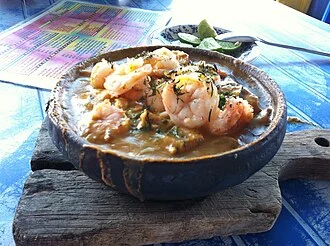
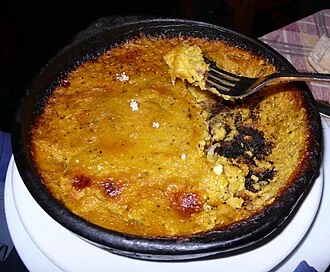
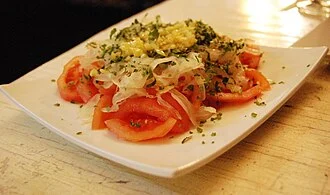
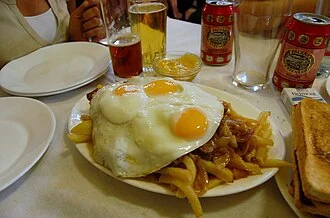
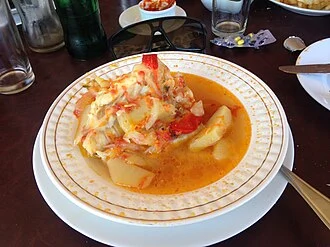
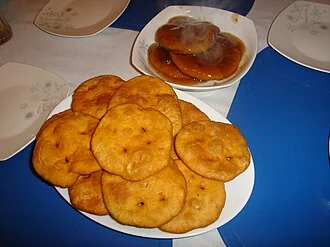
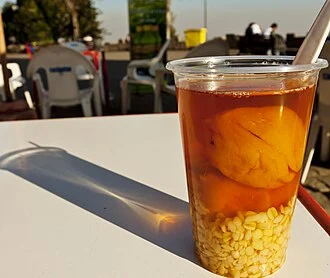
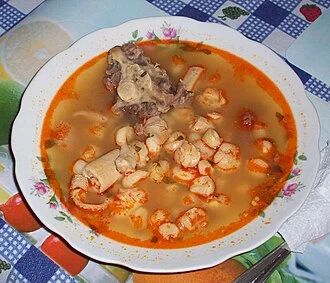
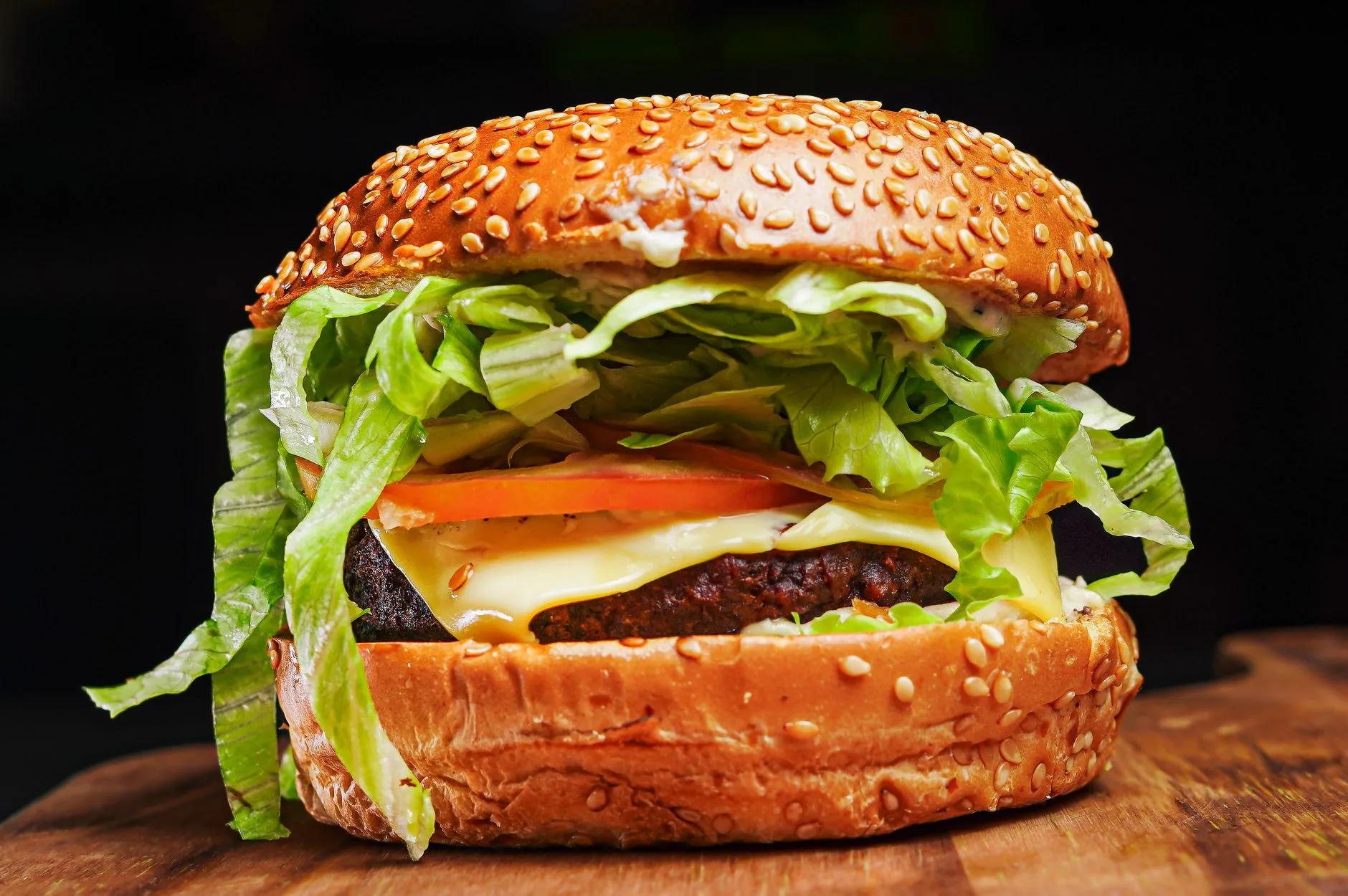
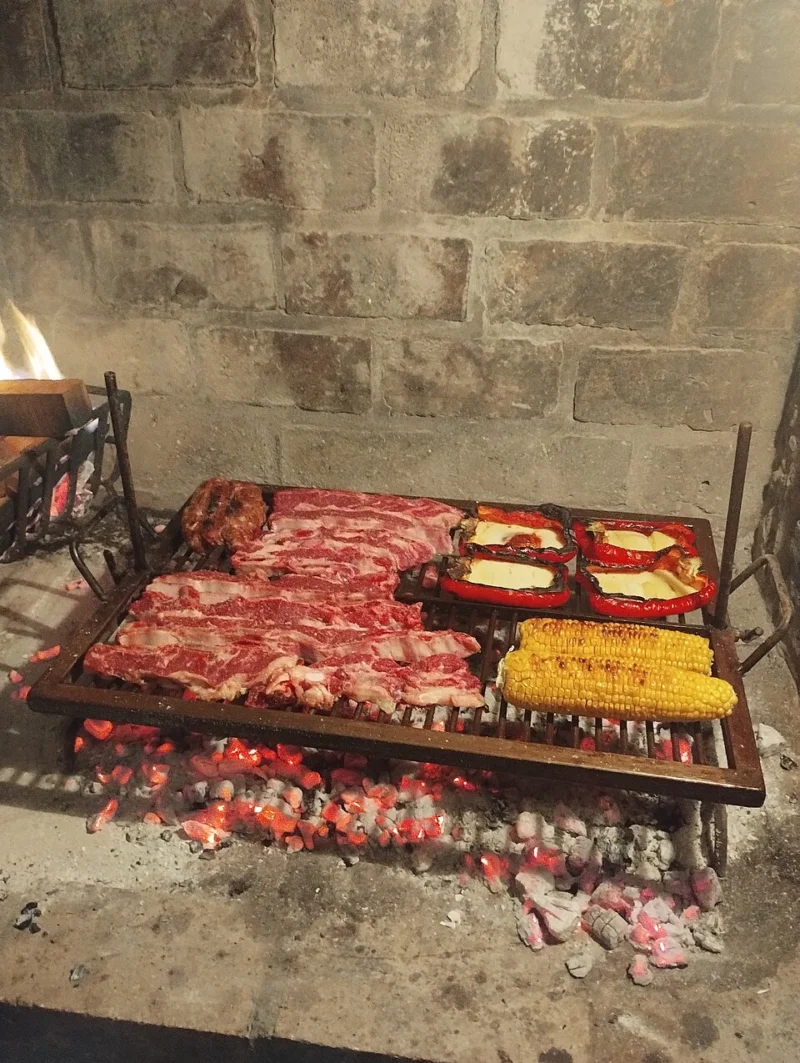
A hearty sandwich filled with thinly sliced beef, green beans, tomatoes, and chili peppers. A traditional barbecue featuring various cuts of beef and other meats. A hearty stew with meat, corn, and vegetables. A traditional casserole with a savory corn and meat filling. A fresh and simple salad of tomatoes, onions, and cilantro dressed with olive oil and vinegar. A hearty shared plate of fries topped with beef and onions. A flavorful fish soup made with conger eel, tomatoes, onions, and herbs. A deep-fried bread made with squash and flour, often eaten with pebre or chancaca. Refreshing peach nectar drink with husked wheat. A fresh, spicy sauce made with tomatoes and herbs.
Traditional Local Food
Santiago (Chile)
 Street food
Meat
Chacarero Sandwich
Chacarero
cha-ka-RE-roh
 Main course
Meat
Chilean BBQ
Asado
ah-SAH-do
Soup
Meat
Chilean Cazuela
Cazuela Chilena
kah-SWEH-lah chee-LEH-nah
Main course
Meat
Chilean Corn Pie
Pastel de Choclo
pahs-TEL deh CHO-klo
Starter
Vegan
Chilean Salad
Ensalada Chilena
en-sah-LAH-dah chee-LAY-nah
Main course
Meat
Chorrillana
cho-ree-YAH-nah
Soup
Fish & Seafood
Conger Chowder
Caldillo de Congrio
kahl-DEE-yoh day KAWN-gree-oh
Snack
Vegan
Fried Sopaipillas
Sopaipillas
soh-pie-PEE-yahs
Drink
Vegan
Mote with Huesillo
Mote con Huesillos
MO-tay con Hway-SEE-yos
Sauce
Vegan
Pebre Sauce
Pebre
PEH-breh