

Explore Guides
NORTH AMERICA
Canada
Triplandio Canada guide covers 21 travel guides with 2 cities across 50 areas, complete with hotel picks. Explore 84 self-guided walking tours in Canada with 294 POI, spanning 219.7 km in total. Get inspired by 17 local dishes, complete with recipes and our unique Food Flavour DNA graph.
Country Data Canada

Key travel data for Canada — safety, healthcare, local currency and essentials, curated by Triplandio.
🌍 Canada
Safety
86
Health
83
Lifestyle
78
Infra
85
Rank
#14
Score
67
Tourists
32.4M/y
GDP/cap
$55.7k
Life Exp
82.1 yrs
Population
41.7M
Currency
CAD CA$
Language
English
Payments
Cashless
Emergency
911
Travel tipsCanada

Quick tips
- Never take cannabis across the border — Critical
Recreational cannabis is legal inside Canada, but carrying it into or out of the country without a Health Canada permit is a crime. Airports scan bags, and people leaving with cannabis have been arrested.
- A drink-driving record can bar entry — Critical
Canada can refuse entry to visitors with a criminal record, and impaired or drink-driving convictions count as serious crimes. If you have a conviction, contact a Canadian embassy or high commission well before you travel.
- Bears live in most wild areas — Critical
Black and grizzly bears roam Canada's parks and forests. Store food in bear-proof lockers or your car, make noise on trails, carry bear spray in bear country and never approach or feed a bear.
- Declare all food at the border — Caution
Canada confiscates banned meat, dairy, fruit and plants at the border and can fine you if you don't declare them. Declare any food you carry, and any recent farm visits, on your customs declaration.
- Get an eTA before you fly — Good to know
Most visa-free visitors flying to Canada need an Electronic Travel Authorization (eTA), applied for online; US citizens are exempt. Use only the official Government of Canada site, as copycat sites charge extra.
- Distances in Canada are enormous — Local tip
Canada is the second-largest country in the world: Toronto to Vancouver is over 4 hours by plane and about 4 days by train. Pick one or two regions per trip rather than trying to cross the country.
- Do
- Apply for your eTA on the official site
- Tip 15–20% in restaurants
- Carry bear spray in bear country
- Declare all food at customs
- Stop for flashing school buses
- Don’t
- Take cannabis across the border
- Feed or approach wildlife
- Drink alcohol in the street
- Ignore trail or road closures
- Light fires during a fire ban
Critical
Prison or heavy penalty possible
Getting between cities
- Drink-driving is a criminal offence — Critical
In Canada, driving over the legal alcohol limit is a criminal offence, and most provinces also suspend licences at lower levels. The safest plan is not to drink at all if you drive.
Laws & fines
- Other drugs carry long sentences — Critical
Apart from cannabis, possessing, using or smuggling drugs in Canada brings long prison sentences and heavy fines, including in airport transit.
Outdoors & adventure
- Avalanche risk in the mountains — Critical
Avalanches happen in the mountains of Alberta and British Columbia. Check the avalanche forecast, never ignore trail closures and go off-piste only with a guide.
Caution
Fines, losses or injury possible
Laws & fines
- Cannabis rules change by province — Caution
Legal cannabis in Canada must be bought from licensed stores. The minimum age is 19 in most provinces, 18 in Alberta and 21 in Quebec, and where you may smoke it varies.
- Drinking age is 18 or 19 — Caution
The legal drinking age in Canada is 19 in most provinces and 18 in Alberta, Manitoba and Quebec. Bars and shops ask for photo ID, so carry a copy of your passport.
- No open alcohol in most public places — Caution
Drinking in streets and most parks is generally illegal in Canada and fined, though some cities allow it in designated park areas. Check the local signs.
- Stop for flashing school buses — Caution
When a yellow school bus in Canada shows flashing red lights, traffic in both directions must stop, unless separated by a central barrier. Passing it brings heavy fines and penalty points.
- Phones at the wheel are fined — Caution
Using a hand-held phone while driving is illegal in every Canadian province, with large fines. Set up your navigation before you set off.
Outdoors & adventure
- Keep your distance from wildlife — Caution
Moose, elk and bison in Canada can charge if approached, especially mothers with young. Stay well back, use a zoom lens and follow national park rules.
- Watch for animals on roads — Caution
Moose and deer cause serious crashes on Canadian country roads, especially at dawn and dusk. Slow down where warning signs are posted.
- Winter tyres and road closures — Caution
Snowstorms and avalanches often close highways in Canada from November to April. Winter tyres are compulsory in Quebec and on many British Columbia mountain roads in winter.
- Respect fire bans — Caution
Wildfires can start in any season, and fire bans are common in summer, especially in western Canada. Check park and provincial fire bans before lighting any campfire.
Good to know
Rules and useful facts
Getting between cities
- Driving: licence and rules — Good to know
Canada drives on the right. Rental companies may require an International Driving Permit (IDP), a minimum age and a year's experience. Turning right on a red light is allowed in most provinces but not on the island of Montreal.
Regions & seasons
- West coast: mild and wet — Good to know
Vancouver and Vancouver Island have mild winters with lots of rain and warm, dry summers. July to September is the driest time.
- The Rockies: summer or ski season — Good to know
Banff and Jasper are best for hiking from late June to September, when snow has cleared the trails, and for skiing from December to April.
- Ontario and Quebec: hot summers, cold winters — Good to know
Toronto, Montreal and Quebec City are hot and humid in July and August and very cold with snow from December to March. Late spring and autumn are the most comfortable.
- The Atlantic provinces and the north — Good to know
Nova Scotia and Newfoundland are best June to September. The far north and the Arctic have very limited medical and rescue services, so travel with an experienced operator.
Tipping & money
- Sales tax is added at the till — Good to know
Prices on Canadian shelves and menus usually exclude sales tax, which is added when you pay. The rate depends on the province.
Entry & visa
- Travel advisory: Level 1 of 4 — Good to know
Exercise Normal Precautions — the U.S. State Department's rating for Canada.
- Passport valid for your whole stay — Good to know
Your passport must be valid for the length of your stay in Canada. Visitors can normally stay up to 6 months; the border officer decides the exact period.
- No eTA needed by land or sea — Good to know
The eTA is required only for air travel to or through Canada. Travellers arriving by car, bus, train or boat just need valid travel documents.
- Proof of funds and onward travel — Good to know
Canadian border officers may ask for a return or onward ticket and proof you can support yourself, even if you are staying with friends or family.
- Consent letter for children — Good to know
Children travelling to Canada alone or with one parent should carry a letter of consent from the absent parent or guardian. Officers may question children to check for abduction.
- Transiting needs an eTA too — Good to know
You need an eTA or a transit visa even if you are only changing planes in Canada on the way to another country.
Health
- Healthcare is very expensive for visitors — Good to know
Hospital care in Canada is very expensive for visitors, and there is no healthcare agreement with the UK. Buy travel insurance with full medical cover. For emergencies, dial 911.
- Ticks and biting insects — Good to know
Ticks in parts of southern Canada can spread Lyme disease, and mosquitoes and blackflies swarm in forests and lakes in early summer. Use repellent and check your skin after hikes.
- Wildfire smoke in summer — Good to know
Wildfire smoke can make the air unhealthy across Canada in summer, even far from the fires. Check the Government of Canada's air quality ratings, especially if you have asthma.
- Altitude in the Rockies — Good to know
Ski and hiking areas in the Canadian Rockies, such as Banff and Lake Louise, are high enough for some people to feel altitude sickness. Take it easy on the first day.
- Tap water is safe — Good to know
Tap water in Canadian towns and cities is safe to drink. Boil, filter or treat water from lakes and streams before drinking it.
Outdoors & adventure
- Tell someone your hiking plans — Good to know
Many Canadian trails have no phone signal, and search and rescue can take hours to arrive. Leave your route and return time with someone and carry warm layers, even in summer.
Local tips
Local know-how
Getting between cities
- Trains in the Quebec–Windsor corridor — Local tip
VIA Rail (Canada's national passenger railway) runs frequent trains between Toronto, Ottawa, Montreal and Quebec City. Elsewhere, trains are infrequent and mostly scenic long-distance routes.
- Fly for long distances — Local tip
Air Canada, WestJet, Porter and other airlines link Canadian cities. For anything beyond one province, flying is usually the only practical option.
- Ferries on the west coast — Local tip
BC Ferries links Vancouver with Vancouver Island and the Gulf Islands. Summer and holiday-weekend sailings fill up, so reserve ahead if you are taking a car.
Customs
- Start with ‘Bonjour’ in Quebec — Local tip
French is the main language in Quebec. Greeting shop and restaurant staff with ‘Bonjour’ before switching to English is polite and appreciated in Montreal and Quebec City.
- Queue and wait your turn — Local tip
Canadians queue patiently for buses, shops and counters, and pushing in is frowned upon. Let passengers off buses and trains before you get on.
- Respect Indigenous places and culture — Local tip
Much of Canada is traditional Indigenous territory. Ask before photographing ceremonies, don't take objects from sites and buy Indigenous art from Indigenous-owned shops.
- Canadians aren't Americans — Local tip
Many Canadians are proud of the differences between Canada and the United States. Mistaking them for Americans or making political comparisons can annoy.
Tipping & money
- Tip 15–20% in restaurants — Local tip
Service is not included in Canadian restaurant bills, and staff depend on tips. Leave about 15–20% of the pre-tax total at sit-down restaurants.
- Tip bars, taxis and hotel staff — Local tip
In Canada, tip bar staff about a dollar or two per drink, taxi drivers about 10–15%, and hotel porters a couple of dollars per bag.
- Tap to pay almost everywhere — Local tip
Contactless cards and phone payments are accepted almost everywhere in Canada, even for small amounts. Carry a little cash for tips or remote areas.
- No haggling — Local tip
Prices in Canadian shops and markets are fixed. Bargaining is only normal for private sales, such as second-hand items.
Outdoors & adventure
- Park passes — Local tip
Canada's national parks, including Banff and Jasper, charge an entry fee. An annual Parks Canada Discovery Pass is usually cheaper if you visit several parks.
Our Canada city guides
Take the UP Express train from Pearson Airport to Union Station in about 25 minutes.
Ride the Canada Line SkyTrain from the airport and never leave anything visible in a parked car.
Through the year
Festival or season Public holiday (exact date)
- Winter storms
Nov 2026–Apr 2027 · Blizzards, freezing rain and deep cold across most of Canada; roads close and flights are delayed, but ski season is in full swing.
- Atlantic hurricane season
Jul–Nov 2026 · Hurricanes and their remnants can bring storms and floods to Nova Scotia, Newfoundland and the other Atlantic provinces.
- Remembrance Day (regional holiday)
Wed 11 Nov 2026 · Public holiday
- Christmas Day (regional holiday)
Fri 25 Dec 2026 · Public holiday
- Boxing Day / Christmas Holiday (regional holiday)
Sat 26 Dec 2026 · Public holiday
- Boxing Day / Christmas Holiday (regional holiday)
Mon 28 Dec 2026 · Public holiday
- New Year's Day (regional holiday)
Fri 1 Jan 2027 · Public holiday
- Good Friday (regional holiday)
Fri 26 Mar 2027 · Public holiday
- Easter Monday (regional holiday)
Mon 29 Mar 2027 · Public holiday
- Victoria Day (regional holiday)
Mon 24 May 2027 · Public holiday
- Wildfire season
Jun–Sep 2027 · Fires and smoke can close parks and highways, mostly in the west, but also in Quebec, Ontario and Nova Scotia.
- Peak summer season
Jun–Aug 2027 · The best weather for the Rockies and the coast; hotels, campsites and park shuttles book up months ahead.
- Calgary Stampede
Jul 2027 · Ten days of rodeo, concerts and parties in Calgary in early July; hotels fill up and prices rise.
- Canada Day (regional holiday)
Thu 1 Jul 2027 · Public holiday
- Civic/Provincial Day
Mon 2 Aug 2027 · Public holiday
- Autumn colours
Sep–Oct 2027 · Maple forests in Ontario and Quebec turn red and gold from late September; a popular time for road trips.
- Labour Day (regional holiday)
Mon 6 Sep 2027 · Public holiday
- National Day for Truth and Reconciliation (regional holiday)
Thu 30 Sep 2027 · Public holiday
- Thanksgiving Day (regional holiday)
Mon 11 Oct 2027 · Public holiday
Sources: GOV.UK travel advice · U.S. State Dept · Google public holidays
Traditional Local Food Canada
🌿
Dessert
Vegetarian
Saskatoon Berry Pie
sas-KA-toon berry pie
A sweet pie made with Saskatoon berries native to Western Canada.
Open Saskatoon Berry Pie recipe
Street food
Meat
Roti
ROW-tee
Flatbread that often encases curried meats or vegetables.
Open Roti recipe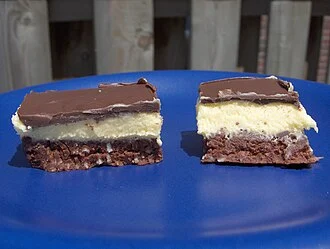
Dessert
Vegetarian
Nanaimo Bar
nuh-NY-moh bar
A no-bake layered dessert bar with a crumb base, custard, and chocolate.
Open Nanaimo Bar recipe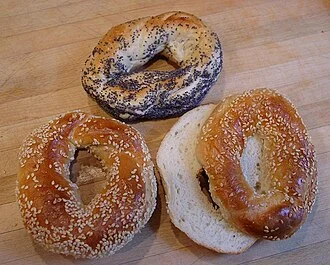
Bread
Vegetarian
Montreal-Style Bagel
Bagel de Montréal
BAE-gul de Mohn-TREY-ahl
A sweeter, denser bagel made with malt and boiled in honey-sweetened water.
Open Montreal-Style Bagel recipe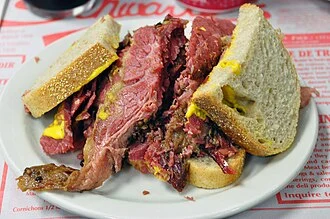
Main course
Meat
Smoked Meat Sandwich
Sandwich à la viande fumée
Sand-wich a la vee-awnd foom-ay
A deli sandwich made with smoked beef brisket, rye bread, and mustard.
Open Smoked Meat Sandwich recipe
Dessert
Vegan
Maple Syrup
MAY-pul SEER-up
A sweet syrup made from the sap of sugar maple trees.
Open Maple Syrup recipe🐟
Main course
Fish & Seafood
Pacific Salmon
Pak-i-fik Sam-lon
Grilled or baked, this wild salmon is a staple in Vancouver.
Open Pacific Salmon recipe
Dessert
Vegetarian
Butter Tart
BUT-er tart
A small, rich tart made with a filling of butter, sugar, and eggs.
Open Butter Tart recipe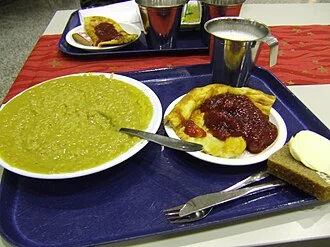
Soup
Meat
French Canadian Split Pea Soup
Soupe aux pois
soo-p oh pwah
A hearty soup made with yellow split peas, ham, and vegetables.
Open French Canadian Split Pea Soup recipe
Snack
Vegan
Ketchup Chips
ke-chup chips
Potato chips flavored with a tangy, tomato ketchup seasoning.
Open Ketchup Chips recipe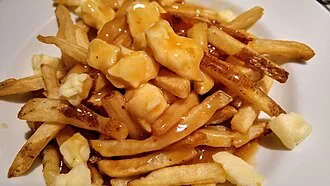
Snack
Vegetarian
Poutine
poo-TEEN
Quebec dish of french fries topped with cheese curds and gravy.
Open Poutine recipe🐟
Snack
Fish & Seafood
Salmon Candy
SAL-muhn KAN-dee
Smoked and sweetened salmon strips, often glazed with maple syrup.
Open Salmon Candy recipe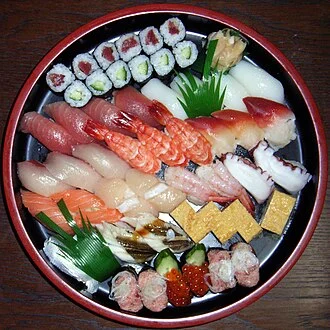
Main course
Fish & Seafood
Sushi
SOO-shee
Vinegar-flavored rice with various fillings and toppings, often raw fish.
Open Sushi recipe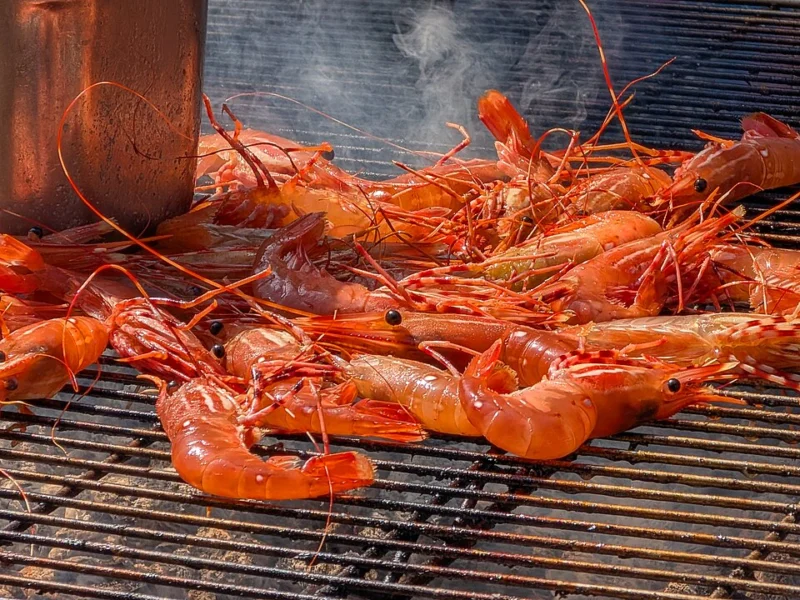
Main course
Fish & Seafood
Spot Prawns
spaht PRAWNZ
Sustainable, sweet prawns from the local Pacific waters, best eaten fresh.
Open Spot Prawns recipe
Main course
Meat
Tourtière
tor-TYAIR
A traditional French-Canadian meat pie made with minced pork and spices.
Open Tourtière recipe