Explore Guides
EUROPE / UNITED KINGDOM
Triplandio London guide covers 13 travel guides across 33 areas, complete with hotel picks. Explore 52 self-guided walking tours in London with 246 POI, spanning 162.5 km in total. Get inspired by 21 local dishes, complete with recipes and our unique Food Flavour DNA graph.
London
City & Country Data London (United Kingdom)

Key travel data for London — local prices, safety, healthcare, local currency and essentials, curated by Triplandio.
🌍 United Kingdom
Safety
77
Health
85
Lifestyle
75
Infra
89
Rank
#12
Score
67
Tourists
11.1M/y
GDP/cap
$57.6k
Life Exp
81.4 yrs
Population
69.5M
Currency
GBP £
Language
English
Payments
Cashless
Emergency
999
💰 Prices in London
Coffee
$5.00
Beer
$9.00
Lunch
$25.00
Groceries
$50.00/w
Taxi/km
$3.00
Transit
$4.00
Fuel
$1.80/l
Internet
$40.00/m
Salary
$3,000/m
Travel tipsLondon (United Kingdom)

Quick tips
- Pepper spray and most knives are illegal — Critical
Carrying pepper spray or any self-defence spray in the UK is a serious crime. Carrying a knife in public without good reason is also illegal, except a non-locking folding pocketknife with a blade under 3 inches (7.62 cm).
- Scotland's drink-driving limit is lower — Critical
Scotland's legal alcohol limit for drivers is lower than in England, Wales and Northern Ireland, and even one drink can put you over. Drink-driving means a ban, a heavy fine and possibly prison.
- Look right before crossing — Caution
Traffic in the UK drives on the left, so cars come from the right first. Many London crossings have “look right” or “look left” painted on the road — follow them.
- Get an ETA before you travel — Good to know
Most visitors who don't need a UK visa — including US, Canadian, Australian and EU citizens — must get an Electronic Travel Authorisation (ETA) online or in the official app before travelling. Irish citizens are exempt.
- Hospital treatment is not free for visitors — Good to know
Visitors to the UK are charged for most NHS (National Health Service) hospital care, often at a premium rate. Emergency treatment in A&E (Accident & Emergency) is free, but travel insurance is essential.
- Stand on the right on escalators — Local tip
On London Underground escalators, stand on the right and leave the left side free for people walking. Blocking the left is the classic tourist mistake.
- Do
- Get your ETA before you fly
- Look right before crossing roads
- Queue patiently
- Get travel insurance
- Carry waterproofs
- Don’t
- Carry pepper spray or a knife
- Hold your phone while driving
- Bring meat or cheese in luggage
- Swim outside the lifeguard flags
- Ride without a valid ticket
Critical
Prison or heavy penalty possible
Laws & fines
- Cannabis is illegal — Critical
Cannabis is a controlled drug in the UK; possession can lead to arrest, a criminal record and prison. Legal CBD (cannabidiol) products must contain virtually no THC (the compound that makes you high).
Caution
Fines, losses or injury possible
Scams & safety
- Phone snatchers on bikes — Caution
Thieves on bicycles, e-bikes and mopeds snatch phones from people's hands on London pavements. Step away from the kerb or into a doorway to check maps.
- Street betting games — Caution
The “find the ball under the cup” game on Westminster Bridge and the South Bank is a scam: the players winning are part of the gang, and you will lose.
- Only licensed taxis — Caution
Black cabs can be hailed in London's streets; minicabs and other private-hire cars must be pre-booked by app or phone. Drivers touting for fares on the street are unlicensed and unsafe.
Laws & fines
- No phone in your hand while driving — Caution
Holding a mobile phone for any reason while driving in the UK — even at traffic lights — is illegal and brings a heavy fine and penalty points.
- No smoking indoors — Caution
Smoking is banned in all enclosed public places in the UK, including pubs, restaurants, stations and public transport. Most venues also ban vaping indoors.
- Register before flying a drone — Caution
Most drones with a camera must be registered with the Civil Aviation Authority (CAA) before you fly them in the UK. Flying is banned near airports and in many London parks.
- Always buy a ticket before travelling — Caution
Travelling on UK trains, the London Underground or trams without a valid ticket or tapped card brings an on-the-spot penalty fare, and ticket inspectors are common.
Entry & visa
- No meat or dairy in your luggage — Caution
Bringing most meat, dairy and many plant products into the UK in personal luggage is banned, including from the EU. Eat or bin sandwiches and cheese before you land.
- Declare cash of £10,000 or more — Caution
If you carry £10,000 or more in cash, or the equivalent, into or out of the UK from outside the country, you must declare it to customs.
Health
- Cold sea and lake water — Caution
Seas, lakes and rivers in the UK are cold even in summer, and sudden cold-water shock causes drownings. Enter slowly and never swim after drinking.
Beaches & adventure
- Swim between the flags — Caution
On UK beaches with lifeguards, swim between the red-and-yellow flags. A red flag means no swimming. In trouble at sea, call 999 and ask for the Coastguard.
- Watch the tides — Caution
Tides rise fast on UK coasts and can cut you off on sandbanks, beaches and causeways. Check tide times before walking around headlands or across to tidal islands.
- Mountain weather changes fast — Caution
In the Scottish Highlands, the Lake District and Snowdonia (Eryri), sun can turn to fog, wind and rain within an hour. Carry waterproofs, a map and a warm layer.
Good to know
Rules and useful facts
Scams & safety
- Travel advisory: Level 2 of 4 — Good to know
Exercise increased caution — the U.S. State Department's rating for United Kingdom.
- Pickpockets in the busiest spots — Good to know
Pickpockets work Oxford Street, Covent Garden, Westminster, the South Bank and crowded Tube carriages. Keep bags zipped and phones out of back pockets.
Laws & fines
- Report unattended bags — Good to know
The UK terrorism threat level is substantial, meaning an attack is likely. Never leave bags unattended in stations or airports, and report suspicious items to staff or police.
Tipping & money
- No tax-free shopping — Good to know
The UK no longer offers VAT refunds to tourists on goods bought in shops, so the price on the tag is what you pay.
Entry & visa
- Passport valid for your stay — Good to know
Your passport must be valid for your whole stay in the UK. Check whether you need a visa or an ETA (Electronic Travel Authorisation) on the UK government website, gov.uk, before booking.
- Visits of up to 6 months — Good to know
Visitors from many countries can stay in the UK for up to 6 months without a visa for tourism, but not to work. You may be asked about your plans and your return ticket.
Health
- Tap water is safe — Good to know
Tap water is safe to drink throughout the UK. Many cafés and bars will give you free tap water if you ask.
- Emergency and advice numbers — Good to know
In the UK, call 999 or 112 for police, ambulance, fire or coastguard. For urgent but non-emergency medical advice, call 111, the NHS (National Health Service) helpline.
Beaches & adventure
- Midges and ticks in Scotland — Good to know
Tiny biting midges swarm in the Scottish Highlands in summer, and ticks, which can carry Lyme disease, live in long grass. Use repellent and check your skin after walks.
- Driving on the left — Good to know
Traffic in the UK drives on the left and speeds are in miles per hour. Many foreign licences are valid for visitors for up to 12 months; check your hire company's rules.
Local tips
Local know-how
Getting around
- Heathrow (LHR) → centre — Local tip
The Elizabeth line reaches central London in about 30–40 minutes; the pricier Heathrow Express runs non-stop to Paddington in about 15 minutes. The Piccadilly line is cheapest but slower.
- Gatwick (LGW) → centre — Local tip
Gatwick Express trains run to Victoria in about 30 minutes; Southern and Thameslink trains are often cheaper and reach London Bridge and St Pancras.
- Stansted (STN) and Luton (LTN) — Local tip
The Stansted Express runs to Liverpool Street in about 50 minutes. From Luton, a shuttle train connects the terminal to Luton Airport Parkway station for trains into London.
- Tap in with a contactless card — Local tip
On the Tube, buses, Elizabeth line and most trains in London, tap a contactless card or phone at the start and end of each journey. Daily and weekly fares are capped automatically.
- Taxis and ride-hailing — Local tip
Black cabs are metered and can be hailed; Uber and other apps also work across London. Buses are cheap and run all night on main routes.
Customs
- Queue and wait your turn — Local tip
Queuing is taken seriously in the UK, at bus stops, shop tills and bars. Pushing in is one of the quickest ways to annoy people.
- Order at the bar in pubs — Local tip
In most British pubs there is no table service: order and pay at the bar. Buying drinks in rounds for your group is a common custom.
- Keep quiet in quiet coaches — Local tip
Many UK trains have a Quiet Coach where phone calls, loud music and loud conversations are not allowed. Look for the signs on the doors and windows.
- Scotland, Wales and England are distinct — Local tip
The UK is made up of England, Scotland, Wales and Northern Ireland, each with its own identity. Calling a Scot or a Welsh person “English” can cause offence.
Tipping & money
- Check for a service charge — Local tip
Many UK restaurants add an optional 10–12.5% service charge. If there isn't one, around 10% for good service is usual; tipping bar staff in pubs isn't expected.
- Contactless almost everywhere — Local tip
Contactless cards and phone payments work almost everywhere in the UK, and some cafés and venues are card-only. Carry a little cash for small shops and markets.
- Scottish banknotes are valid — Local tip
Banks in Scotland and Northern Ireland print their own pound notes. They're valid across the UK, though some shops in England may hesitate — spend them before you leave.
- Prices are fixed — Local tip
Bargaining isn't done in UK shops. At antique and flea markets you can politely ask for a small discount, especially for cash.
Health
- Pharmacies for minor problems — Local tip
Pharmacists, also called chemists, in the UK can advise on minor illnesses and sell many medicines without a prescription.
Beaches & adventure
- Right to roam in Scotland — Local tip
Scotland allows responsible access to most land and lakes for walking and wild camping. Follow the Scottish Outdoor Access Code; rules are stricter in England.
Through the year
Festival or season Public holiday (exact date)
- Bonfire Night
Nov 2026 · On and around 5 November, fireworks displays light up towns and cities across the UK.
- Short, stormy days
Nov 2026–Feb 2027 · Winter brings early darkness, especially in Scotland, and storms that can cancel ferries and trains.
- Christmas shutdown
Dec 2026 · On 25 December almost everything closes and most trains and London's Underground don't run; services are reduced on 26 December.
- New Year's Eve fireworks
Dec 2026 · The riverside viewing areas are ticketed — without a ticket you can't get close.
- Christmas Day
Fri 25 Dec 2026 · Public holiday
- Boxing Day
Sat 26 Dec 2026 · Public holiday
- Substitute Bank Holiday for Boxing Day
Mon 28 Dec 2026 · Public holiday
- New Year's Day
Fri 1 Jan 2027 · Public holiday
- Good Friday
Fri 26 Mar 2027 · Public holiday
- Easter Monday (regional holiday)
Mon 29 Mar 2027 · Public holiday
- Early May Bank
Mon 3 May 2027 · Public holiday
- Spring Bank
Mon 31 May 2027 · Public holiday
- Glastonbury Festival
Jun 2027 · The huge music festival in Somerset in late June; tickets sell out months ahead (it takes some years off).
- Midge season
Jun–Sep 2027 · Biting midges are worst in the Scottish Highlands and islands on calm, damp days.
- Wimbledon
Jun–Jul 2027 · Two weeks of tennis in late June and early July; queue from early morning for same-day tickets.
- School summer holidays
Jul–Aug 2027 · Late July to the end of August is peak season: trains, beaches and attractions are busiest and prices highest.
- Notting Hill Carnival
Aug 2027 · Europe's biggest street carnival over the August bank holiday weekend; huge crowds and pickpockets.
- Summer Bank Holiday (regional holiday)
Mon 30 Aug 2027 · Public holiday
Best time to visit London (United Kingdom)
Now (November) avg high: 11°C, mostly dry, full season — expect crowds. Best months to walk: Jun & Aug.
Live Temp
…
~Day / Night Temp
11°C / 6°C
Sunrise / Sunset
8:05 / 17:24
Local time
20:27
Best Months  Jun & Aug
J
Jan
F
Feb
M
Mar
A
Apr
M
May
J
Jun
J
Jul
A
Aug
S
Sep
O
Oct
N
Nov
 D
Dec
J
Jul
A
Aug
S
Sep
O
Oct
N
Nov
D
Dec
Check London hotels
Temperature
Average daytime high, month by month. Zero line marks freezing point.
Crowds
How busy it gets — traveller interest by month.
Rainfall
Rainy days to expect each month.
Sunshine
Hours of sun per day, by month.
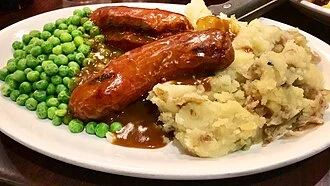
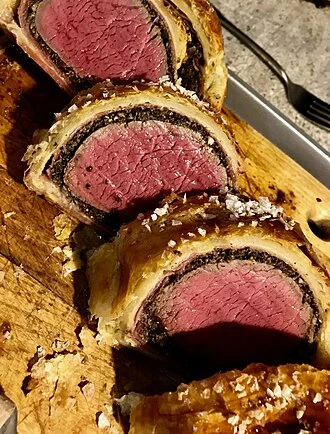
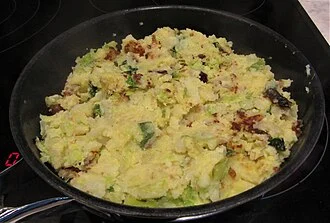
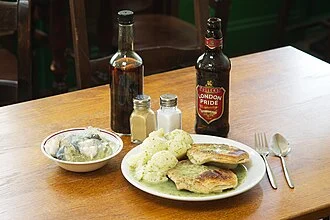
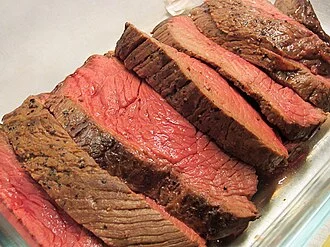
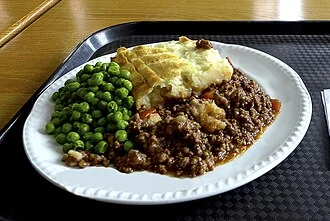
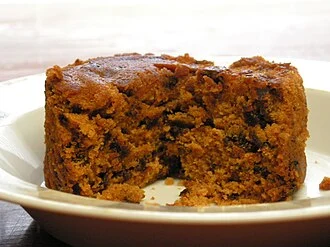
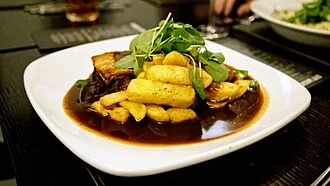
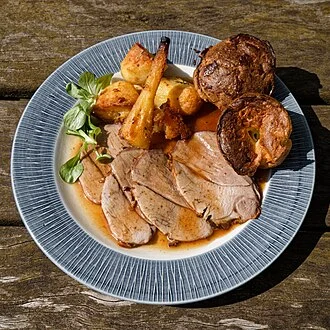
A simple dish of sausages served with mashed potatoes and gravy. A luxurious dish of beef tenderloin coated in pâté and duxelles, wrapped in puff pastry. Pan-fried mix of leftover vegetables, often with potatoes and cabbage. Mix of strawberries, broken meringue, and cream. Eels cooked in a spiced stock and set into a jelly-like consistency. A traditional London dish of minced beef pie served with mashed potatoes. Traditional British Sunday roast featuring beef and fluffy batter pudding. A savory pie with minced lamb and a mashed potato crust. A traditional British steamed suet pudding with dried fruit. A savory pie filled with diced beef, kidney, onion, and gravy. Traditional British meal of roasted meat and vegetables.
Traditional Local Food
London (United Kingdom)
Main course
Meat
Bangers and Mash
Bang-guhz and mash
Main course
Meat
Beef Wellington
Main course
Vegetarian
Bubble and Squeak
bub-ul and skweek
Dessert
Vegetarian
Eton Mess
ee-ton mess
Main course
Fish & Seafood
Jellied Eels
Main course
Meat
Pie and Mash
Main course
Meat
Roast Beef and Yorkshire Pudding
roast beef and YORK-shur PUH-ding
Main course
Meat
Shepherd's Pie
Dessert
Vegetarian
Spotted Dick
Spot-tid Dik
Main course
Meat
Steak and Kidney Pie
Steyk and Kid-nee Pie
Main course
Meat
Sunday Roast
sun-day roast