Explore Guides
EUROPE / SPAIN
Triplandio Valencia guide covers 11 travel guides across 28 areas, complete with hotel picks. Explore 42 self-guided walking tours in Valencia with 92 POI, spanning 100.9 km in total. Get inspired by 15 local dishes, complete with recipes and our unique Food Flavour DNA graph.
Valencia
City & Country Data Valencia (Spain)

Key travel data for Valencia — local prices, safety, healthcare, local currency and essentials, curated by Triplandio.
🌍 Spain
Safety
80
Health
89
Lifestyle
73
Infra
81
Rank
#22
Score
64
Tourists
36.4M/y
GDP/cap
$38.6k
Life Exp
83.9 yrs
Population
49.4M
Currency
EUR €
Language
Spanish
Payments
Cards OK
Emergency
112
💰 Prices in Valencia
Coffee
$2.50
Beer
$3.00
Lunch
$15.00
Groceries
$200.00/w
Taxi/km
$1.19
Transit
$2.00
Fuel
$1.50/l
Internet
$33.54/m
Salary
$1,738/m
Travel tipsValencia (Spain)

Quick tips
- Balcony accidents are often fatal — Critical
Tourists, often after drinking, are killed or badly hurt falling from hotel balconies in Spain. Hotels can evict you and fine you for risky behaviour, and insurance may refuse to pay.
- Swimwear stays on the beach — Caution
In many Spanish seaside towns it is illegal to walk the streets or the seafront promenade in only a bikini, swimming shorts or bare-chested. Cover up when you leave the sand, or you can be fined.
- Drinking in the street can be fined — Caution
Many Spanish towns ban drinking alcohol in streets, squares and on beaches, and police give on-the-spot fines. Some areas also fine the sale or use of nitrous oxide (laughing gas).
- Pickpockets work in teams — Caution
Thieves in Spain's cities, airports and car-hire desks use distractions such as a spilled drink, a map or a petition while a partner takes your wallet or phone. Keep valuables zipped away and spread out.
- Show photo ID when police ask — Good to know
You must show photo ID if a Spanish police officer asks, and ignoring a direct police instruction counts as the criminal offence of disobedience. Carry a copy of your passport photo page or the passport itself.
- Do
- Say hola when entering shops
- Carry a copy of your passport
- Cover up away from the beach
- Choose euros at card machines
- Book trains and sights ahead
- Don’t
- Drink alcohol in the street
- Leave your phone on café tables
- Swap money with street dealers
- Climb or lean over balconies
- Stop for roadside “helpers”
Critical
Prison or heavy penalty possible
Laws & fines
- Drug laws are strictly enforced — Critical
Illegal drugs, including cannabis, carry severe penalties in Spain. Possession of even a small amount can lead to arrest and heavy fines, and smuggling means a long prison sentence. Airport scanners also check transit bags.
- Exchange money only at banks — Critical
Street money changers in Spain may hand out fake notes, and having or spending counterfeit money is a serious crime. Use banks, official exchange offices or ATMs.
Health
- Watch your drink in nightlife areas — Critical
Drink spiking with sedative “date-rape” drugs happens in Spanish party resorts. Buy your own drinks, keep them in sight, and remember Spanish measures are often stronger than at home.
Beaches & adventure
- Causing a wildfire is a crime — Critical
Summer wildfires are common in Spain, and causing one is a criminal offence even by accident. Don't light barbecues outside marked areas, put cigarettes out properly, take bottles away and report fires on 112.
- Strict drink-driving and phone rules — Critical
Spain drives on the right, and police run frequent roadside alcohol and drug tests; penalties include prison. Phones and earpieces are banned at the wheel, even when pulled over. On-the-spot fines are halved if paid in 20 days.
Caution
Fines, losses or injury possible
Scams & safety
- Pickpockets at the Central Market — Caution
Valencia's Central Market, the cathedral square and the old-town streets draw pickpockets, especially at weekends. Keep bags in front of you.
- Beach bags at Malvarrosa — Caution
Bags left alone on Malvarrosa and Las Arenas beaches are an easy target. Take the minimum and take turns swimming.
Laws & fines
- Party limits in Magaluf and Playa de Palma — Caution
In Magaluf and Playa de Palma (Mallorca) and San Antonio (Ibiza), happy hours, open bars, pub crawls and party boats are banned, and shops may not sell alcohol between 21:30 and 08:00.
- Stay away from illegal villa parties — Caution
Commercially promoted parties in private villas on Ibiza and Mallorca have led to serious accidents because they lack exits, crowd limits and licensed security. You can also be fined just for attending.
- No sex or drunken behaviour in public — Caution
Spain has strict rules against sexual activity and drunken behaviour in public places, including beaches. Local police can fine you on the spot.
- Unlicensed taxis can cost you 600 euros — Caution
In Spain, passengers caught using an unlicensed taxi can be fined up to 600 euros. Use official taxis or book airport transfers through a licensed firm; some cities require taxis to be pre-booked.
Tipping & money
- Pay in euros at the ATM — Caution
When a Spanish ATM or card machine offers to charge you in your home currency, choose euros. The “conversion” uses a poor exchange rate.
Entry & visa
- No meat or dairy from outside the EU — Caution
You cannot bring meat, milk or products containing them, such as sandwiches, into Spain from outside the EU. Baby food and medically required foods are exceptions.
Health
- Hotel doctors may be private — Caution
Some Spanish hotels call a private doctor or ambulance that takes you to a private clinic, where UK and EU health insurance cards are not accepted. Ask for a public hospital or call your insurer first.
- Summer heat can be dangerous — Caution
Inland Spain, especially Andalusia and Madrid, regularly passes 40°C in July and August. Avoid the midday sun, drink plenty of water and plan sightseeing for mornings and evenings.
Beaches & adventure
- Obey the beach flags — Caution
People drown in Spain's sea and pools every year. A red flag means you must not enter the water. Don't dive into unknown water or swim where a river meets the sea, and keep small children within arm's reach.
- Beware of fake police and roadside helpers — Caution
Gangs on Spanish motorways flag down hire cars claiming a flat tyre or damage, then rob the car. Stop only at a lit service station. Real traffic police wear uniform and never ask for your wallet.
- Flash floods can hit suddenly — Caution
Flash floods in Spain can disrupt travel and damage roads with little warning. Check warnings from the Spanish weather service (AEMET) before you travel, and follow the advice of local authorities.
Good to know
Rules and useful facts
Scams & safety
- Travel advisory: Level 2 of 4 — Good to know
Exercise Increased Caution — the U.S. State Department's rating for Spain.
- Las Fallas crowds and fireworks — Good to know
During Las Fallas, the daily 14:00 firework display (mascletà) in the town hall square is deafening and packed. Hold on to children and stand well back.
Laws & fines
- Let the hotel register your passport — Good to know
Spanish hotels, holiday lets and car-hire firms must record every guest's passport details by law. Wait while they copy it at check-in rather than leaving your passport at reception to collect later.
Tipping & money
- Tourist tax at the hotel — Good to know
Catalonia (including Barcelona) and the Balearic Islands add a nightly tourist tax per person to hotel and holiday-let bills. It is often paid on arrival and is not included in some online prices.
Entry & visa
- Check both passport dates — Good to know
For Spain (Schengen area rules), your passport must have been issued less than 10 years before you arrive and be valid for at least 3 months after the day you leave.
- The Schengen 90-day limit — Good to know
Many passports, including British, allow 90 days in any 180 in the Schengen area. Days spent in other Schengen countries count too, and overstaying can bring a ban of up to 3 years.
- New fingerprint checks at the border — Good to know
The EU Entry/Exit System (EES) now records fingerprints and a photo of non-EU visitors instead of stamping passports. It is free but adds time, so arrive at the airport early.
- Have proof of your trip ready — Good to know
Spanish border officers may ask for a return ticket, travel insurance, your hotel booking and proof you have enough money for your stay. Keep them on your phone or on paper.
- A police report won't get you home — Good to know
If your passport is lost or stolen in Spain, you need a new passport or an emergency travel document from your embassy. A Spanish police report alone isn't accepted for leaving.
Health
- Emergency number is 112 — Good to know
Dial 112 anywhere in Spain for an ambulance, police or fire service. Operators can usually connect you to English speakers.
- Bring your health insurance card — Good to know
UK visitors need a Global Health Insurance Card (GHIC) and EU visitors a European Health Insurance Card (EHIC) for state healthcare in Spain. It doesn't replace travel insurance or cover repatriation.
- Tap water is safe — Good to know
Tap water is safe to drink across mainland Spain, though it can taste of chlorine. On the Balearic and Canary Islands many locals prefer bottled water.
Beaches & adventure
- Mountains need proper planning — Good to know
Weather changes fast in the Pyrenees, Picos de Europa and Sierra Nevada, and altitude sickness is possible around Granada, Huesca and Tenerife's Teide. Call 112 for rescue; Catalonia bills reckless adventurers for it.
Local tips
Local know-how
Getting around
- Metro from Valencia airport (VLC) — Local tip
Metro lines 3 and 5 run from Valencia airport to the city centre in about 20–25 minutes. The airport fare costs more than a normal city ticket.
- Taxis from the airport — Local tip
Metered taxis wait outside Valencia's arrivals hall and take about 20 minutes to the centre. Uber and Cabify also operate in the city.
- Cycle the Turia park — Local tip
The former Turia riverbed is now a 9 km park running through Valencia. Cycle it from the centre to the City of Arts and Sciences on a rented or public Valenbisi bike.
- Tram to the beach — Local tip
Tram lines run from the city to the Malvarrosa and Las Arenas beaches in about 20 minutes, quicker than a bus in summer.
Laws & fines
- Your card may need ID — Local tip
Shops in Spain sometimes ask for photo ID when you pay by credit or debit card. A driving licence or passport copy is often accepted, but some shops insist on the passport.
Customs
- Spain eats late — Local tip
Lunch in Spain is usually between 14:00 and 16:00 and dinner rarely before 21:00. Many restaurants close their kitchens in between, so plan a snack of tapas in the early evening.
- Expect a midday break in small towns — Local tip
Outside big-city centres, many small shops in Spain close for a few hours in the early afternoon and reopen in the evening. Supermarkets and department stores usually stay open all day.
- Greet people when you walk in — Local tip
Say “hola” or “buenos días” (good morning) when entering a small shop, bar or lift in Spain, and “adiós” when leaving. Skipping it comes across as rude.
- Two kisses among friends — Local tip
Spanish friends and new acquaintances in social settings usually greet with a light kiss on each cheek. In business or formal situations a handshake is normal.
- Respect regional languages — Local tip
Catalan, Basque and Galician are official alongside Spanish in their regions, and signs may be in the local language first. Don't call Catalan or Basque a dialect.
- LGBT+ friendly by law and custom — Local tip
Spain is generally tolerant towards LGBT+ travellers, and same-sex marriage is legal. Madrid, Barcelona and other big cities have active LGBT+ communities and venues.
Tipping & money
- Tipping in restaurants — Local tip
Service is included in Spanish restaurant prices and tipping is not expected. Leaving the small change or around 5–10% for good table service is appreciated.
- Tipping in bars and taxis — Local tip
In Spanish bars people leave a few coins at most, and taxi drivers expect you simply to round up the fare.
- Fixed prices, little bargaining — Local tip
Prices in Spanish shops and markets are fixed. Gentle haggling only works at flea markets and with street sellers.
- Cards are accepted almost everywhere — Local tip
Contactless cards work in most Spanish shops, bars and taxis. Keep some cash for small village bars, markets and tips.
Say it locally
Add “por favor” (please) to every request; in Spain people often ask for things directly, and that is not rude.
Through the year
Festival or season Public holiday (exact date)
- All Saints' Day
Mon 1 Nov 2027 · Public holiday
- Immaculate Conception
Tue 8 Dec 2026 · Public holiday
- Christmas Day
Fri 25 Dec 2026 · Public holiday
- Three Kings parades
Jan 2027 · Big evening parades on 5 January, when Spanish children get their presents; shops are busy, then close the next day.
- New Year's Day
Fri 1 Jan 2027 · Public holiday
- Epiphany
Wed 6 Jan 2027 · Public holiday
- Holy Week (Semana Santa)
Mar–Apr 2027 · Easter processions fill the streets, biggest in Seville and Málaga; dates move each year and hotels book out early.
- Las Fallas (15–19 March)
Mar 2027 · Giant satirical figures, fireworks and street parties; the figures are burned on the last night. Hotels fill and prices soar.
- Good Friday
Fri 26 Mar 2027 · Public holiday
- Labor Day
Sat 1 May 2027 · Public holiday
- Summer heat and crowds
Jun–Sep 2027 · Inland cities pass 40°C and the coasts are at their busiest; book beach hotels and trains well ahead.
- San Fermín in Pamplona
Jul 2027 · Bull-running festival from 6 to 14 July; the city is packed and running with the bulls causes serious injuries every year.
- August holidays
Aug 2027 · Many Spaniards take August off; some family-run shops and restaurants in cities close while coastal resorts overflow.
- La Tomatina
Aug 2027 · Tomato fight in Buñol near Valencia on the last Wednesday of August; entry is by ticket only.
- Hispanic Day
Tue 12 Oct 2027 · Public holiday
Sources: GOV.UK travel advice · U.S. State Dept · Google public holidays
Best time to visit Valencia (Spain)
Now (November) avg high: 21°C, mostly dry, full season — expect crowds. Best months to walk: Aug & Jul.
Live Temp
…
~Day / Night Temp
21°C / 12°C
Sunrise / Sunset
8:46 / 18:47
Local time
14:09
Sea Temp
18°C
Best Months  Aug & Jul
J
Jan
F
Feb
M
Mar
A
Apr
M
May
J
Jun
J
Jul
A
Aug
S
Sep
O
Oct
N
Nov
 D
Dec
A
Aug
S
Sep
O
Oct
N
Nov
D
Dec
Check Valencia hotels
Temperature
Average daytime high, month by month. Zero line marks freezing point.
Crowds
How busy it gets — traveller interest by month.
Sea temperature
Sea warmth for swimming, by month.
Rainfall
Rainy days to expect each month.
Sunshine
Hours of sun per day, by month.
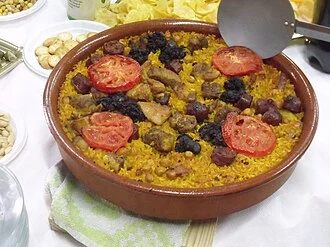
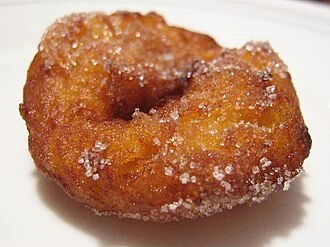
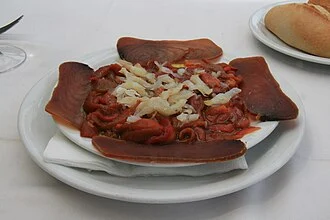
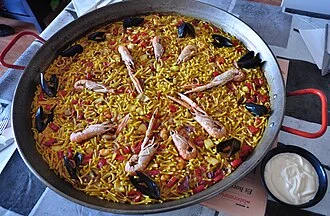
A spicy eel stew flavored with garlic and paprika. A baked rice dish with meats, chickpeas, and tomatoes. Small, fried doughnuts often enjoyed at Las Fallas festivals in Valencia. A salad of roasted red peppers and salted codfish. Long, sugary pastries perfect for dipping in horchata. A noodle-based dish similar to paella, often cooked with seafood. A refreshing tiger nut milk drink served with soft, sweet pastries. Light, anise-flavored fried pastries, dusted with sugar. A traditional rice dish with rabbit, chicken, and vegetables.
Traditional Local Food
Valencia (Spain)
 Main course
Fish & Seafood
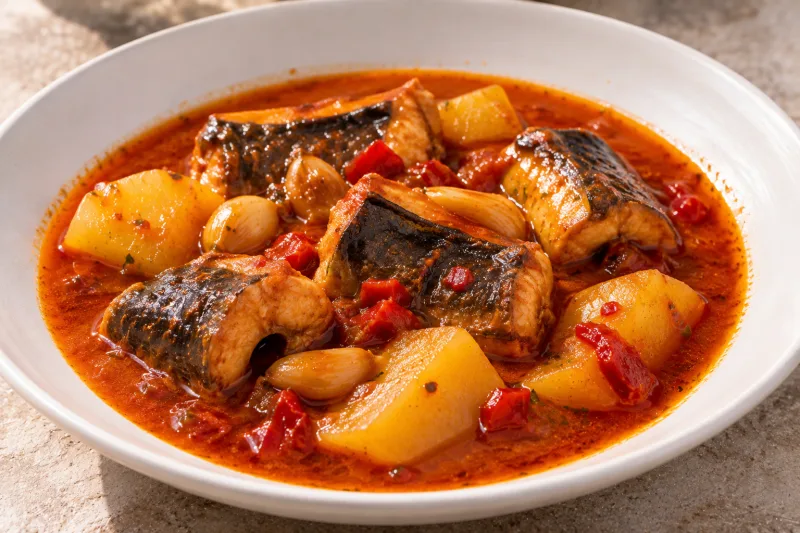
All i Pebre
AH-ee peh-BREH
Main course
Meat
Arroz al Horno
ah-ROZ al OR-no
Snack
Vegetarian
Bunyols
boo-NYOLS
Starter
Fish & Seafood
Esgarraet
es-gah-RAH-et
Snack
Vegetarian
Fartons
far-TONS
Main course
Fish & Seafood
Fideuà
fee-deh-WAH
Dessert
Vegan
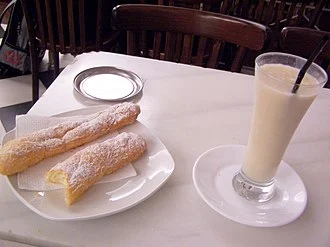
Horchata and Fartons
Horchata y Fartons
or-CHA-tah ee FAR-tonz
Dessert
Vegetarian
Orelletes
or-EH-yet-es
Main course
Meat
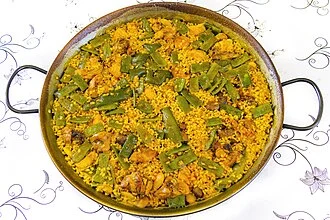
Valencian Paella
Paella Valenciana
pah-AY-yah vah-len-sy-AH-nah