

Explore Guides
EUROPE
Slovenia
Triplandio Slovenia guide covers 22 travel guides with 2 cities across 64 areas, complete with hotel picks. Explore 82 self-guided walking tours in Slovenia with 58 POI, spanning 303.4 km in total. Get inspired by 7 local dishes, complete with recipes and our unique Food Flavour DNA graph.
Country Data Slovenia

Key travel data for Slovenia — safety, healthcare, local currency and essentials, curated by Triplandio.
🌍 Slovenia
Safety
93
Health
77
Lifestyle
74
Infra
70
Rank
#27
Score
62
Tourists
1.2M/y
GDP/cap
$37.4k
Life Exp
82.3 yrs
Population
2.1M
Currency
EUR €
Language
Slovenian
Payments
Cards OK
Emergency
112
Travel tipsSlovenia

Quick tips
- Bears live near towns and trails — Critical
Brown bears live in forests across Slovenia, even near Ljubljana. Make noise on forest paths, keep dogs on a lead and never leave food out at campsites.
- Wild camping is illegal — Caution
Camping or sleeping in a van outside registered campsites and signed motorhome stops is banned in Slovenia. Fines range from 40 to 500 euros, and checks are strict in Triglav National Park.
- Jaywalking brings heavy fines — Caution
Crossing Slovenian roads away from marked crossings can bring a heavy on-the-spot fine. If you can't pay, police can hold your documents or belongings until you do.
- Buy a motorway e-vignette — Caution
Cars on Slovenian motorways need an electronic toll sticker (e-vignette) linked to the number plate. Buy it before joining the motorway, online only from the official DARS (Slovenian Motorway Company) site.
- Carry ID at all times — Caution
Always carry your passport or a copy of it in Slovenia. If police ask for ID and you can't show any, the fine is 50 to 200 euros.
- Everything is within a few hours — Local tip
Slovenia is small: Ljubljana, Lake Bled, the Postojna caves and the coast at Piran are all within about 1–2 hours of each other. Many visitors base themselves in Ljubljana and take day trips.
- Do
- Say “Dober dan” when you walk in
- Carry your passport or a copy
- Buy an e-vignette for motorways
- Keep headlights on when driving
- Stay in registered campsites
- Don’t
- Cross the road away from crossings
- Camp or sleep in a van in the wild
- Feed or approach bears
- Hike via ferrata without gear
- Drive after drinking
Critical
Prison or heavy penalty possible
Laws & fines
- Drug penalties are severe — Critical
Possessing, using or smuggling illegal drugs, including cannabis, can lead to long prison sentences and heavy fines in Slovenia, including at the airport.
- Drink-driving limit is low — Critical
The blood alcohol limit for drivers in Slovenia is 0.05%, and zero for drivers under 21 or with a licence held less than 2 years. Offenders face fines and possible prison.
Outdoors & adventure
- Via ferrata needs proper kit — Critical
Some high Slovenian trails, including routes up Triglav, have via ferrata sections of steel cables and rungs. You need a harness, helmet and experience, or a licensed mountain guide.
Caution
Fines, losses or injury possible
Laws & fines
- Headlights on, kit in the car — Caution
Dipped headlights must be on at all times in Slovenia, day and night. Cars must carry a warning triangle, reflective jacket and first aid kit.
- Winter tyres from mid-November — Caution
From 15 November to 15 March, and whenever there is snow or ice, cars in Slovenia need winter tyres or snow chains on board. Missing equipment costs 125 euros or more.
- No phone at the wheel — Caution
Using a mobile phone while driving in Slovenia without a hands-free headset brings an on-the-spot fine. Speeding and drink-driving are also fined on the spot.
Entry & visa
- No meat or dairy from outside the EU — Caution
You cannot bring meat, milk or products containing them into Slovenia from outside the EU. Declare cash of 10,000 euros or more.
Outdoors & adventure
- Plan mountain hikes carefully — Caution
Slovenian mountain trails can be long and exposed. Plan for the weakest walker, use a marked map, check mountain huts are open and never take shortcuts or closed paths.
- Afternoon storms in the Alps — Caution
Sudden storms with lightning, hail and flash floods hit Slovenia, especially on summer afternoons in the mountains. Start hikes early and turn back when clouds build.
- Off-piste skiing risks — Caution
Avalanches are a risk in the Julian Alps. Off-piste skiing in Slovenia is dangerous and may not be covered by your insurance, so check forecasts and go with a guide.
- Breakdowns on the motorway — Caution
If you break down on a Slovenian motorway, call 1970 for help. Unauthorised tow trucks may charge high fees; official ones show the logo of DARS (the Slovenian Motorway Company).
Good to know
Rules and useful facts
Getting between cities
- Driving on the right — Good to know
Traffic drives on the right. You need an e-vignette for motorways, dipped headlights at all times and winter tyres from mid-November to mid-March.
Laws & fines
- Monthly siren test — Good to know
A nationwide emergency siren is tested at 12:00 on the first Saturday of every month. If you hear sirens at any other time, follow official instructions.
Customs
- Sundays are quiet — Good to know
Many shops in Slovenia close on Sundays and public holidays, while petrol stations and some small shops stay open. Stock up on Saturday.
Tipping & money
- Use bank ATMs — Good to know
Independent cash machines in tourist areas can charge high fees and poor exchange rates. Use ATMs belonging to banks, and choose to be charged in euros.
Entry & visa
- Travel advisory: Level 1 of 4 — Good to know
Exercise normal precautions — the U.S. State Department's rating for Slovenia.
- The 90-in-180-day rule — Good to know
Visitors from visa-free countries can stay in the Schengen area, including Slovenia, for 90 days in any 180. Overstaying can bring an on-the-spot fine and a ban of up to 3 years.
- Passport age and validity — Good to know
For non-EU visitors, your passport must have been issued less than 10 years before you arrive and be valid for at least 3 months after you leave the Schengen area.
- New biometric border checks — Good to know
The EU Entry/Exit System (EES) records fingerprints and a photo of non-EU visitors at the border. It is free, but allow extra time on arrival and departure.
- Checks at Italian and Austrian borders — Good to know
Slovenia carries out checks at its land borders with Italy and Austria. From Croatia or Hungary, use crossings open to all travellers and allow extra time.
- Registration is done by your hotel — Good to know
Visitors must be registered with the police within 3 days of arrival. Hotels and guesthouses do this for you; in private rentals, check that your host does it.
Health
- Call 112 for any emergency — Good to know
Dial 112 in Slovenia for an ambulance, fire service or mountain rescue. Contact your travel insurer quickly if you are referred to a hospital.
- Ticks carry encephalitis — Good to know
Ticks in Slovenian forests and meadows can spread tick-borne encephalitis and Lyme disease. Consider the tick-borne encephalitis vaccine if you plan to hike or camp, and check your skin daily.
- Bring your EHIC or GHIC — Good to know
Visitors from the EU, and the UK with a Global Health Insurance Card (GHIC) or European Health Insurance Card (EHIC), get medically necessary state healthcare. It does not replace travel insurance.
- Winter air quality — Good to know
In winter, cold air can trap smog in valleys and basins such as Ljubljana. Check air-quality reports if you have asthma or a heart or lung condition.
Local tips
Local know-how
Getting between cities
- Buses are often faster than trains — Local tip
Intercity buses link Ljubljana with Bled, Bohinj, Piran and most towns, often faster than the train. Buy tickets at the Ljubljana bus station or from the driver.
- Trains for the main routes — Local tip
Slovenian Railways runs trains from Ljubljana to Maribor, Koper and Lesce-Bled station. Trains are cheap but can be slow, and some lines use replacement buses during works.
- The Bohinj car train — Local tip
A car-carrying train runs through the Bohinj tunnel between Bohinjska Bistrica and Most na Soči, a shortcut between the lakes and the Soča valley.
Regions & seasons
- Julian Alps: June to September — Local tip
Lakes Bled and Bohinj, the Soča valley and Triglav National Park are best from June to September, when mountain huts are open and high passes such as Vršič are clear.
- Karst caves in any season — Local tip
Postojna and Škocjan caves in the Karst region stay cool all year, so they work in any weather. Bring a jacket even in summer.
- A short Adriatic coast — Local tip
Slovenia's coast around Piran, Izola and Koper is small and busy in July and August; June and September are calmer and still warm.
- Wine country in autumn — Local tip
The eastern regions around Maribor and Ptuj, and Goriška Brda in the west, are at their best during the September–October grape harvest.
Laws & fines
- Guides must show a licence — Local tip
Official tour guides in Slovenia must display a guide card showing they are registered. Check it before paying a street guide.
Customs
- Greet when you enter — Local tip
Slovenians say “Dober dan” (good day) when entering small shops, cafés and lifts, and greet other hikers on mountain trails. A greeting is expected before you ask for anything.
- Shoes off at home — Local tip
People in Slovenia usually take off their shoes at the door of a home, and hosts often offer slippers. Follow your host's lead.
- Eye contact when toasting — Local tip
When clinking glasses, Slovenians say “Na zdravje” and look each person in the eye. Wait until everyone has a glass before the first sip.
Tipping & money
- Tipping is modest — Local tip
Service is included in Slovenian restaurant prices. Rounding up or leaving about 10% for good service is appreciated but not expected.
- Cards are widely accepted — Local tip
Cards and contactless payments work in most shops, restaurants and hotels in Slovenia. Carry some euros in cash for mountain huts, rural guesthouses and small bars.
- Prices are fixed — Local tip
Bargaining is not usual in Slovenia. At flea markets you can ask for a small discount, but shop and market-stall prices are generally final.
Health
- Tap water is safe — Local tip
Tap water is safe and good to drink throughout Slovenia, including from many public fountains in towns.
Our Slovenia city guides
The old centre is car-free — explore on foot, and use an Urbana card, not cash, on city buses.
Come early morning or outside July and August to enjoy the lake without the crowds.
Say it locally
Say “Dober dan” when you walk into a shop or café; younger Slovenians usually speak good English.
Through the year
Festival or season Public holiday (exact date)
- St Martin's wine festivals
Nov 2026 · Around 11 November, wine regions such as Maribor and Ptuj celebrate the new wine with tastings and roast goose.
- Winter driving rules
Nov 2026–Mar 2027 · Winter tyres or chains are compulsory from 15 November to 15 March; mountain passes such as Vršič close in winter.
- Remembrance Day
Mon 1 Nov 2027 · Public holiday
- Ski season
Dec 2026–Mar 2027 · Kranjska Gora, Vogel and other Slovenian ski areas usually open from December to March, depending on snow.
- Christmas Day
Fri 25 Dec 2026 · Public holiday
- Independence and Unity Day
Sat 26 Dec 2026 · Public holiday
- New Year's Day
Fri 1 Jan 2027 · Public holiday
- New Year
Sat 2 Jan 2027 · Public holiday
- Kurentovanje carnival
Feb 2027 · Slovenia's biggest carnival in Ptuj, with shaggy sheepskin kurent costumes chasing away winter; the town fills up in the days before Lent.
- Prešeren Day
Mon 8 Feb 2027 · Public holiday
- Easter Sunday
Sun 28 Mar 2027 · Public holiday
- Easter Monday
Mon 29 Mar 2027 · Public holiday
- Day of Uprising Against Occupation
Tue 27 Apr 2027 · Public holiday
- Labor Day
Sat 1 May 2027 · Public holiday
- Labour Day
Sun 2 May 2027 · Public holiday
- Whit Sunday
Sun 16 May 2027 · Public holiday
- Summer storm season
Jun–Aug 2027 · Violent thunderstorms, hail and flash floods are most common in summer and can close mountain roads at short notice.
- Statehood Day
Fri 25 Jun 2027 · Public holiday
- Peak summer crowds
Jul–Aug 2027 · Lake Bled, Bohinj and the Soča valley are busiest in July and August; book rooms early and arrive at popular sights before 9:00.
- Assumption of Mary
Sun 15 Aug 2027 · Public holiday
- Reformation Day
Sun 31 Oct 2027 · Public holiday
Sources: GOV.UK travel advice · U.S. State Dept · Google public holidays
Traditional Local Food Slovenia
Dessert
Vegetarian
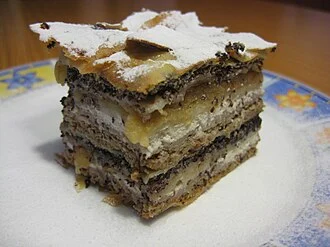
Prekmurska Gibanica
PREK-mur-ska GEE-ba-ni-tsa
A layered pastry cake with poppy seeds, walnuts, apples, raisins, and cottage cheese.
Open Prekmurska Gibanica recipe🌿
Dessert
Vegetarian
Bled Cream Cake
Blejska kremna rezina
Blesh-ka krehm-na re-zhee-na
A layered vanilla and custard cream desert with puff pastry.
Open Bled Cream Cake recipe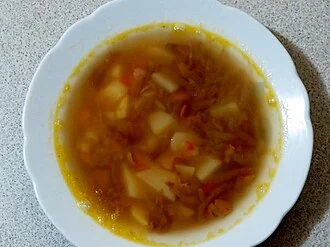
Soup
Meat
Jota
HO-tah
A thick, hearty soup made with sauerkraut or turnip, beans, potatoes, and pork.
Open Jota recipe🥩
Main course
Meat
Ljubljanska
Lyooblyanskah
· Breaded and stuffed schnitzel
A breaded and fried schnitzel, stuffed with ham and cheese.
Open Ljubljanska recipe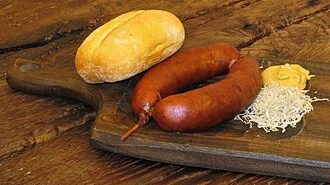
Main course
Meat
Kranjska Klobasa
KRAN-ska klo-BA-sa
A traditional Slovenian sausage made from pork, bacon, and garlic.
Open Kranjska Klobasa recipe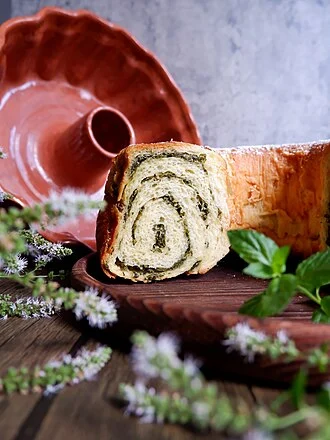
Dessert
Vegetarian
Potica
POH-ti-tsah
A traditional rolled cake filled with nuts, poppy seeds, or cottage cheese.
Open Potica recipe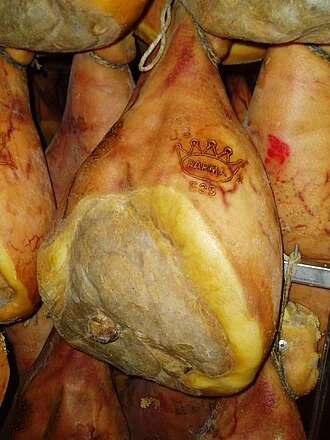
Starter
Meat
Kraški pršut
KRAH-skee PUR-shoot
Air-dried ham from the Karst region, known for its rich flavor and delicate texture.
Open Kraški pršut recipe