Explore Guides
EUROPE / ROMANIA
Triplandio Bucharest guide covers 12 travel guides across 30 areas, complete with hotel picks. Explore 37 self-guided walking tours in Bucharest with 52 POI, spanning 137.1 km in total. Get inspired by 11 local dishes, complete with recipes and our unique Food Flavour DNA graph.
Bucharest
City & Country Data Bucharest (Romania)

Key travel data for Bucharest — local prices, safety, healthcare, local currency and essentials, curated by Triplandio.
🌍 Romania
Safety
70
Health
47
Lifestyle
64
Infra
50
Rank
#47
Score
48
Tourists
5.0M/y
GDP/cap
$22.5k
Life Exp
76.5 yrs
Population
19.0M
Currency
RON lei
Language
Romanian
Payments
Cards OK
Emergency
112
💰 Prices in Bucharest
Coffee
$3.30
Beer
$3.30
Lunch
$12.00
Groceries
$25.00/w
Taxi/km
$0.60
Transit
$1.00
Fuel
$1.20/l
Internet
$25.00/m
Salary
$1,200/m
Travel tipsBucharest (Romania)

Quick tips
- Zero alcohol when driving — Critical
Romania has a zero-tolerance drink-driving rule: if a test finds any alcohol in your system, you can be fined and possibly jailed. Don't drink at all if you're driving.
- Drug arrests at music festivals — Critical
Growing numbers of visitors have been arrested and given long prison sentences for drugs at Romanian music festivals. All drugs, including cannabis, carry severe penalties.
- Hostess bar bills in the Old Town — Caution
In Bucharest's Old Town, friendly strangers or street promoters steer tourists into bars where drinks come with huge bills. Check prices on the menu before ordering and walk away from touts.
- Buy a rovinieta before driving — Caution
Every car on Romania's national roads needs a rovinieta, the road-toll vignette, bought at border points, most petrol stations or online. Driving without one can mean a heavy fine.
- Carry a car safety kit — Caution
Cars in Romania must carry a first-aid kit, a fire extinguisher, a red warning triangle and a reflective jacket. Check your hire car has them before you drive off.
- Use Uber or Bolt instead of street taxis — Local tip
Taxi drivers in Romania sometimes overcharge foreigners. Ride-hailing apps such as Uber and Bolt are generally reliable and show the price before you ride.
- Do
- Buy a rovinieta before driving
- Use Uber or Bolt
- Cover up at monasteries
- Carry lei for villages
- Keep food away from bears
- Don’t
- Drink any alcohol before driving
- Take drugs at festivals
- Change money in the street
- Feed or approach bears
- Photograph military sites
Critical
Prison or heavy penalty possible
Scams & safety
- Drink spiking in clubs — Critical
Drinks are sometimes spiked in Bucharest bars and clubs. Don't accept drinks from strangers or leave yours unattended.
Laws & fines
- Don't touch drone debris — Critical
Drones from the war in Ukraine have sometimes crossed into Romania or washed ashore. Stay away from any military debris and follow RO-Alert, the government's phone alert system.
Outdoors & adventure
- Brown bears in the Carpathians — Critical
Romania has one of Europe's largest brown bear populations, and bears sometimes enter towns and roadsides. Never feed or approach them, keep food locked away and make noise on trails.
Caution
Fines, losses or injury possible
Scams & safety
- Distraction thieves at stations and hotels — Caution
Organised groups in Bucharest use distraction to steal passports, phones and wallets, especially at Gara de Nord station, near exchange offices, around hotels and inside the airport.
- Pickpockets on the airport route — Caution
Thefts are reported on public transport to and from Otopeni airport. Keep bags on your lap and your passport in an inside pocket.
- Taxis that overcharge — Caution
Some taxis around Gara de Nord, the Old Town and the airport overcharge foreigners. Licensed taxis show their rates and company name on the door; check before you get in.
Laws & fines
- Winter tyres in snow and ice — Caution
Cars in Romania must use winter tyres whenever there is snow, ice or sleet on the road, in practice usually November to March. Hire cars should come fitted.
- No photos at airports and military bases — Caution
Most Romanian airports and military bases have signs banning photography. If you are not sure whether photos are allowed, ask first.
- Declare cash of 10,000 euros or more — Caution
Declare cash of 10,000 euros or more when entering Romania and keep the certified declaration, or the money can be seized when you leave.
Tipping & money
- Watch your card in bars — Caution
Card details have been copied in some Romanian bars and restaurants. Pay by contactless where you can and don't let your card leave your sight.
- Use official exchange offices — Caution
Change money only at banks or official exchange offices and check the rate and commission first. Never change money with people in the street.
Entry & visa
- No meat or dairy from outside the EU — Caution
You cannot bring meat, milk or products containing them into Romania from outside the EU, apart from limited exceptions such as baby milk.
Health
- Rabies risk from animals — Caution
Stray dogs are found in some Romanian towns and villages, and rabies exists in wild animals. See a doctor the same day if you're bitten or scratched.
Outdoors & adventure
- Mountain weather turns quickly — Caution
The Carpathians can bring storms, fog and snow at short notice. Check the forecast, carry warm layers and tell someone your route before hiking.
- Roads are slow and unpredictable — Caution
Romanian roads can be badly potholed, with overtaking lorries, horse-drawn carts, livestock and stray dogs in rural areas. Allow extra time and avoid driving at night.
Good to know
Rules and useful facts
Scams & safety
- Travel advisory: Level 1 of 4 — Good to know
Exercise Normal Precautions — the U.S. State Department's rating for Romania.
Laws & fines
- Get a police report after an accident — Good to know
After any road accident in Romania you must get a report at the scene. If your car arrives already damaged, ask customs or police to note it, or you may have problems leaving.
Tipping & money
- Pay in lei, not euros — Good to know
Romania uses the Romanian leu (RON), plural lei, not the euro. Cards are widely accepted in cities; carry lei for markets, villages and small guesthouses.
Entry & visa
- Romania is in the Schengen area — Good to know
Romania follows Schengen rules: visa-free visitors can stay up to 90 days in any 180-day period across all Schengen countries combined. Overstaying can bring a ban of up to 3 years.
- Check your passport dates — Good to know
Your passport must have been issued less than 10 years before you arrive and be valid for at least 3 months after you leave the Schengen area.
- Biometric Entry/Exit System checks — Good to know
The EU Entry/Exit System (EES) records fingerprints and a photo of non-EU visitors at the Schengen border. It is free, but allow extra time at airports.
- Passport checks at land borders — Good to know
Carry your passport when crossing into Bulgaria or Hungary: border guards still check it on land and river crossings, even within Schengen.
Health
- Emergency number 112 — Good to know
In Romania dial 112 for an ambulance, police or fire service; operators can connect you to an English speaker.
- Bring a GHIC or EHIC and insurance — Good to know
EU and UK visitors can get state healthcare in Romania with a European Health Insurance Card (EHIC) or Global Health Insurance Card (GHIC). Private clinics and repatriation need travel insurance.
- Ticks in forests and meadows — Good to know
Ticks in Romanian forests and meadows can spread Lyme disease and tick-borne encephalitis. Use repellent on hikes and check your skin afterwards.
Outdoors & adventure
- Earthquakes happen — Good to know
Romania lies in an active seismic zone and small tremors are common. Follow phone alerts from the authorities, which come in Romanian and English.
Local tips
Local know-how
Getting around
- Henri Coandă Airport (OTP) by train — Local tip
A train runs from Henri Coandă International Airport (OTP) at Otopeni to Gara de Nord, the main railway station, in about 20 minutes, connecting with the metro.
- Order a taxi on the airport screens — Local tip
In the arrivals hall at Otopeni airport, touch-screen machines let you order a licensed taxi at a displayed rate. Ignore drivers who approach you inside the terminal.
- Express bus to the centre — Local tip
Express bus line 100 runs day and night between Otopeni airport and central Bucharest, taking about 45–60 minutes depending on traffic.
- Metro and apps in the city — Local tip
Bucharest's metro is quick and cheap for longer trips, and you can pay with a contactless card. Uber and Bolt are reliable for door-to-door rides.
Customs
- Dress modestly at monasteries — Local tip
Orthodox monasteries such as the painted monasteries of Bucovina expect covered shoulders and knees; women may be asked to wear a skirt and headscarf, often lent at the entrance.
- Bring flowers in odd numbers — Local tip
Romanians give flowers in odd numbers; even numbers are for funerals. Take your shoes off when you enter someone's home.
- Greet with Bună ziua — Local tip
Say “Bună ziua” (good day) when entering shops and offices. Romanians are warm but formal with strangers, so use titles like Domnul (Mr) and Doamna (Mrs).
Tipping & money
- Tip about 10% in restaurants — Local tip
Leaving around 10% in Romanian restaurants and cafés is customary when service is not included. Round up taxi fares.
Say it locally
Use the polite “vă rog” (please) and address older people formally; younger Romanians often speak English.
Through the year
Festival or season Public holiday (exact date)
- St Andrew's Day
Mon 30 Nov 2026 · Public holiday
- Ski season
Dec 2026–Mar 2027 · Poiana Brașov and other Carpathian resorts usually ski from December to March; mountain roads need winter tyres.
- Christmas markets
Dec 2026 · Sibiu, Brașov and Bucharest hold popular Christmas markets from late November, with carols and mulled wine.
- Christmas market
Dec 2026 · A large Christmas market fills the square in front of the Palace of the Parliament through December.
- National Day
Tue 1 Dec 2026 · Public holiday
- Christmas Day
Fri 25 Dec 2026 · Public holiday
- Second day of Christmas
Sat 26 Dec 2026 · Public holiday
- New Year's Day
Fri 1 Jan 2027 · Public holiday
- Day after New Year's Day
Sat 2 Jan 2027 · Public holiday
- Epiphany
Wed 6 Jan 2027 · Public holiday
- Synaxis of St. John the Baptist
Thu 7 Jan 2027 · Public holiday
- Unification Day
Sun 24 Jan 2027 · Public holiday
- Orthodox Good Friday
Fri 30 Apr 2027 · Public holiday
- Labor Day
Sat 1 May 2027 · Public holiday
- Orthodox Easter
Sun 2 May 2027 · Public holiday
- Orthodox Easter Monday
Mon 3 May 2027 · Public holiday
- Children's Day
Tue 1 Jun 2027 · Public holiday
- Orthodox Pentecost
Sun 20 Jun 2027 · Public holiday
- Orthodox Pentecost Monday
Mon 21 Jun 2027 · Public holiday
- Transfăgărășan road open
Jul–Oct 2027 · The famous high mountain road over the Făgăraș range is usually open only from July to October, weather permitting.
- Black Sea beach season
Jul–Aug 2027 · Mamaia and the resorts near Constanța are packed in July and August; book accommodation early.
- Summer music festivals
Jul–Aug 2027 · Big festivals such as Untold in Cluj-Napoca and Neversea in Constanța draw huge crowds; police run strict drug checks.
- Summer heat
Jul–Aug 2027 · Bucharest regularly passes 35°C in July and August; sightsee early and use air-conditioned transport.
- St Mary's Day
Sun 15 Aug 2027 · Public holiday
Sources: GOV.UK travel advice · U.S. State Dept · Google public holidays
Best time to visit Bucharest (Romania)
Now (November) avg high: 11°C, mostly dry, moderate crowds. Best months to walk: Jun & Sep.
Live Temp
…
~Day / Night Temp
11°C / 4°C
Sunrise / Sunset
8:00 / 17:59
Local time
19:59
Best Months  Jun & Sep
J
Jan
F
Feb
M
Mar
A
Apr
M
May
J
Jun
J
Jul
A
Aug
S
Sep
O
Oct
N
Nov
 D
Dec
J
Jul
A
Aug
S
Sep
O
Oct
N
Nov
D
Dec
Check Bucharest hotels
Temperature
Average daytime high, month by month. Zero line marks freezing point.
Crowds
How busy it gets — traveller interest by month.
Rainfall
Rainy days to expect each month.
Sunshine
Hours of sun per day, by month.
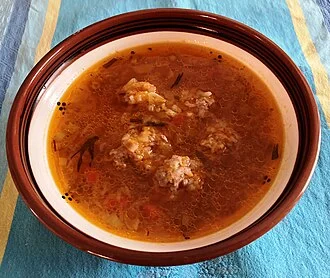
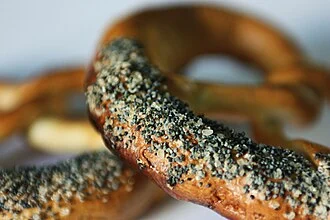
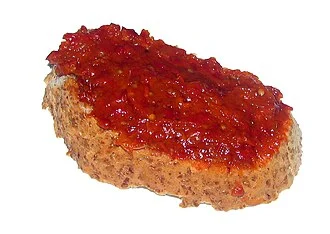
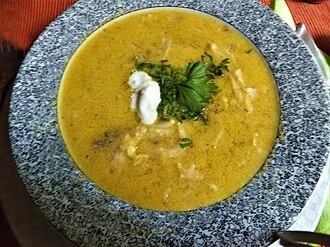
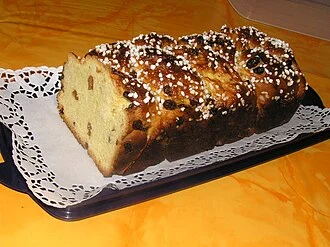
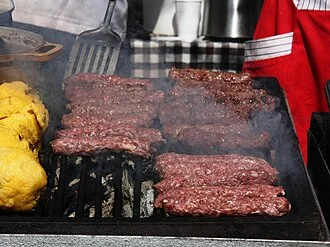
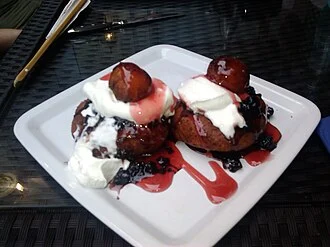
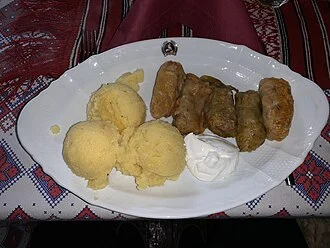
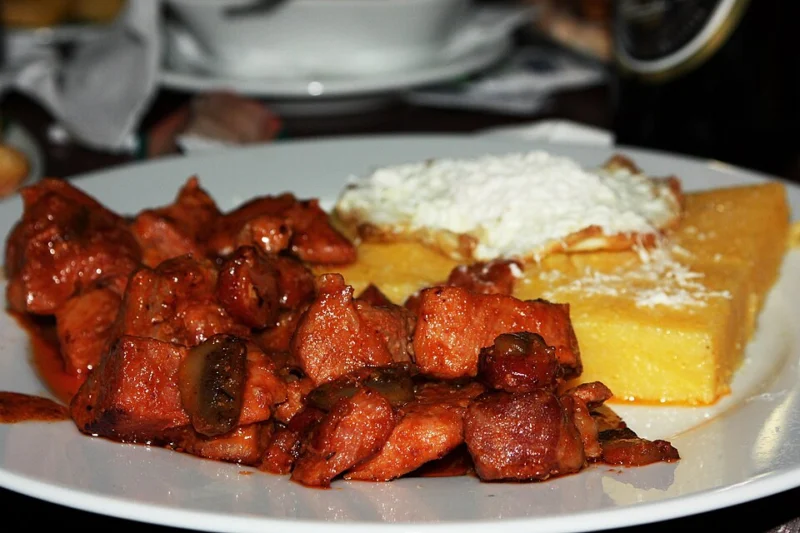
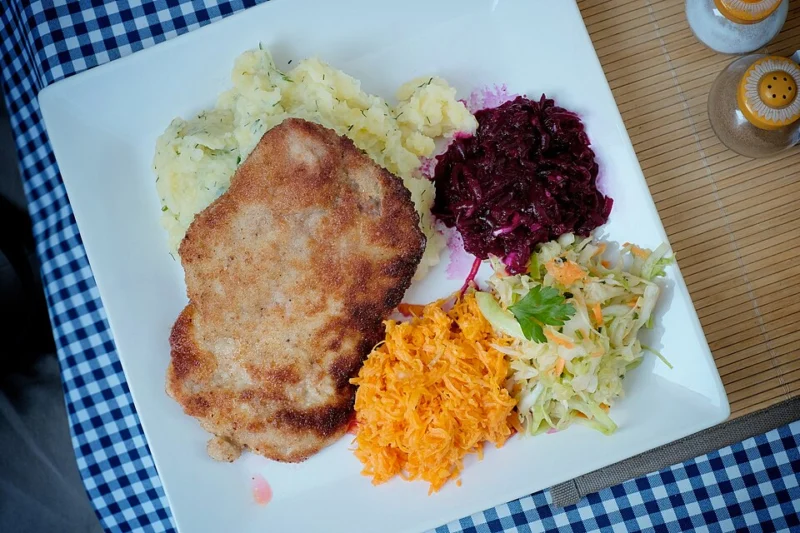
Grilled polenta balls filled with telemea cheese and often bacon. A tangy vegetable soup made with fermented bran. Baked pretzels, typically with a salted crust. Rich and flavorful pork stew with polenta and cheese. A smoky spread made from roasted vegetables, typically eggplant and peppers. Breaded and fried pork cutlet. Traditional tripe soup with sour cream. A sweet, leavened bread filled with nuts, cocoa, and sometimes Turkish delight. Fried doughnuts with sour cream and jam.
Traditional Local Food
Bucharest (Romania)
🥩
Main course
Meat
Bulz
Bools
· Polenta and cheese dish
Soup
Vegetarian
Ciorbă de legume
Chor-buh deh leh-goom-eh
· Vegetable sour soup
Snack
Vegetarian
Covrigi
Co-vree-ghee
· Romanian pretzels
 Main course
Meat
Tochitură Moldovenească
Toh-khi-too-ruh Mol-doh-veh-neshk-ah
· Moldovan pork stew
Starter
Vegan
Zacuscă
Za-koos-ka
· Roasted vegetable spread
 Main course
Meat
Șnițel de porc
Shnee-tzel de pork
· Pork schnitzel
Soup
Meat
Ciorbă de burtă
CHOR-buh deh BOOR-tuh
Dessert
Vegetarian
Cozonac
koh-ZOH-nahk
Dessert
Vegetarian
Papanasi
Papanași
pah-pah-NAH-shee