Explore Guides
EUROPE / POLAND
Triplandio Gdansk guide covers 10 travel guides across 29 areas, complete with hotel picks. Explore 40 self-guided walking tours in Gdansk with 75 POI, spanning 87.1 km in total. Get inspired by 37 local dishes, complete with recipes and our unique Food Flavour DNA graph.
Gdansk
City & Country Data Gdansk (Poland)

Key travel data for Gdansk — local prices, safety, healthcare, local currency and essentials, curated by Triplandio.
🌍 Poland
Safety
70
Health
53
Lifestyle
65
Infra
78
Rank
#32
Score
58
Tourists
88.5M/y
GDP/cap
$28.4k
Life Exp
78.4 yrs
Population
36.4M
Currency
PLN zł
Language
Polish
Payments
Cards OK
Emergency
112
💰 Prices in Gdansk
Coffee
$3.88
Beer
$3.88
Lunch
$10.00
Groceries
$25.00/w
Taxi/km
$0.93
Transit
$1.00
Fuel
$1.50/l
Internet
$20.00/m
Salary
$1,000/m
Travel tipsGdansk (Poland)

Quick tips
- Use only official taxis — Critical
Unofficial taxis in Poland overcharge, and passengers have been assaulted. An official taxi shows the company name and phone number on the door and roof, and a rate card in the window.
- Drinking alcohol in public is illegal — Caution
In Poland you can't drink alcohol in streets, parks or squares, except in licensed beer gardens and café terraces. Police can fine or arrest you, and drunk people can be held overnight in a sobering-up centre at their own cost.
- Jaywalking gets you a fine — Caution
Polish police fine pedestrians who cross away from a crossing or against a red signal, even on an empty street. Wait for the green man.
- Validate your ticket when you board — Caution
On Polish trams, buses and metros you must stamp or tap your ticket at the start of the journey. Inspectors fine anyone with an unvalidated ticket, tourists included.
- Always carry ID — Good to know
You must carry identification in Poland. A printed copy of your passport photo page is acceptable, so keep the passport itself in your hotel safe.
- Do
- Say “dzień dobry” when entering
- Validate your ticket when you board
- Carry a copy of your passport
- Pay in zloty, not your home currency
- Take shoes off in people's homes
- Don’t
- Drink alcohol in the street or park
- Cross against a red light
- Take unmarked taxis
- Photograph military sites
- Drink anything before driving
Critical
Prison or heavy penalty possible
Laws & fines
- Drug laws are severe, including cannabis — Critical
Possessing, using or smuggling any illegal drug in Poland, including cannabis, can mean a long prison sentence and heavy fines. Airport scanners also check transit passengers' bags.
- No photos or drones near military sites — Critical
Don't photograph or fly a drone near military or security sites, infrastructure or border areas in Poland. Obey “no photography” signs and Poland's civil aviation rules for drones.
- Keep away from the Ukraine and Belarus borders — Critical
Access within 15 metres of the Poland–Ukraine border is restricted, and zones up to 2 km deep are closed along parts of the Belarus border, including near Białowieża Forest. Follow signs and border guards' instructions.
Entry & visa
- 90 days in any 180 in Schengen — Critical
Poland is in the Schengen area. Visitors who don't need a visa can stay up to 90 days in any 180-day period, counting time in all Schengen countries. Overstaying can mean a ban of up to 3 years.
Outdoors & adventure
- Tatra weather turns quickly — Critical
Storms in the Tatra Mountains near Zakopane often build on summer afternoons, and lightning has killed hikers on exposed peaks. Start early, turn back if clouds build and check the forecast.
Caution
Fines, losses or injury possible
Scams & safety
- Pickpockets on Long Street in summer — Caution
Pickpockets work the crowds on Gdańsk's Long Street (ulica Długa), Long Market and the riverside in summer. Keep bags zipped and in front of you.
- Check menus and prices on the waterfront — Caution
Some restaurants and bars along Gdańsk's Motława riverside and in Sopot charge by weight for fish or add high extras. Ask the price before you order.
Laws & fines
- Wear something reflective after dark — Caution
Pedestrians and cyclists outside built-up areas in Poland must wear a reflective item at night. Police can fine you 100 zloty (about £20) without one.
- Check your bar bill before paying — Caution
Visitors to Polish bars and nightclubs have been overcharged when paying by card at the end of the night, and drinks have been spiked. Check prices and the bill, and watch your drink.
Tipping & money
- Avoid stand-alone cash machines — Caution
Independent cash machines in tourist areas often charge high fees and push poor exchange rates. Use cash machines at banks, and take care after withdrawing money.
Entry & visa
- No meat or dairy from outside the EU — Caution
You can't bring meat, milk or products containing them into Poland from outside the EU, apart from baby food and some medical foods. Declare cash of 10,000 euros or more.
Outdoors & adventure
- Swim at guarded Baltic beaches — Caution
The Baltic Sea is cold and has strong currents. Swim only at beaches with lifeguards: a white flag means swimming is allowed, a red flag means it's forbidden.
- Headlights on day and night — Caution
Drivers in Poland must use dipped headlights at all times, all year round. The drink-driving limit is very low, so don't drink at all before driving.
- Narrow roads and frequent roadworks — Caution
Some Polish main roads are narrow and poorly surfaced, and roadworks are common in summer. Driving these roads after dark is difficult, so plan long drives in daylight.
Good to know
Rules and useful facts
Scams & safety
- Travel advisory: Level 1 of 4 — Good to know
Exercise normal precautions — the U.S. State Department's rating for Poland.
- Sopot nightlife after dark — Good to know
Sopot's Monte Cassino street is busy with bars on summer nights. Watch your drink, check the bill and use official taxis or app rides home.
Laws & fines
- Demonstrations are common — Good to know
Public demonstrations are common in Polish cities. Most are peaceful and well policed, but some attract violence, so keep your distance and follow police instructions.
Customs
- Most shops close on Sundays — Good to know
Poland bans most large-shop trading on most Sundays. Plan grocery shopping for Saturday; small kiosks, bakeries, petrol station shops and restaurants stay open.
Tipping & money
- Pay in zloty, not your home currency — Good to know
Poland uses the zloty (PLN), not the euro. When a card machine or cash machine offers to charge you in your home currency, choose zloty — the conversion rate offered is usually worse.
Entry & visa
- Passport under 10 years old — Good to know
Your passport must have been issued less than 10 years before you arrive in Poland and be valid for at least 3 months after you leave the Schengen area.
- Fingerprints at the border — Good to know
The EU's Entry/Exit System (EES) now registers non-EU visitors' fingerprints and photo on first entry, replacing passport stamps. It's free, but allow extra time at the border and airport.
- Show a return ticket and funds — Good to know
Polish border guards may ask for a return or onward ticket and proof that you have enough money for your stay.
Health
- Call 112 in an emergency — Good to know
Dial 112 in Poland for an ambulance, police or fire service. Contact your insurer quickly if you are referred to hospital.
- Ticks in forests and meadows — Good to know
Ticks in Polish forests and grassland can spread Lyme disease and tick-borne encephalitis. Use repellent, cover your legs and check your body after walks.
- Bring a GHIC or EHIC — Good to know
Visitors from the UK need a Global Health Insurance Card (GHIC) or European Health Insurance Card (EHIC) for state healthcare in Poland. It doesn't replace travel insurance or cover repatriation.
- Winter smog in southern cities — Good to know
Coal heating causes heavy air pollution in many Polish cities in winter, especially in the south. Check an air-quality app and limit outdoor exercise on bad days.
Outdoors & adventure
- Algae can close Baltic beaches — Good to know
In hot summers, blue-green algae (sinice) blooms can make the Baltic unsafe for swimming, and beaches are then closed to bathers. Check notices before going in.
Local tips
Local know-how
Getting around
- Gdańsk Airport (GDN) to the centre — Local tip
Gdańsk Lech Wałęsa Airport is about 12 km from the Old Town. The PKM (Pomeranian Metropolitan Railway) regional train links the airport with Gdańsk Wrzeszcz, where you change for the centre; buses and taxis also run.
- SKM trains to Sopot and Gdynia — Local tip
Fast local SKM (Szybka Kolej Miejska, the Tricity urban railway) trains link Gdańsk, Sopot and Gdynia every few minutes. Buy tickets from machines or an app before boarding.
- Trams around Gdańsk — Local tip
Trams and buses cover Gdańsk. Validate paper tickets on board, or use the city transport app or contactless ticket machines.
- Ferry to Westerplatte — Local tip
In summer, tourist boats sail from the Gdańsk waterfront to Westerplatte, where the Second World War began. They stop in rough weather.
Customs
- Say “dzień dobry” when entering — Local tip
Greet staff with “dzień dobry” (good day) when you walk into a shop, café or lift in Poland, and “do widzenia” (goodbye) when you leave.
- “Dziękuję” when paying means keep the change — Local tip
If you say “dziękuję” (thank you) as you hand over money in Poland, staff may take it that they can keep the change. Say it after you get your change back.
- Take your shoes off in homes — Local tip
Poles usually take off their shoes when entering a home and hosts may offer slippers. Bring flowers (an odd number) or chocolates if you're invited.
- Dress respectfully in churches — Local tip
Poland is a strongly Catholic country. In churches, cover shoulders, take off hats and keep quiet during Mass; many churches ask visitors not to walk around during services.
Tipping & money
- Tip about 10% for table service — Local tip
In Polish restaurants and cafés with table service, a tip of about 10% is normal for good service. Check whether a service charge has been added, which is more common for groups.
- Compare rates at exchange offices — Local tip
Exchange offices (kantor) are everywhere in Poland, but rates vary a lot and airport and station ones are usually the worst. Check the rate and any commission before handing over cash.
- Cards and contactless work almost everywhere — Local tip
Contactless card and phone payments are accepted almost everywhere in Poland, including ticket machines on trams and small cafés. Keep a little cash for market stalls and toilets.
Health
- Private clinics are affordable — Local tip
Public healthcare in Poland is of a reasonable standard, and private clinics cost less than in the UK. Many private clinics in big cities have English-speaking doctors.
Say it locally
Address strangers politely as “pan” (sir) or “pani” (madam) and always say “dzień dobry” when you walk in.
Through the year
Festival or season Public holiday (exact date)
- Smog and cold season
Nov 2026–Mar 2027 · Short days, frost and coal-heating smog in many cities; check the air quality.
- All Saints' Day
Mon 1 Nov 2027 · Public holiday
- Independence Day
Wed 11 Nov 2026 · Public holiday
- Christmas markets
Dec 2026 · Markets fill the main squares of Kraków, Gdańsk, Wrocław and Warsaw from late November.
- Ski season
Dec 2026–Mar 2027 · Zakopane and the Tatras get busy with skiers, especially in the January–February school holidays.
- Christmas Eve
Thu 24 Dec 2026 · Public holiday
- Christmas Day
Fri 25 Dec 2026 · Public holiday
- Second Day of Christmas
Sat 26 Dec 2026 · Public holiday
- New Year's Day
Fri 1 Jan 2027 · Public holiday
- Epiphany
Wed 6 Jan 2027 · Public holiday
- Easter traditions
Mar–Apr 2027 · Holy Week brings processions and the Saturday blessing of food baskets in churches; Easter dates move each year.
- Easter Sunday
Sun 28 Mar 2027 · Public holiday
- Easter Monday
Mon 29 Mar 2027 · Public holiday
- Labor Day
Sat 1 May 2027 · Public holiday
- Constitution Day
Mon 3 May 2027 · Public holiday
- Whit Sunday
Sun 16 May 2027 · Public holiday
- Corpus Christi
Thu 27 May 2027 · Public holiday
- Summer holidays
Jul–Aug 2027 · Baltic resorts, the lakes of Masuria and the Tatras are crowded; book trains and rooms early.
- St Dominic's Fair
Jul–Aug 2027 · Large open-air fair filling the Old Town for about three weeks from late July, with crowds and street stalls.
- Assumption of Mary
Sun 15 Aug 2027 · Public holiday
Sources: GOV.UK travel advice · U.S. State Dept · Google public holidays
Best time to visit Gdansk (Poland)
Now (November) avg high: 7°C, mostly dry, moderate crowds. Best months to walk: May & Sep.
Live Temp
…
~Day / Night Temp
7°C / 2°C
Sunrise / Sunset
8:02 / 16:57
Local time
11:17
Sea Temp
9°C
Best Months  May & Sep
J
Jan
F
Feb
M
Mar
A
Apr
M
May
J
Jun
J
Jul
A
Aug
S
Sep
O
Oct
N
Nov
 D
Dec
J
Jun
J
Jul
A
Aug
S
Sep
O
Oct
N
Nov
D
Dec
Check Gdansk hotels
Temperature
Average daytime high, month by month. Zero line marks freezing point.
Crowds
How busy it gets — traveller interest by month.
Sea temperature
Sea warmth for swimming, by month.
Rainfall
Rainy days to expect each month.
Sunshine
Hours of sun per day, by month.
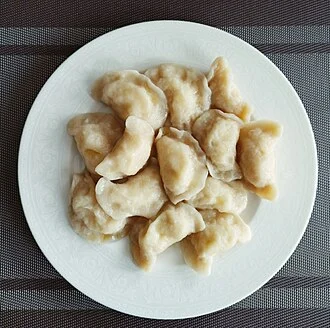
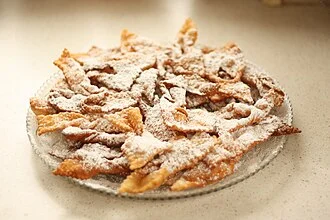
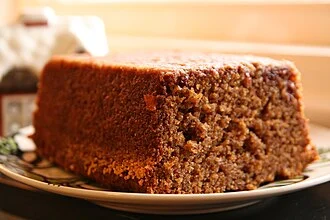
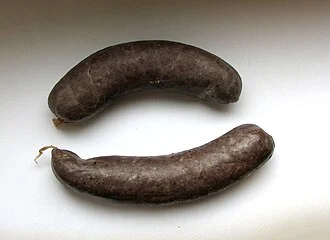
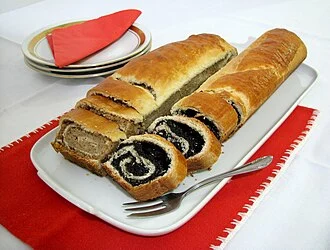
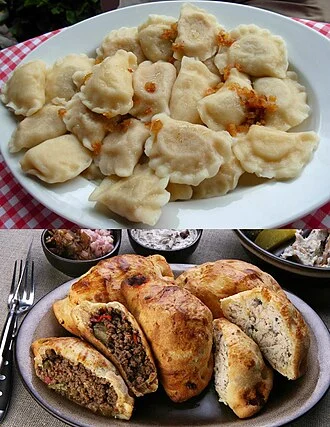
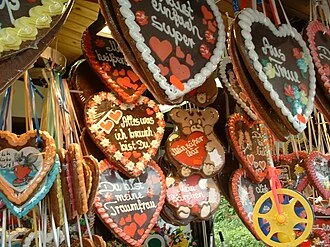
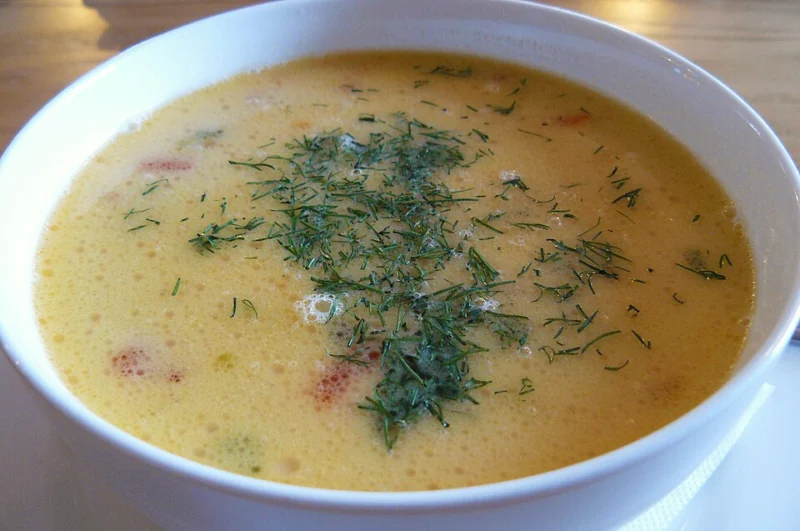
Dumplings filled with a sweet cheese mixture Soup made from duck blood, broth, dried fruits, and spices. Roast duck served with baked apples and spices. Sweet, crispy pastries sprinkled with powdered sugar. Spiced gingerbread often enjoyed during festive seasons in Gdańsk. Roasted duck served with apples, a traditional Pomeranian dish. A hearty fish soup made with local fish and vegetables. Traditional blood sausage with barley and spices. Sweet poppy seed roll prepared with yeast dough. Wild mushrooms marinated in vinegar with onions Dumplings filled with a variety of ingredients, often meat or cheese. Traditional Polish deep-fried doughnuts filled with jam. Spiced gingerbread cake often made with honey and nuts. Smoked and seasoned goose meat popular in Pomeranian cuisine
Traditional Local Food
Gdansk (Poland)
Main course
Vegetarian
Cheese Pierogi
Pierogi z serem
Pyeh-roh-gee z seh-rem
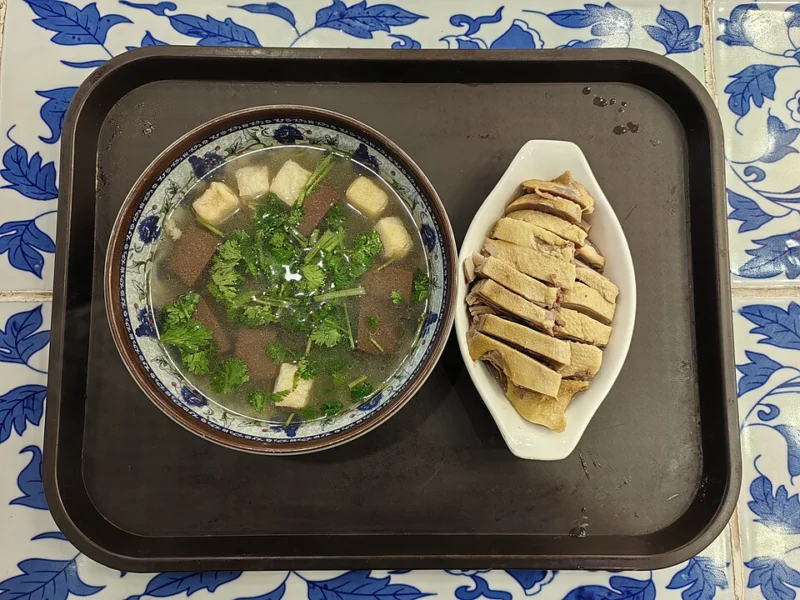 Soup
Meat
Duck Blood Soup
Czernina
Cher-NEE-nah
🥩
Main course
Meat
Duck with Apples
Kaczka z jabłkami
KAH-chka zh YAH-bka-mee
Dessert
Vegetarian
Faworki
Fah-VOHR-kee
Dessert
Vegetarian
Gdańsk Gingerbread
Piernik gdański
PYER-neek g'dah-NSEE
🥩
Main course
Meat
Kashubian Duck with Baked Apples
Kaszubska Kaczka z Pieczonymi Jabłkami
Kah-shoob-ka Kat-ska z Pee-yeh-choh-nee-mi Yah-boo-kah-mee
 Soup
Fish & Seafood
Kashubian Fish Soup
Kaszubska Zupa Rybna
Ka-ZHOOB-ska Zoo-pa REE-bna
Main course
Meat
Kaszanka
Kah-shan-kah
Dessert
Vegetarian
Makowiec
Mah-KO-viets
🌱
Starter
Vegan
Marinated Mushroom Salad
Sałatka z marynowanych grzybów
Sah-waht-kah z mahr-ihnoh-vah-nihkh gzhih-boff
Main course
Meat
Pierogi
PYE-roh-ghee
Dessert
Vegetarian
Polish Doughnuts
Pączki
POHNCH-kee
Dessert
Vegetarian
Polish Gingerbread
Piernik
Pyer-neek
🥩
Main course
Meat
Pomeranian Smoked Goose
Gęsina pomorska wędzona
Gen-sinah poh-mor-ska ven-dzoh-na