

Explore Guides
EUROPE
Ireland
Triplandio Ireland guide covers 21 travel guides with 2 cities across 53 areas, complete with hotel picks. Explore 77 self-guided walking tours in Ireland with 178 POI, spanning 179.8 km in total. Get inspired by 11 local dishes, complete with recipes and our unique Food Flavour DNA graph.
Country Data Ireland

Key travel data for Ireland — safety, healthcare, local currency and essentials, curated by Triplandio.
🌍 Ireland
Safety
100
Health
81
Lifestyle
83
Infra
80
Rank
#8
Score
68
Tourists
11.0M/y
GDP/cap
$131.6k
Life Exp
83.0 yrs
Population
5.5M
Currency
EUR €
Language
English
Payments
Cashless
Emergency
999
Travel tipsIreland

Quick tips
- Drug laws are strict — Critical
Possessing even small amounts of drugs, including cannabis, can bring heavy fines and prison in Ireland. Never carry a bag or parcel for anyone else through an Irish airport or port.
- Drive on the left — Caution
Traffic in Ireland drives on the left, and many rural roads are narrow and winding with stone walls on both sides. Take your time and pull in to let faster locals pass.
- Pay the M50 toll online — Caution
The M50 motorway around Dublin has a barrier-free toll between junctions 6 and 7. There is no booth — pay online by 8pm the next day, or hire cars pass on the charge plus a fee.
- Ireland is not in the Schengen area — Good to know
Ireland is in the EU but runs its own border controls, so a Schengen visa or Schengen stay does not cover it. Check Ireland's visa rules for your passport separately.
- Northern Ireland is a different country — Good to know
Northern Ireland is part of the United Kingdom, with pounds sterling and speed limits in miles per hour. There are no checks at the land border, but many visitors need a UK Electronic Travel Authorisation (ETA) to cross.
- Pick one coast rather than all of it — Local tip
Distances in Ireland look short, but narrow roads make driving slow. On a week's trip, combine Dublin with one western region such as Galway and Connemara or Kerry.
- Do
- Drive slowly on narrow rural roads
- Pack waterproofs in every season
- Pay the M50 toll by the next day
- Buy your round in the pub
- Check visa rules separately
- Don’t
- Call Ireland part of Britain
- Drink and drive
- Go past cliff barriers for a photo
- Assume a Schengen visa covers Ireland
- Drink in the street
Critical
Prison or heavy penalty possible
Laws & fines
- Low drink-driving limit — Critical
The drink-driving limit in Ireland is lower than in many countries, and even lower for learner, new and professional drivers. Police run random breath tests, so don't drink at all if you're driving.
Beaches & adventure
- Stay back from cliff edges — Critical
Irish sea cliffs such as the Cliffs of Moher have crumbling, unfenced edges and strong gusts. Keep to marked paths and behind barriers, especially in wind or rain.
Caution
Fines, losses or injury possible
Laws & fines
- Drinking in the street is often banned — Caution
Local bylaws in Dublin, Galway and many other Irish towns ban drinking alcohol in public places, and police can confiscate drinks and fine you.
- No smoking indoors — Caution
Ireland bans smoking in all enclosed workplaces, including pubs and restaurants. Smokers use outdoor areas or beer gardens.
- Speed limits in kilometres — Caution
Speed limits in Ireland are in kilometres per hour, and speed cameras are common. Remember that limits switch to miles per hour when you cross into Northern Ireland.
Entry & visa
- Declare 10,000 euros in cash — Caution
Declare cash or travellers' cheques worth 10,000 euros or more when entering or leaving Ireland from outside the EU. Undeclared money can be seized.
Beaches & adventure
- Atlantic waves and currents — Caution
The Atlantic coast of Ireland has big waves, cold water and strong currents. Swim only at lifeguarded beaches in summer and watch out for large waves on rocks.
- Weather changes fast in the hills — Caution
Mist, rain and wind can arrive quickly in Irish mountains such as Connemara and Kerry. Carry waterproofs, a map and warm layers, and tell someone your route.
- Watch for sheep and cyclists — Caution
Sheep, farm vehicles and cyclists are common on rural Irish roads, often around blind bends. Slow down and be ready to stop.
Good to know
Rules and useful facts
Getting between cities
- A car for the countryside — Good to know
Public transport to rural areas and the Wild Atlantic Way is limited, so most visitors hire a car. Hire companies often charge extra for drivers under 25 or over 70.
- Ferries to the islands — Good to know
Ferries serve the Aran Islands and other offshore islands from ports on the west coast. Sailings are cancelled in rough weather, so keep a spare day.
Regions & seasons
- Rain in every season — Good to know
Ireland's weather is mild but changeable, and rain is possible on any day of the year. The west is wetter than the east.
Laws & fines
- Limited hours for buying alcohol — Good to know
Shops and off-licences in Ireland can only sell alcohol from 10:30 to 22:00 Monday to Saturday and from 12:30 on Sundays. Pubs have their own later hours.
Tipping & money
- Two currencies on one island — Good to know
The Republic of Ireland uses the euro, while Northern Ireland uses the pound sterling. Shops near the border sometimes take both, but at a poor exchange rate.
Entry & visa
- Travel advisory: Level 1 of 4 — Good to know
Exercise normal precautions — the U.S. State Department's rating for Ireland.
- Visa-free visits — Good to know
Many passport holders, including those from the EU, USA, Canada and Australia, can visit Ireland without a visa. The immigration officer decides how long you can stay, up to 90 days.
- No Entry/Exit System in Ireland — Good to know
Ireland is not part of the new EU Entry/Exit System (EES) for fingerprints and photos, so you won't register biometrics when arriving in Ireland.
- British and Irish citizens travel freely — Good to know
Under the Common Travel Area, British and Irish citizens don't need a visa to visit, live or work in each other's country. Some airlines and ferries still insist on a passport.
Health
- Call 112 or 999 — Good to know
In Ireland, dial 112 or 999 for an ambulance, police (Gardaí), fire service or coastguard. Contact your travel insurer quickly if you are referred to a hospital.
- EU and UK health cover — Good to know
EU visitors with a European Health Insurance Card (EHIC) and UK residents can use Irish public healthcare. Other visitors pay in full, so travel insurance is essential.
- Paying for prescriptions — Good to know
Irish pharmacies can fill some foreign prescriptions, such as UK and EU ones, but you pay the full price. Bring enough of your regular medicine for the trip.
- Tap water is safe — Good to know
Tap water in Ireland is safe to drink. Occasionally a local boil-water notice is issued — follow it and check the Uisce Éireann (Irish Water) website if unsure.
Local tips
Local know-how
Getting between cities
- Trains from Dublin — Local tip
Irish Rail (Iarnród Éireann) runs trains from Dublin to Galway, Cork, Limerick and other cities. Book online for cheaper fares and a reserved seat.
- Coaches are frequent — Local tip
Coach companies such as Bus Éireann, Citylink and GoBus link Dublin and Dublin Airport with Galway, Cork and many towns, often more often than trains.
Regions & seasons
- The west for scenery — Local tip
Connemara, the Burren, Kerry and Donegal have Ireland's wildest scenery. May to September is the best time, with long days and most attractions open.
- Dublin all year — Local tip
Dublin works in any season, with museums, pubs and theatre. Winter is cheaper but dark by about 16:30 in December.
Customs
- Buying rounds in the pub — Local tip
In Irish pubs, groups often take turns buying drinks for everyone (a round). If you join a round, make sure you buy one when it's your turn.
- Order drinks at the bar — Local tip
In most Irish pubs you order and pay at the bar rather than waiting for table service. Traditional music sessions are informal, so listen quietly while musicians play.
- Don't call Ireland part of Britain — Local tip
The Republic of Ireland is an independent country, not part of the UK or Great Britain. Calling Irish people British causes offence, so avoid it.
- Irish on signs — Local tip
Road signs and place names in Ireland are shown in both Irish (Gaelic) and English. In Irish-speaking areas (the Gaeltacht) in the west, some signs are in Irish only.
Tipping & money
- Tip about 10% in restaurants — Local tip
In Irish restaurants a tip of about 10–15% is normal for good table service, unless a service charge is already on the bill. Nobody tips for drinks at the bar.
- Cards work almost everywhere — Local tip
Contactless card and phone payments are accepted almost everywhere in Ireland, including most pubs and taxis. Carry a little cash for rural bed-and-breakfasts and small shops.
- Prices are fixed — Local tip
Bargaining is not usual in Ireland, although you can ask for a discount at markets or for longer stays in small guesthouses.
Beaches & adventure
- Single-track roads — Local tip
Many scenic roads in the west, such as parts of the Ring of Kerry, are narrow with passing places. Tour coaches often travel one way, so drive in the same direction.
Our Ireland city guides
There's no train from the airport — take an express coach or bus into the city.
Book rooms early for the arts festival and race week in late July.
Through the year
Festival or season Public holiday (exact date)
- Atlantic storm season
Oct 2026–Mar 2027 · Named storms can bring gales, flooding and ferry cancellations, especially in the west; check Met Éireann weather warnings.
- Christmas Day
Fri 25 Dec 2026 · Public holiday
- St. Stephen's Day
Sat 26 Dec 2026 · Public holiday
- New Year's Day
Fri 1 Jan 2027 · Public holiday
- Six Nations rugby
Feb–Mar 2027 · Home rugby internationals in Dublin fill the city's hotels and pubs on match weekends; book early.
- St. Brigid’s Day
Mon 1 Feb 2027 · Public holiday
- St. Patrick's Day
Wed 17 Mar 2027 · Public holiday
- Easter Monday
Mon 29 Mar 2027 · Public holiday
- May Day
Mon 3 May 2027 · Public holiday
- Peak summer season
Jun–Aug 2027 · Long daylight until about 22:00, festivals and the busiest time on the Wild Atlantic Way; book cars and rooms well ahead.
- June Bank
Mon 7 Jun 2027 · Public holiday
- Gaelic games finals
Jul 2027 · The All-Ireland hurling and Gaelic football finals at Croke Park in Dublin are big national events that fill the capital.
- August Bank
Mon 2 Aug 2027 · Public holiday
- Halloween festivals
Oct 2027 · Halloween grew out of the Celtic festival of Samhain, and towns such as Dublin and Drogheda hold parades and events in late October.
- October Bank
Mon 25 Oct 2027 · Public holiday
Sources: GOV.UK travel advice · U.S. State Dept · Google public holidays
Traditional Local Food Ireland
Bread
Vegetarian
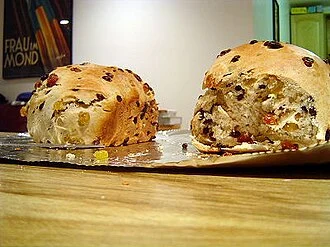
Barmbrack
Báirín Breac
BAH-reen BRAK
A traditional Irish fruit bread, often served at Halloween.
Open Barmbrack recipe🐟
Main course
Fish & Seafood
Dublin Bay Prawns
Nephrop Básce
nef-rop bas-ka
Sweet and succulent prawns from Dublin Bay.
Open Dublin Bay Prawns recipe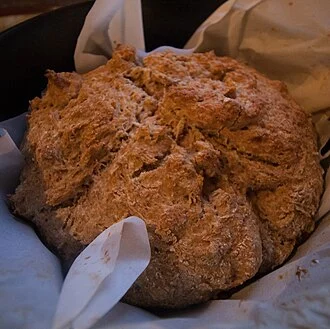
Bread
Vegetarian
Brown Bread
Arán Donn
AR-awn DON
Traditional Irish bread made with wholemeal flour and buttermilk.
Open Brown Bread recipe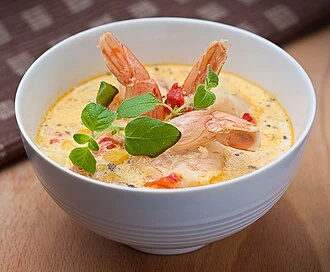
Soup
Fish & Seafood
Seafood Chowder
Brocann Feamainne
BROH-kahn Feh-WAHN-na
A creamy soup with a mix of local seafood, potatoes, and herbs.
Open Seafood Chowder recipe🐟
Starter
Fish & Seafood
Galway Oysters
Oisrí na Gaillimhe
ISH-ree na GAL-ih-may
Fresh, locally sourced oysters from Galway Bay.
Open Galway Oysters recipe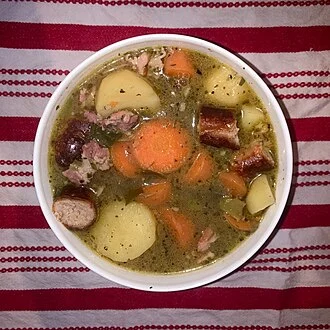
Main course
Meat
Coddle
Cadharlach
CAD-her-lack
Classic Dublin dish of sausages, bacon, and potatoes.
Open Coddle recipe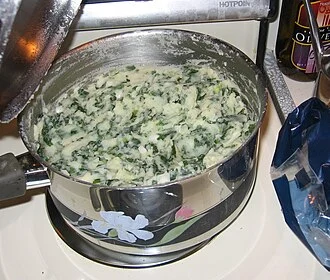
Main course
Vegetarian
Colcannon
Cál ceannann
KAHL KEE-un-un
Mashed potatoes mixed with kale or cabbage.
Open Colcannon recipe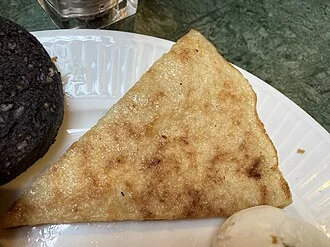
Main course
Vegetarian
Boxty Pancake
Bacstaí
BAHK-stee
A type of potato pancake with a smooth, creamy texture.
Open Boxty Pancake recipe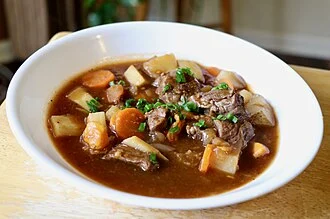
Main course
Meat
Irish Stew
Stobhach Gaelach
STO-ah ga-LAA
Hearty stew with lamb, potatoes, and vegetables.
Open Irish Stew recipe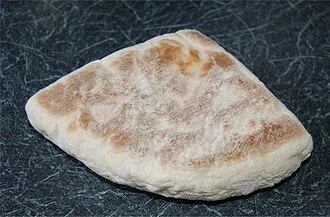
Bread
Vegetarian
Irish Soda Bread
Arán Sóide
Ah-rawn So-deh
Traditional Irish quick bread made with baking soda.
Open Irish Soda Bread recipe🐟
Starter
Fish & Seafood
Cockles and Mussels
Cóisirí agus Moilisc
KAW-shee-ree eh-GUS MO-lisk
A traditional Irish seafood dish featuring cockles and mussels.
Open Cockles and Mussels recipe