Explore Guides
ASIA / THAILAND
Triplandio Chiang Mai guide covers 11 travel guides across 16 areas, complete with hotel picks. Explore 42 self-guided walking tours in Chiang Mai with 107 POI, spanning 118.8 km in total. Get inspired by 21 local dishes, complete with recipes and our unique Food Flavour DNA graph.
Chiang Mai
City & Country Data Chiang Mai (Thailand)

Key travel data for Chiang Mai — local prices, safety, healthcare, local currency and essentials, curated by Triplandio.
🌍 Thailand
Safety
48
Health
66
Lifestyle
60
Infra
59
Rank
#49
Score
47
Tourists
39.9M/y
GDP/cap
$8.1k
Life Exp
76.6 yrs
Population
71.6M
Currency
THB ฿
Language
Thai
Payments
Mixed
Emergency
191
💰 Prices in Chiang Mai
Coffee
$1.65
Beer
$2.20
Lunch
$3.50
Groceries
$20.00/w
Taxi/km
$0.50
Transit
$0.90
Fuel
$1.20/l
Internet
$20.00/m
Salary
$600/m
Travel tipsChiang Mai (Thailand)

Quick tips
- Vapes and e-cigarettes are illegal — Critical
Owning or using any vape, pod, e-liquid or heat-not-burn device is banned — no exception for tourists. Fines typically 5,000–30,000 baht, possible detention.
- Never criticise the monarchy — Critical
Insulting the King or the royal family (lèse-majesté) can mean years in prison. It covers past and present royals — and your own posts, shares and comments online.
- Register your drone within 30 days — Critical
Every drone brought into Thailand must be registered with the telecoms regulator (NBTC), even if you never fly it. An unregistered drone can mean up to 100,000 baht or 5 years in prison.
- Carrying over 120 playing cards is illegal — Caution
An old anti-gambling law still applies: more than 120 cards (just over two packs) can lead to a fine or prosecution. One or two packs are fine.
- Fill in the Digital Arrival Card first — Good to know
Every foreign visitor must complete the online Thailand Digital Arrival Card (TDAC) in the 3 days before arriving — whether by air, land or sea.
- Do
- Return a wai with a smile
- Take shoes off in temples and homes
- Carry a copy of your passport
- Use the meter, Grab or Bolt
- Stand for the royal anthem
- Don’t
- Bring a vape
- Touch heads or point feet at people
- Step on money
- Joke about the royal family
- Hand over your passport as a deposit
Critical
Prison or heavy penalty possible
Laws & fines
- Drug laws are extremely strict — Critical
Even small amounts can mean heavy fines or prison. The most serious drug offences can carry the death penalty.
- Cannabis is medical-only — Critical
Using cannabis just for fun is illegal. You can only buy it with a Thai doctor's prescription (max 30-day supply), and you can't take any out of the country.
Entry & visa
- Overstaying your visa is costly — Critical
Staying past your permitted date costs 500 baht per day, up to 20,000 baht. You can also be detained and banned from returning for up to 10 years.
Health
- Methanol and spiked drinks — Critical
Fake spirits containing methanol have killed travellers. Order sealed bottles or cans, and don't accept drinks from strangers.
Caution
Fines, losses or injury possible
Scams & safety
- Police checkpoints for scooter riders — Caution
Chiang Mai police regularly stop foreign scooter riders at checkpoints around the Old City and ask for a helmet and a valid motorbike licence. Riders without one are fined on the spot.
Laws & fines
- Smoke only in marked areas — Caution
Smoking is banned in most public places — indoors, in restaurants and bars, parks and on many popular beaches. Use designated smoking areas; fines reach 5,000 baht.
- Alcohol sale hours — Caution
Shops and supermarkets won't sell you alcohol between midnight and 11:00. Licensed hotels, airport terminals and entertainment venues are exempt.
- Photos on social media — Caution
Posting photos online that show people drinking alcohol or dressed revealingly can break Thai law — both the person posting and the people in the picture can be fined.
- Wildlife souvenirs — Caution
Don't buy ivory or anything made from protected animals — buying, selling or taking it home without a licence is illegal.
- Helmets and licences — Caution
Helmets are compulsory on motorbikes, for the rider and passenger. Without a valid motorbike licence your travel insurance may not pay out after a crash.
Entry & visa
- Duty-free limit: 200 cigarettes — Caution
You can bring in 200 cigarettes per person. Above that, the fine is 10 times their value.
Health
- Stay away from stray animals — Caution
Stray dogs and temple monkeys can carry rabies. Don't feed or touch them, and see a doctor the same day if you're bitten or scratched.
Beaches & adventure
- Rip currents and flags — Caution
Strong currents can pull even good swimmers out to sea. Swim only at beaches with lifeguards and never when a red flag is up, especially in the rainy season.
- Box jellyfish in the rainy season — Caution
Jellyfish come close to shore mostly May–October, and some stings can be fatal. Ask your hotel or dive centre whether it's safe to swim.
- Renting a scooter safely — Caution
Rental scooters are often unregistered. Never leave your passport as a deposit — the shop can keep it until you pay for any damage, real or claimed.
Good to know
Rules and useful facts
Scams & safety
- Travel advisory: Level 1 of 4 — Good to know
Exercise normal precautions — the U.S. State Department's rating for Thailand.
Laws & fines
- Carry your ID — Good to know
Police may ask for your passport. A copy of the photo page is usually enough; otherwise you may have to show it within 24 hours.
Customs
- Respect the royal image — Good to know
Banknotes and coins carry the King's portrait, so never step on them — not even to stop a rolling coin. Stand still when the royal anthem plays before films in cinemas.
Tipping & money
- Card safety — Good to know
Card skimmers are sometimes fitted to street ATMs. Use machines inside banks or malls, and never let your card out of sight when paying.
Entry & visa
- Passport valid for 6 months — Good to know
Your passport must be valid for at least 6 months after you arrive and have at least one blank page.
- Visa-free stays — Good to know
Since 15 Sep 2026, tourists who don't need a visa can stay up to 30 days, normally twice a year. The rules depend on your passport, so check with the Thai embassy before you go.
- Proof of funds — Good to know
At the border you may be asked to show 10,000 baht per person (20,000 per family), or the equivalent, and a ticket out of Thailand.
Health
- Don't drink the tap water — Good to know
Don't drink tap water — stick to bottled or filtered. Ice in restaurants and cafés is usually factory-made and safe.
- Protect yourself from mosquitoes — Good to know
Mosquitoes spread dengue and Zika across the country, and malaria in some border areas. Use repellent, especially at dawn and dusk.
- Air quality — Good to know
Bangkok and Chiang Mai can have dangerous smog and seasonal smoke haze. Check an air-quality (AQI) app, especially if you have asthma.
- Private hospitals need insurance — Good to know
Private hospitals are excellent but expensive, and they want proof you can pay before treating you. Travel insurance is essential.
Local tips
Local know-how
Scams & safety
- Choose trekking tours carefully — Local tip
Cheap hill-tribe treks sold in Chiang Mai guesthouses vary a lot in safety and ethics. Book with a licensed operator that has recent reviews, and ask what is included and who guides you.
- Animal attractions to avoid — Local tip
Some attractions around Chiang Mai let you pose with sedated tigers or ride elephants. Choose places where animals are observed, not handled or ridden.
- Agree songthaew fares in advance — Local tip
Red songthaews (shared pick-up trucks) are Chiang Mai's cheapest transport. Say where you're going before you get in and agree the fare, as private charters cost much more than a shared ride.
Getting around
- Chiang Mai airport (CNX) → Old City — Local tip
Chiang Mai International Airport is only a few kilometres from the Old City, about 15 minutes by car. Use the official taxi counter in arrivals or book Grab or Bolt.
- Grab and Bolt work well — Local tip
Grab and Bolt cars and motorbike taxis are widely available across Chiang Mai, with the price fixed before you book.
- Buses from the Arcade terminal — Local tip
Long-distance buses to Chiang Rai, Pai and Bangkok leave from the Chiang Mai Arcade bus terminal northeast of the Old City. Buy tickets at the terminal or online.
- Walk or cycle the Old City — Local tip
The walled Old City of Chiang Mai is about 1.5 km across and full of temples, so walking or a rented bicycle is the easiest way to explore it.
Customs
- Cover up at temples — Local tip
Cover your shoulders and knees and take your shoes off before entering temple halls. The Grand Palace turns away visitors in shorts or sleeveless tops.
- The head is sacred, feet are low — Local tip
The head is the most respected part of the body and the feet the lowest. Don't touch anyone's head, not even a child's. Don't stretch your feet toward a monk or Buddha image, or use them to point or push things. In temples, sit with your feet tucked under you.
- How to behave around monks — Local tip
Monks may not be touched by women. If you're a woman, don't hand a monk anything directly — put it down in front of him or ask a man to pass it.
- Keep your cool — Local tip
Shouting or showing anger embarrasses everyone involved and rarely gets results. A calm tone, a smile and patience solve most problems.
- The wai — Local tip
The Thai greeting: palms pressed together at chest height and a slight bow. When someone greets you with a wai, return it with a smile. You don't need to start one with waiters, shop staff or children.
Tipping & money
- Tipping in restaurants — Local tip
Check the bill first — many restaurants add a 10% service charge. If it's not included, leaving the small change is appreciated but not expected.
- Tipping taxi drivers — Local tip
No tip expected — just round the fare up to the next 10 or 20 baht.
- Hotels and massages — Local tip
Give hotel porters 20–50 baht. After a massage, 50–100 baht to your masseur is common.
- Bargain at markets, not in malls — Local tip
Haggling is expected at markets and street stalls — keep it friendly. Prices in malls, 7-Elevens and restaurants are fixed.
Beaches & adventure
- Choose ethical elephant sanctuaries — Local tip
Riding elephants harms them and sometimes injures tourists. Choose an ethical sanctuary where you watch and feed them instead.
Say it locally
Men end polite phrases with “khrap”, women with “kha”.
Through the year
Festival or season Public holiday (exact date)
- Loy Krathong
Nov 2026 · Floating candle festival on the November full moon — beautiful, and hotels book up.
- Yi Peng lantern festival
Nov 2026 · Chiang Mai's sky-lantern festival, held with Loy Krathong; mass releases are ticketed events.
- King Bhumibol's Birthday
Sat 5 Dec 2026 · Public holiday
- Constitution Day
Thu 10 Dec 2026 · Public holiday
- New Year's Eve
Thu 31 Dec 2026 · Public holiday
- Chinese New Year
Jan–Feb 2027 · Big celebrations in Chinatowns; some shops close for a few days.
- New Year's Day
Fri 1 Jan 2027 · Public holiday
- Buddhist holy days
Feb–Mar 2027, May–Jul 2027, Oct 2027 · Alcohol sales are banned nationwide on major Buddhist holidays (Makha, Visakha and Asalha Bucha, Buddhist Lent); dates move with the lunar calendar.
- Burning season
Feb–Apr 2027 · Smoke from crop fires can make Chiang Mai's air among the worst in the world; check the air index and avoid outdoor exercise on bad days.
- Makha Bucha
Sun 21 Feb 2027 · Public holiday
- Songkran water fights
Apr 2027 · Chiang Mai's Thai New Year (mid-April) is the country's wildest: expect to be soaked everywhere around the moat for days; bag your phone.
- Chakri Day
Tue 6 Apr 2027 · Public holiday
- Songkran
13–15 Apr 2027 · Public holiday
- Rainy season
May–Oct 2027 · Short heavy downpours and flash floods. Koh Samui and the Gulf islands get most of their rain October–December instead.
- Labor Day
Sat 1 May 2027 · Public holiday
- Coronation Day
Tue 4 May 2027 · Public holiday
- Visakha Bucha
Thu 20 May 2027 · Public holiday
- Queen Suthida's Birthday
Thu 3 Jun 2027 · Public holiday
- Asalha Bucha
Sun 18 Jul 2027 · Public holiday
- King Vajiralongkorn's Birthday
Wed 28 Jul 2027 · Public holiday
- The Queen Mother's Birthday
Thu 12 Aug 2027 · Public holiday
- Vegetarian Festival
Oct 2027 · Nine days of meat-free food and processions, biggest in Phuket and Bangkok's Chinatown; look for yellow flags on stalls.
- Anniversary of the Death of King Bhumibol
Wed 13 Oct 2027 · Public holiday
- Chulalongkorn Day
Sat 23 Oct 2027 · Public holiday
Sources: GOV.UK travel advice · U.S. State Dept · Google public holidays
Best time to visit Chiang Mai (Thailand)
Now (November) avg high: 28°C, mostly dry, full season — expect crowds. Best months to walk: Feb & Apr.
Live Temp
…
~Day / Night Temp
28°C / 20°C
Sunrise / Sunset
6:29 / 17:47
Local time
11:28
Best Months  Feb & Apr
J
Jan
F
Feb
M
Mar
A
Apr
M
May
J
Jun
J
Jul
A
Aug
S
Sep
O
Oct
N
Nov
 D
Dec
M
Mar
A
Apr
M
May
J
Jun
J
Jul
A
Aug
S
Sep
O
Oct
N
Nov
D
Dec
Check Chiang Mai hotels
Temperature
Average daytime high, month by month. Zero line marks freezing point.
Crowds
How busy it gets — traveller interest by month.
Rainfall
Rainy days to expect each month.
Sunshine
Hours of sun per day, by month.
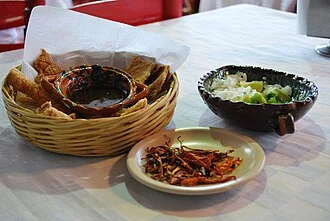
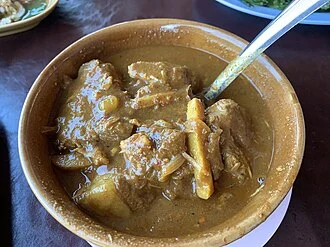
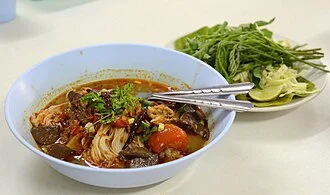
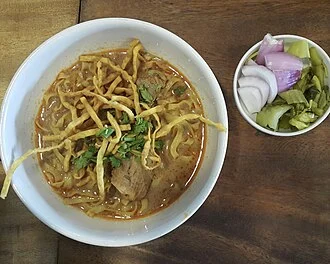
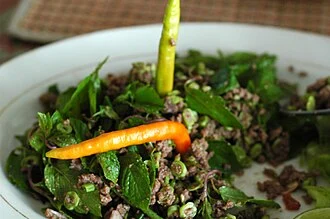
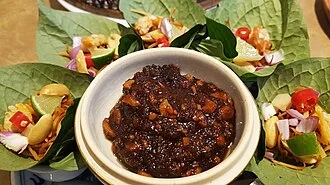
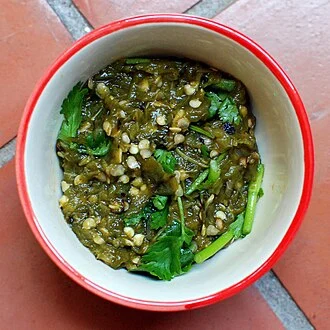
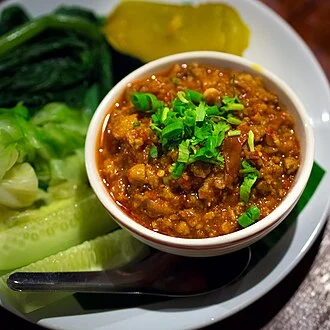
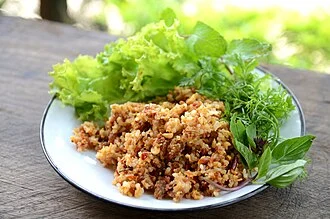
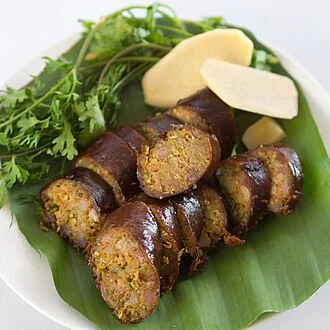
A deep-fried pork skin snack, crispy and savory. A Northern Thai pork curry flavored with ginger and tamarind. Northern Thai rice noodle curry soup with pork ribs and tomatoes. A curry noodle soup with a rich coconut broth. A spicy mixed herb and minced chicken dish. A traditional Thai snack of bite-sized parcels using betel leaves. A spicy green chili dip served with fresh vegetables and sticky rice. A spicy Northern Thai chili dip made with ground pork and tomatoes. A rich and spicy curry made with unripe jackfruit. A spicy-sour fermented pork sausage, eaten raw or cooked. A Northern Thai grilled pork sausage seasoned with local herbs.
Traditional Local Food
Chiang Mai (Thailand)
Snack
Meat
Crispy Pork Skin
แคบหมู
kaep moo
Main course
Meat
Kaeng Hang Lei
แกงฮังเล
Geng-hung-lay
Main course
Meat
Kanom Jeen Nam Ngiao
ขนมจีนน้ำเงี้ยว
khanom jean nam ngiao
Main course
Meat
Khao Soi
ข้าวซอย
Kow Soy
Main course
Meat
Larb Kua Kai
ลาบคั่วไก่
lap khwa kai
Snack
Fish & Seafood
Miang Kham
เมี่ยงคำ
Mee-ang Kahm
Side dish
Fish & Seafood
Nam Prik Noom
น้ำพริกหนุ่ม
nahm prik NOOM
Dip
Meat
Nam Prik Ong
น้ำพริกอ่อง
nahm prik ONG
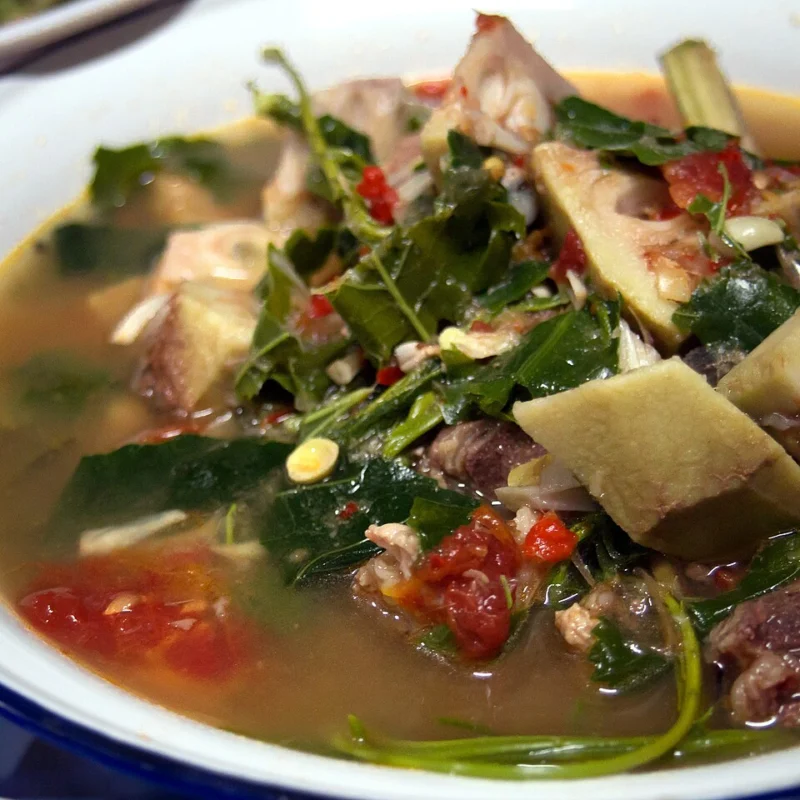 Main course
Fish & Seafood
Northern Thai Curry with Jackfruit
แกงขนุน
keng ka-noon
Snack
Meat
Northern Thai Fermented Pork
แหนม
naem
Snack
Meat
Sai Ua
ไส้อั่ว
Sigh Oo-ah