

Explore Guides
AFRICA
Ivory Coast
Triplandio Ivory Coast guide covers 8 travel guides with 2 cities across 25 areas, complete with hotel picks. Explore 28 self-guided walking tours in Ivory Coast with 52 POI, spanning 102.5 km in total. Get inspired by 8 local dishes, complete with recipes and our unique Food Flavour DNA graph.
Country Data Ivory Coast

Key travel data for Ivory Coast — safety, healthcare, local currency and essentials, curated by Triplandio.
🌍 Ivory Coast
Tourists
668K/y
GDP/cap
$3.1k
Life Exp
62.1 yrs
Population
32.7M
Payments
Mixed
Emergency
112
Travel tipsIvory Coast

Quick tips
- Deadly rip currents, no rescue — Critical
Ocean currents along the Ivorian coast are very strong, and rip tides drown many people each year. There is no lifeboat or rescue service, so swim only in sheltered water.
- Carry your original passport — Caution
Police in Ivory Coast (Côte d'Ivoire) do not always accept photocopies. Carry your original passport with you, and keep a copy separately.
- No photos of the airport or government sites — Caution
Photography is banned near military sites, government buildings, radio and TV stations, the Presidency and Abidjan airport. Put your camera and phone away there.
- Apply for the e-visa early — Good to know
You need a visa for Ivory Coast. Apply and pay for the e-visa online at least 10 working days before you travel, then collect it on arrival at Abidjan airport.
- Yellow fever certificate required — Good to know
Every visitor to Ivory Coast must show a certificate proving yellow fever vaccination. Get the vaccine at least 10 days before you travel.
- Stay in the south and centre — Good to know
Most visitors stick to Abidjan, the beaches of Grand-Bassam and Assinie, and Yamoussoukro. Several governments, including the UK, advise against travel to the far north and parts of the Liberian border.
- Do
- Get your e-visa 10 working days ahead
- Carry your original passport
- Use ride-hailing apps after dark
- Greet people before asking
- Take malaria precautions
- Don’t
- Swim in the open ocean
- Photograph the airport or army
- Walk around at night
- Drive on rural roads after dark
- Travel near the northern borders
Critical
Prison or heavy penalty possible
Laws & fines
- Heavy drug penalties — Critical
Trafficking or possessing drugs in Ivory Coast can mean a long prison sentence or a heavy fine.
Health
- Malaria is everywhere — Critical
Malaria, dengue and Zika are present throughout Ivory Coast. Take antimalarial tablets as advised, and use repellent and a mosquito net.
Beaches & adventure
- The far north is off-limits — Critical
Several governments, including the UK, advise against all travel within 40 km of the Burkina Faso and Mali borders, to the Zanzan and Savanes regions and to Comoé National Park, because of terrorism and kidnapping.
- Care near the Liberian border — Critical
Several governments, including the UK, advise against all but essential travel within 20 km of the Liberian border, where militias have been active.
- Don't drive at night — Critical
Roads outside Abidjan are poorly lit, with stray livestock and many fatal accidents. Armed robbers also target cars on western main roads.
Caution
Fines, losses or injury possible
Getting between cities
- Driving yourself — Caution
Traffic drives on the right. Driving standards are poor, so most visitors hire a car with a local driver. Keep doors locked and documents ready for checkpoints.
Laws & fines
- Stay away from protests — Caution
Demonstrations in Ivory Coast, especially around elections, are dispersed with tear gas, and internet access can be restricted. Avoid crowds and follow local media.
- Cooperate at checkpoints — Caution
Police and army roadblocks are common. Show your documents calmly when asked, and be wary of unofficial roadblocks on secondary roads run by armed bandits (coupeurs de route).
- No ivory or wildlife products — Caution
Despite the country's name, buying or exporting ivory and products from protected animals is illegal. Leave such souvenirs in the shop.
Tipping & money
- Cash limits — Caution
You can take up to 500,000 West African francs in cash into Ivory Coast, and you must declare foreign currency on arrival.
- Take a taxi to the ATM — Caution
Criminals watch cash machines in Ivorian cities. Go to ATMs and banks by taxi, in daylight, and put the money away before leaving.
Beaches & adventure
- Swim in lagoons, not the open sea — Caution
On the Ivorian coast, choose hotel pools or sheltered lagoon beaches such as those around Assinie. Never swim in the open ocean when waves are breaking.
Good to know
Rules and useful facts
Regions & seasons
- The coast: December to March — Good to know
Abidjan, Grand-Bassam and Assinie are most pleasant in the drier months. The sea is rough all year, especially from May to July.
- The west and north: check advice — Good to know
The west has forests and mountains near the Liberian border, and the north borders the Sahel. Check the latest advice before going beyond the south.
Laws & fines
- Discretion for LGBT+ travellers — Good to know
Same-sex relations are not illegal in Ivory Coast, but they have no legal recognition or protection and attitudes are less tolerant. Avoid public displays of affection.
Tipping & money
- The CFA franc — Good to know
Ivory Coast uses the West African CFA (Communauté Financière Africaine) franc, pegged to the euro. Euros are the easiest foreign currency to exchange.
Entry & visa
- Passport valid 6 months — Good to know
Your passport must be valid for at least 6 months after the date you arrive in Ivory Coast.
- Visa approval before you fly — Good to know
Travellers from outside the West African ECOWAS (Economic Community of West African States) bloc must have e-visa approval before boarding. Print the approval for check-in.
- Ebola screening — Good to know
Travellers arriving from Ebola-affected countries, currently the Democratic Republic of Congo and Uganda, face health screening and possible 21-day monitoring.
Health
- Drink bottled water — Good to know
Stick to sealed bottled water in Ivory Coast and eat food that is freshly cooked and hot.
- Healthcare outside Abidjan is basic — Good to know
Hospitals in Abidjan are of a reasonable standard but expensive, and emergency care is limited to a few. Elsewhere facilities are rudimentary; insurance with evacuation cover is essential.
- Ambulance: 185 — Good to know
In Ivory Coast call 185 for an ambulance. Tell your insurer quickly if you are admitted to hospital.
Local tips
Local know-how
Getting between cities
- Motorway to Yamoussoukro — Local tip
A motorway links Abidjan with Yamoussoukro. Coaches and private drivers use it; travel only in daylight.
- Domestic flights — Local tip
Air Côte d'Ivoire flies from Abidjan to regional towns, saving long drives on poor roads.
Regions & seasons
- The centre: Yamoussoukro — Local tip
The political capital, with its giant basilica, is an easy trip from Abidjan by road.
Customs
- Greet before you ask — Local tip
In Ivory Coast, start every conversation with “bonjour” and a question about how the person is. Jumping straight to business seems rude.
- Dress modestly at religious sites — Local tip
Cover shoulders and knees at churches and mosques, including the Basilica in Yamoussoukro and the mosques of the north.
- Ask before photographing people — Local tip
Many Ivorians dislike being photographed without being asked, and some will ask for money. Always ask first.
Tipping & money
- Bargain in markets — Local tip
Haggling is expected in markets and with craft sellers in Ivory Coast; start well below the first price and stay friendly. Tipping is not expected but welcome.
Our Ivory Coast city guides
Use ride-hailing apps or pre-booked taxis after dark, and take a taxi to ATMs.
Cover shoulders and knees for the Basilica of Our Lady of Peace, and travel from Abidjan by day.
Say it locally
Ivorian French is relaxed and friendly; a “bonjour” and “merci” go a long way.
Through the year
Festival or season Public holiday (exact date)
- Short rains
Oct–Nov 2026 · A second, shorter rainy season in the south.
- All Saints Day
Mon 1 Nov 2027 · Public holiday
- National Peace Day
Sun 15 Nov 2026 · Public holiday
- Dry season and Harmattan
Dec 2026–Feb 2027 · The driest months in the south; dusty Harmattan winds from the Sahara can bring haze.
- Christmas Day
Fri 25 Dec 2026 · Public holiday
- New Year
Fri 1 Jan 2027 · Public holiday
- Ramadan
Feb–Mar 2027 · The Muslim fasting month moves about 11 days earlier each year (roughly February–March in 2027); it matters most in the north and in Muslim neighbourhoods.
- Day After Laila tou-Kadr
Sat 6 Mar 2027 · Public holiday
- Aid el-Fitr (tentative)
Wed 10 Mar 2027 · Public holiday
- Easter Monday
Mon 29 Mar 2027 · Public holiday
- Main rainy season
May–Jul 2027 · Heavy rain on the coast floods streets in Abidjan and makes rural roads slow; the sea is at its roughest.
- Labor Day
Sat 1 May 2027 · Public holiday
- Ascension Day
Thu 6 May 2027 · Public holiday
- Whit Monday
Mon 17 May 2027 · Public holiday
- Aid el-Kebir (tentative)
Mon 17 May 2027 · Public holiday
- Independence Day
Sat 7 Aug 2027 · Public holiday
- Assumption of Mary
Sun 15 Aug 2027 · Public holiday
- The Prophet's Birthday (tentative)
Sun 15 Aug 2027 · Public holiday
Sources: GOV.UK travel advice · Google public holidays
Traditional Local Food Ivory Coast
🐟
Main course
Fish & Seafood
Gbozoma
gboh-zoh-mah
· Spicy Fish and Plantain
Fried fish marinated with spices, served with plantains.
Open Gbozoma recipe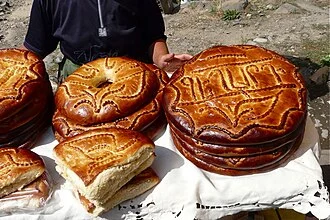
Street food
Fish & Seafood
Garba
Gahr-bah
· Achié with fried tuna
A dish of attiéké and fried fish, popular with students.
Open Garba recipe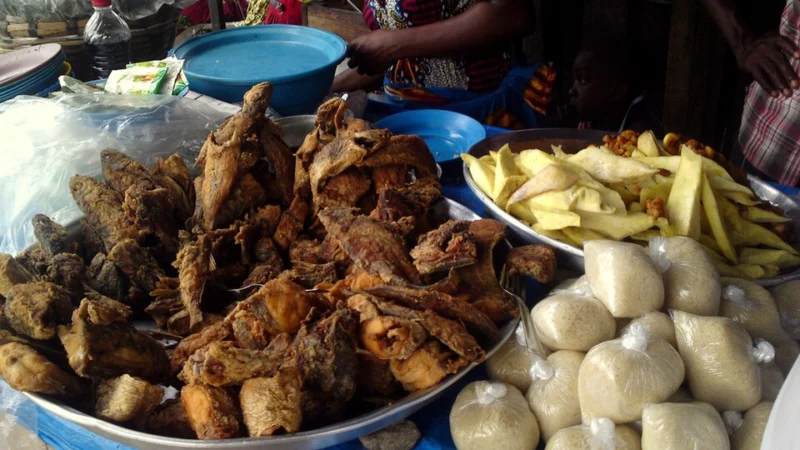
Main course
Fish & Seafood
Attiéké Poisson Grillé
Ah-tee-eh-keh Pw-ah-sawn Gree-yay
· Grilled fish with cassava couscous
Grilled fish served with traditional cassava couscous.
Open Attiéké Poisson Grillé recipe🌱
Snack
Vegan
Aloko
Ah-loh-koh
· Fried plantain
Sweet and savory fried plantains, a popular street food.
Open Aloko recipe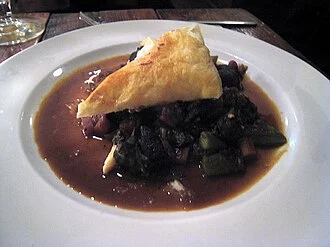
Main course
Meat
Kedjenou
Kédjénou
Kay-jay-noo
· Chicken stew
A slow-cooked chicken stew with vegetables, unique to Yamoussoukro.
Open Kedjenou recipe🌿
Main course
Vegetarian
Foutou Banane
Foo-too Bah-nahn
· Mashed plantain with sauce
A soft, dough-like dish made from bananas and cassava, served with sauce.
Open Foutou Banane recipe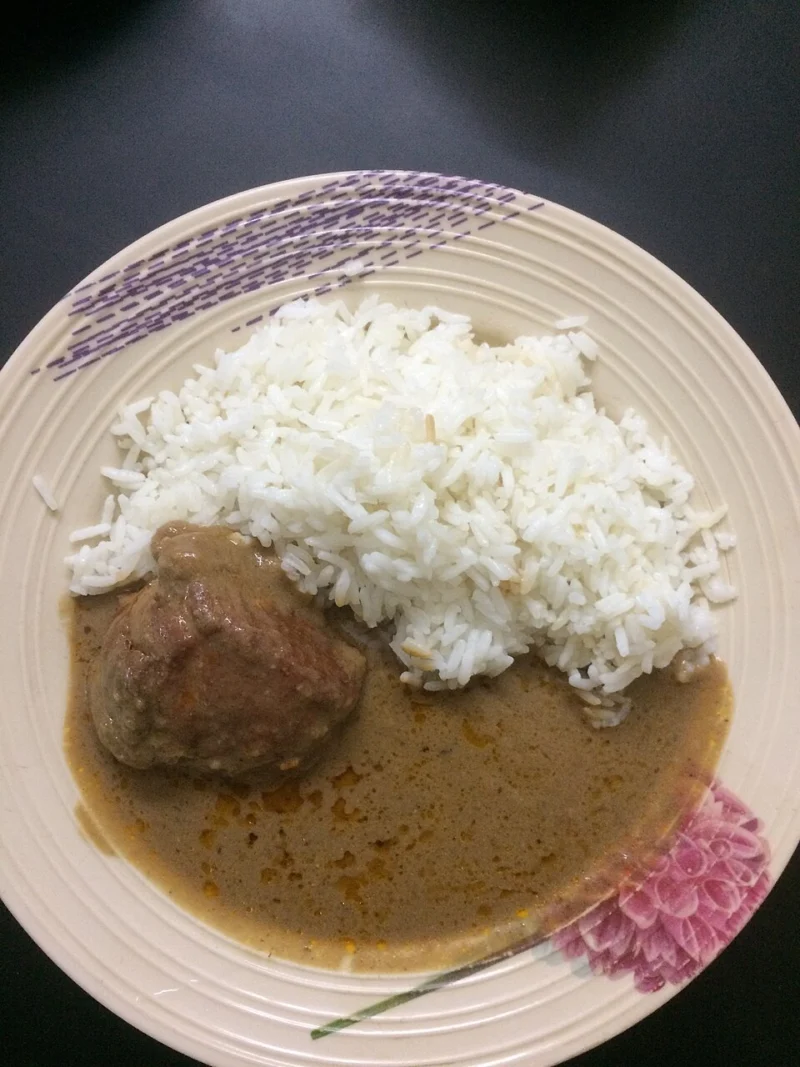
Main course
Meat
Sauce Arachide
sohs a-rah-sheed
· Peanut Butter Sauce
A creamy peanut sauce often served with rice or fufu.
Open Sauce Arachide recipe🌱
Snack
Vegan
Aloco
Alloco
ah-loh-coh
· Fried Plantains
Fried ripe plantains, often served as a side dish.
Open Aloco recipe