

Explore Guides
OCEANIA
Palau
Triplandio Palau guide covers 6 travel guides with 2 cities across 21 areas, complete with hotel picks. Explore 17 self-guided walking tours in Palau with 28 POI, spanning 71.6 km in total. Get inspired by 9 local dishes, complete with recipes and our unique Food Flavour DNA graph.
Country Data Palau

Key travel data for Palau — safety, healthcare, local currency and essentials, curated by Triplandio.
🌍 Palau
Tourists
18.4K/y
GDP/cap
$19.5k
Life Exp
69.4 yrs
Population
17.7K
Payments
Mixed
Emergency
112
Travel tipsPalau

Quick tips
- Unexploded Second World War bombs — Critical
Unexploded bombs and ammunition from the Second World War still lie around Palau, especially on Peleliu and Angaur. Never touch metal objects; photograph them and report them to the authorities.
- Reef-toxic sunscreen is banned — Caution
It is illegal to bring or use reef-toxic sunscreen in Palau; customs confiscate it on arrival. Pack a mineral sunscreen whose active ingredient is zinc oxide or titanium dioxide.
- No drinking in public — Caution
In Palau it is illegal to drink alcohol in public places, including beaches and streets, except on licensed premises. The legal drinking age is 21.
- Card fraud is rising — Caution
Credit card skimming and data theft have increased in Palau. Keep your card in sight when paying and use cash machines inside banks where possible.
- You must sign the Palau Pledge — Good to know
On arrival, every visitor signs the Palau Pledge, a promise to protect the islands' nature and culture, which is stamped into your passport. Take it seriously: reef and wildlife rules are enforced.
- Base yourself in Koror — Local tip
Most hotels, restaurants and dive shops are in Koror, a short drive from the airport. Day boats to the Rock Islands, Jellyfish Lake and the dive sites leave from here.
- Do
- Pack mineral, reef-safe sunscreen
- Honour the Palau Pledge
- Carry your Rock Islands permit
- Report old bombs you find
- Dive within your experience
- Don’t
- Touch or stand on coral
- Drink alcohol in public
- Pick up metal objects in caves
- Take shells home
- Drive after dark if you can avoid it
Critical
Prison or heavy penalty possible
Laws & fines
- Drug penalties are heavy — Critical
Palau has heavy penalties for all drug offences. Even a small amount of an illegal drug can mean a fine or a prison sentence.
Caution
Fines, losses or injury possible
Laws & fines
- Don't take shells or coral — Caution
Palau protects its reefs and marine life strictly. Don't touch or stand on coral, feed fish, or take shells, coral or marine creatures home.
- No overtaking on the roads — Caution
Overtaking is illegal on Palau's roads, although local drivers often do it anyway. Keep to the speed limit and let others make their own mistakes.
Beaches & adventure
- Choose dive operators carefully — Caution
Dive standards in Palau vary. Check an operator's credentials, that oxygen is carried on the boat, and how they would get you to the hyperbaric chamber at Belau National Hospital.
- Wall dives are for experienced divers — Caution
Palau has over 60 vertical drop-offs, and some famous sites have strong currents. Pick dives that match your experience and follow your guide's instructions.
- Ask before jumping from rocks — Caution
Take local advice before jumping or diving from high rocks in the Rock Islands; hidden rocks and shallow water cause serious injuries.
- Drive carefully after dark — Caution
Palau's rural roads are unlit, with little signage and people or animals on the road. Drink-driving is a common cause of accidents, especially at night and at weekends.
Good to know
Rules and useful facts
Getting between cities
- Boats to the outer islands — Good to know
Peleliu and Angaur are reached by boat from Koror, on state-run services with limited schedules or by chartered speedboat. Boats are cancelled in rough seas.
- Driving in Palau — Good to know
Traffic drives on the right. You can drive for up to 30 days on a UK photocard licence; other visitors should check the rules for their licence with the rental company.
Regions & seasons
- Koror and the Rock Islands — Good to know
Koror is the main town, and the Rock Islands Southern Lagoon, a UNESCO World Heritage site, lies just offshore with its lagoons, beaches and dive sites.
- Babeldaob for waterfalls and history — Good to know
The big island of Babeldaob has rainforest, waterfalls, stone monoliths and traditional villages, with fewer visitors than Koror.
- Peleliu and Angaur for war history — Good to know
The southern islands of Peleliu and Angaur were the scene of major Second World War battles, and relics remain across both.
Laws & fines
- Permits for the Rock Islands — Good to know
Visiting the Rock Islands and Jellyfish Lake requires a permit from Koror State. Tour and dive operators usually arrange it; keep it with you on the boat.
Entry & visa
- Travel advisory: Level 1 of 4 — Good to know
Exercise Normal Precautions — the U.S. State Department's rating for Palau.
- Passport valid for 6 months — Good to know
Your passport must be valid for at least 6 months after you arrive in Palau and have at least 2 blank pages.
- 30-day visa on arrival — Good to know
Many visitors, including UK citizens, get a free 30-day tourist visa on arrival in Palau; US citizens have visa-free access. You may be asked for an onward or return ticket.
- Fill in the entry form — Good to know
Visitors must complete the Palau entry form within 72 hours of arrival and use it to declare goods worth over 400 US dollars and cash of 10,000 US dollars or more.
- Environmental fee in your ticket — Good to know
Palau charges international visitors a Pristine Paradise Environmental Fee, which is normally included in the price of your air ticket.
Health
- Emergency number is 911 — Good to know
In Palau, call 911 for an ambulance. The only national hospital is Belau National Hospital in Koror, less than 2 hours from most places.
- Serious cases need evacuation — Good to know
Palau's hospital handles routine care, but serious illness or injury often requires medical evacuation. Doctors expect cash payment, so carry insurance with evacuation cover.
- Dengue and Zika — Good to know
Mosquitoes in Palau can spread dengue and Zika. Use repellent, especially at dawn and dusk, and cover up in the evening.
- Bring your own medicines — Good to know
Only basic medicines are dispensed by the pharmacy at Belau National Hospital in Koror. Bring enough of any regular medication for your whole trip.
Beaches & adventure
- Cyclones and heavy rain — Good to know
Palau can be hit by tropical storms and floods, with most rain from April to November. Follow local warnings and check forecasts before boat trips.
Local tips
Local know-how
Getting between cities
- A bridge links Koror and Babeldaob — Local tip
Koror is joined by bridge to Babeldaob, the largest island, where the airport is. A paved ring road circles Babeldaob, so a hire car is the easiest way to explore it.
- Taxis and tours — Local tip
There is no public bus network in Palau. Use taxis in Koror, hotel shuttles and tour operators' transfers for trips further afield.
Regions & seasons
- Best months for diving — Local tip
Palau can be dived all year, but December to March usually has the calmest seas and least rain.
Customs
- Much land belongs to clans — Local tip
Most land in Palau is owned by families, clans or states, including many beaches and trails. Ask before walking on to private land and pay any local site fees.
- Dress modestly in villages — Local tip
Swimwear is fine on boats and beaches, but in Palauan villages and towns cover up with a T-shirt and shorts or a skirt to the knee.
- Ask before photographing people — Local tip
Ask permission before photographing Palauans, their homes or traditional meeting houses (bai), especially in villages away from Koror.
Tipping & money
- Palau uses the US dollar — Local tip
The US dollar is Palau's currency. Hotels, dive shops and larger restaurants in Koror take cards; carry cash for smaller places and state site fees.
- Tip dive and boat crews — Local tip
Tipping isn't a Palauan tradition, but in tourist restaurants about 10% is common, and divers usually tip boat crews and guides at the end of a trip.
- Prices are fixed — Local tip
Bargaining is not part of Palauan culture. Prices in shops, markets and for tours are fixed.
Our Palau city guides
Rent a car to drive the ring road; bring cash for state entry fees at the waterfalls and monoliths.
See the battlefields with a local guide and never touch old ammunition in the caves.
Through the year
Festival or season Public holiday (exact date)
- Rainy season
Apr–Nov 2026 · Higher rainfall, heaviest in July and August, with occasional tropical storms; heavy downpours can flood inland roads.
- Tropical storm risk
Jul–Nov 2026 · Palau lies at the southern edge of the typhoon belt; storms are uncommon but can cancel boats and flights, so follow local warnings.
- Thanksgiving
Thu 26 Nov 2026 · Public holiday
- Family Day
Fri 27 Nov 2026 · Public holiday
- Drier season
Dec 2026–Mar 2027 · The driest, calmest months and the peak season for diving and island trips; book boats and rooms early.
- Holiday peaks
Dec 2026–Feb 2027 · Christmas, New Year and Lunar New Year bring the most visitors from Asia; dive boats and hotels fill up, so book ahead.
- Christmas Day
Fri 25 Dec 2026 · Public holiday
- New Year's Day
Fri 1 Jan 2027 · Public holiday
- Youth Day
Mon 15 Mar 2027 · Public holiday
- Senior Citizens Day
Wed 5 May 2027 · Public holiday
- President's Day
Tue 1 Jun 2027 · Public holiday
- Constitution Day
Fri 9 Jul 2027 · Public holiday
- Labor Day
Mon 6 Sep 2027 · Public holiday
- Independence Day
Fri 1 Oct 2027 · Public holiday
- United Nations Day
Sun 24 Oct 2027 · Public holiday
Sources: GOV.UK travel advice · U.S. State Dept · Google public holidays
Traditional Local Food Palau
🌱
Main course
Vegan
Kassava Dumplings
Kassava
kah-sah-vah dumplings
· Cassava flour dumplings
Dumplings made from grated cassava and coconut.
Open Kassava Dumplings recipe🐟
Starter
Fish & Seafood
Titiarau Salad
ti-ti-ah-rau sah-lad
· Sea cucumber salad
A fresh salad featuring sea cucumber and island greens.
Open Titiarau Salad recipe🐟
Main course
Fish & Seafood
Palauan Grilled Fish
puh-lau-en grild fish
· Grilled local fish with lemon
A simple yet flavorful grilled fish, seasoned with local spices.
Open Palauan Grilled Fish recipe🥩
Main course
Meat
Coconut Bat Fry
koh-koh-nut bat fry
· Fried coconut-covered bat
Fried bat coated with shredded coconut.
Open Coconut Bat Fry recipe
Soup
Vegan
Taro Leaf Soup
Omekeang
oh-meh-kay-ahng
· Taro leaves in coconut broth
A traditional soup made from taro leaves and coconut milk.
Open Taro Leaf Soup recipe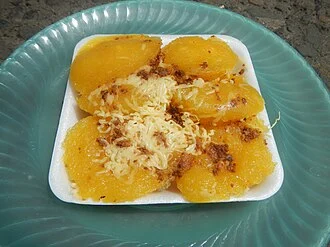
Dessert
Vegan
Pichi-Pichi
pee-chee pee-chee
· Coconut cassava dessert
A sweet treat of grated cassava and coconut.
Open Pichi-Pichi recipe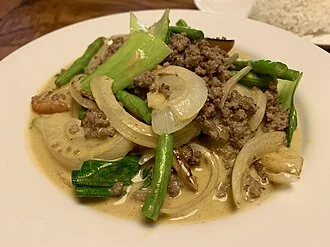
Main course
Meat
Tinaktak
tee-nak-tak
· Beef with coconut cream
Beef cooked in coconut milk with local vegetables.
Open Tinaktak recipe🐟
Main course
Fish & Seafood
Uab
oow-ab
· Grilled giant clams
Large clams grilled and served with lime.
Open Uab recipe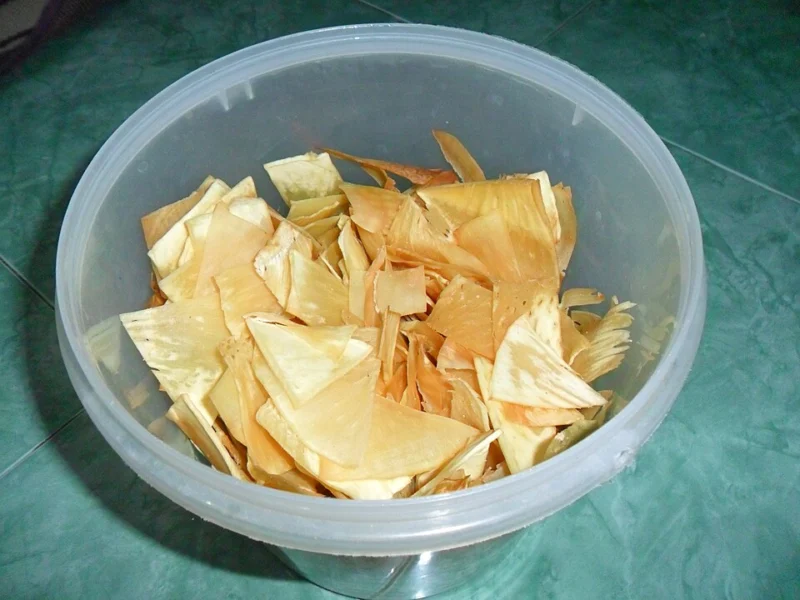
Snack
Vegan
Breadfruit Chips
bred-froo-it chips
· Crispy breadfruit chips
Thinly sliced and fried breadfruit crisps.
Open Breadfruit Chips recipe