

Explore Guides
EUROPE
Hungary
Triplandio Hungary guide covers 12 travel guides with 1 city across 38 areas, complete with hotel picks. Explore 48 self-guided walking tours in Hungary with 184 POI, spanning 126.8 km in total. Get inspired by 8 local dishes, complete with recipes and our unique Food Flavour DNA graph.
Country Data Hungary

Key travel data for Hungary — safety, healthcare, local currency and essentials, curated by Triplandio.
🌍 Hungary
Safety
86
Health
49
Lifestyle
63
Infra
65
Rank
#37
Score
56
Tourists
31.6M/y
GDP/cap
$25.9k
Life Exp
76.7 yrs
Population
9.5M
Currency
HUF Ft
Language
Hungarian
Payments
Cards OK
Emergency
112
Travel tipsHungary

Quick tips
- Zero alcohol when driving — Critical
Hungary has a zero-tolerance drink-driving law: it is illegal to drink any alcohol at all and then drive. Even one beer can mean a fine, a driving ban or worse.
- Cannabis is treated like hard drugs — Critical
Illegal drugs in Hungary, including cannabis, bring long jail sentences and heavy fines. Airports scan the bags of transit passengers too, so don't carry any.
- Carry your actual passport — Caution
In Hungary you must show ID if the police ask, and a photocopy is not accepted. Visitors from outside the EU should carry their passport with them at all times.
- Buy a motorway e-vignette first — Caution
Hungary's motorways and major highways require an electronic toll pass (e-vignette), bought online or at filling stations before you drive on them. Cameras check number plates and fines follow.
- Don't clink glasses of beer — Local tip
Many Hungarians still avoid clinking beer glasses, a custom linked to the defeat of the 1848 revolution. Clinking wine or pálinka (fruit brandy) glasses is fine.
- Budapest is the hub for everything — Local tip
Almost all trains and long-distance buses in Hungary start from Budapest, so most trips work best as a base in the capital plus day trips or short stays at Lake Balaton and the wine regions.
- Do
- Carry your passport
- Check menu prices before ordering
- Validate tickets on public transport
- Buy an e-vignette before motorways
- Pay in forints
- Don’t
- Drink any alcohol before driving
- Change money on the street
- Follow strangers to a bar
- Swim in the Danube
- Leave bags visible in a car
Critical
Prison or heavy penalty possible
Lakes & adventure
- Don't swim in the Danube — Critical
The Danube has strong currents, boat traffic and cold water, and swimming in it is dangerous. Use official river beaches, lakes and pools instead.
Caution
Fines, losses or injury possible
Laws & fines
- Headlights on outside towns — Caution
In Hungary you must drive with dipped headlights on all roads outside built-up areas, even in bright daylight. Police fine drivers who don't.
- Declare restricted goods — Caution
Hungary has strict customs rules on alcohol, tobacco, some medicines, pets and hunting weapons. Declare anything that may be prohibited or taxable when you arrive.
Tipping & money
- Never change money on the street — Caution
People offering good exchange rates on Hungarian streets hand over fake or worthless notes. Use bank ATMs or official exchange offices.
- Watch for card skimming — Caution
Fraudsters in Hungary copy card details at tampered street ATMs. Use cash machines inside banks, keep your card in sight when paying, and refuse to be charged in your home currency.
Entry & visa
- No meat or dairy from outside the EU — Caution
You can't bring meat, milk or products containing them into Hungary from outside the EU. Powdered baby milk, baby food and medically required foods are exceptions.
- Declare 10,000 euros or more — Caution
Declare cash or travellers' cheques worth 10,000 euros or more when entering Hungary. Keep the declaration, or the money could be seized when you leave.
Lakes & adventure
- Storm lights on Lake Balaton — Caution
Yellow storm-warning lights flash around Lake Balaton when strong winds are coming; the faster they flash, the greater the danger. Get out of the water and bring boats ashore when they speed up.
- Lock your compartment on night trains — Caution
Thefts happen on Hungarian trains, especially at night and as trains pull into stations. Keep bags in sight, travel with companions where possible and lock your compartment from inside.
- Don't leave bags in the car — Caution
Theft from parked cars is common in Hungary. Park in a secure place when possible and never leave bags or valuables visible in the car.
Good to know
Rules and useful facts
Getting between cities
- Check which Budapest station — Good to know
Budapest has three main railway stations: Keleti, Nyugati and Déli. Trains to Lake Balaton, for example, can leave from Déli or Keleti depending on the service, so check your ticket.
- Driving in Hungary — Good to know
Traffic drives on the right. Many foreign photocard licences are accepted; some visitors need an International Driving Permit (IDP). You need an e-vignette for motorways.
Regions & seasons
- Budapest all year — Good to know
Budapest works in every season: spring and autumn are mild, summer is hot and busy, and winter is cold but good for thermal baths and Christmas markets.
- Lake Balaton in summer — Good to know
Central Europe's largest lake is a summer destination, warm and shallow from June to August. Many resorts are quiet or closed from October to April.
- Wine regions in autumn — Good to know
Tokaj in the north-east, Eger in the north and Villány in the south are best in September and October, when the harvest and wine festivals take place.
- Great Plain: hot summers — Good to know
The flat Great Hungarian Plain, with Debrecen, Szeged and the horse-riding country of the puszta (grassland), gets the hottest summers in the country. Spring and early autumn are more comfortable.
Laws & fines
- Avoid political rallies — Good to know
Demonstrations in Budapest and other Hungarian cities often take place on national days such as 15 March and 23 October, and some have turned violent. Move away from large crowds.
- Be discreet outside Budapest — Good to know
Same-sex relationships are legal in Hungary and Budapest is generally tolerant, but same-sex couples showing affection in smaller towns may attract unwanted attention.
Entry & visa
- Travel advisory: Level 1 of 4 — Good to know
Exercise Normal Precautions — the U.S. State Department's rating for Hungary.
- Schengen rules: 90 days in 180 — Good to know
Hungary is in the Schengen area. Visitors who don't need a visa can stay up to 90 days in any 180-day period across all Schengen countries together; overstaying can bring a ban of up to 3 years.
- Check your passport dates — Good to know
If you're from outside the EU, your passport must have been issued less than 10 years before you arrive and be valid for at least 3 months after you plan to leave the Schengen area.
- Proof of your trip at the border — Good to know
Hungarian border officers may ask for a return or onward ticket, proof of enough money for your stay and a hotel booking. Keep them on your phone or printed.
- Fingerprints at the border — Good to know
The EU's new Entry/Exit System (EES) records non-EU visitors' fingerprints and photo when entering the Schengen area. It is free, but allow extra time at airports, including when leaving.
Health
- Tap water is safe — Good to know
Tap water in Hungary is safe to drink. Public drinking fountains are common in Budapest and other towns in summer.
- Call 112 in an emergency — Good to know
Dial 112 in Hungary for an ambulance, the police or the fire service. Contact your travel insurer quickly if you are referred for treatment.
- Bring your EHIC or GHIC — Good to know
EU visitors need a European Health Insurance Card (EHIC), and UK visitors a Global Health Insurance Card (GHIC), for state healthcare in Hungary. Neither replaces travel insurance.
- Summer heatwaves — Good to know
Hungarian summers are often very hot, with heatwaves above 35°C. Drink plenty of water, avoid the midday sun and plan sightseeing for mornings and evenings.
Local tips
Local know-how
Getting between cities
- Trains and buses — Local tip
Hungarian State Railways (MÁV) trains and Volánbusz coaches link Budapest with most towns. Tickets are cheap, and buses often reach places the railway doesn't.
- Boats on the Danube and Balaton — Local tip
In summer, passenger boats run on the Danube from Budapest to Szentendre and Visegrád, and ferries cross Lake Balaton between Tihany and Szántód.
Customs
- Greet with “Jó napot” — Local tip
Say “Jó napot” (good day) when you enter a shop, café or small hotel in Hungary. Younger people use the informal “Szia” (hi) with each other.
- Bring swimwear to thermal baths — Local tip
Hungary's thermal baths require swimwear and most ask you to wear flip-flops around the pools. Lap-swimming pools often require a swimming cap, so bring one or buy it at the entrance.
- Family names come first — Local tip
Hungarians put their family name before their given name, so Kovács János is John Kovács. Ask which name to use if you are unsure.
- Look people in the eye when toasting — Local tip
When toasting with wine or pálinka in Hungary, look each person in the eye and say “Egészségedre” (to your health), or simply “Egészség”.
Tipping & money
- Check the bill for service charge — Local tip
Many Hungarian restaurants, especially in Budapest, add a service charge of 10–15% to the bill. If it is not included, tip about 10% when you pay rather than leaving cash on the table.
- Pay in forints — Local tip
Hungary's currency is the forint, not the euro. Some tourist places take euros but at poor rates, so pay in forints or by card, which is accepted almost everywhere.
- Prices are fixed — Local tip
Bargaining isn't normal in Hungarian shops, markets or restaurants. You can sometimes negotiate at flea markets or antique stalls.
Lakes & adventure
- Summer festival safety — Local tip
Big summer music festivals in Hungary draw huge crowds. Keep valuables to a minimum, lock tents, drink water and agree a meeting point with friends in case you get separated.
Our Hungary city guides
Check menu prices before ordering, and validate a new ticket every time you change metro, tram or bus.
Say it locally
Hungarian stresses the first syllable of every word; “kérem” (please) makes any request polite.
Through the year
Festival or season Public holiday (exact date)
- Christmas markets
Nov–Dec 2026 · Markets in Budapest and other cities from mid-November; cold weather, but thermal baths are at their best.
- All Saints' Day
Mon 1 Nov 2027 · Public holiday
- Christmas Eve
Thu 24 Dec 2026 · Public holiday
- Christmas Day
Fri 25 Dec 2026 · Public holiday
- Second Day of Christmas
Sat 26 Dec 2026 · Public holiday
- New Year's Day
Fri 1 Jan 2027 · Public holiday
- Busójárás in Mohács
Feb–Mar 2027 · A carnival where masked men in sheepskins chase away winter in the southern town of Mohács, held before Lent.
- 1848 Revolution Memorial Day
Mon 15 Mar 2027 · Public holiday
- Good Friday
Fri 26 Mar 2027 · Public holiday
- Easter Monday
Mon 29 Mar 2027 · Public holiday
- Labor Day
Sat 1 May 2027 · Public holiday
- Whit Monday
Mon 17 May 2027 · Public holiday
- Lake Balaton season
Jun–Aug 2027 · Beaches, ferries and resort towns around Balaton are at their busiest; book accommodation early for July and August.
- Summer heat and festivals
Jul–Aug 2027 · Hot weather, outdoor festivals and the Hungarian Formula One Grand Prix near Budapest push up hotel prices.
- National Day
Fri 20 Aug 2027 · Public holiday
- Grape harvest
Sep–Oct 2027 · Wine festivals in Budapest and in wine regions such as Tokaj, Eger and Villány; a good time for vineyard visits.
- 1956 Revolution Memorial Day
Sat 23 Oct 2027 · Public holiday
Sources: GOV.UK travel advice · U.S. State Dept · Google public holidays
Traditional Local Food Hungary
Main course
Meat
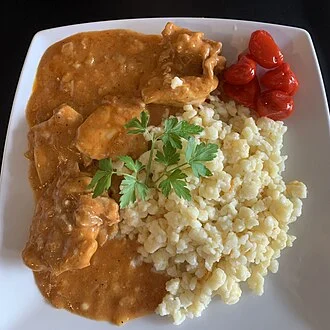
Chicken Paprikash
Paprikás Csirke
PAHP-reek-ahsh CHEER-keh
Chicken in creamy paprika sauce, served over noodles or dumplings.
Open Chicken Paprikash recipe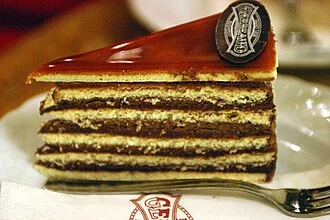
Dessert
Vegetarian
Dobos Torte
Dobos Torta
DOH-bosh TOR-ta
A layered sponge cake coated with chocolate buttercream, topped with caramel.
Open Dobos Torte recipe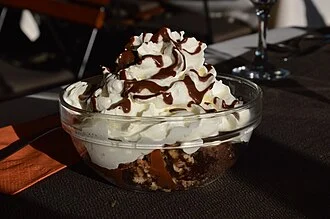
Dessert
Vegetarian
Somlói Galuska
SHOM-loh-ee GAH-loosh-kah
A Hungarian trifle made of sponge cake, chocolate sauce, and whipped cream.
Open Somlói Galuska recipe
Street food
Vegetarian
Hungarian Lángos
Lángos
LAHN-gohsh
A deep-fried flatbread topped with garlic, cheese, and sour cream.
Open Hungarian Lángos recipe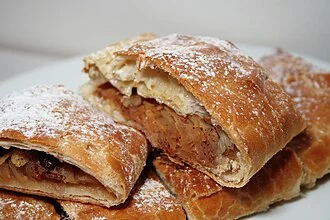
Dessert
Vegetarian
Strudel
Rétes
RAY-tesh
Flaky pastry with sweet or savory fillings, often featuring apples or cheese.
Open Strudel recipe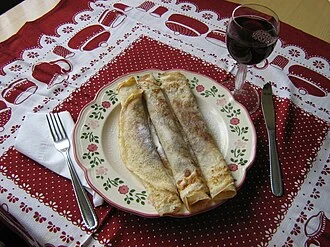
Dessert
Vegetarian
Pancakes
Palacsinta
PAH-lah-chin-tah
Thin, crepe-like pancakes often filled with sweet or savory fillings.
Open Pancakes recipe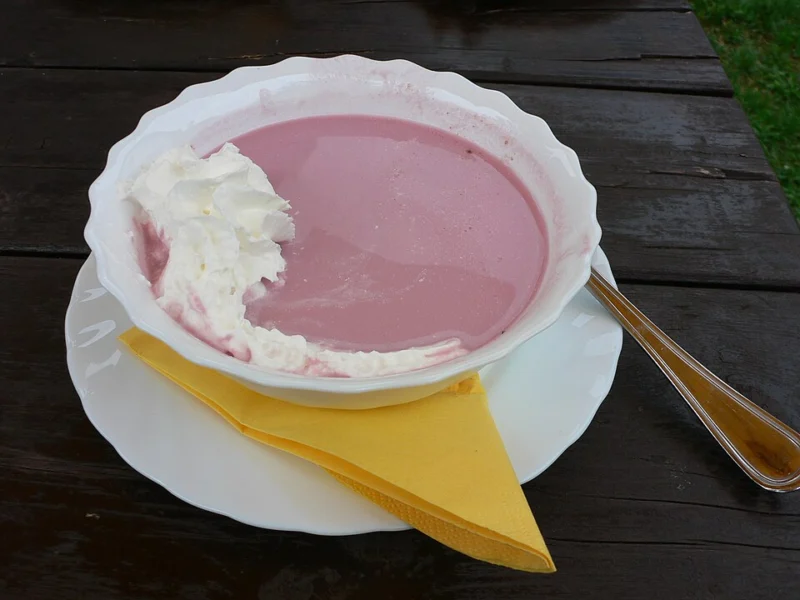
Soup
Vegetarian
Sour Cherry Soup
Meggyleves
MEG-yeh-lev-esh
A sweet, chilled soup made from sour cherries and cream.
Open Sour Cherry Soup recipe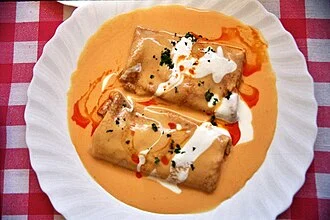
Main course
Meat
Hortobágyi Palacsinta
HOR-toh-bah-ghee pah-lah-CHEEN-tah
Savory Hungarian pancakes filled with a paprikash-flavored meat.
Open Hortobágyi Palacsinta recipe