

Explore Guides
EUROPE
Germany
Triplandio Germany guide covers 70 travel guides with 6 cities across 154 areas, complete with hotel picks. Explore 276 self-guided walking tours in Germany with 802 POI, spanning 739.3 km in total. Get inspired by 72 local dishes, complete with recipes and our unique Food Flavour DNA graph.
Country Data Germany

Key travel data for Germany — safety, healthcare, local currency and essentials, curated by Triplandio.
🌍 Germany
Safety
84
Health
98
Lifestyle
72
Infra
85
Rank
#11
Score
68
Tourists
12.4M/y
GDP/cap
$60.5k
Life Exp
80.8 yrs
Population
83.5M
Currency
EUR €
Language
German
Payments
Mixed
Emergency
112
Travel tipsGermany

Quick tips
- Nazi symbols and salutes are crimes — Critical
In Germany, showing a swastika or making a Hitler salute is a criminal offence, even as a joke, on clothing or in a photo. Tourists have been arrested for it, so don't do it anywhere.
- Don't assume cannabis is legal for you — Critical
Germany's cannabis rules are narrow: buying from street dealers is illegal, and carrying any drugs through a German airport or across a border is treated as smuggling, with long prison sentences.
- Buy a ticket before you board — Caution
German buses, trams and trains run on trust, but plain-clothes inspectors check tickets. Riding without a valid ticket usually costs a 60-euro penalty on the spot, and saying you are a tourist doesn't help.
- Most shops close on Sundays — Good to know
Supermarkets and most shops in Germany are closed all day on Sundays and public holidays. Stock up on Saturday; shops in big railway stations and airports stay open.
- Carry some cash — Local tip
Cards are widely accepted now, but some bakeries, beer gardens, market stalls and small restaurants in Germany still take cash only. Keep 20–50 euros on you and ask before you order.
- Travel between cities by train — Local tip
Germany's high-speed Intercity-Express (ICE) trains link Berlin, Hamburg, Cologne, Frankfurt and Munich in 4–6 hours. Delays are common, so leave a margin before flights, and book early for cheap saver fares.
- Do
- Buy a ticket before boarding
- Wait for the green pedestrian light
- Carry some cash
- Shop before Sunday
- Return bottles for the deposit
- Don’t
- Make a Nazi salute, even as a joke
- Walk in the cycle lane
- Carry drugs through an airport
- Swim in the Rhine
- Leave bags unattended at stations
Critical
Prison or heavy penalty possible
Laws & fines
- Drug laws are strictly enforced — Critical
Possessing, using or smuggling illegal drugs in Germany can mean a long jail sentence and heavy fines. German airports scan baggage closely, including that of passengers only changing planes.
Outdoors & adventure
- Avalanches and off-piste skiing — Critical
Off-piste skiing in the German Alps is dangerous and can invalidate your travel insurance. Check the avalanche warning before you go and only leave marked runs with a qualified guide.
- Don't swim in the Rhine — Critical
Big rivers such as the Rhine have strong currents, cold water and heavy ship traffic, and swimmers drown there every summer. Swim only at official bathing spots and lakes with lifeguards.
Caution
Fines, losses or injury possible
Laws & fines
- Wait for the green pedestrian light — Caution
Crossing on a red pedestrian light can get you a small fine from the police in Germany, and locals will often tell you off, especially if children are watching.
- Don't walk in cycle lanes — Caution
Cycle lanes in German cities are often on the pavement, marked in red or by a white line. Cyclists ride fast and expect them to be clear, so keep out of them.
- Fake banknotes can get you arrested — Caution
Change money only at banks, ATMs or official exchange offices in Germany, and check your change. Visitors have been arrested for paying with counterfeit notes they had been given.
Entry & visa
- No meat or dairy from outside the EU — Caution
You can't bring meat, milk or products containing them into Germany from outside the EU. Powdered baby milk, baby food and medically required foods are exceptions.
- Declare cash over 10,000 euros — Caution
If you enter or leave Germany carrying 10,000 euros or more in cash or equivalent, you must declare it to customs. Undeclared cash can be seized.
Outdoors & adventure
- Prepare properly for mountain hikes — Caution
Weather in the Bavarian Alps changes quickly. Check the forecast, carry a map and phone, tell someone your route, and make sure your insurance covers mountain rescue and helicopter costs.
- Mudflat walks only with a guide — Caution
On the North Sea coast, walks across the mudflats of the Wadden Sea at low tide are popular, but the tide comes back fast and fog is common. Go only with a certified local guide.
- Autobahn: keep right, pass left — Caution
Some German motorway stretches have no speed limit, but 130 km/h is recommended. Always drive in the right lane unless overtaking, and never pass a car on its right.
- Clear an emergency lane in jams — Caution
When traffic slows to a stop on German motorways, drivers must leave a gap (Rettungsgasse) for ambulances: the far-left lane moves left, all other lanes move right. Failing to do so is fined.
- Green stickers for city driving — Caution
Many German city centres are low emission zones (Umweltzone). Cars, including rental and foreign cars, need a green emissions sticker on the windscreen to enter.
Good to know
Rules and useful facts
Getting between cities
- Book saver fares on Deutsche Bahn — Good to know
Deutsche Bahn's cheap saver fares (Sparpreis) tie you to one specific train. If you miss it through your own fault, you have to buy a new ticket, while flexible fares are valid on any train that day.
- Allow for train delays — Good to know
Long-distance trains in Germany are often late and connections are missed. Check the DB Navigator app for platform changes and don't plan a tight connection before a flight.
- The Deutschlandticket covers local trains only — Good to know
The monthly Deutschlandticket gives unlimited travel on local and regional trains, buses and trams across Germany, but not on long-distance Intercity (IC) or Intercity-Express (ICE) trains. It is sold as a subscription you must cancel.
- Driving in Germany — Good to know
Traffic drives on the right. Many foreign licences are valid for up to 6 months; some nationalities also need an International Driving Permit (IDP), so check before you travel.
Regions & seasons
- Late spring to early autumn is best — Good to know
May to September brings the warmest weather across Germany, with long days and outdoor festivals. Summers are mostly mild, but heatwaves above 30°C now happen most years.
- The Alps and Bavaria — Good to know
Southern Bavaria has the Alps, lakes and castles such as Neuschwanstein. Hiking is best June–September, skiing December–March, and mountain weather changes fast.
- North Sea and Baltic coasts — Good to know
The northern coasts and islands are a summer destination: beaches are busy in July and August, the sea is cool even then, and many resort businesses close in winter.
Laws & fines
- Carrying ID is advised, not required — Good to know
You don't have to carry your passport in Germany, but if the police ask for ID and you can't show it, they can take you to fetch it. A passport or national ID card is what they want to see.
Tipping & money
- Avoid expensive ATMs — Good to know
Use cash machines belonging to banks in Germany. Standalone ATMs in tourist areas can charge high fees, and you should always refuse the offer to convert the amount into your home currency.
Entry & visa
- Travel advisory: Level 2 of 4 — Good to know
Exercise Increased Caution — the U.S. State Department's rating for Germany.
- Schengen rules: 90 days in 180 — Good to know
Germany is in the Schengen area. Visitors who don't need a visa can stay up to 90 days in any 180-day period across all Schengen countries together. Overstaying can bring an entry ban of up to 3 years.
- Check your passport dates — Good to know
If you're from outside the EU, your passport must have been issued less than 10 years before you arrive and be valid for at least 3 months after you plan to leave the Schengen area.
- Fingerprints at the border — Good to know
The EU's new Entry/Exit System (EES) records non-EU visitors' fingerprints and photo on arrival. It is free, but queues can be longer, so allow extra time at the airport when leaving too.
- Border checks on land crossings — Good to know
Germany has temporarily brought back checks at its land borders, so carry your passport or ID card even when arriving by train or car from another Schengen country.
Health
- Tap water is safe — Good to know
Tap water in Germany is safe to drink everywhere. Restaurants usually serve bottled water, often sparkling, so ask for “stilles Wasser” if you want still water.
- Call 112 in an emergency — Good to know
Dial 112 in Germany for an ambulance, the fire service or urgent medical help. Contact your travel insurer quickly if you are sent to hospital.
- Bring your EHIC or GHIC — Good to know
Visitors from the EU need a European Health Insurance Card (EHIC), and UK visitors a Global Health Insurance Card (GHIC), for state healthcare in Germany. Neither replaces travel insurance.
- Check for ticks after walks — Good to know
Ticks in German forests and meadows can spread Lyme disease and, mainly in the south, tick-borne encephalitis (TBE), a brain infection. Cover your legs and check your skin after hiking.
Local tips
Local know-how
Getting between cities
- Long-distance buses are cheapest — Local tip
Coaches such as FlixBus connect most German cities and airports for less than the train, though journeys take longer and luggage allowances are limited.
Regions & seasons
- Winter means Christmas markets — Local tip
November to February is cold and grey, often around freezing, with short days. It is the season for Christmas markets, museums and winter sports rather than countryside walks.
Laws & fines
- Respect quiet hours — Local tip
Many German towns and apartment buildings expect quiet at night (usually from 22:00) and on Sundays. Loud music, drilling or noisy parties can bring complaints from neighbours and a visit from the police.
Customs
- Be on time — Local tip
Germans treat punctuality as a sign of respect. Arrive on time for tours, restaurant bookings and meetings, and let people know if you will be even 10 minutes late.
- Greet people when you walk in — Local tip
Say “Guten Tag” (good day) or “Hallo” when you enter a small shop, a doctor's waiting room or a lift, and a handshake is the usual greeting when you meet someone.
- Saunas are usually nude — Local tip
In German saunas and spa areas, people are normally naked and swimwear is often not allowed. Bring a large towel to sit or lie on, so no bare skin touches the wood.
- Say “Prost” and make eye contact — Local tip
When toasting with a drink in Germany, look each person in the eye as you clink glasses and say “Prost”. Looking away is seen as rude, and with wine people often say “zum Wohl”.
- Sort your rubbish — Local tip
Germans separate waste into paper, packaging, glass and general rubbish, and hotel rooms and holiday flats often have several bins. Use the right one; glass bottle banks are colour-coded.
Tipping & money
- Tip by telling the total — Local tip
In German restaurants, service is included but a tip of about 5–10% is usual. Tell the server the total you want to pay when they bring the card machine or take your cash, rather than leaving coins on the table.
- Tipping taxis and hotels — Local tip
Round the taxi fare up to the next euro or two. Give hotel porters one or two euros per bag, and leave a few euros for housekeeping if you stay several nights.
- Prices are fixed — Local tip
Bargaining is not part of German shopping, even at markets. Haggling is only normal at flea markets (Flohmarkt) and when buying second-hand items privately.
- Return bottles for your deposit — Local tip
Most drink bottles and cans in Germany carry a deposit (Pfand), 25 cents on single-use ones. Return them to the machines in any supermarket to get a voucher you can spend at the till.
Health
- Medicines come from pharmacies — Local tip
Even painkillers and cold remedies are sold mainly in pharmacies (Apotheke, marked by a red A). Out of hours, a notice on every pharmacy door shows which one nearby is open.
Our Germany city guides
Buy an ABC ticket from BER airport and watch out for the shell game near Alexanderplatz.
Book beds months ahead for Oktoberfest, and keep your bag close in the beer tents.
Harbour ferries are included in a normal public transport ticket — a cheap boat tour.
Avoid the streets right around the main station at night; check if you're flying to Hahn, not Frankfurt.
Put your beer mat on your glass, or the waiter keeps bringing more Kölsch.
An easy train trip from Berlin or Prague; the Striezelmarkt Christmas market is very busy in December.
Say it locally
Use the formal “Sie” with strangers, and add “bitte” (please) to requests.
Through the year
Festival or season Public holiday (exact date)
- Christmas markets
Nov–Dec 2026 · Markets open in almost every town from late November until just before Christmas; expect crowds at weekends and bag checks at big ones.
- All Saints' Day (regional holiday)
Mon 1 Nov 2027 · Public holiday
- Repentance Day (Saxony)
Wed 18 Nov 2026 · Public holiday
- Ski season in the Alps
Dec 2026–Mar 2027 · The Bavarian Alps and the Black Forest have snow sports in winter; check avalanche warnings and road conditions.
- Christmas Eve (half-day)
Thu 24 Dec 2026 · Public holiday
- Christmas Day
Fri 25 Dec 2026 · Public holiday
- Boxing Day
Sat 26 Dec 2026 · Public holiday
- New Year's Eve (half-day)
Thu 31 Dec 2026 · Public holiday
- New Year's Day
Fri 1 Jan 2027 · Public holiday
- Epiphany (regional holiday)
Wed 6 Jan 2027 · Public holiday
- Carnival (Karneval, Fasching)
Feb–Mar 2027 · Street parades and costume parties before Lent, biggest in Cologne, Düsseldorf and Mainz; dates move with Easter and many offices close on Rose Monday.
- International Women's Day (regional holiday)
Mon 8 Mar 2027 · Public holiday
- Good Friday
Fri 26 Mar 2027 · Public holiday
- Easter Sunday (regional holiday)
Sun 28 Mar 2027 · Public holiday
- Easter Monday
Mon 29 Mar 2027 · Public holiday
- Beer garden season
May–Sep 2027 · Beer gardens, open-air pools and lake swimming are in full swing; long light evenings, especially in the south.
- May Day
Sat 1 May 2027 · Public holiday
- Ascension Day
Thu 6 May 2027 · Public holiday
- Whit Sunday (regional holiday)
Sun 16 May 2027 · Public holiday
- Whit Monday
Mon 17 May 2027 · Public holiday
- Corpus Christi (regional holiday)
Thu 27 May 2027 · Public holiday
- Summer school holidays
Jul–Sep 2027 · Each federal state has its own dates, but roads, trains, coasts and lakes are busiest and hotels dearest from July to early September.
- Assumption of Mary (regional holiday)
Sun 15 Aug 2027 · Public holiday
- Oktoberfest
Sep–Oct 2027 · Munich's beer festival runs for about 16 days from mid or late September to early October; Munich hotels book up months ahead.
- German World Children's Day (Thuringia)
Mon 20 Sep 2027 · Public holiday
- Day of German Unity
Sun 3 Oct 2027 · Public holiday
- Reformation Day (regional holiday)
Sun 31 Oct 2027 · Public holiday
Sources: GOV.UK travel advice · U.S. State Dept · Google public holidays
Traditional Local Food Germany
Main course
Meat
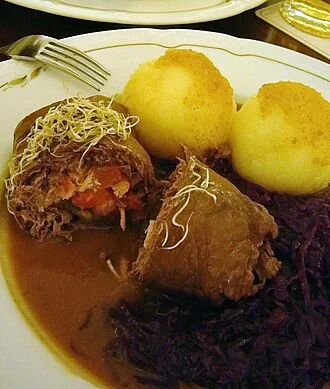
Beef Rouladen
Rinderroulade
RIN-der-roo-LAH-de
Stuffed beef rolls simmered till tender.
Open Beef Rouladen recipe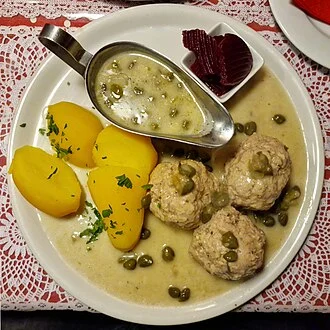
Main course
Meat
Königsberger Klopse
KER-nigs-ber-ger KLOP-suh
Meatballs in a creamy white sauce with capers.
Open Königsberger Klopse recipe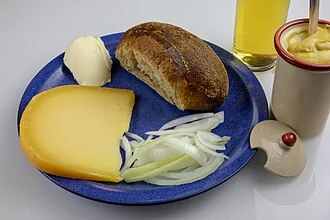
Snack
Vegetarian
Halve Hahn
HAL-vuh HAAN
A simple rye bread roll with cheese, pickles, and mustard.
Open Halve Hahn recipe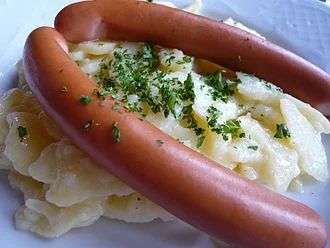
Snack
Meat
Frankfurter Sausage
Frankfurter Würstchen
FRAHNK-fur-ter VURSH-tchen
A traditional smoked sausage made from pork and veal, typically served with bread and mustard.
Open Frankfurter Sausage recipe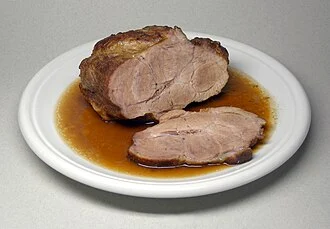
Main course
Meat
Bavarian Pork Roast
Schweinsbraten
SHVINES-brah-ten
A succulent and hearty roast pork dish with a crispy crust.
Open Bavarian Pork Roast recipe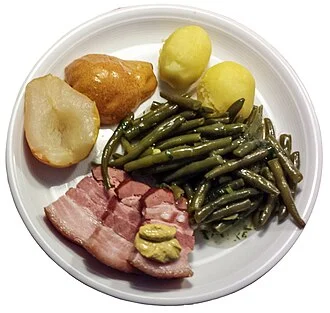
Main course
Meat
Birnen, Bohnen und Speck
BEER-nen, BOHN-en und SPECK
A hearty regional dish made with pears, green beans, and bacon.
Open Birnen, Bohnen und Speck recipe
Dessert
Vegetarian
Apple Strudel
Apfelstrudel
AHP-full-stroo-dell
Delicate pastry filled with spiced apples and raisins, served warm.
Open Apple Strudel recipe
Dessert
Vegetarian
Bavarian Cream
Bayerische Creme
BYE-reesh-uh KREM-eh
A dessert of custard and whipped cream, often served with fruit.
Open Bavarian Cream recipe
Dessert
Vegetarian
Schneegestöber
Shnay-geh-stuh-ber
A creamy dessert with whipped quark and applesauce.
Open Schneegestöber recipe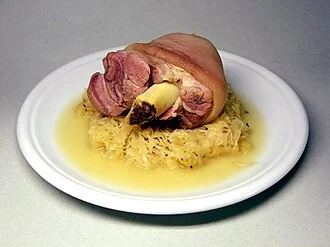
Main course
Meat
Berliner Eisbein
Bair-LEE-ner Eyes-bine
Boiled and cured pork knuckle served with sauerkraut and peas.
Open Berliner Eisbein recipe🐟
Soup
Fish & Seafood
Elbe Fish Soup
Elbfischsuppe
EL-buh FISH-zoo-peh
A hearty fish soup made with local freshwater fish from the Elbe River.
Open Elbe Fish Soup recipe🥩
Soup
Meat
Beef Bouillon
Rinderbouillon
RIN-der-boo-yawn
A clear and flavorful beef broth, often used as a base for soups or consumed on its own.
Open Beef Bouillon recipe
Dessert
Vegetarian
Leipzig Lerche
Leipziger Lerche
LIPE-zih-ger LAIR-kheh
A sweet pastry filled with nuts and marzipan.
Open Leipzig Lerche recipe🌿
Dessert
Vegetarian
Saxon Quarkkeulchen
Sächsische Quarkkeulchen
ZEK-sish-er KVARK-koyl-shen
Potato and quark cheese pancakes, usually served with apple sauce.
Open Saxon Quarkkeulchen recipe
Dessert
Vegetarian
Berliner
Bur-LEE-nur
A soft, pillowy doughnut filled with fruity jam and dusted with sugar.
Open Berliner recipe