

Explore Guides
ASIA
Lebanon
Triplandio Lebanon guide covers 6 travel guides with 2 cities across 17 areas, complete with hotel picks. Explore 23 self-guided walking tours in Lebanon with 64 POI, spanning 72 km in total. Get inspired by 8 local dishes, complete with recipes and our unique Food Flavour DNA graph.
Country Data Lebanon

Key travel data for Lebanon — safety, healthcare, local currency and essentials, curated by Triplandio.
🌍 Lebanon
Tourists
1.9M/y
GDP/cap
$4.5k
Life Exp
77.9 yrs
Population
5.8M
Currency
LBP ل.ل
Language
Arabic
Payments
Mixed
Emergency
112
Travel tipsLebanon

Quick tips
- Large parts of Lebanon are war zones — Critical
Israeli airstrikes and fighting with Hizballah continue, especially in the South, Nabatieh, the Beqaa and Beirut's southern suburbs. The UK and US advise against travel to many areas; your insurance may not cover you there.
- An Israeli stamp can get you refused — Critical
If your passport contains an Israeli stamp or other sign of travel to Israel, you may be refused entry to Lebanon, even with a valid visa.
- Photos near military or Hizballah areas — Critical
Photographing military sites can lead to arrest, and people have been detained for taking pictures in Hizballah areas. Take photos only at tourist sites; flying a drone needs permission.
- Stay within the safer areas — Critical
UK warnings cover the South, Nabatieh, much of the Beqaa and parts of Beirut, Tripoli and Akkar; central Beirut and the coast north to Byblos (Jbeil) lie outside them. The US advises against all travel. Check the latest map before every trip.
- Take cover if you hear gunfire — Caution
Celebratory gunfire at weddings, funerals and big news is illegal but common in Lebanon, and falling bullets injure people each year. Get inside a building and away from windows.
- Bring enough US dollars in cash — Good to know
Because of Lebanon's long economic crisis, many businesses don't accept cards and getting cash locally can be hard or costly. US dollars are the main cash currency, so bring enough for your whole stay.
- Do
- Check the latest travel advice daily
- Bring enough US dollars in cash
- Carry your passport at all times
- Carry a torch at night
- Take cover if you hear gunfire
- Don’t
- Travel with an Israeli stamp
- Photograph soldiers or checkpoints
- Fly a drone without permission
- Enter Palestinian refugee camps
- Talk politics with strangers
Critical
Prison or heavy penalty possible
Getting between cities
- Avoid shared and street taxis — Critical
Don't use shared taxis (called “service”) or taxis hailed in the street in Lebanon: passengers have been robbed and attacked by drivers or other passengers. Book a taxi from a recognised company or through your hotel.
- Use the airport road into Beirut — Critical
Several governments, including the UK, advise against travel to Beirut's southern suburbs except on Route 51, the main road between central Beirut and the airport. Make sure your driver uses it.
Regions & seasons
- The south is off-limits — Critical
The South Governorate, including Tyre and Sidon (Saida), and Nabatieh are areas where several governments, including the UK, advise against all travel because of ongoing fighting and airstrikes.
Laws & fines
- Drug offences mean prison — Critical
Possessing, using or trafficking any illegal drug in Lebanon, even a small amount, is a serious offence punishable by prison.
- Same-sex acts can be prosecuted — Critical
Lebanon's criminal code punishes “sexual acts against nature” with up to a year in prison, and courts may apply it to same-sex relations. Be discreet in public.
- Stay out of Palestinian camps — Critical
Several governments, including the UK, advise against all travel to Lebanon's 12 Palestinian refugee camps, where the Lebanese state has little control and armed groups operate.
Entry & visa
- Travel advisory: Level 4 of 4 — Critical
Do Not Travel — the U.S. State Department's rating for Lebanon.
Beaches & adventure
- Landmines are not always marked — Critical
Landmines and unexploded munitions remain in parts of Lebanon and are not always marked. Stick to well-travelled tracks without straying from their edges, avoid abandoned buildings and use local guides.
Caution
Fines, losses or injury possible
Regions & seasons
- Beqaa Valley: dry and exposed — Caution
The Beqaa Valley, home to Baalbek and many vineyards, is hot and dry in summer and cold in winter. Much of it is currently advised against because of airstrikes and crime.
Tipping & money
- Be careful at ATMs — Caution
Keep an eye on your surroundings when using ATMs in Lebanon, and don't carry large amounts of cash in public; split money between bags and your hotel safe.
Entry & visa
- Overstay fines in Lebanese pounds only — Caution
If you overstay your Lebanese visa you pay a fine at the airport before security, and only Lebanese pounds are accepted. Plan your dates carefully.
Beaches & adventure
- Roads are chaotic — Caution
Driving standards in Lebanon are poor, traffic lights are often off and accidents are common. Visitors from the UK can drive on their licence; others should check whether they need a 1968 International Driving Permit (IDP); wear a seat belt, avoid driving at night outside towns, or hire a driver.
- Forest fires in summer — Caution
Lebanon has a high risk of forest fires in summer, and roads through woodland can be closed or evacuated. Follow local instructions; to report a fire call 112, or 175 for the fire service.
Good to know
Rules and useful facts
Regions & seasons
- Beirut and the coast — Good to know
The coast from Beirut to Byblos is hot and humid in summer and mild in winter, with rain mostly from November to March.
- Mount Lebanon: cool summers, snowy winters — Good to know
Mountain villages above Beirut are a cool escape in summer and get snow in winter; ski resorts are about 1–1.5 hours' drive from the capital.
Laws & fines
- Carry your passport at checkpoints — Good to know
The Lebanese army runs checkpoints on main roads and in cities. Keep your passport with you, stop when asked and stay calm and polite.
- Your name is checked on arrival — Good to know
Lebanese immigration checks every visitor's name against a database of wanted people. A name match can mean detention until you prove it isn't you; a birth certificate copy can help.
Customs
- Respect Ramadan in Muslim areas — Good to know
During Ramadan, avoid eating, drinking, smoking or chewing gum in public in the daytime in Muslim areas, including in your car, and keep music low.
Tipping & money
- Two currencies in use — Good to know
Prices in Lebanon may be shown in US dollars or Lebanese pounds (LBP), which has lost most of its value. Check which currency is meant before you pay and count your change.
Entry & visa
- Free visa on arrival for many — Good to know
British citizens and several other nationalities can get a free one-month tourist visa on arrival at Beirut airport, extendable at General Security offices. Check the rules for your passport.
- Passport valid for 3 months — Good to know
Your passport should be valid for at least 3 months from the date you enter Lebanon; many airlines prefer 6 months.
- Have an exit plan — Good to know
The situation in Lebanon can change within hours. Keep your passport and visas for onward travel ready, and have supplies to shelter in place for several days.
Health
- Hospitals want a cash deposit — Good to know
Most Lebanese hospitals ask for a large cash deposit before admitting a patient, even in an emergency. Carry your insurance details and have access to funds.
- Drink bottled water — Good to know
Cholera cases have been reported in Lebanon and tap water is not safe to drink. Use bottled water, and wash or peel fruit and vegetables.
- Bring all your medicines — Good to know
Medicines can be hard to find in Lebanon. Bring enough for your trip plus spare, with a doctor's letter confirming your prescriptions.
- Emergency numbers — Good to know
In Lebanon dial 140 for an ambulance (Lebanese Red Cross) and 112 for police. Private hospitals in Beirut give good care; staff usually speak English and French.
Beaches & adventure
- Power cuts and dark streets — Good to know
Lebanon's grid supplies only limited power, and streetlights often don't work. Carry a torch and a charged phone at night, and know how to leave your building in the dark.
- Roadblocks can cut the airport road — Good to know
Protests and roadblocks can close roads across Lebanon, including those to Beirut airport, at short notice. Check your flight and leave extra time; if roads are blocked, wait at the airport until they reopen.
Local tips
Local know-how
Getting between cities
- Hire a driver for day trips — Local tip
Lebanon has no passenger trains, so most visitors hire a car with a driver, arranged through their hotel. A local driver knows current checkpoints and which areas to avoid.
- Buses from Beirut's Charles Helou station — Local tip
Buses and minibuses to Byblos and Tripoli leave from the Charles Helou bus station in Beirut. Services are frequent but have no fixed timetable.
Customs
- Avoid politics and religion — Local tip
Lebanon is home to many Muslim and Christian communities with deep political divisions. Avoid discussing religion, the war or political parties, and never praise Israel.
- Dress modestly at religious sites — Local tip
Beirut can feel relaxed, but cover shoulders and knees in mosques, churches and conservative areas; women should carry a scarf to cover their hair in mosques.
- A mix of three languages — Local tip
Many Lebanese switch between Arabic, French and English in one sentence. English is widely spoken in Beirut and tourist areas, less in rural towns.
Tipping & money
- Tip about 10% in restaurants — Local tip
Tipping around 10% in Lebanese restaurants and cafés is customary if service is not already included. Round up for drivers and give small tips to valets and porters.
- Bargain in the souks — Local tip
Haggling is expected in the old markets (souks) of Tripoli and Byblos. Shops in malls and supermarkets have fixed prices.
Beaches & adventure
- Beaches are mostly private clubs — Local tip
Much of Lebanon's coast is lined with paid beach resorts, which have cleaner water and lifeguards. Water quality near cities such as Beirut can be poor.
- Skiing and hiking in the mountains — Local tip
Resorts such as Mzaar Kfardebian offer skiing from about December to March, and the Lebanon Mountain Trail is popular in spring and autumn. Check the security advice for each area first.
Our Lebanon city guides
Visit the old souks with a local guide and avoid the eastern districts governments advise against.
Currently advised against by the UK and US; check the latest security map before any trip.
Say it locally
Lebanese often mix Arabic, French and English — “Hi, kifak, ça va?” — so a simple “merci” is perfectly polite.
Through the year
Festival or season Public holiday (exact date)
- Independence Day
Sun 22 Nov 2026 · Public holiday
- Ski season
Dec 2026–Mar 2027 · Snow usually allows skiing at Mzaar, Faraya and the Cedars from about December to March; mountain roads can be icy.
- Christmas Day
Fri 25 Dec 2026 · Public holiday
- New Year
Fri 1 Jan 2027 · Public holiday
- Orthodox Christmas
Wed 6 Jan 2027 · Public holiday
- Ramadan
Feb–Mar 2027 · The Muslim holy month falls in February–March in 2026 and 2027 and moves about 11 days earlier each year; opening hours change in Muslim areas.
- St Maron's Day
Tue 9 Feb 2027 · Public holiday
- Commemoration of the Assassination of PM Rafic Hariri
Sun 14 Feb 2027 · Public holiday
- Eid al-Fitr (tentative)
Wed 10 Mar 2027 · Public holiday
- Eid al-Fitr Holiday (tentative)
Thu 11 Mar 2027 · Public holiday
- Feast of the Annunciation
Thu 25 Mar 2027 · Public holiday
- Good Friday
Fri 26 Mar 2027 · Public holiday
- Easter Sunday
Sun 28 Mar 2027 · Public holiday
- Easter Monday
Mon 29 Mar 2027 · Public holiday
- Best hiking weather
Apr–May 2027, Sep–Oct 2027 · Spring and autumn are mild and ideal for mountain walks and ruins; summer on the coast is hot and humid.
- Orthodox Good Friday
Fri 30 Apr 2027 · Public holiday
- Labor Day
Sat 1 May 2027 · Public holiday
- Martyrs' Day
Sun 2 May 2027 · Public holiday
- Orthodox Easter
Sun 2 May 2027 · Public holiday
- Orthodox Easter Monday
Mon 3 May 2027 · Public holiday
- Liberation and Resistance
Sun 9 May 2027 · Public holiday
- Eid al-Adha (tentative)
Mon 17 May 2027 · Public holiday
- Eid al-Adha Holiday (tentative)
Tue 18 May 2027 · Public holiday
- Liberation and Resistance Day
Tue 25 May 2027 · Public holiday
- Muharram (tentative)
Sun 6 Jun 2027 · Public holiday
- Ashoura (tentative)
Tue 15 Jun 2027 · Public holiday
- Summer festivals and peak season
Jul–Aug 2027 · Lebanese living abroad return in summer, and the Baalbek, Byblos and Beiteddine festivals are held when security allows; hotels and flights fill up.
- Assumption of Mary
Sun 15 Aug 2027 · Public holiday
- The Prophet's Birthday (tentative)
Sun 15 Aug 2027 · Public holiday
Sources: GOV.UK travel advice · U.S. State Dept · Google public holidays
Traditional Local Food Lebanon
🌱
Street food
Vegan
Mshabbak
مشبك طرابلسي
mish-SHAB-bak
· Crisp syrup fritter
A bright orange spiral fritter fried crisp and soaked in scented syrup.
Open Mshabbak recipe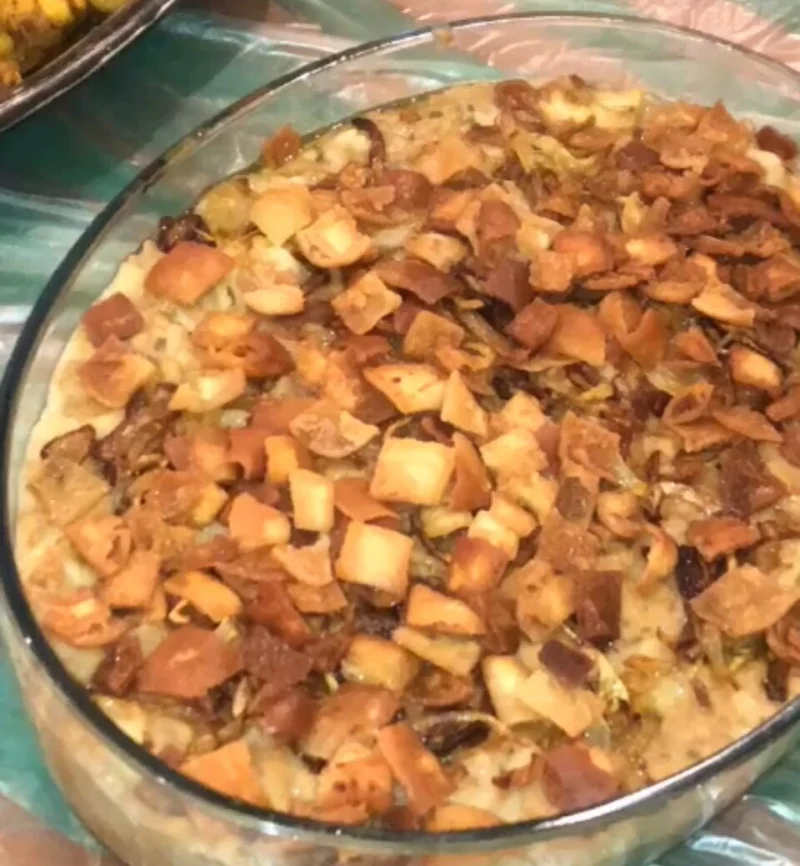
Main course
Vegetarian
Fattat Batinjan
فتة باذنجان
fat-tat bat-in-jan
· Eggplant with yogurt and bread
Layers of eggplant, toasted pita, and yogurt sauce.
Open Fattat Batinjan recipe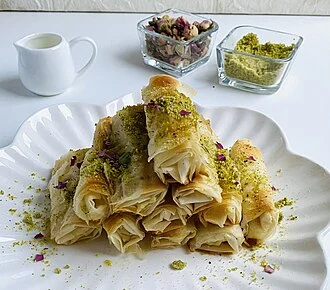
Dessert
Vegetarian
Znoud el-Sit
زنود الست
ZNOOD el-SIT
· Cream-filled pastry rolls
Crisp fried pastry rolls filled with ashta and soaked in floral syrup.
Open Znoud el-Sit recipe🐟
Main course
Fish & Seafood
Samke Harra
سمكة حرة طرابلسية
SAHM-keh HAH-reh
· Spicy Tripoli fish
Roasted fish topped with a hot tahini, walnut, garlic, and herb sauce.
Open Samke Harra recipe🌿
Dessert
Vegetarian
Mafroukeh
مفروكة طرابلسية
mah-FROO-keh
· Pistachio semolina cream
Toasted semolina and pistachio base layered with fragrant rose cream.
Open Mafroukeh recipe🌿
Dessert
Vegetarian
Nammoura
نمورة
na-moo-rah
· Sweet semolina cake
Sweet semolina cake soaked in syrup.
Open Nammoura recipe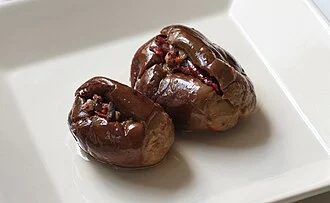
Appetizer
Vegetarian
Makdous
مكدوس
mak-doos
· Stuffed baby eggplants
Fermented baby eggplants stuffed with nuts and red pepper.
Open Makdous recipe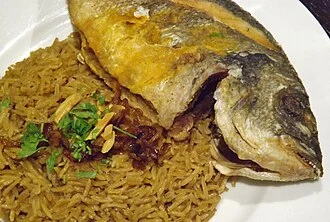
Main course
Fish & Seafood
Sayadieh
صيادية طرابلسية
sah-YAH-dee-eh
· Spiced fish and rice
Fragrant spiced rice layered with caramelized onions and tender coastal fish.
Open Sayadieh recipe