Explore Guides
ASIA / JAPAN
Triplandio Osaka guide covers 13 travel guides across 32 areas, complete with hotel picks. Explore 51 self-guided walking tours in Osaka with 136 POI, spanning 120.1 km in total. Get inspired by 24 local dishes, complete with recipes and our unique Food Flavour DNA graph.
Osaka
City & Country Data Osaka (Japan)

Key travel data for Osaka — local prices, safety, healthcare, local currency and essentials, curated by Triplandio.
🌍 Japan
Safety
89
Health
100
Lifestyle
48
Infra
100
Rank
#5
Score
70
Tourists
4.1M/y
GDP/cap
$36.0k
Life Exp
84.0 yrs
Population
123.4M
Currency
JPY ¥
Language
Japanese
Payments
Mixed
Emergency
110
💰 Prices in Osaka
Coffee
$3.00
Beer
$3.00
Lunch
$7.00
Groceries
$50.00/w
Taxi/km
$1.50
Transit
$2.00
Fuel
$1.20/l
Internet
$40.00/m
Salary
$2,500/m
Travel tipsOsaka (Japan)

Quick tips
- Some cold and allergy medicines are banned — Critical
Japan's strict stimulant-drug law covers Vicks inhalers, cold and flu tablets containing pseudoephedrine, some allergy and sinus remedies and some codeine painkillers. Visitors have been detained and deported, so check your medicines with the Japanese embassy before you fly.
- Don't follow street touts into bars — Critical
In nightlife districts such as Kabukicho, Roppongi, Shibuya and Ikebukuro in Tokyo, touts lure visitors into bars where drinks are spiked and huge sums are charged to their cards. Ignore touts and check prices before you order.
- Always carry your passport — Caution
Tourists in Japan must carry their passport at all times, not a photocopy. Police can arrest you if you cannot show proof of your permission to stay.
- Smoking on the street is often banned — Caution
Smoking while walking on the streets of Tokyo and many other Japanese cities is illegal. Look for the designated smoking areas, usually near stations, and smoke only there.
- Carry cash as well as cards — Local tip
Many small restaurants, shrines, temples and rural shops in Japan still take cash only. ATMs at 7-Eleven stores and post offices are the most reliable for foreign cards.
- Do
- Carry your passport at all times
- Take shoes off where slippers wait
- Wash before getting into an onsen
- Carry cash for small places
- Take your rubbish with you
- Don’t
- Bring pseudoephedrine medicine
- Follow touts into bars
- Tip in restaurants
- Smoke while walking
- Take phone calls on trains
Critical
Prison or heavy penalty possible
Laws & fines
- Zero tolerance of drugs — Critical
Drug penalties in Japan are severe, including for cannabis. Foreigners have been convicted after small amounts arrived by post or after testing positive in police raids on clubs, and trafficking sentences have ranged from 6 to 17 years.
- A positive drug test is enough — Critical
If Japanese police find an illegal substance in your blood, you can be charged even if your drink was spiked. Refusing a police drug test can itself lead to arrest.
- Detention without charge for 23 days — Critical
Japanese police can hold a suspect for up to 23 days without charge, even for minor offences such as theft, trespassing or a fight in a bar.
- Drink-driving rules are very strict — Critical
Japan's drink-driving limit is very low, and offenders face fines and possible prison. Passengers who knew the driver had been drinking can also be arrested. If you drink, don't drive or cycle.
Entry & visa
- Overstaying is treated seriously — Critical
Staying in Japan beyond your permitted date risks arrest, detention and a heavy fine. Working without the right visa is also illegal, however informal the job.
Beaches & adventure
- Bear attacks are increasing — Critical
Bear sightings and attacks have increased in Japan's mountains and forests, sometimes near towns. Don't hike alone where bears have been seen, carry a bell, take all food waste with you and follow local alerts.
Caution
Fines, losses or injury possible
Scams & safety
- Touts around Dotonbori and Namba — Caution
Street touts in Osaka's Minami nightlife area, around Dotonbori and Namba, steer visitors into bars with inflated bills. Pick your own bar and check prices first.
- Smoking is banned on every street — Caution
Since January 2025 smoking on roads anywhere in Osaka city is banned outside designated smoking areas, and patrols issue on-the-spot fines.
Laws & fines
- Check bar prices before you drink — Caution
Visitors have been arrested after arguing with staff over huge bar bills in Japanese nightlife areas. See a price menu before you go in, confirm any entry charge and keep track of what you order.
- Groping on crowded trains — Caution
Women on Japanese commuter trains have been groped or secretly photographed from below. Police advise shouting to draw attention and asking another passenger to call staff. Some lines run women-only carriages at rush hour.
Entry & visa
- No meat products in your bag — Caution
Bringing sausages, ham, bacon, jerky or other meat products into Japan without animal-quarantine approval is illegal and can mean a heavy fine or prison. Eat or bin them before landing.
Health
- Summer heat can be dangerous — Caution
Japanese summers are hot and humid, and heatstroke sends many people to hospital each year. Drink water often, rest in the shade and take heat warnings seriously.
Beaches & adventure
- Driving needs the right permit — Caution
Traffic in Japan drives on the left. Visitors from the UK and many other countries need the 1949 International Driving Permit (IDP), bought before travel, plus their licence and insurance papers; driving without them can mean arrest and a fine.
- Typhoons, floods and landslides — Caution
Typhoon season in Japan runs from June to December, peaking July to September and hitting the south hardest. Heavy rain brings floods and landslides fast in coastal and mountain areas, so follow Japan Meteorological Agency warnings and any evacuation orders.
Good to know
Rules and useful facts
Scams & safety
- Travel advisory: Level 1 of 4 — Good to know
Exercise normal precautions — the U.S. State Department's rating for Japan.
- Pickpockets in crowded spots — Good to know
Dotonbori's bridges and Kuromon Market get very crowded, especially in the evening. Pickpocketing is rare in Osaka, but keep bags zipped and phones out of back pockets.
- Don't photograph in Tobita Shinchi — Good to know
Tobita Shinchi, near Shinsekai in Osaka, is a red-light district where photography is not tolerated. Keep your camera away and walk on through.
Getting around
- Shin-Osaka for bullet trains — Good to know
Bullet trains stop at Shin-Osaka, not the central Osaka Station. The Midosuji subway line links Shin-Osaka with Umeda and Namba.
Laws & fines
- Same-sex couples have no legal recognition — Good to know
Same-sex relationships are legal in Japan, but same-sex marriage is not recognised and there is no legal protection from discrimination. Shinjuku Nichome in Tokyo and Doyamacho in Osaka are well-known LGBT+ areas.
Customs
- Tattoos can keep you out — Good to know
Because tattoos are linked with organised crime in Japan, some hot springs, pools, gyms and beaches refuse tattooed guests. Check in advance, look for tattoo-friendly baths or cover small tattoos with a plaster.
Tipping & money
- Foreign cards at ATMs — Good to know
Many Japanese bank ATMs reject foreign cards, and Cirrus, Maestro and some other debit cards are not widely accepted. Use 7-Eleven, JP Post Bank or post office machines.
Entry & visa
- Visa-free stays for many passports — Good to know
Visitors from the UK, the USA, the EU and many other countries can enter Japan as tourists for up to 90 days without applying in advance. The rules depend on your passport, so check with the Japanese embassy.
- Fingerprints and photo on arrival — Good to know
Foreign visitors have their fingerprints and photo taken at Japanese immigration. Your passport must be valid for your whole stay with a blank page for the landing stamp.
Health
- Tap water is safe — Good to know
Tap water is safe to drink throughout Japan, and free water or tea is served in most restaurants.
- Bring a large medicine supply legally — Good to know
Beyond banned ingredients, bringing more than about a month's supply of prescription medicine into Japan can require an import certificate. Check the rules for your medicines before you travel.
- Treatment is excellent but expensive — Good to know
Hospitals in Japan are high quality, but you pay the full cost and some check your insurance before treating you. Travel insurance is essential; call 119 for an ambulance.
- Ticks and mosquitoes — Good to know
Ticks and biting insects occur in Japanese countryside and forests, and dengue has been reported. Use repellent and cover your legs when hiking.
Beaches & adventure
- Climbing Mount Fuji — Good to know
Mount Fuji's trails open only in summer, roughly July to early September, and climbers now have to register and pay a fee in advance. Altitude sickness and sudden cold are real risks near the 3,776 m summit.
- Earthquakes and tsunami — Good to know
Japan has frequent earthquakes. If you feel a strong one near the coast, move to high ground at once and follow hotel and station instructions. The Japan Visitor Hotline (+81 50 3816 2787) gives English help in disasters, day and night.
- Missile alerts — Good to know
North Korean missile tests sometimes trigger J-Alert warnings on phones in Japan. Follow the on-screen instructions and check NHK World (the English service of Japan's public broadcaster) for updates.
- Check volcano warnings before hiking — Good to know
Japan has several active volcanoes, and some popular hiking peaks close when activity rises. Check the Japan Meteorological Agency's volcano warnings before you climb and obey closed-trail signs.
Local tips
Local know-how
Getting around
- Kansai Airport (KIX) → Namba — Local tip
The Nankai rapi:t express reaches Namba in south-central Osaka in about 40 minutes from Kansai International Airport; JR trains run to Tennoji and Osaka Station.
- Itami (ITM) → centre — Local tip
Osaka Itami Airport, used for domestic flights, has limousine buses to Umeda and Namba in about 30 minutes, or you can take the Osaka Monorail.
- Stand on the right — Local tip
On Osaka escalators people stand on the right and walk on the left — the opposite of Tokyo.
- Metro and IC cards — Local tip
Osaka Metro covers the whole centre. ICOCA, Suica and PASMO cards work on the metro, JR and the private railways.
Customs
- Take your shoes off indoors — Local tip
Remove your shoes in Japanese homes, traditional inns (ryokan), many temples and some restaurants — look for a step up or a row of slippers. Use the separate toilet slippers only in the toilet.
- Wash before entering a hot spring — Local tip
At a hot spring or public bath (onsen or sento), shower and rinse thoroughly on the stool before getting in. Swimwear is not allowed and your small towel stays out of the water.
- Keep quiet on trains — Local tip
Don't take phone calls on Japanese trains and buses, and keep conversations low. Loud behaviour in public attracts disapproving looks.
- Chopstick manners — Local tip
Never stand chopsticks upright in a bowl of rice or pass food from chopsticks to chopsticks — both mirror Japanese funeral rites. Rest them on the holder or across your bowl.
- Carry your rubbish with you — Local tip
Public bins are rare in Japan. Keep a small bag for your rubbish and sort it into the bins at convenience stores or your hotel.
Tipping & money
- Don't tip in Japan — Local tip
Tipping is not part of Japanese culture, and leaving money on the table can cause confusion — staff may chase you to return it. Good service is simply included.
- Prices are fixed — Local tip
Bargaining is not expected in Japanese shops or markets. The price shown is the price, though flea markets and some electronics shops may give a small discount if you ask politely.
- Pay with an IC card — Local tip
Rechargeable transport cards such as Suica, PASMO and ICOCA also work in convenience stores, vending machines and many cafés, which saves counting coins.
Entry & visa
- Speed up arrival online — Local tip
You can fill in your immigration and customs details in advance on Visit Japan Web, the government's free arrival website, and show a QR code at the airport.
Say it locally
Add “kudasai” (please) to requests, and a small bow goes with almost every greeting and thank you.
Through the year
Festival or season Public holiday (exact date)
- Autumn leaves
Nov–Dec 2026 · Maple colours peak in Kyoto and Tokyo from mid-November to early December, bringing crowds similar to cherry blossom time.
- Culture Day
Wed 3 Nov 2027 · Public holiday
- Labor Thanksgiving Day
Mon 23 Nov 2026 · Public holiday
- New Year holidays
Dec 2026–Jan 2027 · From about 29 December to 3 January many businesses, museums and restaurants close, while shrines are crowded with first visits of the year.
- New Year's Day
Fri 1 Jan 2027 · Public holiday
- Coming of Age Day
Mon 11 Jan 2027 · Public holiday
- National Foundation Day
Thu 11 Feb 2027 · Public holiday
- Emperor's Birthday
Tue 23 Feb 2027 · Public holiday
- Cherry blossom season
Mar–Apr 2027 · Blossom moves north from late March in Tokyo and Kyoto to early May in Hokkaido; hotels fill up and parks get very crowded.
- Spring Equinox
Sun 21 Mar 2027 · Public holiday
- Golden Week
Apr–May 2027 · A cluster of public holidays from late April to early May, when half of Japan travels — book trains and rooms well ahead.
- Shōwa Day
Thu 29 Apr 2027 · Public holiday
- Constitution Memorial Day
Mon 3 May 2027 · Public holiday
- Greenery Day
Tue 4 May 2027 · Public holiday
- Children's Day
Wed 5 May 2027 · Public holiday
- Rainy season (tsuyu)
Jun–Jul 2027 · Weeks of frequent rain from early June to mid-July across most of Japan; Hokkaido is largely spared.
- Typhoon season
Jul–Sep 2027 · The season runs from June to December but peaks July to September, when typhoons can cancel flights, ferries and bullet trains for a day or two, especially in the south.
- Tenjin Matsuri
Jul 2027 · On 24–25 July, one of Japan's biggest festivals fills Osaka's river with boats and ends with fireworks; riverside areas are packed.
- Sea Day
Mon 19 Jul 2027 · Public holiday
- Obon
Aug 2027 · Mid-August family holiday when people return to their hometowns; trains and motorways are packed and some shops close.
- Mountain Day
Wed 11 Aug 2027 · Public holiday
- Respect for the Aged Day
Mon 20 Sep 2027 · Public holiday
- Autumn Equinox
Thu 23 Sep 2027 · Public holiday
- Sports Day
Mon 11 Oct 2027 · Public holiday
Sources: GOV.UK travel advice · U.S. State Dept · Google public holidays
Best time to visit Osaka (Japan)
Now (November) avg high: 17°C, wetter month, full season — expect crowds. Best months to walk: Dec & Nov.
Live Temp
…
~Day / Night Temp
17°C / 9°C
Sunrise / Sunset
6:25 / 16:59
Local time
11:33
Sea Temp
18°C
Best Months  Dec & Nov
J
Jan
F
Feb
M
Mar
A
Apr
M
May
J
Jun
J
Jul
A
Aug
S
Sep
O
Oct
N
Nov
 D
Dec
D
Dec
Check Osaka hotels
Temperature
Average daytime high, month by month. Zero line marks freezing point.
Crowds
How busy it gets — traveller interest by month.
Sea temperature
Sea warmth for swimming, by month.
Rainfall
Rainy days to expect each month.
Sunshine
Hours of sun per day, by month.
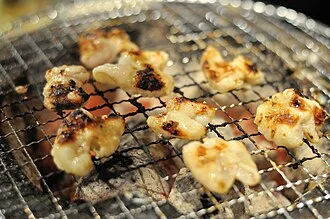
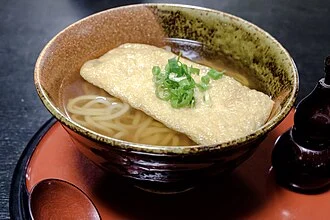
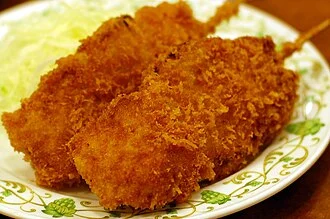
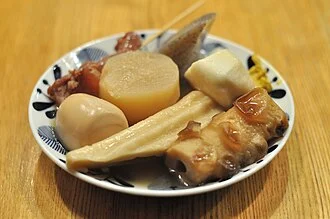
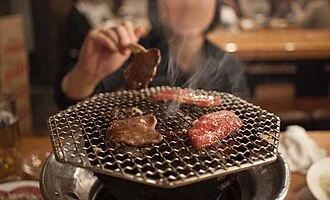
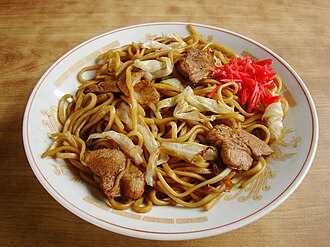
Grilled or stir-fried beef or pork offal, seasoned and cooked on a griddle. Udon noodle soup with a piece of fried tofu. Deep-fried skewers of meat and vegetables. A hotpot dish with various ingredients simmered in dashi. Grilled meat dish enjoyed with dipping sauces. Stir-fried noodles with vegetables, meat, and yakisoba sauce.
Traditional Local Food
Osaka (Japan)
Main course
Meat
Horumonyaki
ホルモン焼き
hoh-roo-mohn-yah-kee
Main course
Vegetarian
Kitsune Udon
きつねうどん
kee-tsoo-nay oo-don
Street food
Meat
Kushikatsu
串カツ
koo-shee-KA-tsoo
Soup
Fish & Seafood
Oden
おでん
Oh-dehn
Main course
Meat
Yakiniku
焼肉
yah-kee-nee-koo
Main course
Meat
Yakisoba
焼きそば
yah-kee-soh-bah