Explore Guides
ASIA / IRAN
Triplandio Rasht guide covers 5 travel guides across 20 areas, complete with hotel picks. Explore 17 self-guided walking tours in Rasht with 22 POI, spanning 63.6 km in total. Get inspired by 5 local dishes, complete with recipes and our unique Food Flavour DNA graph.
Rasht
City & Country Data Rasht (Iran)

Key travel data for Rasht — local prices, safety, healthcare, local currency and essentials, curated by Triplandio.
🌍 Iran
Tourists
1.6M/y
GDP/cap
$3.9k
Life Exp
77.9 yrs
Population
92.4M
Currency
IRR ﷼
Language
Persian
Payments
Mixed
Emergency
112
💰 Prices in Rasht
Coffee
$1.24
Beer
$0.85
Lunch
$3.50
Groceries
$112.00/w
Taxi/km
$0.30
Transit
$0.49
Fuel
$0.61/l
Internet
$4.00/m
Salary
$213/m
Travel tipsRasht (Iran)

Quick tips
- Governments advise against all travel — Critical
The UK and US advise against all travel to Iran. Foreigners, especially British, US and dual nationals, risk arbitrary arrest and long detention, and embassies, including the UK's, may be unable to give face-to-face help in an emergency.
- Women must cover their hair in public — Critical
Iranian law requires women, including visitors, to wear a headscarf, trousers or a long skirt and a coat reaching mid-thigh or knee. Women have been arrested and treated violently for breaking the dress code, and crackdowns come without warning.
- Alcohol is illegal — Critical
Buying, drinking or carrying alcohol is illegal in Iran and can lead to arrest. Bootleg spirits have also caused deaths from methanol poisoning, which you can't taste or smell.
- Stay away from protests and sensitive sites — Critical
Anyone in or near a protest in Iran risks arrest, including bystanders. Foreigners have been arrested for taking photos near government, military or other sensitive sites.
- Foreign bank cards don't work — Good to know
Because of sanctions, foreign debit and credit cards don't work anywhere in Iran and travellers' cheques usually can't be changed. Bring enough cash in euros or US dollars for your whole stay.
- Do
- Check the latest travel advice
- Bring enough cash for the whole trip
- Wear a headscarf in public (women)
- Ask which currency a price is in
- Accept and return taarof politely
- Don’t
- Bring or drink alcohol
- Go near protests or crowds
- Photograph government buildings
- Change money on the street
- Post political content online
Critical
Prison or heavy penalty possible
Scams & safety
- Travel advisory: Level 4 of 4 — Critical
Do not travel — the U.S. State Department's rating for Iran.
Laws & fines
- Drug offences can carry the death penalty — Critical
Iran enforces some of the world's harshest drug laws. Importing or possessing drugs brings severe penalties, and many people convicted of drug offences, including foreigners, have been executed.
- Same-sex relations are illegal — Critical
Same-sex relations are illegal in Iran, and the defined punishment is death. Sex outside marriage and adultery also carry the death penalty, so avoid any public affection.
- Unmarried couples should be very careful — Critical
Unmarried couples and friends of the opposite sex travelling together in Iran should be extremely cautious. Hotel managers may ask for a marriage certificate before letting a couple share a room.
- Cameras and laptops can look like spying — Critical
Photographing military or government buildings in Iran can lead to national security charges, and sensitive sites are often unmarked. Even using a laptop with photos in public has led to arrests for espionage. Ask before photographing people.
- Watch what you post and share online — Critical
Iranian authorities treat political posts, blogging and even liking or sharing content about Iran as grounds for suspicion. Think before posting anything while you're there or before you go.
- Links to Israel put you at risk — Critical
Any current or past links to Israel, Israeli nationals or institutions increase your risk of detention in Iran. Israeli stamps in your passport can get you refused at the border.
Entry & visa
- Don't overstay your visa — Critical
If you stay in Iran past your visa's expiry date, you may be stopped from leaving until it is resolved and can be detained.
- Drones and satellite phones need permission — Critical
Bringing or using a drone or satellite phone in Iran without permission from the Iranian authorities is illegal and can get you arrested. Leave them at home.
Outdoors & adventure
- Keep out of the border areas — Critical
Several governments, including the UK, advise against all travel within 100 km of the Afghan border, within 10 km of the Iraqi border, to Sistan and Baluchistan province and east of Bam and Jask, because of banditry and drug smuggling.
- Airspace and borders can close — Critical
Iranian airspace, ports and land borders can close at short notice during the current regional conflict. Keep a backup plan to leave and don't rely on one flight.
- Stick to main routes — Critical
Wandering off main roads in Khuzestan, Kurdish-majority areas or near military sites risks entering a restricted zone. Photographing the wrong place can lead to arrest.
- Stay calm at roadblocks — Critical
Iranian authorities set up informal roadblocks in cities and on highways, often staffed by young, inexperienced officers. Carry ID and avoid any argument. Women riding motorbikes risk arrest.
Caution
Fines, losses or injury possible
Scams & safety
- Mountain roads to Masuleh — Caution
The winding road to the hill village of Masuleh is steep and often foggy. Use an experienced local driver rather than driving yourself.
Laws & fines
- Fake police officers — Caution
Robbers posing as plain-clothes police stop foreigners in Iran. Ask for ID and a uniformed officer or marked car, and never hand over documents or cash or get into their vehicle.
- Street money changing is illegal — Caution
Changing money with people on the street is illegal in Iran. Exchange offices take euros and US dollars more readily than pounds, but changing money can still be difficult, so plan how you'll get rials legally.
Entry & visa
- Don't bring pork products — Caution
Importing pork or pork products into Iran is illegal, including sausages, ham and snacks that contain pork. Leave them at home.
Outdoors & adventure
- Road traffic is dangerous — Caution
Iran has a high rate of road accidents. Visitors from the UK need a 1968 International Driving Permit (IDP), bought before travel; other nationalities should check whether they need one. After any accident, however minor, stay at the scene until the police arrive.
- Avoid motorcycle taxis — Caution
Motorcycle taxis in Iran have taken tourists to quiet places and robbed them. Use pre-booked taxis, which are safer than cars hailed in the street.
Good to know
Rules and useful facts
Scams & safety
- Heavy rain and flooding — Good to know
Rasht is one of the wettest cities in Iran, and downpours can flood streets and make mountain roads in Gilan slippery. Check the forecast before day trips.
- Busy bazaar, watch your pockets — Good to know
Rasht's central bazaar is crowded, especially in the evening. Keep your cash in several places, as foreign cards can't replace lost money in Iran.
Customs
- Respect fasting and mourning months — Good to know
During Ramadan, the Muslim fasting month, don't eat, drink, smoke or chew gum in public in daylight, even in your car. In the mourning month of Muharram, avoid loud music and bright, festive clothes.
Tipping & money
- Prices in rials and tomans — Good to know
Iran's official currency is the rial, but most prices are quoted in tomans; one toman equals 10 rials. Always check which one a price means before you pay.
Entry & visa
- A visa is required in advance — Good to know
Everyone without an Iranian passport needs a visa for Iran. British citizens must join an organised tour or have a sponsor in Iran, and the process can be long and unpredictable.
- Passport valid for 6 months — Good to know
Your passport must be valid for at least 6 months after you arrive in Iran and from the date you apply for the visa.
- Headscarf in visa photos — Good to know
Women and girls aged 10 or over must wear a headscarf in the photos for an Iranian visa application.
- Kish Island needs an agency — Good to know
To visit Kish Island in the Persian Gulf, a registered Iranian travel agency must arrange your trip at least 2 weeks ahead, with a hotel booking and a guide meeting you at the airport.
- Yellow fever and polio certificates — Good to know
If you arrive in Iran from a country with yellow fever risk or polio, you must show a certificate proving you have been vaccinated.
Health
- Call 115 for an ambulance — Good to know
In Iran, dial 115 for an ambulance. Hospitals in the major cities are reasonable and many doctors speak some English, but care in remote areas is poor.
- Bring all your medicines — Good to know
Iran has had shortages of some basic medicines. Bring enough of your prescription medicines for the whole trip, in original packaging with a copy of the prescription.
- Don't swim in fresh water — Good to know
Schistosomiasis, a parasitic infection, is present in some lakes and rivers in Iran. Avoid swimming or wading in fresh water.
- Mosquito-borne disease in the south — Good to know
Malaria and dengue occur in parts of southern and south-eastern Iran. Use insect repellent and check whether you need antimalarial tablets for your route.
- Altitude in the mountains — Good to know
Parts of Iran, including Mount Damavand and the Alborz ski areas, are high enough for altitude sickness. Climb slowly and descend if you feel unwell.
Outdoors & adventure
- Segregated beaches — Good to know
Swimming on Iran's Caspian and Gulf coasts is usually separated by gender, with screened sections for women. Mixed swimming in public is not allowed.
- Spring floods in some provinces — Good to know
Khuzestan, Golestan and Lorestan can flood in spring. Follow local news, and carry waterproofs, warm layers, boots and food when driving or hiking there. Iran is also prone to strong earthquakes.
Local tips
Local know-how
Getting around
- Rasht airport (RAS) for domestic flights — Local tip
Rasht's small airport has domestic flights, mainly from Tehran. The flight is short, but schedules can change at short notice.
- By road from Tehran — Local tip
Buses and shared taxis run from Tehran to Rasht via Qazvin, a journey of roughly 4–5 hours through the Alborz mountains.
- Train via Qazvin — Local tip
A railway line links Rasht with Qazvin and Tehran. Trains are fewer than buses, so check times at the station or with your hotel.
- Taxis in the city — Local tip
Rasht's centre around Shahrdari Square is walkable; for longer trips use a taxi or Snapp, Iran's ride-hailing app, booked through your hotel.
Customs
- Men should avoid shorts — Local tip
Men in Iran are expected to wear long trousers in public; shorts and sleeveless tops draw attention and can be refused entry at mosques and shrines.
- Understand taarof, the politeness ritual — Local tip
Taarof is Iran's etiquette of polite refusal: a shopkeeper or taxi driver may say “it's nothing, be my guest”. Offer to pay two or three times — they almost always expect you to.
- Chador at major shrines — Local tip
Women must wear a chador, a full-length cloak, to enter major shrines such as Imam Reza's in Mashhad or Shah Cheragh in Shiraz. They are usually lent at the entrance.
- Women's sections on public transport — Local tip
Tehran metro trains have women-only carriages, and city buses are often split into men's and women's sections. Women may use either on the metro; men should stay out of the women's area.
Tipping & money
- Bring clean foreign banknotes — Local tip
Exchange offices in Iran prefer new, undamaged euro and US dollar notes. Carry your money in several places, as lost cash can't be replaced by card.
- Bargain in the bazaars — Local tip
Haggling is normal for carpets, handicrafts and souvenirs in Iran's bazaars, but food and everyday shop prices are fixed.
- Tipping is small and modest — Local tip
In Iranian restaurants a service charge is sometimes added. Otherwise leaving around 10% or rounding up is appreciated, as is a small tip for guides and drivers.
Say it locally
Use “lotfan” (please) and expect generous politeness — return it.
Through the year
Festival or season Public holiday (exact date)
- Best travel weather
Oct–Nov 2026, Mar–May 2027 · Spring and autumn are mild in Isfahan, Shiraz and Yazd; summers there are very hot.
- Martyrdom of Hazrat Fatima (tentative)
Wed 3 Nov 2027 · Public holiday
- Martyrdom of Hazrat Fatima (tentative)
Fri 13 Nov 2026 · Public holiday
- Birthday of Imam Ali and Father's Day
Wed 23 Dec 2026 · Public holiday
- Ramadan
Jan–Mar 2027 · The fasting month moves about 11 days earlier each year; in 2027 it starts in February. Daytime restaurants mostly close.
- Prophet's Ascension (tentative)
Wed 6 Jan 2027 · Public holiday
- Imam Mahdi's birthday (tentative)
Sun 24 Jan 2027 · Public holiday
- Revolution Day
Thu 11 Feb 2027 · Public holiday
- Martyrdom of Imam Ali (tentative)
Sun 28 Feb 2027 · Public holiday
- Nowruz (Persian New Year)
Mar–Apr 2027 · From around 20 March the whole country travels for about two weeks; transport and hotels are packed and many offices close.
- Eid-e-Fetr (tentative)
Wed 10 Mar 2027 · Public holiday
- Eid-e-Fetr Holiday (tentative)
Thu 11 Mar 2027 · Public holiday
- Oil Nationalization Day
Sat 20 Mar 2027 · Public holiday
- Sizdah Bedar
Apr 2027 · On the 13th day of the new year (early April) families picnic outdoors all day; parks are full and towns quiet.
- Islamic Republic Day
Thu 1 Apr 2027 · Public holiday
- Martyrdom of Imam Sadeq
Sat 3 Apr 2027 · Public holiday
- Muharram and Ashura
May–Jun 2027 · The Shia mourning month (dates move each year) brings processions and closures, especially on the days of Tasua and Ashura.
- Eid-e-Ghorban (tentative)
Mon 17 May 2027 · Public holiday
- Eid-e-Ghadir (tentative)
Tue 25 May 2027 · Public holiday
- Extreme summer heat
Jun–Aug 2027 · The desert cities and the Persian Gulf coast often pass 40°C; travel early and late in the day.
- Anniversary of Khomeini's Death
Fri 4 Jun 2027 · Public holiday
- Revolt of Khordad 15
Sat 5 Jun 2027 · Public holiday
- Tassoua (tentative)
Mon 14 Jun 2027 · Public holiday
- Ashura (tentative)
Tue 15 Jun 2027 · Public holiday
- Arbaeen (tentative)
Sun 25 Jul 2027 · Public holiday
- Demise of Prophet Muhammad and Martyrdom of Imam Hassan (tentative)
Mon 2 Aug 2027 · Public holiday
- Martyrdom of Imam Reza (tentative)
Tue 3 Aug 2027 · Public holiday
- Martyrdom of Imam Hasan al-Askari (tentative)
Wed 11 Aug 2027 · Public holiday
- Birthday of Prophet Muhammad and Imam Sadeq (tentative)
Fri 20 Aug 2027 · Public holiday
Sources: GOV.UK travel advice · U.S. State Dept · Google public holidays
Best time to visit Rasht (Iran)
Now (November) avg high: 19°C, wetter month, full season — expect crowds. Best months to walk: Apr & Aug.
Live Temp
…
~Day / Night Temp
19°C / 12°C
Sunrise / Sunset
6:45 / 17:07
Local time
15:48
Best Months  Apr & Aug
J
Jan
F
Feb
M
Mar
A
Apr
M
May
J
Jun
J
Jul
A
Aug
S
Sep
O
Oct
N
Nov
 D
Dec
M
May
J
Jun
J
Jul
A
Aug
S
Sep
O
Oct
N
Nov
D
Dec
Check Rasht hotels
Temperature
Average daytime high, month by month. Zero line marks freezing point.
Crowds
How busy it gets — traveller interest by month.
Rainfall
Rainy days to expect each month.
Sunshine
Hours of sun per day, by month.
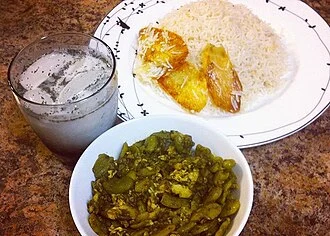
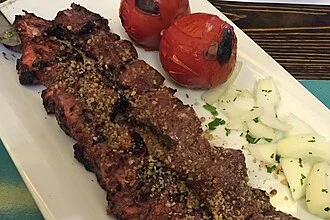
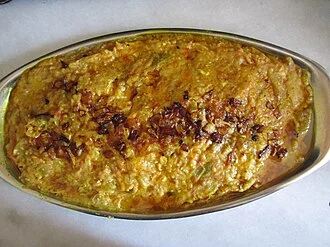
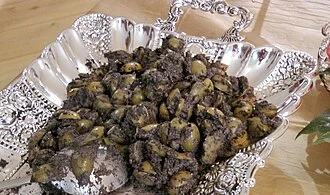
A rich stew made with pomegranate juice, walnuts, and herbs. A hearty stew of fava beans, dill, and eggs. Grilled kebabs marinated in pomegranate paste and herbs. A smoked eggplant dish mixed with tomatoes and eggs. Olives marinated with pomegranate paste, walnuts, and herbs.
Traditional Local Food
Rasht (Iran)
🥩
Main course
Meat
Anar Bij
انار بیج
ah-nahr beej
· Pomegranate and walnut stew
Main course
Vegetarian
Baghala Ghatogh
باقالی قاتق
bah-gah-lah gha-tohgh
· Fava bean and dill stew
Main course
Meat
Kabab Torsh
کباب ترش
ka-bahb tor-sh
· Sour pomegranate kebabs
Main course
Vegetarian
Mirza Ghasemi
میرزا قاسمی
meer-zah gah-seh-mee
· Smoked eggplant and egg dish
Starter
Vegetarian
Zeytoon Parvardeh
زیتون پرورده
zay-toon par-var-deh
· Marinated olives with walnuts