

Explore Guides
SOUTH AMERICA
Venezuela
Triplandio Venezuela guide covers 4 travel guides with 1 city across 13 areas, complete with hotel picks. Explore 13 self-guided walking tours in Venezuela with 25 POI, spanning 55.1 km in total. Get inspired by 4 local dishes, complete with recipes and our unique Food Flavour DNA graph.
Country Data Venezuela

Key travel data for Venezuela — safety, healthcare, local currency and essentials, curated by Triplandio.
🌍 Venezuela
Tourists
429K/y
GDP/cap
$3.5k
Life Exp
72.7 yrs
Population
28.5M
Currency
VES Bs.S
Language
Spanish
Payments
Mixed
Emergency
171
Travel tipsVenezuela

Quick tips
- Governments advise against all but essential travel — Critical
Several governments, including the UK, advise against all but essential travel to Venezuela, and against all travel to Zulia, the border areas and the Orinoco Mining Arc. Travel insurance may be invalid, and consular help is very limited.
- Foreigners have been detained — Critical
Some foreigners, including Europeans, have been held at Venezuelan airports and borders for hours or days, deported, or accused of terrorism. Be ready to explain your trip and keep your plans simple and documented.
- Drug trafficking means 8–15 years — Critical
Drug trafficking in Venezuela carries 8 to 15 years in prison, in some of the harshest jails in the region. Never carry a bag or package for anyone else.
- Check which regions are off-limits — Critical
Several governments, including the UK, advise against all travel to Zulia, the areas near the Colombian, Brazilian and Guyanese borders and the mining region south of the Orinoco, and against all but essential travel elsewhere.
- Carry ID and your entry stamp — Caution
Security forces in Venezuela can demand ID at any time, especially at checkpoints. Carry a copy of your passport photo page and entry stamp, and keep the passport itself close by.
- Frequent power cuts — Good to know
Power cuts in Venezuela can be nationwide and last for hours, cutting phone signal, internet and water pumps. Keep a torch, charged power bank, some water and cash to hand.
- Do
- Pre-book taxis through your hotel
- Carry small US dollar notes
- Bring all your medicines
- Keep a torch and power bank ready
- Carry a copy of passport and stamp
- Don’t
- Resist a robbery
- Photograph soldiers or military sites
- Discuss politics in public
- Travel by road after dark
- Get into a taxi with other passengers
Critical
Prison or heavy penalty possible
Getting between cities
- Avoid public transport — Critical
Robberies, some at gunpoint, have happened on Venezuelan buses. Use pre-booked cars or a trusted driver arranged through your hotel or tour operator.
- Arrive at Maiquetía in daylight — Critical
Travellers have been robbed in and around Maiquetía airport near Caracas and on the road to the city, especially at night. Arrange a pickup in advance or use the official taxi rank outside arrivals; refuse offers of transport inside the hall.
Regions & seasons
- The south: mostly off-limits — Critical
Much of Bolívar and Amazonas, including the Orinoco Mining Arc, is in areas where several governments, including the UK, advise against all travel because of armed groups.
Laws & fines
- No photos of military sites — Critical
Photographing military or strategic installations, including military airports and the presidential palace, is illegal in Venezuela. Plane spotting is best avoided entirely.
- Avoid protests and crowds — Critical
Demonstrations in Venezuela can be broken up with tear gas and rubber bullets. Avoid rallies and never cross security lines or barricades.
- The age of consent is 18 — Critical
The age of consent in Venezuela is 18, and sex with anyone aged 17 or under is illegal. Offenders face long prison sentences.
Entry & visa
- Overstaying leads to arrest — Critical
Overstaying in Venezuela can get you arrested and fined as you leave. Extend before your card expires at an office of SAIME (the immigration service).
- Journalists and volunteers need visas — Critical
Any work in Venezuela, paid or unpaid — journalism, filming, volunteering or charity work — needs a proper visa, not a tourist card.
Health
- Bring all your medicines — Critical
Venezuela has severe shortages of medicines and medical supplies. Bring enough of your medication for the whole trip, plus extra in case your return is delayed.
Beaches & adventure
- Armed groups in border states — Critical
Armed groups and criminal gangs operate in Zulia, Táchira and Apure and in the mining and river areas of Bolívar, Amazonas and Delta Amacuro. Don't go there.
- Don't resist robbers — Critical
Armed robbery, mugging and carjacking are common in Venezuela and can be very violent. Hand over what is demanded, and don't show phones, cameras or jewellery in the street.
- Earthquake damage in La Guaira — Critical
Earthquakes of magnitude 7.2 and 7.5 in June 2026 damaged La Guaira and parts of Caracas. La Guaira is under military control; stay away from damaged buildings and expect aftershocks.
Caution
Fines, losses or injury possible
Getting between cities
- Driving: fuel and equipment — Caution
Traffic drives on the right. Fuel shortages are common outside Caracas, and every vehicle must carry a spare tyre, wheel block, jack and warning triangle.
Laws & fines
- Stop at checkpoints — Caution
Police and National Guard checkpoints are everywhere in Venezuela. Drive slowly, stop when asked and stay calm; some officers try to extract bribes for alleged traffic offences.
Entry & visa
- Travel advisory: Level 3 of 4 — Caution
Reconsider Travel — the U.S. State Department's rating for Venezuela.
- Declare valuables and cash — Caution
Declare goods worth more than 1,000 US dollars and cash or travellers cheques of 10,000 US dollars or more when entering Venezuela.
Beaches & adventure
- Strong currents, no lifeguards — Caution
Venezuela's Caribbean beaches can have strong currents and undertows, and lifeguards and warning signs are usually absent. Swim only where locals do in calm water.
- Hurricanes and floods, June to November — Caution
Hurricane season from June to November can affect northern Venezuela, and rainy-season floods from May to November hit the Llanos plains and Andean valleys around Mérida. Follow local weather reports and official advice.
Good to know
Rules and useful facts
Getting between cities
- Limited international flights — Good to know
International flights to Venezuela are limited. Maiquetía airport near Caracas reopened on 1 September 2026 with reduced capacity; Valencia, Barquisimeto, Barcelona and Maracaibo also have flights.
- Your licence — Good to know
Visitors from the UK can drive on a photocard licence for up to one year; older paper licences and other nationalities may need an International Driving Permit (IDP). Drink-driving and red-light running are common, so keep to main roads and never drive after dark. After a crash, stay at the scene until traffic police arrive.
Regions & seasons
- Caribbean coast and islands — Good to know
Margarita Island and the Caribbean coast are drier and sunnier from December to April. Crime is still a risk, so stay in reputable accommodation.
Laws & fines
- Airport drug checks — Good to know
The National Guard carries out random drug checks at Maiquetía airport, sometimes taking departing passengers to hospital for an X-ray. Beware of fake officials and ask airline staff if unsure.
- Discreet public affection — Good to know
Same-sex relationships are legal in Venezuela, but public displays of affection can attract negative attention, including from police and security forces. Same-sex partnerships are not recognised, so partners have no next-of-kin rights.
Customs
- Don't talk politics in public — Good to know
Politics in Venezuela is tense and security forces are highly visible. Avoid political discussions, slogans and clothing in public and on social media while you're there.
Tipping & money
- US dollars are widely used — Good to know
Most Venezuelan businesses accept bolívars, US dollars or international cards. Bring plenty of small US dollar notes in good condition, as change is scarce.
- Cards don't always work — Good to know
Some card machines in Venezuela reject international cards. Carry enough cash and a backup; relatives abroad can send money via Western Union for collection at a Grupo Zoom branch.
Entry & visa
- Passport valid 6 months after leaving — Good to know
Your passport must be valid for at least 6 months after the date you plan to leave Venezuela.
- Tourist card on arrival by air — Good to know
Many visitors arriving by air, including British citizens, get a tourist card for up to 90 days on arrival and must show a return or onward ticket. Overland or by sea you may need a visa in advance.
- Yellow fever proof from Brazil — Good to know
If you enter Venezuela from Brazil you must show a yellow fever vaccination certificate.
Health
- Private clinics, and evacuation cover — Good to know
Private clinics in large Venezuelan cities handle routine care, while public hospitals are poorly supplied. Get insurance that covers medical evacuation.
- Don't drink tap water — Good to know
Tap water in Venezuela is not safe to drink, and supplies are unreliable. Use bottled water.
- Dengue and yellow fever — Good to know
Dengue and yellow fever occur in Venezuela. Use insect repellent and ask a travel clinic about the yellow fever vaccine at least 8 weeks before you go.
- Don't swim in fresh water — Good to know
Schistosomiasis, a parasitic infection, is present in Venezuelan rivers and lakes. Avoid swimming or wading in fresh water.
- Emergency number — Good to know
In Venezuela call 911 for an ambulance. The private service AeroAm can move patients back to Caracas or other cities after an accident.
Beaches & adventure
- Climb into the Andes slowly — Good to know
Mérida, Táchira and Trujillo in the Venezuelan Andes reach high altitudes. Go up gradually and watch for altitude sickness.
Local tips
Local know-how
Regions & seasons
- The Andes: cool and high — Local tip
Mérida and the Venezuelan Andes are much cooler than the coast. Allow time to adjust to the altitude.
Customs
- Greet with a kiss on the cheek — Local tip
Venezuelans usually greet friends and new acquaintances with a single kiss on the right cheek, and men shake hands. Say “buenos días” when you enter a shop.
- Learn some Spanish — Local tip
Few police, soldiers or officials in Venezuela speak English. Basic Spanish, or a translation app that works offline, helps at checkpoints and in taxis.
Tipping & money
- Pay petrol stations exactly — Local tip
Petrol stations often don't give change and may not take foreign cards. Pay the correct amount in bolívars or dollars.
- Tipping in restaurants — Local tip
Check the bill for a service charge. If there is none, leaving around 10% in a restaurant is appreciated.
Our Venezuela city guides
Arrange airport and island transport through your hotel, and keep valuables out of sight on quiet beaches.
Say it locally
Venezuelans are warm and formal with strangers — use “usted” and start with “buenos días” or “buenas tardes”.
Through the year
Festival or season Public holiday (exact date)
- Rainy season
May–Nov 2026 · Heavy rain can damage roads and cause landslides; waterfalls such as Angel Falls are at their fullest.
- All Saints Day
Mon 1 Nov 2027 · Public holiday
- Dry season
Dec 2026–Apr 2027 · The most reliable weather across most of Venezuela, and the best time for beaches and the Andes.
- Christmas season
Dec 2026 · The busiest travel period of the year in Venezuela; book any domestic flights early.
- Christmas Eve
Thu 24 Dec 2026 · Public holiday
- Christmas Day
Fri 25 Dec 2026 · Public holiday
- New Year's Eve
Thu 31 Dec 2026 · Public holiday
- New Year's Day
Fri 1 Jan 2027 · Public holiday
- Carnival
Feb–Mar 2027 · Carnival brings days off and crowded beaches before Lent; dates move each year.
- Carnival / Shrove Monday
Mon 8 Feb 2027 · Public holiday
- Carnival / Shrove Tuesday / Pancake Day
Tue 9 Feb 2027 · Public holiday
- Holy Week
Mar–Apr 2027 · Semana Santa (Holy Week before Easter): many Venezuelans head to the beach, and transport and hotels fill up.
- Maundy Thursday
Thu 25 Mar 2027 · Public holiday
- Good Friday
Fri 26 Mar 2027 · Public holiday
- Declaration of Independence
Mon 19 Apr 2027 · Public holiday
- Labor Day
Sat 1 May 2027 · Public holiday
- Venezuelan Family Day
Sat 15 May 2027 · Public holiday
- Carabobo Battle
Thu 24 Jun 2027 · Public holiday
- Independence Day
Mon 5 Jul 2027 · Public holiday
- Simón Bolívar's Birthday
Sat 24 Jul 2027 · Public holiday
- Day of Indigenous Resistance
Tue 12 Oct 2027 · Public holiday
Sources: GOV.UK travel advice · U.S. State Dept · Google public holidays
Traditional Local Food Venezuela
🐟
Main course
Fish & Seafood
Chucho en Coco
choo-cho en koh-koh
· Ray fish in coconut
Stewed ray fish in a creamy coconut sauce.
Open Chucho en Coco recipe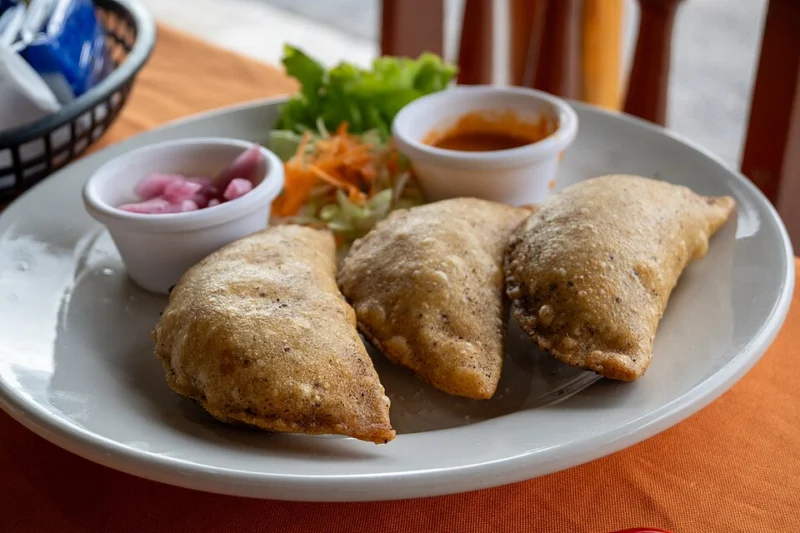
Snack
Fish & Seafood
Empanadas de Cazón
em-pah-na-das de ka-zon
· Shark-filled empanadas
Fried turnovers filled with seasoned shark meat.
Open Empanadas de Cazón recipe🐟
Main course
Fish & Seafood
Carite Asado
ka-ree-teh ah-sah-doh
· Grilled kingfish
Grilled kingfish seasoned with lemon and herbs.
Open Carite Asado recipe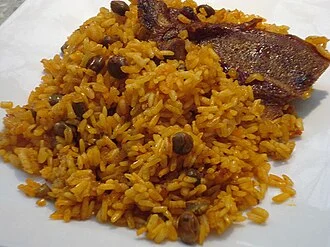
Snack
Vegetarian
Domplines
dom-plee-nes
· Fried dough balls
Fried dough balls often served with cheese.
Open Domplines recipe