

Explore Guides
SOUTH AMERICA
Peru
Triplandio Peru guide covers 21 travel guides with 3 cities across 52 areas, complete with hotel picks. Explore 79 self-guided walking tours in Peru with 173 POI, spanning 245.5 km in total. Get inspired by 29 local dishes, complete with recipes and our unique Food Flavour DNA graph.
Country Data Peru

Key travel data for Peru — safety, healthcare, local currency and essentials, curated by Triplandio.
🌍 Peru
Safety
45
Health
43
Lifestyle
62
Infra
33
Rank
#68
Score
36
Tourists
1.1M/y
GDP/cap
$9.7k
Life Exp
77.9 yrs
Population
34.6M
Currency
PEN S/.
Language
Spanish
Payments
Mixed
Emergency
105
Travel tipsPeru

Quick tips
- Foreigners may not join protests — Critical
It is illegal for foreigners to take part in political activity in Peru, including demonstrations. You can be detained or deported, so keep away from marches and roadblocks.
- Don't photograph anything military — Critical
Taking photos of military bases, soldiers, vehicles or equipment is illegal in Peru and can lead to a prison sentence of two to five years.
- Take only booked or app taxis — Critical
Criminals posing as taxi drivers rob and sometimes kidnap tourists in Peru, forcing them to empty their bank accounts at ATMs (“express kidnapping”). Use official airport desks, app taxis or cabs your hotel books.
- Condor-feather souvenirs are illegal — Caution
Selling crafts made from condor feathers, wild animal skins, turtle shell, butterflies or other animal parts is illegal in Peru, even though tourist markets in Cusco and Iquitos offer them. You can be prosecuted when leaving with them.
- Altitude sickness is a real risk — Good to know
Cusco, Puno and Lake Titicaca, the Colca Canyon and Kuelap all lie high in the Andes. Headaches and breathlessness are common, so rest on arrival, drink water and see a doctor if symptoms get worse.
- Leave spare days for disruption — Good to know
Protests and strikes in Peru can block roads, suspend trains to Machu Picchu and close border crossings with little warning. Keep a buffer day before international flights and follow local news.
- Do
- Book taxis through an app or hotel
- Rest on your first day at altitude
- Carry your passport or a copy
- Drink bottled or filtered water
- Book Machu Picchu tickets early
- Don’t
- Join or watch street protests
- Take coca leaves home
- Buy feather or animal-part crafts
- Photograph soldiers or bases
- Use your phone at the roadside
Critical
Prison or heavy penalty possible
Getting between cities
- Never try to pass a roadblock — Critical
Protesters in Peru often block roads and railways with little warning, and services can stop for days. Don't try to drive or walk through a blockade; carry extra food, water, cash and medication, and follow police and tour operators' advice.
Regions & seasons
- Areas to avoid — Critical
Several governments, including the UK, advise against all but essential travel to the VRAEM (the valley of the Apurímac, Ene and Mantaro rivers) and parts of the Colombian border, because of drug-linked organised crime.
Laws & fines
- Drug sentences are long — Critical
Using or trafficking illegal drugs in Peru brings lengthy jail sentences in prisons with extremely poor conditions. Pack your own bags and never carry anything through customs for anyone.
- Coca leaves stay in Peru — Critical
Coca tea and coca leaves are legal and widely offered in Peru, often to help with altitude, but taking them home is illegal in many countries, including the UK. Finish them before you fly.
- No archaeological artefacts — Critical
Taking any archaeological object out of Peru without official permission is illegal, even a small piece of pottery from a ruin. Buy clearly modern replicas from shops instead.
- Beware of courier job offers — Critical
Drug gangs email foreigners offering paid trips to Peru to collect a parcel or suitcase. The luggage contains drugs, and the courier faces arrest and prison for trafficking.
Health
- Methanol in bootleg drinks — Critical
People in Peru have died from alcoholic drinks containing methanol, which you can't taste or smell. Drink in reputable places, avoid very cheap spirits and seek help fast if you feel ill after drinking.
- Ayahuasca ceremonies can kill — Critical
Shamans in the Amazon, northern Peru and Cusco offer “spiritual cleansing” with ayahuasca or San Pedro, unregulated hallucinogenic brews. People have died or become seriously ill, and sexual assaults have been reported at remote retreats far from medical help.
Outdoors & adventure
- High mountains need a guide — Critical
Hikers have died in the Cordillera Blanca, Peru's highest range. Hire a qualified guide, acclimatise before climbing, and check that your insurance covers mountain rescue.
Caution
Fines, losses or injury possible
Getting between cities
- Driving in Peru — Caution
Traffic drives on the right. Visitors from the UK can drive on their licence for up to 6 months; others should check if they need an International Driving Permit (IDP). Always carry your passport. Drivers often ignore stop signs and red lights, and fatal crashes are frequent, so most visitors fly, take buses or hire a driver.
Tipping & money
- Watch for fake money — Caution
Counterfeit Peruvian soles and US dollars circulate in Peru. Use banks or official exchange offices, check notes you receive, and don't change money with street changers.
- Use ATMs inside buildings — Caution
Thieves watch street ATMs in Peruvian cities. Withdraw cash from machines inside banks, supermarkets or shopping centres during business hours.
Entry & visa
- Get stamped at land borders — Caution
If you arrive in Peru overland, make sure you get an entry stamp at the immigration post. Without it you can't leave the country normally and must apply for one, which takes time.
Outdoors & adventure
- Use licensed adventure operators — Caution
Ziplines, bungee jumps, paragliding, rafting and sand buggies in Peru are not always well regulated. Choose a licensed company, check its safety kit and make sure your insurance covers the activity.
- Avoid night buses on mountain roads — Caution
Armed robbers sometimes hold up inter-city buses in Peru, and mountain roads are dangerous in the dark. Travel by day with reputable bus companies where possible.
- Beaches often have no lifeguards — Caution
Many Peruvian beaches have no lifeguards, and surfboard rentals on Lima's Miraflores beaches are often unauthorised. Rent from an established surf school, ask locals about currents and don't swim alone.
- Rainy-season landslides close routes — Caution
Peru's rainy season runs from November to May. Mudslides, rockslides and snow can close roads, railways and treks around Cusco, including the Salkantay and Santa Teresa routes to Machu Picchu. Check conditions with your operator before setting off.
Good to know
Rules and useful facts
Getting between cities
- Trains to Machu Picchu — Good to know
There is no road to Machu Picchu. Trains run from the Cusco area and Ollantaytambo to Aguas Calientes, the town below the site, and sell out in dry season, so book ahead.
Regions & seasons
- The Andes: May to September — Good to know
Cusco, the Sacred Valley and Lake Titicaca are driest from May to September, the best time for trekking. Nights at altitude can drop below freezing, so pack warm layers.
- The coast: sunny December to April — Good to know
Lima and the desert coast are warm and sunny December–April. The rest of the year is cool and overcast, although it hardly ever rains.
- The Amazon: wet and dry seasons — Good to know
The Peruvian Amazon around Iquitos and Puerto Maldonado is hot and humid all year, with the heaviest rain roughly December–May. Mosquito protection matters in every month.
Laws & fines
- Always carry ID — Good to know
Peruvian police can ask to see your ID at any time. If you can't show it, you may be taken to the nearest police station, so carry your passport or a copy of it.
- Same-sex couples: be discreet — Good to know
Same-sex relationships are legal in Peru, but attitudes are conservative and partnerships are not recognised. Public affection between same-sex couples can attract unwanted, negative attention.
Entry & visa
- Travel advisory: Level 2 of 4 — Good to know
Exercise Increased Caution — the U.S. State Department's rating for Peru.
- Passport valid for 6 months — Good to know
Your passport must be valid for at least 6 months after the date you arrive in Peru.
- Check how many days you get — Good to know
Visitors who don't need a visa normally get up to 90 days in Peru. Your entry is recorded digitally, and you can check your permitted stay on the immigration authority's website. Overstaying means a fine and possible detention.
- Transit fee at Lima airport — Good to know
Passengers connecting through Lima's Jorge Chávez airport must pay an airport use fee (TUUA) that is not included in the ticket. Pay online in advance to avoid delays.
- Keep your passport on bus trips — Good to know
Airlines and long-distance bus companies in Peru check passports, and some won't accept only a police report if yours is stolen. Keep it on you rather than in luggage on buses.
Health
- Don't drink the tap water — Good to know
Tap water in Peru is not safe to drink. Use bottled, boiled or filtered water, and be careful with salads and raw food, as stomach upsets are common and can be serious.
- Protect yourself from mosquitoes — Good to know
Mosquitoes in Peru spread dengue, Zika, Oropouche virus and, in the Amazon, malaria and yellow fever. Use repellent and check vaccine advice at least 8 weeks before travel.
- Healthcare is limited outside Lima — Good to know
Good private clinics are mainly in Lima. In the mountains and jungle, treatment can be hours away, so travel insurance that covers medical evacuation is essential.
- Emergency number 106 — Good to know
Dial 106 in Peru for an ambulance. In Lima, private ambulance services respond faster but you must pay for them, so keep your insurer's number to hand.
Outdoors & adventure
- Book the Inca Trail months ahead — Good to know
Permits for the classic Inca Trail to Machu Picchu are limited, sold only through licensed operators and often sell out months in advance. The trail closes every February for maintenance.
- Earthquakes and volcanoes — Good to know
Peru is in an active earthquake zone with frequent tremors, and the Ubinas volcano near Arequipa has recently spread ash, forcing evacuations. Learn your hotel's safety procedures and follow local warnings near volcanic areas.
Local tips
Local know-how
Getting between cities
- Fly the long distances — Local tip
Peru is large and mountainous, and most domestic flights connect through Lima. Flying from Lima to Cusco takes about 1.5 hours, compared with more than 20 hours by bus.
- Choose reputable bus companies — Local tip
Long-distance buses link most Peruvian cities. Pay more for an established company with seat belts and a terminal of its own rather than cheap buses that pick up along the road.
Customs
- Greet people properly — Local tip
In Peru, say “buenos días” or “buenas tardes” before asking a question in a shop or on the street. A handshake is normal on meeting, and friends greet with one kiss on the right cheek.
- Ask before taking portraits — Local tip
Ask permission before photographing people in Peru, especially in Andean villages. Women and children in traditional dress with llamas in tourist spots expect a small payment for a photo.
- Respect the rules at Inca sites — Local tip
At Machu Picchu and other Inca sites, stay on the marked routes, don't touch or climb on the stonework and follow your guide. Guards can remove visitors who break the rules.
- Expect a relaxed pace — Local tip
Buses, shops and social plans in Peru often run later than scheduled. Build slack into your plans and stay patient, as showing anger rarely speeds things up.
Tipping & money
- Tipping in restaurants — Local tip
In Peruvian sit-down restaurants a tip of about 10% is usual if service isn't already on the bill. Smaller local places and set-lunch cafés don't expect more than rounding up.
- Tip guides and porters — Local tip
On treks such as the Inca Trail, porters, cooks and guides rely on tips. Agree the amount with your group and hand it over at the end, directly to each person where possible.
- Bargain at craft markets — Local tip
Haggling politely is normal at Peru's craft and souvenir markets, but not in shops, restaurants or supermarkets with marked prices.
- Carry small notes — Local tip
Taxis, market stalls and small shops in Peru often can't change large notes. Keep coins and small soles notes, and note that damaged or torn US dollar notes are often refused.
Our Peru city guides
Use official airport taxis or ride-hailing apps, and don't use your phone at the roadside in Miraflores.
At 3,400 m, take your first day slowly and book Machu Picchu entry and trains well ahead.
A desert oasis reached via Ica by bus from Lima — book dune-buggy rides only with licensed operators.
Say it locally
Use “usted” with older people and strangers, and start any request with “buenos días” or “buenas tardes”.
Through the year
Festival or season Public holiday (exact date)
- Andean rainy season
Nov 2026–Apr 2027 · The rainy season runs from November to May, wettest January–March; landslides close roads, treks and sometimes the railway to Machu Picchu.
- All Saints' Day
Mon 1 Nov 2027 · Public holiday
- Feast of the Immaculate Conception
Tue 8 Dec 2026 · Public holiday
- Battle of Ayacucho
Wed 9 Dec 2026 · Public holiday
- Christmas Day
Fri 25 Dec 2026 · Public holiday
- New Year's Day
Fri 1 Jan 2027 · Public holiday
- Inca Trail closed
Feb 2027 · The classic Inca Trail shuts every February for maintenance; Machu Picchu itself stays open.
- Virgen de la Candelaria
Feb 2027 · Puno's huge festival of music and costumed dancers fills the town by Lake Titicaca; rooms book up.
- Holy Week (Semana Santa)
Mar–Apr 2027 · Easter processions across Peru, especially in Cusco and Ayacucho; dates move with Easter and domestic travel is busy.
- Maundy Thursday
Thu 25 Mar 2027 · Public holiday
- Good Friday
Fri 26 Mar 2027 · Public holiday
- Andean dry season
May–Sep 2027 · Clear, sunny days and cold nights in Cusco and the Sacred Valley; peak season, so book Machu Picchu tickets and treks early.
- Labor Day
Sat 1 May 2027 · Public holiday
- Grey season on the coast
Jun–Oct 2027 · Lima and the central coast sit under a cool, damp mist (garúa) for months; sunny beach weather returns December–April.
- Battle of Arica
Mon 7 Jun 2027 · Public holiday
- St Peter and St Paul
Tue 29 Jun 2027 · Public holiday
- Peruvian Air Force Day
Fri 23 Jul 2027 · Public holiday
- Independence Day
Wed 28 Jul 2027 · Public holiday
- Independence Day (day 2)
Thu 29 Jul 2027 · Public holiday
- Battle of Junín
Fri 6 Aug 2027 · Public holiday
- Santa Rosa De Lima
Mon 30 Aug 2027 · Public holiday
- Battle of Angamos
Fri 8 Oct 2027 · Public holiday
Sources: GOV.UK travel advice · U.S. State Dept · Google public holidays
Traditional Local Food Peru
Main course
Fish & Seafood
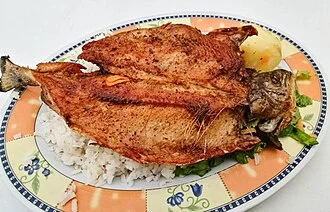
Fried Trout
Trucha Frita
TROO-cha free-tah
Fried trout served with golden potatoes and salad.
Open Fried Trout recipe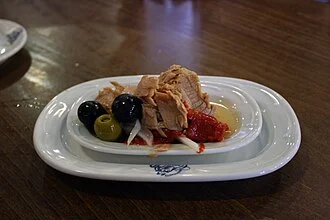
Main course
Fish & Seafood
Peruvian Marinated Fish Escabeche
Escabeche de Pescado
ehs-cah-BEH-cheh deh pehs-CAH-doh
Marinated fried fish served with onions and bell peppers.
Open Peruvian Marinated Fish Escabeche recipe🥩
Main course
Meat
Carapulcra Huacachina
kar-a-pool-kra wah-kah-chee-na
· Pork and potato stew
A traditional stew made with dried potatoes and pork.
Open Carapulcra Huacachina recipe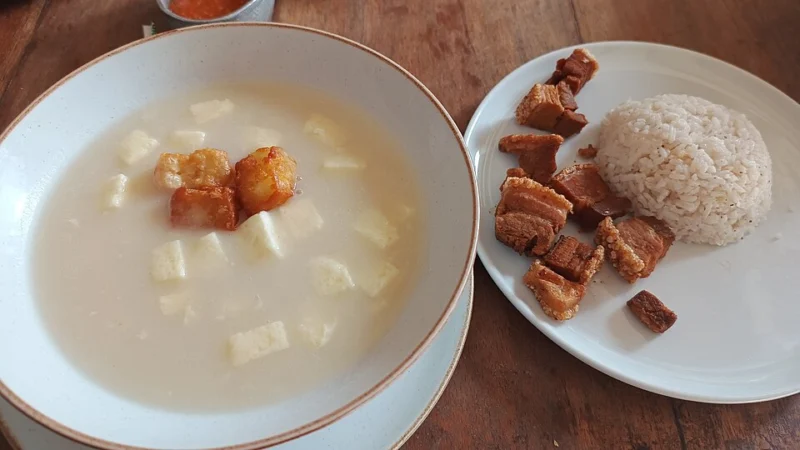
Main course
Meat
Pork and Corn Stew
Chicharrón con Mote
chee-chah-rohn kohn moh-teh
Crispy fried pork served with boiled large corn kernels.
Open Pork and Corn Stew recipe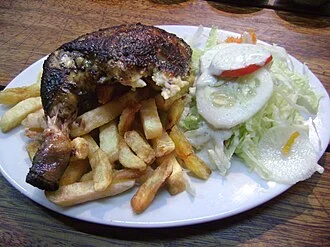
Main course
Meat
Grilled Chicken
Pollo a la Brasa
POY-yo ah la BRAH-sa
Peruvian spit-roasted chicken seasoned with herbs and spices.
Open Grilled Chicken recipe
Starter
Vegetarian
Papa a la Huancaína
PAH-pah ah lah whahn-kah-EE-nah
Boiled potatoes with a spicy, creamy cheese sauce
Open Papa a la Huancaína recipe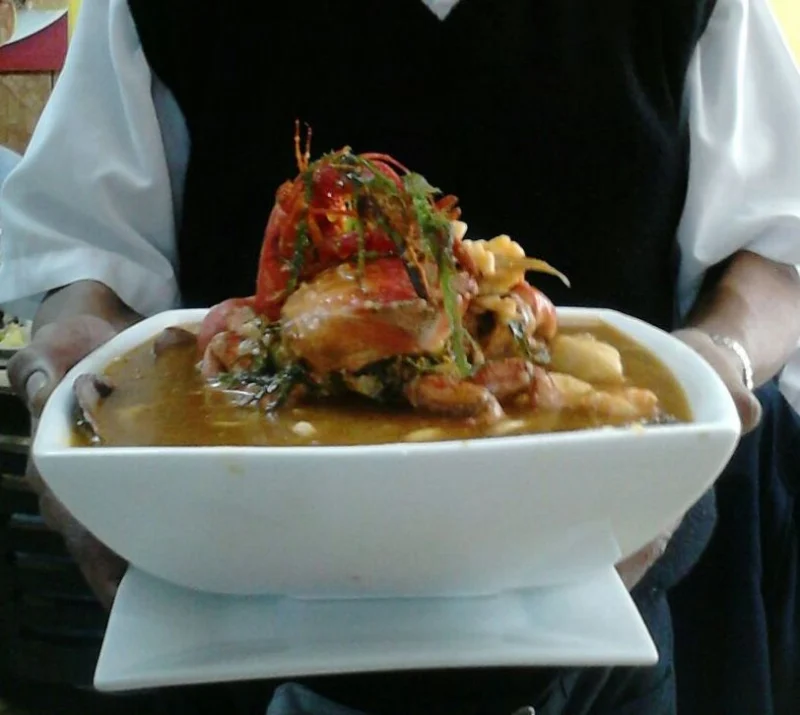
Soup
Fish & Seafood
Traditional Peruvian Seafood Stew
Parihuela
pah-ree-HWEH-lah
A hearty seafood stew with fish, shellfish, and a rich tomato broth.
Open Traditional Peruvian Seafood Stew recipe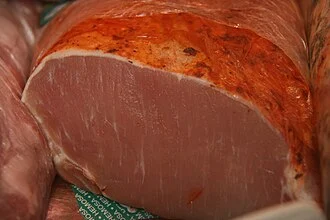
Main course
Meat
Peruvian Pot Roast
Adobo
ah-DO-boh
Peruvian pork stew marinated with vinegar and spices.
Open Peruvian Pot Roast recipe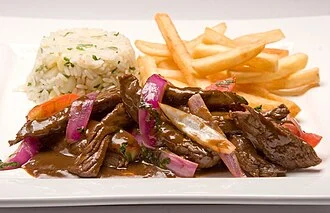
Main course
Meat
Lomo Saltado
LOH-moh sahl-TAH-doh
Stir-fried beef with onions, tomatoes, and potatoes
Open Lomo Saltado recipe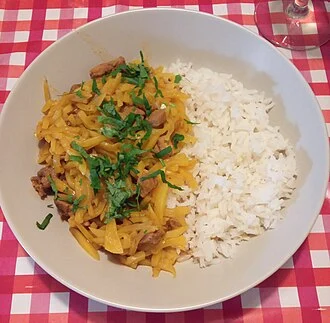
Main course
Meat
Beef and Grain Stew
Olluquito con Charqui
oy-yoo-KEE-toe kon CHAR-kee
Traditional stew made with olluco tubers and dried llama meat.
Open Beef and Grain Stew recipe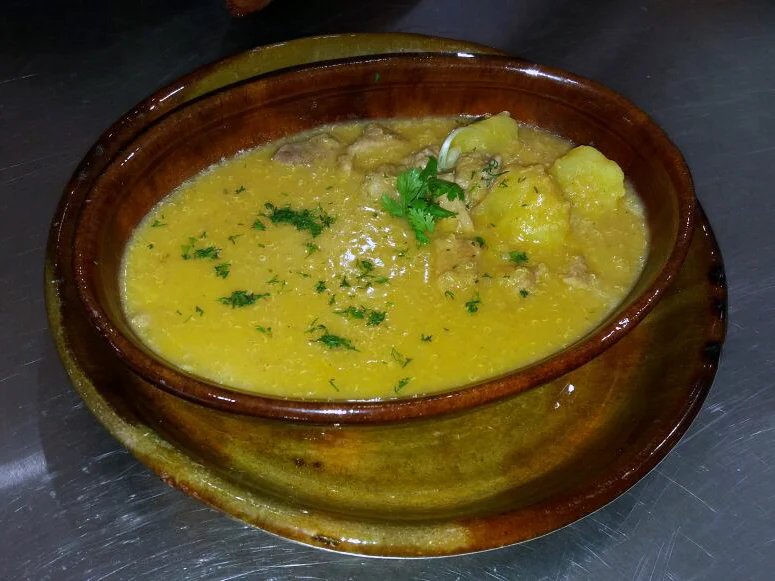
Soup
Vegetarian
Quinoa Soup
Sopa de Quinua
soh-pah de kee-noo-ah
A warming soup featuring quinoa and various Andean vegetables.
Open Quinoa Soup recipe🥩
Starter
Meat
Causa Huacachina
kau-sa wah-kah-chee-na
· Layered potato and chicken dish
A signature layered dish featuring potatoes and fillings.
Open Causa Huacachina recipe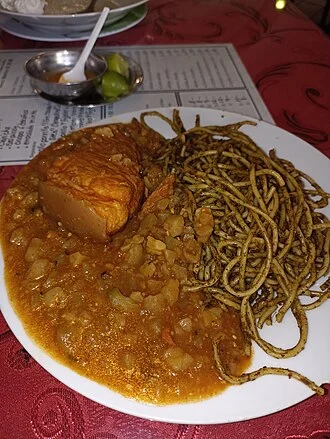
Main course
Meat
Spicy Potato Stew
Carapulcra
Kah-rah-POOL-krah
A spicy and hearty potato stew flavored with Andean spices
Open Spicy Potato Stew recipe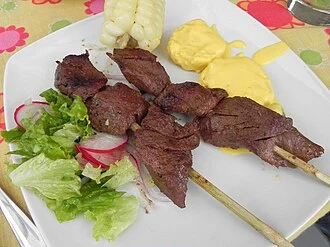
Snack
Meat
Anticuchos
ahn-tee-KOO-chos
Grilled beef heart skewers seasoned with spices
Open Anticuchos recipe🥩
Snack
Meat
Tamal Huacachino
tah-mal wah-kah-chee-no
· Cornmeal with meats and spices
A savory tamale flavored with local spices.
Open Tamal Huacachino recipe