Explore Guides
EUROPE / ITALY
Triplandio Venice guide covers 13 travel guides across 16 areas, complete with hotel picks. Explore 51 self-guided walking tours in Venice with 120 POI, spanning 99.6 km in total. Get inspired by 61 local dishes, complete with recipes and our unique Food Flavour DNA graph.
Venice
City & Country Data Venice (Italy)

Key travel data for Venice — local prices, safety, healthcare, local currency and essentials, curated by Triplandio.
🌍 Italy
Safety
75
Health
85
Lifestyle
69
Infra
74
Rank
#33
Score
58
Tourists
38.4M/y
GDP/cap
$43.3k
Life Exp
84.0 yrs
Population
58.9M
Currency
EUR €
Language
Italian
Payments
Cards OK
Emergency
112
💰 Prices in Venice
Coffee
$2.10
Beer
$1.60
Lunch
$22.00
Groceries
$55.00/w
Taxi/km
$2.00
Transit
$1.50
Fuel
$1.74/l
Internet
$29.50/m
Salary
$2,671/m
Travel tipsVenice (Italy)

Quick tips
- Check the Venice access fee — Caution
On set days, mostly in spring and summer, day-trippers to Venice's historic centre must pay an access fee online and carry the QR code. Overnight guests don't pay but must register for an exemption.
- Don't paddle in fountains or sit on monuments — Caution
Many Italian cities, including Rome, Florence and Venice, fine visitors for bathing in public fountains, sitting on monument steps or eating next to major churches and historic buildings.
- Buying from street sellers is illegal — Caution
In Italy it is an offence to buy from unlicensed street traders, such as sellers of fake designer bags laid out on blankets. Local police can stop and fine the buyer, not just the seller.
- Validate your ticket before you travel — Caution
Paper bus, tram and regional train tickets in Italy must be stamped in the machine at the station or on board. Inspectors fine passengers on the spot for an unvalidated ticket, even if you bought it.
- Taking sand or shells is against the law — Caution
Removing sand, shells or pebbles from Italian beaches is illegal and can mean a large fine, as can picking protected flowers and plants in the mountains. Leave them where they are.
- Pickpockets work the big sights — Caution
Bag-snatching and pickpocketing are common at Italy's main tourist sites, stations, metros and busy buses. Keep bags zipped and in front of you, and don't carry all your cards and cash together.
- Do
- Say buongiorno when entering shops
- Stamp paper tickets before boarding
- Cover shoulders and knees in churches
- Keep cash for the hotel tourist tax
- Stand at the bar for cheaper coffee
- Don’t
- Wade or bathe in public fountains
- Buy from unlicensed street sellers
- Sit or eat on monument steps
- Take sand or shells from beaches
- Drive into a restricted town centre
Critical
Prison or heavy penalty possible
Laws & fines
- Drug laws are strict — Critical
Illegal drugs, including cannabis, carry severe penalties in Italy: expect a long jail sentence and heavy fines for possessing, using or smuggling them, also when only transiting through an airport.
Entry & visa
- Overstaying brings a ban — Critical
Staying longer than your 90-day visa-free limit can get you banned from all Schengen countries for up to 3 years.
Beaches & adventure
- Off-piste needs avalanche gear — Critical
Skiers going off-piste in Italy must by law carry an avalanche transceiver, a snow probe and a shovel. Go with a qualified guide and check the avalanche forecast first.
Caution
Fines, losses or injury possible
Scams & safety
- Check prices before you sit down — Caution
Some restaurants and cafés near St Mark's Square and the Rialto serve tourists huge bills. Look for a menu with prices, check the cover charge, and ask the price of fish, which is often listed per 100 grams.
- Pickpockets on water buses — Caution
Crowded vaporetti (water buses) on the Grand Canal and the busy Rialto Bridge are favourite spots for pickpockets. Keep your bag closed and in front of you when boarding.
- Swimming in the canals is banned — Caution
Swimming in Venice's canals is illegal and fined, and the water is dirty and busy with boats. Head to the Lido beaches if you want a swim.
- Don't feed the pigeons — Caution
Feeding pigeons in St Mark's Square is banned in Venice and can get you fined, and seed sellers no longer operate legally there.
Laws & fines
- Public urination can cost thousands — Caution
Urinating in a public place in Italy can bring a fine of up to 10,000 euros. Use the toilets in cafés, stations or museums instead.
- Capri bans disposable plastic — Caution
On the island of Capri you must not use or bring any disposable plastic items, such as bags, cutlery, cups, straws or food packaging. The fine is up to 500 euros.
- Don't write on or damage monuments — Caution
Scratching names into walls, adding graffiti or otherwise defacing historic monuments is an offence in Italy and is actively prosecuted, especially at famous sites.
- Use the pedestrian crossing — Caution
In Italy you can be fined for crossing the road within 100 metres of a pedestrian crossing without using it. Take care even on green: drivers don't always stop, and cars turning right may cross your path.
Entry & visa
- No meat or dairy from outside the EU — Caution
You can't bring meat, milk or products containing them into Italy from outside the EU, apart from exceptions such as baby milk. Declare cash of 10,000 euros or more on arrival.
Beaches & adventure
- Red flag means stay out — Caution
Many Italian beaches use flags: a red flag means you must not enter the water. Don't dive into unknown water, as hidden rocks and shallows cause serious injuries.
- Lakes are colder than they look — Caution
Italy's mountain and northern lakes can cause cold water shock even in summer, which can overwhelm strong swimmers. Test the temperature and get in slowly.
- Ski helmets are compulsory — Caution
Since 1 November 2025, everyone skiing, snowboarding or sledging at an Italian ski resort must wear a certified helmet, whatever their age. The fine is up to 200 euros plus a ski pass suspension of up to 3 days.
- Summer wildfires spread fast — Caution
Wildfires are a risk across Italy through the long summer and can move unpredictably. Take care in woodland, check local alerts before travelling to affected areas, and report any fire on 112.
Good to know
Rules and useful facts
Scams & safety
- Travel advisory: Level 2 of 4 — Good to know
Exercise Increased Caution — the U.S. State Department's rating for Italy.
Getting around
- Treviso airport (TSF) — Good to know
Some budget airlines use Treviso airport, about an hour's bus ride from Venice's Piazzale Roma. Check the bus times against late arrivals.
Laws & fines
- Always carry photo ID — Good to know
Italian police can stop you at any time for an identity check. Carry your passport or other photo ID with you; if you are stopped while driving, police normally ask for the full passport.
- Hotels must register your passport — Good to know
Italian hotels are legally required to record your passport details for the police. Wait while they do it at check-in rather than leaving your passport to collect later.
- Avoid demonstrations — Good to know
Protests and strikes can start with little warning in Italian cities and can disrupt transport. Keep away from marches and political gatherings, and check for announced transport strikes (sciopero) before travel days.
Tipping & money
- Keep cash for the tourist tax — Good to know
Many Italian cities charge a nightly tourist tax that is usually not included in your booking. Hotels often ask for it in cash at check-in or check-out; ask for a receipt.
Entry & visa
- Schengen rules: 90 days in 180 — Good to know
Italy is in the Schengen area. Visitors from visa-free countries, including the UK, USA, Canada and Australia, can stay up to 90 days in any 180-day period, counting all Schengen countries together.
- Check your passport dates — Good to know
For UK passports, the Schengen area requires an issue date less than 10 years before you arrive and an expiry date at least 3 months after you leave. Other nationalities should check the rule for their passport.
- Fingerprints at the border — Good to know
The EU's Entry/Exit System (EES) now records fingerprints and a photo of non-EU visitors at the Schengen border instead of passport stamps. It is free but can mean longer queues, so allow extra time.
- Be ready to show your plans — Good to know
Italian border officers may ask for a hotel booking, travel insurance, a return or onward ticket and proof that you have enough money for your stay.
Health
- Emergency numbers are 112 and 118 — Good to know
In Italy, dial 118 for an ambulance or 112 for any emergency service. Contact your insurer quickly if you are sent to a hospital.
- Tap water is safe to drink — Good to know
Tap water across Italy is generally safe, and many towns have free public drinking fountains. Don't drink from taps or fountains marked “acqua non potabile” (not drinking water).
- Bring your health insurance card — Good to know
EU visitors need a European Health Insurance Card (EHIC) and UK visitors a Global Health Insurance Card (GHIC) for state healthcare in Italy. Neither replaces travel insurance, so take out a policy as well.
- Mosquitoes and ticks — Good to know
Mosquitoes in Italy can spread dengue and West Nile virus, and ticks live in woods and long grass. Use repellent in summer and check your skin after hikes.
- Summer heatwaves — Good to know
Italian summers bring frequent heatwaves, especially in cities and the south. Sightsee early and late, drink plenty of water and rest in the shade at midday.
Beaches & adventure
- Ski insurance is required by law — Good to know
Third-party liability insurance is compulsory on Italian ski slopes; you can buy it with your ski pass. Skiing under the influence of alcohol or drugs is illegal.
- Italy has active volcanoes — Good to know
Mount Etna in Sicily and the Phlegraean Fields (Campi Flegrei) near Naples are active, and tremors are common. Follow local instructions on closed areas, and check flights at Catania airport during eruptions.
- Hike prepared in the Alps — Good to know
In the Alps and Dolomites, weather changes fast and altitude sickness is possible. Check the forecast and insurance for helicopter rescue. Trentino has brown bears, so read the local bear advice. Call 112 if lost.
Local tips
Local know-how
Scams & safety
- Agree the gondola fare first — Local tip
Gondola rides in Venice follow official fares set by the city, higher in the evening. Confirm the price and length of the ride with the gondolier before you get in.
Getting around
- Marco Polo (VCE) by bus — Local tip
Buses from Venice Marco Polo airport reach Piazzale Roma, the car and bus terminal at the edge of the historic centre, in about 20–25 minutes. From there you walk or take a water bus.
- Marco Polo (VCE) by boat — Local tip
The Alilaguna water bus goes from the airport to stops including Fondamente Nove, Rialto and San Marco in about an hour or more. Private water taxis are quicker but far more expensive.
- Get off at Santa Lucia, not Mestre — Local tip
Venezia Santa Lucia station is on the Grand Canal in the historic centre; Venezia Mestre is on the mainland. Stay on the train until Santa Lucia if your hotel is in old Venice.
- Buy a water bus travel card — Local tip
Single vaporetto (water bus) tickets in Venice are expensive and valid for a limited time. A travel card for one or more days is better value if you'll take more than two or three rides.
Customs
- Cover shoulders and knees in churches — Local tip
Churches across Italy, including St Peter's Basilica in Vatican City, expect covered shoulders and knees and may refuse entry in shorts or sleeveless tops. Carry a light scarf to cover up.
- Greet people when you walk in — Local tip
Say “buongiorno” (good morning) or “buonasera” (good evening) when entering a shop, bar or small restaurant in Italy, and “arrivederci” (goodbye) when leaving. Walking in silently comes across as rude.
- Italians eat late — Local tip
In Italy lunch usually runs from about 12:30 to 14:30 and dinner starts from about 19:30, later in the south. Many restaurants close their kitchens in between, so plan snacks for the afternoon.
- Afternoon closing in small towns — Local tip
Outside the big cities, many Italian shops, pharmacies and churches close for a long lunch break in the early afternoon and reopen in the late afternoon. Check opening times before you set off.
- Don't handle fruit at market stalls — Local tip
At Italian markets and greengrocers the seller usually picks the produce for you. Point to what you want instead of touching it, unless gloves or baskets are provided for self-service.
Tipping & money
- The cover charge is normal — Local tip
Many Italian restaurants add a per-person cover charge (coperto) for bread and table service. It is legal as long as it is shown on the menu, and it is not a tip.
- Tipping is small and optional — Local tip
Tipping is not expected in Italy. If no service charge (servizio) is on the bill, rounding up or leaving a few euros for good service is plenty.
- Coffee at the counter is cheaper — Local tip
In Italian bars, a coffee drunk standing at the counter (al banco) costs less than the same coffee served at a table, where table service is added.
- Use bank cash machines and pay in euros — Local tip
Withdraw cash from bank ATMs (called Bancomat) rather than independent machines, which often charge higher fees. When a machine or card terminal offers to charge in your home currency, choose euros.
- Prices are fixed in shops — Local tip
Bargaining is not usual in Italian shops or restaurants. At flea markets and antique fairs you can politely ask for a discount, especially when buying several items.
Health
- Pharmacies have a green cross — Local tip
Italian pharmacies, marked by a green cross, sell most everyday medicines over the counter. Foreign prescriptions are not accepted, but a pharmacist may sell you an equivalent or send you to a local doctor.
Say it locally
Use “buongiorno” or “buonasera” with strangers and staff; “ciao” is for friends.
Through the year
Festival or season Public holiday (exact date)
- Truffle and harvest season
Oct–Nov 2026 · Autumn brings grape and olive harvests and the white truffle fair in Alba, Piedmont, with food festivals across the countryside.
- Christmas markets
Nov–Dec 2026 · The best-known Christmas markets are in the north, in South Tyrol and Trentino, around Bolzano, Merano and Trento.
- High water (acqua alta)
Oct 2026–Jan 2027 · Unusually high tides can flood low areas such as St Mark's Square; sirens warn of them and flood barriers now hold back most.
- All Saints' Day
Mon 1 Nov 2027 · Public holiday
- Ski season
Dec 2026–Apr 2027 · Resorts in the Alps and Dolomites are open roughly December to April; school holidays and February are the busiest weeks.
- Feast of the Immaculate Conception
Tue 8 Dec 2026 · Public holiday
- Christmas Day
Fri 25 Dec 2026 · Public holiday
- St. Stephen's Day
Sat 26 Dec 2026 · Public holiday
- New Year's Day
Fri 1 Jan 2027 · Public holiday
- Epiphany
Wed 6 Jan 2027 · Public holiday
- Carnival
Feb–Mar 2027 · Venice Carnival fills the city with masks and crowds in the two weeks before Lent; hotel prices peak.
- Easter and Holy Week
Mar–Apr 2027 · Rome and the Vatican are packed around Easter, and towns in Sicily and the south hold religious processions. Book rooms early.
- Easter Sunday
Sun 28 Mar 2027 · Public holiday
- Easter Monday
Mon 29 Mar 2027 · Public holiday
- Liberation Day
Sun 25 Apr 2027 · Public holiday
- Labor Day
Sat 1 May 2027 · Public holiday
- Peak season and heat
Jun–Aug 2027 · Summer brings the biggest crowds, the highest prices and frequent heatwaves, especially in the cities and the south.
- Republic Day
Wed 2 Jun 2027 · Public holiday
- Palio di Siena
Jul–Aug 2027 · Siena's bareback horse race around Piazza del Campo is run on 2 July and 16 August; the town fills up for days around it.
- Festa del Redentore
Jul 2027 · On the third weekend of July, boats gather in the lagoon for a huge Saturday-night fireworks display.
- August holidays
Aug 2027 · Around mid-August many family-run shops and restaurants in Italian cities close for a week or two, while beaches and resorts are at their busiest.
- Assumption of Mary
Sun 15 Aug 2027 · Public holiday
- Feast of St Francis of Assisi
Mon 4 Oct 2027 · Public holiday
Sources: GOV.UK travel advice · U.S. State Dept · Google public holidays
Best time to visit Venice (Italy)
Now (November) avg high: 13°C, mostly dry, moderate crowds. Best months to walk: Nov & Feb.
Live Temp
…
~Day / Night Temp
13°C / 5°C
Sunrise / Sunset
8:00 / 17:49
Local time
12:22
Sea Temp
16°C
Best Months  Nov & Feb
J
Jan
F
Feb
M
Mar
A
Apr
M
May
J
Jun
J
Jul
A
Aug
S
Sep
O
Oct
N
Nov
 D
Dec
M
Mar
A
Apr
M
May
J
Jun
J
Jul
A
Aug
S
Sep
O
Oct
N
Nov
D
Dec
Check Venice hotels
Temperature
Average daytime high, month by month. Zero line marks freezing point.
Crowds
How busy it gets — traveller interest by month.
Sea temperature
Sea warmth for swimming, by month.
Rainfall
Rainy days to expect each month.
Sunshine
Hours of sun per day, by month.
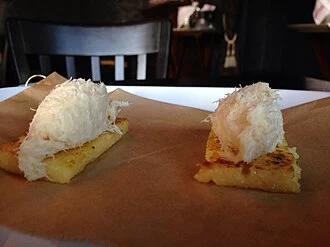
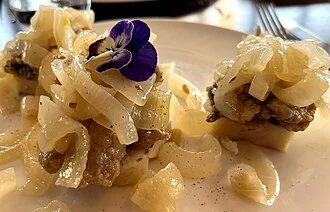
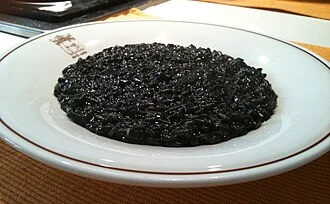
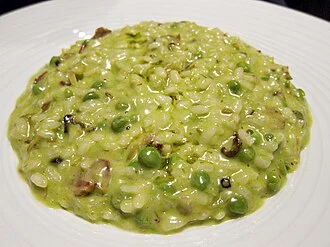
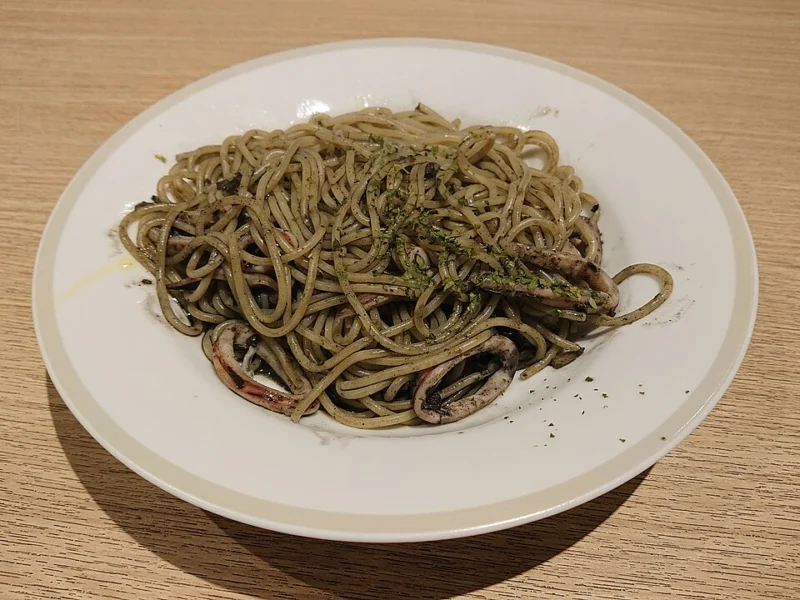
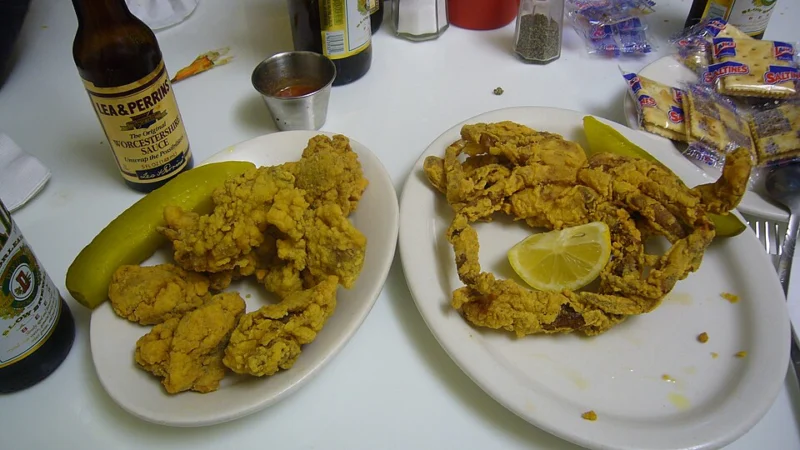
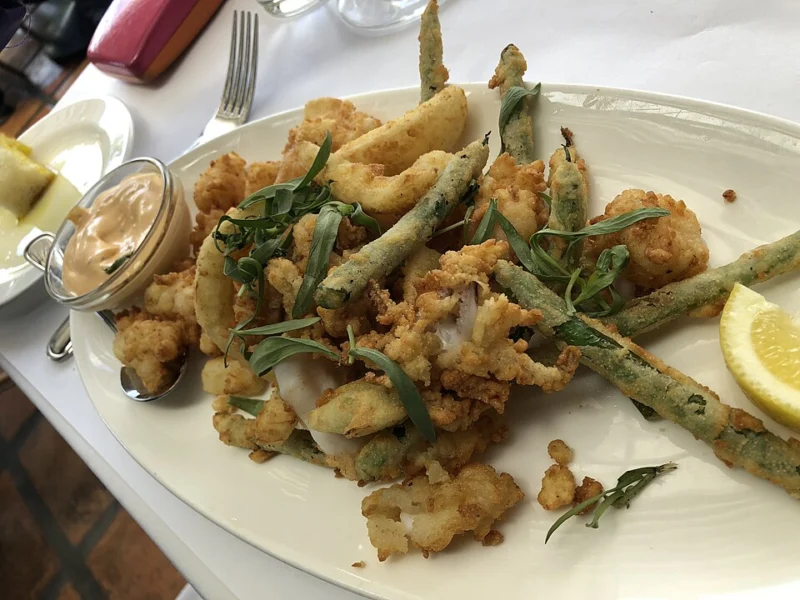
Creamy whipped salt cod served on grilled bread. Creamy polenta served with tiny, crispy lagoon shrimps. Venetian sweet and sour sardines with onions and raisins. Thick spaghetti-like pasta served with an anchovy-onion sauce. Risotto cooked with squid ink, providing a distinct black color and rich flavor A creamy risotto cooked with fresh peas and pancetta. Tender octopus served with potatoes, seasoned with lemon. Spaghetti colored with cuttlefish ink, served with seafood. Deep-fried soft-shell crabs, a Venetian delicacy. A medley of mixed fried seafood including fish, shrimp, and calamari.
Traditional Local Food
Venice (Italy)
Starter
Fish & Seafood
Baccala' Mantecato
bahk-KAH-lah man-teh-KAH-toh
🐟
Main course
Fish & Seafood
Polenta and Schie
Polenta e Schie
poh-LEHN-tah eh SHK-EH
Starter
Fish & Seafood
Sardine in Saor
Sarde in Saor
SAHR-deh een SAH-or
🐟
Main course
Fish & Seafood
Venetian Bigoli in Salsa
Bigoli in Salsa
BEE-go-lee een SAHL-sah
Main course
Fish & Seafood
Venetian Risotto
Risotto al Nero di Seppia
ree-SOT-toh ahl NEH-ro dee SEH-pee-ah
Main course
Meat
Venetian Risotto with Peas
Risi e Bisi
REE-zee eh BEE-see
🐟
Main course
Fish & Seafood
Venetian-Style Octopus
Polpo alla Veneziana
POHL-poh ah-lah veh-neh-tzee-AH-nah
 Main course
Fish & Seafood
Venetian-Style Pasta with Cuttlefish Ink
Spaghetti al Nero di Seppia
spah-GEH-tee ahl NEH-ro dee SEHP-pyah
 Main course
Fish & Seafood
Venetian-Style Soft-Shell Crabs
Moeche Fritte
MOH-eh-keh FREE-tteh
 Main course
Fish & Seafood
Venetian-style Fried Fish
Fritto Misto alla Veneziana
FREE-toh MEES-toh ah-lah veh-neh-tsyah-nah