Explore Guides
EUROPE / GREECE
Triplandio Mykonos guide covers 9 travel guides across 17 areas, complete with hotel picks. Explore 28 self-guided walking tours in Mykonos with 44 POI, spanning 56.7 km in total. Get inspired by 29 local dishes, complete with recipes and our unique Food Flavour DNA graph.
Mykonos
City & Country Data Mykonos (Greece)

Key travel data for Mykonos — local prices, safety, healthcare, local currency and essentials, curated by Triplandio.
🌍 Greece
Safety
66
Health
62
Lifestyle
77
Infra
59
Rank
#45
Score
50
Tourists
7.4M/y
GDP/cap
$26.9k
Life Exp
81.8 yrs
Population
10.4M
Currency
EUR €
Language
Greek
Payments
Cards OK
Emergency
112
💰 Prices in Mykonos
Coffee
$5.25
Beer
$7.00
Lunch
$18.19
Groceries
$272.46/w
Taxi/km
$1.00
Transit
$1.80
Fuel
$1.80/l
Internet
$50.00/m
Salary
$1,500/m
Travel tipsMykonos (Greece)

Quick tips
- Drunken or indecent behaviour means arrest — Critical
Greek police arrest people for rowdy or indecent behaviour, especially when heavy drinking is involved, and some fancy-dress costumes count as indecent. Courts can impose heavy fines or prison.
- Never photograph military sites — Critical
Taking photos or videos of military bases, vehicles or buildings in Greece is illegal and leads to arrest and prosecution. Border areas are also sensitive, so keep cameras and drones away.
- Wildfire risk from April to October — Critical
Greece has a high wildfire risk from April to October, and starting a fire is a crime even by accident. Never light barbecues, leave glass or litter, or drop cigarettes, and turn on emergency alerts on your phone.
- Drug penalties are severe — Critical
Possessing, using or smuggling any illegal drug in Greece, including cannabis, brings long prison sentences and heavy fines. Airport scanners also check the bags of transit passengers.
- Check prices before you order — Caution
Some Mykonos waterfront restaurants and beach clubs have charged tourists hundreds of euros for seafood or drinks. Ask for the menu with prices, confirm the price of fish per kilo, and get an itemised bill.
- Carry your actual passport — Good to know
Greek police can ask foreigners for identification at any time and may not accept a photocopy. Keep your passport on you, and a copy of the photo page somewhere separate.
- Do
- Carry your passport
- Ask for an itemised bill
- Cover shoulders in churches
- Put toilet paper in the bin
- Obey red beach flags
- Don’t
- Photograph military sites
- Light fires or barbecues outdoors
- Dive into water you don't know
- Rent a quad without insurance
- Get drunk and rowdy in public
Critical
Prison or heavy penalty possible
Scams & safety
- Watch your drink at parties — Critical
Drink spiking and thefts are reported at crowded beach parties and clubs on Mykonos. Keep your drink in your hand and stay with friends when you leave.
Laws & fines
- Pepper spray and large knives are weapons — Critical
Pepper spray and knuckledusters count as weapons in Greece, and so does a knife with a blade of 10 cm or more. Leave them at home to avoid arrest.
- Low drink-driving limit — Critical
Greece's drink-driving limit is low, and going over it means a fine and possible prison. The safest choice is not to drink at all if you are driving.
Entry & visa
- Overstaying can mean a ban — Critical
Staying longer than the 90-day Schengen limit can lead to a ban from entering all Schengen countries for up to 3 years.
Beaches & adventure
- Don't dive into unknown water — Critical
Hidden rocks and shallow water off Greek beaches, harbours and cliffs cause serious injuries and deaths every year. Check the depth before you jump or dive.
- Quad bikes cause serious crashes — Critical
Quad bike (ATV) crashes kill and injure tourists on Greek islands every year. Many insurers exclude quad biking, and rental cover is usually third-party only, so you may pay for any damage.
- Mopeds need a motorcycle licence — Critical
To hire a moped in Greece your licence must include the right motorbike category (A1, light motorcycle, or higher); provisional licences are not valid. Riders and passengers must wear helmets, or police fine you and take your licence.
Caution
Fines, losses or injury possible
Scams & safety
- Sunbed prices at beach clubs — Caution
Front-row sunbeds at popular Mykonos beaches can cost far more than you expect, sometimes with a minimum spend. Ask the price before you sit down.
- Photograph rental quads before riding — Caution
Mykonos rental shops sometimes charge for scratches that were already there. Photograph the quad or scooter before you ride, and never hand over your passport as a deposit.
- Narrow, unlit roads at night — Caution
Mykonos roads are narrow, unlit and busy with quads and drunk drivers late at night. Take a bus or a pre-booked transfer after a night out.
Laws & fines
- Insist on an itemised bill — Caution
Greek law requires restaurants to give you an itemised bill, and every shop or service should give you a receipt. If you don't get one, ask for it before paying.
- No alcohol for under-18s — Caution
Selling or giving alcohol to anyone under 18 is illegal in Greece, and bars and nightclubs cannot admit under-18s even with a parent. Expect age checks; parents can face charges if a child is harmed by drinking.
- Stay away from protests — Caution
Demonstrations in Greece, especially around Syntagma Square in Athens, sometimes turn violent and police use tear gas. Move away from any crowd that gathers, particularly on 1 May, 17 November and 6 December.
- No wild camping or motorhome parking — Caution
Camping in tents and parking camper vans or motorhomes on beaches, seashores, archaeological sites and other public areas is banned in Greece. Use licensed campsites to avoid fines.
Tipping & money
- Fish is priced by the kilo — Caution
Fresh fish and seafood in Greek tavernas is often priced per kilo, not per portion. Ask to see the fish weighed and agree the price before it is cooked.
- Pay in euros at cash machines — Caution
Independent cash machines in tourist areas often charge high fees and offer to convert to your home currency at a poor rate. Use bank ATMs and always choose to be charged in euros.
Entry & visa
- No meat or dairy from outside the EU — Caution
You cannot bring meat, milk or products containing them into Greece from outside the EU, apart from baby milk, baby food and special medical foods.
- Declare cash of €10,000 or more — Caution
Declare cash or travellers' cheques worth 10,000 euros or more at Greek customs when you arrive, and keep a certified copy of the form, or the money can be seized when you leave.
Health
- Summer heat is dangerous — Caution
Heatwaves above 40°C hit Greece most summers, and ancient sites have little shade. Visit early or late in the day, drink plenty of water and wear a hat.
Beaches & adventure
- Red flag means stay out — Caution
Many organised Greek beaches use a flag system, and a red flag means you must not enter the water. On beaches without lifeguards, ask locals about currents first.
- Book water sports at licensed centres — Caution
Choose a licensed water sports centre in Greece, complete the paperwork, ask for a safety briefing and make sure you know how to call for help before you start.
- Driving in Greece — Caution
Traffic in Greece drives on the right and is often fast and chaotic, with speed limits widely ignored. Visitors from the UK can drive on their licence; other nationalities should check whether they need an International Driving Permit (IDP). Hire firms may also want one, plus a year's experience.
Good to know
Rules and useful facts
Scams & safety
- Travel advisory: Level 1 of 4 — Good to know
Exercise Normal Precautions — the U.S. State Department's rating for Greece.
Getting around
- Taxis are scarce in summer — Good to know
Mykonos has few licensed taxis for the number of summer visitors. Book transfers in advance and expect long waits after midnight.
Laws & fines
- Your insurance may not cover drunk arrests — Good to know
If you miss a flight because you were arrested after drinking, your travel insurance may refuse to pay for the new ticket or other costs.
- Strikes can stop transport — Good to know
Greek transport workers strike regularly, sometimes at short notice, halting buses, trains, ferries or flights. Check local news before travel days and keep a spare day before a flight home.
Entry & visa
- Schengen 90-day rule — Good to know
Greece is in the Schengen area of European countries without internal border checks. Visa-free visitors can stay up to 90 days in any 180 days, counting time in all Schengen countries.
- Check your passport dates — Good to know
Visa-free visitors to Greece need a passport issued less than 10 years before arrival and valid for at least 3 months after the day you plan to leave the Schengen area.
- New Entry/Exit System checks — Good to know
The EU Entry/Exit System (EES) now records non-EU visitors' fingerprints and photo at the border instead of a passport stamp. Registration is free, but allow extra time at airports.
Health
- Emergency numbers 112 and 166 — Good to know
Call 112 for any emergency in Greece or 166 for an ambulance. Contact your insurer quickly if you are sent to a clinic, because some island clinics are private and expensive.
- Healthcare on the islands is limited — Good to know
Hospitals on the Greek mainland are generally good, but island facilities are basic and some islands are short of ambulances. Serious cases may be flown to Athens, so get travel insurance.
- EHIC and GHIC cover state care only — Good to know
Europeans with a European Health Insurance Card (EHIC) and UK visitors with a Global Health Insurance Card (GHIC) get necessary care in Greek public hospitals, but not private clinics or flights home.
- Bring your own prescription medicine — Good to know
Greek pharmacies follow strict rules on antibiotics and other prescription drugs. Bring enough medicine in its original labelled box, with a doctor's letter stating the quantity.
- Check tap water on small islands — Good to know
Tap water in Athens and Thessaloniki is safe to drink. On many smaller islands it comes from desalination plants or tankers, so ask your host or buy bottled water.
Local tips
Local know-how
Getting around
- Mykonos Airport (JMK) is close to town — Local tip
Mykonos Airport (JMK) is about 4 km from Mykonos Town. Pre-book a transfer in summer, because the taxi queue can be long.
- Ferries from Piraeus and Rafina — Local tip
Ferries reach Mykonos from the Athens ports of Piraeus and Rafina in roughly 2.5–5 hours depending on the boat. Most dock at the New Port, a few kilometres north of Mykonos Town.
- Local buses to the beaches — Local tip
Local buses run from Mykonos Town to the main beaches such as Paradise and Platis Gialos. Water taxis also link several south-coast beaches in summer.
Customs
- Cover up in churches and monasteries — Local tip
Greek Orthodox churches and monasteries, such as those at Meteora, expect covered shoulders and knees. Some monasteries ask women to wear a skirt and lend wraps at the door.
- Toilet paper goes in the bin — Local tip
Old, narrow pipes in much of Greece block easily. Put used toilet paper in the bin next to the toilet, not in the bowl, unless a sign says otherwise.
- Avoid the open-palm gesture — Local tip
Holding up your open palm with fingers spread toward someone (the moutza) is a serious insult in Greece. Wave with your palm facing yourself, or just nod.
- Meals start late and last long — Local tip
Greeks often eat dinner after 21:00 and linger for hours. Waiters won't bring the bill until you ask, which is considered polite rather than slow service.
- Nodding can mean no — Local tip
A quick upward tilt of the head, often with a click of the tongue, means no in Greece. Yes (nai) sounds like the English word no, so listen carefully.
Tipping & money
- Tipping in Greek restaurants — Local tip
Service is not usually added to the bill in Greece. Rounding up or leaving about 5–10% in cash on the table is appreciated for good service but never compulsory.
- Carry some cash on the islands — Local tip
Cards are accepted almost everywhere in Athens, but small island tavernas, kiosks and beach sunbed renters may prefer cash. Carry some euros as a backup.
Beaches & adventure
- Hike early in summer — Local tip
Trails such as the Samaria Gorge in Crete are hot and exposed in summer. Start early, carry plenty of water and tell someone your route.
Say it locally
Adding “parakaló” (please) to a request is polite, and Greeks appreciate any attempt at their language.
Through the year
Festival or season Public holiday (exact date)
- Island low season
Nov 2026–Mar 2027 · Many hotels and tavernas on small islands close, and ferry timetables are cut back.
- Christmas Day
Fri 25 Dec 2026 · Public holiday
- Synaxis of the Mother of God
Sat 26 Dec 2026 · Public holiday
- New Year Day
Fri 1 Jan 2027 · Public holiday
- Epiphany
Wed 6 Jan 2027 · Public holiday
- Carnival (Apokries)
Feb–Mar 2027 · Costume parades before Orthodox Lent, biggest in Patras; the date moves with Orthodox Easter.
- Orthodox Easter
Mar–May 2027 · Greece's biggest festival, usually on a different date from Western Easter; ferries and hotels book up and many shops close for several days.
- Clean Monday
Mon 15 Mar 2027 · Public holiday
- Annunciation of the Virgin Mary
Thu 25 Mar 2027 · Public holiday
- Greek Independence Day
Thu 25 Mar 2027 · Public holiday
- Wildfire season
Apr–Oct 2027 · High wildfire risk from April to October; roads and sites near fires can close at short notice.
- Orthodox Good Friday
Fri 30 Apr 2027 · Public holiday
- Labor Day
Sat 1 May 2027 · Public holiday
- Orthodox Easter Monday
Mon 3 May 2027 · Public holiday
- Orthodox Holy Spirit Monday
Mon 21 Jun 2027 · Public holiday
- Heatwaves and meltemi winds
Jul–Aug 2027 · Temperatures can pass 40°C, and the strong northerly meltemi wind in the Aegean can delay or cancel ferries.
- Mid-August peak
Aug 2027 · The 15 August holiday is the busiest time of year: Greek families travel, ferries sell out and island prices peak.
- Dormition of the Holy Virgin
Sun 15 Aug 2027 · Public holiday
- The Ochi day
Thu 28 Oct 2027 · Public holiday
Sources: GOV.UK travel advice · U.S. State Dept · Google public holidays
Best time to visit Mykonos (Greece)
Now (November) avg high: 20°C, mostly dry, moderate crowds. Best months to walk: Aug & Jun.
Live Temp
…
~Day / Night Temp
20°C / 16°C
Sunrise / Sunset
7:51 / 18:14
Local time
4:19
Sea Temp
20°C
Best Months  Aug & Jun
J
Jan
F
Feb
M
Mar
A
Apr
M
May
J
Jun
J
Jul
A
Aug
S
Sep
O
Oct
N
Nov
 D
Dec
J
Jul
A
Aug
S
Sep
O
Oct
N
Nov
D
Dec
Check Mykonos hotels
Temperature
Average daytime high, month by month. Zero line marks freezing point.
Crowds
How busy it gets — traveller interest by month.
Sea temperature
Sea warmth for swimming, by month.
Rainfall
Rainy days to expect each month.
Sunshine
Hours of sun per day, by month.
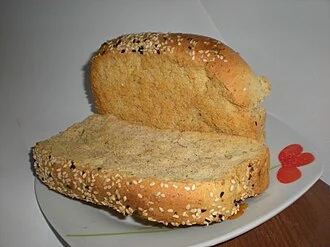
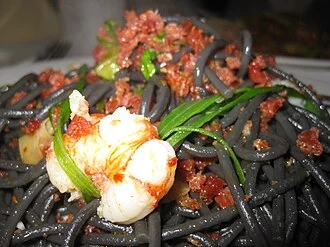
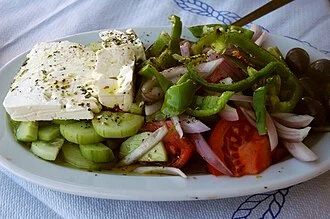
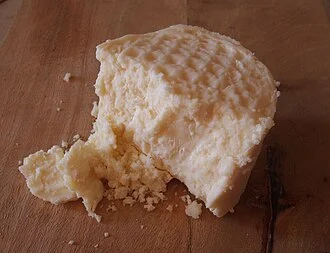
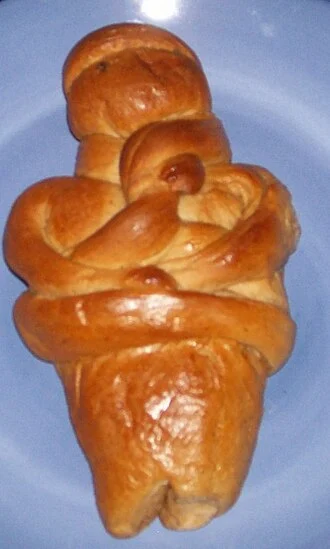
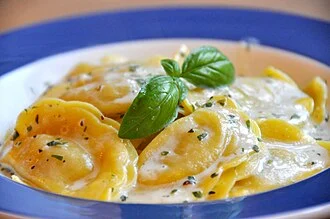
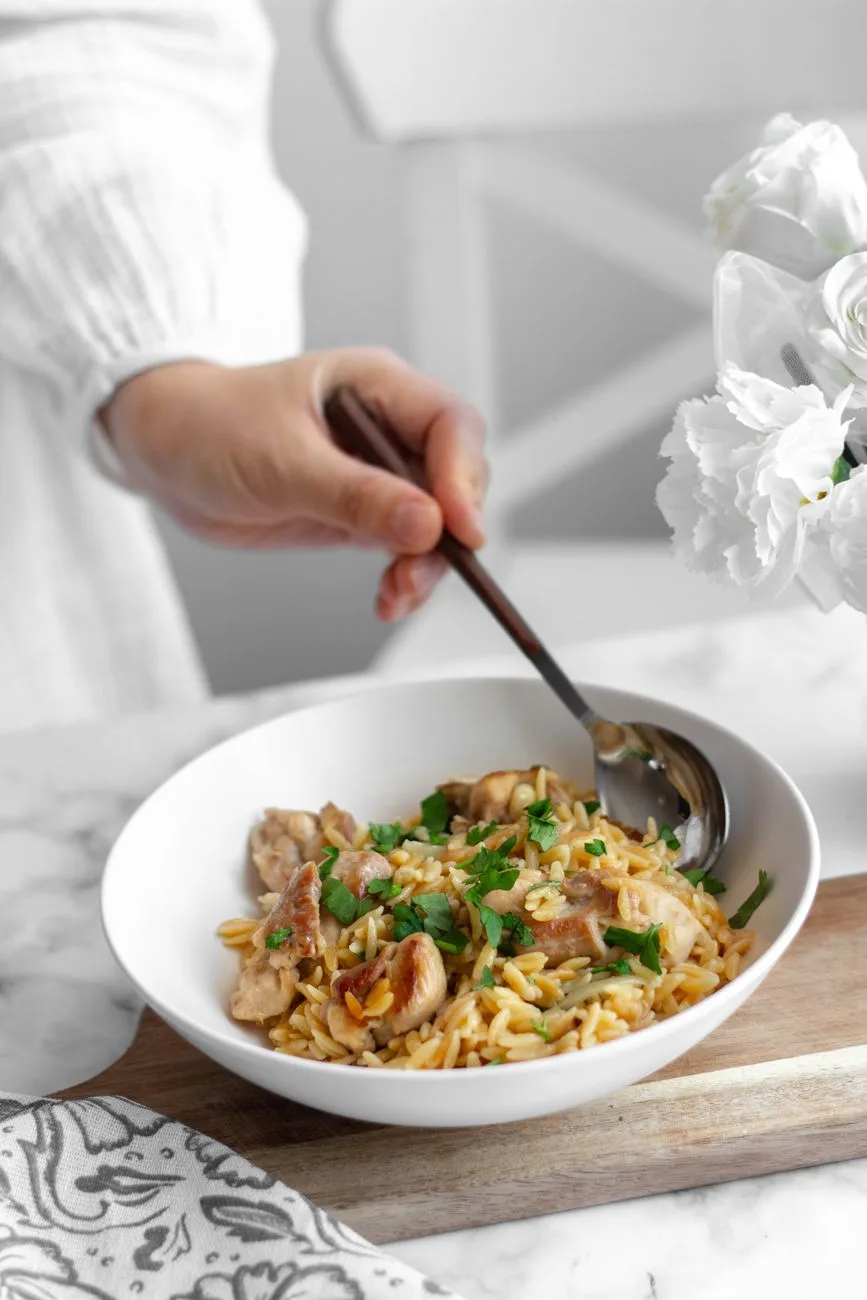
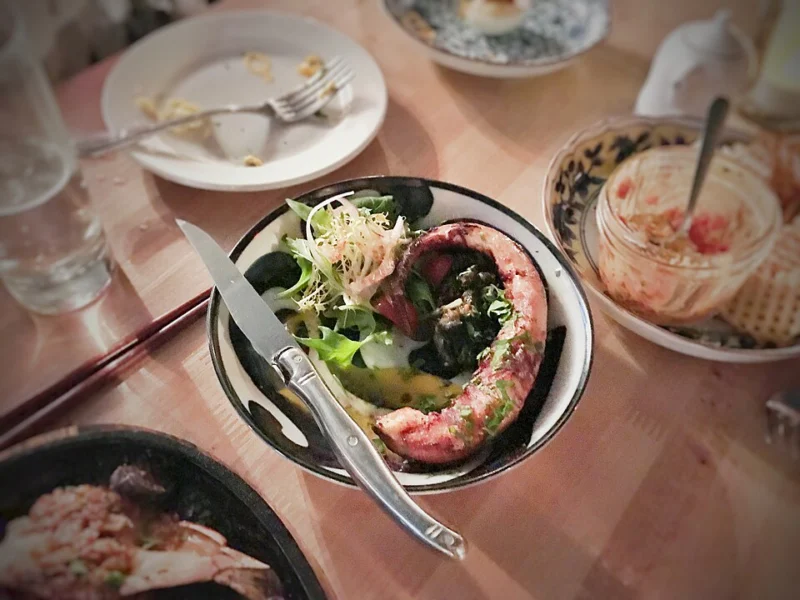
Traditional almond cookies served as a sweet treat. A comforting Greek dish of meat and orzo baked in a rich tomato sauce. Twice-baked barley bread that is hard and crunchy, used often in salads. Lightly battered and fried squid rings, served with lemon. A refreshing salad made with tomatoes, cucumbers, olives, and feta. Charcoal-grilled octopus served with lemon and olive oil. A traditional sweet pie made with fresh cheese and honey. Spicy, tangy fermented cheese with a soft texture. Savory pie made with caramelized onions and typically feta cheese. Sweet spiced bread traditionally made for the Lazarus Saturday Mykonian charcuterie made with seasoned cured pork loin A thin pie filled with fennel and herbs. Mykonian rusk topped with tomatoes and kopanisti cheese. A savory pie filled with sautéed onions and herbs enclosed in crispy filo pastry. Pastry filled with Mykonian cheese, fried then drizzled with honey. Chickpea stew flavored with lemon and olive oil, slow-cooked. Skewered seafood grill with herbs and olive oil.
Traditional Local Food
Mykonos (Greece)
🌿
Dessert
Vegetarian
Amigdalota
Αμυγδαλωτά Μυκόνου
ah-meeg-da-LO-ta mee-KOH-noo
 Main course
Meat
Baked Meat with Orzo
Γιουβέτσι
Yoo-VET-see
Snack
Vegan
Barley Rusks
Παξιμάδια
pah-ksee-MAH-dee-ah
Snack
Fish & Seafood
Fried Squid
Καλαμαράκια τηγανητά
kah-lah-mah-RAH-kyah tee-gah-nee-TAH
Starter
Vegetarian
Greek Salad
Χωριάτικη Σαλάτα
ho-ree-ah-TEE-kee sah-LAH-tah
 Main course
Fish & Seafood
Grilled Octopus
Χταπόδι στα κάρβουνα
H-tah-POH-dee sta kar-VOO-nah
🌿
Dessert
Vegetarian
Honey Pie
Μελόπιτα
me-LOH-pee-ta
Starter
Vegetarian
Kopanisti
Κοπανιστή
Koh-pah-NEE-stee
🌿
Snack
Vegetarian
Kremmidi Pita
Κρεμμυδόπιτα
kreh-mee-THO-pee-ta
Bread
Vegetarian
Lazarakia Bread
Λαζαράκια
la-za-RA-kee-ah
🥩
Snack
Meat
Louza Mykonos
Λούζα
LOO-zah
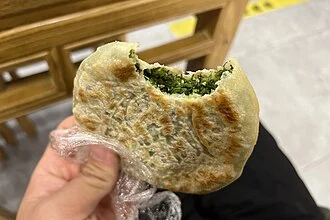 Snack
Vegetarian
Marathopita
Μαραθόπιτα
mah-rah-tho-PEE-tah
🌿
Snack
Vegetarian
Mostra
Μόστρα
MOHS-tra
🌿
Main course
Vegetarian
Onion Pie
Κρεμμυδόπιτα
krehm-mee-doh-PEE-tah
Dessert
Vegetarian
Rafiolia
Ραφιόλια
Rah-FYO-lia
🌱
Main course
Vegan
Revithada
Ρεβιθάδα
Reh-VEE-thah-thah
🐟
Main course
Fish & Seafood
Seafood Souvlaki
Θαλασσινό Σουβλάκι
ThalassiNO SooVLAkee