Explore Guides
EUROPE / BOSNIA AND HERZEGOVINA
Triplandio Konjic guide covers 4 travel guides across 15 areas, complete with hotel picks. Explore 13 self-guided walking tours in Konjic with 17 POI, spanning 47.9 km in total. Get inspired by 5 local dishes, complete with recipes and our unique Food Flavour DNA graph.
Konjic
City & Country Data Konjic (Bosnia and Herzegovina)

Key travel data for Konjic — local prices, safety, healthcare, local currency and essentials, curated by Triplandio.
🌍 Bosnia and Herzegovina
Safety
57
Health
38
Lifestyle
56
Infra
33
Rank
#71
Score
35
Tourists
197K/y
GDP/cap
$10.4k
Life Exp
78.0 yrs
Population
3.1M
Payments
Cards OK
Emergency
122
💰 Prices in Konjic
Coffee
$1.50
Beer
$1.80
Lunch
$7.90
Groceries
$23.00/w
Taxi/km
$1.10
Transit
$1.80
Fuel
$1.60/l
Internet
$23.00/m
Salary
$1,050/m
Travel tipsKonjic (Bosnia and Herzegovina)

Quick tips
- Landmines remain in the countryside — Critical
Landmines and unexploded weapons from the 1992–1995 war still lie in rural Bosnia and Herzegovina. Never step off roads or paved paths without an experienced guide, and keep out of ruined buildings.
- Don't dive off Mostar's Old Bridge — Critical
Diving from the Old Bridge (Stari Most) in Mostar is dangerous and has caused serious injuries and deaths. Leave it to the trained local divers who perform for tips.
- Get your passport stamped — Caution
Border police check entry and exit stamps to make sure you haven't overstayed the 90-day visa-free limit. Without an entry stamp, you can be fined when you leave.
- Register with the police within 72 hours — Good to know
All foreigners must register their address with the police within 72 hours of arriving. Hotels usually do it for you; in private rooms, check that your host has registered you.
- Always carry photo ID — Good to know
You must carry your passport or official photo ID in Bosnia and Herzegovina and show it when police ask or when checking into a hotel.
- Book Tito's bunker in advance — Local tip
Tito's Cold War nuclear bunker near Konjic can only be visited on a guided tour. Book ahead through the official tour office or an agency, and bring ID.
- Do
- Stay on roads and marked paths
- Get your passport stamped
- Carry your passport
- Carry some cash in marks
- Fit winter tyres November–April
- Don’t
- Walk into ruined buildings
- Dive off Mostar's Old Bridge
- Argue about the war
- Use unlicensed taxis
- Rely on EHIC or GHIC cover
Critical
Prison or heavy penalty possible
Laws & fines
- Drug penalties are severe — Critical
Possessing, using or smuggling illegal drugs, including cannabis, in Bosnia and Herzegovina brings long prison sentences and heavy fines, including for passengers in transit.
Caution
Fines, losses or injury possible
Scams & safety
- The Neretva is fast and cold — Caution
The Neretva river at Konjic is clear, cold and faster than it looks. Swim only in calm spots, and don't let children swim near the bridge or rapids.
- Choose a licensed rafting company — Caution
Konjic is the main base for rafting on the Neretva canyon. Pick an established operator that provides helmets, life jackets and wetsuits, and follow the guide's instructions.
- Remote mountain trails — Caution
Hiking routes in the mountains around Konjic and Boračko Lake are remote. Go with a local guide, stay on marked paths and carry water.
Laws & fines
- On-the-spot traffic fines — Caution
Bosnian traffic police can fine drivers on the spot for any offence. After an accident, stay at the scene and don't move your car until police arrive.
Entry & visa
- Declare restricted goods — Caution
You must declare goods that may be prohibited or taxed when entering Bosnia and Herzegovina, or risk confiscation and fines.
Outdoors & adventure
- White-water rafting safely — Caution
Rafting on rivers such as the Neretva, Una and Tara is popular, but currents can be extremely strong. Use licensed operators with helmets and wetsuits, and check your insurance covers it.
- Winter tyres from November to April — Caution
From November to April, cars must have winter tyres with at least 4 mm of tread and carry snow chains to use when signs say so. Mountain roads freeze quickly.
- Carry proof of car insurance — Caution
Driving without at least third-party insurance is illegal, and border police can ask for printed proof. If your policy doesn't cover Bosnia and Herzegovina, buy border insurance at the crossing.
- Wildfires and flash floods — Caution
Wildfires are possible from April to October, and heavy rain can bring flash floods and landslides. Don't light fires outside marked areas, and call 112 if you see a fire.
Good to know
Rules and useful facts
Scams & safety
- Travel advisory: Level 2 of 4 — Good to know
Exercise Increased Caution — the U.S. State Department's rating for Bosnia and Herzegovina.
Laws & fines
- Letter needed for children — Good to know
Children under 18 travelling without both parents must carry a notarised letter of permission from the absent parent or guardian naming the accompanying adult.
- Avoid political demonstrations — Good to know
Protests are usually peaceful but can turn tense over issues linked to the 1990s war. Some politicians in Republika Srpska, one of the country's two entities, have used anti-UK rhetoric. Move away from gatherings.
- Police may need a translator — Good to know
Bosnian police officers don't always speak English. If you need to report a crime, ask for an interpreter or bring someone who can translate.
Tipping & money
- Pay in convertible marks — Good to know
The currency is the convertible mark (KM), fixed to the euro at just under 2 marks per euro. Euros are accepted in many tourist places, but change is usually given in marks.
Entry & visa
- 90 days visa-free in 6 months — Good to know
Many visitors, including British and EU citizens, can stay up to 90 days in any 6 months without a visa. Bosnia and Herzegovina is not in the Schengen area, so the time is counted separately.
- Passport issued within 10 years — Good to know
UK passports must be issued less than 10 years before arrival, valid for at least 90 days after you leave and undamaged. Other nationalities should check the rule for their passport.
- Longer queues at EU borders — Good to know
When crossing from Bosnia and Herzegovina into Croatia or another EU country, the EU Entry/Exit System (EES) records fingerprints and a photo. Allow extra time at the border.
Health
- EHIC and GHIC are not valid — Good to know
The European Health Insurance Card (EHIC) and UK Global Health Insurance Card (GHIC) do not cover Bosnia and Herzegovina, and care outside Sarajevo and big towns is limited. Get travel insurance.
- Ambulance number is 124 — Good to know
Dial 124 for an ambulance in Bosnia and Herzegovina, or 112 for general emergencies. Contact your insurer quickly if you are taken to a hospital.
- Winter smog in the valleys — Good to know
Sarajevo and other valley towns can have very high air pollution in winter, when coal and wood fires are lit. Check an air-quality app if you have asthma or heart problems.
- Get a local prescription — Good to know
Bosnian pharmacies may not accept foreign prescriptions. Bring enough medicine for your trip, or see a local doctor who can write a new prescription.
- Check yourself for ticks — Good to know
Ticks live in grass and woods across Bosnia and Herzegovina. Use insect repellent when hiking and check your skin each evening.
Outdoors & adventure
- Driving a hire car — Good to know
Traffic drives on the right. If you drive a car rented in Bosnia and Herzegovina, you need the 1968-convention International Driving Permit (IDP) as well as your licence; get it before you travel.
Local tips
Local know-how
Getting around
- From Sarajevo airport — Local tip
Konjic has no airport. Sarajevo International Airport (SJJ) is about an hour away by road on the route to Mostar.
- Buses on the Sarajevo–Mostar road — Local tip
Buses between Sarajevo and Mostar stop in Konjic several times a day, taking about an hour from Sarajevo.
- The scenic railway — Local tip
Konjic is on the Sarajevo–Mostar railway through the Neretva valley. Trains are infrequent and the line has been disrupted by floods, so check it is running.
- Small and walkable — Local tip
Konjic's centre, old bridge and riverside cafés are all within walking distance. You need a car, taxi or tour to reach the bunker and Boračko Lake.
Customs
- Tread carefully around the war — Local tip
The 1992–1995 war still shapes life in Bosnia and Herzegovina, and people hold strong views. Listen rather than argue, and avoid calling locals Serb, Croat or Bosniak by guesswork.
- Visiting mosques and churches — Local tip
Cover shoulders and knees, take off your shoes before entering a mosque, and women should cover their hair. Avoid visiting mosques during prayer times.
- Slow down for Bosnian coffee — Local tip
Bosnian coffee is served in a small copper pot (džezva) with a sugar cube and is meant to be sipped slowly over conversation. Declining an offered coffee can seem unfriendly.
- Respect Ramadan — Local tip
During the Muslim fasting month of Ramadan, check restaurant opening hours, dress modestly and avoid eating or drinking conspicuously in front of people who are fasting.
Tipping & money
- Tipping in Bosnian restaurants — Local tip
Tipping in Bosnia and Herzegovina is appreciated but not expected. Round up the bill or leave about 10% for good service in restaurants and cafés.
- Carry cash outside the cities — Local tip
Cards are accepted in Sarajevo and Mostar hotels and restaurants, but small cafés, bakeries and village guesthouses often take cash only.
- Friendly bargaining at craft stalls — Local tip
Light haggling is normal at copper and souvenir stalls in Sarajevo's Baščaršija and Mostar's old bazaar. Prices in shops and restaurants are fixed.
Say it locally
Bosnian, Croatian and Serbian are mutually understood, so these phrases work everywhere in the country; “molim” means please.
Through the year
Festival or season Public holiday (exact date)
- Ski season and winter smog
Dec 2026–Mar 2027 · Jahorina and Bjelašnica near Sarajevo have skiing, but valley air pollution and airport fog peak in December and January.
- New Year's Day
Fri 1 Jan 2027 · Public holiday
- New Year's (Day 2)
Sat 2 Jan 2027 · Public holiday
- Ramadan
Feb–Mar 2027 · The Muslim fasting month moves about 11 days earlier each year; in 2027 it falls around February–March. Some cafés open later in the day.
- Independence Day (Federation of Bosnia and Herzegovina)
Mon 1 Mar 2027 · Public holiday
- Labor Day
Sat 1 May 2027 · Public holiday
- Labor Day (Day 2)
Mon 3 May 2027 · Public holiday
- Mostar bridge-diving competition
Jul 2027 · Divers leap from Mostar's Old Bridge in the traditional summer competition, drawing big crowds to the old town.
- Herzegovina heat
Jul–Aug 2027 · Mostar and the south often pass 40°C; plan sightseeing for early morning and evening.
- Sarajevo Film Festival
Aug 2027 · The biggest film festival in the region fills Sarajevo's hotels for about a week in August.
Sources: GOV.UK travel advice · U.S. State Dept · Google public holidays
Best time to visit Konjic (Bosnia and Herzegovina)
Now (November) avg high: 11°C, wetter month, full season — expect crowds. Best months to walk: Jul & Aug.
Live Temp
…
~Day / Night Temp
11°C / 3°C
Sunrise / Sunset
7:33 / 17:31
Local time
13:57
Best Months  Jul & Aug
J
Jan
F
Feb
M
Mar
A
Apr
M
May
J
Jun
J
Jul
A
Aug
S
Sep
O
Oct
N
Nov
 D
Dec
A
Aug
S
Sep
O
Oct
N
Nov
D
Dec
Check Konjic hotels
Temperature
Average daytime high, month by month. Zero line marks freezing point.
Crowds
How busy it gets — traveller interest by month.
Rainfall
Rainy days to expect each month.
Sunshine
Hours of sun per day, by month.
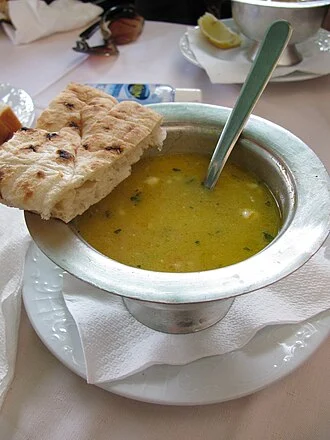
A thick, viscous soup made with okra, chicken, and a special blend of spices. Savory dumplings filled with spiced meat, typically served with a yogurt sauce. A dense, sweet cake made from semolina and tahini, soaked in a light syrup. A warm, rich cheese dip often served with bread.
Traditional Local Food
Konjic (Bosnia and Herzegovina)
Soup
Meat
Begova Čorba
Beh-go-vah chor-bah
· Bey's soup
Main course
Meat
Klepe
Kleh-peh
· Meat dumplings
🌿
Dessert
Vegetarian
Tahan Halva
Tah-hahn hall-vah
· Syrup-soaked semolina cake
🌿
Starter
Vegetarian
Topa
Toh-pah
· Melted cheese dip