Explore Guides
EUROPE / ALBANIA
Triplandio Berat guide covers 4 travel guides across 8 areas, complete with hotel picks. Explore 16 self-guided walking tours in Berat with 22 POI, spanning 60.4 km in total. Get inspired by 4 local dishes, complete with recipes and our unique Food Flavour DNA graph.
Berat
City & Country Data Berat (Albania)

Key travel data for Berat — local prices, safety, healthcare, local currency and essentials, curated by Triplandio.
🌍 Albania
Safety
64
Health
30
Lifestyle
67
Infra
37
Rank
#72
Score
34
Tourists
2.7M/y
GDP/cap
$13.0k
Life Exp
79.8 yrs
Population
2.3M
Payments
Cards OK
Emergency
112
💰 Prices in Berat
Coffee
$1.80
Beer
$2.00
Lunch
$7.00
Groceries
$30.00/w
Taxi/km
$0.80
Transit
$0.50
Fuel
$1.50/l
Internet
$30.00/m
Salary
$500/m
Travel tipsBerat (Albania)

Quick tips
- Drug possession means years in prison — Critical
Possessing illegal drugs in Albania, including cannabis, can bring 5 to 10 years in prison, and supplying them up to 15 years. Airport scanners check even transit passengers' bags.
- Wait for the police after any accident — Caution
If you are involved in a road accident in Albania, even a minor bump, you must stay at the scene until the police arrive. Driving away can lead to criminal charges and a fine.
- Starting a wildfire is a crime — Caution
Wildfires are common in Albania from April to October, and causing one is a criminal offence punished by fines or prison. Put cigarettes out properly and light barbecues only in marked areas.
- Don't drink the tap water — Good to know
Tap water in Albania can make you ill, so drink only bottled water. If you drink milk, make sure it is UHT (long-life, ultra-heat-treated) or pasteurised.
- A head shake can mean yes — Local tip
Many Albanians, especially older people, shake their head from side to side to mean yes and nod to mean no. If in doubt, ask again or listen for “po” (yes) and “jo” (no).
- Do
- Drink bottled water
- Carry cash in lek
- Stay at the scene after an accident
- Stick to marked paths in the north
- Accept a coffee when offered
- Don’t
- Carry any drugs, even cannabis
- Drive at night on rural roads
- React to aggressive drivers
- Light fires outside marked areas
- Rent a jet ski without paperwork
Critical
Prison or heavy penalty possible
Beaches & adventure
- Roads are among Europe's deadliest — Critical
Albania has one of the highest road death rates in Europe. Driving is aggressive, rural roads are potholed and unlit, and minor disputes can escalate, as some drivers are armed. Never react to provocation.
- Landmines near the Kosovo border — Critical
Unexploded landmines remain in some remote areas around hill towns on Albania's northern border with Kosovo. Stay on marked paths, never walk on uncultivated land and ask locals if unsure.
Caution
Fines, losses or injury possible
Scams & safety
- Slippery cobbles to the castle — Caution
The lanes up to Berat Castle are steep and paved with polished stones that get very slippery, especially when wet. Wear shoes with good grip and take the climb slowly in summer heat.
Laws & fines
- Carry a green card for your own car — Caution
To drive your own car in Albania, you must carry a green card (international proof of motor insurance). Hire companies provide insurance papers for rental cars.
- Declare restricted goods — Caution
Albania has strict customs rules. Declare anything that may be prohibited or subject to duty when you arrive, including large amounts of cash, tobacco or alcohol.
Tipping & money
- Watch for pickpockets at ATMs and stations — Caution
Pickpockets and bag thieves work tourist areas, buses and transport hubs in Albania. Use ATMs inside banks, and keep cards and cash out of sight.
Beaches & adventure
- Rent jet skis only from licensed centres — Caution
Jet skis and boats rented on Albania's beaches sometimes lack safety equipment. Use a licensed water sports centre and complete the paperwork before you start.
Good to know
Rules and useful facts
Scams & safety
- Travel advisory: Level 2 of 4 — Good to know
Exercise Increased Caution — the U.S. State Department's rating for Albania.
Laws & fines
- Ask to contact your embassy if arrested — Good to know
The Albanian authorities do not always tell a foreign embassy when one of its citizens is arrested. If you are detained, insist on your right to contact your embassy in Tirana.
- Avoid political demonstrations — Good to know
Political protests in central Tirana have sometimes turned violent and disrupt traffic. Keep away from rallies and large gatherings anywhere in Albania, and follow local media.
Tipping & money
- Carry lek in cash — Good to know
Albania's currency is the lek. Cards are accepted in bigger hotels and restaurants in Tirana and on the coast, but guesthouses, buses and village cafés usually want cash.
Entry & visa
- Passport dates — Good to know
Your passport should be valid for at least 3 months after the day you plan to leave Albania.
- Visa-free stays — Good to know
Many visitors, including UK and EU citizens, can stay in Albania without a visa for up to 90 days in any 180-day period. Rules depend on nationality, so check yours with an Albanian embassy.
- Yellow fever certificate — Good to know
If you are arriving in Albania from a country with a risk of yellow fever, you must show a certificate proving you've been vaccinated.
Health
- Healthcare is poor outside Tirana — Good to know
Hospitals and emergency care in Albania are very basic, especially outside Tirana. Take insurance that covers treatment and evacuation by air ambulance.
- Call 127 for an ambulance — Good to know
The ambulance number in Albania is 127, and 112 is the general emergency number. Contact your insurer as soon as you are referred for treatment.
- Air pollution in cities — Good to know
Air pollution in Albania can be high, especially in Tirana in winter. Check the World Air Quality Index if you have asthma or a heart condition.
- Some beaches have sewage pollution — Good to know
A small number of Albanian beaches are polluted because of poor sewage treatment. Swim at beaches with good water quality ratings and avoid swimming near river mouths or town drains.
Beaches & adventure
- Earthquakes happen — Good to know
Albania is an earthquake zone and tremors are common. Learn what to do: drop, take cover under a sturdy table and hold on until the shaking stops.
Local tips
Local know-how
Scams & safety
- People live inside the castle — Local tip
Berat Castle is a living neighbourhood, not just a ruin. Don't walk into courtyards or photograph through windows, and keep noise down in the evening.
- Agree taxi fares first — Local tip
Taxis in Berat rarely use meters. Agree the price before getting in, particularly for the ride up to the castle gate or out to the bus station.
Getting around
- No airport: bus from Tirana — Local tip
Berat has no airport. Buses and minibuses leave from Tirana's North and South Bus Terminal and take roughly 2–3 hours; Tirana International Airport is the nearest airport.
- The bus station is outside the centre — Local tip
Buses stop at a terminal a few kilometres from Berat's old town. Local buses and taxis run into the centre, near the Mangalem quarter.
- Walk the old quarters — Local tip
Berat's Mangalem and Gorica quarters, the river bridge and the castle are all within walking distance. Cars are best left in a car park below the old town.
Customs
- Accept hospitality gracefully — Local tip
Albanians are famously hospitable and may offer coffee, sweets or a glass of raki, the strong local fruit brandy. Accepting at least a little is polite; a smile and thanks is enough to decline.
- Dress modestly in mosques and churches — Local tip
Albania is mostly secular, but cover your shoulders and knees when you visit mosques, churches and monasteries. Remove your shoes before entering a mosque.
- Coffee is a social ritual — Local tip
Meeting for coffee is at the heart of daily life in Albania, and cafés stay busy all day. Expect slow, sit-down service rather than coffee to go, and don't rush a conversation.
- Avoid talking politics lightly — Local tip
Albania's communist past, blood feuds and relations with neighbouring countries are sensitive subjects. Listen rather than offer strong opinions unless you know people well.
Tipping & money
- Tipping in restaurants — Local tip
Tipping isn't compulsory in Albania, but rounding up or leaving about 10% for good service in restaurants is appreciated. In cafés, leave the small change.
- Euros work, but at a price — Local tip
Many businesses on the Albanian coast accept euros, but the exchange rate they use is often poor. Paying in lek is usually cheaper.
- Bargaining is limited — Local tip
Prices in Albanian shops and restaurants are fixed. Friendly haggling is possible at bazaar souvenir stalls and for private room or taxi prices.
Entry & visa
- Albania isn't in Schengen — Local tip
Albania is not part of the Schengen area, so days spent in Albania don't count towards the Schengen 90-day limit. Expect separate passport checks at its borders.
Beaches & adventure
- Beach flags and sea urchins — Local tip
Follow lifeguards and beach flags on Albania's coast, and wear water shoes on rocky beaches, where sea urchins are common. Ask locally if jellyfish have been seen.
Say it locally
Add “ju lutem” (please) to requests; a greeting in Albanian always earns a warm welcome.
Through the year
Festival or season Public holiday (exact date)
- Alphabet Day
Sun 22 Nov 2026 · Public holiday
- Flag and Independence Day
Sat 28 Nov 2026 · Public holiday
- Liberation Day
Sun 29 Nov 2026 · Public holiday
- Winter floods and snow
Dec 2026–Feb 2027 · Heavy rain can flood parts of northern Albania, and snow disrupts mountain roads and services.
- National Youth Day
Tue 8 Dec 2026 · Public holiday
- Christmas Day
Fri 25 Dec 2026 · Public holiday
- New Year's Day
Fri 1 Jan 2027 · Public holiday
- New Year's
Sat 2 Jan 2027 · Public holiday
- Eid al-Fitr (tentative)
Tue 9 Mar 2027 · Public holiday
- Summer Day
Sun 14 Mar 2027 · Public holiday
- Nevruz Day
Mon 22 Mar 2027 · Public holiday
- Easter Sunday
Sun 28 Mar 2027 · Public holiday
- Wildfire season
Apr–Oct 2027 · Hot, dry weather brings frequent wildfires; take care in the countryside and call 112 if you see a fire.
- Shoulder season
May–Jun 2027, Sep–Oct 2027 · Warm sea, fewer crowds and lower prices; the best time for combining beaches, towns and hiking.
- International Worker’s Day
Sat 1 May 2027 · Public holiday
- Easter Sunday (Orthodox)
Sun 2 May 2027 · Public holiday
- Feast of the Sacrifice (tentative)
Sun 16 May 2027 · Public holiday
- Mountain hiking season
Jun–Sep 2027 · The Theth–Valbona trails and mountain guesthouses in the Albanian Alps are open; snow closes the high passes outside these months.
- Peak beach season
Jul–Aug 2027 · The Riviera and Ksamil are packed, prices are highest and traffic to the coast is heavy; book rooms early.
- Mother Teresa Beatification Day
Sun 5 Sep 2027 · Public holiday
Sources: GOV.UK travel advice · U.S. State Dept · Google public holidays
Best time to visit Berat (Albania)
Now (November) avg high: 18°C, wetter month, full season — expect crowds. Best months to walk: Jul & Oct.
Live Temp
…
~Day / Night Temp
18°C / 9°C
Sunrise / Sunset
7:17 / 17:31
Local time
18:24
Best Months  Jul & Oct
J
Jan
F
Feb
M
Mar
A
Apr
M
May
J
Jun
J
Jul
A
Aug
S
Sep
O
Oct
N
Nov
 D
Dec
A
Aug
S
Sep
O
Oct
N
Nov
D
Dec
Check Berat hotels
Temperature
Average daytime high, month by month. Zero line marks freezing point.
Crowds
How busy it gets — traveller interest by month.
Rainfall
Rainy days to expect each month.
Sunshine
Hours of sun per day, by month.
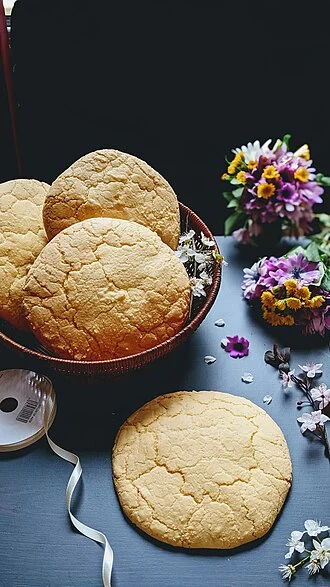
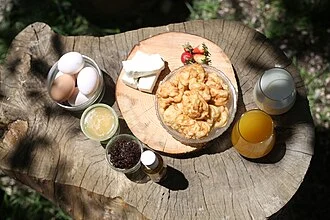
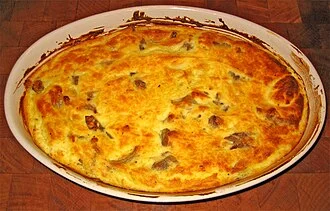
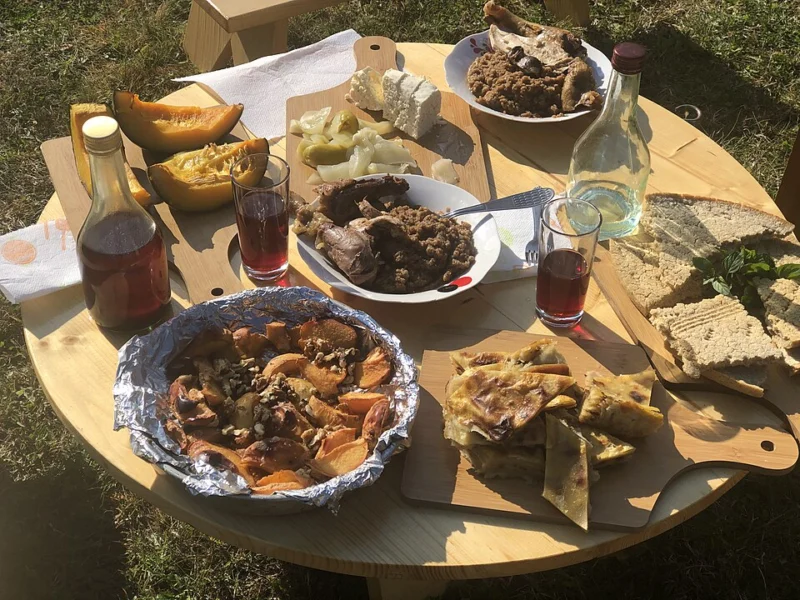
Traditional Albanian cornflour festival cookies. Albanian fried dough, often served for breakfast. Chicken braised with white wine and herbs. A classic baked dish of lamb and yogurt from Valbona.
Traditional Local Food
Berat (Albania)
Dessert
Vegetarian
Ballokume
Bal-loh-koom-eh
· Cornflour cookies
Snack
Vegetarian
Petulla
Pe-toola
· Fried dough fritters
 Main course
Meat
Pulë me Verë
Pool-eh meh Vay-rah
· Chicken with white wine
Main course
Meat
Tavë kosi
Tav Kosi
· Baked lamb with yogurt sauce