Explore Guides
ASIA / MONGOLIA
Triplandio Ulaanbaatar guide covers 3 travel guides across 11 areas, complete with hotel picks. Explore 11 self-guided walking tours in Ulaanbaatar with 16 POI, spanning 40.1 km in total. Get inspired by 5 local dishes, complete with recipes and our unique Food Flavour DNA graph.
Ulaanbaatar
City & Country Data Ulaanbaatar (Mongolia)

Key travel data for Ulaanbaatar — local prices, safety, healthcare, local currency and essentials, curated by Triplandio.
🌍 Mongolia
Safety
70
Health
21
Lifestyle
35
Infra
37
Rank
#83
Score
28
Tourists
66.9K/y
GDP/cap
$7.1k
Life Exp
72.4 yrs
Population
3.6M
Currency
MNT ₮
Language
Mongolian
Payments
Mixed
Emergency
112
💰 Prices in Ulaanbaatar
Coffee
$2.30
Beer
$1.70
Lunch
$4.90
Groceries
$28.80/w
Taxi/km
$0.14
Transit
$0.14
Fuel
$0.96/l
Internet
$7.70/m
Salary
$471/m
Travel tipsUlaanbaatar (Mongolia)

Quick tips
- Don't photograph police or soldiers — Critical
Photographing or filming police, police escorts or military personnel in Mongolia is illegal. You can be arrested and fined, with the fine set by a court.
- Drug trafficking can mean life in prison — Critical
All drugs, including cannabis, are illegal in Mongolia. Trafficking can bring a life sentence, and prisons have very basic conditions.
- Carry your original passport — Caution
Mongolian police don't accept a photocopy of your passport as ID, and you can be fined without the original. Keep copies of the photo page and entry stamp separately in case it's lost.
- Border zones need a permit — Caution
Areas up to 100 km inside Mongolia's borders can count as border zones, closed to foreigners without permission from the State Frontier Guard Authority. Check your route with your tour operator.
- Make sure you're registered — Good to know
Hotels register foreign guests with the Mongolian Immigration Agency through an app. If you stay with friends or travel independently, register yourself online and carry the digital permit it issues.
- Do
- Carry your original passport
- Call “nokhoi khori” at a ger
- Accept offers with your right hand
- Tip your guide and driver
- Bring cash for the countryside
- Don’t
- Photograph police or soldiers
- Step on a ger's threshold
- Eat or touch marmots
- Enter border zones without a permit
- Buy wildlife souvenirs
Critical
Prison or heavy penalty possible
Scams & safety
- Don't walk alone at night — Critical
Foreigners have been assaulted and robbed in Ulaanbaatar at night, sometimes by drunk people. Ask your hotel, restaurant or bar to order a car for you.
Laws & fines
- No trade in wild animal parts — Critical
Buying, selling, hunting or trapping protected wild animals, or trading their parts, is illegal in Mongolia without a licence. Avoid furs, bones and claws sold as souvenirs.
- Customs disputes can stop you leaving — Critical
If you get involved in a customs dispute or investigation in Mongolia, you can be banned from leaving until it is resolved. Ask for your embassy straight away.
Health
- Don't eat or touch marmots — Critical
Wild marmots in Mongolia can carry bubonic plague, and cases occur most summers. Never eat marmot meat or handle the animals, dead or alive.
Caution
Fines, losses or injury possible
Scams & safety
- Pickpockets at markets and on buses — Caution
Pickpockets in Ulaanbaatar work Narantuul market (often called the Black Market), the State Department Store area and crowded buses, especially during Naadam and Tsagaan Sar.
- Groups asking for money — Caution
Groups of people, including children and teenagers, sometimes crowd visitors for money outside bars, restaurants and cars. Keep your phone, passport and wallet in a closed bag.
- Avoid unmarked taxis — Caution
Many private cars in Ulaanbaatar act as informal taxis. Use licensed taxis or the trackable UBCab app instead.
Laws & fines
- Declare cash of US$10,000 or more — Caution
You must declare cash or travellers' cheques worth 10,000 US dollars or more when entering Mongolia, or the money can be seized when you leave.
Customs
- Call out before approaching a ger — Caution
Nomads' dogs guard their homes and can be aggressive. Stay by your vehicle and call “nokhoi khori” (hold the dog) until someone comes out.
Steppe & adventure
- Few paved roads — Caution
Only about 10% of Mongolia's roads outside the capital are paved, and signposts are rare. Travel with an experienced driver or guide rather than driving yourself.
- Extreme and sudden weather — Caution
Temperatures in Mongolia range from +35°C in summer to −40°C in winter, and blizzards, dust storms and floods arrive without warning, especially in the Gobi.
- Driving yourself — Caution
To drive in Mongolia you need a 1968 International Driving Permit (IDP) with your licence. Traffic drives on the right, and accident rates are high.
Good to know
Rules and useful facts
Scams & safety
- Travel advisory: Level 1 of 4 — Good to know
Exercise Normal Precautions — the U.S. State Department's rating for Mongolia.
Getting around
- Traffic jams — Good to know
Ulaanbaatar's roads are heavily congested at rush hour. Allow plenty of time to reach the airport and railway station.
Laws & fines
- Get your passport stamped — Good to know
Check that the border officer stamps your passport when you enter Mongolia. Without the stamp you can have problems when you leave.
- Avoid protests — Good to know
Occasional political protests take place in Mongolia, mostly in Ulaanbaatar's Sükhbaatar Square. Keep away from large gatherings.
Tipping & money
- Carry cash in the countryside — Good to know
The currency is the Mongolian tögrög (MNT). Cards work in Ulaanbaatar, but outside the capital you'll need cash, and ATMs are few.
Entry & visa
- Passport valid for 6 months — Good to know
To enter Mongolia your passport must be valid for at least 6 months after the date you arrive.
- Visa-free until the end of 2026 — Good to know
British visitors can enter Mongolia for tourism for up to 30 days without a visa until 31 December 2026. Rules vary by nationality, so check before you book.
- Only certain border crossings — Good to know
Foreigners may use only specific border crossings, such as Zamyn-Üüd for China and Sükhbaatar for Russia. Other crossings are for Mongolian, Chinese or Russian citizens.
- Letters for other people's children — Good to know
Adults travelling in Mongolia with children who are not their own should carry a notarised letter from the parents or legal guardians.
Health
- Emergency numbers — Good to know
In Mongolia call 103 for an ambulance and 102 for the police. English may be limited outside Ulaanbaatar, so ask your guide or hotel to help.
- Pay 80% before treatment — Good to know
Mongolian hospitals ask you to pay 80% of the treatment cost in advance. Your insurance must include air ambulance evacuation, as care outside the capital is basic.
- Bring your own medicines — Good to know
Pharmacies in Mongolia mostly stock Chinese and Russian brands with unfamiliar labels. Bring your prescription medicines and a first-aid kit from home.
- Boil or buy your water — Good to know
Don't drink tap or river water in Mongolia. Stick to bottled or boiled water, including for brushing your teeth in the countryside.
Steppe & adventure
- No signal in the countryside — Good to know
Large parts of rural Mongolia have no mobile coverage. Share your route with someone and carry a satellite phone or messenger on remote trips.
- Livestock disease checkpoints — Good to know
Outbreaks of foot-and-mouth disease can close roads and provinces in western Mongolia at short notice. Check local news and follow checkpoint instructions.
Local tips
Local know-how
Getting around
- From Chinggis Khaan airport (UBN) — Local tip
Chinggis Khaan International Airport is about 50 km south of Ulaanbaatar. The drive usually takes about an hour, much longer in rush hour; most visitors book a hotel transfer or use the official taxi desk.
- Taxis and apps — Local tip
Book licensed taxis through your hotel or with the UBCab app, which shows the driver and route. Agree the fare if the car has no meter.
- Walk the centre — Local tip
Sükhbaatar Square, the National Museum and many restaurants are within walking distance of each other. Cross roads carefully, as drivers rarely give way.
Customs
- How to behave in a ger — Local tip
In a ger (the round felt tent of nomadic families), don't step on the threshold, move clockwise around the stove, and don't lean on the two central pillars or point your feet at the stove or altar.
- Accept food and drink politely — Local tip
Hosts will offer milk tea, dairy snacks or airag (fermented mare's milk). Receive them with your right hand, or both hands, and at least take a sip or small bite.
- Respect monasteries — Local tip
In Buddhist monasteries, walk clockwise around temples and prayer wheels, ask before taking photos, and don't touch sacred images or objects.
Tipping & money
- Tip your guide and driver — Local tip
Tipping isn't traditional in Mongolia, but guides and drivers on multi-day tours expect a tip at the end. Agree with your group what to give.
- Restaurants in Ulaanbaatar — Local tip
Some Ulaanbaatar restaurants add a service charge. Otherwise rounding up or leaving about 10% for good service is appreciated.
- Haggle at markets — Local tip
Bargaining is normal at markets and souvenir stalls in Mongolia, particularly for cashmere, felt goods and antiques. Shops and supermarkets have fixed prices.
Entry & visa
- Get Chinese or Russian visas at home — Local tip
Visas for China and Russia are hard to get in Mongolia. Arrange any onward visa in your home country before you travel.
Say it locally
Mongolian is written in Cyrillic; a smile and a few words go a long way, and elders are always greeted first.
Through the year
Festival or season Public holiday (exact date)
- Deep winter
Nov 2026–Mar 2027 · Temperatures can fall to −40°C, and smog in Ulaanbaatar is at its worst; many ger camps close.
- Genghis Khan Day (tentative)
Tue 10 Nov 2026 · Public holiday
- Republic Day
Thu 26 Nov 2026 · Public holiday
- Independence Day
Tue 29 Dec 2026 · Public holiday
- Tsagaan Sar (Lunar New Year)
Jan–Feb 2027 · Family celebrations over several days; many shops, offices and restaurants close. The date follows the lunar calendar.
- New Year
Fri 1 Jan 2027 · Public holiday
- Tsagaan Sar
6–8 Feb 2027 · Public holiday
- Spring dust storms
Mar–May 2027 · Strong winds and dust storms, especially in the Gobi; temperatures swing widely.
- International Women's Day
Mon 8 Mar 2027 · Public holiday
- Main travel season
Jun–Sep 2027 · Warm, green months and the best time for ger camps, the Gobi and Lake Khövsgöl.
- Children's Day
Tue 1 Jun 2027 · Public holiday
- Naadam festival
Jul 2027 · National games of wrestling, horse racing and archery around 11–13 July; flights and hotels book out and pickpockets are busy.
- Naadam opening ceremony
Jul 2027 · Held at the National Sports Stadium around 11 July; buy tickets through your hotel or tour operator in advance.
- Naadam Holiday (National Day Holiday)
Sat 10 Jul 2027 · Public holiday
- Naadam Holiday (National Day)
Sun 11 Jul 2027 · Public holiday
- Naadam Holiday (National Day Holiday)
12–15 Jul 2027 · Public holiday
Sources: GOV.UK travel advice · U.S. State Dept · Google public holidays
Best time to visit Ulaanbaatar (Mongolia)
Now (November) avg high: -3°C, mostly dry, full season — expect crowds. Best months to walk: Feb & Apr.
Live Temp
…
~Day / Night Temp
-3°C / -13°C
Sunrise / Sunset
7:47 / 17:26
Local time
3:51
Best Months  Feb & Apr
J
Jan
F
Feb
M
Mar
A
Apr
M
May
J
Jun
J
Jul
A
Aug
S
Sep
O
Oct
N
Nov
 D
Dec
M
Mar
A
Apr
M
May
J
Jun
J
Jul
A
Aug
S
Sep
O
Oct
N
Nov
D
Dec
Check Ulaanbaatar hotels
Temperature
Average daytime high, month by month. Zero line marks freezing point.
Crowds
How busy it gets — traveller interest by month.
Rainfall
Rainy days to expect each month.
Sunshine
Hours of sun per day, by month.
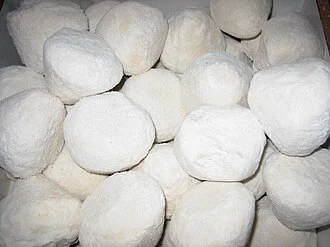
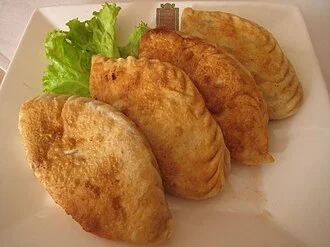
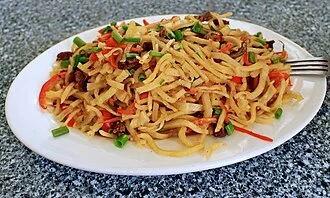
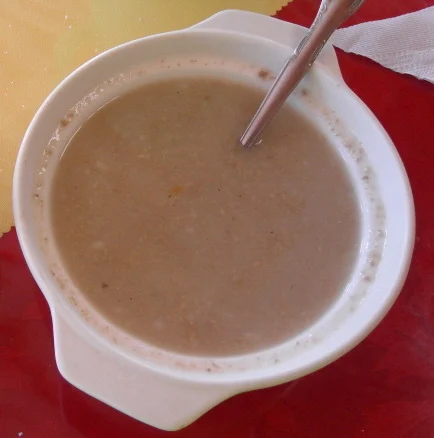
A traditional dried curd cheese, rich in flavor. A hearty and simple meat porridge, thickened with dough pieces. A flavorful stir-fried rice dish with meat and vegetables. Deep-fried dumplings with a savory meat filling. A traditional steamed noodle stir-fry with meat and vegetables.
Traditional Local Food
Ulaanbaatar (Mongolia)
Snack
Vegetarian
Aaruul
Аарц
ar-ool
· Dried Curd Cheese
 Soup
Meat
Bantan
Бантан
ban-tahn
· Mongolian Meat Porridge
🥩
Main course
Meat
Budaatai Khuurga
Будаатай хуурга
boo-dah-tai hoor-gah
· Fried Rice with Meat
Snack
Meat
Khushuur
Хуушуур
hoo-shoor
· Fried Meat Dumpling
Main course
Meat
Tsuivan
Цуйван
tsu-ee-van
· Steamed Noodle Stir-fry