
Written for travellers who come for museums, old neighbourhoods and the stories behind them. Updated 2026.

Where to Stay in Mumbai for History and Culture

Where to stay in Mumbai for history and culture — four neighbourhoods, from Victorian Kala Ghoda to Portuguese Bandra.

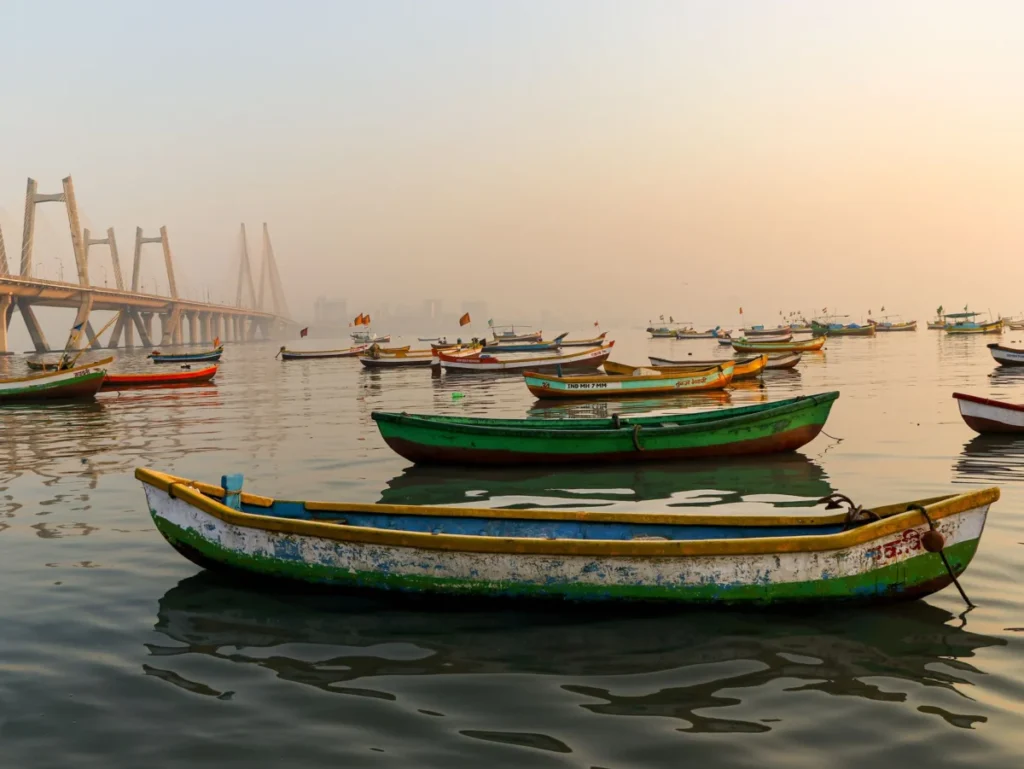
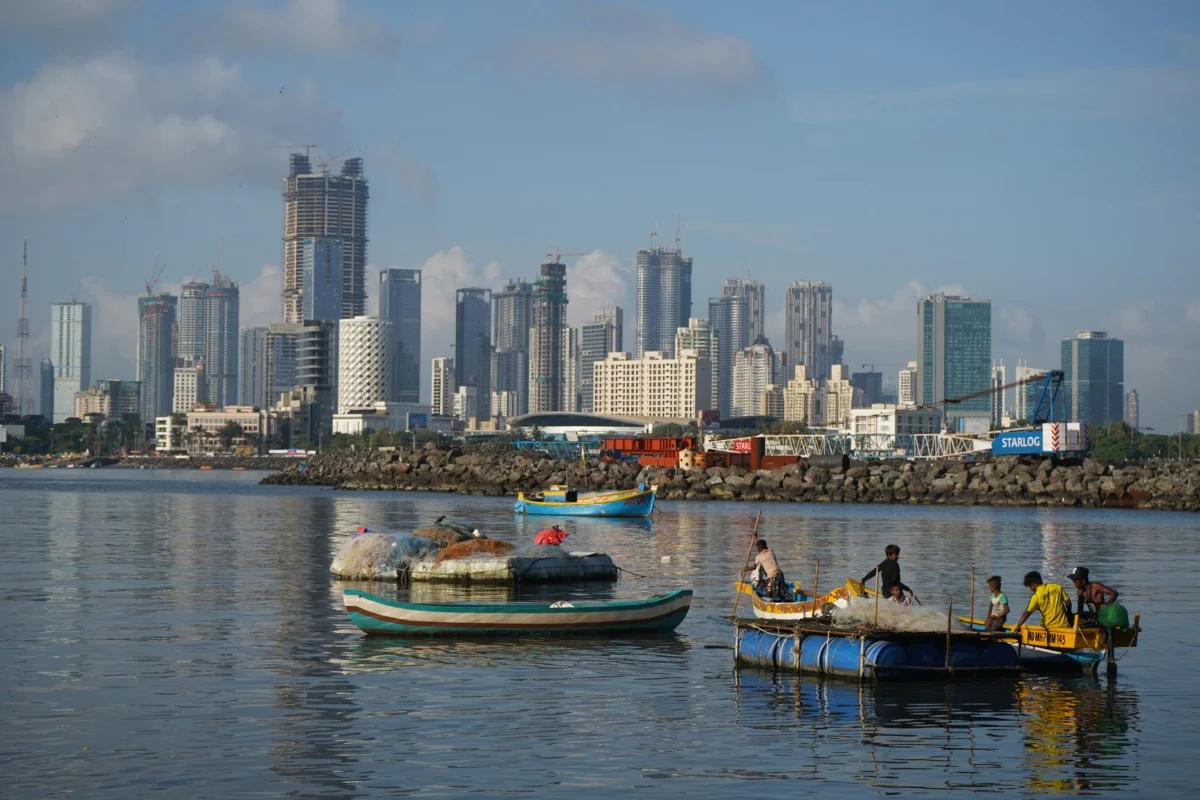
Panoramic view of Mumbai's coastline
At a Glance
Country India
City Mumbai
Day / Night 33° / 23°
Local Time 1:04
November — Now Moderate crowds
Best Months Dec · Nov

Mumbai's history comes in layers: Portuguese churches, a British fort, Parsi and Jewish merchant families, Gandhi's years in the city and the Marathi neighbourhoods that grew up around them. This guide picks four areas where that history is still on the street — Kala Ghoda, Colaba, Girgaon and Bandra West — with a walk, the main sights and hotels for each.

Our favourite Mumbai hotels for history lovers

Best overall
⭐ 9.2
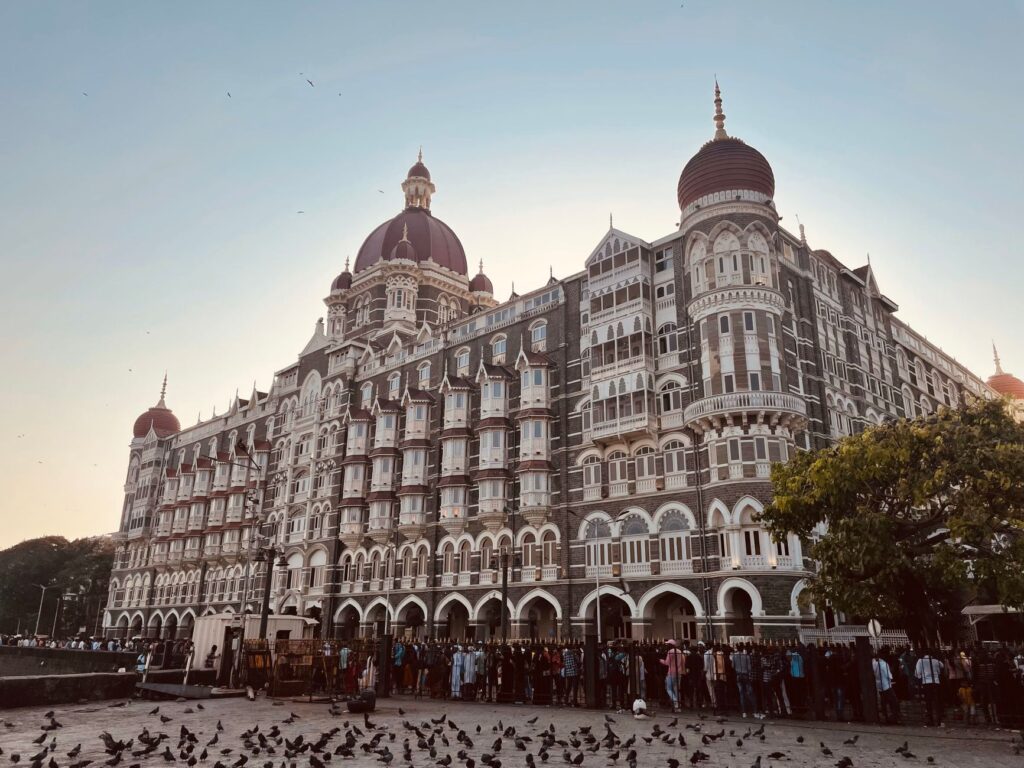
The Taj Mahal Palace, Mumbai

The Taj Mahal Palace, Mumbai

Opened in 1903 beside the Gateway of India, the Taj Mahal Palace is a piece of Mumbai history in itself. The museums and galleries of Kala Ghoda are about ten minutes on foot. Rooms are either in the original palace building or in the 1970s Tower, so check which one you are booking.

Top pick
⭐ 9.0
Abode Bombay

Abode Bombay

A small boutique hotel on Lansdowne Road in Colaba, about ten minutes on foot from the museums of Kala Ghoda. Guests rate it highly, and it is a quieter alternative to the big hotels by the Gateway of India.

Smart choice
⭐ 8.1
Taj Lands End, Mumbai

Taj Lands End, Mumbai

A large Taj hotel at Land's End, at the southern tip of the Bandstand promenade and a few minutes from Bandra Fort. It is a comfortable base for Bandra's churches and village lanes, but South Mumbai's museums can be an hour away by road at busy times.

Which chapter of Mumbai's history interests you?

Pick the era you want to explore — we will show you the neighbourhood.

Best choice: Bandra West

Best for: Portuguese heritage

Best choice: Colaba

Best for: Colonial Bombay by the sea

Best choice: Kala Ghoda

Best for: Museums and Victorian Bombay

Best choice: Girgaon

Best for: Gandhi and old Marathi Mumbai

Best hotels in Mumbai for culture and history

Rooms within reach of the museums, the Victorian Fort and the old neighbourhoods.

Abode Bombay
Top pick
⭐ 9.0 Excellent
1495 reviews

Abode Bombay

Colaba • Boutique • Lansdowne Road

A small boutique hotel on Lansdowne Road in Colaba, about ten minutes on foot from the museums of Kala Ghoda. Guests rate it highly, and it is a quieter alternative to the big hotels by the Gateway of India.

  • Small boutique hotel
  • Walk to Kala Ghoda and the Gateway
  • Highly rated by guests
Taj Lands End, Mumbai
Smart choice
⭐ 8.1 Very Good
2547 reviews

Taj Lands End, Mumbai

Bandra West • Large hotel • Next to Bandra Fort

A large Taj hotel at Land's End, at the southern tip of the Bandstand promenade and a few minutes from Bandra Fort. It is a comfortable base for Bandra's churches and village lanes, but South Mumbai's museums can be an hour away by road at busy times.

  • Next to Bandra Fort
  • On the Bandstand promenade
  • Walk to Mount Mary Basilica
The Ferreiras
Smart choice
⭐ 9.4 Superb
139 reviews

The Ferreiras

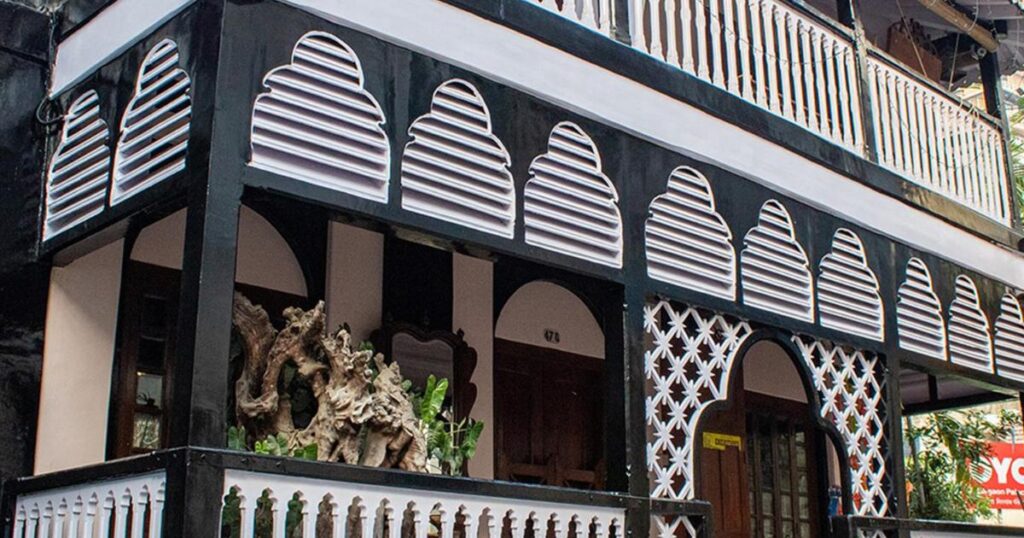
Girgaon • Homestay • Khotachiwadi Trail Lane

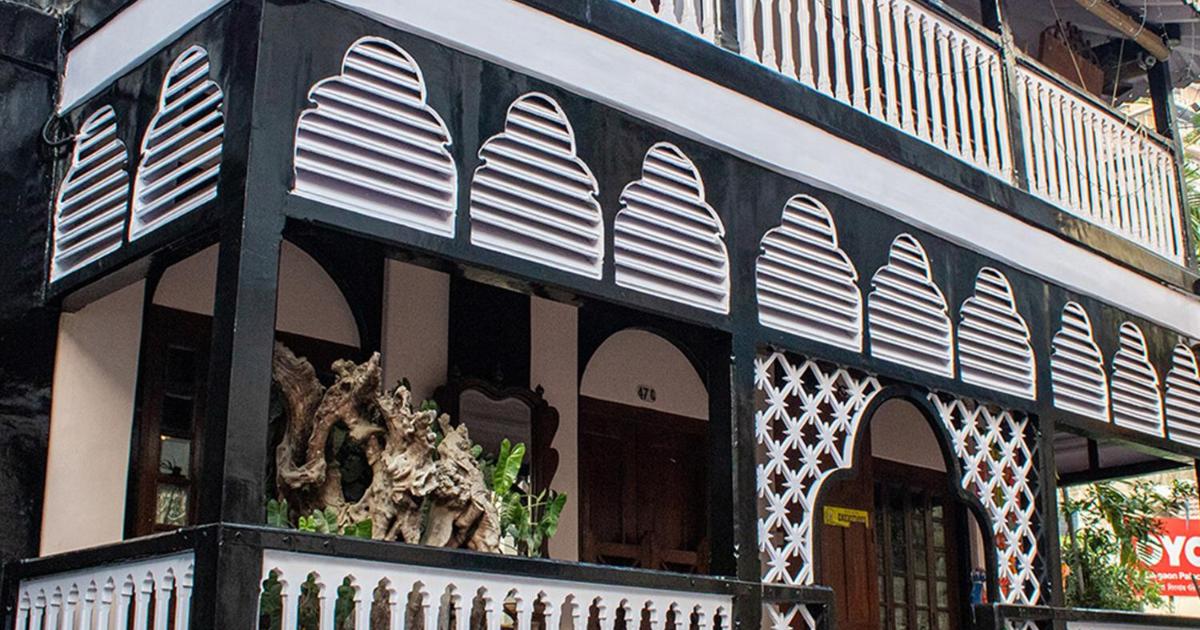
A homestay on Khotachiwadi Trail Lane in Girgaon, about 15 minutes on foot from Girgaum Chowpatty beach. Rooms are air-conditioned with private bathrooms, there is a small garden, and a continental breakfast is served each morning. It is a home rather than a hotel, so expect few services, but you wake up in the old lanes you came to see.

  • In the Khotachiwadi lanes
  • Continental breakfast daily
  • Walk to Chowpatty beach
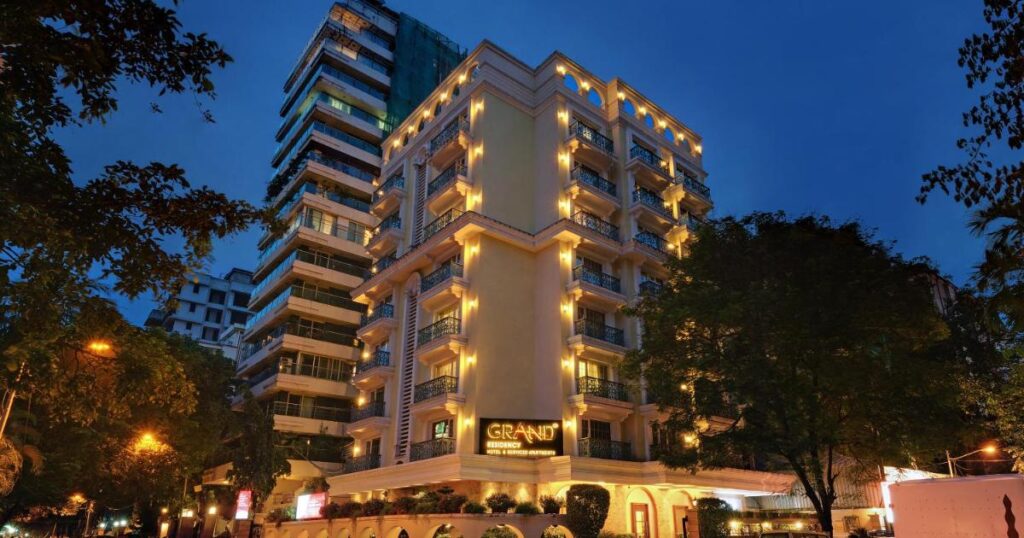
Grand Residency Hotel & Serviced Apartments
Smart choice
⭐ 8.1 Very good
445 reviews

Grand Residency Hotel & Serviced Apartments

Bandra West • 4-star aparthotel • Off Turner Road

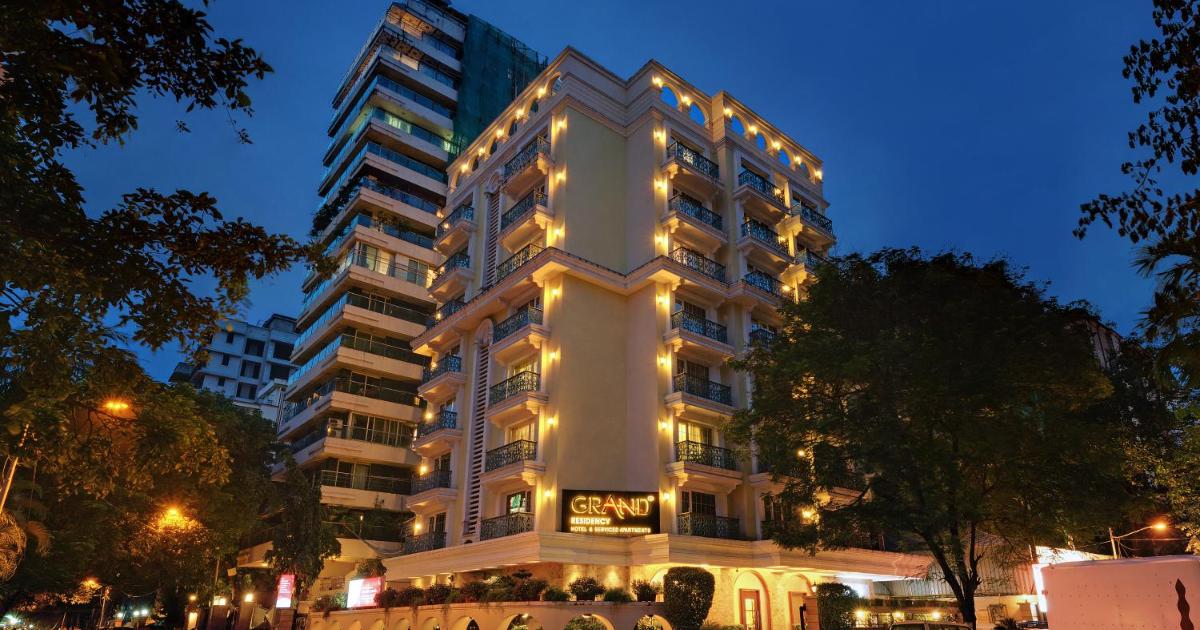
An aparthotel at the junction of 24th and 29th Road, just off Turner Road in Bandra West, with the Bandstand promenade about 2.3 km away. Rooms have private balconies and soundproofing, and the lobby café serves local dishes. It is a quiet base for Bandra's old churches and village lanes, though South Mumbai's museums are a long drive.

  • Private balcony in every room
  • Lobby café with local dishes
  • Bandstand about 2.3 km away
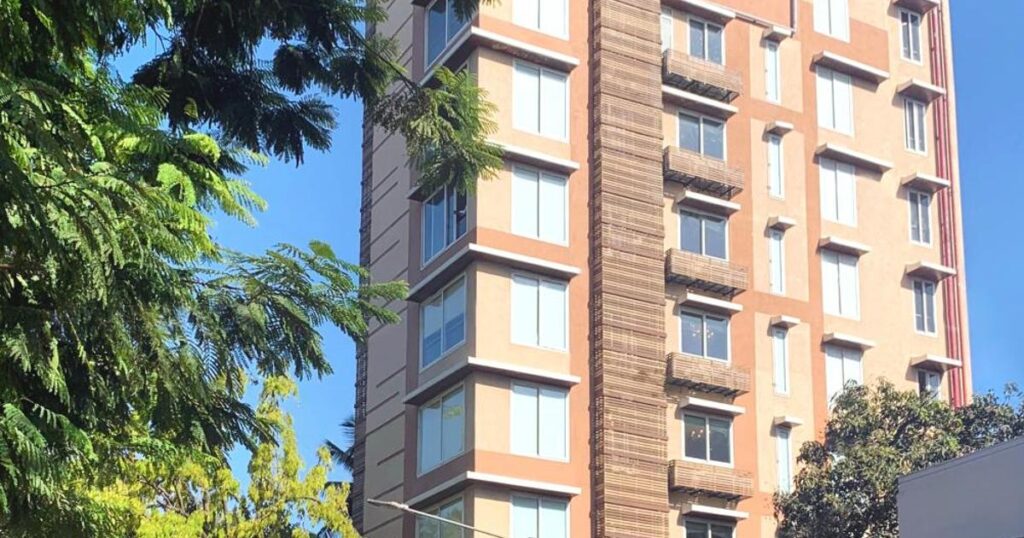
Theory9 Premium Service Apartments Bandra
Smart choice
⭐ 8.4 Very good
427 reviews

Theory9 Premium Service Apartments Bandra

Bandra West • 4-star serviced apartments • Turner Road

Serviced apartments on the corner of Turner Road and St Martins Road, in the middle of Bandra West, about 2.5 km from Mahim Beach. There is a 24-hour front desk, a lift and daily housekeeping, and the vegetarian breakfast includes local specialities. It suits a slower history trip around Bandra, with more space than a hotel room.

  • 24-hour front desk
  • Vegetarian breakfast with local dishes
  • Central Turner Road corner

How we choose

We pick hotels by location first — how easily you can walk to museums, heritage buildings and old neighbourhoods — then by guest ratings.

The best areas to stay in Mumbai for history and culture

Four neighbourhoods, four chapters of the city's past — with a walk and the key sights in each.

Bandra West

Bandra West is where Mumbai's Portuguese and East Indian Catholic past is still part of daily life. Old families live in cottages with wooden balconies in Ranwar and the neighbouring village lanes, church bells ring above Hill Road, and the suburb's oldest landmarks sit on the hill and the headland by the sea.

Start the morning in the lanes of Ranwar before the traffic builds, walk to St Andrew's Church, built in 1575, then climb to Mount Mary Basilica, which looks out over the Arabian Sea. In the late afternoon the ruins of Bandra Fort (1640) catch the low sun, and the Bandstand promenade fills with families and joggers.

The catch: Bandra is about 15 km from the museums of South Mumbai, and the drive can take an hour at busy times. Use the Western line trains from Bandra station, and treat this as a base for the suburb's own history rather than for daily trips downtown.

Local picks

For Culture & History
  • 1
    MorningOur Lady of Mount Carmel ChurchThis Jesuit church opened in 1894 on land given by the older parishes of Mount Mary and St Andrew's. It is a quiet first stop before the village lanes, so step in briefly if no service is running.
  • 2
    Village lanesRanwar VillageRanwar is one of Bandra's old village pockets, with small cottages, wooden balconies and roadside crosses between the apartment blocks. Go before 10 am, walk slowly and keep your camera discreet, because these are people's homes.
  • 3
    Oldest churchSt Andrew's ChurchPortuguese Jesuits built St Andrew's in 1575, and for a long time it was the only parish church in Bandra. Walk round the churchyard by the sea road, then step inside quietly if no Mass is on.
  • 4
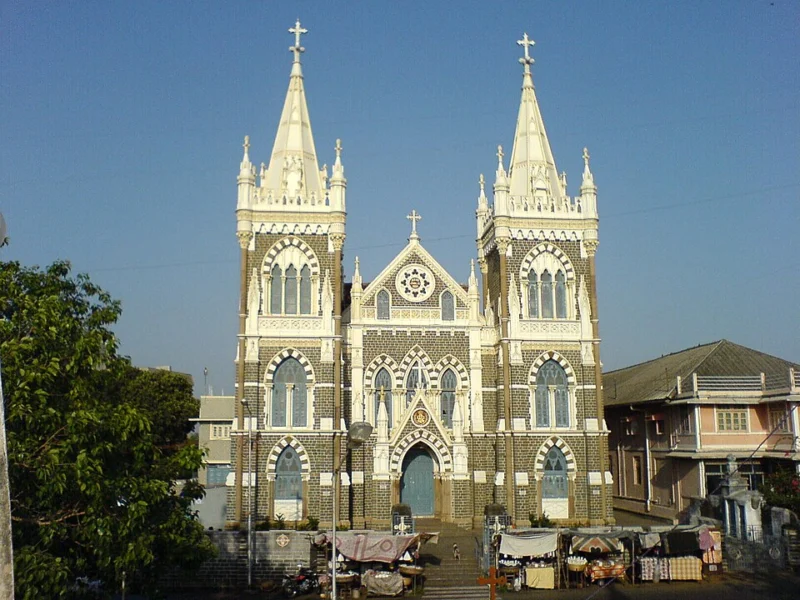
    On the hillMount Mary BasilicaThe basilica stands on a hill about 80 metres above the sea. The church was destroyed in 1738 and rebuilt under British rule, and the present building is around a century old. In September the Bandra Fair fills the hill for a week.
  • 5
    Late afternoonBandra FortThe Portuguese built this watchtower over Mahim Bay in 1640, and its old name, Castella de Aguada, refers to a freshwater spring used by passing ships. The terraces look across to the Bandra–Worli Sea Link and are best in the late afternoon.
  • 6
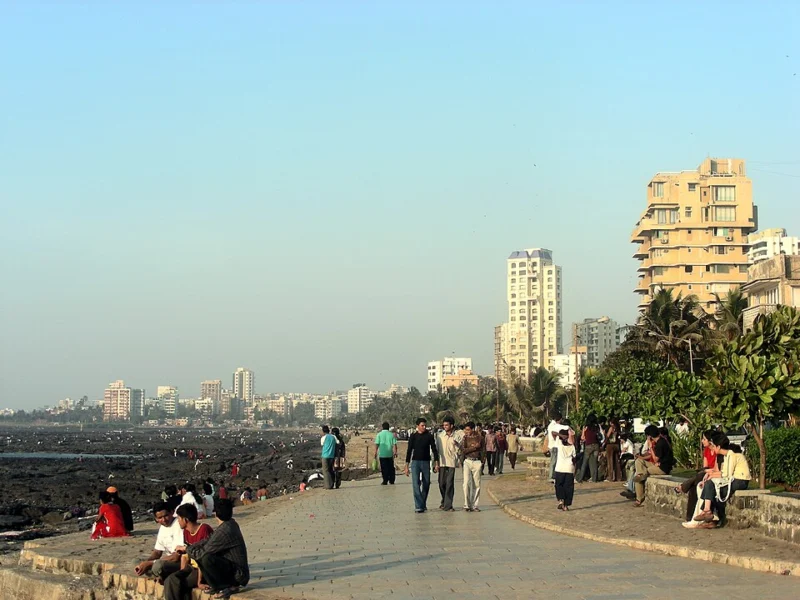
    Sunset walkBandstand PromenadeWalk back north along the 1.2 km sea promenade as the sun goes down. Near the Land's End end there is an amphitheatre used for festivals, and public music sessions sometimes happen at the Artists' Court on Sundays.
  • Getting aroundBandra stationBandra station on the Western line is a 15–20 minute walk or a short rickshaw ride from Hill Road. Fast trains to Churchgate take around half an hour, but avoid the morning and evening rush.
  • Where to stayLook for hotels between Hill Road and Bandstand, so the churches, the fort and the promenade are a walk away. Most hotels here are either large and upmarket or small and simple, with little in between, and anything near the Western Express Highway means long walks and traffic noise.

Did you know?

A fort named after a spring The Portuguese built Castella de Aguada, now Bandra Fort, in 1640; the name refers to a freshwater source for ships.
Destroyed and rebuilt Mount Mary church was destroyed in 1738 during the Maratha campaign and rebuilt under British rule.
One of the oldest churches in Mumbai Portuguese Jesuits built St Andrew's Church in 1575.
A week-long fair The feast of Mary’s nativity on 8 September is followed by the week-long Bandra Fair around Mount Mary.
Bandra West

Colaba

Colaba is the long, narrow peninsula at the southern tip of Mumbai, running from the Gateway of India down past old Parsi housing colonies, naval land and fishing docks. Fishing families, navy officers, old Bombay families and backpackers all share its streets, and Colaba Causeway is its busy spine of shops, cafés and street stalls.

For a history lover it is where colonial Bombay meets the older fishing city. Start early at the Gothic Afghan Church, then watch the catch come in at Sassoon Docks before the heat. After a simple vegetarian lunch, walk the Causeway north to the Gateway and the Taj, and end the day at Café Mondegar, a Bombay institution with cartoon murals.

The honest downside: Colaba is crowded and touristy around the Causeway and the Gateway, with touts and heavy traffic. The quieter, older streets are further south, so give yourself time to walk away from the main road.

Local picks

For Culture & History
  • MorningAfghan ChurchStart at the Church of St John the Evangelist, known as the Afghan Church, at the quiet southern end of Colaba, a short taxi ride or a 25-minute walk south of the docks. Come in the early morning, when it is quiet and cool.
  • 1
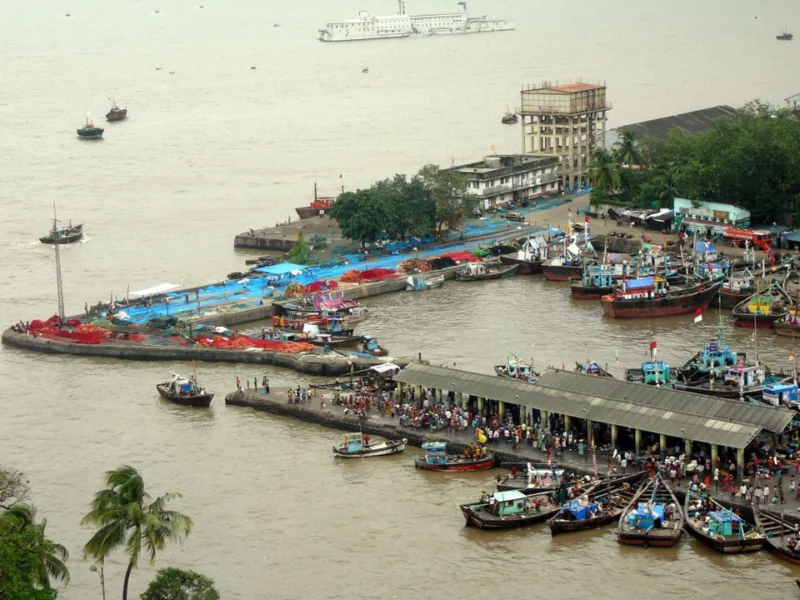
    Working historySassoon DocksWalk north to the dock built in 1875, where fishing boats unload at dawn. It is busy, wet and smelly, so wear closed shoes and ask before taking photos of people.
  • 2
    LunchKailash ParbatA basic restaurant on First Pasta Lane known for excellent vegetarian Indian food. It is quick, cheap and a good break from the heat.
  • 3
    AfternoonColaba CausewayWalk the Causeway north past old arcades, cafés and street stalls. Look up at the building fronts, many of them from the late 19th and early 20th centuries.
  • 4
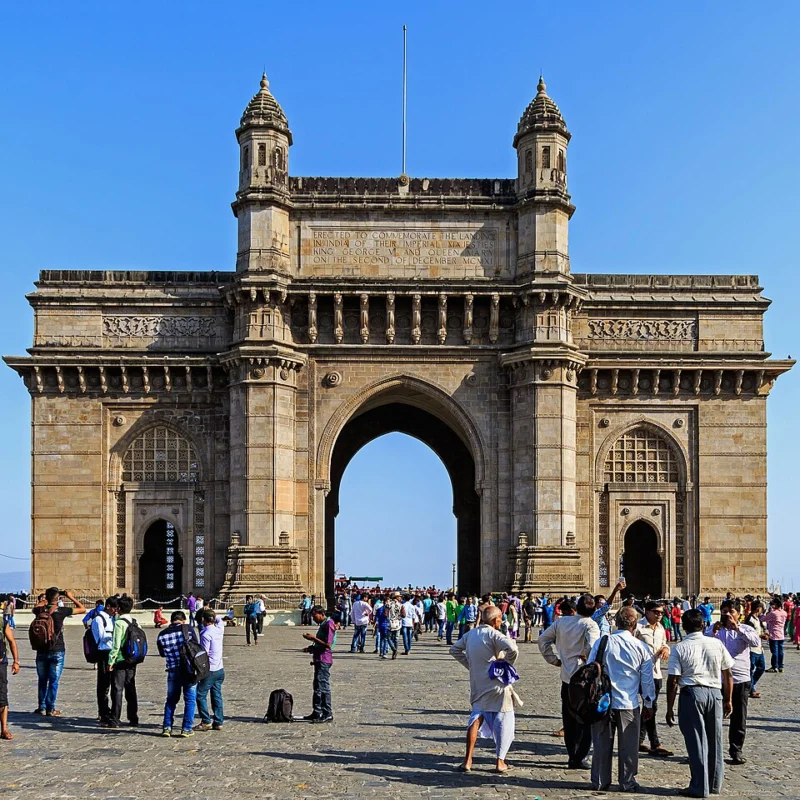
    SunsetGateway of IndiaReach the basalt arch on the waterfront in the late afternoon, with the Taj Mahal Palace behind it. The ferries to Elephanta leave from the jetty here, so this is also where to plan tomorrow.
  • 5
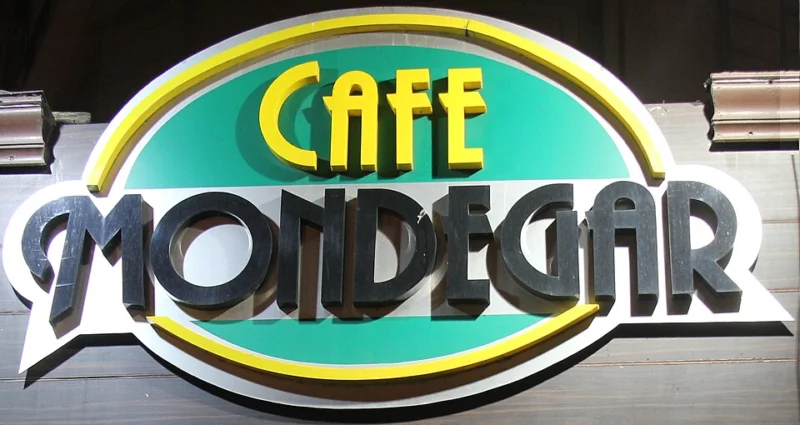
    EveningCafé MondegarFinish at Mondy's, a café and bar on the Causeway serving pitchers of Kingfisher at low prices. Look at the cartoon murals on the walls while you wait for a table.
  • Getting aroundChurchgate and taxisChurchgate station on the Western line is about 20 minutes' walk or a short taxi ride north. Taxis and buses run the length of the Causeway.
  • Where to stayLook for a heritage hotel near the Gateway or a smaller guesthouse in the lanes behind the Causeway. Rooms facing the main road are noisy, so ask for one at the back.

Did you know?

Kolbhat under the Portuguese During Portuguese rule in the 16th century, the island of Colaba was known as Kolbhat.
One of four peninsulas Colaba is one of Mumbai's four peninsulas; the others are Worli, Bandra and Malabar Hill.
The first wet dock Sassoon Docks, built in 1875, was the first wet dock constructed in Bombay and is still a working fishing dock.
Colaba

Kala Ghoda

Kala Ghoda is the cultural heart of South Mumbai: a small crescent of Victorian Gothic and Indo-Saracenic buildings between the Oval Maidan and the docks. The city's main museum, its best-known art gallery, a 19th-century synagogue and the old university all lie within ten minutes' walk of each other.

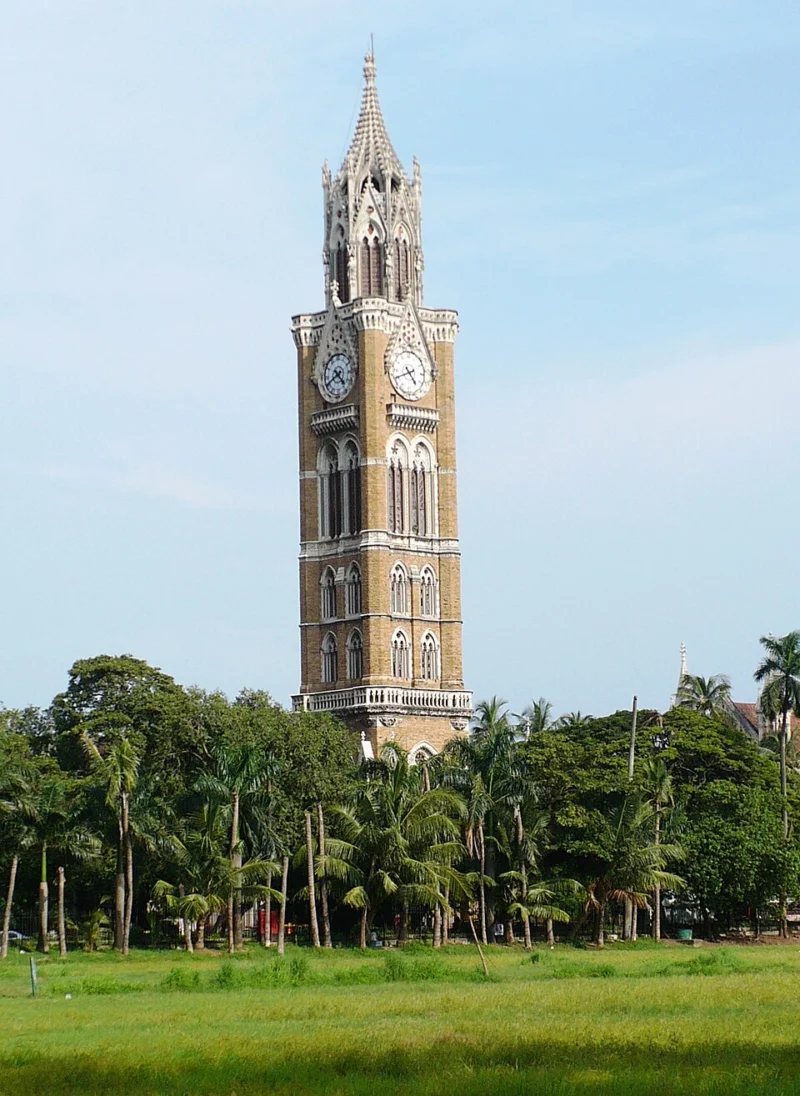
Start early at the Oval Maidan for the view of the Rajabai Clock Tower and the university buildings, part of a UNESCO World Heritage Site since 2018. Spend the late morning in Chhatrapati Shivaji Maharaj Vastu Sangrahalaya, then look into the free exhibitions at Jehangir Art Gallery. In the afternoon walk north to Flora Fountain and St Thomas Cathedral, where the walls of the old Fort once stood, and finish on the steps of the Asiatic Society as offices empty.

The downside: hotels in Kala Ghoda and the Fort are either old and basic or expensive, and weekday streets are busy with office traffic. Many of the better-value rooms are a short walk south in Colaba.

Local picks

For Culture & History
  • 1
    MorningRajabai Clock TowerThe 85-metre tower rises over the University of Mumbai's Fort campus, part of the Victorian and Art Deco Ensemble listed by UNESCO in 2018. The best view is from the Oval Maidan in the early morning, when the first cricket games start on the grass.
  • 2
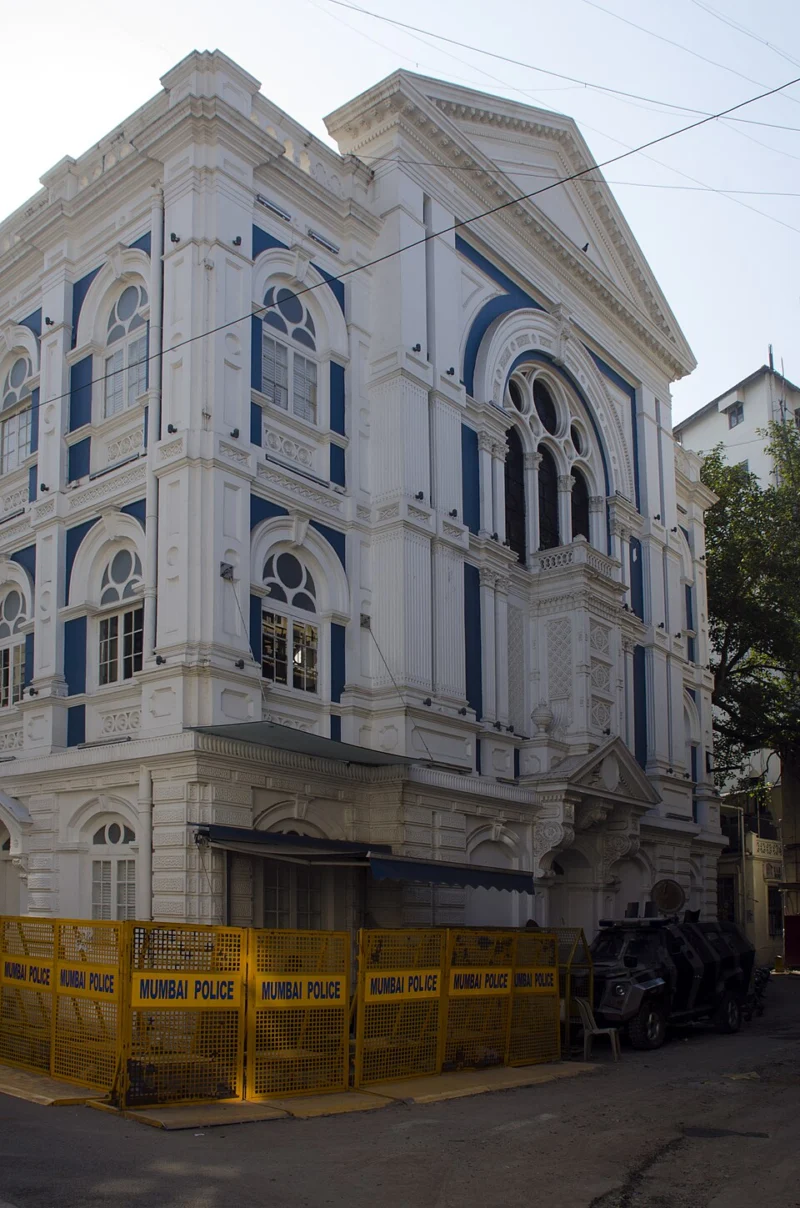
    Jewish BombayKnesset Eliyahoo SynagogueJacob Elias Sassoon built this synagogue in 1884, and a restoration in 2018–19 brought back its original white and indigo colours. Expect a security check at the gate and carry photo ID.
  • 3
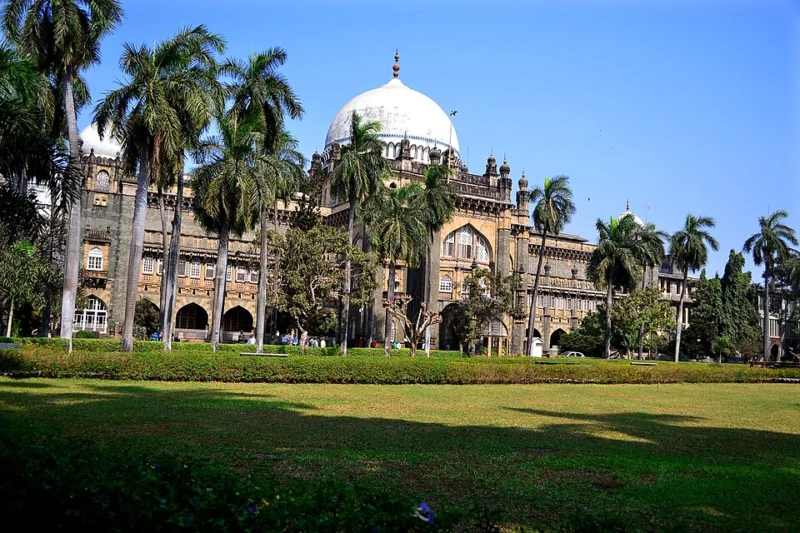
    Late morningChhatrapati Shivaji Maharaj Vastu SangrahalayaThe former Prince of Wales Museum holds around 50,000 objects, from Indus Valley finds to sculpture from the Gupta and Maurya periods. Give it at least two hours, and rest afterwards in the palm garden around the domed building.
  • 4
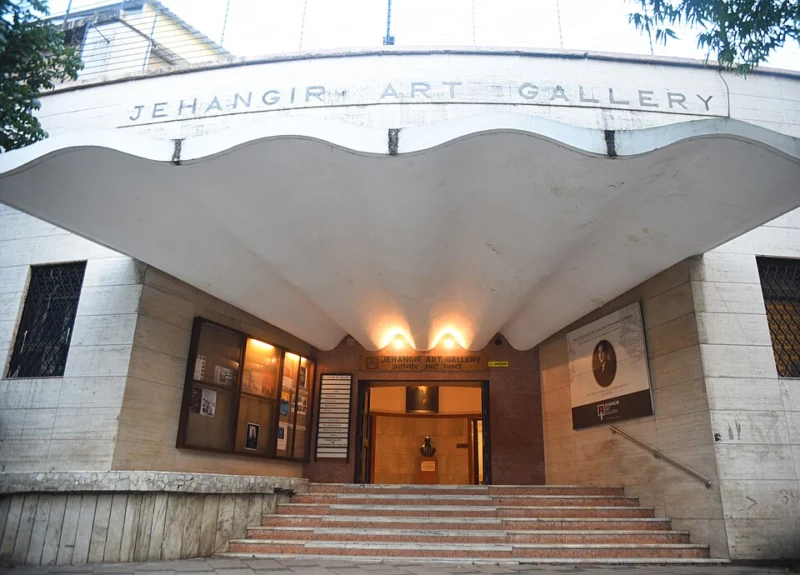
    Art breakJehangir Art GalleryFounded in 1952, the gallery has four halls of changing exhibitions by Indian artists. Entry is free, so it is easy to drop in for half an hour.
  • 5
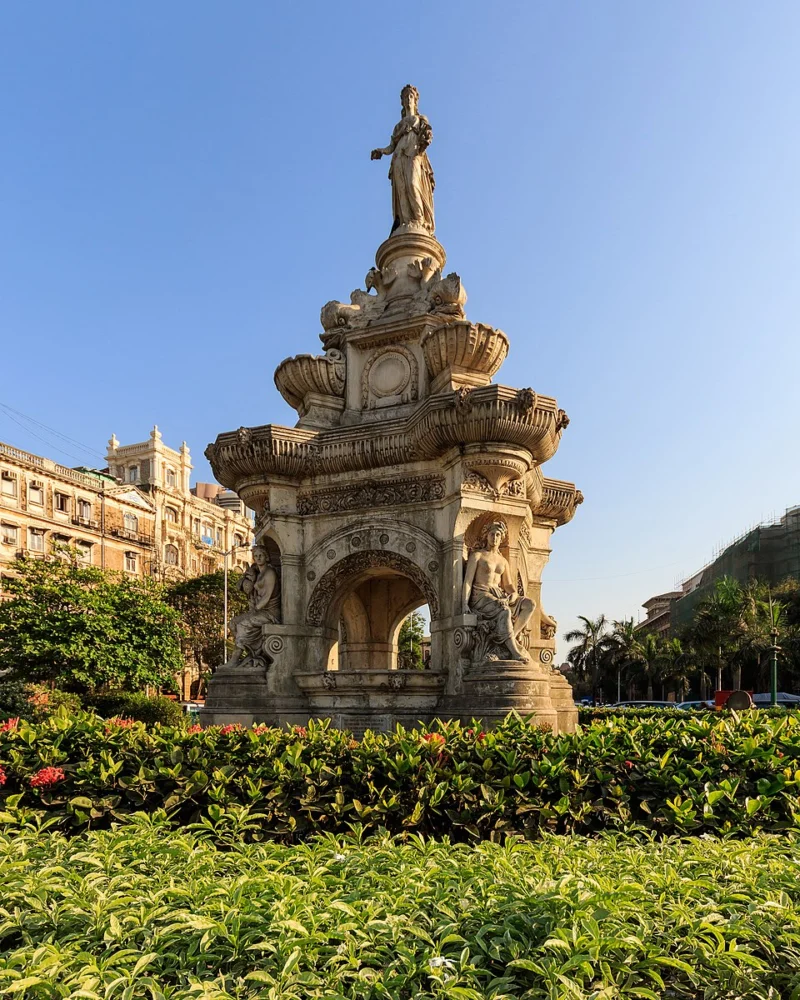
    AfternoonFlora FountainThe fountain of the Roman goddess Flora was built in 1864, where a gate of the old Fort walls stood until they were pulled down. The square around it is Hutatma Chowk, Martyrs’ Square, named after those who died in the movement for a Marathi-speaking state.
  • 6
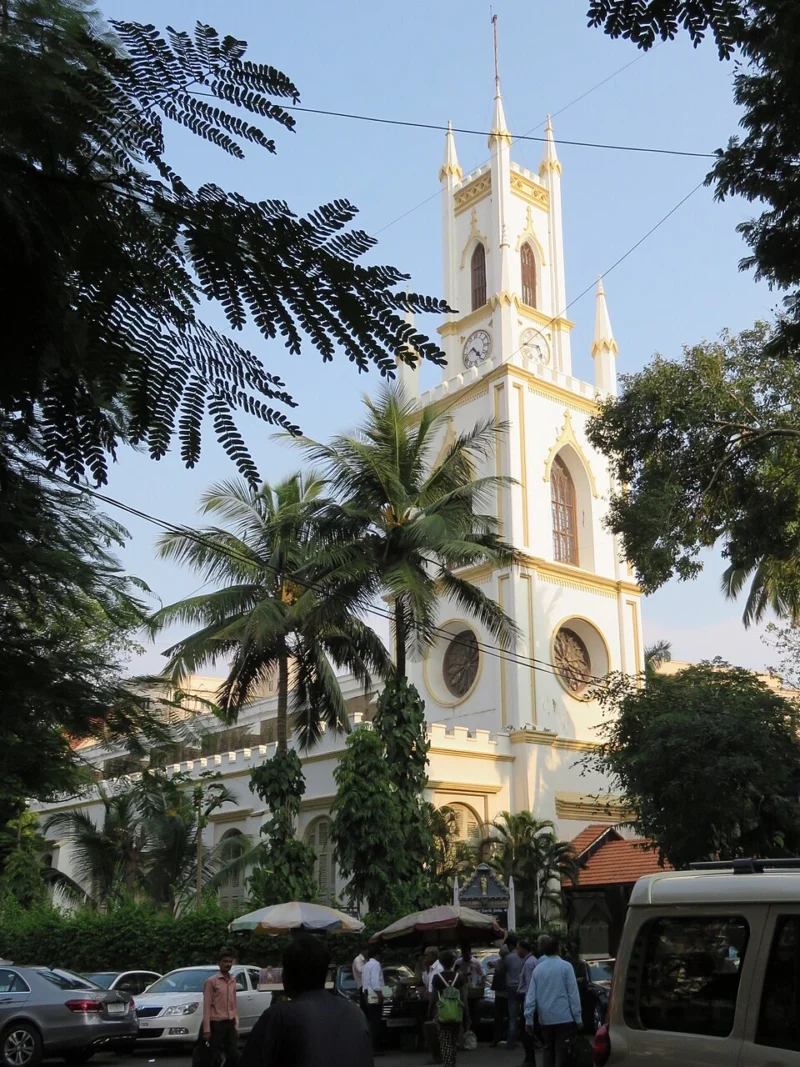
    Oldest churchSt Thomas CathedralConsecrated on Christmas Day 1718, this is the oldest church in Mumbai and was the first Anglican church inside the British fort. The memorials on its walls tell the stories of colonial Bombay families.
  • 7
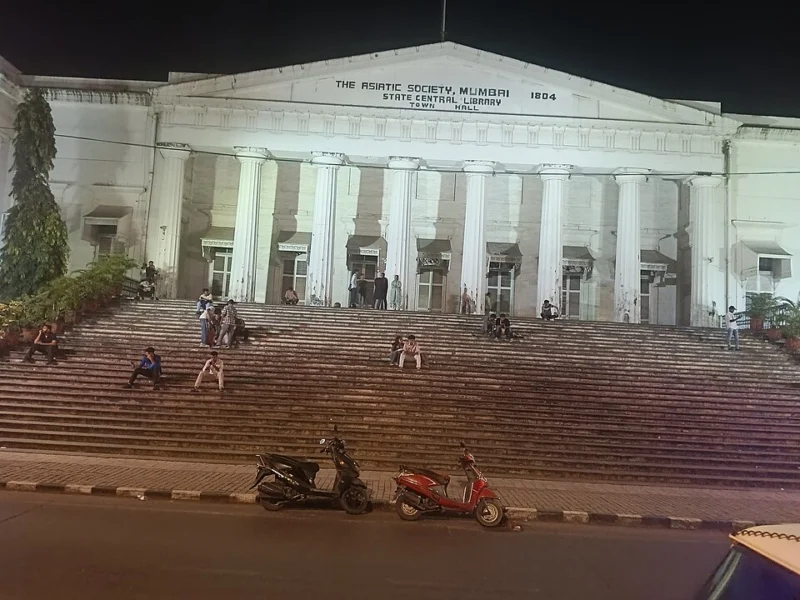
    Early eveningAsiatic Society of MumbaiThe society traces its roots to 1804 and works from the neoclassical Town Hall facing Horniman Circle. Its wide steps are a favourite place to sit as the office crowd heads home.
  • 8
    DinnerTrishnaThis long-running seafood restaurant on Rope Walk Street is a Kala Ghoda institution with locals and visitors. Order the seafood, which is what it is known for, and book a table for the evening.
  • Getting aroundChurchgate and CSMTChurchgate and Chhatrapati Shivaji Maharaj Terminus stations are both about 10–15 minutes on foot from Kala Ghoda. The area itself is best explored on foot, with taxis easy to find for longer trips.
  • Where to stayLook in Kala Ghoda, the Fort and northern Colaba, so the museums and the Victorian buildings are a walk away. Rooms in older buildings can be small and dated, so check recent photos and reviews, and expect higher prices than elsewhere in Mumbai.

Did you know?

Named after a black horse Kala Ghoda means black horse — a statue of Edward VII on horseback that now stands in Byculla’s Jijamata Udyan.
A synagogue for a father Jacob Elias Sassoon built the Knesset Eliyahoo Synagogue in 1884.
Free art since 1952 Jehangir Art Gallery has shown Indian artists since 1952, and entry is free.
Kala Ghoda

Girgaon

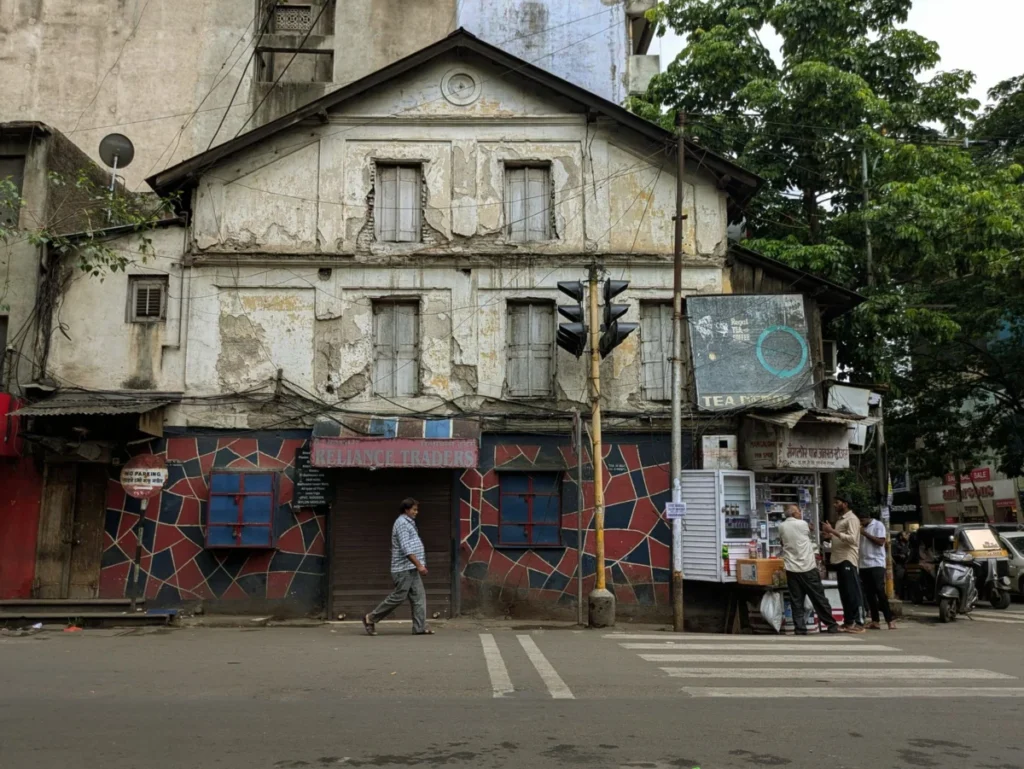
Girgaon is old Marathi Mumbai: crowded lanes, small temples, Ganesh festival pandals and family-run shops between Charni Road station and the beach at Chowpatty. It is less polished than the Fort, but it is where you see how the city's middle class has lived for more than a century.

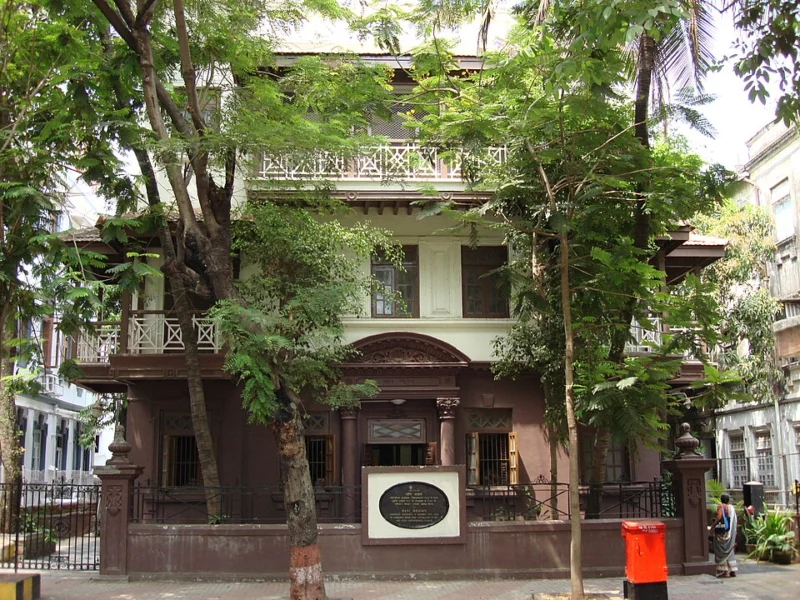
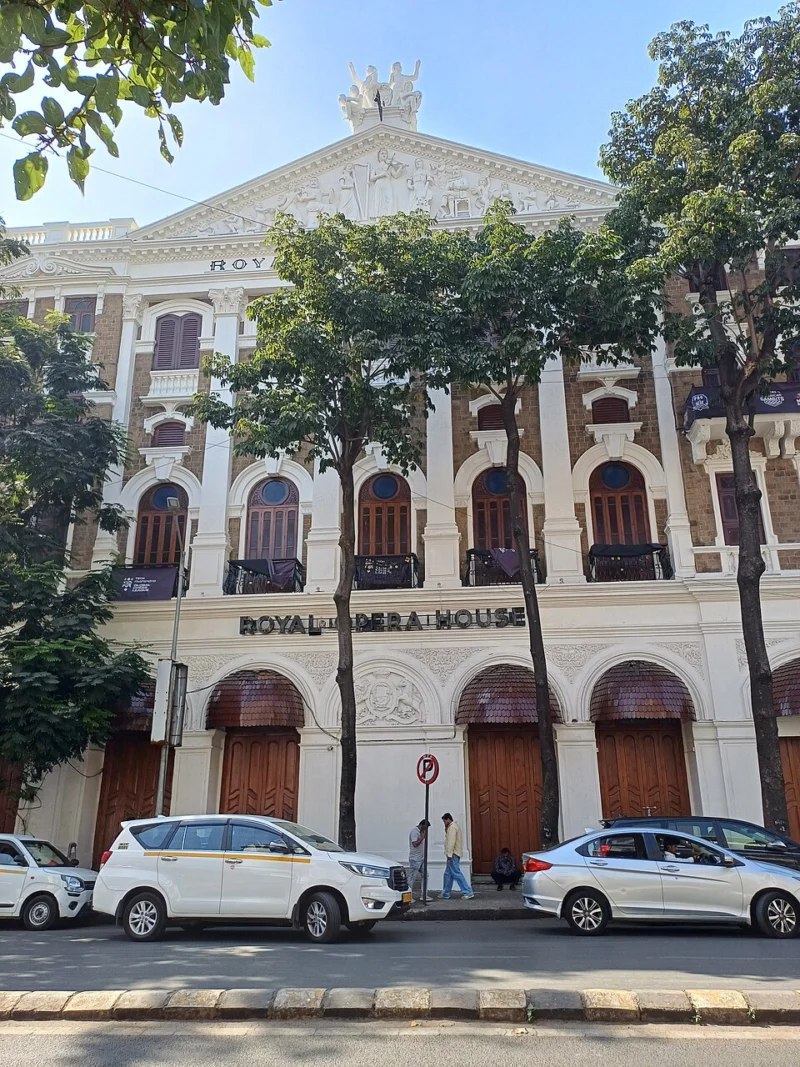
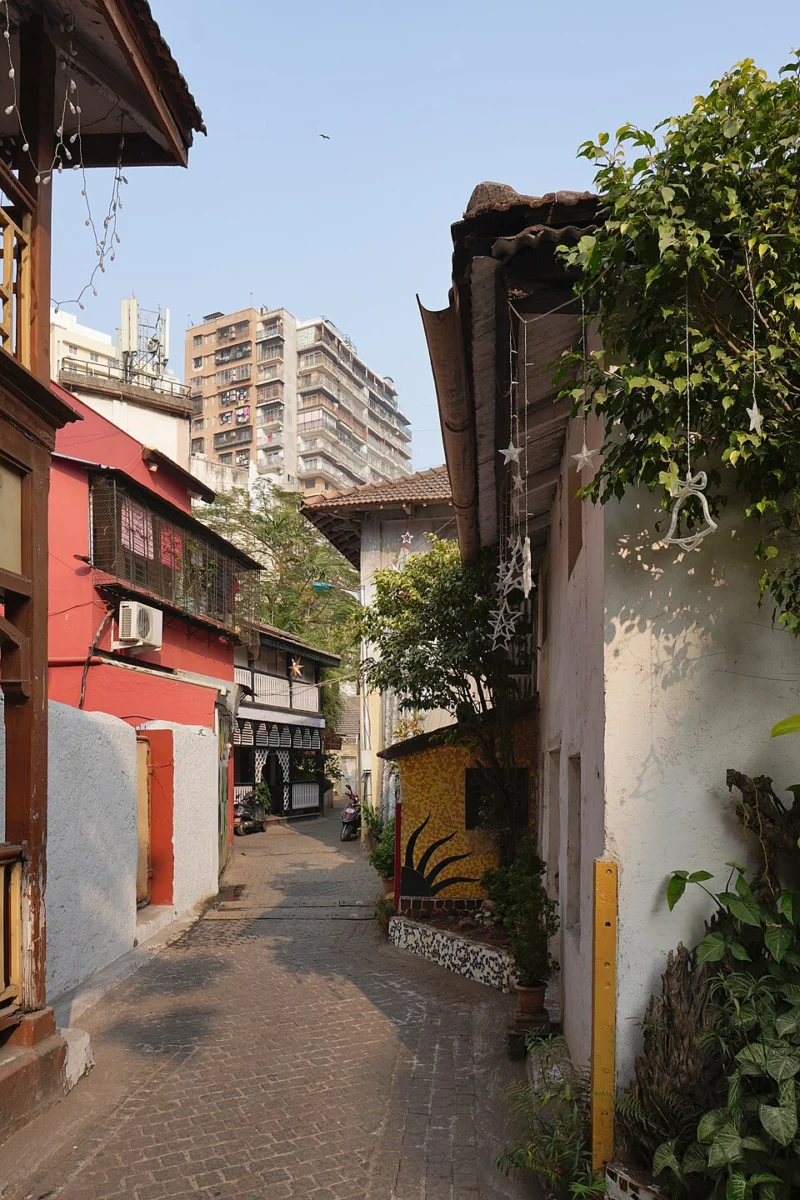
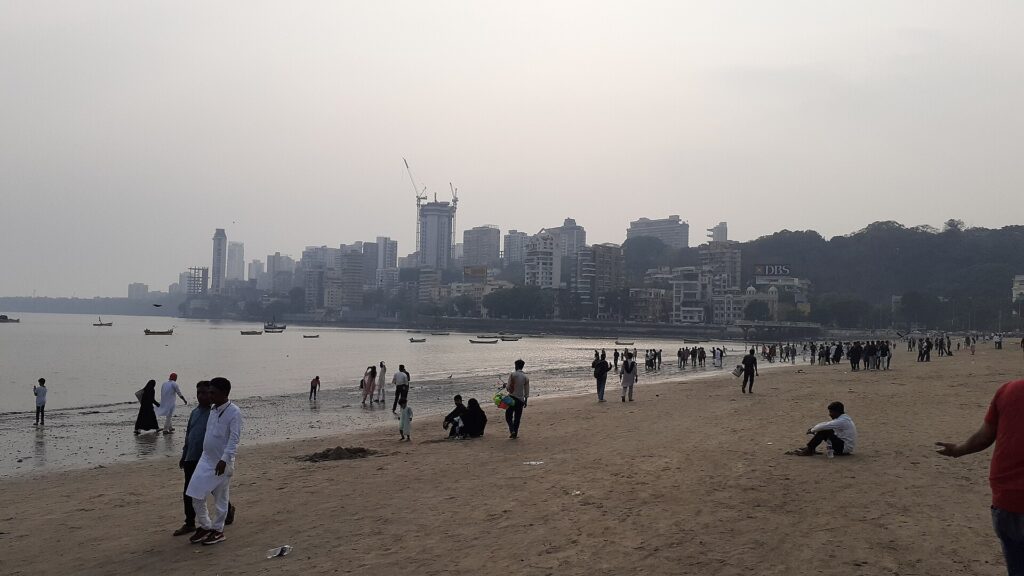
Begin at Mani Bhavan, the house on Laburnum Road that was Gandhi's base in Bombay between 1917 and 1934. Walk down to the Royal Opera House, India's only surviving opera house, restored and reopened in 2016, then lose yourself in the narrow lanes of Khotachiwadi, a heritage village of old Portuguese-style houses. Finish at Girgaon Chowpatty, the beach at the end of Marine Drive, as the lights come on along the bay.

The drawback: streets are crowded and noisy, and there are few hotels inside Girgaon itself. Most visitors stay along Marine Drive or around Grant Road, a short walk or taxi ride away.

Local picks

For Culture & History
  • 1
    MorningMani BhavanGandhi used this house on Laburnum Road as his base in Bombay between 1917 and 1934, and it is now a museum about his life and work. Allow about an hour, and go early before the day gets hot.
  • 2
    Late morningRoyal Opera HouseIndia's only surviving opera house was inaugurated in 1911, closed in 1993 and reopened after restoration in 2016. Check the programme for a concert or talk, as that is the easiest way to see the interior.
  • 3
    AfternoonKhotachiwadiThis heritage village of old Portuguese-style houses survives in the middle of Girgaon. Walk quietly through the lanes and respect the residents’ privacy.
  • 4
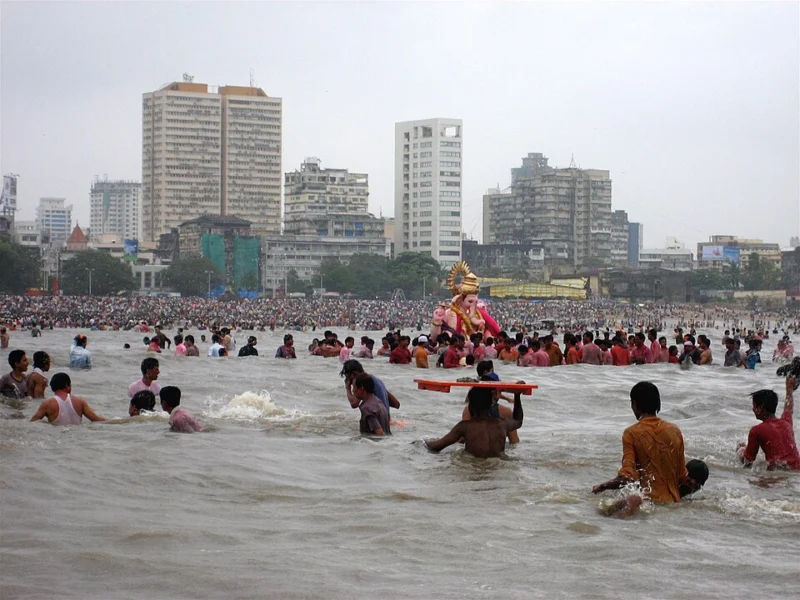
    SunsetGirgaon ChowpattyThe beach at the end of Marine Drive is where the city comes to walk, eat street snacks and watch the sun go down. During the Ganesh festival, huge crowds bring idols here for immersion in the sea.
  • Getting aroundCharni Road stationCharni Road station on the Western line is the nearest for Girgaon, and Grant Road is the next stop north. Both are only a few minutes by train from Churchgate.
  • Where to stayThere are few hotels inside Girgaon, so look along Marine Drive or around Charni Road and Grant Road stations. Rooms facing the main roads are noisy, so ask for a quieter side, and check recent reviews for older buildings.

Did you know?

Gandhi's Bombay home Mani Bhavan was the centre of Gandhi’s political work in Bombay between 1917 and 1934.
India's only surviving opera house The Royal Opera House opened in 1911 and reopened in 2016 after restoration.
A village inside the city Khotachiwadi is a heritage village of old Portuguese-style houses in the middle of Girgaon.
Girgaon

Planning your stay in Mumbai

For Culture & History
  • Mumbai's history in 3 daysDay 1: Kala Ghoda — the Rajabai Clock Tower, the museum and St Thomas Cathedral. Day 2: Colaba — the Afghan Church, Sassoon Docks and the Gateway of India, then sunset at Girgaon Chowpatty. Day 3: Bandra — Ranwar, Mount Mary and Bandra Fort.
  • When to goNovember to February is the most comfortable time for walking, with dry weather and cooler days. The monsoon from June to September brings heavy rain that can flood streets and disrupt trains.
  • Museum daysStart museum days early, before the heat and the crowds. Foreign visitors usually pay a higher entry fee than Indian visitors, and some museums charge extra for photography.
Self-guided walking tours Culture & History (Mumbai, India)
Routes 4
Pick a route

Best time to visit Mumbai (India)

Now (November) avg high: 33°C, mostly dry, moderate crowds. Best months to walk: Dec & Nov.

Live Temp …
~Day / Night Temp 33°C / 23°C
Sunrise / Sunset 6:44 / 18:02
Local time 1:04
Sea Temp 29°C
Best Months Dec & Nov
J Jan F Feb M Mar A Apr M May J Jun J Jul A Aug S Sep O Oct N Nov best month this month D Dec best month
Check Mumbai hotels
Temperature Average daytime high, month by month. Zero line marks freezing point.
Crowds How busy it gets — traveller interest by month.
Sea temperature Sea warmth for swimming, by month.
Rainfall Rainy days to expect each month.
Sunshine Hours of sun per day, by month.
Mumbai guides →

Best hotels in Mumbai for culture and history

Rooms within reach of the museums, the Victorian Fort and the old neighbourhoods.
The Taj Mahal Palace, Mumbai
Best overall
9.2 Outstanding
2362 reviews

The Taj Mahal Palace, Mumbai

Opened in 1903 beside the Gateway of India, the Taj Mahal Palace is a piece of Mumbai history in itself. The museums and galleries of Kala Ghoda are about ten minutes on foot. Rooms are either in the original palace building or in the 1970s Tower, so check which one you are booking.

Ideal for: History lovers who want to stay inside a landmark
Abode Bombay
Top pick
9.0 Excellent
1495 reviews

Abode Bombay

A small boutique hotel on Lansdowne Road in Colaba, about ten minutes on foot from the museums of Kala Ghoda. Guests rate it highly, and it is a quieter alternative to the big hotels by the Gateway of India.

Ideal for: Travellers who want a small hotel near the museums
Taj Lands End, Mumbai
Smart choice
8.1 Very Good
2547 reviews

Taj Lands End, Mumbai

A large Taj hotel at Land's End, at the southern tip of the Bandstand promenade and a few minutes from Bandra Fort. It is a comfortable base for Bandra's churches and village lanes, but South Mumbai's museums can be an hour away by road at busy times.

Ideal for: Travellers exploring Bandra's Portuguese past
The Ferreiras
Smart choice
9.4 Superb
139 reviews

The Ferreiras

A homestay on Khotachiwadi Trail Lane in Girgaon, about 15 minutes on foot from Girgaum Chowpatty beach. Rooms are air-conditioned with private bathrooms, there is a small garden, and a continental breakfast is served each morning. It is a home rather than a hotel, so expect few services, but you wake up in the old lanes you came to see.

Ideal for: History lovers who want to stay inside old Girgaon
Grand Residency Hotel & Serviced Apartments
Smart choice
8.1 Very good
445 reviews

Grand Residency Hotel & Serviced Apartments

An aparthotel at the junction of 24th and 29th Road, just off Turner Road in Bandra West, with the Bandstand promenade about 2.3 km away. Rooms have private balconies and soundproofing, and the lobby café serves local dishes. It is a quiet base for Bandra's old churches and village lanes, though South Mumbai's museums are a long drive.

Ideal for: History lovers exploring Bandra's Portuguese past
Theory9 Premium Service Apartments Bandra
Smart choice
8.4 Very good
427 reviews

Theory9 Premium Service Apartments Bandra

Serviced apartments on the corner of Turner Road and St Martins Road, in the middle of Bandra West, about 2.5 km from Mahim Beach. There is a 24-hour front desk, a lift and daily housekeeping, and the vegetarian breakfast includes local specialities. It suits a slower history trip around Bandra, with more space than a hotel room.

Ideal for: Travellers who want space for a longer Bandra stay

Coming for the Kala Ghoda Arts Festival?

Hotels in South Mumbai fill up around the festival in late January and early February, and in the cooler months from November to February — book early if your dates are fixed.

Compare Mumbai hotels for history lovers

Location, character and what makes each one special — side by side.
The Ferreiras
Smart choice
9.4 Superb
139 reviews

The Ferreiras

Girgaon • Homestay • Khotachiwadi Trail Lane
A homestay in old Girgaon
Local Vibe
Homestay in old Girgaon
Abode Bombay
Top pick
9.0 Excellent
1495 reviews

Abode Bombay

Colaba • Boutique • Lansdowne Road
Boutique stay near Kala Ghoda
Boutique Hotel
Small hotel in Colaba

Traditional Local Food Mumbai (India)

Snack Vegan

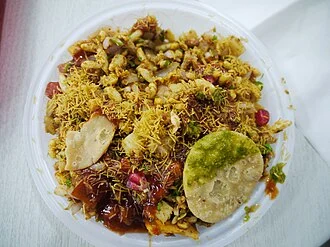
Bhel Puri

भेलपुरी
Bhael-Poo-ree

A tangy and spicy puffed rice salad mixed with tamarind sauce.

Open Bhel Puri recipe
Bombay Duck Fry
Main course Fish & Seafood

Bombay Duck Fry

बॉम्बे डक फ्राय
Baam-bae Duc Fray

Crispy fried fish known locally as 'Bombay Duck'.

Open Bombay Duck Fry recipe
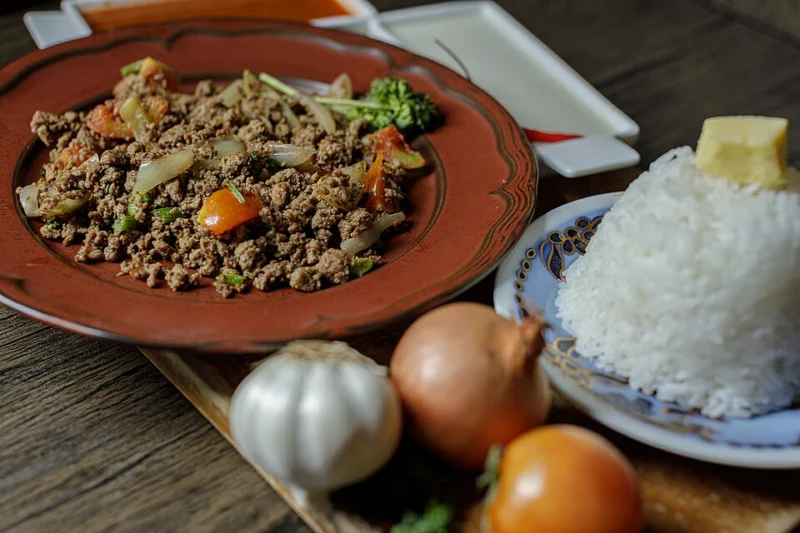
Keema Pav
Main course Meat

Keema Pav

कीमा पाव
Kee-mah Pow

Spiced minced meat served with buttered bread rolls.

Open Keema Pav recipe
Street food Vegan

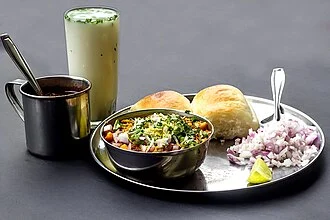
Misal Pav

मिसळ पाव
mee-sull paav

A spicy curried lentil dish topped with crunchy farsan, served with bread.

Open Misal Pav recipe
Snack Vegetarian

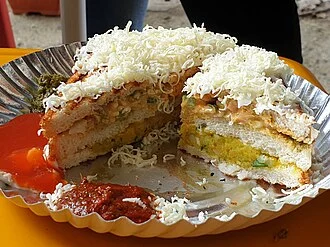
Mumbai Sandwich

बॉम्बे सॅंडविच
bom-bay san-dwich

A street food favorite with layers of chutney, veggies, and spices.

Open Mumbai Sandwich recipe
Street food Vegan

Pani Puri

पाणी पुरी
pah-ni poo-ree

Crispy hollow puris filled with spicy tangy water and chickpeas.

Open Pani Puri recipe
Street food Vegetarian

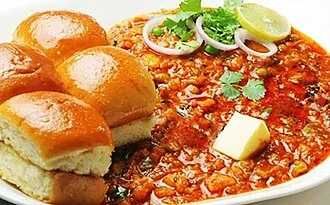
Pav Bhaji

पाव भाजी
Paav Bhaa-jee

A spicy vegetable mash served with fluffy buttered bread rolls.

Open Pav Bhaji recipe
Street food Vegetarian

Vada Pav

वडा पाव
Vuh-daa Paav

Spicy potato fritter served inside a bun, akin to a burger.

Open Vada Pav recipe

Activities & Experiences

Things to Do in Mumbai

Top-rated tours, day trips and local experiences — book in advance to secure your spot.

City & Country Data Mumbai (India)

Key travel data for Mumbai — local prices, safety, healthcare, local currency and essentials, curated by Triplandio.

Safety 🔒 34
Health 🏥 28
Lifestyle ⭐ 44
Infra 🏗️ 37
Rank 🎯 #69
Score 📊 35
Tourists ✈️ 17.9M/y
GDP/cap 💵 $2.7k
Life Exp ❤️ 72.2 yrs
Population 👥 1.5B
Currency 💱 INR ₹
Language 🗣️ Hindi
Payments 💳 Mixed
Emergency 🆘 112
Coffee ☕ $3.12
Beer 🍺 $3.12
Lunch 🍽️ $6.02
Groceries 🛒 $15.00/w
Taxi/km 🚕 $0.36
Transit 🚇 $0.24
Fuel ⛽ $1.27/l
Internet 📡 $11.00/m
Salary 💵 $500/m

Travel tipsMumbai (India)

Quick tips

  1. Satellite phones and GPS devices are illegal — Critical

    Owning or using a satellite phone or satellite GPS device in India without a licence is illegal, even in transit. Visitors, including British nationals, have been arrested; the device is confiscated. Leave satellite messengers and handheld GPS units at home.

  2. Some states ban all alcohol — Critical

    Drinking, carrying or transporting alcohol is illegal in Bihar, Gujarat, Mizoram, Nagaland and Lakshadweep. You could be arrested, held without bail and face 5 to 10 years in prison.

  3. Tiny amounts of drugs mean prison — Critical

    Possessing even a small amount of any illegal drug for personal use carries a minimum sentence of 6 months, and up to 10 years for larger amounts. Court cases are slow, so you could be held for years.

  4. Vapes are banned — Caution

    Vapes and e-cigarettes are banned in India. You cannot buy them there or bring them into the country, so leave yours at home.

  5. Get your visa before you fly — Good to know

    Almost every visitor needs a visa or e-visa arranged in advance, and the wrong visa type can get you refused or deported. Also fill in the online e-arrival card in the 72 hours before landing.

  • Do
  • Get your visa before you fly
  • Take shoes off at temples and homes
  • Use your right hand to eat and pay
  • Drink sealed bottled water
  • Agree rickshaw fares before you ride
  • Don’t
  • Bring a satellite phone or GPS unit
  • Pack a vape
  • Drink in parks or in dry states
  • Photograph airports or army sites
  • Walk isolated beaches alone

Mumbai tips for history and culture lovers

Take a guided heritage walk

Local guides run walks through the Fort precinct, Kala Ghoda and old neighbourhoods such as Khotachiwadi. A guide explains who built what and why — book a day or two ahead, early in your trip.

Tip: Book a walk early in your trip

Time your trip for the Kala Ghoda Arts Festival

The Kala Ghoda Arts Festival fills the streets every year in late January or early February, with exhibitions, talks and walks, many of them free. Rooms nearby go quickly, so book early if your dates overlap.

Tip: Late January to early February

Dress and ID for places of worship

Cover shoulders and knees for temples, churches and synagogues, and take your shoes off where asked. Synagogues in Mumbai have security checks, so carry photo ID.

Tip: Carry ID and dress modestly

Use the trains, not the roads

Mumbai's suburban trains are the fastest way between South Mumbai, Byculla and Bandra. Travel outside rush hours, buy tickets at the counter or on the UTS app, and keep your bag in front of you in crowded carriages.

Tip: Avoid the morning and evening rush

Mumbai for history and culture: FAQ

When is the best time to visit Mumbai?

The best time to visit Mumbai is December and November — fewer crowds, comfortable temperatures, less rain and more sunshine. Compare every month in the seasonal chart above.

Where should I stay in Mumbai for history and culture?

Kala Ghoda and the neighbouring Fort and Colaba are the best base: the main museum, the Victorian Gothic buildings and the Gateway of India are all within walking distance. Bandra West suits travellers interested in Mumbai's Portuguese and East Indian Catholic past.

Which Mumbai hotel has the most history?

The Taj Mahal Palace beside the Gateway of India opened in 1903 and is a landmark in its own right. When you book, check whether your room is in the original palace building or the newer Tower.

Which museums should I not miss in Mumbai?

Start with Chhatrapati Shivaji Maharaj Vastu Sangrahalaya in Kala Ghoda for Indian art and archaeology, then the Dr. Bhau Daji Lad Museum in Byculla for the story of the city itself. Mani Bhavan in Gamdevi tells the story of Gandhi in Bombay.

How do I get around Mumbai's historic areas?

Walk within Kala Ghoda and the Fort, and use the suburban trains for Byculla (Central line) and for Girgaon or Bandra (Western line). Taxis are easy to find in South Mumbai, but road traffic is slow at rush hour.

Can I visit Mumbai's synagogues and old churches?

Yes. Knesset Eliyahoo in Kala Ghoda and Magen David near Byculla usually admit visitors outside prayer times, and the old churches of Bandra are open for quiet visits. Dress modestly, carry photo ID for synagogue security checks and keep away from services unless you are joining in.

Mumbai's history, neighbourhood by neighbourhood

★ For culture lovers
Mumbai's history comes in layers: Portuguese churches, a British fort, Parsi and Jewish merchant families, Gandhi's years in the city and the Marathi neighbourhoods that grew up around them. This guide picks four areas where that history is still on the street — Kala Ghoda, Colaba, Girgaon and Bandra West — with a walk, the main sights and hotels for each.
  • Hotels near museums and heritage sites
  • Walks through four historic areas
  • Checked facts, no myths
  • Updated 2026
Asia — India — Mumbai — Where to Stay in Mumbai for History and Culture
keyboard_arrow_up