


Dorf
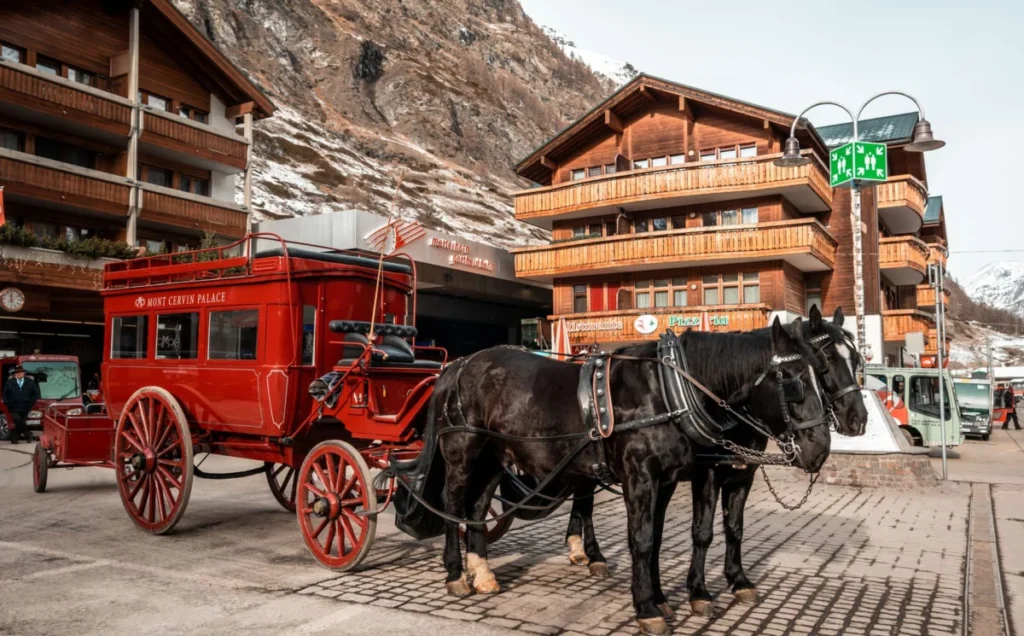
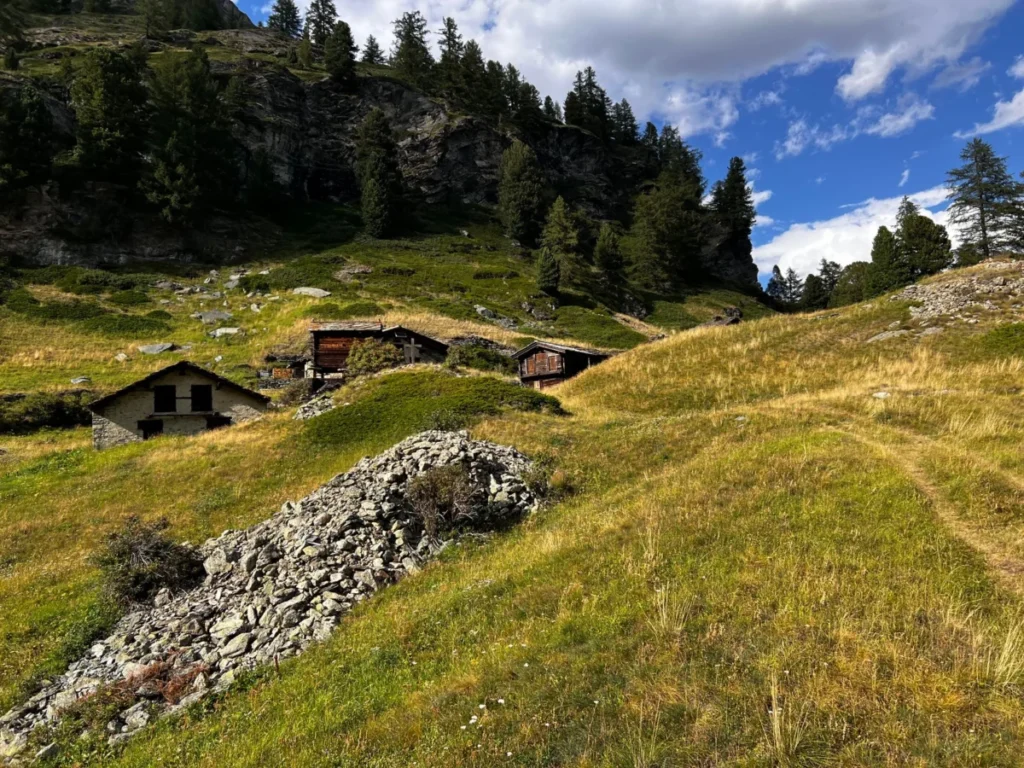
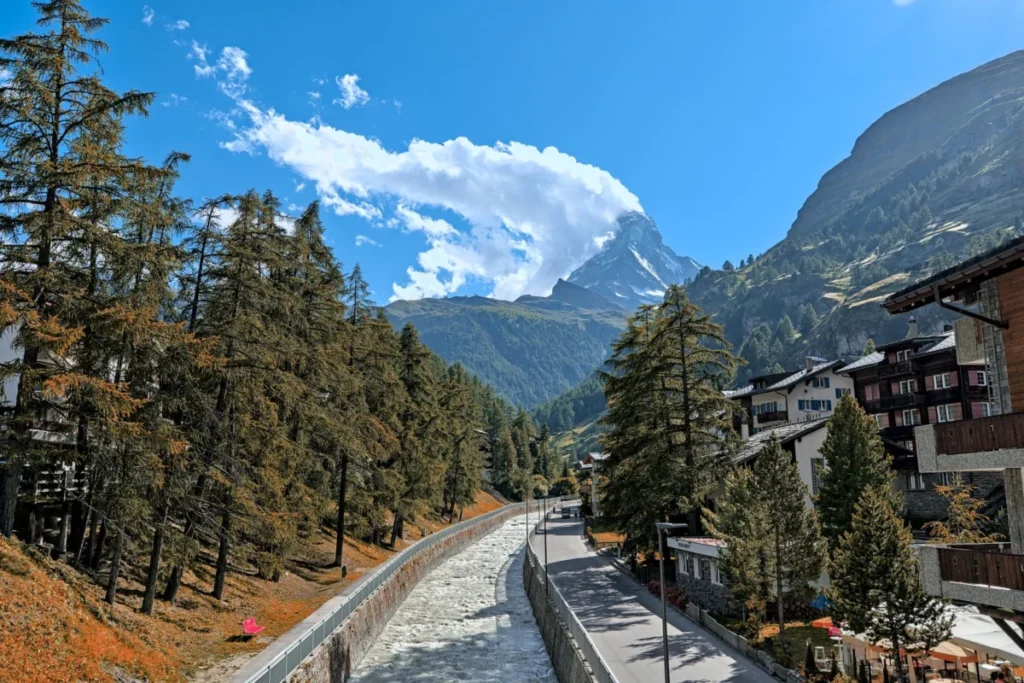
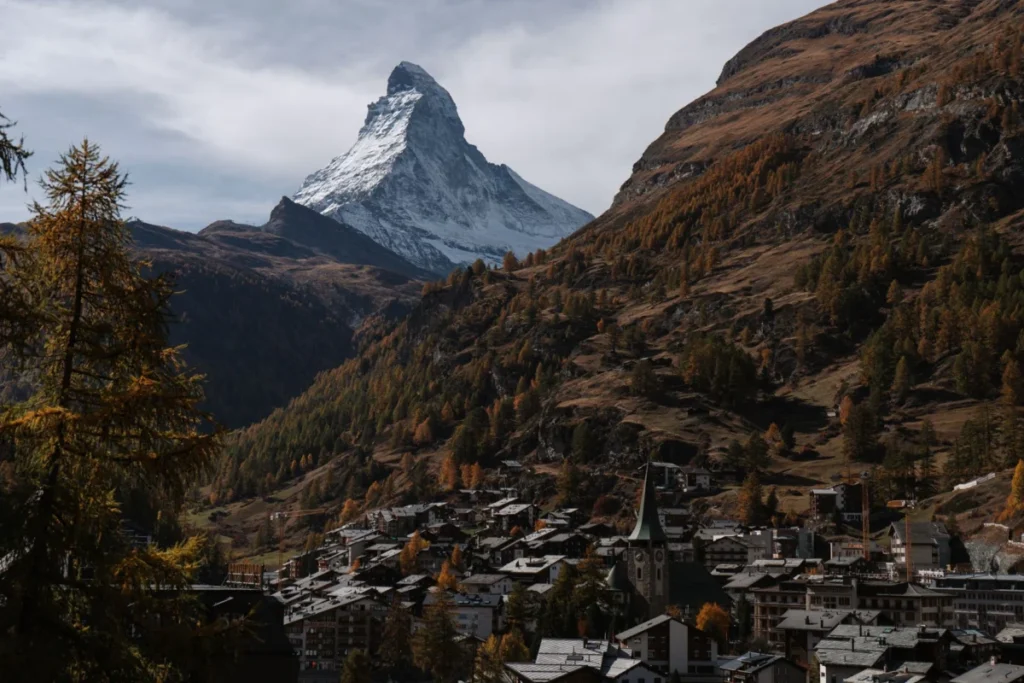
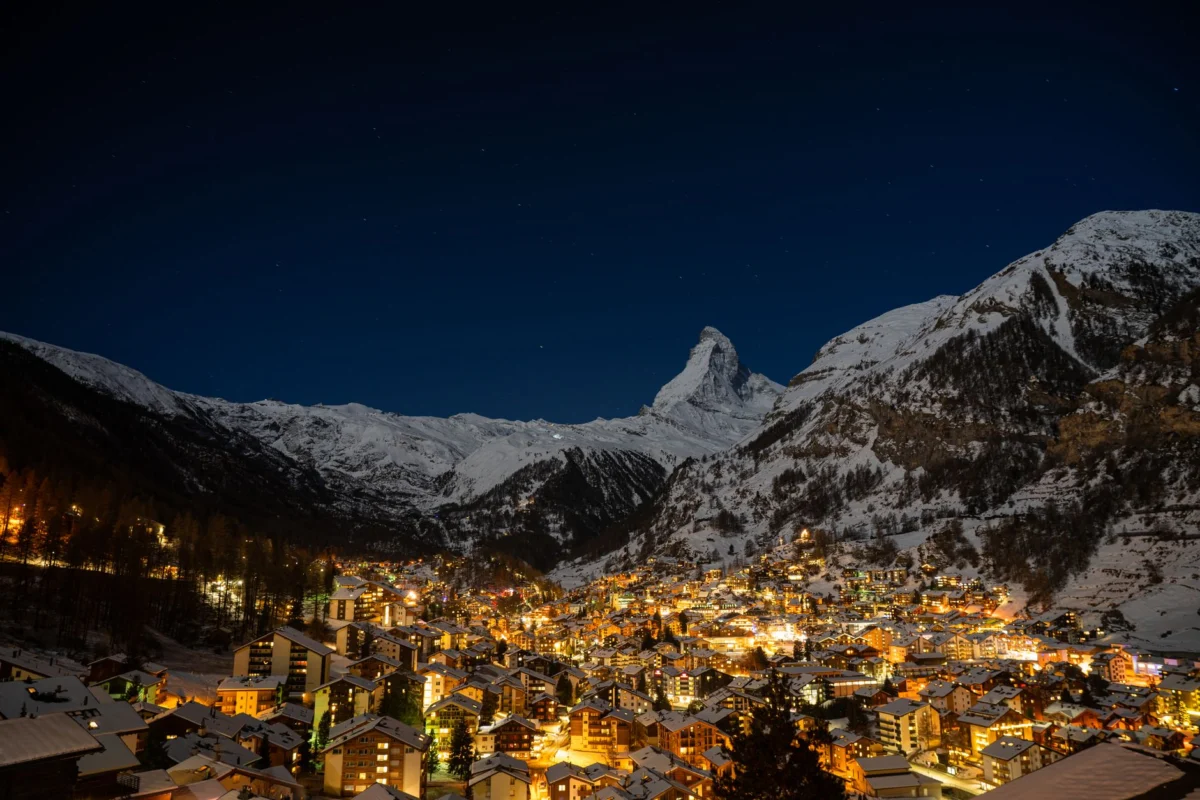
For a first Zermatt stay, Dorf puts the most useful landmarks within a short walk. Bahnhofstrasse runs through the centre with bakeries, outdoor shops, Swiss watch stores and restaurants, while Kirchplatz brings you to St. Mauritius Church, the Mountaineers’ Cemetery and the Matterhorn Museum – Zermatlantis. The historic lanes around Hinterdorfstrasse show timber hay barns and stone bases, giving you an easy introduction to the village’s older architecture. Hotels here range from traditional chalet properties to polished four- and five-star addresses, with many rooms and terraces oriented towards the Matterhorn.
Transport is especially straightforward from this base. The Gornergrat Railway station is close to Bahnhofstrasse, and the Sunnegga funicular entrance is also within a practical walking distance for an early mountain start. You can shop for picnic supplies, return to your room between activities and find dinner without arranging a taxi. Evening foot traffic is highest around the central streets, while the lanes near the church are quieter after restaurants close. Choose Dorf for walkable sightseeing, restaurant choice, easy lift access and the simplest first-night orientation in Zermatt.
| Zermatt first appeared as “Pratobornum” A 1495 record names the village Pratobornum; “Zermatt” developed from the German “zur Matte”. |
| Alexander Seiler launched hotel tourism Seiler opened the Hotel Monte Rosa on Bahnhofstrasse in 1855, helping establish Zermatt as an alpine resort. |
| St Mauritius Church rose in the tourism era The present parish church in Dorf was built between 1913 and 1916. |
| The Matterhorn’s first ascent began in Zermatt Edward Whymper’s party reached the summit on 14 July 1865 after setting out from Zermatt. |