

Explore Guides
EUROPE
Kosovo
Triplandio Kosovo guide covers 4 travel guides with 1 city across 16 areas, complete with hotel picks. Explore 14 self-guided walking tours in Kosovo with 14 POI, spanning 42.1 km in total. Get inspired by 4 local dishes, complete with recipes and our unique Food Flavour DNA graph.
Country Data Kosovo

Key travel data for Kosovo — safety, healthcare, local currency and essentials, curated by Triplandio.
🌍 Kosovo
GDP/cap
$7.9k
Life Exp
78.2 yrs
Population
1.6M
Payments
Mixed
Emergency
112
Travel tipsKosovo

Quick tips
- Avoid protests in the north — Critical
Protests in the northern municipalities of Zvečan, Zubin Potok and Leposavić, and in Mitrovica north of the Ibar river, have at times turned violent. Stay away from any gatherings there.
- Unexploded mines in remote areas — Critical
Landmines and unexploded bombs from the 1998–1999 conflict remain in some remote parts of Kosovo. Stay on roads and marked trails when hiking, and keep out of abandoned buildings.
- Don't enter Serbia straight from Kosovo — Caution
Serbia doesn't recognise Kosovo's borders. If you entered Kosovo from somewhere other than Serbia, you'll likely be refused entry at the Kosovo–Serbia crossings. Travel via North Macedonia or Montenegro instead.
- Green card car insurance isn't valid — Caution
The European green card insurance doesn't cover Kosovo. Buy local third-party insurance at the border when you drive in, and carry enough euros in cash to pay for it.
- No Uber or Bolt in Kosovo — Local tip
International ride-hailing apps don't work in Kosovo. Order a registered taxi by phone or local app; drivers who approach you are often unofficial and overcharge.
- Pristina, Prizren and Peja in one trip — Local tip
Kosovo is small: Prizren and Peja are each about 1.5 hours by bus from Pristina, so you can see the capital, the Ottoman old town of Prizren and the Rugova mountains in a few days.
- Do
- Enter Serbia via a third country
- Buy local car insurance at the border
- Order taxis by phone
- Stay on marked trails
- Carry cash in euros
- Don’t
- Join protests in the north
- Photograph soldiers or police
- Take unofficial taxis
- Hire a Serbian car for Kosovo
- Drive rural roads at night
Critical
Prison or heavy penalty possible
Regions & seasons
- The north is tense — Critical
The Serb-majority north, including north Mitrovica, has seen violent protests. Check official travel advice before visiting and avoid gatherings.
Laws & fines
- Drug penalties are severe — Critical
Possessing, using or smuggling illegal drugs, including cannabis, in Kosovo brings long prison sentences and heavy fines, including for passengers transiting the airport.
Caution
Fines, losses or injury possible
Laws & fines
- Don't photograph soldiers or police — Caution
Photographing military or police installations, personnel or vehicles in Kosovo, including international peacekeepers, can get you into trouble with the authorities.
Tipping & money
- Use ATMs inside banks — Caution
Card fraud happens in Kosovo. Use cash machines inside banks where possible, check street machines for tampering and keep your card in sight when paying.
- Don't flash cash or valuables — Caution
Criminals in Kosovo target people they think carry a lot of cash. Leave expensive jewellery and watches at home and carry only what you need for the day.
Entry & visa
- Declare restricted goods — Caution
You must declare goods that may be prohibited or subject to duty when entering Kosovo, or risk confiscation and fines.
Health
- Tick-borne fever in summer — Caution
Crimean-Congo haemorrhagic fever, a serious illness spread by ticks, is present in Kosovo, especially around Malisheva in summer. Use repellent in rural areas and check for ticks.
Outdoors & adventure
- Drive in daylight — Caution
Kosovo's roads range from fair to poor, especially in rural areas and after bad weather, with landslide and flood risk. Drive on the right and avoid driving at night.
- Wildfires from April to October — Caution
Wildfires are possible in Kosovo in hot, dry weather. Don't light fires outside marked areas, put out cigarettes properly and call 112 if you see a fire.
Good to know
Rules and useful facts
Getting between cities
- Border delays in summer — Good to know
Crossings between Kosovo and North Macedonia, Albania and Serbia can have long delays, especially in summer and around holidays. Carry food and water in the car.
- Crossing into Serbia — Good to know
You can enter Kosovo from Serbia and return, but if you arrived in Kosovo another way you will likely be refused at the Serbian crossings. Go via a third country.
Laws & fines
- Carry your passport — Good to know
Carry your passport for identification in Kosovo and keep a copy somewhere separate in case it is lost or stolen.
- Kosovo stamps and Serbian officials — Good to know
Serbian border guards have refused entry to foreigners with Republic of Kosovo stamps in their passports, and have occasionally cancelled those stamps.
- Carry vehicle documents — Good to know
If you drive your own car into Kosovo you must carry its registration and ownership documents. Border queues can be long in summer and around holidays, so bring food and water.
Customs
- A conservative society — Good to know
Same-sex relations are legal in Kosovo, but society is conservative and public affection between same-sex couples can attract unwanted attention.
Tipping & money
- Kosovo uses the euro — Good to know
Kosovo uses the euro even though it is not in the EU. Cards work in Pristina hotels and restaurants, but carry cash for villages, buses and small cafés.
Entry & visa
- Travel advisory: Level 2 of 4 — Good to know
Exercise Increased Caution — the U.S. State Department's rating for Kosovo.
- 90 days visa-free — Good to know
British, EU, US and many other passport holders can visit Kosovo without a visa for up to 90 days. Border officers may ask about the purpose of your trip or your funds.
- Passport valid for your stay — Good to know
Your passport must be undamaged and valid for your whole stay in Kosovo; no extra validity is needed. Some nationalities need a visa, so check before you go.
Health
- Ambulance numbers 94 and 194 — Good to know
In Kosovo, dial 94 from a landline or 194 from a mobile for an ambulance, or 112 for general emergencies.
- Use private clinics — Good to know
Kosovo's public hospitals are poorly equipped and short of medicines. Private clinics are better and fairly affordable; carry travel insurance and some cash.
- Mosquitoes carry West Nile virus — Good to know
Mosquito-borne diseases, including West Nile virus, occur in Kosovo in summer. Use insect repellent, especially in the evening.
- Winter smog in Pristina — Good to know
Air pollution in Pristina can be very high, especially in winter when coal is burned. Check the air-quality index if you have asthma or heart problems.
Outdoors & adventure
- Serbian hire cars and Kosovo — Good to know
Many Serbian hire companies don't allow their cars into Kosovo, and vice versa. Serbian-registered hire cars have been targeted in isolated areas.
Local tips
Local know-how
Getting between cities
- Buses are the main transport — Local tip
Frequent, cheap buses link Pristina with Prizren, Peja, Gjakova and Mitrovica, and run to Skopje, Tirana and Podgorica. Buy tickets at the bus station or on board.
- Limited train service — Local tip
Kosovo's railway is small and slow, with few daily trains. For most journeys the bus is faster and more frequent.
Regions & seasons
- The west: mountains around Peja — Local tip
The Rugova Gorge and the Accursed Mountains near Peja are Kosovo's best hiking and via ferrata area, with the best weather from June to September.
- The south: Prizren — Local tip
Prizren, below the Sharr mountains, is the most attractive old town in Kosovo, with Ottoman mosques, a stone bridge and a hilltop fortress. Summers are hot.
Customs
- Be careful with names and politics — Local tip
The Kosovo–Serbia conflict is still sensitive. Avoid describing Kosovo as part of Serbia to Albanian Kosovars, and don't raise the war casually with anyone.
- Macchiato is a ritual — Local tip
Kosovars take coffee seriously, and a small macchiato in a café is how people meet and talk. Expect to be invited, and accept if you can.
- Dress modestly at religious sites — Local tip
Most Kosovars are Muslim, and there are also Serbian Orthodox monasteries. Cover shoulders and knees at mosques and churches, and women should cover their hair in mosques.
Tipping & money
- Tipping in Kosovo — Local tip
Round up the bill or leave about 10% in Kosovo restaurants for good service. Tips are appreciated rather than expected in cafés.
Outdoors & adventure
- Hike with local knowledge — Local tip
The Rugova and Sharr mountains have superb hiking, but trails can be poorly marked. Hire a local guide or use a well-known route, and carry water and warm layers.
Our Kosovo city guides
Order registered taxis by phone and avoid the evening crowds and demonstrations in the centre.
Say it locally
Albanian is spoken by most people and Serbian in Serb-majority areas; many younger Kosovars speak good English.
Through the year
Festival or season Public holiday (exact date)
- Winter smog and snow
Nov 2026–Feb 2027 · Pristina's air pollution peaks, while the mountains get snow; drive carefully on rural roads.
- Christmas Day
Fri 25 Dec 2026 · Public holiday
- New Year's Day
Fri 1 Jan 2027 · Public holiday
- Second Day of New Year
Sat 2 Jan 2027 · Public holiday
- Christmas Day
Thu 7 Jan 2027 · Public holiday
- Ramadan
Feb–Mar 2027 · The Muslim fasting month moves about 11 days earlier each year; in 2027 it falls around February–March. Most places stay open, but be discreet.
- Independence Day of the Republic of Kosovo
Wed 17 Feb 2027 · Public holiday
- Eid al-Fitr (tentative)
Wed 10 Mar 2027 · Public holiday
- Easter
Sun 28 Mar 2027 · Public holiday
- Easter Monday
Mon 29 Mar 2027 · Public holiday
- Constitution Day of the Republic of Kosovo
Fri 9 Apr 2027 · Public holiday
- International Labour Day
Sat 1 May 2027 · Public holiday
- Easter Sunday (Orthodox)
Sun 2 May 2027 · Public holiday
- Easter Monday (Orthodox)
Mon 3 May 2027 · Public holiday
- Europe Day
Sun 9 May 2027 · Public holiday
- Kurban Bayrami (tentative)
Mon 17 May 2027 · Public holiday
- Mountain hiking season
Jun–Sep 2027 · The best time for hiking in the Rugova Gorge and the Accursed Mountains near Peja.
- Diaspora summer
Jul–Aug 2027 · Hundreds of thousands of Kosovars living abroad come home for summer; border queues grow long and weddings fill hotels.
- Dokufest in Prizren
Aug 2027 · An international documentary film festival fills Prizren's old town with screenings and concerts; book rooms early.
Sources: GOV.UK travel advice · U.S. State Dept · Google public holidays
Traditional Local Food Kosovo
Main course
Meat
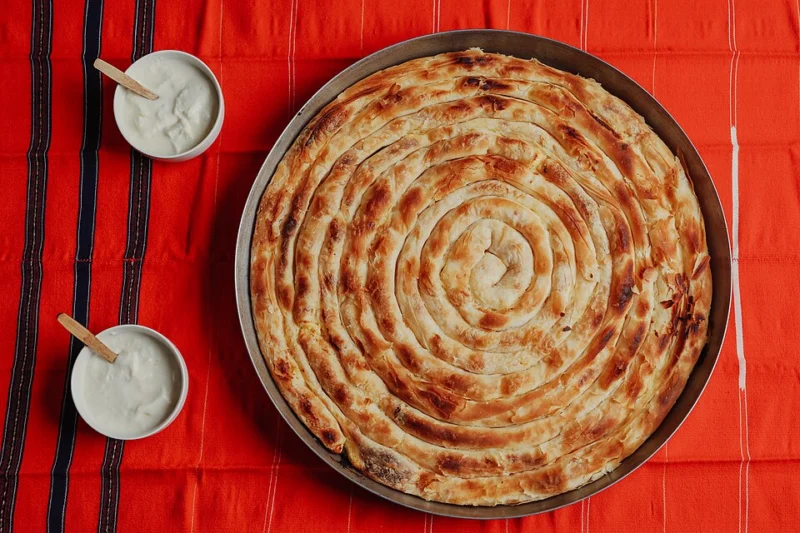
Pite me Mish
PEE-teh meh MEESH
· Savory meat pie
Pristina's meat pie with a flaky pastry filled with seasoned meat.
Open Pite me Mish recipe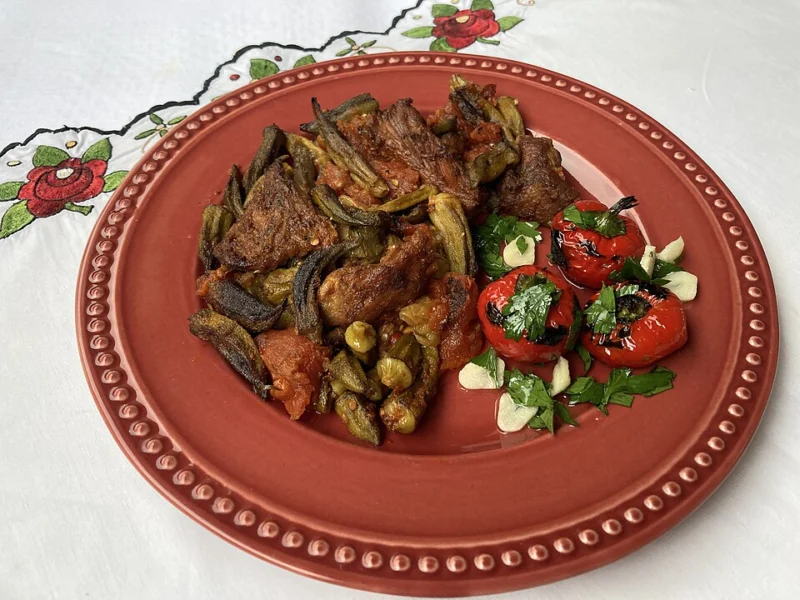
Main course
Meat
Tavë Prizreni
TAH-ve PREE-zreh-nee
· Baked lamb and vegetables
A hearty casserole of lamb with seasonal vegetables.
Open Tavë Prizreni recipe🥩
Main course
Meat
Sarma Prizreni
SAR-mah PREE-zreh-nee
· Stuffed cabbage rolls
Kosovan dish of cabbage leaves stuffed with meat and rice.
Open Sarma Prizreni recipe🌿
Bread
Vegetarian
Rastika
RAH-stee-kah
· Bread with yogurt and greens
A simple dish of flatbread topped with fresh yogurt and wilted greens.
Open Rastika recipe