Explore Guides
ASIA / VIETNAM
Triplandio Ho Chi Minh City guide covers 9 travel guides across 19 areas, complete with hotel picks. Explore 36 self-guided walking tours in Ho Chi Minh City with 86 POI, spanning 103.8 km in total. Get inspired by 17 local dishes, complete with recipes and our unique Food Flavour DNA graph.
Ho Chi Minh City
City & Country Data Ho Chi Minh City (Vietnam)

Key travel data for Ho Chi Minh City — local prices, safety, healthcare, local currency and essentials, curated by Triplandio.
🌍 Vietnam
Safety
70
Health
45
Lifestyle
42
Infra
52
Rank
#55
Score
44
Tourists
3.8M/y
GDP/cap
$5.1k
Life Exp
74.7 yrs
Population
101.6M
Currency
VND ₫
Language
Vietnamese
Payments
Mixed
Emergency
113
💰 Prices in Ho Chi Minh City
Coffee
$2.00
Beer
$1.20
Lunch
$3.00
Groceries
$16.00/w
Taxi/km
$0.50
Transit
$0.50
Fuel
$1.00/l
Internet
$16.00/m
Salary
$500/m
Travel tipsHo Chi Minh City (Vietnam)

Quick tips
- Vapes are banned — Critical
Vapes and related products are illegal in Vietnam. You cannot buy them there or bring them into the country, so leave e-cigarettes and refills at home.
- Drug offences can carry the death penalty — Critical
Possessing, using or smuggling any drug, including cannabis and in any amount, means long prison sentences and heavy fines in Vietnam. The most serious cases can carry the death penalty, and airport scanners also check transit bags.
- A positive drug test is enough — Critical
Police raid bars and clubs and test people at parties in Vietnam. A positive test can lead to criminal charges even if you took the drug before you arrived in the country.
- Phone snatching in District 1 — Caution
Thieves on motorbikes grab phones and bags from pedestrians in District 1, Ho Chi Minh City's tourist centre, and from passengers on motorbike taxis. Keep your phone away when standing near the kerb.
- Hold bags away from the traffic — Caution
Thieves on motorbikes snatch bags and phones from pedestrians across Vietnam's cities. Carry your bag on the side away from the road and don't hold your phone out at the kerb.
- Your passport must be undamaged — Good to know
Vietnam refuses entry, and sometimes exit, to travellers with a torn, water-damaged or worn passport. It also needs 6 months' validity and 2 blank pages.
- Do
- Carry a copy of your passport
- Book taxis through Grab or Xanh SM
- Count the zeros on your change
- Cover shoulders and knees at temples
- Wear a helmet on every motorbike
- Don’t
- Bring a vape
- Leave your passport as a deposit
- Drink spirits of unknown origin
- Criticise the government in public
- Walk on the kerb side with your bag
Critical
Prison or heavy penalty possible
Scams & safety
- Bui Vien Walking Street at night — Critical
Bui Vien, the backpacker nightlife street in District 1, is loud and fun but has pickpockets, laughing-gas balloons and drink spiking. Buy your own sealed drinks and leave with friends.
Laws & fines
- Laughing gas balloons are dangerous — Critical
Nitrous oxide (laughing gas) balloons are sold in many Vietnamese bars and clubs. Drugs in Vietnam, including these, may be fake or laced with toxic substances, and people have died.
- Stay out of politics — Critical
Vietnam is a one-party state. Criticising the government, carrying political material or preaching religion without permission can lead to a travel ban or prison, and online posts count too.
- Avoid protests and demonstrations — Critical
Protests are rarely tolerated in Vietnam and some have been put down with force. Walk away from any gathering and follow police instructions.
- Exit bans after disputes or accidents — Critical
Vietnamese authorities can stop you leaving the country and hold your passport while they investigate a traffic accident, unpaid debt or business dispute. Get a lawyer and contact your embassy.
- Protected wildlife is off-limits — Critical
Buying, selling or collecting protected wild animals, plants or products made from them is illegal in Vietnam and can mean a fine or a long prison sentence. Avoid souvenirs made from ivory, turtle shell or rare wood.
Entry & visa
- Don't overstay — Critical
Overstaying in Vietnam means a fine before you are allowed to leave, and you can be deported and banned from returning.
Health
- Methanol in spirits can kill — Critical
People have died in Vietnam after drinking spirits mixed with methanol, including drinks bought in licensed bars and hotels. Avoid cheap spirits and buy nothing alcoholic from street vendors.
- Watch your drink in nightlife areas — Critical
Drinks, snacks and gum from strangers have been used to drug people in Vietnam's tourist areas. Buy your own drinks, keep them in sight and get home with a licensed app taxi.
Beaches & adventure
- Zero alcohol for drivers and riders — Critical
Vietnam has a zero limit on alcohol for anyone driving a car or riding a motorbike. Any alcohol found in a police test can mean a heavy fine and possible imprisonment.
- Stay on paths in old war zones — Critical
Unexploded bombs and landmines still lie in former battlefields, especially in central Vietnam and along the Laos border on the old Ho Chi Minh Trail. Mined areas are often unmarked, so stick to used paths.
- Choose Ha Long Bay boats carefully — Critical
Overcrowded and poorly maintained boats have sunk quickly on Ha Long Bay. Choose a registered operator with a good record, especially for overnight cruises, and insist on a safety briefing and life jackets.
Caution
Fines, losses or injury possible
Scams & safety
- Lookalike taxis — Caution
Some taxis in Ho Chi Minh City copy the colours and logos of the big companies, Vinasun and Mai Linh, and use rigged meters. Book through an app or check the exact company name and phone number on the car.
- Street sellers and shoeshine boys — Caution
Coconut sellers and shoeshine boys in District 1 start the service first and then demand far more than the usual price. Say no clearly before anything begins.
- Free airport shuttles — Caution
Offers of a free bus from Tan Son Nhat Airport to your hotel are often scams unless your hotel arranged them in advance. Use the official taxi rank or an app.
Laws & fines
- Change money only at official counters — Caution
Change money only at banks, hotels or licensed exchange counters. Changing cash at unlicensed places such as jewellery or gold shops is illegal in Vietnam and can be fined.
Tipping & money
- Check the zeros on banknotes — Caution
Vietnamese dong (VND) notes run into hundreds of thousands, and the blue 20,000 and 500,000 notes look alike. Count your change and keep large notes separate from small ones.
Health
- Limits on sleeping and anxiety pills — Caution
Vietnam allows only 7 days' supply of medicines it classes as addictive or psychotropic, such as some sleeping, anxiety and strong pain tablets. Carry the prescription and a doctor's letter.
Beaches & adventure
- Motorbike licence, helmet, insurance — Caution
To ride a motorbike or drive in Vietnam you need your licence plus a 1968 International Driving Permit (IDP), and third-party insurance is compulsory. Helmets are required for rider and passenger; ride only if you're experienced.
- Never leave your passport as a deposit — Caution
Motorbike rental shops and some landlords ask for your passport as a guarantee, then hold it against damage they claim. Offer a copy or a cash deposit instead.
- Tropical storms May to November — Caution
Typhoons and tropical storms hit Vietnam from May to November, causing floods, landslides and cancelled boats and flights. Follow local weather warnings and the advice of authorities.
Good to know
Rules and useful facts
Scams & safety
- Travel advisory: Level 1 of 4 — Good to know
Exercise Normal Precautions — the U.S. State Department's rating for Vietnam.
Getting around
- Digital arrival card at Tan Son Nhat — Good to know
Since 15 April 2026, visitors arriving at Tan Son Nhat Airport (SGN) are encouraged to fill in an online digital arrival card before landing. It isn't compulsory yet, but the rule may change with little notice.
Laws & fines
- Carry photo ID at all times — Good to know
Vietnamese law requires you to carry photo ID. A printed copy of your passport photo page and visa or entry stamp is accepted, so the passport itself can stay in the hotel safe.
- Expect no internet privacy — Good to know
Some websites and social media can be blocked in Vietnam, and the authorities may check what is stored on your phone or laptop. Think before you post or carry sensitive material.
Tipping & money
- Declare large amounts of cash — Good to know
You must declare cash over 15 million dong or 5,000 US dollars (or the same value in other currencies) when you enter or leave Vietnam.
Entry & visa
- Visa-free stays or an e-visa — Good to know
Many nationalities, including British citizens, can visit Vietnam visa-free for up to 45 days. Others, or anyone staying longer, can apply online for an e-visa valid for up to 90 days.
- Check the date on your entry stamp — Good to know
Your entry stamp shows the date you must leave Vietnam. Check it before leaving the airport or border post, because immigration will not correct it later and you could be accused of overstaying.
- E-visas fix your border crossing — Good to know
A Vietnamese e-visa only works at the entry and exit points you chose when applying. Choose carefully if you plan to cross overland to Cambodia or Laos.
- Domestic connections mean immigration — Good to know
If you change from an international to a domestic flight in Hanoi or Ho Chi Minh City, you must pass immigration and enter Vietnam, even if you are flying on abroad afterwards.
- Use the same passport in and out — Good to know
Vietnam requires you to enter and leave on the same passport. Dual nationals should not switch passports during the trip.
Health
- Don't drink the tap water — Good to know
Tap water in Vietnam is not safe to drink. Use bottled or filtered water; ice in city restaurants is usually factory-made.
- Mosquito-borne diseases — Good to know
Mosquitoes in Vietnam spread dengue, Zika, Japanese encephalitis and, in some rural areas, malaria. Use repellent and check vaccines at least 8 weeks before you go.
- Air pollution in the big cities — Good to know
Hanoi and Ho Chi Minh City often have poor air, especially in the dry winter months. Check an air-quality (AQI) app, and carry a mask if you have asthma.
- Bring your own medicines — Good to know
Some medicines are hard to find in Vietnam and many sold there are fake. Bring enough of your regular medication and buy from hospital or chain pharmacies. The ambulance number is 115.
Beaches & adventure
- Altitude in the northern mountains — Good to know
Treks around Sapa and to Fansipan, Vietnam's highest peak, reach altitudes where some people get altitude sickness. Go up slowly and use a registered local guide.
Local tips
Local know-how
Getting around
- Tan Son Nhat (SGN) to District 1 — Local tip
The airport is inside the city, about 7 km from District 1. A Grab or taxi takes 20–40 minutes depending on traffic; the airport bus 109 is a cheap alternative.
- Metro Line 1 — Local tip
Ho Chi Minh City's first metro line runs from Ben Thanh Market in District 1 east towards Thu Duc. It is handy for some trips but does not serve the airport.
- Grab, Xanh SM and Be — Local tip
Ride-hailing apps Grab, Be and the electric taxi firm Xanh SM work well in Ho Chi Minh City for cars and motorbike taxis, with the price fixed before you ride.
- Walking in the heat — Local tip
Pavements in Ho Chi Minh City are often blocked by parked motorbikes and food stalls. Walk short distances in the morning or evening and take a car in the midday heat.
Customs
- Cover shoulders and knees at temples — Local tip
Temples, pagodas and sites such as the Ho Chi Minh Mausoleum in Hanoi expect shoulders and knees covered. Signs at the entrance usually show the dress code, and some turn visitors away.
- Take your shoes off indoors — Local tip
Remove your shoes when entering someone's home and many temple halls in Vietnam. Look for shoes left at the door as a sign.
- Stay calm when things go wrong — Local tip
Losing your temper or shouting makes people in Vietnam lose face and rarely solves anything. A calm, polite tone and a smile work much better in shops, hotels and at the police station.
- Ask before photographing people — Local tip
Ask before you photograph people, especially ethnic minority villagers in the northern mountains, monks and people at prayer. Some villagers expect a small payment for photos.
Tipping & money
- Tipping is appreciated, not required — Local tip
Tipping is not a Vietnamese tradition, but small tips are welcome in tourist restaurants, spas and hotels. Tour guides and drivers on day trips usually expect a tip.
- Bargain at markets, not in shops — Local tip
Haggling is normal at markets and with street sellers in Vietnam, so agree the price before you buy. Supermarkets, malls and restaurants with printed menus have fixed prices.
- Cash still rules outside cities — Local tip
Cards and QR payments work in hotels, malls and many city restaurants, but street food, markets and small towns in Vietnam take cash only. Use ATMs inside banks or malls.
Beaches & adventure
- Crossing the road — Local tip
Traffic in Vietnam rarely stops for pedestrians. Cross slowly at a steady pace without running or stepping back, so motorbikes can flow around you.
Say it locally
Vietnamese is tonal, so a smile and a slight nod help if your pronunciation is off.
Through the year
Festival or season Public holiday (exact date)
- Tropical storm season
May–Nov 2026 · Typhoons can bring floods and cancel flights and Ha Long Bay cruises; the south has daily afternoon downpours.
- Central coast rains
Sep–Dec 2026 · Hue, Da Nang and Hoi An get their heaviest rain and floods in autumn, just when the north is at its best.
- Rainy season
May–Nov 2026 · Short, heavy afternoon storms flood low streets for an hour or two; plan indoor sights for the afternoon.
- Vietnam Culture Day
Tue 24 Nov 2026 · Public holiday
- Cool winter in the north
Dec 2026–Feb 2027 · Hanoi, Ha Long Bay and Sapa are cool and grey, with near-freezing nights in the mountains; pack warm layers.
- Tet (Lunar New Year)
Jan–Feb 2027 · Vietnam's biggest holiday; trains, buses and flights sell out and many shops and restaurants close for several days. The date moves with the lunar calendar.
- International New Year's Day
Fri 1 Jan 2027 · Public holiday
- Tet
Thu 4 Feb 2027 · Public holiday
- Vietnamese New Year's Eve
Fri 5 Feb 2027 · Public holiday
- Vietnamese New Year
Sat 6 Feb 2027 · Public holiday
- Tet
7–10 Feb 2027 · Public holiday
- Hung Kings Festival
Fri 16 Apr 2027 · Public holiday
- Liberation Day/Reunification Day
Fri 30 Apr 2027 · Public holiday
- International Labor Day
Sat 1 May 2027 · Public holiday
- Mid-Autumn Festival
Sep–Oct 2027 · Lantern parades, lion dances and mooncakes on the 15th day of the 8th lunar month, especially lively in Hanoi and Hoi An.
- Independence Day
2–3 Sep 2027 · Public holiday
Sources: GOV.UK travel advice · U.S. State Dept · Google public holidays
Best time to visit Ho Chi Minh City (Vietnam)
Now (November) avg high: 31°C, wetter month, full season — expect crowds. Best months to walk: Feb & Mar.
Live Temp
…
~Day / Night Temp
31°C / 24°C
Sunrise / Sunset
5:47 / 17:28
Local time
13:00
Best Months  Feb & Mar
J
Jan
F
Feb
M
Mar
A
Apr
M
May
J
Jun
J
Jul
A
Aug
S
Sep
O
Oct
N
Nov
 D
Dec
M
Mar
A
Apr
M
May
J
Jun
J
Jul
A
Aug
S
Sep
O
Oct
N
Nov
D
Dec
Check Ho Chi Minh City hotels
Temperature
Average daytime high, month by month. Zero line marks freezing point.
Crowds
How busy it gets — traveller interest by month.
Rainfall
Rainy days to expect each month.
Sunshine
Hours of sun per day, by month.
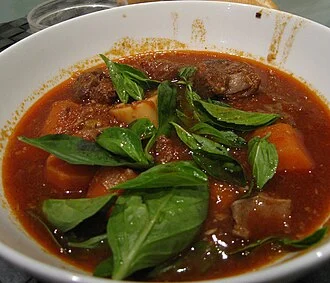
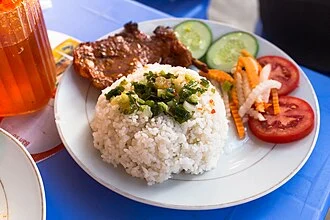
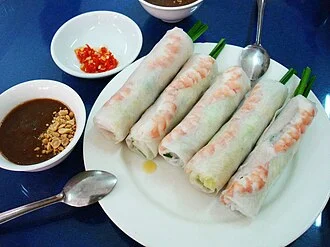
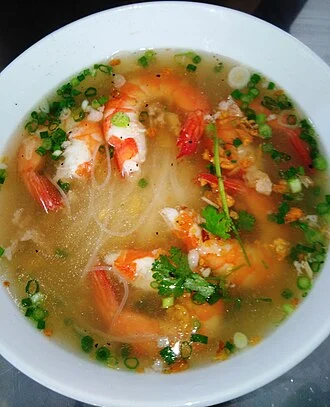
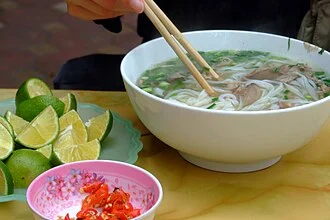
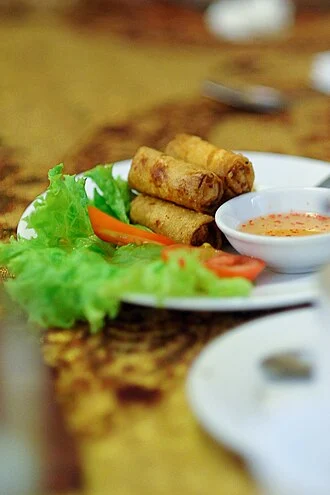
A hearty Vietnamese beef stew with carrots and lemongrass. Broken rice served with grilled pork, egg, and pickled vegetables. Rice paper rolls filled with shrimp, herbs, and vegetables. A hearty noodle soup with a clear broth, usually made with pork and seafood. A fragrant noodle soup with beef or chicken, herbs, and spices. Crispy fried rolls filled with pork, mushrooms, and vegetables.
Traditional Local Food
Ho Chi Minh City (Vietnam)
Main course
Meat
Bo Kho
Bò kho
Baw khaw
Main course
Meat
Com Tam
Cơm tấm
kuhm tumm
Starter
Fish & Seafood
Fresh Spring Rolls
Gỏi Cuốn
Goy Koon
Soup
Fish & Seafood
Hu Tieu
Hủ tiếu
hoo tee-oo
Soup
Meat
Pho
Phở
fuh
Snack
Meat
Vietnamese Spring Rolls
Nem rán
Nem ran