Explore Guides
ASIA / KYRGYZSTAN
Triplandio Bishkek guide covers 3 travel guides across 12 areas, complete with hotel picks. Explore 10 self-guided walking tours in Bishkek with 17 POI, spanning 32.6 km in total. Get inspired by 4 local dishes, complete with recipes and our unique Food Flavour DNA graph.
Bishkek
City & Country Data Bishkek (Kyrgyzstan)

Key travel data for Bishkek — local prices, safety, healthcare, local currency and essentials, curated by Triplandio.
🌍 Kyrgyzstan
Tourists
8.5M/y
GDP/cap
$3.1k
Life Exp
72.4 yrs
Population
7.3M
Currency
KGS с
Language
Kyrgyz
Payments
Mixed
Emergency
112
💰 Prices in Bishkek
Coffee
$2.20
Beer
$1.10
Lunch
$6.00
Groceries
$10.00/w
Taxi/km
$0.33
Transit
$0.22
Fuel
$0.88/l
Internet
$20.00/m
Salary
$300/m
Travel tipsBishkek (Kyrgyzstan)

Quick tips
- No photos or drones near security sites — Critical
Photographing or flying a drone near border checkpoints, military sites or police stations in Kyrgyzstan is illegal. Check your surroundings carefully before taking pictures.
- Vapes are banned at the border — Caution
Bringing e-cigarettes, vaping devices or liquids into Kyrgyzstan, or buying and selling them, is illegal. Customs will confiscate them and can fine or detain you, so leave your vape at home.
- Drinking in public is illegal — Caution
Drinking alcohol in the street, parks or other public places in Kyrgyzstan is banned, with fines of 1,000 som (KGS) or even imprisonment. Drink in bars, restaurants or your accommodation.
- Be careful what you post online — Caution
Social media posts that seem disrespectful to public buildings, the Kyrgyz flag, national food or customs have led to fines or detention in Kyrgyzstan. Think twice before joking about local traditions.
- Carry your passport or a notarised copy — Good to know
Kyrgyz law says you must carry your passport, or a notarised copy translated into Kyrgyz or Russian, at all times. Police can arrest you if you have no ID.
- Do
- Carry your passport or a notarised copy
- Bring clean, post-2007 US dollars
- Declare prescription medicines
- Trek with a reputable agency
- Take shoes off in yurts and homes
- Don’t
- Bring a vape
- Drink alcohol in public
- Photograph checkpoints or police
- Throw bread away
- Pay cash fines to police
Critical
Prison or heavy penalty possible
Scams & safety
- Drink spiking in clubs — Critical
Drinks have been spiked in Bishkek bars and nightclubs, sometimes leading to sexual assault or robbery. Buy your own drinks, keep them in sight and stay with your friends.
Laws & fines
- Drug penalties are long and harsh — Critical
Possessing or using any illegal drug in Kyrgyzstan can bring a long prison sentence in basic conditions. Police carry out masked, armed raids in bars and clubs; stay calm and show your ID.
- LGBT+ travellers should be discreet — Critical
Same-sex relationships are legal in Kyrgyzstan but rarely discussed, and public affection can lead to violent attacks. Keep displays of affection private.
Mountains & adventure
- Never trek alone — Critical
Kyrgyz trekking routes are remote, with avalanches, landslides and rockfalls, and phone signal is often absent. Use a reputable trekking agency and tell someone when you'll be back.
Caution
Fines, losses or injury possible
Scams & safety
- Pickpockets at Osh Bazaar — Caution
Pickpockets target tourists in Bishkek's bazaars, especially the crowded Osh Bazaar, often using distraction tricks. Carry only what you need, spread your cash between pockets and keep your bag in front of you.
- Careful at exchange offices — Caution
Thieves watch Bishkek's currency exchange offices for tourists carrying cash. Count your money inside, put it away before stepping out, and be wary of anyone who follows you.
- Muggings after dark — Caution
Bag snatching and muggings happen in Bishkek, particularly at night. Use a pre-booked or app taxi rather than walking or taking minibuses late, and be wary of over-friendly strangers.
Laws & fines
- Zero alcohol when driving — Caution
Kyrgyzstan has a zero-tolerance drink-driving law: any alcohol in your system can mean a fine and losing your licence for a year.
- Banned material at the border — Caution
Kyrgyzstan bans importing material promoting war, terrorism, religious hatred or racism, and pornography. Customs can check devices as well as luggage.
- Keep away from demonstrations — Caution
Demonstrations happen regularly in Bishkek and elsewhere in Kyrgyzstan and can turn violent with little warning; 41 people were injured in Bishkek protests in May 2024. Avoid crowds and follow local news.
Entry & visa
- Don't overstay, even by a day — Caution
Overstaying in Kyrgyzstan, even briefly, can mean a fine and deportation. If you're leaving overland, reach the border crossing in good time before your permitted stay ends.
Health
- Declare your prescription medicines — Caution
Bring a doctor's prescription for any medicine and declare it on the Kyrgyz customs form. Some medicines sold freely elsewhere are restricted, and undeclared ones can lead to prosecution.
Mountains & adventure
- Snow and sunburn in summer — Caution
At altitude in Kyrgyzstan snow can fall even in July, while the sun burns fast. Pack warm layers, sunscreen and sunglasses, and climb slowly to avoid altitude sickness.
- Don't pick up hitchhikers — Caution
Drivers in Kyrgyzstan have been robbed by hitchhikers they picked up. Roads are often unlit and badly maintained, and fuel stations are scarce in rural areas, where diesel is often unavailable, so fill up before long drives.
Good to know
Rules and useful facts
Scams & safety
- Avoid protests on Ala-Too Square — Good to know
Demonstrations in Bishkek often gather in the centre around Ala-Too Square and government buildings. Most are peaceful but can turn violent quickly; keep away.
Getting around
- Minibuses and buses — Good to know
Minibuses (marshrutkas), buses and trolleybuses cover Bishkek very cheaply, but vehicles are not always well maintained and pickpockets operate on them. Keep valuables hidden, or use an app taxi instead.
Laws & fines
- Pay traffic fines at a terminal — Good to know
If Kyrgyz police fine you, they should give you a paper ticket to pay at a bank or payment terminal. Don't hand cash directly to an officer.
Tipping & money
- Bring newer US dollar notes — Good to know
US dollars are the easiest foreign currency to exchange in Kyrgyzstan, but notes printed before 2007 are usually refused or charged extra. Count your money before leaving the exchange desk.
Entry & visa
- Passport valid for 6 months — Good to know
Your passport must be valid for at least 6 months after the day you arrive in Kyrgyzstan.
- Visa-free days depend on nationality — Good to know
UK citizens can stay up to 30 days in each 60-day period without a visa; other nationalities have different allowances or can use Kyrgyzstan's official e-visa portal. Check your passport's rules.
- Register for longer stays — Good to know
To stay longer than 30 days, you must register online with the State Registration Service (SRS) within 5 days of arrival, or leave before day 30.
Health
- Drink bottled or boiled water — Good to know
Tap water in Kyrgyzstan is not reliably safe to drink. Use bottled or boiled water, especially outside Bishkek and at yurt camps.
- Hospitals are basic — Good to know
Kyrgyz hospitals are often poorly equipped and sterilisation isn't guaranteed, especially in rural areas. Avoid non-essential treatment and carry insurance that covers evacuation. Call 103 for an ambulance.
- Anthrax in the south — Good to know
There have been anthrax cases in southern Kyrgyzstan linked to unvaccinated livestock. Avoid handling animals, raw hides or meat of unknown origin.
- Winter smog in Bishkek — Good to know
Air quality in Bishkek is often very poor in winter. If you have asthma or heart problems, limit time outdoors and check an air-quality (AQI) app.
Mountains & adventure
- Mountain rescue is limited — Good to know
Kyrgyzstan's mountain rescue service is staffed by volunteers with limited equipment. Save its 24-hour number, +996 312 651 404, and make sure your insurance covers high-altitude rescue.
- Driving licence rules — Good to know
Visitors from the UK can drive on their photocard licence in Kyrgyzstan for 30 days; for longer stays carry the 1968 International Driving Permit (IDP) too. Third-party insurance is compulsory, everyone must wear seatbelts, and phones are banned at the wheel.
- Winter power cuts — Good to know
Power cuts are frequent across Kyrgyzstan in winter. Carry a torch and power bank, and choose guesthouses with their own heating.
- Earthquakes are frequent — Good to know
Kyrgyzstan has a high earthquake risk and tremors are common; in the mountains, quakes, avalanches and landslides often block roads, especially in spring. Learn basic earthquake safety and follow local authorities' advice.
Local tips
Local know-how
Getting around
- Manas airport (FRU) to the centre — Local tip
Manas International Airport (FRU) is about 25 km north-west of central Bishkek, roughly 30–40 minutes by car. An app taxi is the simplest option; minibuses also run to the city.
- Use ride-hailing apps — Local tip
Yandex Go is widely used in Bishkek and shows the price before you ride, avoiding haggling with street taxi drivers. It's the safest way to get around at night.
- Trips to the mountains — Local tip
Ala Archa National Park, the nearest mountain valley, is about an hour south of Bishkek by taxi. There's little public transport, so arrange a return ride in advance.
Customs
- Treat bread with respect — Local tip
Bread (nan) is considered sacred in Kyrgyzstan. Never throw it away, put it upside down or leave it on the floor; if you can't finish it, leave it on the table.
- Shoes off in homes and yurts — Local tip
Take off your shoes before entering a Kyrgyz home or yurt, and don't step on the tablecloth (dastorkon) spread on the floor for meals.
- Half-full tea is hospitality — Local tip
Kyrgyz hosts pour tea only halfway so they can keep refilling it — it's a sign of care, not stinginess. To say you've had enough, cover the bowl with your hand.
- Respect elders and handshakes — Local tip
Greet older people first. Men shake hands with men; wait for a woman to offer her hand before shaking it.
- Dress modestly at mosques — Local tip
Most Kyrgyz people are Muslim. At mosques and shrines cover your shoulders and knees, and women should cover their hair; be sensitive during Ramadan.
Tipping & money
- Get som inside the country — Local tip
The Kyrgyz som (KGS) is rarely available abroad. Withdraw it from ATMs in Bishkek or Osh, where machines often limit withdrawals to around 10,000 som, and carry cash for rural areas.
- Visa cards work best — Local tip
Cards are widely used in Kyrgyz cities and QR-code payments are common. Visa is accepted almost everywhere, Mastercard less often, and travellers' cheques not at all.
- Check for a service charge — Local tip
Many restaurants in Bishkek add a service charge of about 10% to the bill. Where there isn't one, rounding up or leaving a small tip is appreciated.
- Bargain at the bazaar — Local tip
Haggling is normal at Kyrgyz bazaars and souvenir stalls, especially for felt goods and carpets. Prices in supermarkets and shops are fixed.
Say it locally
Russian is also widely spoken, especially in Bishkek, but a few words of Kyrgyz earn big smiles.
Through the year
Festival or season Public holiday (exact date)
- Winter smog and power cuts
Nov 2026–Feb 2027 · Bishkek's air is at its worst and power cuts are frequent; many mountain roads and camps are closed.
- Days of History and Memory of Ancestors
7–8 Nov 2026 · Public holiday
- Days of History and Memory of Ancestors
Sun 7 Nov 2027 · Public holiday
- Ski season
Dec 2026–Mar 2027 · Karakol, at the eastern end of Issyk-Kul, has the country's main ski resort, usually operating through the winter months.
- New Year
1–6 Jan 2027 · Public holiday
- Orthodox Christmas Day
Thu 7 Jan 2027 · Public holiday
- Election Day
Wed 27 Jan 2027 · Public holiday
- Ramadan and Orozo Ait
Feb–Mar 2027 · The Muslim fasting month moves about 11 days earlier each year; cafés get busy around the evening meal (iftar), and the Orozo Ait feast marks its end.
- Defender of the Fatherland Day
Tue 23 Feb 2027 · Public holiday
- International Women's Day
Mon 8 Mar 2027 · Public holiday
- Orozo Ait (tentative)
Wed 10 Mar 2027 · Public holiday
- Nooruz National
Sun 21 Mar 2027 · Public holiday
- April People's Revolution Day
Wed 7 Apr 2027 · Public holiday
- May Day
1–4 May 2027 · Public holiday
- Constitution Day of the Kyrgyz Republic
Wed 5 May 2027 · Public holiday
- Constitution Day
6–7 May 2027 · Public holiday
- Victory Day
8–9 May 2027 · Public holiday
- Kurman Ait (tentative)
Mon 17 May 2027 · Public holiday
- Trekking and yurt season
Jun–Sep 2027 · High lakes such as Song-Kol and mountain yurt camps open roughly June–September; outside those months many camps close and passes can be snowed in.
- Lake Issyk-Kul beach season
Jul–Aug 2027 · Resorts on the northern shore of Issyk-Kul fill with holidaymakers from across the region; book ahead.
- Independence Day of the Kyrgyz Republic
Tue 31 Aug 2027 · Public holiday
Sources: GOV.UK travel advice · Google public holidays
Best time to visit Bishkek (Kyrgyzstan)
Now (November) avg high: 12°C, mostly dry, full season — expect crowds. Best months to walk: Jul & Aug.
Live Temp
…
~Day / Night Temp
12°C / 1°C
Sunrise / Sunset
7:43 / 17:48
Local time
21:23
Best Months  Jul & Aug
J
Jan
F
Feb
M
Mar
A
Apr
M
May
J
Jun
J
Jul
A
Aug
S
Sep
O
Oct
N
Nov
 D
Dec
A
Aug
S
Sep
O
Oct
N
Nov
D
Dec
Check Bishkek hotels
Temperature
Average daytime high, month by month. Zero line marks freezing point.
Crowds
How busy it gets — traveller interest by month.
Rainfall
Rainy days to expect each month.
Sunshine
Hours of sun per day, by month.
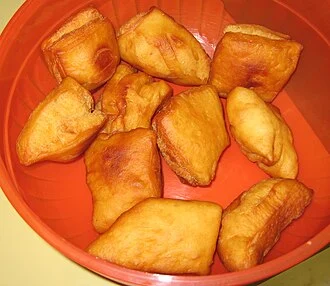
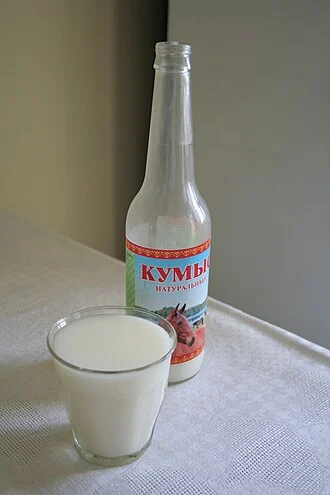
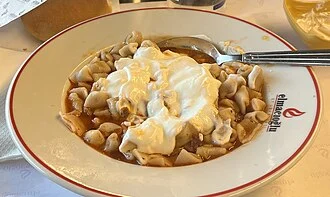
Small pieces of fried dough. A traditional fermented dairy drink. Dumplings filled with spiced meat.
Traditional Local Food
Bishkek (Kyrgyzstan)
Snack
Vegetarian
Boorsok
боорсок
boo-or-sok
· Fried dough snacks
Drink
Vegetarian
Kumis
кумыс
ku-miss
· Fermented mare’s milk
Main course
Meat
Manty
манты
man-tee
· Steamed meat dumplings