Explore Guides
ASIA / CHINA
Triplandio Shanghai guide covers 9 travel guides across 28 areas, complete with hotel picks. Explore 33 self-guided walking tours in Shanghai with 61 POI, spanning 137.1 km in total. Get inspired by 5 local dishes, complete with recipes and our unique Food Flavour DNA graph.
Shanghai
City & Country Data Shanghai (China)

Key travel data for Shanghai — local prices, safety, healthcare, local currency and essentials, curated by Triplandio.
🌍 China
Safety
43
Health
64
Lifestyle
34
Infra
85
Rank
#50
Score
47
Tourists
30.4M/y
GDP/cap
$13.9k
Life Exp
78.0 yrs
Population
1.4B
Currency
CNY ¥
Language
Chinese
Payments
Cards OK
Emergency
110
💰 Prices in Shanghai
Coffee
$3.00
Beer
$1.00
Lunch
$4.50
Groceries
$15.00/w
Taxi/km
$0.50
Transit
$0.50
Fuel
$1.00/l
Internet
$10.00/m
Salary
$1,000/m
Travel tipsShanghai (China)

Quick tips
- Always carry your original passport — Critical
Police in China carry out random ID checks, especially around big events, and do not accept photocopies or photos. Failing to show your passport can lead to a fine or detention.
- National security laws are very broad — Critical
China can detain foreigners under national security laws even when they did not mean to break them. Posting or sharing political criticism of China, including online and before your trip, can count.
- Drug offences can carry the death penalty — Critical
China has zero tolerance for drugs, including cannabis: heavy fines, long prison terms or death. Police can test foreigners at random, even in raided bars, and a positive result counts wherever you took the drug.
- Beware the tea-house and massage scam — Caution
Friendly strangers in tourist areas invite you for tea, a drink or a massage, then the venue demands a huge bill, sometimes with threats or card fraud. Politely decline and choose venues yourself.
- Set up a payment app before you fly — Good to know
Most of China pays by phone with Alipay or WeChat Pay, and many small shops no longer take foreign cards. Both apps accept Visa and Mastercard; install and link one at home and carry some cash as a backup.
- Do
- Carry your original passport
- Link Alipay or WeChat Pay before you fly
- Download offline maps and a translator
- Book train tickets early
- Take business cards with both hands
- Don’t
- Talk politics or post criticism
- Photograph soldiers or military sites
- Follow friendly strangers to a tea house
- Drink tap water
- Get into a fight, whoever started it
Critical
Prison or heavy penalty possible
Laws & fines
- Never photograph military sites — Critical
China has restricted military areas where foreigners found without permission can be detained, fined or deported. Signs are not always clear, so don't photograph soldiers, bases, police checkpoints or border installations.
- Stay away from protests — Critical
Chinese authorities enforce public order strictly. Joining or even filming a demonstration or large gathering can lead to arrest, detention and deportation.
- Police can hold you without charge — Critical
In China a suspect can be detained for up to 37 days without charge, and police can impose up to 15 days of administrative detention without a trial. Bail is rare and the conviction rate at trial is about 99%.
- Exit bans can stop you leaving — Critical
Foreigners involved in business or private disputes, or in an investigation, can be banned from leaving mainland China, sometimes for months or years. You may only find out at the airport.
Entry & visa
- Overstaying brings fines and deportation — Critical
Chinese authorities check visas regularly. Staying even a day past your permitted stay can mean a fine, detention and deportation, so note your exit date carefully.
Outdoors & adventure
- You need a Chinese driving licence — Critical
China does not accept foreign licences or the International Driving Permit (IDP). Driving without a Chinese licence and valid insurance brings fines and detention; most visitors use trains, taxis and ride-hailing apps instead.
- Any alcohol at the wheel is risky — Critical
Drink-driving in China, even at very low levels, can mean fines, detention and prison. After a crash, call the police and don't move the car; a driver who hits a pedestrian is held responsible.
Caution
Fines, losses or injury possible
Scams & safety
- “Let me practise my English” on Nanjing Road — Caution
On East Nanjing Road, the Bund and People's Square, friendly young people start chatting and suggest a tea house or bar, where the bill turns out to be enormous. Decline and pick your own café.
- Touts at the railway stations — Caution
At Hongqiao and Shanghai railway stations, drivers who approach you inside the hall ask far more than the meter. Follow the signs to the official taxi rank or book a Didi.
Laws & fines
- Fights mean trouble for everyone involved — Caution
After a fight or scuffle in China, police can fine or detain everyone involved, whoever started it, and the injured side often claims compensation. Walk away from arguments.
- Religious activity has strict limits — Caution
Foreigners in China may worship at registered temples, churches and mosques, but preaching, handing out religious material or holding services with Chinese citizens without approval is illegal.
- Never fight over a taxi fare — Caution
Taxi fare disputes in China can escalate fast, and any physical scuffle can lead to detention whoever is to blame. Insist on the metered fare and ask for a receipt showing the taxi number.
Tipping & money
- Check QR codes before you scan — Caution
Because nearly everything in China is paid by QR code, fraudsters stick fake codes over real ones on bikes, parking meters and posters. Check the payee name in the app before you confirm any payment.
- Check banknotes for fakes — Caution
Fake 100-yuan notes are common in China, even from ATMs, and banks will not replace them. Check notes carefully before accepting them; paying by phone app avoids the problem.
Health
- Altitude sickness on the plateau — Caution
Tibet, western Sichuan and parts of Yunnan and Qinghai lie high enough to cause altitude sickness. Go up gradually, drink water and descend if you get a severe headache or breathlessness.
Outdoors & adventure
- Never hike the Great Wall alone — Caution
Don't hike alone in isolated areas of China, including wild sections of the Great Wall, where weather changes fast and injuries happen. Stick to restored sections such as Mutianyu or Badaling, and leave your route and return time at your hotel.
- Watch for silent e-scooters — Caution
Electric scooters and bikes in China often ride silently on pavements and against traffic, and cars may turn right on a red light. Look both ways even on a green crossing signal.
- Drones are strictly regulated — Caution
Importing, owning and flying drones and drone parts in China is strictly regulated. Check registration and flying rules with the Civil Aviation Administration of China before you pack one, and never fly near airports or military sites.
Good to know
Rules and useful facts
Scams & safety
- Travel advisory: Level 2 of 4 — Good to know
Exercise increased caution — the U.S. State Department's rating for China.
- Pickpockets in the biggest crowds — Good to know
Pickpockets work the crowds on East Nanjing Road, at Yu Garden and on packed metro Line 2. Keep your phone, which is also your wallet in China, in a front pocket or zipped bag.
Laws & fines
- Many apps and websites are blocked — Good to know
Google, Facebook, YouTube and X are permanently blocked on mainland Chinese networks, and other sites can disappear around political dates. VPNs (virtual private networks) must be government-licensed, so download offline maps and a translator first.
Customs
- Same-sex couples: stay discreet — Good to know
Same-sex relationships are legal in China, but public attitudes are less tolerant than in Western Europe and no law protects against discrimination. Public affection may attract negative attention.
Entry & visa
- Passport valid for 6 months — Good to know
Your passport must be valid for at least 6 months after you arrive in China and have 2 blank pages. Border officers take your fingerprints and photo on arrival.
- Visa-free stays of up to 30 days — Good to know
British citizens and holders of many other passports, including most European ones, can visit China visa-free for up to 30 days until 31 December 2026. US passports are not included, so check the Chinese embassy website for your nationality.
- 240-hour visa-free transit — Good to know
Travellers from many more countries, including the US, can stay up to 240 hours (10 days) without a visa if they arrive and leave for a different country, with an onward ticket, and stay in the permitted regions.
- Your address must be registered — Good to know
Foreigners must register where they stay with the local police (Public Security Bureau) within 24 hours. Hotels do it at check-in; if you stay with friends or in a private flat, go to the local police station yourself.
- Tibet needs a special permit — Good to know
Foreign visitors to Tibet need a Tibet Travel Permit on top of their visa or visa-free entry. It is arranged through a licensed Chinese travel agency, and a guide must accompany you.
Health
- Don't drink the tap water — Good to know
Tap water in China is generally not safe to drink. Drink bottled water or boiled water from the kettle every hotel room provides.
- Check the air quality daily — Good to know
Smog in Chinese cities, especially in the north in winter, can reach unhealthy levels. Check an air-quality (AQI) app and wear a mask on bad days, particularly if you have asthma.
- Dengue in the south in summer — Good to know
Mosquitoes spread dengue in Guangdong Province and other parts of southern China, mainly in the rainy season from May to November. Use insect repellent, especially in the daytime.
- Hospitals want payment upfront — Good to know
Healthcare in China is not free and can be very expensive, and hospitals usually ask for payment before treatment. International clinics exist in big cities. Get insurance that includes medical evacuation.
- Bring enough of your medicines — Good to know
Some medicines are unavailable in China and others may not be allowed in. Bring enough for your trip in the original packaging, and check with the Chinese embassy if you take anything strong. For an ambulance, call 120.
Outdoors & adventure
- Check fire exits and gas safety — Good to know
Fire safety in Chinese hotels and rentals is not always up to Western standards, and people have died from carbon monoxide from faulty gas equipment. Check fire exits are clear and that there is a working alarm.
Local tips
Local know-how
Getting around
- Pudong (PVG) → centre by Maglev — Local tip
The Maglev train reaches Longyang Road in about 8 minutes for 50 yuan one way, then take metro Line 2 into town. Metro Line 2 also runs straight from the airport, taking about an hour.
- Hongqiao Airport (SHA) → centre — Local tip
Hongqiao Airport sits next to Hongqiao railway station, and metro Lines 2 and 10 run from it into the centre in about 30–40 minutes. Check which Hongqiao terminal your flight uses.
- Taxis from Pudong — Local tip
Use the official taxi rank at Pudong. The metered ride to the Bund area usually takes 45–60 minutes and costs much more at night, when a surcharge applies.
- Metro and ride-hailing — Local tip
Shanghai's metro is one of the world's largest, with English signs and announcements. Scan the metro QR code in Alipay or WeChat, and use Didi for taxis late at night.
Customs
- Avoid political topics in conversation — Local tip
Taiwan, Tibet, Xinjiang, Hong Kong protests and criticism of the Communist Party are sensitive subjects in China. Chinese hosts may be put in an awkward position, so steer clear of them.
- Don't stand chopsticks upright in rice — Local tip
Chopsticks stuck upright in a bowl of rice look like incense sticks at a funeral in China. Lay them across your bowl or on the rest instead, and don't point with them.
- Use both hands for cards and gifts — Local tip
In China, offering and receiving business cards, gifts or payment with both hands shows respect. Take a moment to look at a business card before putting it away.
- Help people save face — Local tip
Openly criticising or contradicting someone in front of others causes a loss of face, which Chinese people take seriously. Raise problems quietly and politely, one to one.
Tipping & money
- Tipping is not a local custom — Local tip
Tips are not expected in Chinese restaurants, taxis or shops, and staff may even hand the money back. International hotels and some upmarket restaurants add a service charge to the bill instead.
- Bargain hard at markets — Local tip
At Chinese souvenir and clothing markets, the first price quoted to tourists is often several times what locals pay. Haggle with a smile and be ready to walk away. Prices in malls and supermarkets are fixed.
- Carry some cash anyway — Local tip
Mobile payment is everywhere in China, but a phone that dies or an app that rejects your card can leave you stuck. Keep a few hundred yuan in cash; big hotels and department stores also take foreign cards.
- Use ATMs of the big banks — Local tip
ATMs of large Chinese banks such as Bank of China and ICBC (Industrial and Commercial Bank of China) usually accept foreign cards. Use machines inside bank branches and shield the keypad as you type.
Say it locally
Mandarin is tonal, so show your hotel address written in Chinese characters to taxi drivers.
Through the year
Festival or season Public holiday (exact date)
- Typhoon season
May–Nov 2026 · From May to November typhoons, storms and floods hit the southern and eastern coast; flights and trains can be cancelled at short notice.
- Chinese New Year travel rush
Jan–Feb 2027 · Hundreds of millions travel home around the Spring Festival; trains and flights sell out weeks ahead and many small shops close for several days.
- New Year's Day
Fri 1 Jan 2027 · Public holiday
- Lantern Festival
Feb–Mar 2027 · Lantern displays and riddles on the 15th day of the lunar new year close the New Year season; the date moves with the lunar calendar.
- Spring Festival Eve
Fri 5 Feb 2027 · Public holiday
- Chinese New Year
Sat 6 Feb 2027 · Public holiday
- Spring Festival
7–11 Feb 2027 · Public holiday
- International Women's Day (half-day)
Mon 8 Mar 2027 · Public holiday
- Qing Ming Jie
Mon 5 Apr 2027 · Public holiday
- May Day holiday week
May 2027 · Several days off in early May fill trains, hotels and famous sights; book ahead or visit less-known places.
- Labour Day
Sat 1 May 2027 · Public holiday
- Youth Day (half-day)
Tue 4 May 2027 · Public holiday
- Plum rain season
Jun–Jul 2027 · Weeks of humid, drizzly weather (meiyu, the “plum rains”) settle over Shanghai in June and early July; pack an umbrella.
- Dragon Boat Festival
Wed 9 Jun 2027 · Public holiday
- Summer heat
Jul–Aug 2027 · July and August in Shanghai are hot and very humid; plan the Bund and gardens for early morning or evening.
- Mid-Autumn Festival
Sep–Oct 2027 · Families gather to eat mooncakes under the full moon; the date follows the lunar calendar and falls in September or early October.
- Mid-Autumn Festival
Wed 15 Sep 2027 · Public holiday
- National Day Golden Week
Oct 2027 · The first week of October is China's busiest travel week; the Great Wall, West Lake and the Bund are packed and prices rise.
- National Day
1–5 Oct 2027 · Public holiday
- National Day Golden Week
Wed 6 Oct 2027 · Public holiday
Sources: GOV.UK travel advice · U.S. State Dept · Google public holidays
Best time to visit Shanghai (China)
Now (November) avg high: 18°C, mostly dry, full season — expect crowds. Best months to walk: Dec & Nov.
Live Temp
…
~Day / Night Temp
18°C / 10°C
Sunrise / Sunset
6:14 / 17:02
Local time
3:18
Best Months  Dec & Nov
J
Jan
F
Feb
M
Mar
A
Apr
M
May
J
Jun
J
Jul
A
Aug
S
Sep
O
Oct
N
Nov
 D
Dec
D
Dec
Check Shanghai hotels
Temperature
Average daytime high, month by month. Zero line marks freezing point.
Crowds
How busy it gets — traveller interest by month.
Rainfall
Rainy days to expect each month.
Sunshine
Hours of sun per day, by month.
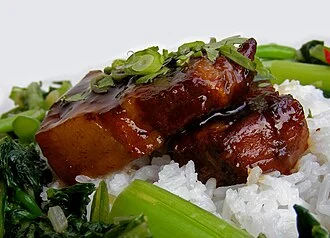
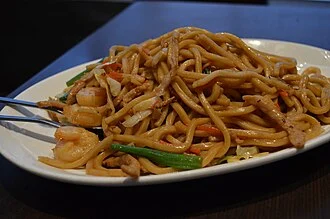
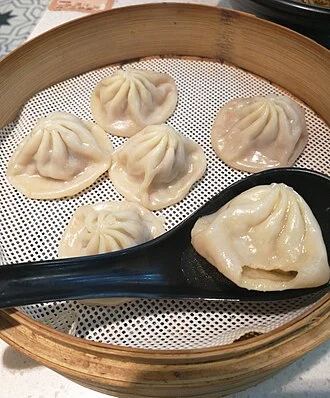
Whole chicken stuffed and cooked in clay for succulence. Pork belly slow-cooked in soy sauce reduction for rich flavor. Stir-fried noodles with pork and vegetables in soy sauce. Seasonal delicacy of steamed freshwater crabs known for their sweet meat. Delicate steamed dumplings filled with pork and rich broth.
Traditional Local Food
Shanghai (China)
Main course
Meat
Beggar's Chicken
叫化鸡
jou-hwa-jee
· Stuffed Clay-baked Chicken
Main course
Meat
Red Braised Pork
红烧肉
hong-show-row
· Pork Belly in Soy Sauce
Main course
Meat
Shanghai Fried Noodles
上海炒面
shahng-high chow-mian
🐟
Main course
Fish & Seafood
Shanghai Hairy Crab
上海大闸蟹
shahng-high dah-chah-sheh
Snack
Meat
Xiaolongbao
小笼包
shaow-long-bow
· Steamed Soup Dumplings