

Explore Guides
AFRICA
Senegal
Triplandio Senegal guide covers 3 travel guides with 1 city across 12 areas, complete with hotel picks. Explore 12 self-guided walking tours in Senegal with 19 POI, spanning 26.5 km in total. Get inspired by 3 local dishes, complete with recipes and our unique Food Flavour DNA graph.
Country Data Senegal

Key travel data for Senegal — safety, healthcare, local currency and essentials, curated by Triplandio.
🌍 Senegal
Tourists
1.4M/y
GDP/cap
$2.0k
Life Exp
68.9 yrs
Population
18.9M
Currency
XOF Fr
Language
French
Payments
Cash only
Emergency
15
Travel tipsSenegal

Quick tips
- Same-sex relations mean 5–10 years in prison — Critical
Same-sex sexual acts are illegal in Senegal, and since March 2026 the sentence is 5–10 years. Promoting or supporting LGBT+ rights is also a crime, and the law is enforced with arrests.
- Don't attend unapproved protests — Critical
Foreigners have been prosecuted in Senegal for attending demonstrations the government had not approved. Protests in Dakar can turn violent and block the airport road, so stay away.
- After a crash, call 17 and wait — Caution
If you have a road accident in Senegal, call the police on 17 and stay at the scene. Don't move your car until an officer allows it; in remote areas, report it at the nearest police station.
- Show your return ticket and hotel — Good to know
Border officials in Senegal ask for proof of return or onward travel and of where you are staying. Without them you can be refused entry, so have printouts or screenshots ready.
- Yellow fever certificate, even after transit — Good to know
You need a yellow fever vaccination certificate to enter Senegal if you arrive from, or even changed planes in, a country with yellow fever risk. Babies aged 9 months and under are exempt.
- Base yourself in Dakar, then travel by day — Good to know
Dakar has the best clinics, ATMs and flights in Senegal. Beyond it, cash and medical care are scarce and roads are risky after dark, so plan day-time journeys and carry enough money.
- Do
- Greet people before asking anything
- Dress modestly in towns
- Carry cash in CFA francs
- Agree taxi fares before getting in
- Book airport transfers in advance
- Don’t
- Go near demonstrations
- Kiss romantically in public
- Change money on the street
- Drive after dark
- Photograph people without asking
Critical
Prison or heavy penalty possible
Regions & seasons
- Keep away from the Mali border — Critical
Armed groups linked to terrorism operate in Mali near the Senegalese border, and there is a kidnap threat across the wider Sahel. Avoid remote areas in the far east of Senegal.
Laws & fines
- Drug trafficking: up to 20 years — Critical
Possessing, using or trafficking drugs in Senegal is severely punished, with up to 20 years for trafficking. People accused often wait a long time in overcrowded prisons before trial.
Health
- Protect yourself from mosquitoes — Critical
Mosquitoes in Senegal spread malaria, dengue, Zika and Rift Valley fever. Ask a doctor about antimalarial tablets, and use repellent and a mosquito net, especially in the rainy season.
Beaches & adventure
- Strong Atlantic currents — Critical
Many of Senegal's Atlantic beaches, including around Dakar, have big waves and dangerous currents. Swim only where locals do and lifeguards watch, never alone or after drinking.
Caution
Fines, losses or injury possible
Laws & fines
- Drunkenness offends, drink-driving is punished — Caution
Most bars and restaurants in Senegal serve alcohol, but being drunk in public is considered offensive, and penalties for drink-driving are severe.
- Declare goods at customs — Caution
Senegal has strict customs rules. Declare anything that may be prohibited or subject to duty when you arrive, and don't carry anything for other people.
Tipping & money
- Watch out for fake notes — Caution
Fake money circulates in Senegal. Change cash only at reputable exchange bureaux or use ATMs, and never change money with people on the street.
Beaches & adventure
- Avoid driving after dark — Caution
Roads in Senegal are poorly lit at night and many vehicles have no lights. Drivers make sudden moves without signalling, so plan journeys for daylight.
- Minibuses are not roadworthy — Caution
Many of Senegal's taxis and public minibuses (cars rapides, the painted buses of Dakar) are in poor condition. Choose newer taxis or pre-booked transport for longer trips.
- Life jackets on boat trips — Caution
Boat trips in the Sine-Saloum delta and to islands are often in open wooden boats (pirogues). Choose operators that provide life jackets and don't go out in rough weather.
Good to know
Rules and useful facts
Getting between cities
- Driving in Senegal — Good to know
Traffic drives on the right. Many foreign licences are accepted for short visits, and an International Driving Permit (IDP) helps as a translation for police checks.
Regions & seasons
- Dakar and the Petite Côte — Good to know
Dakar and the beach resorts of the Petite Côte to its south, such as Saly, are pleasant from November to May, with sea breezes keeping temperatures moderate.
- The north: Saint-Louis and the river — Good to know
Saint-Louis and the Senegal River region in the north are hotter and drier, and very hot in the months before the rains. December to March is most comfortable.
- The south: Casamance — Good to know
Casamance is greener and gets much more rain than the north, from roughly June to October. Check the latest government travel advice before visiting rural areas near its borders.
Laws & fines
- Romantic kissing in public — Good to know
Kissing on the cheek as a greeting is normal in Senegal, but romantic kissing in public is not acceptable and can cause offence or trouble with the authorities.
Customs
- Ramadan rules for visitors — Good to know
During Ramadan, whose dates move each year, don't drink alcohol or wear revealing clothes in public during Friday prayers (1pm–3pm). Shops keep shorter hours and traffic is heavy before sunset.
Tipping & money
- ATMs are scarce outside Dakar — Good to know
Dakar has ATMs that take foreign cards, but there are few elsewhere in Senegal. Withdrawal limits are low and machines often run out of money, so carry enough cash in the local currency, the West African franc (CFA).
- Cards only in bigger places — Good to know
Upmarket hotels and restaurants in Senegal take foreign credit cards, but most small businesses want cash or local mobile payment apps such as Orange Money and Wave.
Entry & visa
- Travel advisory: Level 1 of 4 — Good to know
Exercise Normal Precautions — the U.S. State Department's rating for Senegal.
- Passport valid for 6 months — Good to know
Your passport must be valid for at least 6 months after the date you arrive in Senegal.
- Visa-free stays — Good to know
Many visitors, including British citizens, can stay in Senegal without a visa for up to 3 months. Check the rules for your own passport with a Senegalese embassy before you travel.
- Yellow fever proof for onward travel — Good to know
Because Senegal has a risk of yellow fever, other countries you visit afterwards may ask for your vaccination certificate. Keep it with your passport.
Health
- Healthcare is limited outside Dakar — Good to know
Dakar has reasonable clinics, but medical care in the rest of Senegal is limited. Take insurance that covers treatment, evacuation and repatriation.
- Call 15 for an ambulance — Good to know
The ambulance number in Senegal is 15. Contact your travel insurer quickly if you are referred to a clinic or hospital.
- Drink bottled water — Good to know
Stick to bottled or filtered water in Senegal, especially outside Dakar, and eat food that is freshly cooked and served hot.
Beaches & adventure
- Rainy season damages roads — Good to know
From June to September, torrential rain in Senegal can cause floods and landslides that damage roads. Check conditions before long drives.
Local tips
Local know-how
Getting between cities
- Shared taxis (sept-place) — Local tip
Seven-seat shared taxis, called sept-place, run between Senegal's towns from the main road stations (gares routières). They leave when full; pay for an extra seat if you want more room.
- Private car with driver — Local tip
Hiring a car with a driver is the most comfortable way to travel between Senegalese towns and avoids dealing with traffic police and road stations yourself.
- Ferry or flight to Casamance — Local tip
The south-western Casamance region is cut off by The Gambia. A passenger ferry runs from Dakar to Ziguinchor, or you can fly; the road passes through Gambian border posts.
Customs
- Dress modestly outside resorts — Local tip
Senegal is mainly Muslim. Western holiday clothes are accepted in tourist areas, but cover shoulders and knees in towns, markets and especially near mosques and religious sites.
- Greetings come first — Local tip
In Senegal, start every encounter with a greeting such as “Salaam aleekum” and ask how the person is before anything else. Skipping it seems rude, even in a shop.
- Use your right hand — Local tip
Eat, shake hands and pass money or food with your right hand in Senegal. When sharing a communal dish, eat from the part of the bowl directly in front of you.
- Ask before taking photos — Local tip
Many Senegalese people, especially in markets, fishing villages and religious places, don't want to be photographed without permission. Always ask first and accept a no.
Tipping & money
- Bargain at markets and for taxis — Local tip
Haggling is normal at Senegal's markets and craft stalls. Most taxis have no meters, so agree the fare before you get in, asking your hotel for a fair price first.
- Tipping is appreciated — Local tip
Tipping isn't compulsory in Senegal, but leaving about 10% in restaurants for good service and tipping guides and drivers at the end of a trip is appreciated.
Entry & visa
- Keep copies of your documents — Local tip
Keep your passport in the hotel safe in Senegal when you can, and carry a copy of the photo page and your entry stamp, stored separately from the original.
Our Senegal city guides
About 4–5 hours by road from Dakar; turn down unofficial guides at the bridge and on the island.
Say it locally
French is used in shops and offices, but a greeting in Wolof, followed by asking how people are, opens every door.
Through the year
Festival or season Public holiday (exact date)
- Dry season
Nov 2026–May 2027 · The best time to visit, with sunshine and cooler nights; dusty Harmattan winds from the Sahara can bring haze in winter.
- All Saints' Day
Mon 1 Nov 2027 · Public holiday
- Christmas Day
Fri 25 Dec 2026 · Public holiday
- New Year
Fri 1 Jan 2027 · Public holiday
- Ramadan
Feb–Mar 2027 · The Muslim month of fasting moves about 11 days earlier each year (roughly February–March in 2027); expect shorter opening hours and busy evenings.
- Korité (tentative)
Wed 10 Mar 2027 · Public holiday
- Easter Monday
Mon 29 Mar 2027 · Public holiday
- Independence Day
Sun 4 Apr 2027 · Public holiday
- Labour Day
Sat 1 May 2027 · Public holiday
- Ascension Day
Thu 6 May 2027 · Public holiday
- Whit Monday
Mon 17 May 2027 · Public holiday
- Tabaski (tentative)
Mon 17 May 2027 · Public holiday
- Rainy season
Jun–Oct 2027 · Hot, humid weather with heavy downpours, flooding and more mosquitoes; some rural roads and lodges close.
- Tamkharit (tentative)
Tue 15 Jun 2027 · Public holiday
- Grand Magal of Touba
Jul–Aug 2027 · Millions of pilgrims travel to Touba for this Muslim festival; it follows the Islamic calendar (late July or early August in 2026–2027) and roads across the country jam.
- Grand Magal de Touba
Fri 23 Jul 2027 · Public holiday
- Assumption of Mary
Sun 15 Aug 2027 · Public holiday
- Maouloud (tentative)
Sun 15 Aug 2027 · Public holiday
Sources: GOV.UK travel advice · U.S. State Dept · Google public holidays
Traditional Local Food Senegal
🥩
Main course
Meat
Ndèyè
Ndèyé
n-day-yay
· Magret duck with African spices
Grilled duck breast marinated with a blend of African spices.
🌿
Breakfast
Vegetarian
Lakh
Laax
lahk
· Millet porridge
Creamy millet porridge, often served with fermented milk.
Open Lakh recipe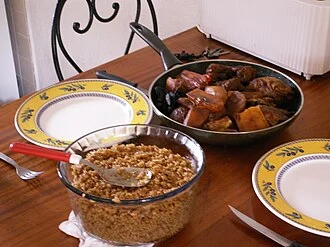
Main course
Fish & Seafood
Thiep bu Djeën
Ceebu jën
cheh-boo jen
· Fish and rice stew
A sumptuous fish and rice stew rich in vegetables and spices.
Open Thiep bu Djeën recipe