Explore Guides
AFRICA / MADAGASCAR
Triplandio Antananarivo guide covers 4 travel guides across 16 areas, complete with hotel picks. Explore 14 self-guided walking tours in Antananarivo with 14 POI, spanning 63.7 km in total. Get inspired by 5 local dishes, complete with recipes and our unique Food Flavour DNA graph.
Antananarivo
City & Country Data Antananarivo (Madagascar)

Key travel data for Antananarivo — local prices, safety, healthcare, local currency and essentials, curated by Triplandio.
🌍 Madagascar
Tourists
87.1K/y
GDP/cap
$0.6k
Life Exp
63.8 yrs
Population
32.7M
Currency
MGA Ar
Language
Malagasy
Payments
Cash only
Emergency
17
💰 Prices in Antananarivo
Coffee
$1.80
Beer
$1.00
Lunch
$3.50
Groceries
$35.00/w
Taxi/km
$0.50
Transit
$0.20
Fuel
$1.10/l
Internet
$30.00/m
Salary
$123/m
Travel tipsAntananarivo (Madagascar)

Quick tips
- Paying for sex is a crime — Critical
Paying for sex in Madagascar is illegal, with fines of 1,500 to 7,000 euros and up to 10 years in prison. Laws against sex with anyone aged 17 or under are strictly enforced against foreigners.
- Avoid bush taxis — Critical
Shared minibuses called taxi-brousses (bush taxis) have frequent fatal crashes and are targeted by armed robbers. Use a tour operator, a hired car with driver or hotel transport.
- Don't bring any food, even fruit — Caution
Taking any food into Madagascar, including a piece of fruit or a snack, is illegal. Finish or throw away food from the plane before you reach customs.
- Carry your original passport — Caution
Police in Madagascar make random ID checks and don't always accept copies. Carry your passport and keep copies of it, your visa and insurance separately.
- Respect local taboos (fady) — Good to know
Much of daily life in Madagascar is governed by local taboos called fady — forbidden foods, clothes, places or actions that vary from village to village. Ask your guide what applies before you go.
- Do
- Ask your guide about local fady
- Carry your original passport
- Travel with a driver or tour operator
- Drink boiled or bottled water
- Tip your park guides
- Don’t
- Bring food through customs
- Ride in bush taxis
- Drive after dark
- Photograph police or soldiers
- Buy rosewood or wildlife products
Critical
Prison or heavy penalty possible
Scams & safety
- Don't walk after dark — Critical
Street robberies in Antananarivo rise after dark, and many streets are poorly lit. Take a pre-booked taxi even for short distances at night.
Laws & fines
- Drug smuggling is punished harshly — Critical
Drug smuggling in Madagascar brings severe punishments, and prison conditions are harsh and life-threatening.
- No rosewood or protected wildlife — Critical
Collecting, buying or exporting protected animals, plants or products made from them — including rosewood items — is illegal. Check before buying anything made of shell or skin.
Health
- Malaria risk everywhere — Critical
Malaria and dengue occur in Madagascar. Take antimalarial tablets as advised by a travel clinic, and use repellent and a mosquito net.
- Serious cases are flown abroad — Critical
Hospitals in Antananarivo handle only routine operations; complex cases are flown to Mauritius, South Africa or Réunion. Travel insurance with evacuation cover is essential.
Beaches & adventure
- Robbery on remote beaches — Critical
Violent robberies have happened in daylight on isolated beaches, including on Nosy Be, around Ankify and Ambanja and near Toliara. Don't go to remote beaches alone; ask locally first.
- Don't drive at night — Critical
Madagascar's roads are often poor, steep and unlit, and armed robberies happen at night outside towns. Travel by day, with doors locked and windows closed.
- Tsiribihina River boat robberies — Critical
Armed criminals have boarded and robbed boats on the Tsiribihina River in western Madagascar. Choose another route.
Caution
Fines, losses or injury possible
Scams & safety
- Pickpockets in markets and crowds — Caution
Pickpockets and bag snatchers work Antananarivo's markets, such as Analakely, and crowded streets. Carry little and don't use your phone in the street.
- Keep car doors locked — Caution
Vehicle crime is a particular risk in Antananarivo. Keep car doors locked, windows closed and bags out of sight, even in slow traffic.
Laws & fines
- Don't photograph police or soldiers — Caution
Security forces in Madagascar react firmly to small issues. Don't photograph them, and stay calm and respectful if you're stopped.
- Vanilla and spice export limits — Caution
When leaving Madagascar you can take out up to 2 kg of vanilla and up to 1 kg of pepper or cloves, but only if you declare them and show receipts.
- Avoid political gatherings — Caution
Protests in 2025 led to violence and looting and a transitional government. Avoid rallies and demonstrations, which can turn violent and close roads.
Tipping & money
- Don't flash cash in the street — Caution
Pickpockets and muggers target foreigners in Madagascar. Use ATMs inside banks during the day and don't show cash or phones in the street.
Entry & visa
- Cash limits — Caution
You can bring in up to 400,000 ariary. Declare foreign cash or travellers cheques worth 7,500 euros or more, or it may be seized when you leave.
Beaches & adventure
- Check ferries before boarding — Caution
Ferries to Île Sainte-Marie and along the west coast have had accidents from overcrowding, poor maintenance and sudden squalls. Check the weather and the boat before you go.
- Cyclone season — Caution
Cyclones hit Madagascar mainly from November to April, especially coastal areas. They cut access to remote regions and contaminate water; follow Meteo Madagascar warnings.
Good to know
Rules and useful facts
Scams & safety
- Travel advisory: Level 2 of 4 — Good to know
Exercise Increased Caution — the U.S. State Department's rating for Madagascar.
- Over-friendly strangers — Good to know
Be wary of people who approach you in an over-friendly way in Antananarivo; criminals often work in pairs to distract you.
Laws & fines
- Ask to see police ID — Good to know
Criminals in Madagascar sometimes pretend to be police. If you're stopped, politely ask to see identification.
Tipping & money
- Cash is king — Good to know
The Malagasy ariary (MGA) is mostly a cash currency; cards work only in larger hotels and some shops. Euros are the easiest foreign currency to change.
Entry & visa
- Passport: 6 months, 2 blank pages — Good to know
Your passport must be valid for at least 6 months after arrival in Madagascar and have at least 2 blank pages.
- 15 days visa-free, with a fee — Good to know
Many visitors, including British citizens, can stay up to 15 days without a visa, paying a 10-euro fee on arrival and showing an onward ticket. Check the rules for your passport.
- Longer visas at the airport — Good to know
For 30 or 60 days, buy a tourist visa on arrival with US dollars, euros or ariary. You can extend to 90 days in total; overstayers may be detained or deported.
- Health screening on arrival — Good to know
All arrivals fill in a health declaration. Visitors who were in an Ebola-affected country in the last 21 days may be refused entry, and those from cholera-affected countries may be given preventive medicine.
Health
- Boiled or bottled water only — Good to know
Tap water in Madagascar is unsafe. Drink boiled or bottled water and avoid ice in drinks.
- Stay out of fresh water — Good to know
Schistosomiasis, a parasitic infection, is present in Madagascar's lakes and rivers. Avoid swimming or wading in fresh water.
- Emergency number — Good to know
In Madagascar call 117 from a mobile or 17 from a landline for an ambulance or the police.
Local tips
Local know-how
Getting around
- From Ivato airport — Local tip
Antananarivo's Ivato International Airport (TNR) is north-west of the centre; the drive can take an hour or more in traffic. Arrange a hotel transfer before you land.
- Taxis without meters — Local tip
Antananarivo's taxis have no meters. Agree the fare before getting in, or ask your hotel to book a driver it trusts.
- Leaving the capital by road — Local tip
Roads out of Antananarivo are slow and congested. Leave early in the morning so you reach your next stop before dark.
Customs
- Introduce yourself in villages — Local tip
If you plan a longer stay in a village, first check whether to tell the local authority head (fokontany) and the village elder (ray aman-dreny). Your guide can help.
- Ask before joining ceremonies — Local tip
Ceremonies such as famadihana, the “turning of the bones” reburial of ancestors, are family events. Only attend or take photos if you're invited.
- Slow down: mora mora — Local tip
“Mora mora” (slowly, slowly) sums up the pace of life in Madagascar. Expect delays, stay patient and build extra time into your plans.
Tipping & money
- Tip guides and drivers — Local tip
Tips are an important part of pay for guides, drivers and porters in Madagascar. Budget for them, especially on national park walks and multi-day tours.
- Bargain at markets — Local tip
Haggling is normal at markets and craft stalls in Madagascar; keep it friendly. Hotel and restaurant prices are fixed.
Say it locally
Malagasy words are spoken quickly with the final vowel often swallowed; French is widely understood too.
Through the year
Festival or season Public holiday (exact date)
- Cyclone and rainy season
Nov 2026–Apr 2027 · Heavy rain and cyclones; many secondary roads become impassable without a 4x4 and bridges wash away.
- All Saints' Day
Mon 1 Nov 2027 · Public holiday
- Christmas Day
Fri 25 Dec 2026 · Public holiday
- New Year's Day
Fri 1 Jan 2027 · Public holiday
- International Women's Day
Mon 8 Mar 2027 · Public holiday
- Eid al-Fitr (tentative)
Wed 10 Mar 2027 · Public holiday
- Easter Sunday
Sun 28 Mar 2027 · Public holiday
- Martyrs' Day
Mon 29 Mar 2027 · Public holiday
- Easter Monday
Mon 29 Mar 2027 · Public holiday
- Dry season
May–Oct 2027 · The best time for most of Madagascar, including the west coast and national parks; book guides and flights ahead from July.
- Labor Day
Sat 1 May 2027 · Public holiday
- Ascension Day
Thu 6 May 2027 · Public holiday
- Whit Sunday
Sun 16 May 2027 · Public holiday
- Whit Monday
Mon 17 May 2027 · Public holiday
- Eid al-Adha (tentative)
Mon 17 May 2027 · Public holiday
- Independence Day
Sat 26 Jun 2027 · Public holiday
- Whale season
Jul–Sep 2027 · Humpback whales pass Île Sainte-Marie and the east coast; boat trips run from the island.
- Famadihana season
Jul–Sep 2027 · Reburial ceremonies take place in the highlands in the cool dry months — join only if invited.
- Assumption of Mary
Sun 15 Aug 2027 · Public holiday
Sources: GOV.UK travel advice · U.S. State Dept · Google public holidays
Best time to visit Antananarivo (Madagascar)
Now (November) avg high: 27°C, wetter month, full season — expect crowds. Best months to walk: Sep & Jul.
Live Temp
…
~Day / Night Temp
27°C / 16°C
Sunrise / Sunset
5:07 / 18:01
Local time
22:12
Best Months  Sep & Jul
J
Jan
F
Feb
M
Mar
A
Apr
M
May
J
Jun
J
Jul
A
Aug
S
Sep
O
Oct
N
Nov
 D
Dec
A
Aug
S
Sep
O
Oct
N
Nov
D
Dec
Check Antananarivo hotels
Temperature
Average daytime high, month by month. Zero line marks freezing point.
Crowds
How busy it gets — traveller interest by month.
Rainfall
Rainy days to expect each month.
Sunshine
Hours of sun per day, by month.
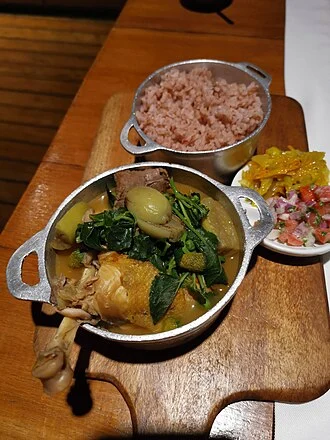
Chicken cooked with coconut, typical of Antananarivo. A sweet cake made from rice and peanuts. A fresh tomato and onion salad with vinaigrette. A traditional dish combining pork and cassava leaves. A beef stew with mixed greens and tomatoes.
Traditional Local Food
Antananarivo (Madagascar)
🥩
Main course
Meat
Akoho sy voanio
Ah-ko-ho see vo-ah-nee-oh
· Chicken with coconut
🌿
Dessert
Vegetarian
Koba
Koh-bah
· Rice and peanut cake
 Side dish
Vegan
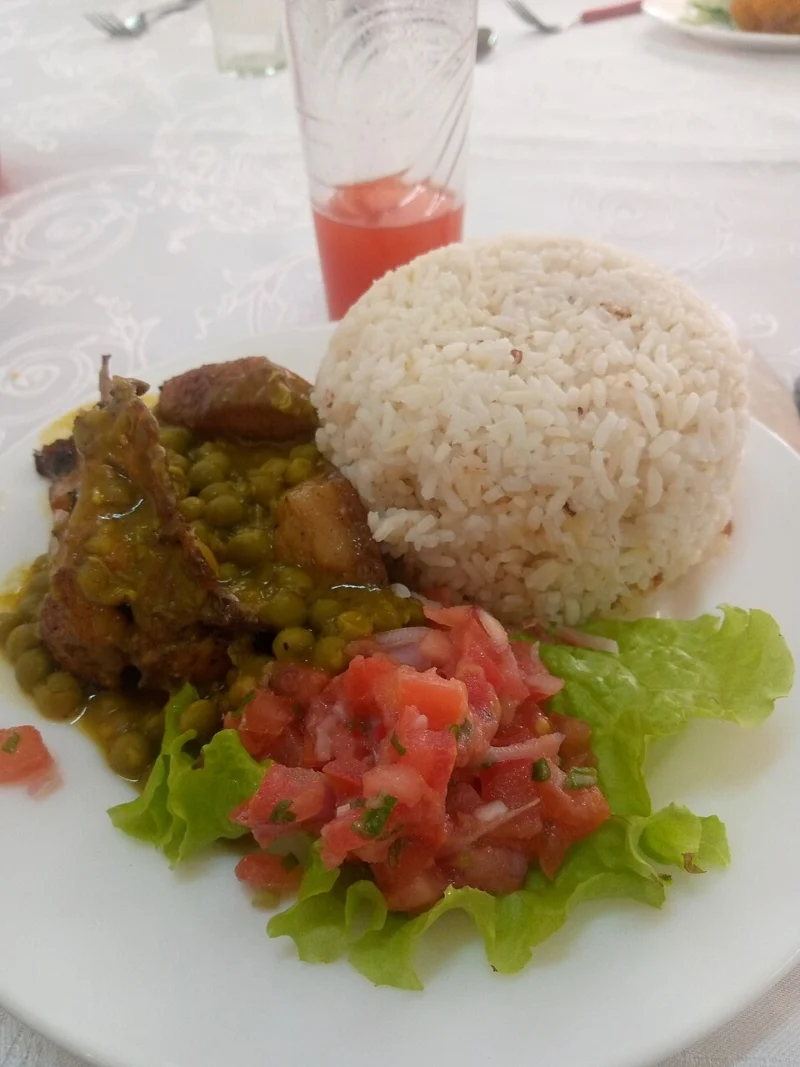
Lasary Voatabia
Lah-sah-ree Voh-tah-bee-ah
· Tomato and onion salad
 Main course
Meat
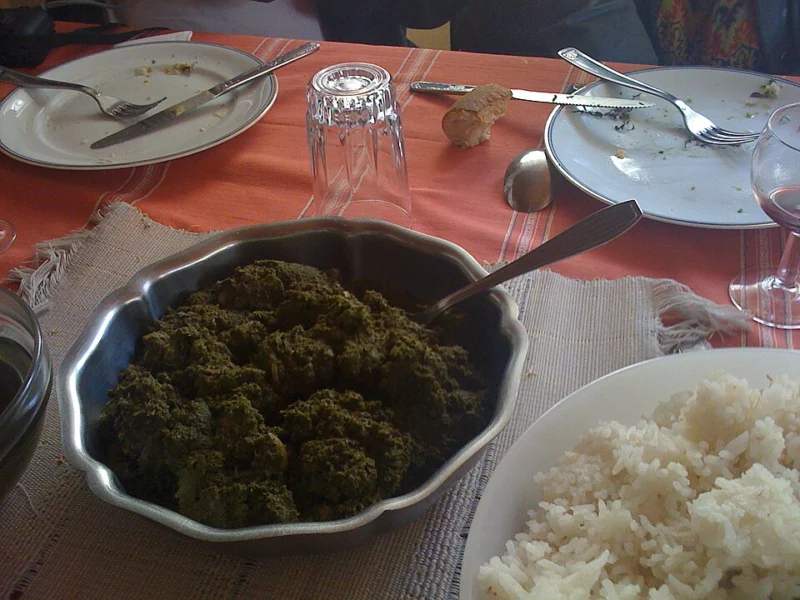
Ravitoto sy henakisoa
Rah-vee-toe-toe see hena-kee-so-ah
· Pork with Cassava Leaves
Main course
Meat
Romazava
Ro-mah-zah-vah
· Beef and greens stew