Explore Guides
AFRICA / GHANA
Triplandio Kumasi guide covers 3 travel guides across 12 areas, complete with hotel picks. Explore 12 self-guided walking tours in Kumasi with 13 POI, spanning 52.9 km in total. Get inspired by 4 local dishes, complete with recipes and our unique Food Flavour DNA graph.
Kumasi
City & Country Data Kumasi (Ghana)

Key travel data for Kumasi — local prices, safety, healthcare, local currency and essentials, curated by Triplandio.
🌍 Ghana
Safety
57
Health
13
Lifestyle
49
Infra
11
Rank
#86
Score
24
Tourists
897K/y
GDP/cap
$3.3k
Life Exp
65.7 yrs
Population
35.1M
Currency
GHS GH₵
Language
English
Payments
Cash only
Emergency
191
💰 Prices in Kumasi
Coffee
$1.00
Beer
$1.00
Lunch
$3.00
Groceries
$10.00/w
Taxi/km
$0.50
Transit
$0.50
Fuel
$1.00/l
Internet
$50.00/m
Salary
$313/m
Travel tipsKumasi (Ghana)

Quick tips
- A little cannabis can mean years in prison — Critical
In Ghana, even possessing a small amount of cannabis can lead to a prison sentence of more than 5 years, usually after a long legal process. Bail is not normally granted.
- Camouflage clothing is illegal — Caution
Wearing military clothing, including anything in camouflage print, is illegal in Ghana for civilians. Leave camouflage shorts, jackets and bags at home.
- Check your airport driver's ID — Caution
Impostors at Kotoka International Airport in Accra have robbed travellers by pretending to be their pre-booked driver. Ask for ID and confirm the driver's name before getting in.
- Yellow fever certificate is compulsory — Good to know
Every visitor to Ghana must show a certificate proving yellow fever vaccination. You also need it to apply for the visa, so get vaccinated well before you travel.
- Get your visa before you fly — Good to know
Most visitors need a visa for Ghana arranged in advance through a Ghanaian embassy or its online service. Standard processing takes about 10–15 days, so apply early.
- Do
- Use your right hand to give and eat
- Carry your yellow fever certificate
- Ask your airport driver for ID
- Bargain with a smile at markets
- Travel by road only in daylight
- Don’t
- Wear camouflage or military clothing
- Carry any drugs, even a little cannabis
- Photograph soldiers or the airport
- Go to the beach alone
- Stop for people flagging you down
Critical
Prison or heavy penalty possible
Scams & safety
- Kidnapping has been reported — Critical
There have been reports of criminal kidnapping in Kumasi, including of foreigners. Vary your routine, don't share travel plans with strangers and use trusted drivers.
Laws & fines
- Street drugs have killed visitors — Critical
Cocaine and other hard drugs sold in Ghana are often mixed with other substances, and foreign visitors have died after taking them. Airports also scan luggage closely.
- LGBT+ travellers face real risks — Critical
Some same-sex acts can mean 3 to 25 years in prison in Ghana, and society is openly hostile. Attacks and blackmail have been reported, so avoid any public display of affection.
Health
- Malaria is a serious risk — Critical
Malaria is present throughout Ghana all year. Take antimalarial tablets as advised by a travel clinic, sleep under a net or in screened rooms and use repellent.
Beaches & adventure
- Avoid Bawku and the northern borders — Critical
Several governments, including the UK, advise against all but essential travel to the Bawku Municipal area in Ghana's Upper East region, where ethnic violence flares. Terrorist groups also operate across the northern borders in Burkina Faso and Togo.
Caution
Fines, losses or injury possible
Scams & safety
- Pickpockets in Kejetia market — Caution
Kejetia in central Kumasi is one of West Africa's largest markets, with crowded, maze-like lanes where pickpockets work. Go with a local guide and carry only what you need.
- Fake officials asking for fees — Caution
Self-appointed “officials” at sights and palaces in Kumasi sometimes demand photo or entry fees. Pay only at official ticket desks and ask for a receipt.
Laws & fines
- No photos of military sites — Caution
Photographing military installations or the airport in Ghana is illegal. Ask permission before photographing buildings with guards, and ignore “officials” who demand photo fees at famous sites.
Tipping & money
- Watch for card skimming — Caution
Card skimmers are sometimes fitted to ATMs in Ghana. Use machines inside banks or malls, check the card slot, and keep your card in sight when paying.
- Romance and business scams — Caution
Scammers in Ghana target foreigners with romance, friendship and business or job offers. Warn family and friends to check with you directly before sending money to Ghana.
Entry & visa
- Declare foreign cash on arrival — Caution
Declare all foreign currency on the form provided when you arrive in Ghana. If you carry cash worth 10,000 US dollars or more, the authorities can confiscate all of it.
- Guard your bags at Kotoka airport — Caution
Luggage and documents are sometimes stolen at Kotoka International Airport in Accra. Accept help only from uniformed porters and staff with photo ID cards.
Beaches & adventure
- Strong currents off Ghana's beaches — Caution
The Atlantic surf along Ghana's coast has strong currents and drownings happen. Swim only at resort beaches with lifeguards, and never after drinking.
- Don't go to the beach alone — Caution
Theft is common on Ghana's beaches, and there have been violent attacks and sexual assaults in tourist areas such as Labadi and Kokrobite. Go in a group and leave valuables behind.
- Flooding in the rainy season — Caution
Floods are common in northern Ghana during the rainy season from March to November, and heavy rain also floods Accra. Roads, transport and power can be cut quickly, so check local weather reports before travelling.
Good to know
Rules and useful facts
Scams & safety
- Travel advisory: Level 2 of 4 — Good to know
Exercise Increased Caution — the U.S. State Department's rating for Ghana.
- Don't walk alone at night — Good to know
Streets in Kumasi are poorly lit after dark and street crime happens. Take a taxi or ride-hail car for evening trips, even short ones.
Laws & fines
- Carry a copy of your passport — Good to know
Carry ID in Ghana — a copy of your passport's photo page and visa is acceptable. Keep the original in a hotel safe.
- Don't watch or film protests — Good to know
Demonstrations in Accra are usually peaceful but can start at short notice, and disputes between local groups can turn violent. Leave the area and don't photograph them.
Entry & visa
- Passport valid for 6 months — Good to know
Your passport must be valid for at least 6 months after the date you arrive in Ghana.
- Extend your visa in Accra — Good to know
To stay longer than your visa allows, apply in person at the Ghana Immigration Service (GIS) office on Independence Avenue in Accra, before your visa runs out.
Health
- Emergency numbers 999 and 112 — Good to know
Call 999 or 112 in Ghana for an ambulance. Ambulances are limited, so a taxi or private car may be faster to reach hospital.
- Drink bottled water — Good to know
Don't drink tap water in Ghana. Buy sealed bottled water; the cheap “pure water” sachets sold everywhere are filtered but quality varies.
- Evacuation for serious illness — Good to know
Medical facilities are poor outside Ghana's main towns, and serious cases need evacuation. Get insurance that covers medical evacuation and keep an emergency fund.
- Dengue from day-biting mosquitoes — Good to know
Dengue fever is spread by mosquitoes that bite during the day in Ghana. Use repellent in the daytime too, not just at dusk.
Local tips
Local know-how
Getting around
- Fly from Accra — Local tip
Domestic flights from Accra to Kumasi's Prempeh I International Airport (KMS) take about 45 minutes. Taxis wait outside for the short ride into the city.
- Coach from Accra — Local tip
Air-conditioned coaches between Accra and Kumasi take about 4–6 hours, depending on traffic. Travel in daylight and keep valuables with you, not in the hold.
- Taxis and ride-hailing — Local tip
Uber and Bolt operate in Kumasi and show the price up front. For street taxis, agree the fare before you get in.
- Allow extra time for traffic — Local tip
Roads around Kejetia, Adum and the city centre jam badly for much of the day. Leave plenty of time for journeys to the airport or bus stations.
Customs
- Use your right hand — Local tip
In Ghana the left hand is considered unclean. Use your right hand to eat, shake hands, wave, and give or receive money and gifts.
- Greet before anything else — Local tip
Ghanaians greet each other before any conversation or purchase, and a friendly “good morning” goes a long way. Handshakes are common and often end with a finger snap.
- Dress modestly — Local tip
Ghana is conservative and deeply religious. Shorts and T-shirts are fine, but avoid anything very revealing, especially in churches, mosques and rural areas.
- Ask before entering shrines — Local tip
Traditional shrines, chiefs' palaces and sacred groves in Ghana have their own rules. Ask permission before entering or taking photos, and follow your guide's lead.
Tipping & money
- Cash and mobile money — Local tip
Ghanaian cedis in cash and mobile money (MoMo) are used for most everyday payments. Cards work at bigger hotels, supermarkets and some restaurants in Accra.
- Bargain at markets — Local tip
Haggling is expected at Ghana's markets, such as Makola in Accra and Kejetia in Kumasi, and with taxi drivers. Start low and keep it good-humoured.
- Tipping is appreciated — Local tip
Tipping isn't compulsory in Ghana, but around 10% in restaurants without a service charge, and a tip for guides and drivers, is appreciated.
- Visa cards work better than Mastercard — Local tip
Many hotels, guesthouses and shops in Ghana take cards, but Mastercard is not widely accepted. Cash machines are common in big towns but scarce in rural areas, so carry back-up cash and tell your bank before you travel.
Beaches & adventure
- Walking safaris in Mole — Local tip
Mole National Park in the north offers walking safaris with armed rangers to see elephants. Stay with your ranger and keep the distance they set.
- Kakum's canopy walkway — Local tip
Kakum National Park near Cape Coast has a rope canopy walkway high above the rainforest. Go early in the morning for wildlife and fewer crowds.
Say it locally
English is Ghana's official language; a few words of Twi, the most widely spoken local language, earn big smiles.
Through the year
Festival or season Public holiday (exact date)
- Rainy season in the north
Mar–Nov 2026 · The north has a single long wet season, with flooding common in the Upper West, Northern and Savannah regions; some roads in Mole National Park become hard to use.
- Akwasidae festival
Jan–Dec 2026 · Every six weeks, the Asantehene (the Ashanti king) receives chiefs at Manhyia Palace in a colourful public ceremony; ask your hotel for the next date.
- Harmattan
Dec 2026–Feb 2027 · A dry, dusty wind from the Sahara brings haze, cooler nights and occasional flight delays.
- December festivities
Dec 2026 · Accra fills with visitors, concerts and parties over Christmas; hotels and flights are expensive, and burglaries rise.
- Farmer's Day
Fri 4 Dec 2026 · Public holiday
- Christmas Day
Fri 25 Dec 2026 · Public holiday
- Boxing Day
Sat 26 Dec 2026 · Public holiday
- New Year's Day
Fri 1 Jan 2027 · Public holiday
- Constitution Day
Thu 7 Jan 2027 · Public holiday
- Independence Day
Sat 6 Mar 2027 · Public holiday
- Eid ul-Fitr (tentative)
Wed 10 Mar 2027 · Public holiday
- Good Friday
Fri 26 Mar 2027 · Public holiday
- Easter Monday
Mon 29 Mar 2027 · Public holiday
- Main rainy season in the south
Apr–Jul 2027 · Heavy downpours flood roads in Accra and Kumasi; a shorter rainy season follows around September–November.
- May Day
Sat 1 May 2027 · Public holiday
- Eid al-Adha (tentative)
Mon 17 May 2027 · Public holiday
- Republic Day
Thu 1 Jul 2027 · Public holiday
- Kwame Nkrumah Memorial Day
Tue 21 Sep 2027 · Public holiday
- Founders' Day
Tue 21 Sep 2027 · Public holiday
Sources: GOV.UK travel advice · U.S. State Dept · Google public holidays
Best time to visit Kumasi (Ghana)
Now (November) avg high: 32°C, mostly dry, full season — expect crowds. Best months to walk: Dec & Feb.
Live Temp
…
~Day / Night Temp
32°C / 23°C
Sunrise / Sunset
5:55 / 17:46
Local time
12:18
Best Months  Dec & Feb
J
Jan
F
Feb
M
Mar
A
Apr
M
May
J
Jun
J
Jul
A
Aug
S
Sep
O
Oct
N
Nov
 D
Dec
M
Mar
A
Apr
M
May
J
Jun
J
Jul
A
Aug
S
Sep
O
Oct
N
Nov
D
Dec
Check Kumasi hotels
Temperature
Average daytime high, month by month. Zero line marks freezing point.
Crowds
How busy it gets — traveller interest by month.
Rainfall
Rainy days to expect each month.
Sunshine
Hours of sun per day, by month.
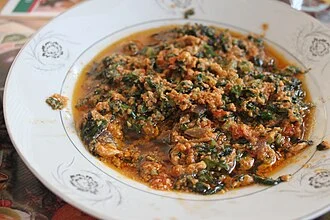
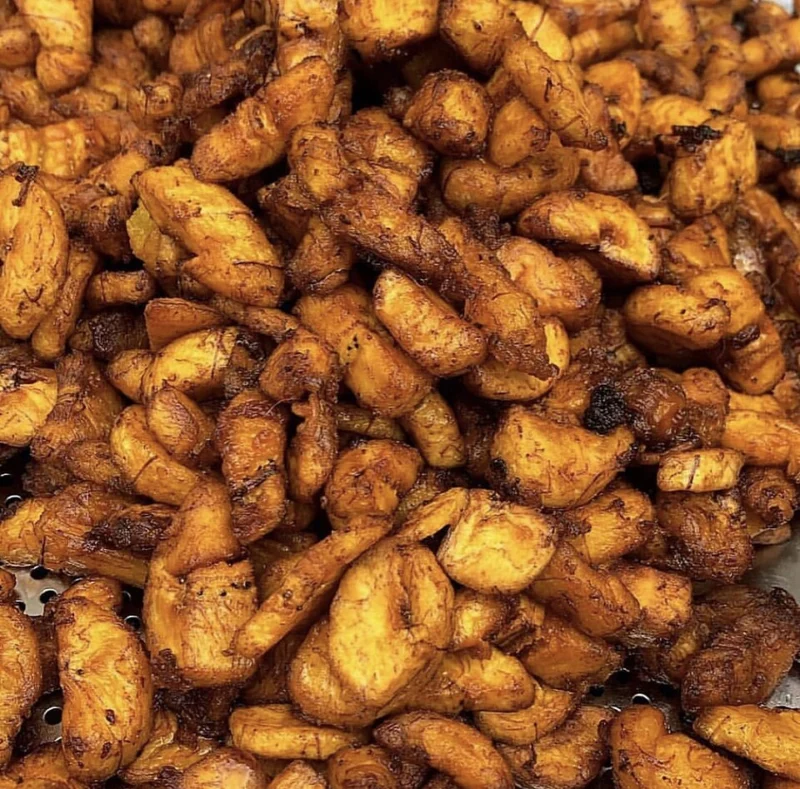
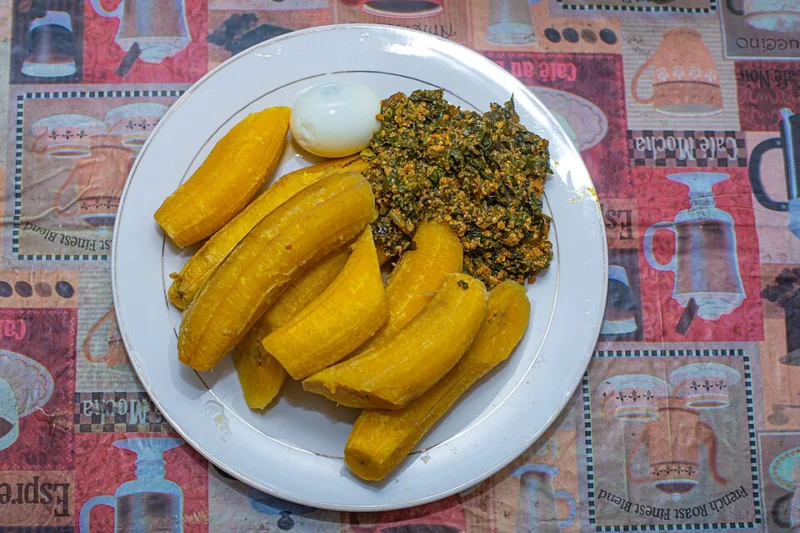
A mix of finely grated cassava served with spices. Fried plantains coated with ginger and spices. Stew made from cocoyam leaves and traditional spices. A spicy stew of black-eyed peas and fried plantains.
Traditional Local Food
Kumasi (Ghana)
🌱
Street food
Vegan
Gari Fotoh
gah-ree fo-toh
· Crushed cassava with spices
 Snack
Vegan
Kelewele
kel-uh-wel-ey
· Spicy fried plantains
Main course
Fish & Seafood
Kontomire Stew
Abom
kon-to-mee-ray stew
· Spinach and cocoyam stew
 Main course
Vegan
Red Red
Stewed black-eyed peas