Explore Guides
AFRICA / ETHIOPIA
Triplandio Bahir Dar guide covers 3 travel guides across 12 areas, complete with hotel picks. Explore 9 self-guided walking tours in Bahir Dar with 13 POI, spanning 47.4 km in total. Get inspired by 5 local dishes, complete with recipes and our unique Food Flavour DNA graph.
Bahir Dar
City & Country Data Bahir Dar (Ethiopia)

Key travel data for Bahir Dar — local prices, safety, healthcare, local currency and essentials, curated by Triplandio.
🌍 Ethiopia
Tourists
518K/y
GDP/cap
$0.9k
Life Exp
67.6 yrs
Population
135.5M
Currency
ETB Br
Language
Amharic
Payments
Cash only
Emergency
907
💰 Prices in Bahir Dar
Coffee
$1.00
Beer
$0.75
Lunch
$3.50
Groceries
$10.00/w
Taxi/km
$0.50
Transit
$0.50
Fuel
$1.00/l
Internet
$50.00/m
Salary
$200/m
Travel tipsBahir Dar (Ethiopia)

Quick tips
- Governments advise against all travel here — Critical
Bahir Dar is in Ethiopia's Amhara region, where several governments, including the UK, advise against all travel because of armed conflict between militias and government forces. Travel insurance is likely to be invalid.
- Large areas are unsafe to visit — Critical
Several governments, including the UK, advise against all travel to the Tigray, Amhara and Gambela regions, parts of Oromia, Afar and Somali regions and most border areas because of armed conflict. Check the latest map before planning any route.
- Taking khat out of Ethiopia is illegal — Critical
Khat, a leaf chewed as a stimulant, is legal inside Ethiopia but illegal to export. Customs regularly search bags at Addis Ababa Bole Airport, and anyone caught with it is likely to be prosecuted.
- Carry no more than 3,000 birr — Critical
You may take only 3,000 Ethiopian birr in or out of Ethiopia (10,000 birr to Djibouti). Customs can seize extra cash and you could be jailed.
- Same-sex relations are illegal — Critical
Same-sex acts are illegal in Ethiopia and carry 1 to 15 years in prison, and police have detained owners and customers of venues in Addis Ababa. Being openly LGBT+ is dangerous; avoid any public affection.
- Drones and binoculars need approval — Caution
Importing drones, satellite phones or even binoculars into Ethiopia needs prior approval from the security agencies. Unapproved items are confiscated and may not be returned.
- Do
- Check which regions are off-limits
- Carry copies of passport and visa
- Keep your currency exchange receipts
- Drink only boiled or bottled water
- Check if a time is Ethiopian or not
- Don’t
- Take khat out of the country
- Bring a drone without approval
- Carry over 3,000 birr in or out
- Buy ivory or undocumented antiques
- Swim in lakes
Critical
Prison or heavy penalty possible
Scams & safety
- Clashes, curfews and closures — Critical
Fighting between Amhara militia groups (Fano) and government forces has affected the region since 2023. Curfews, road closures and phone and internet cuts can start without warning.
- Kidnapping and banditry — Critical
Kidnapping for ransom and opportunistic banditry have increased in Amhara. If you are in the region, avoid travel outside the city and never travel by road after dark.
Getting around
- Avoid the road from Addis Ababa — Critical
The long road from Addis Ababa to Bahir Dar passes through areas affected by armed clashes and kidnapping. If you must travel, fly rather than drive.
Laws & fines
- Drug possession means years in prison — Critical
Drug offences are treated seriously in Ethiopia: possession can bring a prison sentence of 5 to 10 years and large fines. Khat is the only exception, and only inside the country.
- Arbitrary detention can happen — Critical
A few foreigners, including British nationals, have been detained without clear reason in Ethiopia, especially around major events or near sensitive sites. Stay calm, comply and ask for your embassy to be contacted.
- No photos near the Presidential Palace — Critical
In Ethiopia it is illegal to photograph military zones or soldiers, the area around the Presidential Palace in Addis Ababa, or anywhere with no-photography signs. Flying a drone needs official permission.
- LGBT+ travellers face prison risk — Critical
Same-sex acts between men or between women are illegal in Ethiopia, with 1 to 15 years in prison. Public attitudes are hostile and some religious leaders have called for violence, so discretion is essential.
Health
- Medical care is very limited — Critical
Only private hospitals in Addis Ababa offer a reasonable standard of care, and ambulances are scarce. Carry a full medical kit outside the capital. Dial 907 for an ambulance, or 939 for emergency services.
Nature & adventure
- Landmines in the north — Critical
Landmines and unexploded bombs remain along the Tigray–Amhara boundary, the Eritrean border and in rural south-west Tigray. Stay on main roads in these areas.
- Travel only in daylight — Critical
Kidnapping for ransom happens in parts of Oromia, Amhara and Somali regions and near the Kenyan border. Travel by day, vary your routine and use a reputable tour operator.
- Never drive after dark outside Addis — Critical
Outside Addis Ababa, vehicles often have no lights and livestock wander onto roads, so drive only in daylight. At an unattended roadblock, turn around rather than trying to pass it.
Caution
Fines, losses or injury possible
Scams & safety
- Travel advisory: Level 3 of 4 — Caution
Reconsider Travel — the U.S. State Department's rating for Ethiopia.
- Life jackets on Lake Tana — Caution
Boats taking visitors to the Lake Tana island monasteries often carry no life jackets. Ask for one before setting off and don't board overloaded boats.
Laws & fines
- Antiques need an export certificate — Caution
Taking antiques, including old religious crosses and manuscripts, out of Ethiopia requires an export certificate. Without one, items are confiscated and you could be prosecuted.
- Ivory is banned — even your own — Caution
Buying or owning ivory is illegal in Ethiopia, including jewellery you bring with you. Visitors have had ivory confiscated and been fined up to 25,000 birr.
Tipping & money
- Declare large amounts of foreign cash — Caution
Declare foreign cash over 10,000 US dollars when flying into Ethiopia, or over 500 US dollars at land borders, and keep the form to show when you leave.
Entry & visa
- Overstaying costs 30 dollars a day — Caution
Leave Ethiopia before your visa expires, or extend it in person at the Immigration and Citizenship Service head office in Addis Ababa. Overstays cost 30 US dollars a day, paid before you can leave.
Health
- Don't swim in lakes — Caution
Bilharzia (schistosomiasis), a parasite that enters through the skin, is present in most Ethiopian lakes. Check locally before swimming or wading.
Nature & adventure
- Few safety railings or life jackets — Caution
Life jackets on boats and railings at historic sites and viewpoints are rare in Ethiopia. Take extra care on cliffs, rock-hewn churches and lake trips.
- Keep car doors locked — Caution
Thieves snatch bags and jewellery from cars at traffic lights in Ethiopia. Keep windows closed, doors locked and valuables out of sight, and hand them over if threatened.
- After a crash, wait for the police — Caution
If you're in a traffic accident in Ethiopia, stay in your vehicle, call the local police and avoid arguing with anyone while you wait for them to arrive.
Good to know
Rules and useful facts
Laws & fines
- Carry copies of your passport and visa — Good to know
Always carry a paper copy of your passport photo page, visa and entry stamp in Ethiopia, plus your embassy's phone number in case you are questioned.
- Cooperate with security checks — Good to know
Checkpoints and security searches are common in Addis Ababa, sometimes including hotel rooms. Check officials' credentials, then follow their instructions and avoid confrontation.
Customs
- Ethiopian time starts at dawn — Good to know
Ethiopians traditionally count hours from 6 am, so “3 o'clock” can mean 9 am. The Ethiopian calendar also runs about 7–8 years behind, so check times and dates on tickets and bookings.
Tipping & money
- Ethiopia runs on cash — Good to know
Ethiopia is a cash-based society. Card payments and ATMs are limited and unreliable, especially outside cities, so take out or change enough birr (ETB) before you leave Addis Ababa.
- Keep your exchange receipts — Good to know
Without the receipt from changing money into birr, you are unlikely to be able to change leftover birr back when you leave Ethiopia.
Entry & visa
- Passport valid for 6 months — Good to know
Your passport must be machine-readable and valid for at least 6 months after the date you arrive in Ethiopia.
- Get an e-visa before you fly — Good to know
Apply for Ethiopia's 30-day single-entry tourist e-visa on the official e-visa platform before you travel, with a colour scan of your passport and a photo.
- Health forms for some arrivals — Good to know
Travellers from some countries must fill in an Ethiopian health declaration or mpox survey before arrival, even for transit outside the airport. Check with your airline.
Health
- Only boiled or bottled water — Good to know
Water-borne diseases are common in Ethiopia, and there are cholera outbreaks in the south and north-west. Drink only boiled or bottled water and avoid ice.
- Malaria below 2,000 metres — Good to know
Addis Ababa is too high for malaria, but it's common in areas below 2,000 metres, including many tourist sites. Ask a travel clinic about antimalarials.
- Addis Ababa is at 2,400 metres — Good to know
Altitude sickness can affect visitors arriving in Addis Ababa. Take it easy for the first day or two, drink water and go easy on alcohol.
- Yellow fever vaccination — Good to know
Yellow fever is present in Ethiopia. You need a certificate to enter if you're arriving from a risk country, and other countries may ask for one after a visit to Ethiopia.
Nature & adventure
- Internet can be cut — Good to know
The Ethiopian authorities sometimes shut down internet and mobile networks during unrest. Download offline maps and keep your tour operator's phone number written down.
- Foreign licence for 2 weeks only — Good to know
Visitors from the UK can drive on their licence for up to 2 weeks, then need an Ethiopian licence; other nationalities should check whether they need an International Driving Permit (IDP). Driving standards are poor, and drivers involved in crashes can face prison and fines.
Local tips
Local know-how
Getting around
- Bahir Dar Airport (BJR) — Local tip
Bahir Dar Airport (BJR) is a short drive from the city and has Ethiopian Airlines flights from Addis Ababa of about an hour. Flights in northern Ethiopia can be cancelled at short notice.
- Getting around the city — Local tip
Bajaj auto-rickshaws are the usual way around Bahir Dar. Agree the fare before you get in, and stay near the city centre and lakeshore.
Customs
- Dress modestly, especially at churches — Local tip
Many Ethiopians are devout. Cover shoulders and knees, take shoes off before entering Orthodox churches, and women should bring a scarf to cover their hair.
- Join the coffee ceremony — Local tip
Being invited to a coffee ceremony is a sign of welcome in Ethiopia. It takes time — three rounds are traditional — so don't rush off after the first cup.
- Eat with your right hand — Local tip
Ethiopian food is eaten from a shared platter using pieces of injera flatbread held in the right hand. If a host feeds you a mouthful (gursha), accept it — it's a sign of friendship.
- Fasting days mean vegan menus — Local tip
Orthodox Christians fast on Wednesdays, Fridays and during Lent, so many restaurants serve only vegan “fasting food” on those days. It's a good time to try Ethiopia's vegetable dishes.
Tipping & money
- Tip guides and drivers — Local tip
Small tips are common in Ethiopia for guides, drivers, porters and restaurant staff. Guides at churches and sites also expect a tip for their time.
- Bargain at markets — Local tip
Haggling is expected at markets and souvenir stalls in Ethiopia, including Addis Ababa's huge Merkato. Agree taxi and minibus fares before setting off too.
Say it locally
Amharic is written in its own Ge'ez script; a warm “selam” and a handshake go a long way.
Through the year
Festival or season Public holiday (exact date)
- Dry season
Oct 2026–May 2027 · The best months for travel, especially October to February; book festival periods well ahead.
- Timket (Epiphany)
Jan 2027 · Huge Orthodox processions and water blessings around 19 January; expect big crowds and heightened security.
- Ramadan
Jan–Mar 2027 · Observed by Ethiopia's Muslims; the month moves about 11 days earlier each year, and some eateries in Muslim areas close by day.
- Genna
Thu 7 Jan 2027 · Public holiday
- Timket
Tue 19 Jan 2027 · Public holiday
- Orthodox Lent
Feb–Apr 2027 · About 55 days of fasting before Ethiopian Easter; many restaurants serve only vegan food, and dates move each year.
- Adwa Victory Day
Tue 2 Mar 2027 · Public holiday
- Eid al-Fitr (tentative)
Wed 10 Mar 2027 · Public holiday
- Siklet
Fri 30 Apr 2027 · Public holiday
- International Labor Day
Sat 1 May 2027 · Public holiday
- Fasika
Sun 2 May 2027 · Public holiday
- Patriots' Victory Day
Wed 5 May 2027 · Public holiday
- Eid al-Adha (tentative)
Mon 17 May 2027 · Public holiday
- Main rainy season
Jun–Sep 2027 · The long rains (kiremt) make rural roads muddy and some areas hard to reach; highland scenery is at its greenest.
- Mawlid (tentative)
Sun 15 Aug 2027 · Public holiday
- New Year and Meskel
Sep 2027 · Ethiopian New Year falls on 11 September and the Meskel bonfire festival on 27–28 September; crowds are large.
- Enkutatash
Sun 12 Sep 2027 · Public holiday
- Meskel
Tue 28 Sep 2027 · Public holiday
Sources: GOV.UK travel advice · U.S. State Dept · Google public holidays
Best time to visit Bahir Dar (Ethiopia)
Now (November) avg high: 25°C, mostly dry, full season — expect crowds. Best months to walk: Dec & Feb.
Live Temp
…
~Day / Night Temp
25°C / 14°C
Sunrise / Sunset
6:25 / 18:04
Local time
22:11
Best Months  Dec & Feb
J
Jan
F
Feb
M
Mar
A
Apr
M
May
J
Jun
J
Jul
A
Aug
S
Sep
O
Oct
N
Nov
 D
Dec
M
Mar
A
Apr
M
May
J
Jun
J
Jul
A
Aug
S
Sep
O
Oct
N
Nov
D
Dec
Check Bahir Dar hotels
Temperature
Average daytime high, month by month. Zero line marks freezing point.
Crowds
How busy it gets — traveller interest by month.
Rainfall
Rainy days to expect each month.
Sunshine
Hours of sun per day, by month.
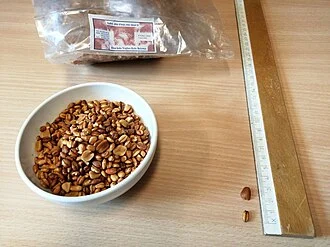
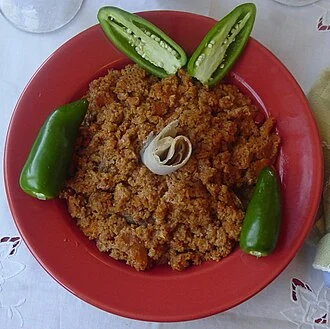
Small, crunchy pieces of spiced dough baked until golden. A delightful dish of mushrooms sautéed with spices and herbs, served with injera. A traditional Ethiopian salad made by soaking injera in a spiced dressing. A flavorful dish of sautéed green beans, onions, tomatoes, and garlic. A colorful platter of vegan dishes served on a large round of injera.
Traditional Local Food
Bahir Dar (Ethiopia)
Snack
Vegan
Dabo Kolo
ዳቦ ቆሎ
dah-bo koh-lo
· Roasted barley snacks
🌱
Main course
Vegan
Enguday Tibs
እንጉዳይ ቲብስ
en-goo-day tibs
· Sauteed mushrooms
Starter
Vegan
Fitfit
ፍትፍት
fit-fit
· Spiced bread salad
🌿
Main course
Vegetarian
Fossolia
ፎሶልያ
foh-soh-lee-ah
· Green beans with garlic
🌱
Main course
Vegan
Yetsom Beyaynetu
የጾመ በያይነቱ
yat-sohm be-yah-yeh-netoo
· Vegan fasting platter