

Explore Guides
SOUTH AMERICA
Ecuador
Triplandio Ecuador guide covers 3 travel guides with 1 city across 12 areas, complete with hotel picks. Explore 12 self-guided walking tours in Ecuador with 19 POI, spanning 49.9 km in total. Get inspired by 5 local dishes, complete with recipes and our unique Food Flavour DNA graph.
Country Data Ecuador

Key travel data for Ecuador — safety, healthcare, local currency and essentials, curated by Triplandio.
🌍 Ecuador
Safety
18
Health
47
Lifestyle
52
Infra
33
Rank
#82
Score
28
Tourists
2.1M/y
GDP/cap
$7.1k
Life Exp
77.6 yrs
Population
18.3M
Currency
USD $
Language
Spanish
Payments
Mixed
Emergency
911
Travel tipsEcuador

Quick tips
- Most of the coast is advised against — Critical
Several governments, including the UK, advise against all but essential travel to seven coastal provinces, including Guayas (with Guayaquil), Manabí, Esmeraldas and Santa Elena, because of violent gang crime. Airside transit at Guayaquil airport is excepted.
- Scopolamine: drugged and robbed — Critical
Criminals in Ecuador use scopolamine, a drug that leaves victims confused and compliant, sometimes blown or rubbed on from leaflets, perfume samples, food or drinks. Refuse items from strangers, however friendly.
- Don't hail taxis in the street — Critical
Express kidnappings, where victims are driven between cash machines, often start in taxis hailed from the street, registered or not. Book taxis through your hotel or a known radio taxi company; ride-hailing apps exist but are unregulated in Ecuador.
- Entering by land needs a criminal record check — Good to know
Travellers entering Ecuador over a land or river border from Peru or Colombia must show a criminal record certificate, legalised with an apostille and translated into Spanish, or ask border officials to run a check on their own system. Flying in is not affected.
- Carry a copy of your passport — Good to know
Ecuadorian law requires you to carry ID. Carry a printed colour copy of your passport's photo page and entry stamp, and keep the original somewhere safe.
- Four regions, very different weather — Local tip
Ecuador packs the Andes, the Amazon, the Pacific coast and the Galápagos into a small country. Most visitors combine Quito and the highlands with the Galápagos or an Amazon lodge, avoiding the advised-against coast.
- Do
- Book taxis through your hotel
- Carry a copy of your passport
- Carry small dollar notes
- Acclimatise to the altitude
- Check curfews and local news
- Don’t
- Accept flyers or samples from strangers
- Hail taxis in the street
- Use street ATMs after dark
- Touch or feed Galápagos animals
- Take ayahuasca with unknown shamans
Critical
Prison or heavy penalty possible
Laws & fines
- Harsh penalties for drugs — Critical
Penalties for drug use or trafficking in Ecuador are harsh, and prison conditions are very basic. Never carry packages for anyone.
- Ayahuasca ceremonies are risky — Critical
Ayahuasca and San Pedro are sold to tourists as “spiritual cleansing”. They are unregulated, often contain the strong hallucinogen dimethyltryptamine (DMT), and have led to illness, deaths, assaults and robberies far from medical help.
Entry & visa
- Get stamped at land borders — Critical
At land borders with Peru and Colombia, make sure you pass through an official checkpoint and get an entry stamp. Some buses skip immigration, which can leave you in serious trouble.
Beaches & adventure
- Women: take care in beach towns — Critical
Serious sexual assaults on foreign women have happened in Ecuador, particularly in the surf town of Montañita. Choose well-reviewed accommodation and avoid travelling after dark.
- Strong currents on Pacific beaches — Critical
Strong, rapidly changing ocean currents cause drownings on Ecuador's beaches, which often have no warning flags. Ask locally about tides and currents before swimming.
- Lightning and cold on the mountains — Critical
Lightning has killed climbers in Ecuador, and hikers have died of hypothermia on Rucu Pichincha above Quito's cable car. Start early, carry warm waterproofs and turn back if storms build.
- Adventure sports have killed tourists — Critical
Tourists have died rafting, kayaking and on zip-lines in Ecuador, and equipment may not meet the safety standards you know from home. Use licensed, insured operators and check your insurance covers each activity.
Caution
Fines, losses or injury possible
Getting between cities
- Buses: daytime, reputable companies — Caution
Long-distance buses cover the whole country cheaply, but robberies happen on board and at terminals. Travel by day with reputable companies and keep valuables on you.
- Beware fake bus inspectors — Caution
In some Quito bus stations, people in uniforms pose as inspectors and tell you to put luggage in the overhead rack so an accomplice can take it. You don't have to.
- Driving: right-hand side, high accident rate — Caution
Ecuador drives on the right and has one of Latin America's highest road accident rates. Visitors from the UK can drive on their licence for the first 6 months; other nationalities should check whether they need an International Driving Permit (IDP), which rental firms often also want.
- Choose Galápagos boats carefully — Caution
Serious accidents have involved Galápagos tour boats and inter-island launches that were overloaded or short of life vests. Book reputable operators and check life vests are on board, even for short trips.
Laws & fines
- Avoid protests and roadblocks — Caution
Demonstrations and strikes in Ecuador can start without warning, turn violent and block main roads for days. Stay away from them and allow extra travel time.
- Declare large sums of cash — Caution
If you carry 10,000 US dollars or more, or taxable goods, into or out of Ecuador, you must register online at least 3 days before travelling. Undeclared cash can be seized.
Tipping & money
- Use ATMs inside banks by day — Caution
Violent robberies have happened outside Ecuadorian banks. Use ATMs inside banks or malls in daylight and withdraw only what you need; police offer a free escort for large sums on 911.
Entry & visa
- Overstaying brings fines — Caution
If you overstay in Ecuador you'll be fined when you leave, and you won't be allowed back until the fine is paid.
Health
- Altitude in Quito and the Andes — Caution
Quito sits at about 2,850 m and many Andean sights are higher. Take it easy for the first days, drink water and descend if you get severe symptoms of altitude sickness.
Beaches & adventure
- Keep your distance from Galápagos wildlife — Caution
Galápagos animals are fearless, but touching or feeding them is prohibited and harms them. Keep about 2 m away and visit protected sites only with a licensed naturalist guide.
- Glacier climbs need an accredited guide — Caution
It is illegal in Ecuador to climb a glaciated mountain, such as Cotopaxi or Chimborazo, without an official accredited mountain guide. Chimborazo reserve also requires registration at least 5 days ahead.
Good to know
Rules and useful facts
Getting between cities
- Roads, landslides and roadblocks — Good to know
Mountain roads in Ecuador are winding and prone to landslides in the rainy season, and protests can block highways. Check road conditions before setting off and avoid driving at night.
Regions & seasons
- The Sierra: spring-like all year — Good to know
Quito, Otavalo, Baños and Cuenca have mild days and cold nights year-round, with drier weather from June to September.
- The Amazon: rain any time — Good to know
The Ecuadorian Amazon is hot, humid and wet all year; lodges operate year-round, and waterproofs and long sleeves are essential.
- The coast: hot and currently risky — Good to know
The Pacific coast is hot and rainy from December to May. Most coastal provinces are under Foreign Office warnings, so check the latest advice first.
- Earthquakes and tsunamis — Good to know
Earthquakes are a high risk across Ecuador, and tsunamis on the coast and in the Galápagos. If sirens sound on the coast, follow the marked evacuation routes to higher ground.
Laws & fines
- States of emergency and curfews — Good to know
Ecuador regularly declares states of emergency in several provinces, with more police and soldiers, checkpoints and sometimes night curfews. Check local news and follow official instructions.
Customs
- Conservative attitudes outside cities — Good to know
Same-sex relationships are legal, but attitudes in Ecuador are conservative, especially in small towns. Public affection between same-sex couples can attract unwanted attention.
Tipping & money
- Ecuador uses the US dollar — Good to know
The US dollar is Ecuador's currency, alongside local coins. Cards work in cities but rarely elsewhere, and many shops and taxis refuse 50 or 100 dollar bills, so carry small notes.
- Tax on cash when leaving — Good to know
You must declare cash when leaving Ecuador and pay tax on amounts over 1,350 US dollars, so don't leave with large sums.
Entry & visa
- Travel advisory: Level 2 of 4 — Good to know
Exercise increased caution — the U.S. State Department's rating for Ecuador.
- Passport valid for 6 months — Good to know
Your passport must be valid for at least 6 months after you arrive in Ecuador. Border officials may ask why you're visiting and for proof of onward travel.
- 90 days in any 12 months — Good to know
Many visitors, including British travellers, can visit Ecuador without a visa for up to 90 days in any 12-month period. You can pay to extend by 90 days, but must apply before the first period ends.
- Galápagos entry rules — Good to know
To fly to the Galápagos you need a transit control card bought at the departure airport before check-in, proof of accommodation, a return flight and health insurance. Tourists can stay up to 60 days.
Health
- Water and ice — Good to know
Drink boiled, filtered or bottled water in Ecuador and avoid ice in drinks.
- Very strong sun near the equator — Good to know
Ultraviolet radiation is intense at Ecuador's altitude and latitude, even on cloudy days. Use high-factor sun cream, a hat and sunglasses.
- Mosquitoes spread several diseases — Good to know
Mosquitoes in Ecuador's lowlands and the Amazon spread dengue and Oropouche virus, and malaria in some areas. Use repellent and ask a travel clinic about antimalarials for jungle trips.
- Private hospitals want a credit card — Good to know
Private hospitals in Ecuador are expensive and ask for a credit card guarantee before admission; public care is free but overstretched. Get insurance with air evacuation, especially for the Galápagos. For an ambulance, call 911.
Beaches & adventure
- Check volcano alerts — Good to know
Ecuador has several active volcanoes, including Cotopaxi and Sangay. Check the current alert level and closures before visiting; ash can close airports at short notice, and mudflows (lahars) threaten valleys below Cotopaxi.
Local tips
Local know-how
Getting between cities
- Domestic flights save long drives — Local tip
Flights link Quito, Cuenca and Guayaquil and serve the Galápagos from Quito or Guayaquil. If you fly via Guayaquil, check with the airline that you can stay airside.
Regions & seasons
- The Galápagos: two seasons — Local tip
From December to May the islands are warmer with calmer seas and occasional showers; June to November is cooler and choppier, with richer marine life.
Customs
- Ask before photographing people — Local tip
At Indigenous markets such as Otavalo and in Andean villages, ask before taking photos of people, and accept a no. Some may ask for a small payment.
- Greet with a handshake or kiss — Local tip
Ecuadorians greet with a handshake, and women often with a single kiss on the right cheek. Say “buenos días” or “buenas tardes” when entering shops and taxis.
Tipping & money
- Service is often on the bill — Local tip
Many Ecuadorian restaurants add a 10% service charge. If it's included, a little extra for good service is kind but not expected.
- Bargain at craft markets — Local tip
At craft markets like Otavalo you can bargain politely, especially if buying several items. Shop and supermarket prices are fixed.
Beaches & adventure
- Amazon trips with established lodges — Local tip
Visit the Ecuadorian Amazon with an established lodge or operator that organises transport and guides. Remote areas have little medical help.
Our Ecuador city guides
Under a Foreign Office warning; if only connecting to the Galápagos, stay airside at the airport.
Say it locally
Ecuadorians are polite and formal: use “usted” with strangers and start every request with a greeting.
Through the year
Festival or season Public holiday (exact date)
- Day of the Dead
Nov 2026 · Families visit cemeteries on 2 November and share colada morada, a spiced purple fruit drink, with guaguas de pan (bread dolls).
- Andean rainy season
Oct 2026–May 2027 · In Quito and the highlands, mornings are often clear and afternoons wet; June to September is drier.
- Fiestas de Quito
Dec 2026 · The capital's founding festival in early December brings concerts, parades and street parties.
- Christmas Day
Fri 25 Dec 2026 · Public holiday
- New Year's Day
Fri 1 Jan 2027 · Public holiday
- Carnival
Feb–Mar 2027 · Water, foam and flour fights across the country in the days before Lent; buses and beach towns are packed.
- Carnival
8–9 Feb 2027 · Public holiday
- Holy Week
Mar–Apr 2027 · Good Friday processions fill Quito's old town, and families eat fanesca, a rich grain and bean soup.
- Good Friday
Fri 26 Mar 2027 · Public holiday
- Labor Day
Sat 1 May 2027 · Public holiday
- The Battle of Pichincha
Mon 24 May 2027 · Public holiday
- Inti Raymi
Jun 2027 · The Andean sun festival around the June solstice, with music and dancing in Otavalo and Cotacachi.
- Independence Day
Tue 10 Aug 2027 · Public holiday
- Independence of Guayaquil
Sat 9 Oct 2027 · Public holiday
Sources: GOV.UK travel advice · U.S. State Dept · Google public holidays
Traditional Local Food Ecuador
🌿
Main course
Vegetarian
Tigrillo
tee-gree-yo
· Mashed plantain breakfast
A breakfast dish of scrambled eggs and mashed green plantains.
Open Tigrillo recipe🥩
Main course
Meat
Churrasco Guayaquileño
choo-rah-sko gwa-yah-keel-eh-nyoh
· Guayaquil-style grilled steak
Grilled steak served with fried eggs and rice.
Open Churrasco Guayaquileño recipe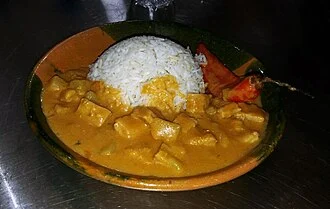
Main course
Meat
Guatita
gwa-tee-ta
· Tripe stew with potatoes
A stew made of beef tripe, potatoes, and a rich peanut sauce.
Open Guatita recipe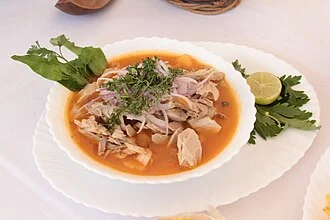
Soup
Fish & Seafood
Encebollado
en-seh-bo-yah-do
· Fish and yucca soup
A fish soup made with albacore and cassava, garnished with pickled onions.
Open Encebollado recipe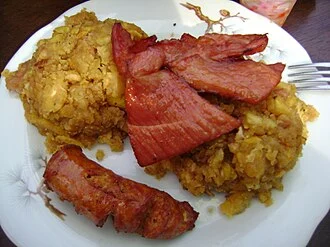
Snack
Vegetarian
Bolón de Verde
boh-lohn de vehr-day
· Green plantain ball
A hearty, fried green plantain dumpling mixed with cheese or pork.
Open Bolón de Verde recipe