
Written for travellers who read the plaques — museums, forts, heritage streets and hotels near them. Updated 2026.

Where to Stay in Singapore for History Lovers: Beyond the Centre

Where to stay in Singapore if history is why you are going — war sites, colonial barracks and Peranakan streets beyond the usual centre.

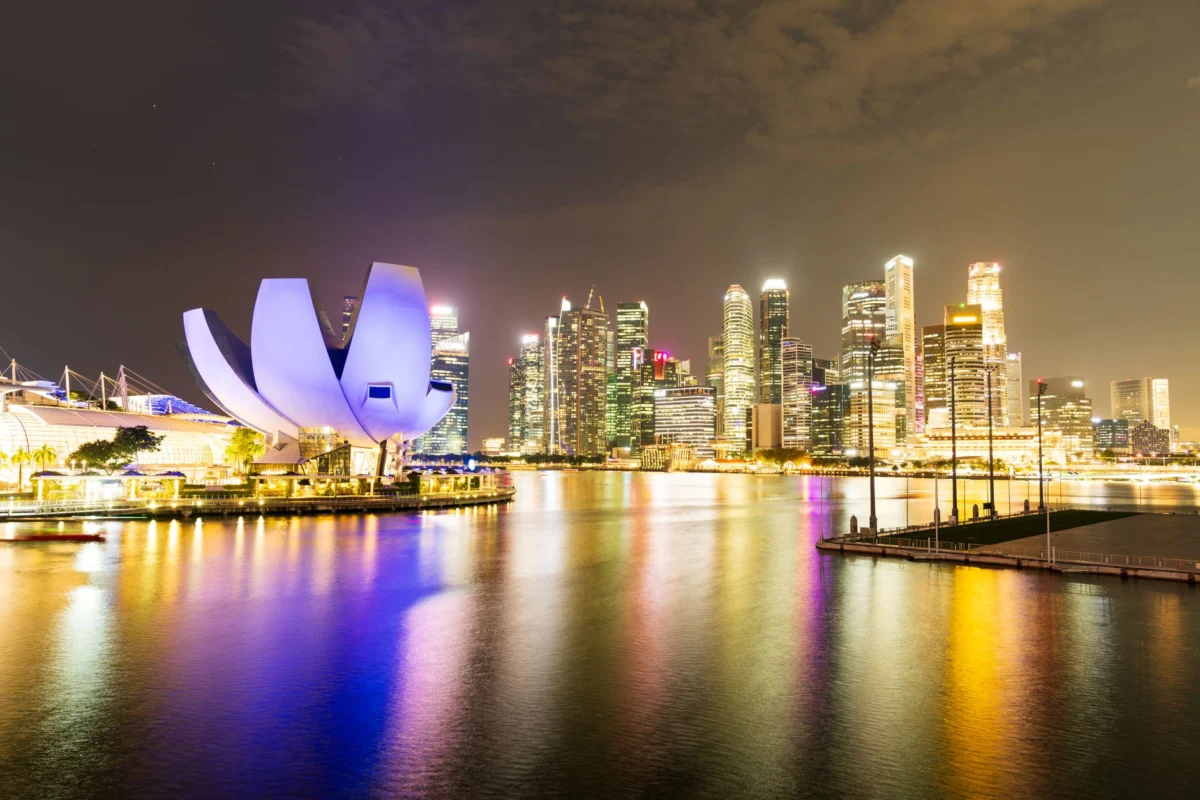
Sunset view of Singapore's skyline
At a Glance
Country Singapore
City Singapore
Day / Night 30° / 25°
Local Time 23:49
November — Now Peak season
Best Months Jun · Jul

Singapore's history is not only in the museums of the Civic District. The sultan’s quarter of Kampong Glam, the temples and shophouses of Chinatown, the coastal forts on Sentosa and the Peranakan terraces of Katong are all still standing. This guide picks four areas with a story, Kampong Glam, Chinatown, Sentosa and Katong, with a walk, the sights worth your time and a hotel for each.

Top Singapore stays for history lovers

Luxury stay
⭐ 9.3
Hotel Indigo Singapore Katong by IHG

Hotel Indigo Singapore Katong by IHG

A hotel on East Coast Road in the heart of old Katong, with interiors inspired by Peranakan design. Koon Seng Road’s terraces, Katong laksa and the Eurasian Heritage Gallery are all within a short walk.

Top pick
⭐ 9.5
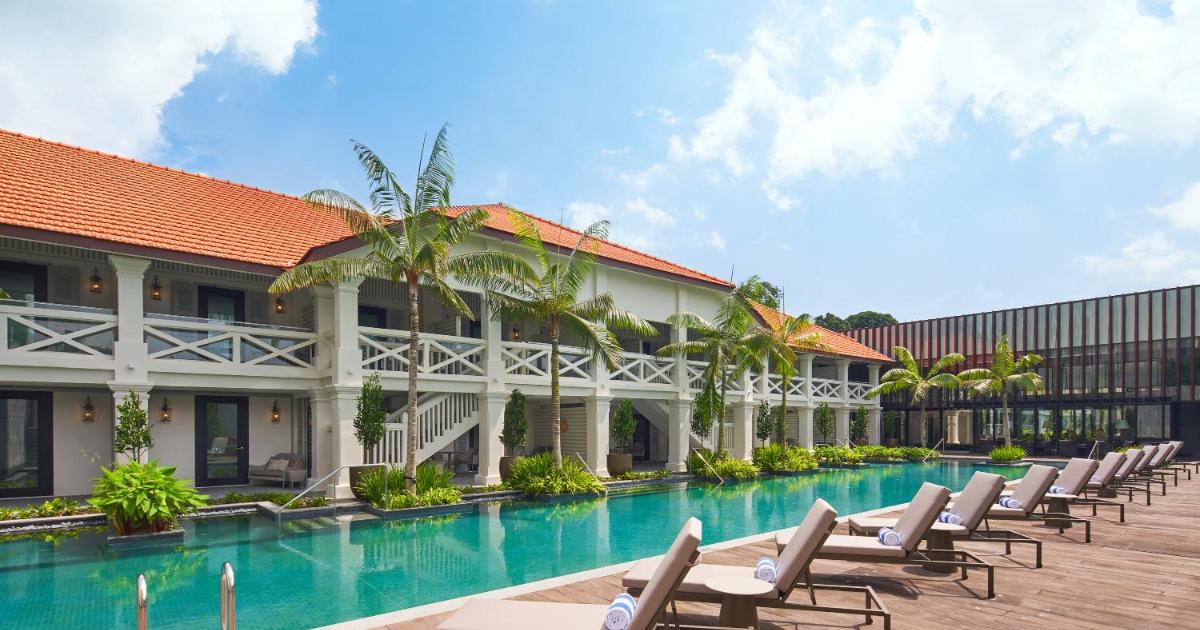
The Barracks Hotel Sentosa

The Barracks Hotel Sentosa

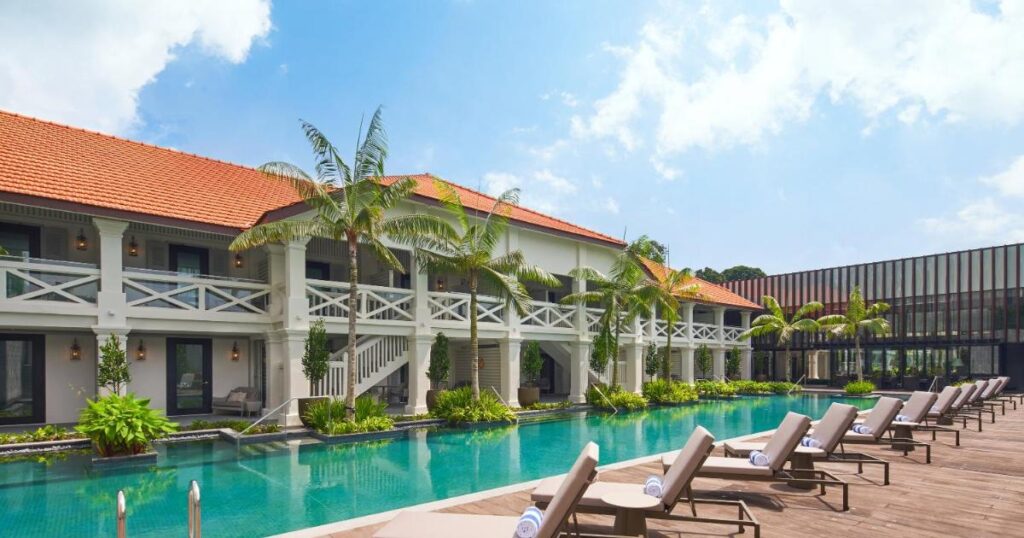
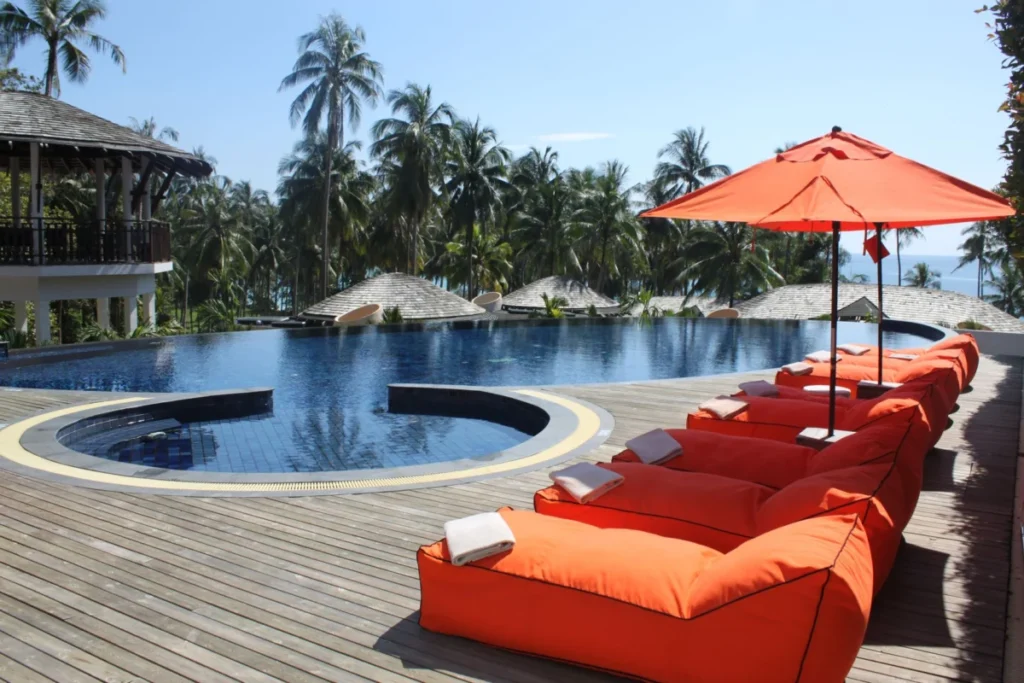
A 5-star hotel at 2 Gunner Lane in the old British military quarter of Sentosa, about an 8-minute walk from Palawan Beach. The setting is the draw for history lovers: Fort Siloso and the island’s wartime sites are a short ride on the free island buses. Back at the hotel there is an outdoor pool, a fitness centre and an à la carte breakfast.

Walkable area
⭐ 9.4
Heritage Collection on KG

Heritage Collection on KG

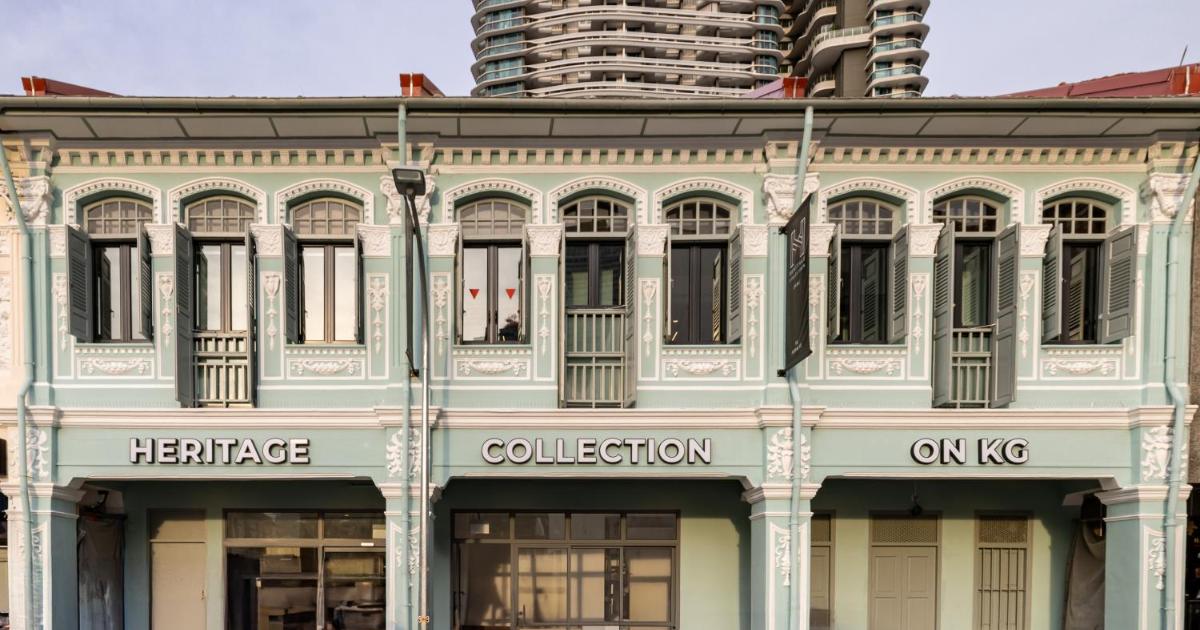
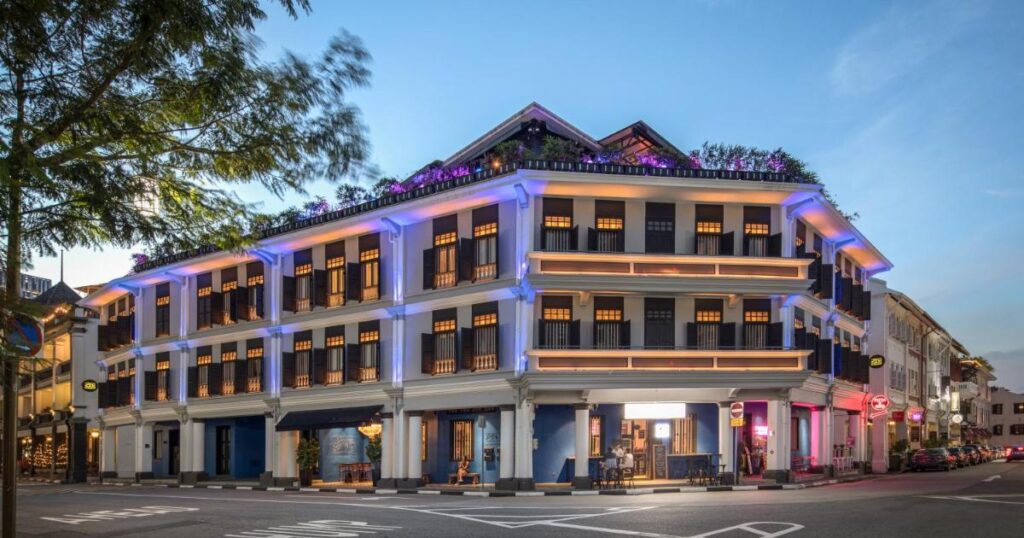
A 3-star, adults-only hotel on Aliwal Street, a few minutes' walk from the Sultan Mosque, the Malay Heritage Centre and the Hajjah Fatimah Mosque. Rooms have kitchenettes and work desks, and check-in is done through a mobile app rather than at a traditional front desk. Guests rate it 9.4 from over 350 reviews, so it is a strong pick if you want to sleep inside the old quarter rather than visit it.

Which chapter of Singapore do you want to live in?

The Second World War, the colonial army, coastal forts or Peranakan life — pick your story.

Best choice: Kampong Glam

Best for: Malay & Arab heritage

Best choice: Chinatown

Best for: Temples and shophouse history

Best choice: Sentosa

Best for: Coastal forts & WWII

Best choice: East Coast (Katong)

Best for: Peranakan heritage

Best hotels in Singapore for history lovers

From a resort built around colonial buildings to hotels a short walk from Katong’s heritage streets.

The Barracks Hotel Sentosa
Top pick
⭐ 9.5 Exceptional
321 reviews

The Barracks Hotel Sentosa

Sentosa • 5-star hotel • 2 Gunner Lane

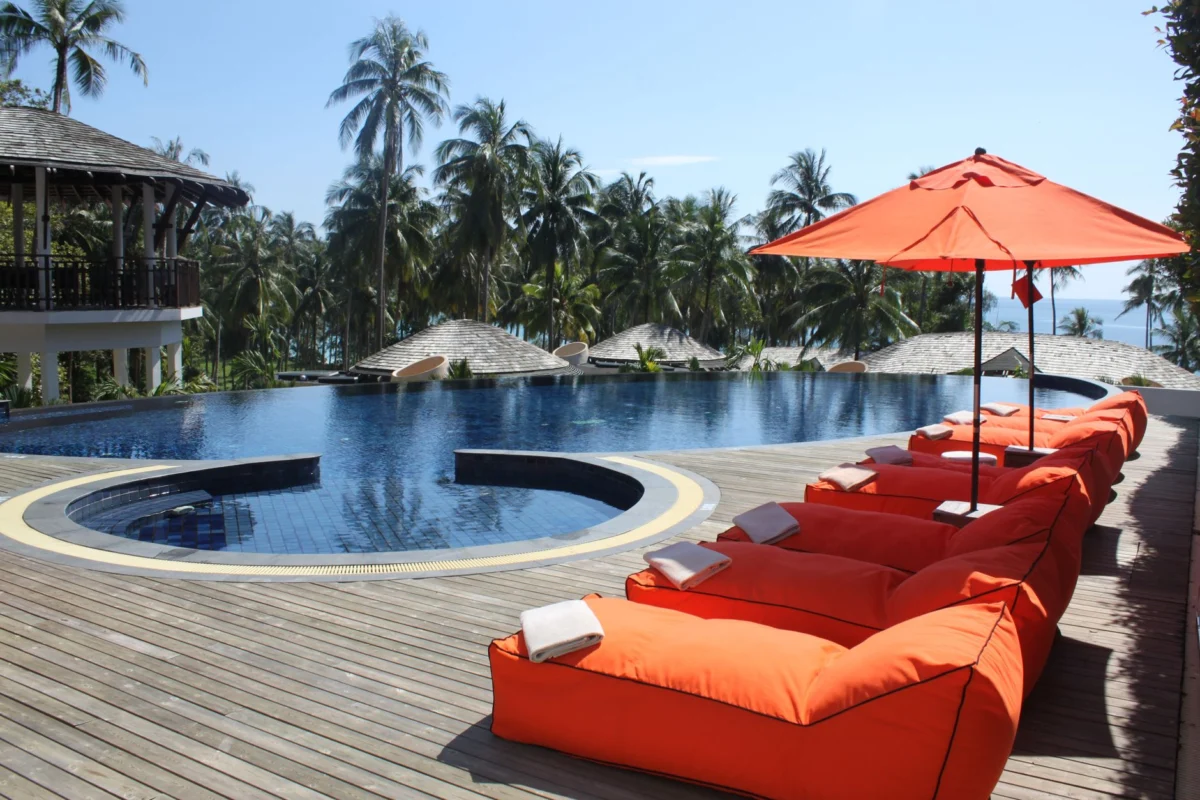
A 5-star hotel at 2 Gunner Lane in the old British military quarter of Sentosa, about an 8-minute walk from Palawan Beach. The setting is the draw for history lovers: Fort Siloso and the island’s wartime sites are a short ride on the free island buses. Back at the hotel there is an outdoor pool, a fitness centre and an à la carte breakfast.

  • In Sentosa’s old military quarter
  • 8-minute walk to Palawan Beach
  • Outdoor pool and fitness centre
Heritage Collection on KG
Walkable area
⭐ 9.4 Superb
361 reviews

Heritage Collection on KG

Kampong Glam • 3-star adults-only hotel • 12 Aliwal Street

A 3-star, adults-only hotel on Aliwal Street, a few minutes' walk from the Sultan Mosque, the Malay Heritage Centre and the Hajjah Fatimah Mosque. Rooms have kitchenettes and work desks, and check-in is done through a mobile app rather than at a traditional front desk. Guests rate it 9.4 from over 350 reviews, so it is a strong pick if you want to sleep inside the old quarter rather than visit it.

  • Minutes on foot to the Sultan Mosque
  • Kitchenette in the rooms
  • Adults only, app check-in
Ann Siang House, The Unlimited Collection
Smart choice
⭐ 9.0 Superb
889 reviews

Ann Siang House, The Unlimited Collection

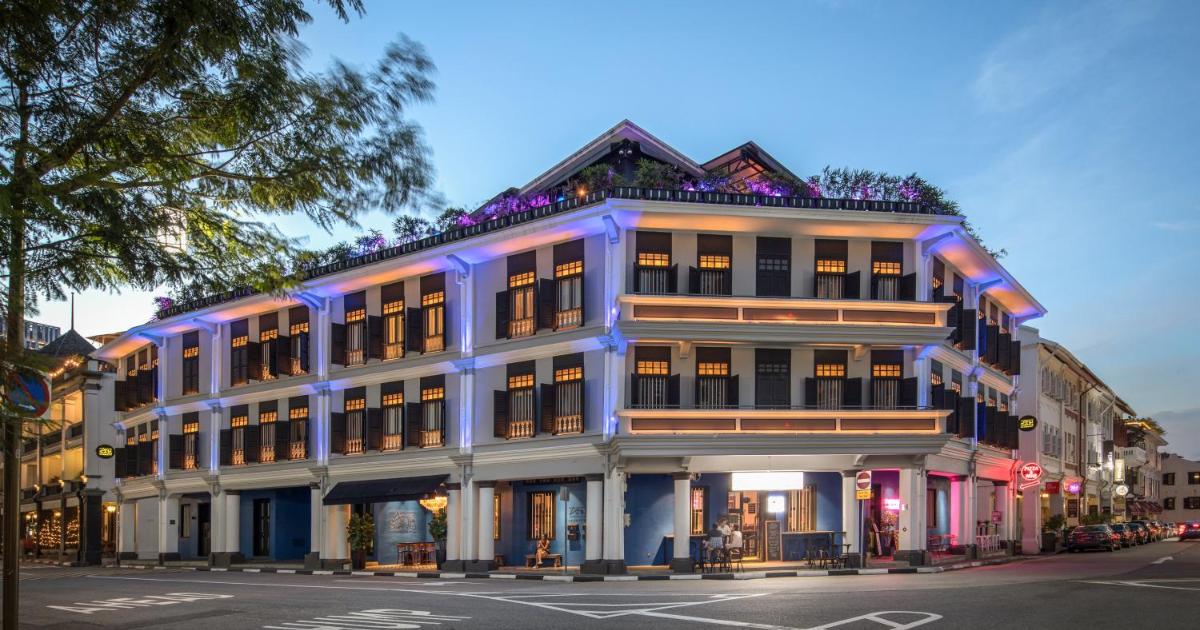
Chinatown • 4-star shophouse hotel • Ann Siang Road

A 4-star hotel in a restored heritage shophouse on Ann Siang Road, about 220 metres from the Buddha Tooth Relic Temple and 290 metres from the Sri Mariamman Temple. Rooms are modern inside the old frame, with a 24-hour front desk and soundproofed rooms. The hotel itself warns that street sounds and trains underground can sometimes be heard, so light sleepers should ask for a quieter room.

  • Restored heritage shophouse
  • Temples a few minutes on foot
  • 24-hour front desk
Capella Singapore
Editor’s choice
⭐ 9.6 Exceptional
110 reviews

Capella Singapore

Sentosa • Built around colonial buildings • 1 The Knolls

A resort on Sentosa built around two restored colonial-era buildings once used by the British military, with new wings designed by Foster + Partners. It hosted the Trump–Kim summit in 2018, and Fort Siloso and the island’s wartime sites are a short ride away.

  • Restored colonial-era buildings
  • Site of the 2018 summit
  • Short ride to Fort Siloso

How we choose

We favour hotels within walking distance of historic sites, or in historic buildings themselves, then check guest ratings. We only describe what we could verify.

Best areas in Singapore for history lovers

Four areas, four chapters of Singapore history — each with a walk you can do in a day.

Kampong Glam

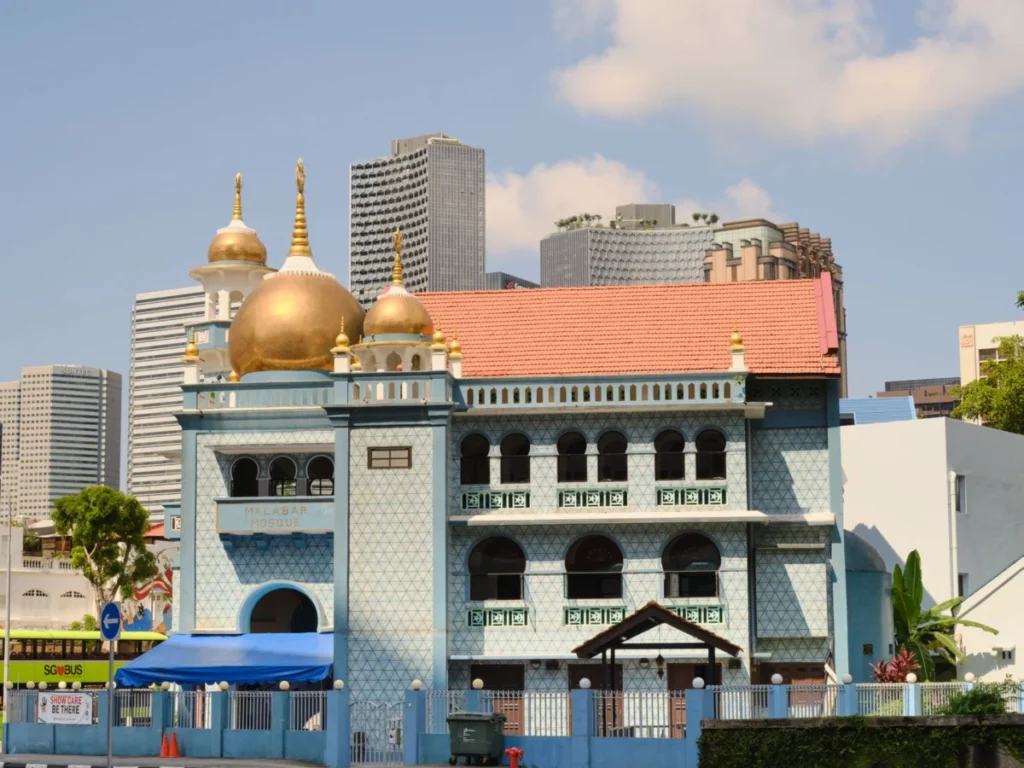
Kampong Glam is the old Malay and Arab quarter, laid out in Raffles’ 1822 town plan for Sultan Hussein Shah, his household and the Malay and Arab merchants. The sultan’s palace still stands, now the Malay Heritage Centre, and the golden domes of the Sultan Mosque rise over rows of restored shophouses on Bussorah, Arab and Kandahar Streets.

Start at the Hajjah Fatimah Mosque on Beach Road, built in the 1840s and known for its leaning minaret, then spend the morning in the palace museum, which reopened in April 2026 after a long redevelopment. After the Sultan Mosque, eat nasi padang at Minang on Kandahar Street, and come back at night for murtabak at Zam Zam, which has served it on North Bridge Road since 1908.

The honest downside: Haji Lane and Arab Street are now more about cafés, bars and boutiques than history, and the lanes are crowded on weekend evenings. Hotels are mostly small shophouse conversions with compact rooms.

Local picks

For Culture & History
  • 1
    Early morningHajjah Fatimah MosqueStart on Beach Road at the mosque funded in the 1840s by Hajjah Fatimah, a Muslim noblewoman from Malacca. Look up at the minaret, which tilts by about six degrees. It has been a national monument since 1973.
  • 2
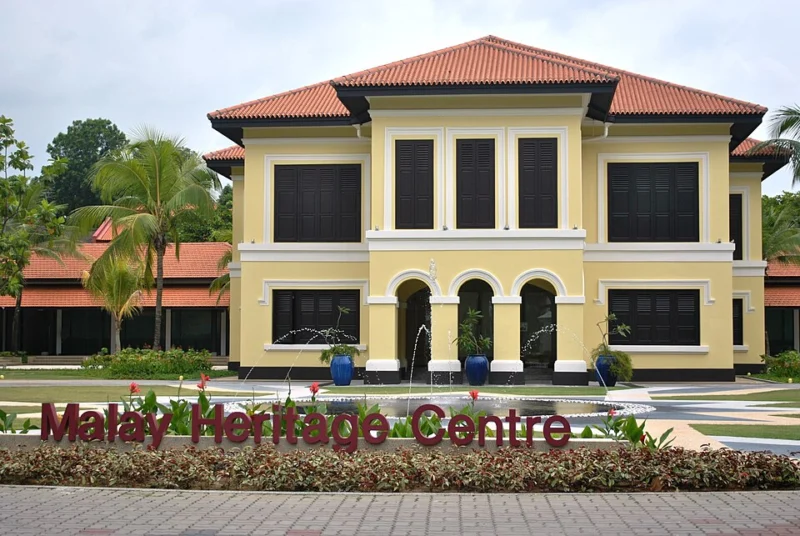
    Must seeMalay Heritage CentreThe museum fills Istana Kampong Glam, the palace built for the sultan’s family in the 19th century. It reopened on 25 April 2026 after redevelopment, so this is a fresh visit even if you came before. Allow at least an hour.
  • 3
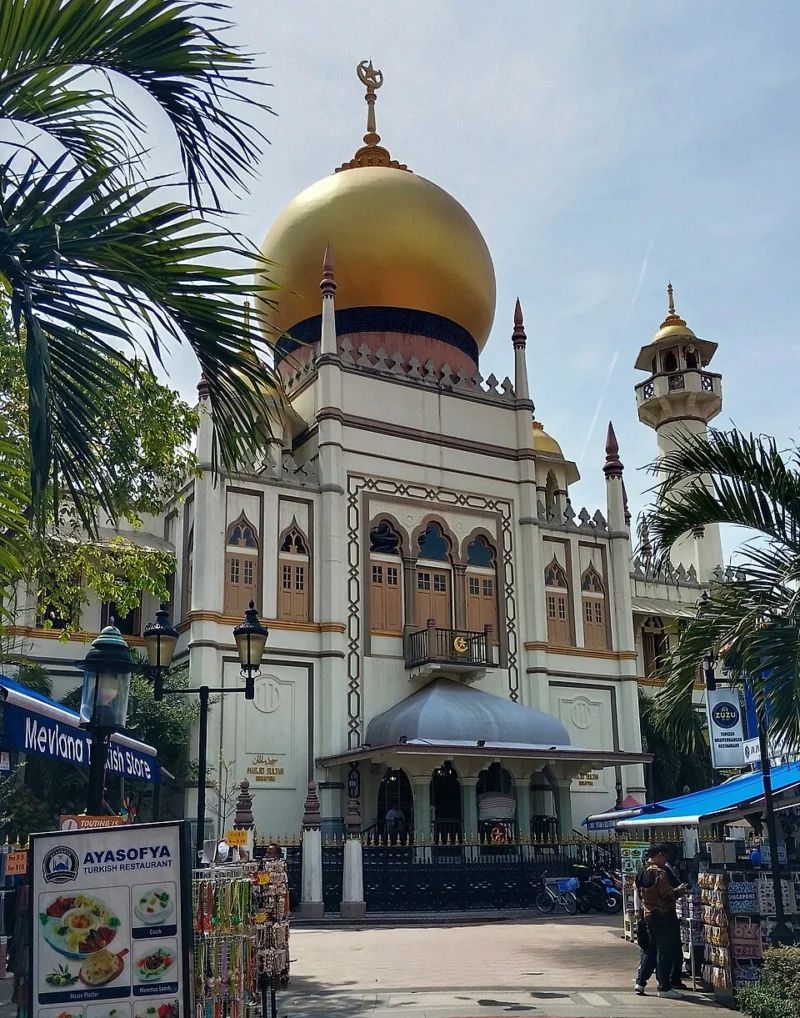
    LandmarkSultan MosqueThe first mosque here was built between 1819 and 1826 for Sultan Hussein; the present one was designed by Denis Santry of Swan & Maclaren and finished in 1932. Visit outside prayer times and dress modestly, with arms and legs covered.
  • 4
    LunchRumah Makan MinangEstablished in 1954, Minang on Kandahar Street is one of the best-known places in Singapore for nasi padang, with more than 20 dishes on the counter. Come early in the lunch hour, before the best dishes run out.
  • 5
    DinnerZam ZamOpposite the mosque on North Bridge Road, Zam Zam has served Indian Muslim food since 1908. Order the murtabak, the stuffed pancake it is famous for.
  • 6
    NightcapAtlasFinish at Atlas, the grand lobby bar of Parkview Square, the Art Deco-style tower a few minutes’ walk south on North Bridge Road. Check the opening days on its website before you go.
  • Getting aroundBugis MRTBugis station on the East–West and Downtown Lines is a short walk from the mosque. From there the Downtown Line reaches Chinatown in a few stops, and Botanic Gardens station for Dempsey.
  • Where to stayMost hotels here are converted shophouses with small rooms and few lifts, so check room size and stairs before you book. Rooms facing Haji Lane or Arab Street can be noisy until late at weekends.

Did you know?

The sultan’s quarter In Raffles’ 1822 town plan, Kampong Glam was set aside for the sultan and the Malay and Arab communities.
Bottles under the domes The base of the Sultan Mosque’s domes is decorated with glass bottle ends collected from the poor during its 1920s rebuilding.
Named after a tree The name is thought to come from the gelam, a Melaleuca tree that grew here.
Kampong Glam

Chinatown

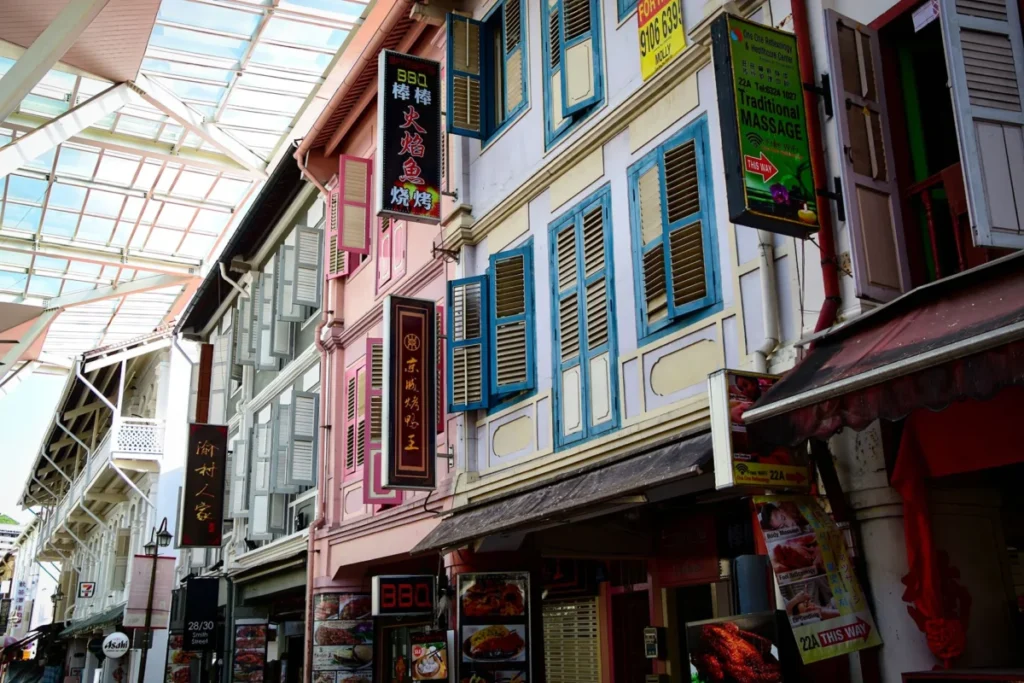
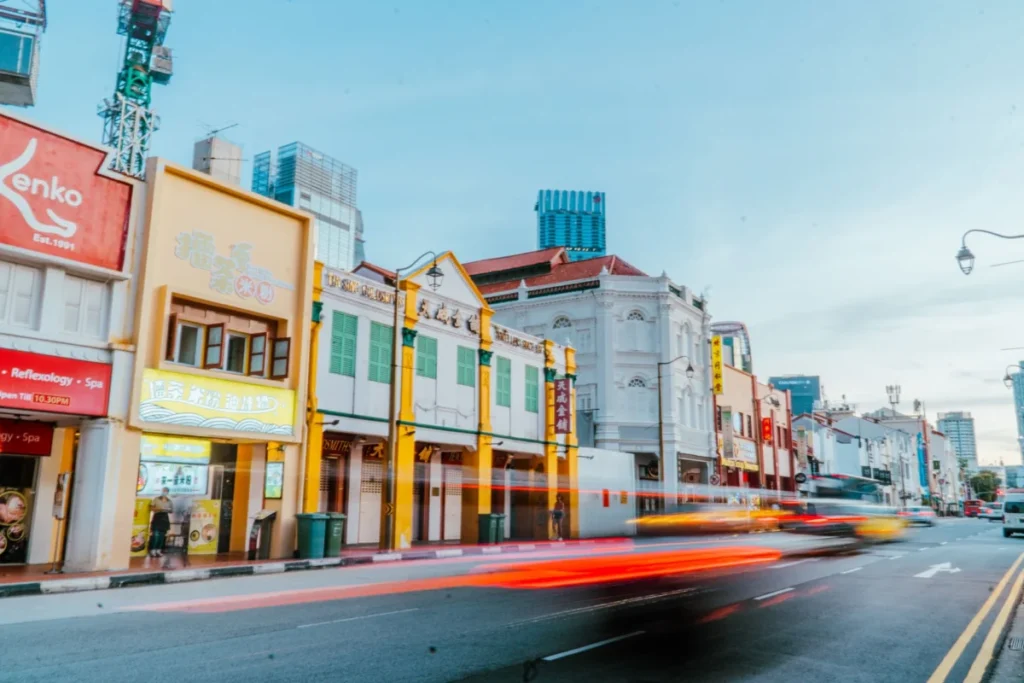
Chinatown grew up south-west of the Singapore River after the 1822 town plan set this land aside for Chinese migrants. Rows of restored shophouses, clan associations and temples of several faiths still line its streets, and the people you see are office workers from the CBD, temple-goers and older residents of the housing blocks above the hawker centres.

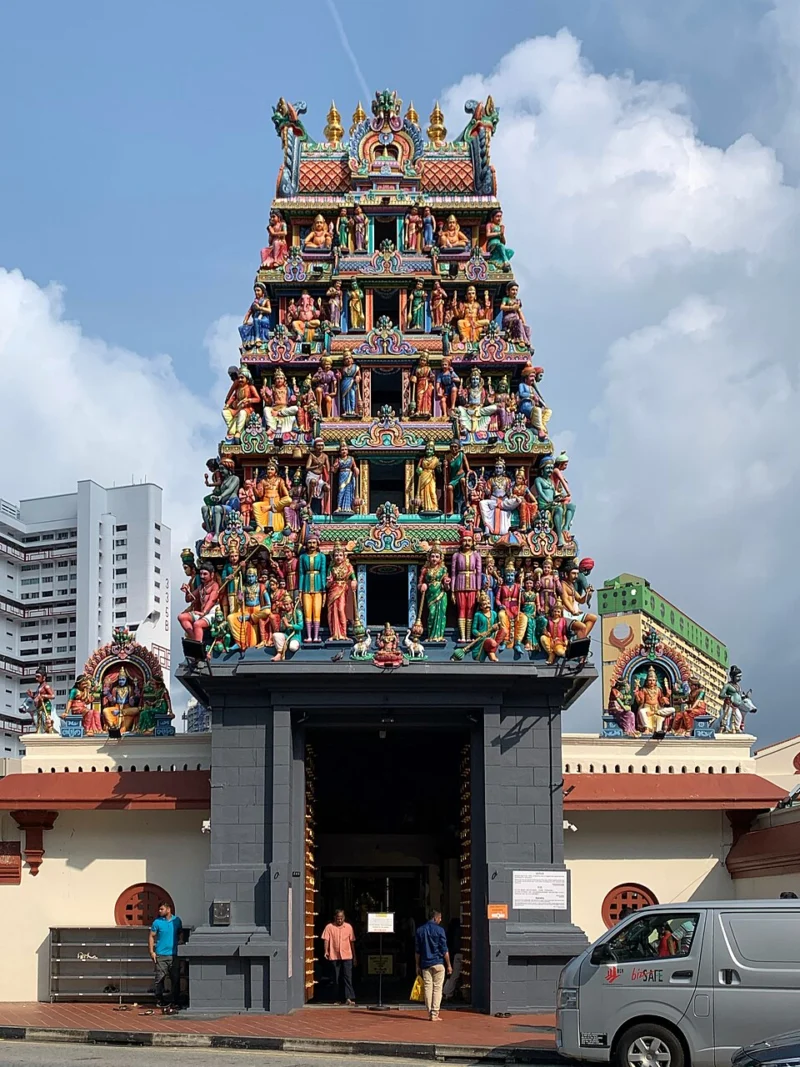
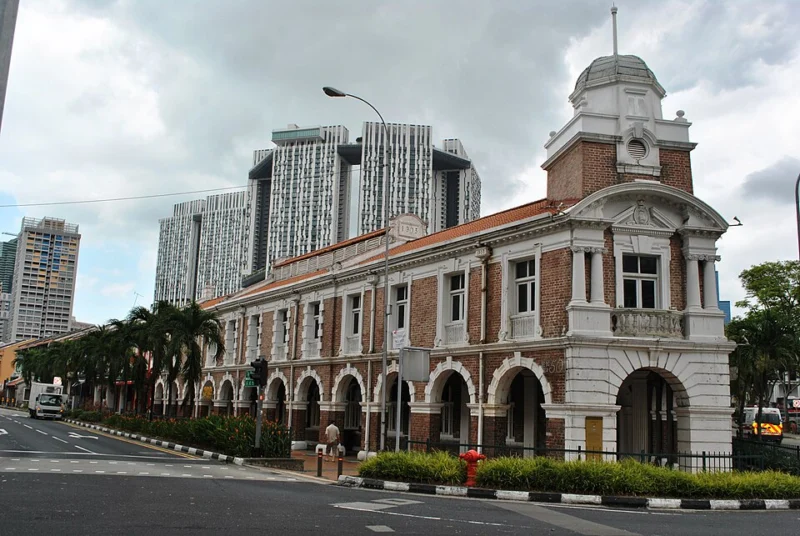
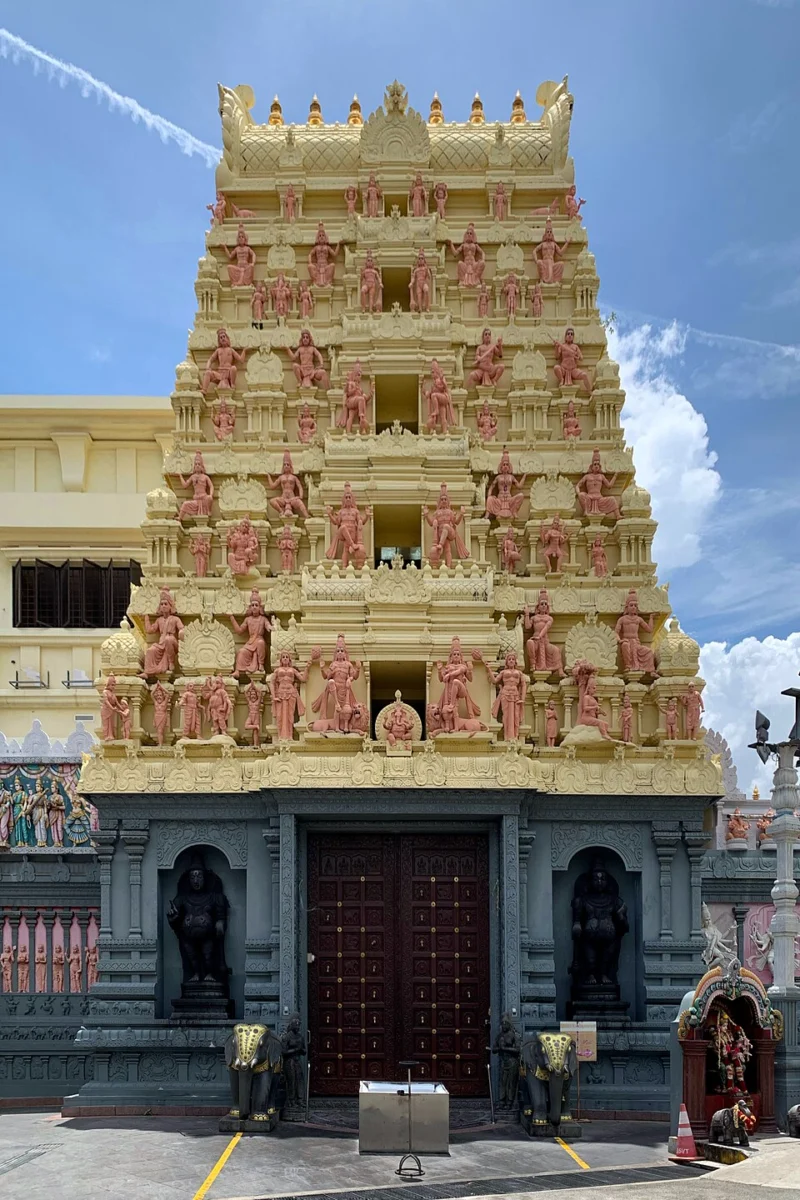
For a history lover it is the most rewarding walk in the city. Start at the Chinatown Heritage Centre, where rebuilt shophouse rooms show how early migrants lived, then visit the Sri Mariamman Temple, Singapore's oldest Hindu temple, look at the red-brick Jinrikisha Station from the rickshaw era, and stop for tea on Tanjong Pagar Road before a Peranakan dinner.

The honest downside: the market streets around Pagoda Street are crowded and full of souvenir stalls, and many shophouses are now bars. Go early, and look up at the upper floors, where the old architecture is best preserved.

Local picks

For Culture & History
  • 1
    MorningChinatown Heritage CentreA museum inside old shophouses on Pagoda Street, with recreated rooms showing how migrant families and workers lived in cramped quarters. Go at opening time, before the street outside fills with shoppers.
  • 2
    TempleSri Mariamman TempleSingapore's oldest Hindu temple, on South Bridge Road, with a tower of carved figures above the gate. Take your shoes off at the entrance and visit outside prayer times if you can.
  • 3
    Hidden historyJinrikisha StationThe triangular red-brick building at the corner of Neil Road was the depot for the city's rickshaws. It is now offices and restaurants, so admire it from the street.
  • 4
    Afternoon teaYixing Xuan TeahouseA calm Chinese teahouse on Tanjong Pagar Road that explains the tea it pours. Ask for a tasting and take your time.
  • 5
    DinnerThe Blue GingerA long-established Peranakan restaurant in a shophouse on Tanjong Pagar Road, known for ayam buah keluak. It is not cheap, so book ahead.
  • Getting aroundChinatown MRT · Maxwell MRTChinatown station (North East and Downtown Lines) and Maxwell station on the Thomson–East Coast Line are both a few minutes from the temples. Katong is a direct ride on the Thomson–East Coast Line.
  • Where to stayChinatown has many boutique hotels in restored shophouses, and larger towers on the edge of the CBD. For atmosphere pick a shophouse hotel, but check reviews for street noise and ask for a room away from the bar streets.

Did you know?

The bullock-cart water Chinatown's Chinese and Malay names (Niu Che Shui, Kreta Ayer) mean 'water cart', after the bullock carts that brought water here.
Planned in 1822 Stamford Raffles' town plan of 1822 allotted the land south-west of the Singapore River to the Chinese community.
The oldest Hindu temple The Sri Mariamman Temple, founded in 1827 by Naraina Pillai, is the oldest Hindu temple in Singapore.
Chinatown

Sentosa

Sentosa is known for resorts and theme parks, but its old name tells another story: until 1972 it was Pulau Blakang Mati, a British military island guarding the entrance to Singapore’s harbour. The guns, tunnels and barracks are still here, mostly on the quiet western and eastern tips.

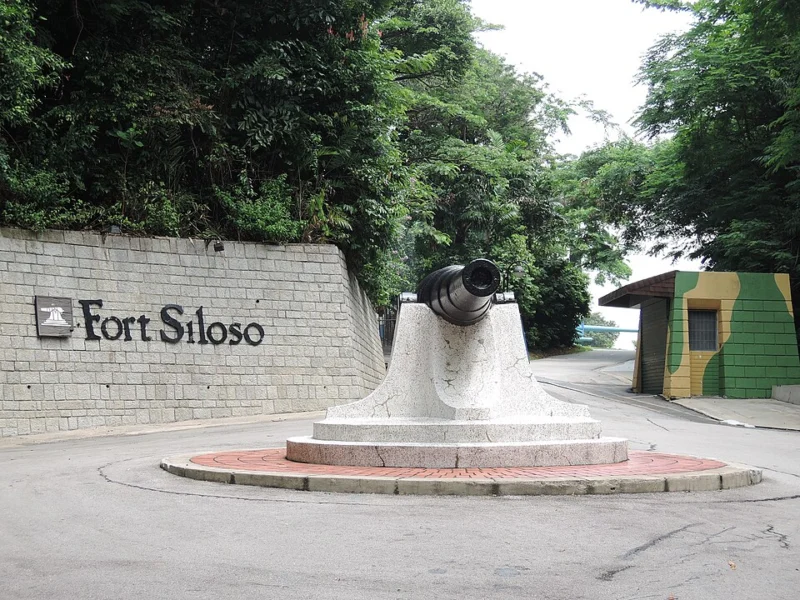
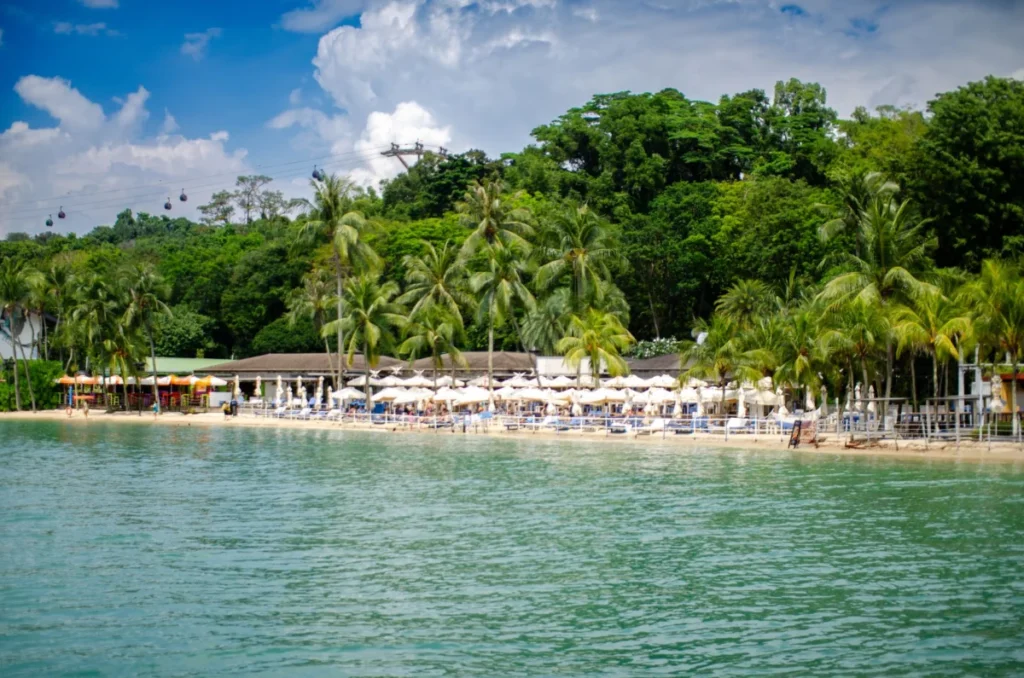
For a history lover, the day starts at Fort Siloso, built in 1878 and later a prisoner-of-war camp, now a free museum of coastal guns and tunnels. Afterwards, follow the beaches east to the little suspension bridge at Palawan Beach and finish on the calmer sand of Tanjong Beach at sunset.

The honest downside: outside the forts, Sentosa is built for fun, not history, and it can feel artificial. Stay here if you want a calm, green base with a few real stories — and plan your city sightseeing as day trips.

Local picks

For Culture & History
  • 1
    MorningFort SilosoOpen from 10 am, free, and best before the day gets hot. Walk the gun emplacements and tunnels, and look for the Surrender Chambers exhibition. In 1942 some of the guns were turned inland to fire at the advancing Japanese — the old story that they all pointed the wrong way is not true.
  • 2
    Walk downFort Siloso SkywalkLeave the fort by the tall elevated walkway above the treetops, which drops you at the western end of Siloso Beach. The views over the harbour show why the British fortified this hill.
  • 3
    BreakSiloso BeachStop for a drink at one of the beach bars along Siloso Beach Walk, then continue east along the shore. The sea lanes you see offshore are the reason the island was fortified.
  • 4
    LandmarkSouthernmost Point of Continental AsiaCross the rope suspension bridge from Palawan Beach to a small islet with two viewing towers — the southernmost point of continental Asia, as the signs say. Ships queue on the horizon waiting to enter the port.
  • 5
    SunsetTanjong BeachThe quietest of Sentosa’s three main beaches, at the eastern end of the island. Above it are the green hills where the British had their artillery camps.
  • 6
    EveningTanjong Beach ClubStay on for dinner or a drink at the beach club behind the sand. It is the smartest address on this beach and priced to match, so book ahead at weekends.
  • Getting aroundSentosa Express · HarbourFrontThe Sentosa Express monorail runs from VivoCity, next to HarbourFront MRT, to the island; you can also walk across the Sentosa Boardwalk. Free buses and beach trams connect the forts and beaches on the island.
  • Where to staySentosa has resorts of every size, from large family hotels at Resorts World to quiet hillside hotels on the eastern side. For history, pick one near Fort Siloso or on the hills around Tanjong Beach, and check the cost of taxis if you plan to visit the city every day.

Did you know?

A 37-metre Merlion, now gone Sentosa’s giant Merlion statue was demolished in 2019 to make way for new development.
Fort Siloso's WWII history Built in 1878, the fort was a prisoner-of-war camp in 1942–45 and became a military museum in 1974.
The island behind the island Sentosa was called Pulau Blakang Mati until it was renamed in 1972.
Sentosa

East Coast (Katong)

Katong grew out of coconut plantations. In the early 1900s wealthy families moved out of the crowded city to seaside villas here, and it became the heartland of Singapore’s Peranakan and Eurasian communities. The sea has since moved — reclamation from 1966 to 1985 pushed the shore south to create East Coast Park — but the shophouses, temples and food have stayed.

Walk Koon Seng Road in the morning for the most photographed Peranakan terraces in Singapore, then book a visit to a private Peranakan home museum. After lunch, learn about the Eurasian community on Ceylon Road and end the day with a bowl of Katong laksa on East Coast Road.

The honest downside: Katong is a residential area, not a museum district, and the sights are small. You will need the MRT for the big museums, but you will eat better here than in the centre.

Local picks

For Culture & History
  • 1
    Early morningKoon Seng RoadCome before 9 am for soft light on the pastel terraces between Joo Chiat Road and Tembeling Road. Look for the tiles, carved doors and pintu pagar half-doors of Peranakan houses.
  • 2
    Worth bookingThe IntanA private home filled with Peranakan furniture, beadwork and porcelain, shown by its owner. Visits are by appointment only, so arrange one before your trip.
  • 3
    LunchGuan Hoe SoonOne of Singapore’s best-known Peranakan restaurants, now on Joo Chiat Road. Try ayam buah keluak, chicken with black keluak nuts. Lunch is served until 3 pm.
  • 4
    Hidden historyEurasian Heritage GalleryInside the Eurasian Community House on Ceylon Road, this small gallery tells the story of Singapore’s Eurasians — families of Portuguese, Dutch, British and Asian descent who shaped Katong. Give it half an hour and the church names and surnames around Katong start to make sense.
  • 5
    TempleSri Senpaga Vinayagar TempleFounded by Ceylon Tamils in the 1850s after a statue of Vinayagar was found by a pond here. The present temple has a 21-metre gateway tower and was named a historic site in 2003.
  • 6
    Peranakan snackKim Choo Kueh ChangAn old shophouse on East Coast Road known for Nyonya rice dumplings wrapped in pandan leaves. Pick up a few for later.
  • 7
    Dinner328 Katong LaksaThe original shop of the laksa wars, at 51 East Coast Road. Order the coconut laksa, eaten with a spoon because the noodles are cut short. Open until 9.30 pm.
  • 8
    Evening walkParkland GreenWalk ten minutes south to the seafront of East Coast Park. Everything you stand on here was sea until the 1970s — East Coast Road behind you was once the coast road.
  • Getting aroundMarine Parade · Tanjong KatongMarine Parade and Tanjong Katong stations on the Thomson–East Coast Line connect Katong with Gardens by the Bay and Orchard. Paya Lebar on the East–West and Circle Lines is a 15-minute walk north.
  • Where to stayKatong has a handful of mid-range hotels on East Coast Road and Marine Parade Road, plus serviced apartments. Stay within walking distance of East Coast Road and you can reach the shophouses, temples and laksa on foot.

Did you know?

Katong's Peranakan heritage By the 1920s, plantations had become an affluent suburb of Peranakan and Eurasian families.
The shore moved south Land reclamation from 1966 to 1985 created East Coast Park and moved the coastline away from Katong.
The laksa wars Rival stalls on East Coast Road fought over the name “Katong laksa” — the original 328 is at No. 51.
East Coast (Katong)

Planning your stay in Singapore

For Culture & History
  • Singapore history in 3 daysDay 1: the National Museum and Fort Canning in the centre. Day 2: Kampong Glam — the Malay Heritage Centre, the Sultan Mosque and murtabak at Zam Zam. Day 3: Chinatown's heritage centre and temples in the morning, Katong in the afternoon and laksa for dinner.
  • Check the opening hoursThe Former Ford Factory opens at noon on Sundays, Fort Siloso runs 10 am–6 pm, and The Intan only opens by appointment.
  • What is freeFort Siloso, the Botanic Gardens (except the National Orchid Garden) and the mosques of Kampong Glam cost nothing. The National Orchid Garden charges an entry fee, and The Intan must be booked ahead.
  • The story of 1942To follow the fall of Singapore in order, visit Fort Siloso, then the Former Ford Factory on Upper Bukit Timah Road, where Percival surrendered, and end at the Battlebox at Fort Canning, where the decision to surrender was made.
Self-guided walking tours Culture & History (Singapore, Singapore)
Routes 4
Pick a route

Best time to visit Singapore (Singapore)

Now (November) avg high: 30°C, wetter month, full season — expect crowds. Best months to walk: Jun & Jul.

Live Temp …
~Day / Night Temp 30°C / 25°C
Sunrise / Sunset 6:46 / 18:50
Local time 23:49
Sea Temp 31°C
Best Months Jun & Jul
J Jan F Feb M Mar A Apr M May J Jun best month J Jul best month A Aug S Sep O Oct N Nov this month D Dec
Check Singapore hotels
Temperature Average daytime high, month by month. Zero line marks freezing point.
Crowds How busy it gets — traveller interest by month.
Sea temperature Sea warmth for swimming, by month.
Rainfall Rainy days to expect each month.
Sunshine Hours of sun per day, by month.
Singapore guides →

Best hotels in Singapore for history lovers

From a resort built around colonial buildings to hotels a short walk from Katong’s heritage streets.
Hotel Indigo Singapore Katong by IHG
Luxury stay
9.3 Outstanding
871 reviews

Hotel Indigo Singapore Katong by IHG

A hotel on East Coast Road in the heart of old Katong, with interiors inspired by Peranakan design. Koon Seng Road’s terraces, Katong laksa and the Eurasian Heritage Gallery are all within a short walk.

Ideal for: History lovers who want heritage streets on the doorstep
The Barracks Hotel Sentosa
Top pick
9.5 Exceptional
321 reviews

The Barracks Hotel Sentosa

A 5-star hotel at 2 Gunner Lane in the old British military quarter of Sentosa, about an 8-minute walk from Palawan Beach. The setting is the draw for history lovers: Fort Siloso and the island’s wartime sites are a short ride on the free island buses. Back at the hotel there is an outdoor pool, a fitness centre and an à la carte breakfast.

Ideal for: History lovers who want to stay in Sentosa’s old military quarter
Heritage Collection on KG
Walkable area
9.4 Superb
361 reviews

Heritage Collection on KG

A 3-star, adults-only hotel on Aliwal Street, a few minutes' walk from the Sultan Mosque, the Malay Heritage Centre and the Hajjah Fatimah Mosque. Rooms have kitchenettes and work desks, and check-in is done through a mobile app rather than at a traditional front desk. Guests rate it 9.4 from over 350 reviews, so it is a strong pick if you want to sleep inside the old quarter rather than visit it.

Ideal for: History lovers who want to wake up inside the old Malay quarter
Ann Siang House, The Unlimited Collection
Smart choice
9.0 Superb
889 reviews

Ann Siang House, The Unlimited Collection

A 4-star hotel in a restored heritage shophouse on Ann Siang Road, about 220 metres from the Buddha Tooth Relic Temple and 290 metres from the Sri Mariamman Temple. Rooms are modern inside the old frame, with a 24-hour front desk and soundproofed rooms. The hotel itself warns that street sounds and trains underground can sometimes be heard, so light sleepers should ask for a quieter room.

Ideal for: History lovers who want to sleep inside a restored shophouse
Capella Singapore
Editor’s choice
9.6 Exceptional
110 reviews

Capella Singapore

A resort on Sentosa built around two restored colonial-era buildings once used by the British military, with new wings designed by Foster + Partners. It hosted the Trump–Kim summit in 2018, and Fort Siloso and the island’s wartime sites are a short ride away.

Ideal for: History lovers who want to sleep inside the story

Visiting around 15 February or National Day?

Wartime anniversaries in February and National Day on 9 August bring special events and busier hotels — book early if your dates are fixed.

Compare Singapore hotels for history lovers

Location, history nearby and what makes each one special — side by side.
Capella Singapore
Editor’s choice
9.6 Exceptional
110 reviews

Capella Singapore

Sentosa • Built around colonial buildings • 1 The Knolls
History and comfort in one address
Historic Building
Colonial-era architecture
Quiet Area
Quiet hillside setting
The Barracks Hotel Sentosa
Top pick
9.5 Exceptional
321 reviews

The Barracks Hotel Sentosa

Sentosa • 5-star hotel • 2 Gunner Lane
Military history on the doorstep
Historic Building
Old military quarter
Pool
Outdoor swimming pool

Traditional Local Food Singapore (Singapore)

Main course Fish & Seafood

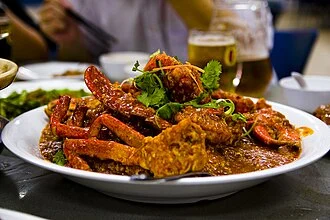
Chili Crab

辣椒螃蟹
Cha-lee Pahng-shee-eh

Spicy tomato-based sauce with succulent mud crabs.

Open Chili Crab recipe
Snack Vegetarian

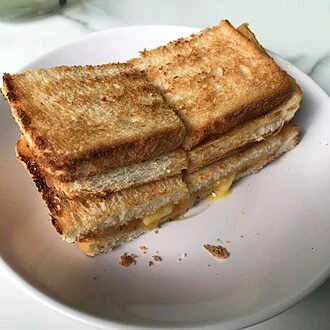
Kaya Toast

咖椰吐司
Ka-yeah Toast

Sliced bread toasted and spread with coconut jam and butter.

Open Kaya Toast recipe
Snack Fish & Seafood

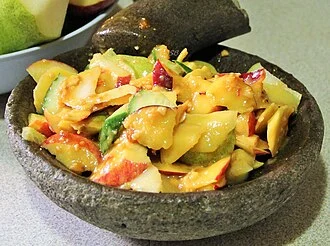
Rojak

罗惹
ro-jahk

Fruit and vegetable salad in a sticky dark sauce.

Open Rojak recipe

Activities & Experiences

Things to Do in Singapore

Top-rated tours, day trips and local experiences — book in advance to secure your spot.

City & Country Data Singapore (Singapore)

Key travel data for Singapore — local prices, safety, healthcare, local currency and essentials, curated by Triplandio.

Safety 🔒 96
Health 🏥 98
Lifestyle ⭐ 75
Infra 🏗️ 100
Rank 🎯 #1
Score 📊 75
Tourists ✈️ 2.7M/y
GDP/cap 💵 $98.8k
Life Exp ❤️ 83.3 yrs
Population 👥 6.1M
Currency 💱 SGD S$
Language 🗣️ English
Payments 💳 Cashless
Emergency 🆘 999
Coffee ☕ $4.80
Beer 🍺 $7.50
Lunch 🍽️ $11.20
Groceries 🛒 $50.00/w
Taxi/km 🚕 $0.74
Transit 🚇 $1.50
Fuel ⛽ $2.30/l
Internet 📡 $25.00/m
Salary 💵 $3,000/m

Travel tipsSingapore (Singapore)

Quick tips

  1. Drug use abroad can get you arrested — Critical

    Singapore can test you for drugs on arrival, even in transit, and charge you if any are found in your system — even if you took them in a country where they're legal. Trafficking can carry the death penalty.

  2. Foreigners can't join demonstrations — Critical

    Visitors to Singapore may not attend outdoor protests, even ones with police permission, or film illegal gatherings. Wearing cause-related clothing or banners in public is also banned.

  3. No eating or drinking on the MRT — Caution

    Eating and drinking — even water — are banned on Singapore's MRT trains, buses and in paid station areas, and you can be fined. Finish your snack before the ticket gates.

  4. Vapes and e-cigarettes are banned — Caution

    You can't bring vapes or e-cigarettes into Singapore, even for personal use, or use them there. Devices are confiscated and you can be fined.

  5. No public drinking late at night — Caution

    Drinking alcohol in public places in Singapore is illegal between 22:30 and 07:00, except in licensed bars, restaurants and venues. Drunk and disorderly behaviour can mean fines, prison or caning.

  6. Fill in the SG Arrival Card — Good to know

    Every visitor must complete the electronic SG Arrival Card, with travel details and a health declaration, in the 3 days before arriving in Singapore. A false declaration is illegal.

  • Do
  • Fill in the SG Arrival Card
  • Return your tray at hawker centres
  • Check if your medicine needs approval
  • Smoke only in marked areas
  • Use bins — always
  • Don’t
  • Bring a vape
  • Carry or take any drugs
  • Drink in public after 22:30
  • Join or film a protest
  • Feed the monkeys

Singapore tips for history lovers

Chinatown’s temples

Sri Mariamman Temple, the oldest Hindu temple in Singapore, and Thian Hock Keng, the old Hokkien temple once on the waterfront, are both in Chinatown. Visit early in the morning, when the temples are busy with worshippers and not tour groups.

Tip: Chinatown for the oldest temples

Kampong Glam and the Sultan Mosque

Kampong Glam was the seat of the Malay sultan, and the golden-domed Sultan Mosque still anchors the quarter. The former palace next to it, Istana Kampong Gelam, houses the Malay Heritage Centre.

Tip: Malay history in Kampong Glam

Follow the Second World War

Put the Former Ford Factory, Fort Siloso and the Battlebox together and you have the story of February 1942. For the occupation years, add Changi Chapel and Museum in the east, the memorial to the prisoners of war held at Changi.

Tip: A 1942 trail across the island

Beat the heat

Start outdoor sights at 7–8 am, keep museums for the hot middle of the day and go back outside after 5 pm. Carry water and an umbrella — afternoon showers are common all year.

Tip: Outdoors early, museums at midday

Singapore for history lovers: FAQ

When is the best time to visit Singapore?

The best time to visit Singapore is June and July — fewer crowds, comfortable temperatures, less rain and more sunshine. Compare every month in the seasonal chart above.

Where should history lovers stay in Singapore?

For the museums and colonial buildings, stay in the Civic District or Chinatown. For a base with its own heritage and lower prices, choose Katong, where Peranakan terraces, temples and old food shops are on your doorstep.

Where did the British surrender Singapore in 1942?

At the Ford Motor Factory on Upper Bukit Timah Road, on 15 February 1942. The building is now a national monument with the exhibition “Surviving the Japanese Occupation: War and Its Legacies”.

Where can I see Peranakan heritage in Singapore?

Walk Koon Seng Road and Joo Chiat in Katong for the decorated terraces, eat at a Peranakan restaurant, and book a visit to The Intan, a private home museum open by appointment.

Is the Singapore Botanic Gardens worth it for history lovers?

Yes. It was founded at its present site in 1859, helped start the rubber industry of Malaya and in 2015 became the only tropical garden on the UNESCO World Heritage list. Look for Burkill Hall, Holttum Hall and the colonial houses of the Gallop Extension.

How do I get between these areas?

Bukit Timah is on the Downtown Line (Beauty World and Hillview), Katong on the Thomson–East Coast Line and Sentosa is reached from HarbourFront by the Sentosa Express. Chinatown has its own stations on the North East, Downtown and Thomson–East Coast Lines.

Singapore for history lovers

★ For history lovers
Singapore's history is not only in the museums of the Civic District. The sultan’s quarter of Kampong Glam, the temples and shophouses of Chinatown, the coastal forts on Sentosa and the Peranakan terraces of Katong are all still standing. This guide picks four areas with a story, Kampong Glam, Chinatown, Sentosa and Katong, with a walk, the sights worth your time and a hotel for each.
  • Four areas with a real story
  • War sites, colonial buildings and Peranakan streets
  • A walk and the must-sees in each
  • Updated 2026
Asia — Singapore — Singapore — Where to Stay in Singapore for History Lovers: Beyond the Centre
keyboard_arrow_up