

Explore Guides
ASIA
Pakistan
Triplandio Pakistan guide covers 3 travel guides with 1 city across 12 areas, complete with hotel picks. Explore 7 self-guided walking tours in Pakistan with 7 POI, spanning 77.6 km in total. Get inspired by 5 local dishes, complete with recipes and our unique Food Flavour DNA graph.
Country Data Pakistan

Key travel data for Pakistan — safety, healthcare, local currency and essentials, curated by Triplandio.
🌍 Pakistan
Tourists
966K/y
GDP/cap
$1.6k
Life Exp
67.8 yrs
Population
255.2M
Currency
PKR Rs
Language
Urdu
Payments
Cash only
Emergency
115
Travel tipsPakistan

Quick tips
- Blasphemy can carry the death penalty — Critical
Insulting religion or anything considered holy (blasphemy) is a crime in Pakistan, defined very broadly and including private remarks and social media posts. Penalties include death, and accused people risk mob violence.
- Never bring alcohol or pork in — Critical
Importing alcohol or pork products into Pakistan is illegal and you could be detained at the airport. Non-Muslims can only drink with a licence from the authorities, and never in public.
- Large areas are no-go zones — Critical
Several governments, including the UK, advise against all travel to Balochistan, much of Khyber Pakhtunkhwa including Peshawar and Swat, border areas, and the Karakoram Highway between Mansehra and Chilas. Travelling there can void your insurance.
- Get a visa before you travel — Good to know
Every visitor needs a Pakistani visa applied for in advance, usually online. Make sure your passport is stamped on arrival — leaving without an entry stamp is very difficult.
- Always carry photo ID — Good to know
Police and security checkpoints in Pakistan may ask for your passport, and you can be detained until you show valid ID. Carry your passport and keep photocopies of it and your visa.
- North in summer, south in winter — Good to know
Pakistan's mountain north, Gilgit-Baltistan, is best from about May to October; the plains around Lahore, Islamabad and Karachi are most comfortable November–February, though Lahore then has smog.
- Do
- Get your visa and entry stamp
- Dress modestly and carry a scarf
- Carry your passport at all times
- Check which regions are off-limits
- Bring enough cash for the mountains
- Don’t
- Pack alcohol or pork
- Joke about religion, even online
- Photograph soldiers or checkpoints
- Take the train
- Drive at night
Critical
Prison or heavy penalty possible
Getting between cities
- Avoid the railways — Critical
Several governments, including the UK, advise avoiding Pakistan's railway network because of the risk of terrorist attacks; a passenger train was hijacked in Balochistan in 2025. Use flights or reputable coaches instead.
Regions & seasons
- Balochistan and much of Khyber Pakhtunkhwa — Critical
Several governments, including the UK, advise against all travel to Balochistan and to many districts of Khyber Pakhtunkhwa, including Peshawar, Swat and the Kalash valleys. Check the latest list before planning.
Laws & fines
- Prison for even small amounts of drugs — Critical
Possessing even a small quantity of illegal drugs in Pakistan can mean prison, and foreigners arrested for trafficking have been held for long periods awaiting trial. Never carry anything for someone else.
- Sex between men is illegal — Critical
Same-sex sexual activity between men is a criminal offence in Pakistan, and arrests occasionally happen. Negative attitudes can lead to violence, so LGBT+ travellers should avoid public affection and be careful online.
- Photos of official sites can mean arrest — Critical
Don't photograph military sites, airports, bridges, dams or other infrastructure in Pakistan, or take photos from planes. Foreigners have been arrested on suspicion of spying. Ask officials if unsure.
- Don't supply alcohol to Muslims — Critical
Even if you have a licence to drink, it's illegal in Pakistan to give or sell alcohol to a Muslim. Public drinking and drunkenness are offences too.
Entry & visa
- Permits for some regions — Critical
You need advance permission from the authorities, sometimes a No Objection Certificate (NOC), to travel in Khyber Pakhtunkhwa, Balochistan and parts of Azad Kashmir. Areas near military sites are prohibited.
Mountains & adventure
- Keep a low profile — Critical
Terrorists may target tourist sites and hiking trails as well as cities. Vary your routines, avoid big public gatherings and limit movements on Friday afternoons.
- Take care near swollen rivers — Critical
Monsoon rain from late June to early October can cause floods across every province of Pakistan and damage roads and bridges. Take extreme care crossing swollen rivers, and check the weather service first.
Caution
Fines, losses or injury possible
Getting between cities
- Avoid buses and street taxis — Caution
Because of crime, avoid Pakistan's public transport, including the Rawalpindi–Islamabad Metro Bus, and don't hail street taxis or use taxi apps. Book taxis by phone through a reputable licensed company.
Laws & fines
- Keep away from protests — Caution
Rallies in Pakistan can turn violent quickly, and authorities often close roads and cut mobile internet during them. Avoid all demonstrations and have a back-up route for journeys.
Tipping & money
- Watch for card fraud — Caution
Credit card fraud is common in Pakistan. Keep your card in sight, use ATMs inside banks or hotels, and check statements regularly.
Entry & visa
- Travel advisory: Level 3 of 4 — Caution
Reconsider Travel — the U.S. State Department's rating for Pakistan.
- Don't let your visa expire — Caution
To leave Pakistan you need an unexpired visa. If yours runs out, apply online for an exit permit before trying to fly, or you may be stopped at the airport.
Mountains & adventure
- Altitude sickness in the north — Caution
Gilgit-Baltistan's valleys and passes are high, and the Khunjerab Pass is well over 4,000 m. Gain height slowly, drink water and descend if you get a severe headache or feel breathless.
- Landslides close mountain roads — Caution
Landslides, rockfalls and snow often block or destroy roads in northern Pakistan, including the N15 between Chilas and Babusar. Travel only in clear weather with an experienced local driver, and build in spare days.
- Avoid travelling at night — Caution
Pakistani roads are dangerous after dark, with unlit vehicles, livestock and poor surfaces. Plan long drives to arrive before sunset.
Good to know
Rules and useful facts
Getting between cities
- Hire a car with a driver — Good to know
Traffic in Pakistan drives on the left and driving is erratic. To drive you need a 1968 International Driving Permit (IDP) with your licence, or risk detention. Most visitors hire a car with an experienced local driver.
- Expect police checkpoints — Good to know
Security checkpoints are common on Pakistani roads. Keep your passport and copies of your visa handy; in some areas police may register foreigners or provide an escort.
Regions & seasons
- Gilgit-Baltistan: high summer — Good to know
Hunza, Skardu and the Karakoram mountains are at their best from late spring to early autumn. Winters are harsh and many hotels close.
- Punjab: Lahore and Islamabad — Good to know
Lahore's Mughal monuments and Islamabad are best visited October–March, avoiding the extreme heat of May and June; expect smog in Lahore from October.
- Sindh and Karachi: hot and humid — Good to know
Karachi is hot and humid most of the year; December–February is the mildest time. Several governments, including the UK, advise against all but essential travel to Sindh north of Nawabshah.
Laws & fines
- Unmarried couples and hotel rooms — Good to know
It is illegal for unmarried couples to live together in Pakistan. The rule is not usually applied to foreign visitors sharing a hotel room, especially in popular tourist areas, but be discreet.
Customs
- Respect the Ramadan fast — Good to know
During Ramadan (Ramazan), don't eat, drink, smoke or chew gum in public in daylight, including in your car, and don't play loud music. Many restaurants close until the evening meal (iftar).
Entry & visa
- Passport valid 6 months from application — Good to know
Your passport must be valid for at least 6 months after the date you apply for your Pakistani visa.
- Get your passport stamped — Good to know
Check your passport is stamped when you enter Pakistan. Without an entry stamp you'll have trouble leaving and must sort it out with the Ministry of Interior.
- Polio proof when leaving — Good to know
Pakistan may ask departing travellers who have stayed more than 4 weeks to show proof of a recent polio vaccination. Carry your vaccination certificate.
- Wagah border is closed to crossings — Good to know
The Wagah crossing to India near Lahore is closed to travellers, although you can still watch the daily flag-lowering ceremony. Don't plan an overland trip between Pakistan and India.
Health
- Drink bottled water only — Good to know
Tap water in Pakistan isn't safe to drink. Use sealed bottled or properly filtered water and avoid ice unless you know it's made from safe water.
- Get typhoid and polio protection — Good to know
Pakistan has cases of drug-resistant typhoid and is one of the last countries with wild polio. Get vaccinated before you go; vaccination teams may ask for proof of polio vaccination.
- Winter smog in Punjab — Good to know
Air pollution is a serious hazard from October to February, worst in Punjab and especially Lahore. Check an air-quality (AQI) app and wear a proper mask on bad days.
- Bring enough medicine — Good to know
Medicine shortages are common in Pakistan and some imported supplies are restricted. Bring enough of any medication you need for your whole trip.
- Ambulances can be slow — Good to know
Call 1122 for an ambulance. In remote mountain areas help can take over an hour; private hospitals in big cities are good but expensive, so carry insurance with evacuation cover.
Mountains & adventure
- Use a registered tour operator — Good to know
Treks and climbs in Pakistan's north can need permits and must avoid restricted border zones. Book through a registered operator with licensed guides who know the current rules.
Local tips
Local know-how
Getting between cities
- Domestic flights save time — Local tip
Flights link Islamabad, Lahore, Karachi and the northern airports of Gilgit and Skardu. Northern flights depend on clear weather and are often cancelled, so keep your plans flexible.
- Reputable intercity coaches — Local tip
Between major cities, large air-conditioned coach companies running on the motorways are safer and more comfortable than local minibuses. Book with an established operator.
Customs
- Dress modestly everywhere — Local tip
In Pakistan both men and women should cover their shoulders and legs in public. Women should cover their hair in mosques and holy places and usually in rural areas; a loose scarf (dupatta) is ideal.
- Ask before photographing women — Local tip
Never photograph Pakistani women without their clear permission, and ask men first too. In conservative areas it's best not to photograph women at all.
- Keep your voice down — Local tip
Loud or rowdy behaviour in public is frowned on in Pakistan and can draw a hostile response. Politeness and patience are valued highly.
- Accept the tea — Local tip
Pakistani hospitality is famous, and you'll often be offered tea (chai). Accepting is polite; use your right hand to eat, give and receive.
Tipping & money
- Cash rules outside big cities — Local tip
Cards work in upmarket hotels and malls in Islamabad, Lahore and Karachi, but most of Pakistan runs on cash in Pakistani rupees. Withdraw enough before heading to the mountains.
- Bargain in the bazaars — Local tip
Haggling is expected in Pakistani bazaars and with rickshaw drivers. Shops in malls have fixed prices.
- Small tips are appreciated — Local tip
In Pakistani restaurants without a service charge, leaving about 10% is appreciated. Guides, drivers and porters on treks expect a tip at the end.
Our Pakistan city guides
Fly to Gilgit if you can; the Karakoram Highway south of Chilas is on the no-travel list of several governments, including the UK.
Say it locally
Greet people with “Assalam-o-alaikum” and answer it with “Walaikum assalam”; English is widely understood in cities.
Through the year
Festival or season Public holiday (exact date)
- Smog season
Oct 2026–Feb 2027 · Thick smog often blankets Lahore and much of Punjab, disrupting flights, roads and schools.
- Iqbal Day
Mon 9 Nov 2026 · Public holiday
- Quaid-e-Azam Day
Fri 25 Dec 2026 · Public holiday
- Christmas Day
Fri 25 Dec 2026 · Public holiday
- Ramadan (Ramazan)
Feb–Mar 2027 · The fasting month moves about 11 days earlier each year; restaurants close by day and security is tighter. Eid al-Fitr follows, with busy roads and flights.
- Northern travel season
May–Sep 2027 · The best time for Gilgit-Baltistan and the high passes; the Khunjerab Pass to China usually opens around April to November.
- Muharram and Ashura
Jun–Jul 2027 · Large religious processions, especially on Ashura, bring heavy security, road closures and sometimes mobile network shutdowns; the date moves each year.
- Monsoon floods
Jun–Oct 2027 · Monsoon rain from late June to early October can flood any province and trigger landslides in the north, damaging roads and bridges for days.
Sources: GOV.UK travel advice · U.S. State Dept · Google public holidays
Traditional Local Food Pakistan
🌱
Main course
Vegan
Hunza Daal
ہنزہ دال
hun-za daal
· Lentil stew
A traditional stew made from lentils and spices.
Open Hunza Daal recipe🌿
Main course
Vegetarian
Giyalin
گیالین
gee-yah-lin
· Buckwheat pancakes
Flat pancakes made with buckwheat flour.
Open Giyalin recipe🥩
Main course
Meat
Chapshuro
چپشورو
chap-shoo-roh
· Stuffed meat pie
A savory pie stuffed with minced meat and regional spices.
Open Chapshuro recipe🥩
Main course
Meat
Mamtu
ممٹوو
mam-too
· Steamed dumplings
Steamed dumplings filled with minced meat and spices.
Open Mamtu recipe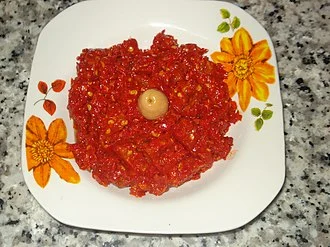
Main course
Meat
Harissa
ہریسہ
ha-ris-sa
· Meat and wheat porridge
A porridge made with meat, wheat, and spiced stock.
Open Harissa recipe