Explore Guides
ASIA / NEPAL
Triplandio Pokhara guide covers 3 travel guides across 12 areas, complete with hotel picks. Explore 10 self-guided walking tours in Pokhara with 27 POI, spanning 48.3 km in total. Get inspired by 5 local dishes, complete with recipes and our unique Food Flavour DNA graph.
Pokhara
City & Country Data Pokhara (Nepal)

Key travel data for Pokhara — local prices, safety, healthcare, local currency and essentials, curated by Triplandio.
🌍 Nepal
Safety
52
Health
9
Lifestyle
42
Infra
0
Rank
#90
Score
19
Tourists
230K/y
GDP/cap
$1.5k
Life Exp
70.6 yrs
Population
29.6M
Currency
NPR Rs
Language
Nepali
Payments
Mixed
Emergency
100
💰 Prices in Pokhara
Coffee
$1.20
Beer
$3.00
Lunch
$3.00
Groceries
$30.00/w
Taxi/km
$1.00
Transit
$0.25
Fuel
$1.50/l
Internet
$20.00/m
Salary
$250/m
Travel tipsPokhara (Nepal)

Quick tips
- Marijuana can mean 5 years in prison — Critical
Cannabis grows wild in Nepal and is sometimes offered to tourists, but being caught with even a small amount can lead to more than 5 years in prison after a long, expensive legal process.
- CBD products count as drugs — Critical
Some skincare products and e-cigarette refills contain cannabidiol (CBD), which is illegal in Nepal. Police can seize them and charge you with drug possession, so leave them at home.
- Declare gold and silver jewellery — Critical
You can bring up to 50 grams of gold and 100 grams of silver jewellery into Nepal. Undeclared precious metals above that can be confiscated and bring fines or prison from one month to 5 years.
- You can't trek alone in national parks — Caution
Independent trekkers must hire a licensed local guide or porter to trek in Nepal's national parks and protected areas, and carry the right permits and a Trekking Information Management System (TIMS) card. Rule-breakers are fined or removed.
- Bring US dollars for your visa — Good to know
Most visitors get a visa on arrival in Nepal. Fill in the online form up to 15 days before you land, then pay at the airport; cards are accepted, but carry US dollar cash as a back-up.
- Do
- Trek with a licensed guide
- Walk clockwise around stupas
- Carry cash for the mountains
- Climb slowly at altitude
- Remove shoes where asked
- Don’t
- Buy or carry marijuana
- Bring CBD skincare or vape refills
- Take night buses
- Kiss or cuddle in public
- Book the cheapest trek on offer
Critical
Prison or heavy penalty possible
Laws & fines
- Overstaying is a crime — Critical
Overstaying your visa in Nepal is treated as a serious offence and can lead to large fines or prison. Extend online before it expires, up to a total of 150 days in a year.
- No wildlife products — Critical
Buying or selling parts of wild animals without a licence is illegal in Nepal, which also bans trade in endangered species. Buyers face fines or prison, so avoid fur, bone, horn and shell souvenirs.
Health
- Altitude sickness on treks — Critical
Altitude sickness is a real risk on Nepal's trekking routes. Climb slowly, add rest days above 3,000 m, and turn back down if you get a bad headache, vomiting or confusion.
- Carbon monoxide from heaters — Critical
Gas heaters, charcoal and fires in poorly ventilated rooms and lodges in Nepal can cause carbon monoxide poisoning, which you cannot see or smell. Keep a window open and never sleep with a heater running.
Outdoors & adventure
- Mountain hazards above 3,000 m — Critical
Nepal's high trails face sudden storms, avalanches, landslides, crevasses and strong sun. Watch forecasts, carry warm and waterproof gear, and use sunscreen and sunglasses.
- All Nepali airlines are on a safety blacklist — Critical
No Nepali airline meets international safety standards, so all are on the UK Air Safety List (ASL). Nepal has had fatal plane and helicopter crashes; weigh the risk and fly in good weather.
- Avoid night and overcrowded buses — Critical
Bus crashes kill people in Nepal every year. Don't travel at night or on overloaded buses; tourist buses are usually safer and more comfortable.
Caution
Fines, losses or injury possible
Scams & safety
- Check paragliding operators — Caution
Tandem paragliding from Sarangkot above Pokhara is hugely popular, and accidents do happen. Choose an established, licensed company, ask about the pilot's experience and check your insurance covers it.
- Life jackets on Phewa Lake — Caution
Rowing boats on Pokhara's Phewa Lake are often rented without life jackets. Ask for one, don't go out when storms build in the afternoon, and never swim after drinking.
- Scooter rentals on busy roads — Caution
Renting a scooter in Pokhara is easy, but the roads to Sarangkot and around the lake are steep and busy. Ride only if you are experienced and hold a valid licence, and always wear a helmet.
Laws & fines
- Seatbelts and helmets — Caution
Nepalese law only requires drivers to wear a seatbelt or helmet. Use a seatbelt as a passenger whenever one is fitted, and always ask for a passenger helmet when renting a motorbike.
Entry & visa
- Declare cash over 5,000 US dollars — Caution
You must declare banknotes worth more than 5,000 US dollars on arrival in Nepal, and keep the certified form customs gives you until you leave.
Outdoors & adventure
- Beware of very cheap trek deals — Caution
Some guides have rushed inexperienced trekkers up too fast and then called expensive helicopter evacuations to take a cut. Book with reputable agencies and be wary of prices that seem too good.
Good to know
Rules and useful facts
Scams & safety
- Travel advisory: Level 2 of 4 — Good to know
Exercise Increased Caution — the U.S. State Department's rating for Nepal.
- Walking at night outside Lakeside — Good to know
Pokhara's Lakeside area is lively in the evening, but side roads and lake paths beyond it are dark. Walk with others after dark or take a taxi, and keep valuables in your room safe.
Laws & fines
- Carry your passport — Good to know
You should carry your passport with you in Nepal, as police and trekking checkpoints may ask for it. Leave a copy somewhere safe or with someone at home.
- Protests, strikes and curfews — Good to know
Political protests and general strikes (bandh) are fairly common in Nepal, can start suddenly and may turn violent. Avoid demonstrations and obey any curfew the authorities impose.
Customs
- Check before volunteering at orphanages — Good to know
Some orphanages in Nepal are profit-making businesses rather than charities, and volunteering there can fuel child exploitation. Check with the Central Child Welfare Board before signing up.
Tipping & money
- Carry cash for the mountains — Good to know
Nepal's ATMs are unreliable outside the main tourist areas, and cards are rarely accepted on treks. Take enough Nepali rupees before you set off, plus extra for flight delays.
- Change your rupees before you leave — Good to know
You must convert your Nepali rupees before leaving Nepal. The airport bank may ask for the customs declaration you received if you brought in large amounts of cash.
Entry & visa
- Passport valid for 6 months — Good to know
To avoid problems at immigration, your passport should be valid for at least 6 months after the date you enter Nepal.
- Show insurance and a hotel booking — Good to know
Nepalese border officials may ask to see travel insurance covering healthcare and repatriation, and confirmation of where you will stay on your first night.
- Yellow fever and polio certificates — Good to know
If you arrive in Nepal from a country with a risk of yellow fever, or from certain countries with polio, you must show a vaccination certificate.
Health
- No national ambulance number — Good to know
Nepal has no central public ambulance service. In an emergency, call the nearest hospital or a private ambulance, and save hospital numbers for Kathmandu and Pokhara before you travel.
- Don't drink the tap water — Good to know
Tap water in Nepal is not safe to drink. Use bottled, boiled or filtered water, and bring purification tablets or a filter bottle for treks to cut plastic waste.
- Dengue and air pollution — Good to know
Dengue is spread by mosquitoes in Nepal, especially in the monsoon, and air pollution in Kathmandu can be severe in winter and spring. Use repellent and check air quality if you have asthma.
- Rescue helicopters are expensive — Good to know
Outside Kathmandu and Pokhara, healthcare is poor and evacuation is by helicopter, which usually costs £1,000–2,000 or more per flying hour. Make sure your insurance covers it.
Outdoors & adventure
- Mountain flights are often delayed — Good to know
Flights to mountain airstrips such as Lukla are often delayed or cancelled by weather. Leave spare days at the end of a trek and carry cash, as remote areas may have no ATMs.
- Limited phone signal on treks — Good to know
Mobile coverage is patchy on long stretches of routes such as the Annapurna Circuit. Consider renting a satellite phone and tell family you may be out of contact.
- Nepal is an earthquake zone — Good to know
Earth tremors are common in Nepal, and remote areas have little rescue equipment. Ask your trekking company about its earthquake plan and learn what to do in a quake before you go.
Local tips
Local know-how
Getting around
- Flights from Kathmandu — Local tip
Flights from Kathmandu to Pokhara take about half an hour and give mountain views on clear mornings. Pokhara's airport is a short taxi ride from the Lakeside hotel area.
- Tourist buses from Kathmandu — Local tip
Tourist buses from Kathmandu and Chitwan arrive at Pokhara's tourist bus park, a short taxi ride from Lakeside. The Kathmandu trip usually takes a full day.
- Agree taxi fares in advance — Local tip
Pokhara's taxis rarely use meters. Agree the price before you get in, and ask your hotel what a fair fare to the airport or bus park should be.
- Trailheads by jeep or taxi — Local tip
Treks into the Annapurna region often start from Nayapul or other villages a drive away from Pokhara. Your trekking agency can arrange a jeep, or you can hire a taxi for the day.
Customs
- Cover up and remove shoes at temples — Local tip
Don't wear shorts or sleeveless tops in Nepal's temples and holy places, and remove your shoes where asked. Some parts of Hindu temples are closed to non-Hindus, so check before entering.
- Walk clockwise around stupas — Local tip
Buddhist stupas, prayer wheels and shrines in Nepal are always passed clockwise, keeping them on your right. Spin prayer wheels in the same direction.
- Greet with “Namaste” — Local tip
The usual greeting in Nepal is “Namaste” with palms pressed together at chest height. Return it when someone greets you; handshakes are fine with men in towns.
- Avoid public displays of affection — Local tip
Nepalis see kissing and cuddling in public as inappropriate, whatever the couple's gender. Holding hands is usually fine, but save anything more for private.
Tipping & money
- Service charge on restaurant bills — Local tip
Tourist restaurants in Nepal usually add a 10% service charge and 13% VAT to the bill. If service is already included, extra tipping is optional.
- Tip trekking guides and porters — Local tip
Tipping guides and porters at the end of a trek is expected in Nepal and makes up an important part of their income. Agree a total with your group and hand it to each person directly.
- Bargain in tourist shops — Local tip
Haggling is normal in Nepal's souvenir shops and markets, such as those in Thamel in Kathmandu. Keep it friendly; supermarkets and restaurants have fixed prices.
Say it locally
Add “-ji” after a name or title as a sign of respect, and use “Namaste” for both hello and goodbye.
Through the year
Festival or season Public holiday (exact date)
- Autumn trekking season
Oct–Nov 2026 · Clear skies and stable weather make this the busiest time on the trails; book lodges, flights and guides early.
- Dashain and Tihar festivals
Sep–Nov 2026 · Nepal's biggest Hindu festivals, with dates set by the lunar calendar; buses and flights are packed and many businesses close for days.
- Laxmi Puja (Tihar)
Sun 8 Nov 2026 · Public holiday
- Gobhardan Pujan (Tihar)
Mon 9 Nov 2026 · Public holiday
- Bhai Tika (Tihar)
Tue 10 Nov 2026 · Public holiday
- Chhat Parwa
Sun 15 Nov 2026 · Public holiday
- Winter
Dec 2026–Feb 2027 · Clear, cold days; high passes may be snowbound, and high-altitude lodges close.
- Holi
Feb–Mar 2027 · The festival of colours on the full moon of February or March; expect to be splashed with coloured powder and water in the streets.
- Spring trekking season
Mar–May 2027 · Warmer weather and flowering rhododendrons on the hills; haze and smoke can hide the peaks and worsen air quality.
- Monsoon
Jun–Oct 2027 · The monsoon normally runs June to October, bringing landslides, floods and road closures, leeches on lower trails and cloud over the mountains; check roads are open and carry extra supplies.
- Very wet monsoon
Jun–Sep 2027 · Pokhara is one of the rainiest places in Nepal; mountain views disappear and paragliding often stops.
Sources: GOV.UK travel advice · U.S. State Dept · Google public holidays
Best time to visit Pokhara (Nepal)
Now (November) avg high: 22°C, mostly dry, moderate crowds. Best months to walk: Apr & Nov.
Live Temp
…
~Day / Night Temp
22°C / 11°C
Sunrise / Sunset
6:25 / 17:21
Local time
10:03
Best Months  Apr & Nov
J
Jan
F
Feb
M
Mar
A
Apr
M
May
J
Jun
J
Jul
A
Aug
S
Sep
O
Oct
N
Nov
 D
Dec
M
May
J
Jun
J
Jul
A
Aug
S
Sep
O
Oct
N
Nov
D
Dec
Check Pokhara hotels
Temperature
Average daytime high, month by month. Zero line marks freezing point.
Crowds
How busy it gets — traveller interest by month.
Rainfall
Rainy days to expect each month.
Sunshine
Hours of sun per day, by month.
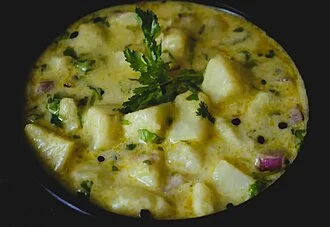
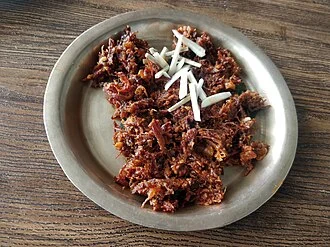
A tangy potato salad mixed with spiced yogurt. Crispy roasted soybeans with spices. A spicy stir-fried meat dish with local herbs and spices. Sun-dried meat seasoned with local spices. A tangy curry of bamboo shoots and potatoes.
Traditional Local Food
Pokhara (Nepal)
Side
Vegetarian
Chukauni
चुकौनी
Cho-kan-i
· Spiced potato yogurt salad
🌱
Snack
Vegan
Jhilinge Bhattmas
झिलिङ्गे भटमास
Ji-lin-ghe bhaut-mass
· Spiced soybeans
🥩
Main course
Meat
Pokhareli Bhutuwa
पोखरेली भुटुवा
Poh-kha-re-lee Boo-too-wah
· Spiced fried meat
Snack
Meat
Sukuti
सुकुटी
Su-koo-ti
· Dried spiced meat
🌿
Main course
Vegetarian
Tama Aloo
टामा आलु
Tah-mah Aa-loo
· Bamboo shoot and potato curry