


Written for travellers who plan the day around meals — markets, counters and hotels close to them. Updated 2026.

Discover Tokyo’s Best Neighborhoods for Food Lovers

Where to stay in Tokyo if you travel to eat — market breakfasts, food halls, ramen and yakitori within walking distance.

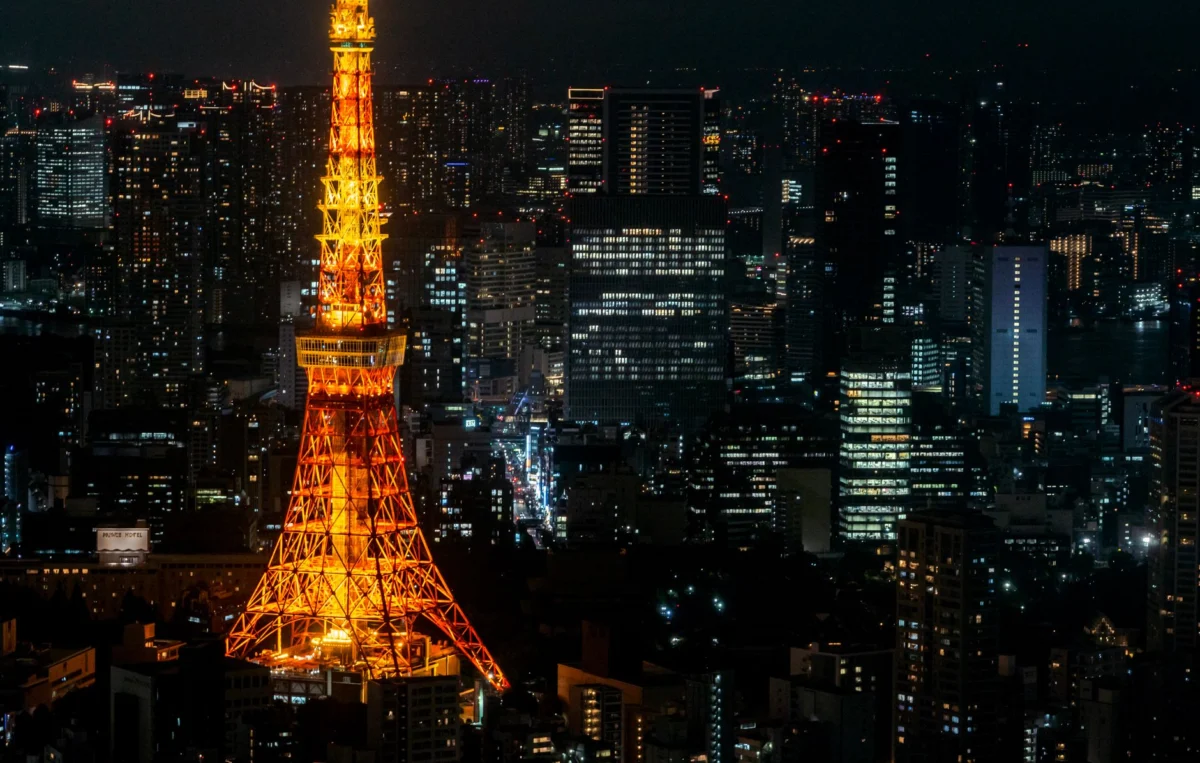
Tokyo skyline at night showcasing the city's vibrant atmosphere
At a Glance
Country Japan
City Tokyo
Day / Night 17° / 9°
Local Time 23:11
November — Now Peak season
Best Months Dec · Jul

In Tokyo the best food is spread across the whole city, so where you sleep decides what you eat before breakfast and after midnight. This guide picks four very different food bases — the Tsukiji market streets, izakaya-packed Ebisu, old-merchant Nihonbashi and cheap-eats Koenji — with a walk from breakfast to the last drink and a hotel for each.

Our favourite Tokyo hotels for food lovers

Best overall
⭐ 9.0
Mitsui Garden Hotel Ginza Tsukiji

Mitsui Garden Hotel Ginza Tsukiji

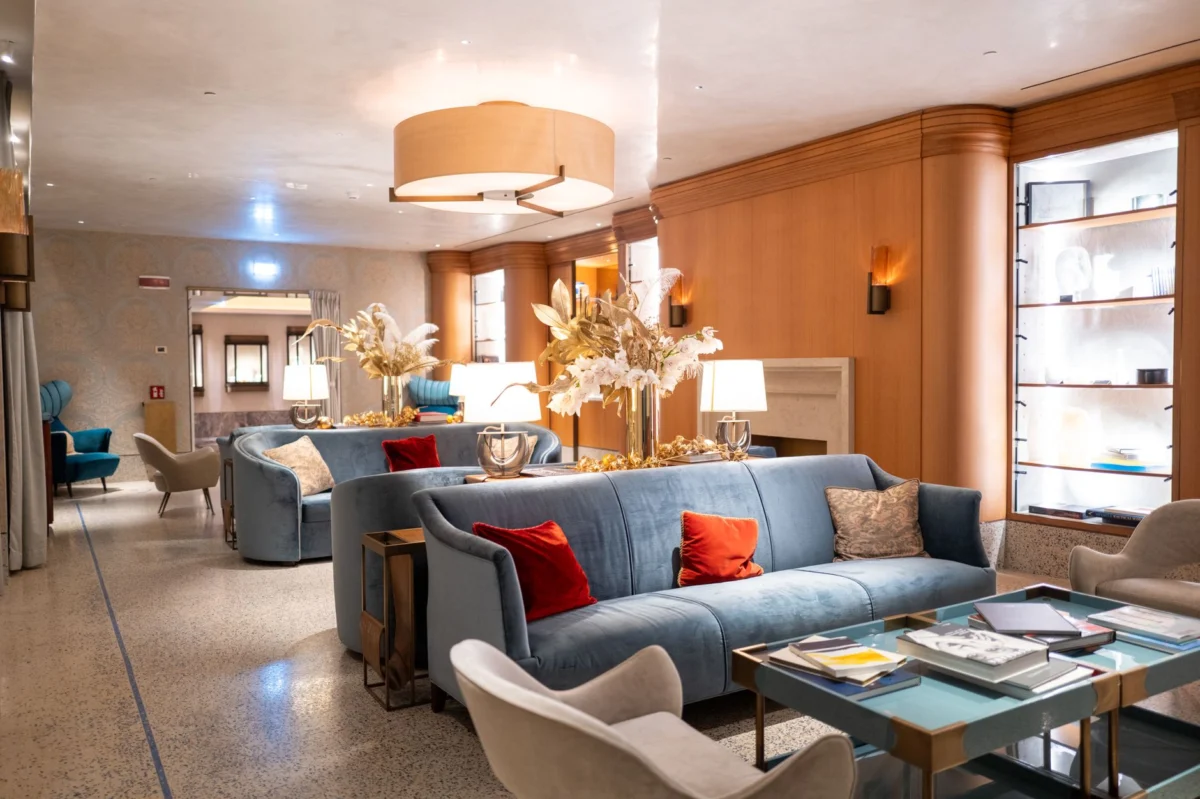
A modern hotel between Ginza and Tsukiji, a few minutes on foot from the outer market. Sleep here and you can be eating tamagoyaki and grilled seafood at the stalls before most visitors have left their hotels.

Walkable area
⭐ 9.4
WAYPOINT TSUKIJI Tokyo

WAYPOINT TSUKIJI Tokyo

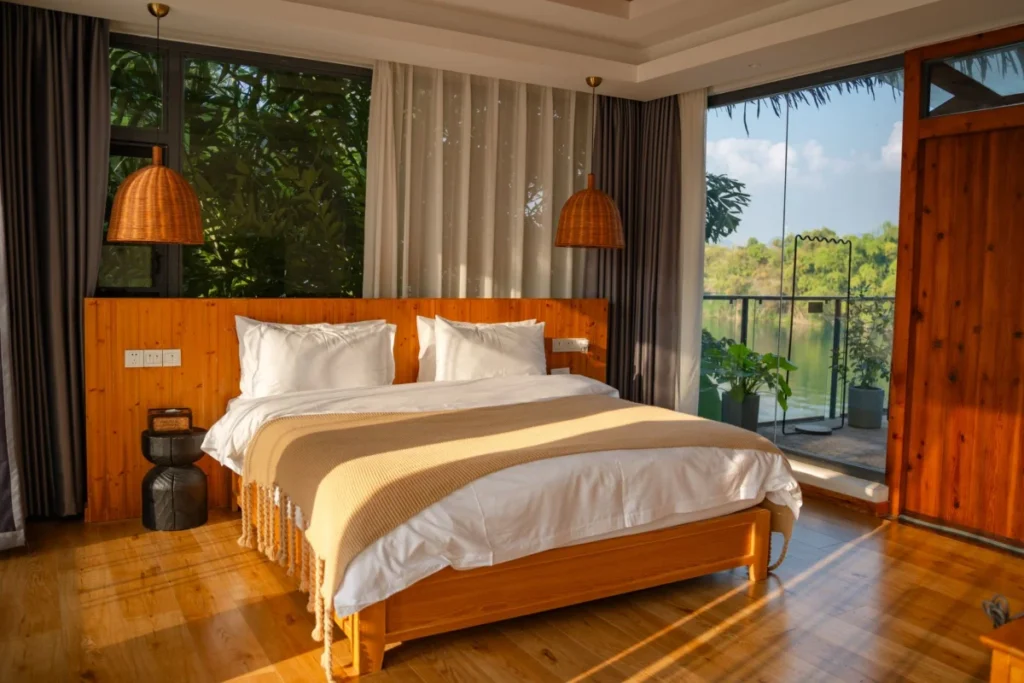
A small, highly rated hotel in Tsukiji, within walking distance of the outer market. It suits travellers who want to walk to breakfast and to monja in Tsukishima in the evening.

Top pick
⭐ 9.8
SLL Urban Suites Ebisu

SLL Urban Suites Ebisu

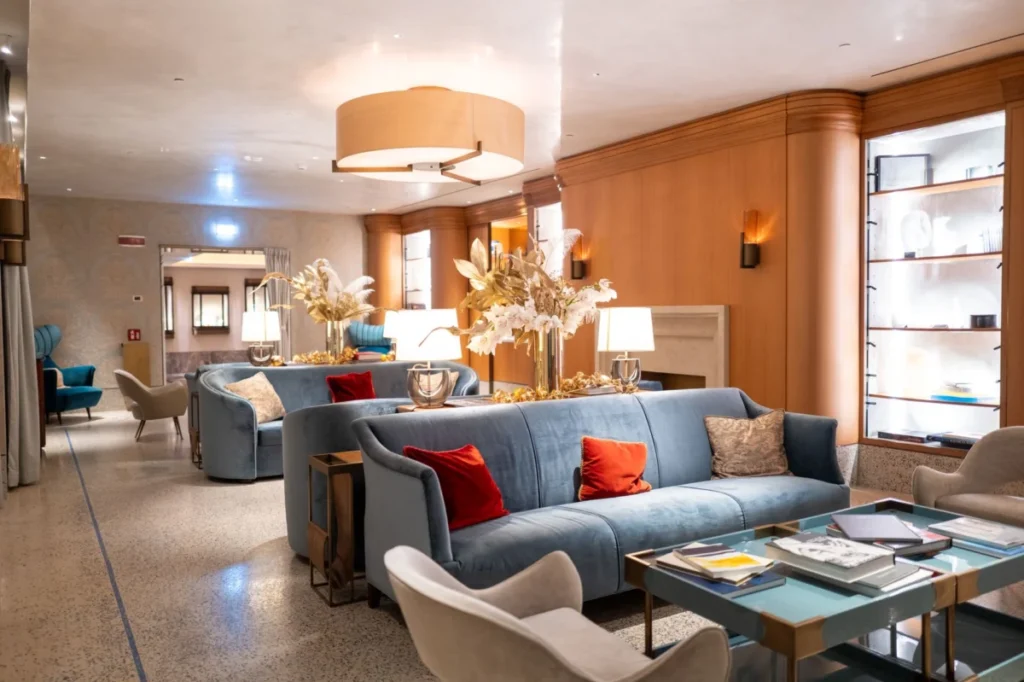
Apartment-style rooms in Ebisu with top guest ratings. You are a short walk from Ebisu Yokocho, AFURI ramen and the side streets full of izakaya — handy when dinner ends late.

What do you want to eat first?

Seafood at dawn, izakaya nights, old food shops or cheap street eats — pick your appetite.

Best choice: Tsukiji

Best for: Market mornings

Best choice: Ebisu (恵比寿)

Best for: Izakaya nights

Best choice: Nihonbashi (日本橋)

Best for: Food halls & old shops

Best choice: Koenji (高円寺)

Best for: Cheap eats

Best hotels in Tokyo for food lovers

Hotels a short walk from a market, a food hall or a street full of counters and izakaya.

WAYPOINT TSUKIJI Tokyo
Walkable area
⭐ 9.4 Exceptional
131 reviews

WAYPOINT TSUKIJI Tokyo

Tsukiji • Small hotel • Market streets

A small, highly rated hotel in Tsukiji, within walking distance of the outer market. It suits travellers who want to walk to breakfast and to monja in Tsukishima in the evening.

  • Highly rated by guests
  • Short walk to the outer market
  • Tsukishima monja within walking distance
SLL Urban Suites Ebisu
Top pick
⭐ 9.8 Exceptional
69 reviews

SLL Urban Suites Ebisu

Ebisu • Apartment-style suites • Near the station

Apartment-style rooms in Ebisu with top guest ratings. You are a short walk from Ebisu Yokocho, AFURI ramen and the side streets full of izakaya — handy when dinner ends late.

  • Very high guest ratings
  • Suite-style rooms
  • Izakaya streets nearby
Tokyu Stay Shibuya Ebisu
Smart choice
⭐ 9.0 Outstanding
287 reviews

Tokyu Stay Shibuya Ebisu

Ebisu • Serviced apartments • North of Ebisu station

Part of the Tokyu Stay chain, known for rooms with a kitchenette and a washer-dryer. It sits north of Ebisu station on the Shibuya side, so you can walk to Ebisu’s restaurants and bring market finds back to your room.

  • Kitchenette in the room
  • Washer-dryer
  • Walk to Ebisu restaurants
Mandarin Oriental, Tokyo
Editor’s choice
⭐ 9.3 Outstanding
521 reviews

Mandarin Oriental, Tokyo

Nihonbashi • Luxury hotel • Above the Mitsukoshi food hall

A luxury hotel on the upper floors of the Nihonbashi Mitsui Tower, with city views. Mitsukoshi’s food hall, Ninben and Sembikiya are a couple of minutes’ walk away, and Tokyo Station is close.

  • High-floor city views
  • Mitsukoshi food hall next door
  • Close to Tokyo Station
Tokyu Stay Nihonbashi
Smart choice
⭐ 8.7 Excellent
790 reviews

Tokyu Stay Nihonbashi

Nihonbashi • Serviced apartments • Nihonbashi-Honcho

A Tokyu Stay in Nihonbashi-Honcho, with a kitchenette and a washer-dryer in the rooms. Mitsukoshi’s food hall and COREDO Muromachi are a short walk away, so you can pick up dinner and eat it in your room.

  • Kitchenette in the room
  • Walk to Mitsukoshi food hall
  • Good metro links
JR-East Hotel Mets Koenji
Walkable area
⭐ 8.9 Excellent
258 reviews

JR-East Hotel Mets Koenji

Koenji • Station hotel • Cheap eats all around

A JR-East hotel right by Koenji station, a few steps from the Pal and Junjō shopping streets. Yakitori stalls, Thai restaurants and small bars are all within five minutes on foot.

  • Next to Koenji station
  • Shopping streets full of food
  • Direct trains to Shinjuku

How we choose

We pick hotels by how close they are to good food — a market, a station full of counters or a depachika — then check guest ratings.

The best areas in Tokyo for food lovers

Four neighbourhoods, four ways to eat Tokyo — each with a walk from the first bite to the last drink.

Tsukiji

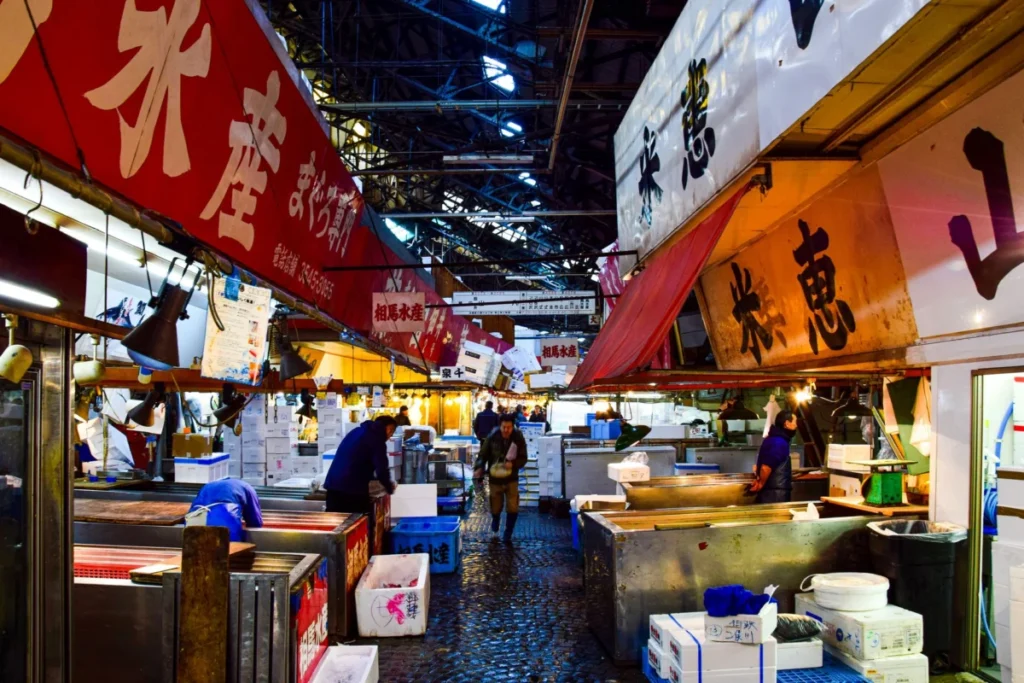
Tsukiji is where Tokyo has shopped for fish for almost a century. The wholesale market moved to Toyosu in 2018, but the Tsukiji Outer Market stayed: narrow lanes of stalls selling tamagoyaki, grilled scallops, pickles, knives and dried bonito, with sushi counters wedged in between. Market workers, chefs and early-rising locals still set the rhythm.

Stay here and breakfast is a five-minute walk. Graze the stalls before 9 am, have sushi at Tsukiji Sushisay, then spend the afternoon over matcha in the teahouse of Hamarikyu Gardens. At sunset, cross the Kachidoki Bridge to Tsukishima for monja cooked at your own table.

The catch: Tsukiji is an early-to-bed area. Many stalls close by early afternoon and on Sundays, and the streets are quiet at night.

Local picks

For Foodie
  • 1
    BreakfastTsukiji Outer MarketStart before 9 am, when the lanes are busy with chefs and the stalls are fully stocked. Graze: tamagoyaki on a stick, grilled scallops, a bowl of seafood over rice — and look into the knife and dried-bonito shops.
  • 2
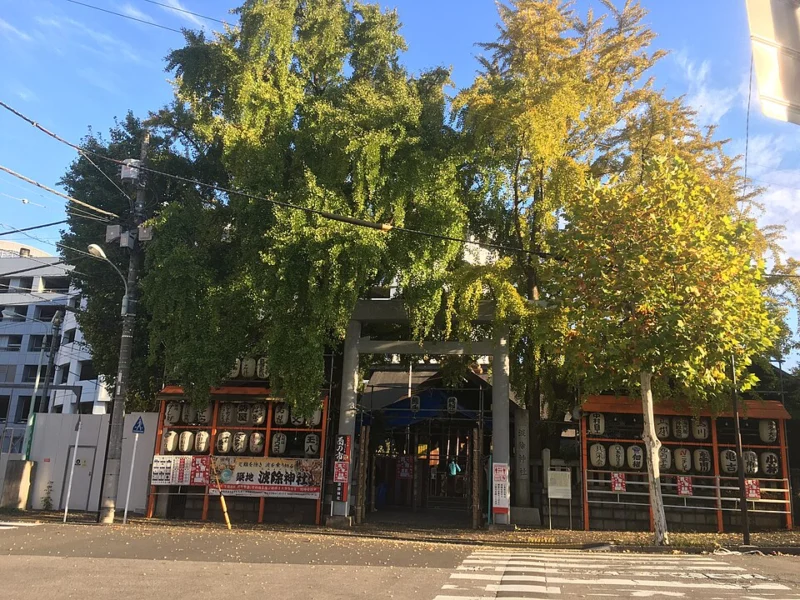
    Food shrineNamiyoke Inari ShrineA few steps from the market, this shrine was founded in 1659 on the new landfill. It is full of memorials donated by market traders to the seafood and sushi ingredients that made their living.
  • 3
    SushiTsukiji SushisayThe head shop of a sushi house that has been in Tsukiji for over 120 years. Sit at the counter and order a set if you are unsure — it is a calm, classic place to have sushi after the market rush.
  • 4
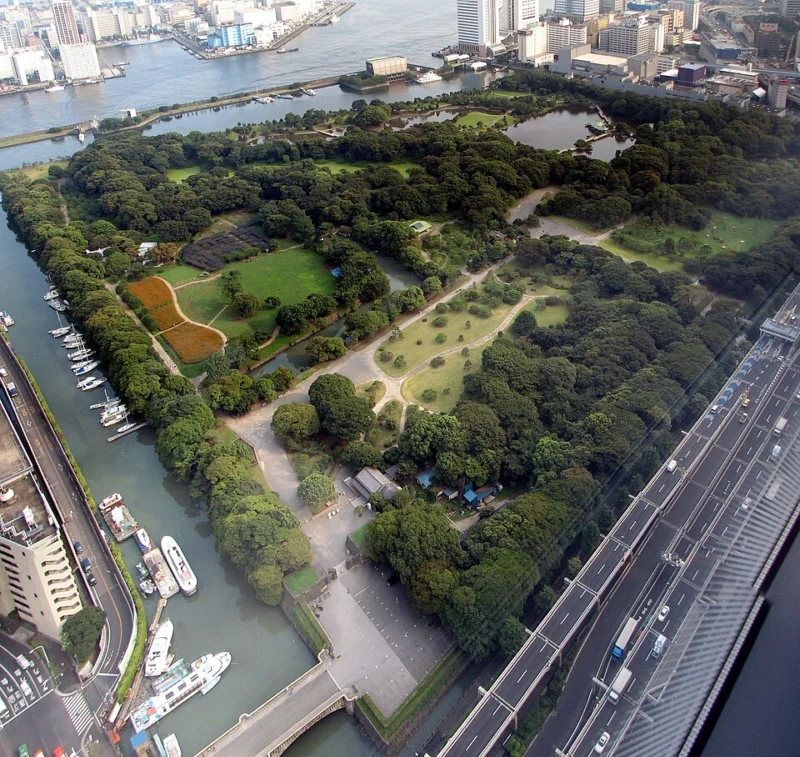
    Afternoon matchaHamarikyu GardensA 17th-century shogun’s garden by the bay, 15 minutes’ walk from the market. Cross to the Nakajima teahouse on the tidal pond for matcha and a Japanese sweet — it is open until 4.45 pm.
  • 5
    Sunset walkKachidoki BridgeOpened in 1940, this drawbridge over the Sumida once lifted for ships. Walk across in the evening light on your way to Tsukishima.
  • 6
    DinnerTsukishima Monja StreetA whole street of monja restaurants on the island across the river. Monjayaki is a runny, savoury batter you cook on the hot plate at your table — staff will show you how. Try one with mentaiko (cod roe).
  • Getting aroundTsukiji · Tsukiji-shijo · TsukishimaTsukiji station is on the Hibiya line and Tsukiji-shijo on the Oedo line; Tsukishima has the Oedo and Yurakucho lines. From Ginza, Tsukiji is about 15 minutes on foot.
  • Where to stayMost hotels here are modern mid-range hotels between Tsukiji and Ginza, with some serviced apartments. Pick one within ten minutes of the outer market — that is the whole point of staying here.

Did you know?

A market that fed Tokyo for 83 years The wholesale fish market opened in 1935 and moved to Toyosu in October 2018; the outer market stayed.
Go in the morning Many outer-market stalls start closing by early afternoon, so come for breakfast, not dinner.
A name that means 'reclaimed land' Tsukiji was built on land reclaimed from Tokyo Bay during the Edo period.
The shrine that stopped the waves Namiyoke Inari was founded in 1659 to protect the new landfill; its name means "protection from waves".
Tsukiji

Ebisu (恵比寿)

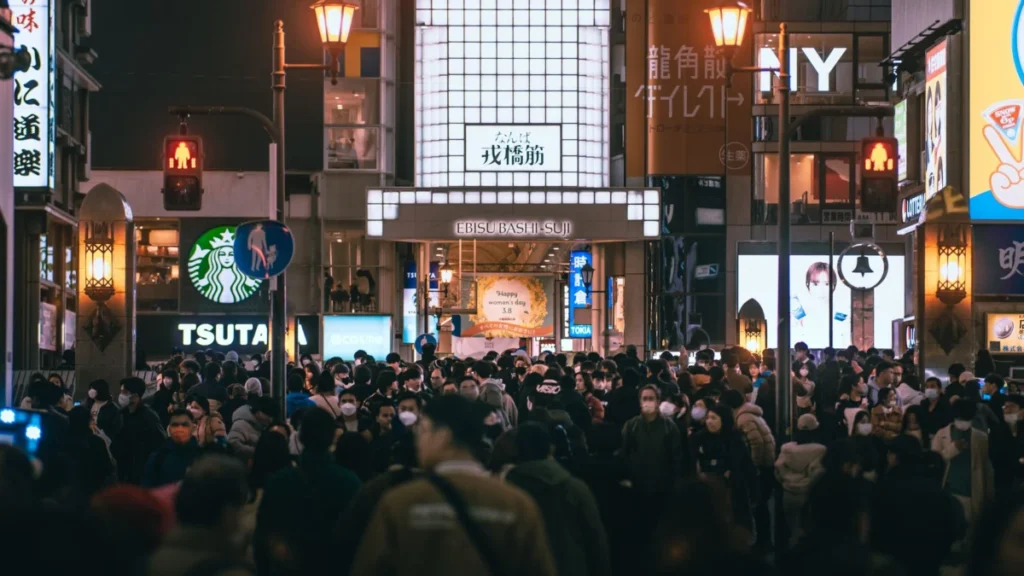
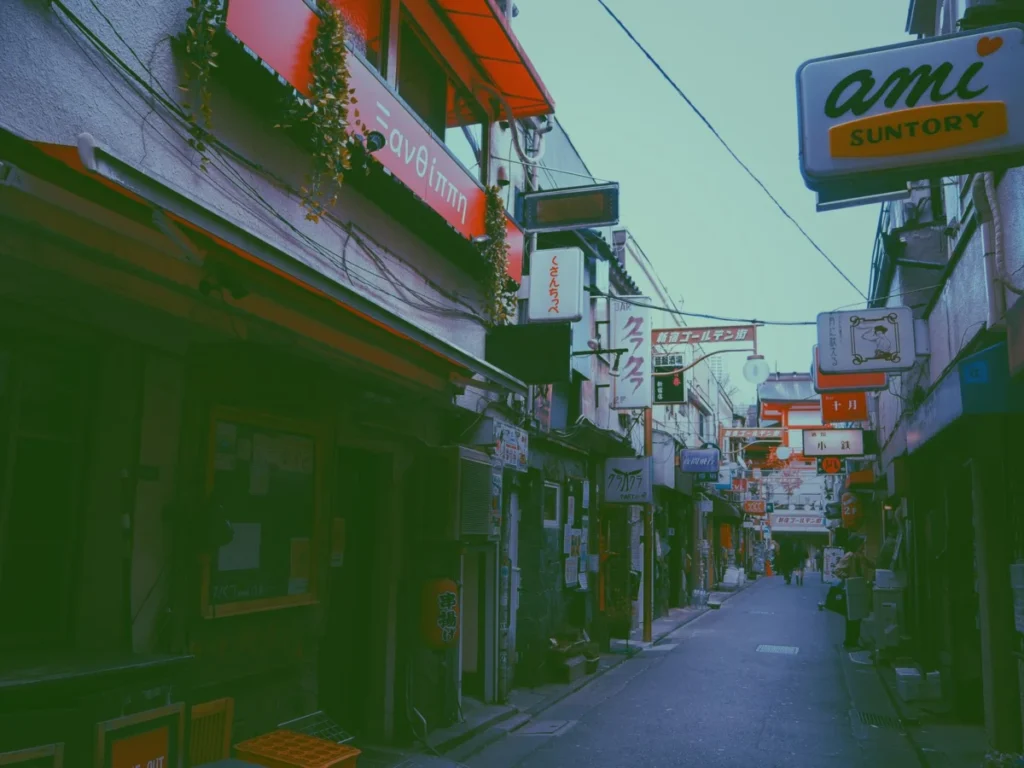
Ebisu is where Tokyo’s office workers and chefs go to eat after work. It grew up around a beer brewery, and it still feels built for evenings: side streets packed with izakaya, standing bars and ramen counters, all within ten minutes of the station. It is compact, walkable and one stop from Shibuya, so you can eat here every night and still see the rest of the city by day.

Stay here and you eat well without a plan. Have yuzu-scented ramen at AFURI for lunch, a warm taiyaki from Hiiragi in the afternoon, and learn how Yebisu beer is made at Yebisu Brewery Tokyo. At night, squeeze into Ebisu Yokocho, a covered alley of tiny eateries where you share tables with strangers.

The catch: Ebisu is pricier than Koenji, and the best small places fill up fast on Friday and Saturday nights.

Local picks

For Foodie
  • 1
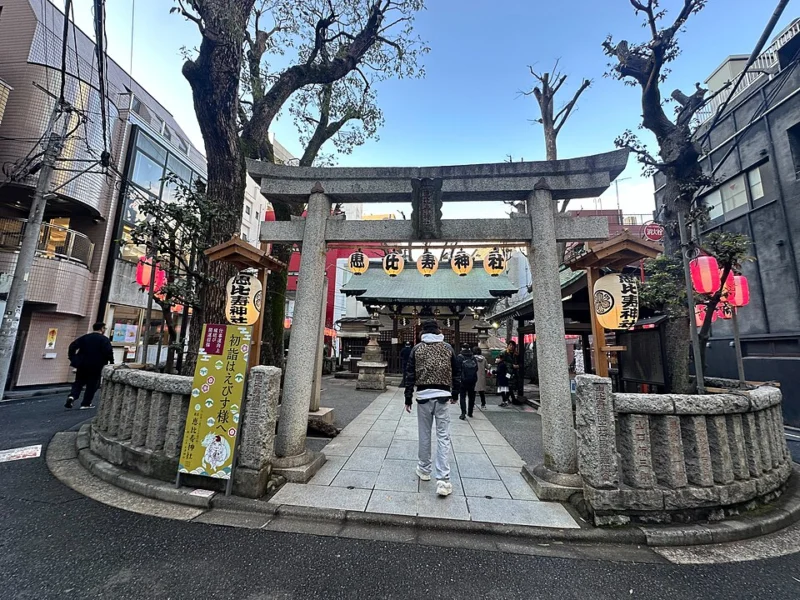
    Start hereEbisu ShrineA small neighbourhood shrine west of the station, dedicated to Ebisu, god of fishermen and good business. A quiet five minutes before the eating starts.
  • 2
    LunchAFURI EbisuAFURI made its name with a light chicken broth scented with yuzu. Order at the ticket machine by the door, and expect a short queue at lunchtime.
  • 3
    Sweet snackHiiragiA famous little taiyaki shop: fish-shaped cakes filled with sweet red bean paste, cooked in front of you. Eat one while it is still hot.
  • 4
    Afternoon beerYebisu Brewery TokyoIn Yebisu Garden Place, on the site of the old brewery. See the exhibition on how Yebisu beer began, then join a tasting tour — book it online, as places are limited.
  • 5
    DinnerEbisu YokochoWalk back towards the station for dinner in this covered alley of tiny eateries — skewers, seafood, oden and cold beer. Seats are few and tables are shared; that is the fun.
  • Getting aroundEbisu stationJR Yamanote and the Hibiya line stop at Ebisu. The Yebisu Skywalk moving walkway links the station with Garden Place, and Shibuya is one stop away.
  • Where to stayEbisu has business hotels, serviced apartments and a few upscale hotels around Garden Place. Stay within ten minutes of the station — that is where the food is.

Did you know?

Named after a beer The area took its name from Yebisu Beer, first brewed here in 1890.
A station built for beer Ebisu Station opened in 1901 as a freight stop for the brewery; passenger trains came in 1906.
An alley of tiny eateries Ebisu Yokocho packs small food stalls and bars into one covered lane by the station.
From brewery to Garden Place The brewery left in 1988, and Yebisu Garden Place opened on its site in 1994.
Ebisu (恵比寿)

Nihonbashi (日本橋)

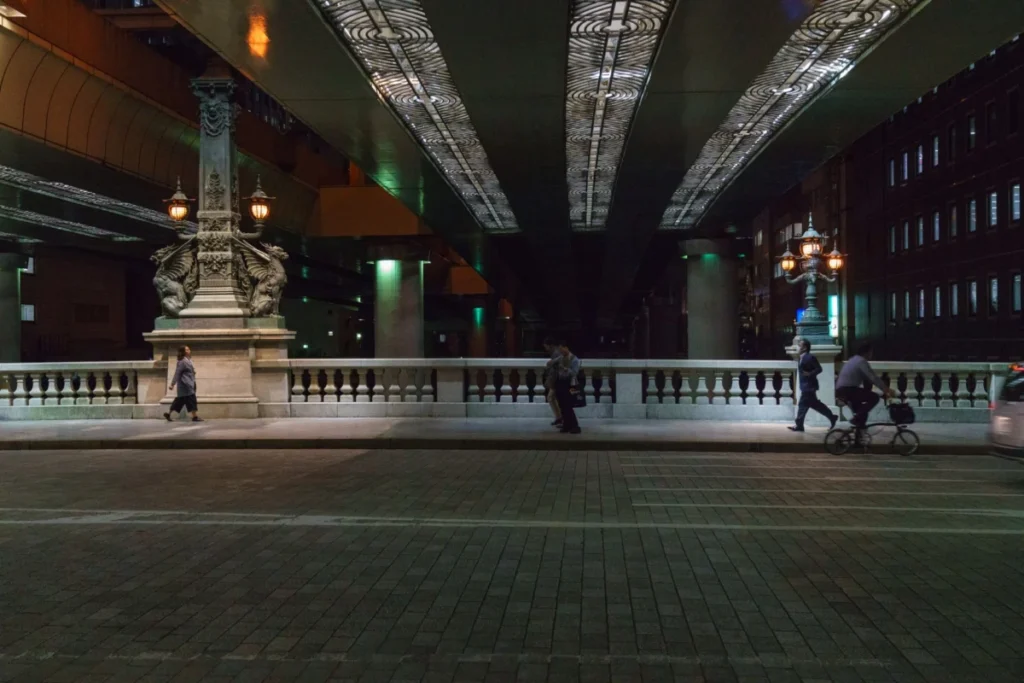
Nihonbashi was the merchant heart of Edo, and it was Tokyo’s fish market for three centuries before Tsukiji. Today it is a business district, but its old food shops are still here, some trading since the 1600s — dried bonito, nori, fruit, sweets — next to Tokyo’s grandest department store food halls.

For a food lover it is a shopping trip as much as a meal. Start at Nihonbashi Bridge, buy katsuobushi at Ninben, have a fruit parfait at Sembikiya and then lose an hour in the basement food hall of Mitsukoshi. Finish with oyakodon at Tamahide in Ningyocho, where it has been served for generations.

The catch: it is an office area, so it is quiet at night and at weekends many small places close early.

Local picks

For Foodie
  • 1
    MorningNihonbashi BridgeThe stone bridge from 1911, with bronze lions and dragons, marks kilometre zero for Japan’s roads. Look for the marker in the middle of the bridge.
  • 2
    Food historyNihonbashi Fish Market MonumentAt the north end of the bridge, a monument marks where Tokyo’s fish market stood for three centuries. After the 1923 earthquake the market moved to Tsukiji — so this is where the story you taste at breakfast began.
  • 3
    Buy thisNinben NihonbashiKatsuobushi specialists since 1699. Pick up dried bonito flakes, dashi packs and seasonings to take home — the base of Japanese cooking in one shop.
  • 4
    Sweet breakSembikiya SohontenTokyo’s famous luxury fruit shop, where perfect melons and strawberries are sold like jewellery. Its fruit parlour is the place to try a parfait made with them.
  • 5
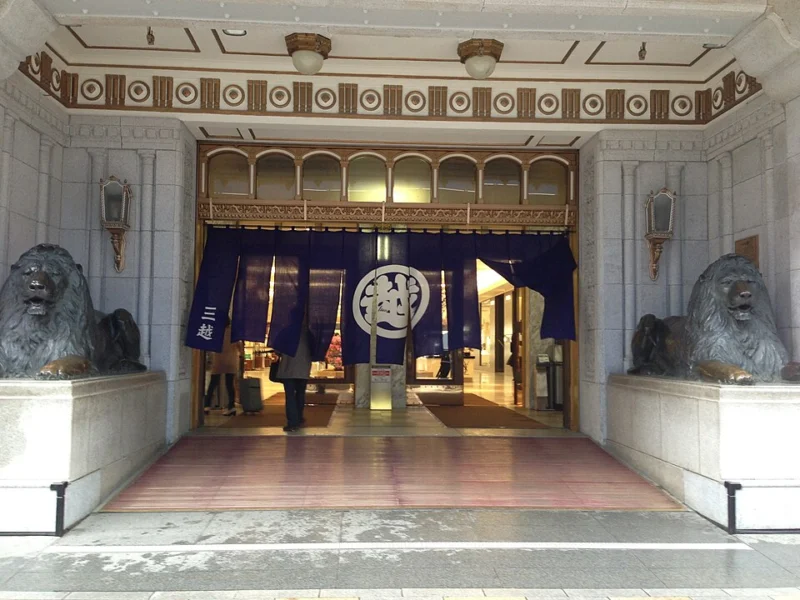
    Food hallNihombashi Mitsukoshi Main StoreJapan’s first department store, with a basement food hall full of bento, wagashi, pickles and tea. Come near closing time for markdowns.
  • 6
    OyakodonTamahideIn business since 1760, Tamahide is famous for oyakodon — chicken and egg over rice. It is in Ningyocho, about 15 minutes’ walk east; expect a queue at lunchtime.
  • Getting aroundMitsukoshimae · Nihombashi · NingyochoThe Ginza and Hanzomon lines stop at Mitsukoshimae, right under the department store. Tokyo Station is a 10-minute walk.
  • Where to stayNihonbashi has everything from serviced apartments to top luxury hotels in the new towers. Pick one near Mitsukoshimae or Nihombashi station, so the food halls are on your way home.

Did you know?

Tokyo’s first fish market Tokyo’s fish market stood by Nihonbashi until the 1923 earthquake; it then moved to Tsukiji.
Kilometre zero for Japan Road distances to Tokyo are still measured from Nihonbashi Bridge.
A bridge since 1603 The first wooden bridge was built in 1603; the current stone bridge dates from 1911.
Bonito flakes since 1699 Ninben has been selling katsuobushi, the dried bonito behind Japanese dashi, since 1699.
Nihonbashi (日本橋)

Koenji (高円寺)

Koenji is where students, musicians and young Tokyoites live and eat cheaply. Covered shopping streets run out from the station in every direction, and between the vintage shops are yakitori stalls, Thai kitchens, curry counters and tiny bars that seat six.

For a food lover it is Tokyo’s best cheap-eats base. Have lunch at Baan Esan on the Pal shopping street, wander the arcades in the afternoon, then cross to the north side and the Junjō shopping street. In the evening, join the crowd at the open-air Taishō yakitori stall, which stays busy late into the night.

The catch: Koenji is 15 minutes by train from Shinjuku, so it is far from Tsukiji and the fine-dining areas, and some streets are loud on weekend nights.

Local picks

For Foodie
  • 1
    LunchBaan EsanA Thai restaurant on the Pal shopping street, a minute from the station’s south exit. Big portions of north-eastern Thai food at local prices.
  • 2
    AfternoonKoenji Pal Shopping StreetA covered arcade running south from the station, with food shops, bakeries and discount stores between the vintage clothes. Graze as you go.
  • 3
    Local shoppingJunjō ShōtengaiCross under the tracks to the north side. This shopping street is lined with bakeries, delis, grocers and small eateries used by people who live here.
  • 4
    DinnerTaishōA popular open-air yakitori place near the station: cheap skewers, cold beer and a crowd of young and old until late. Just look for the smoke.
  • Getting aroundKoenji stationJR Chuo and Sobu lines stop at Koenji; Shinjuku is about 15 minutes away. Note that rapid trains skip Koenji at weekends.
  • Where to stayKoenji has a few station hotels and small guesthouses, and far fewer rooms than central Tokyo. Book early, and pick a room away from the bar streets if you want to sleep.

Did you know?

Where live music lives From the mid-1970s, small live-music venues opened all over Koenji.
Named after a temple The district takes its name from the old Kōen-ji temple.
Folk rock moved in first From the 1960s, folk-rock musicians settled here and gave Koenji its bohemian name.
A huge summer dance festival Koenji Awa Odori, on the last weekend of August, is one of the biggest Awa Odori festivals in Japan.
Koenji (高円寺)

Planning your stay in Tokyo

For Foodie
  • Three days of eating TokyoDay 1: breakfast at Tsukiji Outer Market, matcha in Hamarikyu Gardens and monja in Tsukishima. Day 2: Nihonbashi’s old food shops and the Mitsukoshi food hall. Day 3: ramen and izakaya in Ebisu, or cheap yakitori in Koenji.
  • Eat on Tokyo timeMarkets are a morning thing, lunch sets are the best value of the day, and food halls mark down prices in the last hour before closing. Izakaya fill up from about 7 pm.
  • Book these aheadTop sushi counters and famous kaiseki restaurants, the Yebisu Brewery tasting tour, and a hotel near Tsukiji if you want to be at the market at dawn. Ramen, markets and yakitori need no booking — just queue.
  • Eat well for lessGo for lunch sets instead of dinner at the same restaurant, eat in depachika and Koenji’s stalls, and carry cash for small places.
Self-guided walking tours Foodie (Tokyo, Japan)
Routes 4
Pick a route

Best time to visit Tokyo (Japan)

Now (November) avg high: 17°C, mostly dry, full season — expect crowds. Best months to walk: Dec & Jul.

Live Temp …
~Day / Night Temp 17°C / 9°C
Sunrise / Sunset 6:11 / 16:39
Local time 23:11
Sea Temp 18°C
Best Months Dec & Jul
J Jan F Feb M Mar A Apr M May J Jun J Jul best month A Aug S Sep O Oct N Nov this month D Dec best month
Check Tokyo hotels
Temperature Average daytime high, month by month. Zero line marks freezing point.
Crowds How busy it gets — traveller interest by month.
Sea temperature Sea warmth for swimming, by month.
Rainfall Rainy days to expect each month.
Sunshine Hours of sun per day, by month.
Tokyo guides →

Best hotels in Tokyo for food lovers

Hotels a short walk from a market, a food hall or a street full of counters and izakaya.
Mitsui Garden Hotel Ginza Tsukiji
Best overall
9.0 Excellent
792 reviews

Mitsui Garden Hotel Ginza Tsukiji

A modern hotel between Ginza and Tsukiji, a few minutes on foot from the outer market. Sleep here and you can be eating tamagoyaki and grilled seafood at the stalls before most visitors have left their hotels.

Ideal for: Food lovers who want the market for breakfast
WAYPOINT TSUKIJI Tokyo
Walkable area
9.4 Exceptional
131 reviews

WAYPOINT TSUKIJI Tokyo

A small, highly rated hotel in Tsukiji, within walking distance of the outer market. It suits travellers who want to walk to breakfast and to monja in Tsukishima in the evening.

Ideal for: Food lovers who like a small, quiet base
SLL Urban Suites Ebisu
Top pick
9.8 Exceptional
69 reviews

SLL Urban Suites Ebisu

Apartment-style rooms in Ebisu with top guest ratings. You are a short walk from Ebisu Yokocho, AFURI ramen and the side streets full of izakaya — handy when dinner ends late.

Ideal for: Food lovers who want space and late dinners
Tokyu Stay Shibuya Ebisu
Smart choice
9.0 Outstanding
287 reviews

Tokyu Stay Shibuya Ebisu

Part of the Tokyu Stay chain, known for rooms with a kitchenette and a washer-dryer. It sits north of Ebisu station on the Shibuya side, so you can walk to Ebisu’s restaurants and bring market finds back to your room.

Ideal for: Longer stays and travellers who like to cook
Mandarin Oriental, Tokyo
Editor’s choice
9.3 Outstanding
521 reviews

Mandarin Oriental, Tokyo

A luxury hotel on the upper floors of the Nihonbashi Mitsui Tower, with city views. Mitsukoshi’s food hall, Ninben and Sembikiya are a couple of minutes’ walk away, and Tokyo Station is close.

Ideal for: Food lovers who want a special treat
Tokyu Stay Nihonbashi
Smart choice
8.7 Excellent
790 reviews

Tokyu Stay Nihonbashi

A Tokyu Stay in Nihonbashi-Honcho, with a kitchenette and a washer-dryer in the rooms. Mitsukoshi’s food hall and COREDO Muromachi are a short walk away, so you can pick up dinner and eat it in your room.

Ideal for: Food lovers on a mid-range budget
JR-East Hotel Mets Koenji
Walkable area
8.9 Excellent
258 reviews

JR-East Hotel Mets Koenji

A JR-East hotel right by Koenji station, a few steps from the Pal and Junjō shopping streets. Yakitori stalls, Thai restaurants and small bars are all within five minutes on foot.

Ideal for: Food lovers who want cheap eats and late nights

Coming for cherry blossom or autumn?

Late March, early April and November are the busiest months — hotels near Tsukiji and the main stations fill up first.

Compare Tokyo hotels for food lovers

Location, style and how close each one is to good food — side by side.
WAYPOINT TSUKIJI Tokyo
Walkable area
9.4 Exceptional
131 reviews

WAYPOINT TSUKIJI Tokyo

Tsukiji • Small hotel • Market streets
Small and close to the stalls
Wine Bar
Sushi and sake around the corner
Local Vibe
Market streets on the doorstep
Luxury Stay
Small hotel, not a luxury one
SLL Urban Suites Ebisu
Top pick
9.8 Exceptional
69 reviews

SLL Urban Suites Ebisu

Ebisu • Apartment-style suites • Near the station
Space to relax between meals
Location
Walk to Ebisu Yokocho
Central Location
Near Ebisu station
Restaurants Nearby
Ramen and izakaya on foot

Traditional Local Food Tokyo (Japan)

Snack Vegetarian

Monjayaki

もんじゃ焼き
mon-jah-yah-kee

A savory pancake with a variety of ingredients and a unique batter.

Open Monjayaki recipe
Main course Fish & Seafood

Nigiri

握り
Nee-gee-ree

Hand-formed rice balls topped with slices of raw fish.

Open Nigiri recipe
Main course Meat

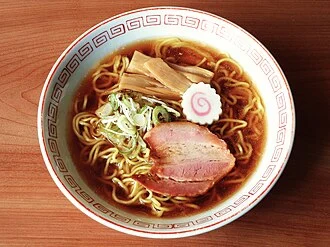
Ramen

ラーメン
rah-muhn

Wheat noodles in a savory broth with toppings.

Open Ramen recipe
Main course Vegan

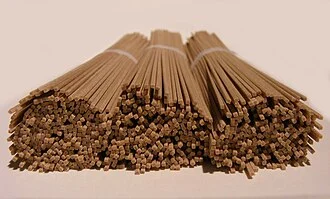
Soba

そば
So-bah

Buckwheat noodles served hot in broth or cold with a dipping sauce.

Open Soba recipe
Main course Fish & Seafood

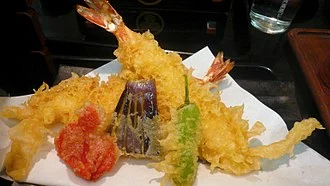
Tempura

天ぷら
tem-poo-rah

Battered and deep-fried seafood or vegetables.

Open Tempura recipe
Main course Meat

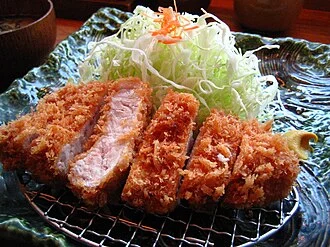
Tonkatsu

豚カツ
ton-KAH-tsu

Breaded and deep-fried pork cutlet, usually served with shredded cabbage.

Open Tonkatsu recipe
Main course Fish & Seafood

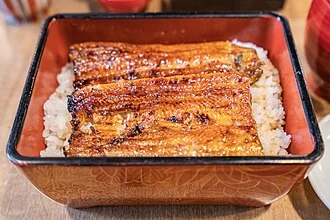
Unagi Kabayaki

うなぎ蒲焼
oo-nah-gee kah-bah-yah-kee

Grilled eel glazed with sweet soy-based sauce.

Open Unagi Kabayaki recipe
Snack Meat

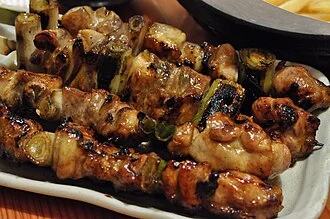
Yakitori

焼き鳥
yah-kee-toh-ree

Grilled skewers of chicken, often seasoned with tare sauce or salt.

Open Yakitori recipe

Activities & Experiences

Things to Do in Tokyo

Top-rated tours, day trips and local experiences — book in advance to secure your spot.

City & Country Data Tokyo (Japan)

Key travel data for Tokyo — local prices, safety, healthcare, local currency and essentials, curated by Triplandio.

Safety 🔒 89
Health 🏥 100
Lifestyle ⭐ 48
Infra 🏗️ 100
Rank 🎯 #5
Score 📊 70
Tourists ✈️ 4.1M/y
GDP/cap 💵 $36.0k
Life Exp ❤️ 84.0 yrs
Population 👥 123.4M
Currency 💱 JPY ¥
Language 🗣️ Japanese
Payments 💳 Mixed
Emergency 🆘 110
Coffee ☕ $3.68
Beer 🍺 $4.08
Lunch 🍽️ $8.00
Groceries 🛒 $60.00/w
Taxi/km 🚕 $1.50
Transit 🚇 $1.50
Fuel ⛽ $1.20/l
Internet 📡 $45.00/m
Salary 💵 $3,000/m

Travel tipsTokyo (Japan)

Quick tips

  1. Kabukicho is the drink-spiking hotspot — Critical

    Kabukicho in Shinjuku is where most British victims of spiking and card fraud in Japan were targeted, and visitors of any nationality are at risk once English-speaking street touts (kyakuhiki) lead them into bars. Walk past any tout.

  2. Some cold and allergy medicines are banned — Critical

    Japan's strict stimulant-drug law covers Vicks inhalers, cold and flu tablets containing pseudoephedrine, some allergy and sinus remedies and some codeine painkillers. Visitors have been detained and deported, so check your medicines with the Japanese embassy before you fly.

  3. Don't follow street touts into bars — Critical

    In nightlife districts such as Kabukicho, Roppongi, Shibuya and Ikebukuro in Tokyo, touts lure visitors into bars where drinks are spiked and huge sums are charged to their cards. Ignore touts and check prices before you order.

  4. Always carry your passport — Caution

    Tourists in Japan must carry their passport at all times, not a photocopy. Police can arrest you if you cannot show proof of your permission to stay.

  5. Smoking on the street is often banned — Caution

    Smoking while walking on the streets of Tokyo and many other Japanese cities is illegal. Look for the designated smoking areas, usually near stations, and smoke only there.

  6. Carry cash as well as cards — Local tip

    Many small restaurants, shrines, temples and rural shops in Japan still take cash only. ATMs at 7-Eleven stores and post offices are the most reliable for foreign cards.

  • Do
  • Carry your passport at all times
  • Take shoes off where slippers wait
  • Wash before getting into an onsen
  • Carry cash for small places
  • Take your rubbish with you
  • Don’t
  • Bring pseudoephedrine medicine
  • Follow touts into bars
  • Tip in restaurants
  • Smoke while walking
  • Take phone calls on trains

Tokyo tips for food lovers

Go to Tsukiji early, and not on Sunday

The outer market is at its best in the morning, and many stalls start closing by early afternoon. Lots of shops are also closed on Sundays, public holidays and some Wednesdays — check the market calendar before you go.

Tip: Morning is market time

Eat in the depachika

The basement food halls of department stores like Mitsukoshi are one of Tokyo’s great food experiences. Come in the last hour before closing, when many counters mark down bento, sushi and sweets.

Tip: Food halls get cheaper at closing time

Ticket machines and cash

Many ramen and set-meal shops take your order through a ticket machine by the door: pay, press the button, hand the ticket over. Small izakaya and yakitori stalls are often cash only, so carry notes.

Tip: Buy your ramen from the machine

Table manners that matter

There is no tipping in Tokyo — good service is included. Eat at the stall or counter where you bought your food rather than on the move, and say “itadakimasu” before you start.

Tip: No tips, no eating on the move

Tokyo for food lovers: FAQ

When is the best time to visit Tokyo?

The best time to visit Tokyo is December and July — fewer crowds, comfortable temperatures, less rain and more sunshine. Compare every month in the seasonal chart above.

Which Tokyo neighbourhood is best for food lovers?

For a first food trip, stay in Tsukiji: you can walk to the outer market for breakfast, to Ginza’s food halls and to Tsukishima for monja. Choose Ebisu if your evenings matter more than your mornings.

Is Tsukiji market still open?

Yes and no. The wholesale market and the tuna auction moved to Toyosu in October 2018, but the Tsukiji outer market stayed. Its streets of seafood stalls, knife shops and sushi counters are still the best place for a market breakfast.

Where should we go for izakaya and ramen at night?

Ebisu is the easiest: Ebisu Yokocho is a covered alley of small eateries by the station, and AFURI’s yuzu ramen is around the corner. Koenji is cheaper and more local, with yakitori stalls near the station.

Do we need to book restaurants in Tokyo?

Top sushi counters and famous restaurants need a booking, often weeks ahead — ask your hotel or use the restaurant’s own booking page. Market stalls, ramen shops, food halls and yakitori stalls don’t take bookings: just queue.

Where can we eat well on a budget?

Koenji: Thai food on the Pal shopping street, yakitori near the station and small bars everywhere. Department store food halls are another cheap trick, especially just before closing.

What is monja and where do we try it?

Monjayaki is a runny cousin of okonomiyaki that you cook yourselves on the hot plate at your table. Tsukishima, a short walk from Tsukiji over the Kachidoki Bridge, has a whole street of monja restaurants.

Tokyo for food lovers

★ For food lovers
In Tokyo the best food is spread across the whole city, so where you sleep decides what you eat before breakfast and after midnight. This guide picks four very different food bases — the Tsukiji market streets, izakaya-packed Ebisu, old-merchant Nihonbashi and cheap-eats Koenji — with a walk from breakfast to the last drink and a hotel for each.
  • Handpicked hotels
  • Best Tokyo areas
  • All budgets covered
  • Updated 2026
Asia — Japan — Tokyo — Discover Tokyo’s Best Neighborhoods for Food Lovers
keyboard_arrow_up