Explore Guides
ASIA / ISRAEL
Triplandio Jerusalem guide covers 8 travel guides across 15 areas, complete with hotel picks. Explore 32 self-guided walking tours in Jerusalem with 67 POI, spanning 68.8 km in total. Get inspired by 8 local dishes, complete with recipes and our unique Food Flavour DNA graph.
Jerusalem
City & Country Data Jerusalem (Israel)

Key travel data for Jerusalem — local prices, safety, healthcare, local currency and essentials, curated by Triplandio.
🌍 Israel
Safety
0
Health
91
Lifestyle
76
Infra
81
Rank
#42
Score
52
Tourists
4.9M/y
GDP/cap
$60.3k
Life Exp
83.2 yrs
Population
10.1M
Currency
ILS ₪
Language
Hebrew
Payments
Cashless
Emergency
101
💰 Prices in Jerusalem
Coffee
$4.00
Beer
$3.50
Lunch
$20.00
Groceries
$50.00/w
Taxi/km
$1.00
Transit
$2.00
Fuel
$2.00/l
Internet
$30.00/m
Salary
$3,000/m
Travel tipsJerusalem (Israel)

Quick tips
- Take care around the Old City gates — Critical
Stabbings, shootings and clashes have happened in and around Jerusalem's Old City, especially at Damascus Gate, Herod's Gate, Lion's Gate and Chain Gate. Check the news before visiting and leave if tension builds.
- Know where to shelter from rockets — Critical
Rocket, missile and drone attacks remain possible across Israel. If a siren sounds, go to the nearest protected room or public shelter and follow Israel's Home Front Command instructions; call 104 for its hotline.
- Some border areas are off-limits — Critical
Several governments, including the UK, advise against all travel to Gaza and within 500 metres of its border, the far north near Lebanon, parts of the occupied Golan Heights and the Jenin, Tulkarm and Tubas areas of the West Bank. Check advice before any trip.
- Apply for travel authorisation before flying — Good to know
Since 1 January 2025, visa-exempt visitors to Israel need an Electronic Travel Authorisation (ETA) from the official ETA-IL website before arriving. It costs 25 shekels, lasts 2 years and covers stays of up to 90 days.
- Expect long security questioning — Good to know
Israeli border and airport security can question you at length and search your bags and devices. Allow at least 3 hours at Ben Gurion airport when you leave.
- Public transport stops for Shabbat — Local tip
Most trains and buses in Israel stop from Friday afternoon until Saturday evening for Shabbat, the Jewish day of rest. Plan journeys around it or use taxis and shared minibuses.
- Do
- Get the ETA-IL before you fly
- Learn where the nearest shelter is
- Keep your entry card with your passport
- Cover shoulders and knees at holy sites
- Allow 3 hours for departure security
- Don’t
- Travel near Gaza or the Lebanon border
- Photograph soldiers or checkpoints
- Join protests or crowds
- Leave bags unattended
- Get Dead Sea water in your eyes
Critical
Prison or heavy penalty possible
Scams & safety
- Tension during holidays and Friday prayers — Critical
Clashes in Jerusalem are more likely after Friday prayers, during Ramadan and on Jewish holidays and anniversaries such as Jerusalem Day. Avoid the Old City at those times.
Laws & fines
- Avoid demonstrations and clashes — Critical
Political protests in Israel and the West Bank can turn violent quickly, especially after Friday prayers, on Thursday and Saturday evenings and on anniversaries. Leave the area if a crowd gathers.
- Don't touch suspicious objects — Critical
Report unattended bags to police or security staff in Israel, and never approach missile or drone fragments after an attack — they can still be dangerous.
- Drug possession means prison — Critical
If you are caught with illegal drugs in Israel, you can expect a prison sentence. Don't buy, carry or bring in drugs of any kind.
Entry & visa
- Boycott support can mean refusal — Critical
Israel can refuse entry to people who have publicly supported boycotts of Israel or its settlements, and has asked some visitors for access to their email or social media. Your devices may be searched.
- Crossing into the West Bank — Critical
Israel controls entry to the West Bank. Carry your passport and entry card, and if officials ask you to sign a form restricting travel to Palestinian areas, breaking it can mean a 10-year entry ban.
Health
- Hospitals insist on payment — Critical
Healthcare in Israel is not free and can be very expensive. Hospitals may insist on payment and take legal action to stop you leaving, so travel insurance is essential.
Beaches & adventure
- Sinkholes along the Dead Sea shore — Critical
Sinkholes can open suddenly along the shrinking Dead Sea shoreline. Stay on marked paths and never enter fenced-off areas.
- Flash floods in desert canyons — Critical
Winter rain far away can send flash floods through dry canyons in the Negev and Judean Desert. Check the forecast and leave canyons if rain is expected.
Caution
Fines, losses or injury possible
Scams & safety
- Travel advisory: Level 3 of 4 — Caution
Reconsider travel — the U.S. State Department's rating for Israel.
- Unofficial guides and taxi overcharging — Caution
Unofficial guides approach visitors at Old City gates and the Mount of Olives. Book licensed guides, and ask Jerusalem taxi drivers to use the meter.
Laws & fines
- Don't photograph military sites — Caution
Israel has many military bases, checkpoints and soldiers on the streets. Don't photograph security installations or personnel, and delete pictures if asked.
- Drones need permission — Caution
Much of Israel's airspace is restricted for security reasons. Don't fly a drone without authorisation from the Israeli civil aviation authorities; it may be confiscated.
Health
- Heat and dehydration in the desert — Caution
Summer temperatures around the Dead Sea, Masada and the Negev are extreme. Start hikes at dawn, carry plenty of water and cover your head.
Beaches & adventure
- Float carefully in the Dead Sea — Caution
The Dead Sea is so salty that water in your eyes or mouth is very painful and swallowing it is dangerous. Float on your back, don't swim face-down and rinse off afterwards.
- Swim at lifeguarded beaches — Caution
Mediterranean beaches in Israel can have strong currents, and jellyfish swarms often arrive in summer. Swim only where lifeguards are on duty and follow their flags.
- Bring an IDP to drive — Caution
To drive in Israel you need a 1968-convention International Driving Permit (IDP), bought before you travel, plus your licence. Traffic keeps right, driving can be erratic and radar speed traps bring heavy fines.
- Never go into the desert alone — Caution
For trips into the Negev or Judean Desert, go with others, carry plenty of water and a charged phone, and tell someone your route and return time. Hitchhiking anywhere in Israel is not safe.
Good to know
Rules and useful facts
Scams & safety
- Temple Mount has strict rules — Good to know
Non-Muslims can visit the Temple Mount (Haram al-Sharif) only at limited hours, through one gate, and may not pray there. Dress modestly and follow police instructions.
Getting around
- Getting to Bethlehem — Good to know
Buses to Bethlehem leave from near Damascus Gate in East Jerusalem. Carry your passport and entry card through the checkpoint, which can close without warning.
Laws & fines
- Carry your passport — Good to know
Keep your passport and the entry card you get at Ben Gurion airport with you in Israel. Police and soldiers at checkpoints may ask for them, and you need them to cross into the West Bank.
- Same-sex relations are legal in Israel — Good to know
Same-sex relations are legal in Israel, and Tel Aviv has a large LGBT+ scene and Pride parade. Attitudes are hostile in some religious and Palestinian areas, and same-sex activity is illegal in Gaza.
Entry & visa
- Passport valid for 90 days — Good to know
Your passport must be valid for at least 90 days after the date you arrive in Israel.
- Keep your entry card — Good to know
At Ben Gurion airport you get a small entry card instead of a passport stamp. Keep it with your passport until you leave; it proves you entered Israel legally.
- Checkpoints close without warning — Good to know
Israeli checkpoints may close on public holidays and during unrest. Check the latest situation before travelling to Bethlehem, Jericho or other West Bank towns.
Health
- Ambulance: 101, police: 100 — Good to know
In Israel, dial 101 for Magen David Adom, the national ambulance service, and 100 for police. In the West Bank, Palestinian services are reached on 101.
- Tap water is safe to drink — Good to know
Tap water in Israel is treated and safe to drink, though it can taste of minerals. Refill a bottle rather than buying plastic.
Beaches & adventure
- Hire cars and Palestinian areas — Good to know
Israeli hire car insurance usually doesn't cover areas under Palestinian control. Check your rental terms before driving in the West Bank.
Local tips
Local know-how
Scams & safety
- “Free” red strings at the Western Wall — Local tip
People near the Western Wall tie red strings on visitors' wrists or offer blessings, then ask for money. Say no politely if you don't want to pay.
Getting around
- Ben Gurion airport (TLV) to Jerusalem — Local tip
A direct train runs from Ben Gurion airport to Jerusalem's Yitzhak Navon station in about 25 minutes, except on Shabbat. Shared minibus taxis (sherut) run to any address.
- Light rail and buses — Local tip
Jerusalem's light rail runs past the Old City and the central bus station. Pay with a Rav-Kav (Israel's travel card), a contactless card or an app.
Customs
- Dress modestly at holy sites — Local tip
In Jerusalem and the West Bank, cover your shoulders, upper arms and knees. Residents of ultra-Orthodox areas such as Bnei Brak, Beit Shemesh and Safed can react strongly to anyone, especially women, dressed less conservatively.
- Respect Shabbat in religious areas — Local tip
Shabbat runs from Friday sunset to Saturday nightfall. Don't drive into ultra-Orthodox areas of Jerusalem then, as residents may throw stones at cars, and ask before photographing people in Orthodox Jewish or Muslim areas.
- Kosher rules shape menus — Local tip
Many restaurants in Israel are kosher, so they don't serve meat and dairy together, and many close on Shabbat. Non-kosher places in Tel Aviv stay open all week.
- Directness isn't rudeness — Local tip
Israelis tend to speak bluntly and argue good-naturedly, and queues can be loose. Stay polite but firm, and don't take directness personally.
- Don't eat in public during Ramadan — Local tip
During Ramadan in Palestinian areas, don't eat, drink, smoke or chew gum in public in daytime, even in your car, and avoid loud music. Security around Al-Aqsa Mosque in Jerusalem's Old City is tight then.
Tipping & money
- Tip 10–15% in restaurants — Local tip
Service is usually not included in Israeli restaurant bills, so a tip of about 10–15% is expected. Some places add it automatically for large groups — check the bill.
- Bargain in markets and the Old City — Local tip
Haggling is normal in Jerusalem's Old City bazaar and at Arab markets. Prices in shops, malls and supermarkets in Israel are fixed.
- Cards are accepted almost everywhere — Local tip
Credit cards and contactless payments are accepted almost everywhere in Israel, even for small amounts. Carry some shekels for market stalls and taxis.
- Hotel VAT exemption for tourists — Local tip
Foreign tourists are usually exempt from VAT on hotel stays in Israel. Show your entry card when you check in so the hotel can remove the tax.
Say it locally
Hebrew reads right to left; “shalom” works for hello, goodbye and peace, and English is widely spoken.
Through the year
Festival or season Public holiday (exact date)
- Rainy season
Nov 2026–Mar 2027 · Winter rain, occasional flash floods in desert canyons and cold nights in Jerusalem.
- Christmas in Bethlehem and Nazareth
Dec 2026 · Services and celebrations draw pilgrims; checkpoints to Bethlehem can be slow.
- Ramadan
Feb–Apr 2027 · The Muslim fasting month affects opening hours in Arab towns and East Jerusalem and can raise tension at holy sites; dates move about 11 days earlier each year.
- Passover
Mar–Apr 2027 · A week when bread is hard to find, hotels and sites are packed and prices rise; dates follow the Hebrew calendar.
- Passover (Day 1)
Thu 22 Apr 2027 · Public holiday
- Passover (Day 7)
Wed 28 Apr 2027 · Public holiday
- Jerusalem Day
May–Jun 2027 · Marches through the Old City on this Israeli anniversary have led to clashes; the date follows the Hebrew calendar.
- Yom HaAtzmaut
Wed 12 May 2027 · Public holiday
- Summer heat
Jun–Sep 2027 · Very hot and humid on the coast and extreme around the Dead Sea and Eilat; plan outdoor visits for early morning.
- Shavuot
Fri 11 Jun 2027 · Public holiday
- Jewish High Holidays
Sep–Oct 2027 · Rosh Hashanah, Yom Kippur and Sukkot; on Yom Kippur the country shuts down completely, including roads and Ben Gurion airport. Dates follow the Hebrew calendar.
- Rosh Hashana
Sat 2 Oct 2027 · Public holiday
- Rosh Hashana (Day 2)
Sun 3 Oct 2027 · Public holiday
- Yom Kippur
Mon 11 Oct 2027 · Public holiday
- Sukkot (Day 1)
Sat 16 Oct 2027 · Public holiday
- Shemini Atzeret / Simchat Torah
Sat 23 Oct 2027 · Public holiday
Sources: GOV.UK travel advice · U.S. State Dept · Google public holidays
Best time to visit Jerusalem (Israel)
Now (November) avg high: 22°C, mostly dry, quiet, fewer crowds. Best months to walk: Jul & Aug.
Live Temp
…
~Day / Night Temp
22°C / 13°C
Sunrise / Sunset
7:00 / 17:46
Local time
18:30
Best Months  Jul & Aug
J
Jan
F
Feb
M
Mar
A
Apr
M
May
J
Jun
J
Jul
A
Aug
S
Sep
O
Oct
N
Nov
 D
Dec
A
Aug
S
Sep
O
Oct
N
Nov
D
Dec
Check Jerusalem hotels
Temperature
Average daytime high, month by month. Zero line marks freezing point.
Crowds
How busy it gets — traveller interest by month.
Rainfall
Rainy days to expect each month.
Sunshine
Hours of sun per day, by month.
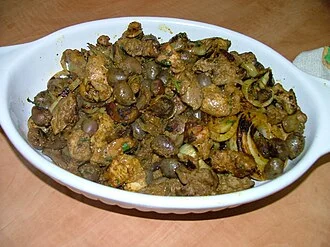
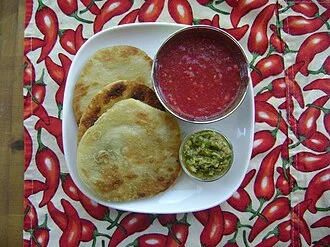
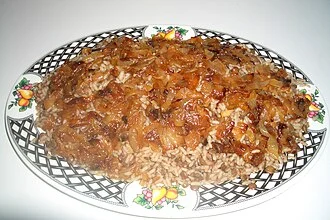
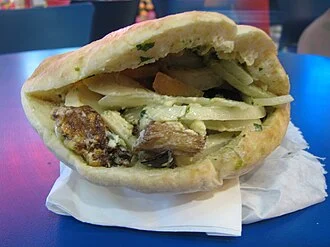
Slow-cooked Yemenite Jewish dish made from rolled dough, baked overnight. A flavorful mix of sautéed chicken hearts, spleens, and liver, with onions and spices. A layered flatbread usually served with a side of hard-boiled eggs, grated tomatoes, and zhug. A dish of lentils and rice, commonly garnished with fried onions. A popular sandwich made with pita, fried eggplant, hard boiled eggs, and salatim. Deep-fried doughnuts filled with jelly and topped with powdered sugar.
Traditional Local Food
Jerusalem (Israel)
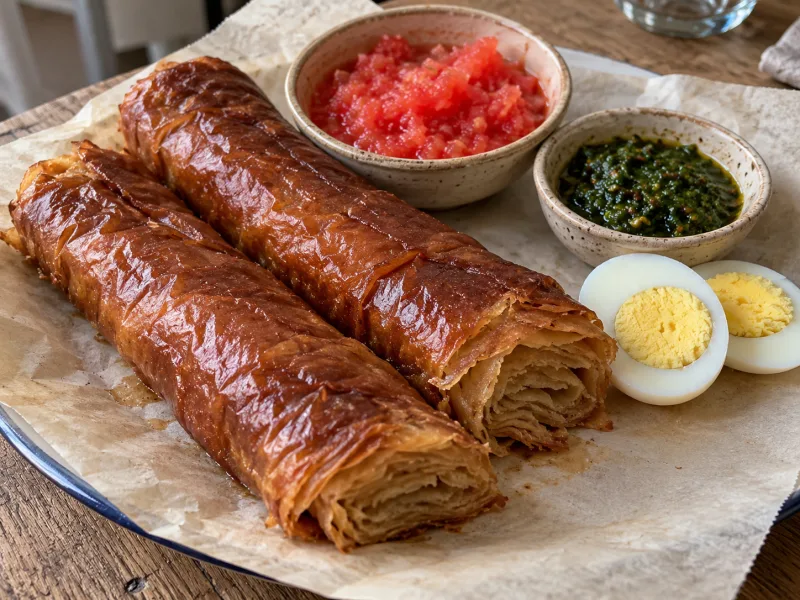 Bread
Vegetarian
Jachnun
ג'חנון
jah-kh-noon
Main course
Meat
Jerusalem Mixed Grill
מַעֲרֶבֶת יְרוּשָׁלַיִם
Mah-ah-reh-vet Ye-roo-shah-lime
Bread
Vegetarian
Malawach
מלאווח
mah-LAH-wahkh
Main course
Vegan
Mujaddara
מג'דרה
moo-JAH-dah-rah
Street food
Vegetarian
Sabich
סביח
sa-BEEKH
Dessert
Vegetarian
Sufganiyot
סופגניות
soof-gah-NEE-yoht